 English
 French
Optimal Hydraulic Breaker for Specific Rock Types Explained
Getting the right hydraulic breaker matched to your rock type makes the difference between a project that runs smooth and one that drains your budget through tool wear and wasted fuel. I’ve seen crews struggle with equipment that looked powerful on paper but couldn’t handle the specific geology they were cutting into. The variables matter more than most people realize—rock hardness, abrasiveness, fracture patterns—and each one shifts what your breaker needs to deliver.
How Rock Properties Shape Your Breaker Decision
Effective rock breaking starts with knowing what you’re actually hitting. The mechanical properties of rock—hardness, compressive strength, tensile strength, and abrasiveness—determine how much energy you need to fracture it and how fast your tools will wear down.
Geological formations behave differently under impact. Igneous rock like granite and basalt formed from cooled magma tends toward high compressive strength. Granite in particular carries high quartz content, which makes it extremely abrasive on chisel tips. Sedimentary rock such as limestone and sandstone generally offers lower resistance but varies widely depending on how it was deposited. Metamorphic rock like marble and quartzite has been transformed by heat and pressure, often resulting in very high hardness and unpredictable fracture patterns.
| Rock Type | Compressive Strength | Abrasiveness | Typical Formations |
|---|---|---|---|
| Granite | High | High | Igneous |
| Basalt | High | Medium | Igneous |
| Limestone | Low to Medium | Low | Sedimentary |
| Sandstone | Medium | Medium | Sedimentary |
| Quartzite | Very High | Very High | Metamorphic |
Understanding these intrinsic properties, including specific gravity and how cracks propagate through the material, guides you toward equipment that won’t underperform or burn out prematurely.
What are the key factors in selecting a hydraulic breaker for specific rock types?
Several parameters work together when choosing a hydraulic breaker. Breaker size and impact energy need to match the rock’s resistance. Chisel type matters for how force gets transferred into the material. The excavator’s operating pressure and flow rate must align with the breaker’s requirements—a mismatch causes poor performance or equipment damage. Carrier weight class affects stability and how efficiently power transfers through the system. Working through these factors systematically keeps operations effective and economical.
Breaker Technologies That Handle Difficult Rock
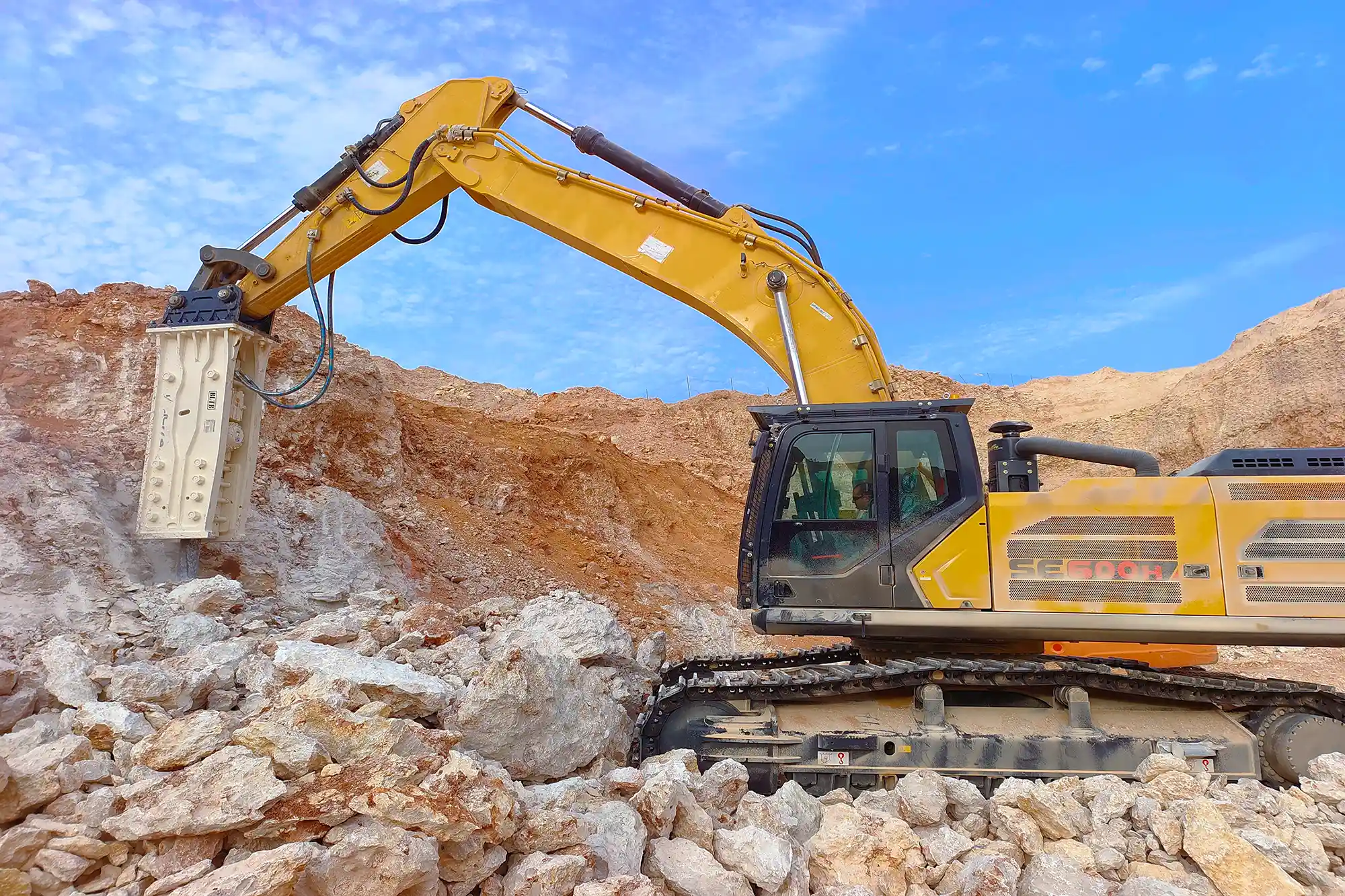
Modern hydraulic breaker designs pack serious engineering into their frames. Beilite Machinery, a national high-tech enterprise, builds the BLT and BLTB series with features that matter when rock gets tough.
Nitrogen accumulator technology stores energy between blows, delivering consistent power even under varying load conditions. The energy recovery system captures recoil energy from the piston’s rebound and feeds it back into the next strike. This recycled energy boosts effective impact power while cutting fuel consumption—a meaningful gain when you’re running equipment all day in hard rock.
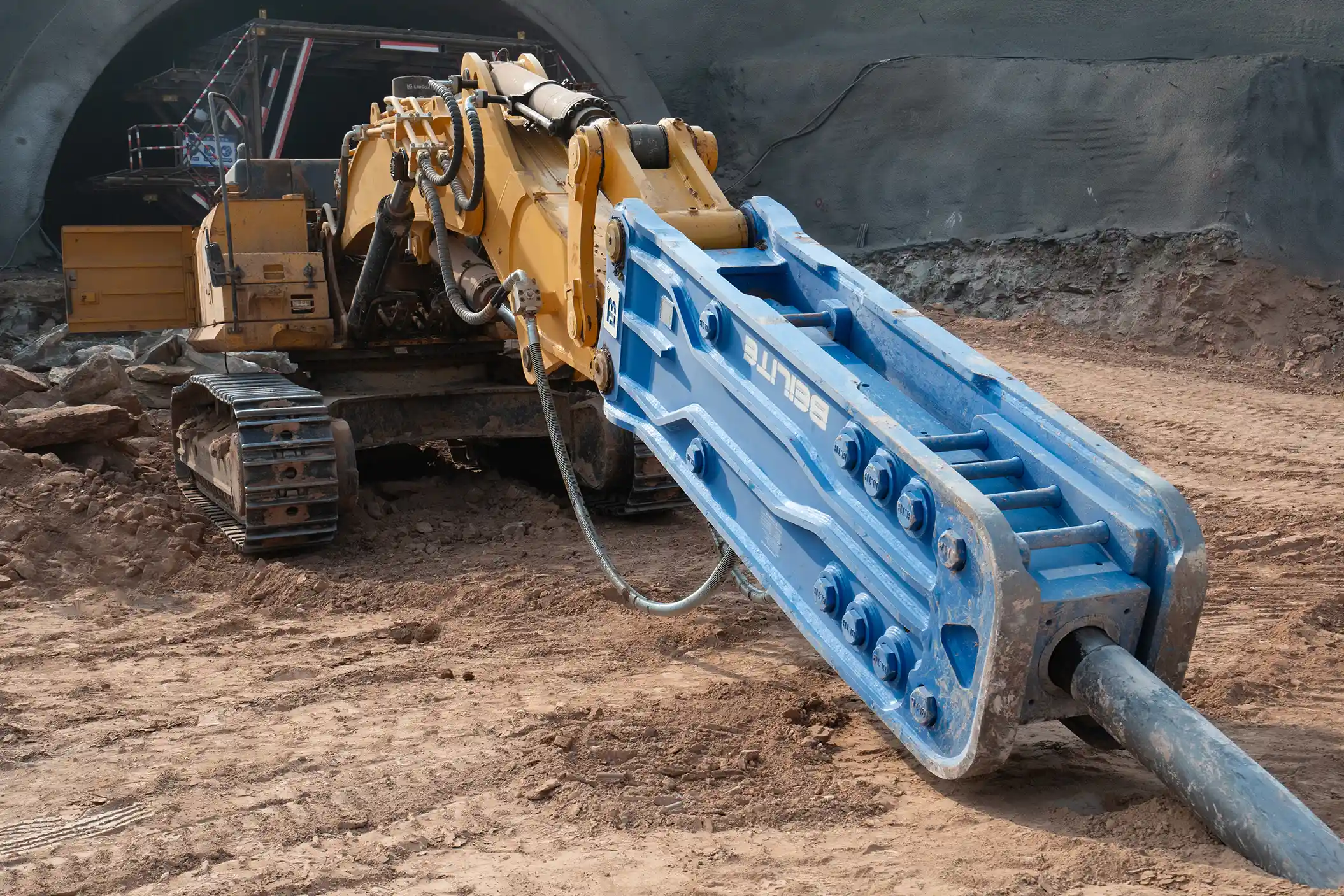
For urban and municipal engineering work, silent type breaker designs reduce noise pollution to levels that won’t shut down a jobsite. Box type housing protects the power cell from debris and impact damage. Anti-blank firing mechanisms prevent the kind of damage that happens when the tool strikes air instead of rock.
Wear-resistant materials in critical components extend service life, especially important when working abrasive formations. Advanced hydraulics with variable speed control let operators adjust impact frequency and blow energy to match what the rock actually needs. Dust suppression systems and underwater breaking capabilities serve specialized applications where standard equipment falls short.
How does the impact energy of a hydraulic breaker relate to rock hardness?
Impact energy, measured in joules, represents the kinetic energy moving from piston to chisel. Harder rock requires higher impact energy to overcome its internal resistance and create material fatigue that leads to fracture.
The relationship between blow energy and impact frequency matters here. Very hard, massive rock often responds better to high impact energy delivered at lower frequency—each blow needs enough force to start crack propagation. Softer or already-fractured rock breaks more efficiently with higher frequency and moderate energy, where rapid repeated strikes exploit existing weaknesses.
Getting this balance right means energy transfers into actual fracture propagation rather than wasted vibration. Matching breaker power to rock hardness keeps productivity high and prevents the kind of inefficient hammering that wears equipment without moving material.
Chisel Selection for Different Rock Formations
The chisel is where all that hydraulic power meets the rock face. Choosing the wrong tool geometry wastes energy and accelerates wear. Different formations and applications demand specific approaches.
Moil Point Chisel: The conical shape concentrates force on a small contact area. This works well for general breaking, concrete demolition, and soft to medium rock types like shale or sandstone. The focused energy initiates cracks that propagate through the material.
Wedge Tool: A flat, wedge-shaped tip excels at splitting rock along existing fractures or cutting trenches. Medium to hard rock responds well when you need controlled breaking rather than pulverizing.
Blunt Tool: The flat, wide surface distributes impact force across a larger area. Hard, abrasive rock like granite benefits from this approach—the distributed force causes spalling and fracture without concentrating wear on a single point. Quarrying operations and oversized rock reduction rely heavily on blunt tools.
Conical and Pyramid Chisels: These geometries balance penetration and splitting action, handling various medium-hard applications where neither extreme specialization fits.
| Chisel Type | Recommended Rock | Primary Application |
|---|---|---|
| Moil Point | Soft to Medium, Concrete | General breaking, concrete |
| Wedge Tool | Medium to Hard | Trenching, rock splitting |
| Blunt Tool | Hard, Abrasive | Quarrying, oversized rock |
Beilite chisels use high-grade wear-resistant materials selected based on the specific rock characteristics they’ll face. Proper chisel diameter and material composition extend tool life even in abrasive rock breaking conditions.
Keeping Breakers Running in Harsh Conditions
Equipment longevity directly affects project profitability. A breaker that wears out early or breaks down frequently costs more than just the repair bill—downtime kills schedules and budgets.
Comprehensive maintenance schedules catch problems before they cascade. Regular hydraulic system health checks reveal issues like contamination or pressure loss that degrade performance gradually. Genuine spare parts availability matters when something does fail; generic replacements often don’t hold up to the same standards.
Operator training pays dividends that compound over time. Proper technique prevents blank firing, which damages internal components when the tool strikes without resistance. Avoiding excessive side loading protects the power cell and bushings from forces they weren’t designed to handle.
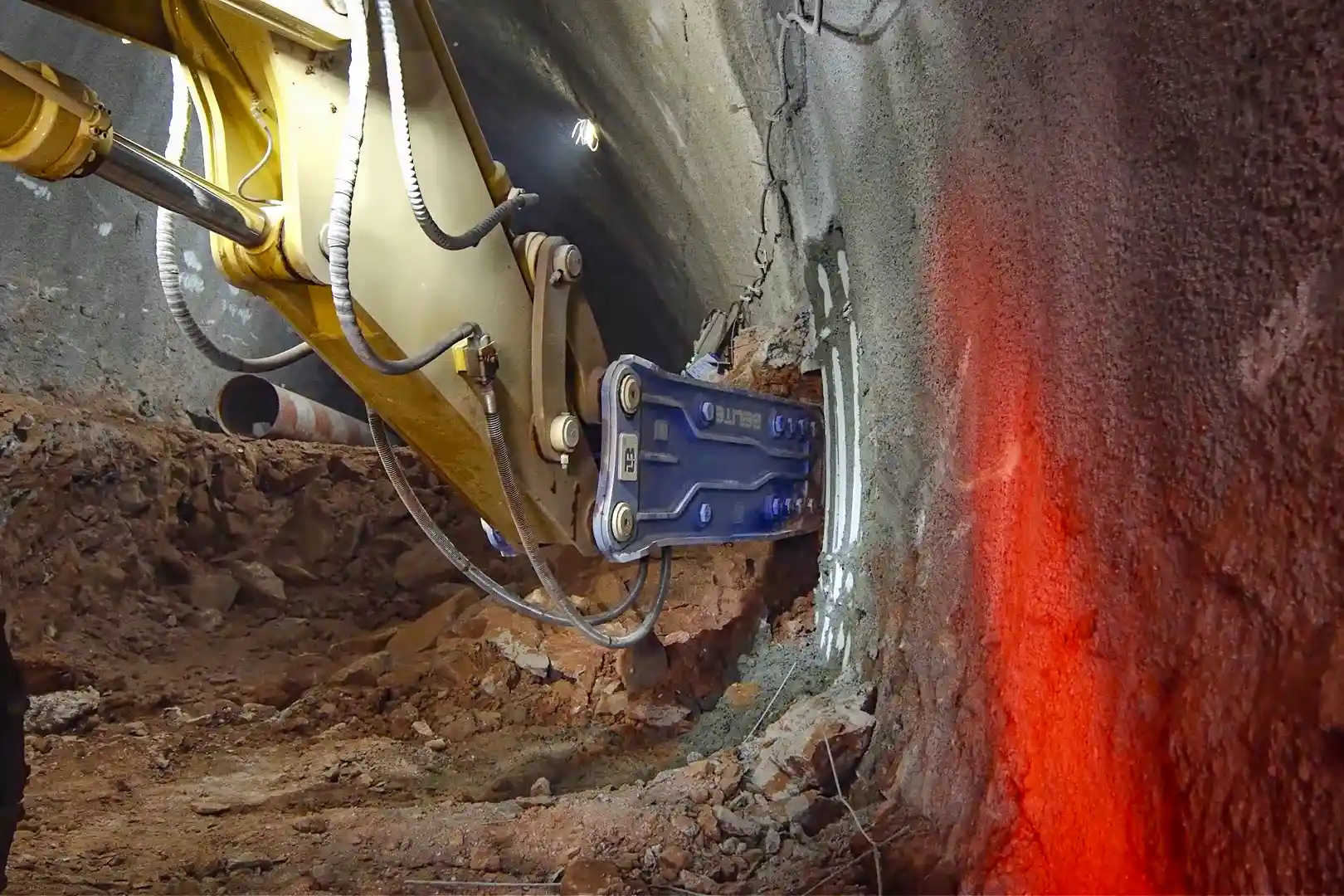
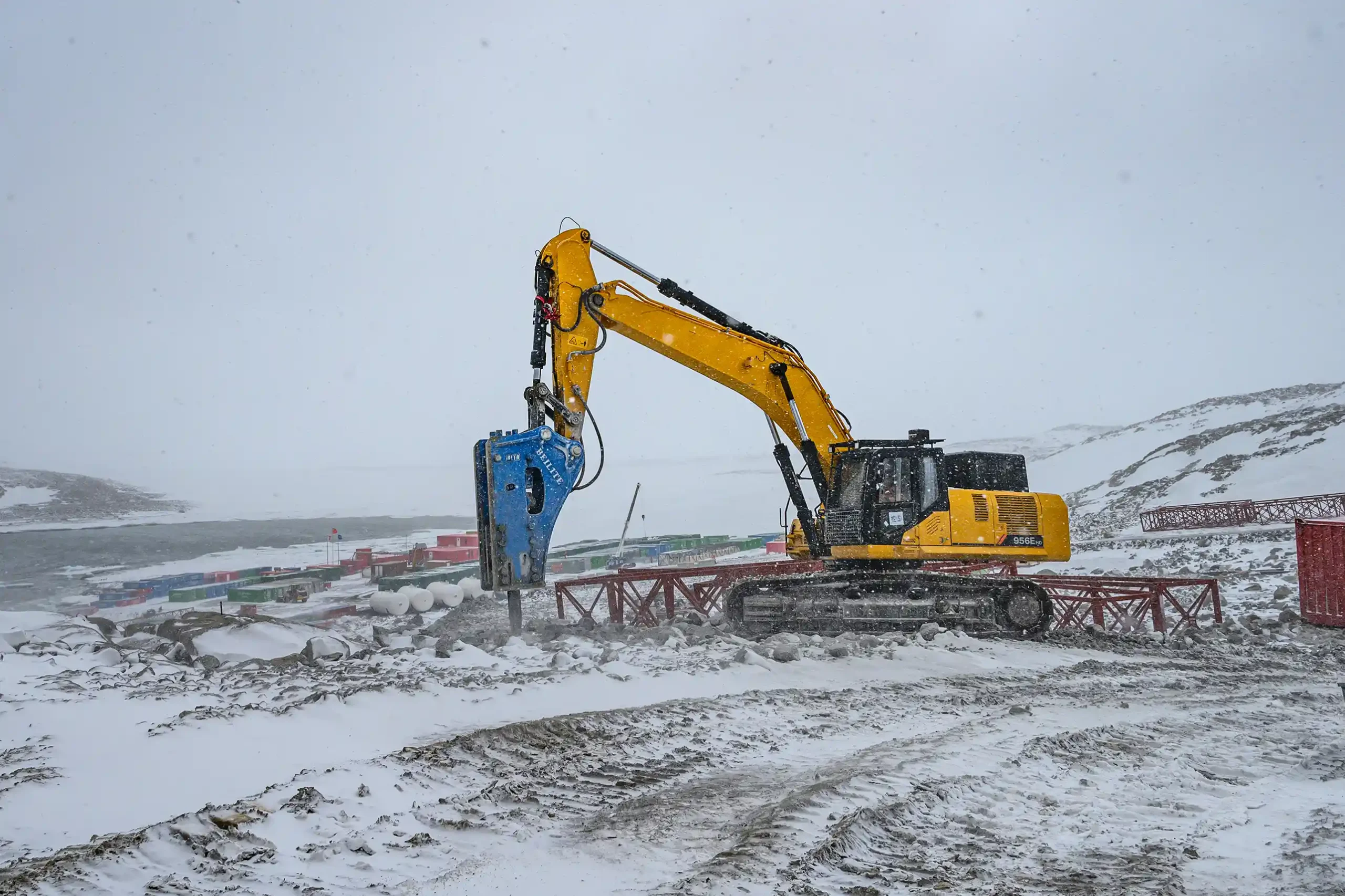
Challenging environments require specific responses. Dust control measures keep abrasive particles out of internal components. Noise reduction and vibration damping technologies protect operators during long shifts. Consistent lubrication frequency becomes critical when working abrasive formations—the intervals that work in limestone won’t protect equipment in high-quartz granite.
Beilite’s global support network and service infrastructure ensure customers can access expertise and parts when they need them. This support structure helps reduce total cost of ownership and extends the working lifespan of hydraulic breaker units.
Are there specific maintenance considerations for breakers used in abrasive rock?
High quartz content and similar abrasive conditions accelerate wear across the entire breaker system. Several maintenance adjustments help equipment survive these environments.
Lubrication frequency needs to increase—moving parts and bushings face more friction and need more protection. Dust ingress monitoring becomes critical because abrasive particles that reach the hydraulic system cause damage throughout. Seal integrity inspections should happen more often than standard schedules suggest.
Chisel wear and tool pin condition require regular attention since these components experience the most direct abrasion. Breakers with specialized wear plates and hardened components, like those in Beilite’s BLT/BLTB series, handle these conditions better than standard designs.
Why Rock-Specific Selection Drives Project Outcomes
Matching your hydraulic breaker to the actual rock you’re breaking affects every metric that matters. Productivity gains come from equipment that efficiently fractures the target material instead of struggling against it. Operational costs drop when fuel consumption and wear rates stay within reasonable bounds.
Safety improves when equipment performs predictably. A breaker working within its design parameters doesn’t fail unexpectedly or create hazardous breaking patterns. Project timelines stay intact when the right equipment runs reliably instead of cycling through breakdowns and repairs.
Environmental impact decreases through optimized energy use and controlled noise and dust generation. Return on investment improves when equipment lasts longer and performs better. These outcomes compound over the life of a project and across multiple projects using the same equipment.
Strategic breaker selection based on actual rock conditions delivers competitive advantage through reliable, efficient operations.
Frequently Asked Questions About Hydraulic Breaker Selection
What is the ideal hydraulic breaker size for breaking hard granite in quarrying?
Hard granite demands high impact energy and construction robust enough to handle sustained punishment. Larger BLT series models like the BLT-155 or BLT-165 deliver the blow energy needed for dense, abrasive rock. Pairing these with blunt tool chisels distributes force effectively across the rock face. The combination maximizes efficiency while keeping wear manageable in demanding quarrying conditions.
How can I prevent premature wear of my hydraulic breaker when working with highly abrasive rock?
Abrasive rock requires a multi-layered defense strategy. Start with chisels made from wear-resistant materials designed for high-quartz environments. Implement frequent and correct lubrication, paying particular attention to the tool and bushings. Monitor for dust ingress regularly and maintain seal integrity throughout the system. Beilite’s BLT/BLTB series breakers incorporate advanced wear-resistant components and sealing systems specifically engineered for these harsh conditions.
Why is it important to consider the excavator’s hydraulic system when choosing a hydraulic breaker?
The hydraulic breaker’s operating pressure and flow rate requirements must match what the excavator can deliver. A mismatch in either direction causes problems—too little flow means underperformance, while excessive pressure leads to overheating and potential damage to both machines. Proper compatibility ensures optimal power delivery from your Beilite hydraulic breaker, prevents costly repairs, and protects your equipment investment.
What are the benefits of Beilite’s energy recovery system in hydraulic breakers?
The energy recovery system captures recoil energy from the piston’s rebound—energy that would otherwise dissipate as heat and vibration. This recycled energy contributes to the next blow, effectively increasing impact power without additional fuel consumption. The result is enhanced breaking capability in tough rock, lower operating costs, and reduced stress on internal components that extends breaker longevity.
Can Beilite hydraulic breakers be used for underwater demolition projects?
Beilite offers specialized models and modifications designed specifically for underwater construction and demolition work. These configurations feature enhanced sealing systems, corrosion-resistant components, and engineering tailored for marine environments. The breakers maintain reliable performance and durability even when fully submerged, providing effective breaking power for demanding underwater applications.
Partner with Beilite for Superior Rock Breaking Solutions
Beilite Machinery Co., LTD builds hydraulic breakers engineered for performance across all rock types. Decades of innovation and participation in national standards development inform the BLT and BLTB series designs. Contact our technical team for a consultation matched to your specific project requirements. Email [email protected] or call 40008-40008.