 English
 French
Hydraulic Breaker Weight Performance: Maximizing Job Site Productivity
The weight of a hydraulic breaker shapes everything from how hard it hits to how long your excavator holds up under the strain. I’ve watched operators struggle with mismatched equipment—fuel bills climbing, maintenance intervals shrinking, productivity stalling—all because the breaker-to-carrier relationship wasn’t thought through properly. Getting this right means understanding not just the numbers on a spec sheet, but how mass, hydraulic power, and application demands interact in real working conditions.
Weight Determines How Much Energy Reaches the Material
The connection between hydraulic breaker weight and breaking performance comes down to physics. A heavier breaker typically houses a larger piston and cylinder assembly, which translates to greater impact energy when that piston slams into the chisel. Breaking through granite or reinforced concrete requires substantial kinetic energy transfer, and mass plays a direct role in generating it.
The mechanics work like this: hydraulic pressure accelerates the piston rapidly, and when it strikes the chisel, the energy delivered depends on both piston mass and velocity squared. A heavier piston driven by adequate hydraulic flow delivers a more forceful blow. This matters when you’re working hard materials where lighter equipment simply bounces off the surface without making progress.
The power-to-weight ratio tells you how efficiently a breaker converts its mass into actual breaking force. Two breakers weighing the same can perform very differently depending on internal design, piston geometry, and hydraulic efficiency. BEILITE’s R&D work focuses on maximizing this ratio—getting the most output from every kilogram of equipment weight.
Carrier Machine Health Depends on Proper Weight Matching
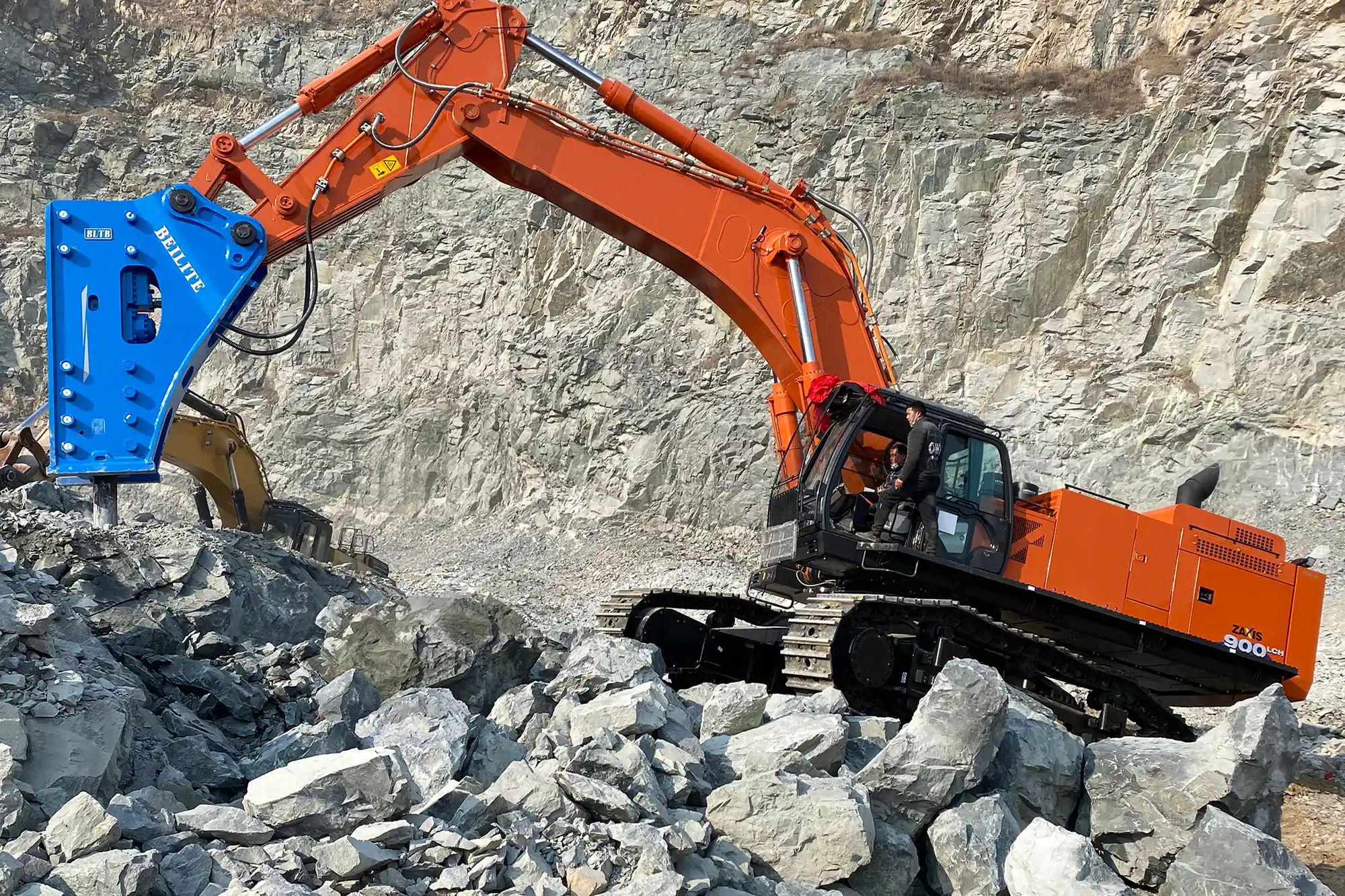
An improperly sized hydraulic breaker creates problems that compound over time. Too heavy, and you’re straining the excavator’s hydraulic system, boom, and stick with every cycle. Too light, and you’re spending extra hours on tasks that should take half the time.
When a breaker exceeds what the carrier can comfortably handle, the engine works harder to maintain hydraulic pressure. Fuel consumption rises noticeably. The constant impact and vibration from an oversized attachment accelerate wear on pins, bushings, and chassis components. I’ve seen excavators age years in months when operators push the limits of attachment compatibility.
A breaker that’s undersized for the job creates different problems. The machine can handle it physically, but breaking times stretch out. Operators compensate by running longer cycles, which adds up to reduced productivity and frustrated crews.
The BLT and BLTB series from BEILITE are engineered to integrate with specific excavator classes, matching hydraulic flow and operating pressure requirements. This attention to compatibility keeps maintenance costs predictable and maximizes uptime.
Fuel Consumption and Wear Patterns
Breaker weight influences fuel consumption through hydraulic demand. An oversized breaker requires more flow and pressure than the carrier’s system was designed to deliver efficiently. The engine compensates by running harder, burning more fuel per hour of operation.
Mechanically, the extra weight and impact forces stress the boom and stick beyond their design envelope. Pins wear faster. Bushings need replacement sooner. The hydraulic pump works under sustained high loads, shortening its service life. Proper sizing functions as preventative maintenance—it costs nothing upfront but saves substantially over the equipment’s lifespan.
Performance Metrics That Matter Beyond the Scale
Weight tells part of the story. Selecting the right hydraulic breaker means evaluating several specifications that collectively define capability.
Impact frequency—measured in blows per minute—determines how quickly you can process material. Higher frequency suits softer materials and precision work. Lower frequency with higher energy per blow handles hard rock better.
Chisel diameter affects penetration depth and the contact area with the target material. Larger chisels spread impact force over a wider area, which matters for certain demolition applications.
Operating pressure and hydraulic flow rate must match what your carrier can supply. A breaker rated for 200 bar won’t perform correctly on a machine that maxes out at 180 bar. These specifications aren’t suggestions—they’re requirements for proper function.
| Metric | What It Tells You | Typical Range |
|---|---|---|
| Impact Energy | Force delivered per blow | 1,000 – 15,000 Joules |
| Impact Frequency | Breaking speed in blows per minute | 300 – 1,500 bpm |
| Chisel Diameter | Tool size and penetration capability | 40 mm – 165 mm |
| Operating Pressure | Required hydraulic input | 90 – 220 bar |
| Hydraulic Flow Rate | Oil volume the breaker needs | 15 – 260 L/min |
Noise reduction technology and vibration damping have become increasingly important as regulations tighten and operator comfort affects productivity. Automatic lubrication systems reduce maintenance intervals. These features add value beyond raw breaking power.
Defining Breaker Capability Through Specifications
Impact energy quantifies the force behind each blow—the number that matters most for hard materials. Impact frequency indicates cycle speed. Together, they determine how much material you can process in a given timeframe.
Chisel diameter relates directly to the tool’s penetration characteristics. Hydraulic requirements—operating pressure and oil flow rate—must align with the carrier machine’s capabilities. Mismatched hydraulic specifications result in underperformance regardless of how impressive the other numbers look.
Matching Equipment to Application Requirements
Strategic matching goes beyond checking that the breaker physically fits the carrier. It requires understanding how weight class, job type, and material characteristics interact.
Excavator weight class sets the upper limit for breaker weight. Exceed it, and you risk machine instability and structural damage. A Hydraulic Breaker Hammer For Backhoe,Factory Direct Price operates under different constraints than a large excavator-mounted unit—the carrier’s geometry and hydraulic capacity differ substantially.
Job type shapes requirements. Demolition projects often involve varied materials and tight spaces where maneuverability matters. Quarrying operations demand sustained high-energy output against consistent hard rock. Trenching applications need precision and controlled impact.
Material density and hardness influence which combination of impact energy and frequency works best. Soft concrete breaks efficiently with high-frequency, moderate-energy blows. Dense granite requires fewer, more powerful strikes.
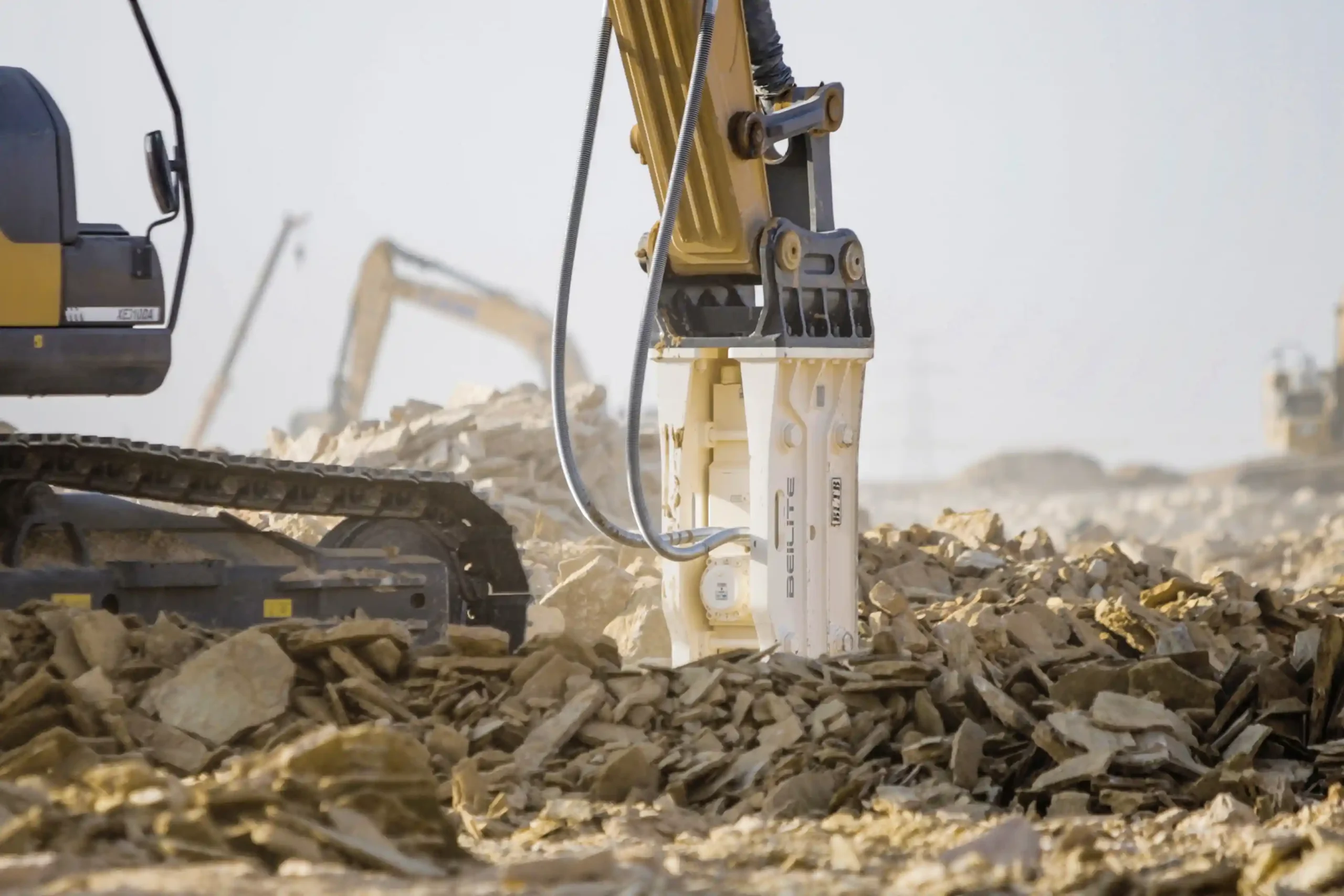
The BLT series spans a range of applications:
| Model | Total Weight (kg) | Chisel Diameter (mm) | Operating Flow (L/min) | Applicable Excavator (t) |
|---|---|---|---|---|
| BLT-60 | 263 | 60 | 30–60 | 3–5.5 |
| BLT-100 | 986 | 100 | 80–110 | 10–14 |
| BLT-150 | 2310 | 150 | 150–210 | 24–27 |
Why Proper Sizing Protects Your Investment
Improper sizing creates cascading problems. An oversized breaker destabilizes the carrier during operation, creating safety risks. The hydraulic system runs under constant overload, stressing pumps and valves. Boom and stick components experience forces beyond their design limits, accelerating fatigue and wear.
The repair costs accumulate faster than most operators expect. What seems like a minor mismatch—a breaker slightly above the recommended range—compounds into significant maintenance expenses over a season of heavy use.
Weight-to-Power Ratios Vary by Application
No universal “ideal” weight-to-power ratio exists because applications differ too much. Urban demolition often favors lighter breakers with precise control—minimizing collateral vibration matters more than raw power. Heavy quarrying operations prioritize maximum impact energy, and the weight required to deliver it becomes acceptable.
Engineers balance these factors for specific use cases. The goal is sufficient impact force for the task without unnecessary strain on the carrier or excessive fuel consumption.
Technology Advances Change the Weight-Performance Equation
BEILITE Machinery Co., LTD. holds national high-tech enterprise status and participates in standards formulation for the industry. Hundreds of patents reflect ongoing investment in advancing hydraulic breaker technology.
Modern advanced hydraulic breaker Hammer designs incorporate features that weren’t available a decade ago. Energy recovery systems capture recoil energy and redirect it into subsequent blows, increasing effective impact force without additional hydraulic input. This means lighter breakers can match the performance of older, heavier designs.
Anti-blank firing mechanisms prevent damage when the chisel loses contact with the material mid-cycle. This protection extends breaker lifespan significantly in applications where material breaks away unpredictably.
Automatic lubrication systems maintain consistent greasing of wear surfaces, reducing friction and extending component life. Noise reduction and vibration dampening improve working conditions and help meet environmental regulations in sensitive areas.
Smart hydraulic systems adjust flow and pressure dynamically based on material resistance, optimizing performance across varying conditions. These systems work particularly well in mining and quarrying operations where material hardness changes across a site, or in specialized applications like Hydraulic Breaker Hammer for Underwater Construction.
Heavier Doesn’t Always Mean More Powerful
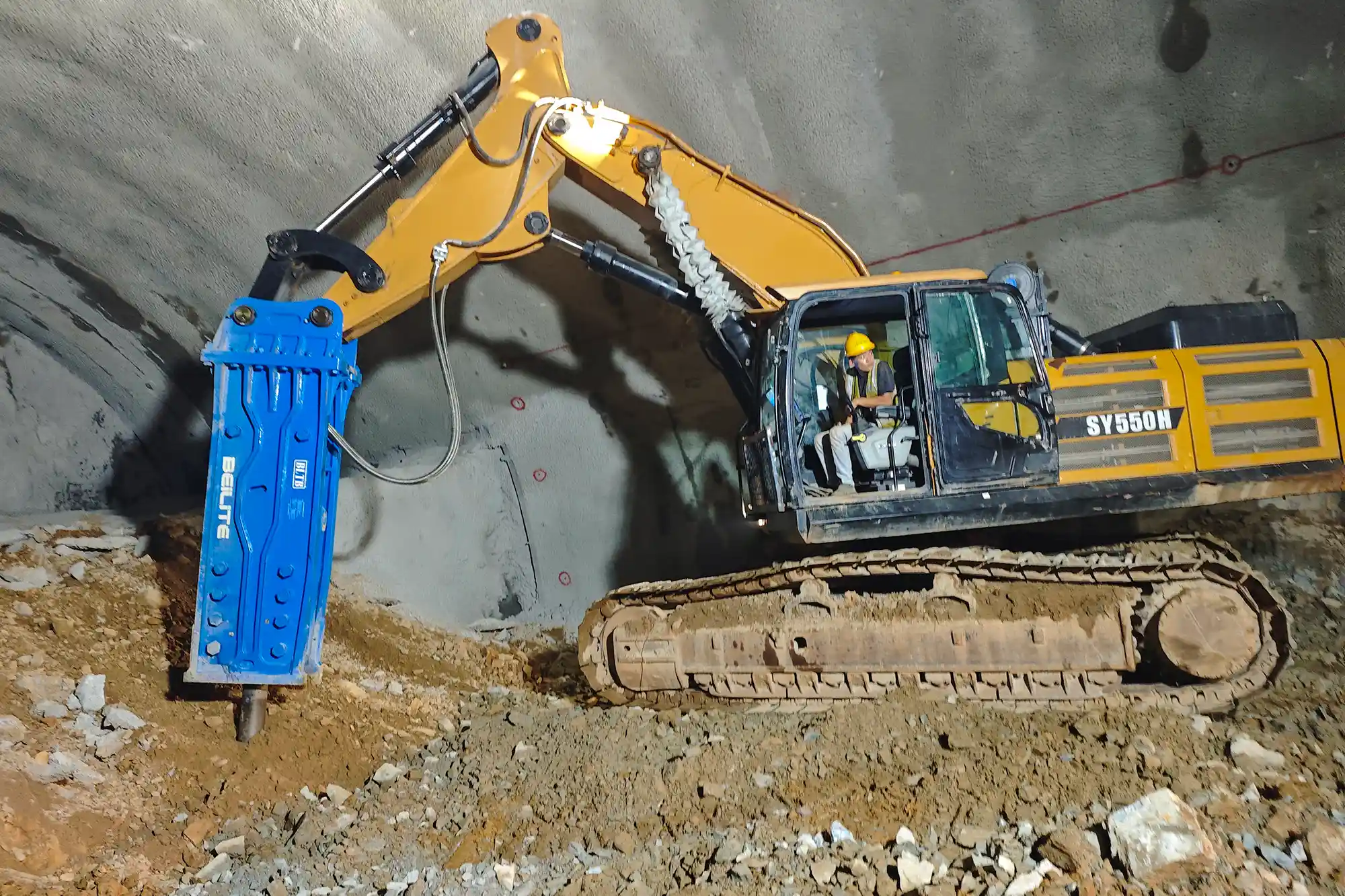
The assumption that heavier breakers automatically deliver more power no longer holds. Technological advances have decoupled weight from performance in meaningful ways.
Energy recovery systems boost effective impact force without adding mass. High-strength alloys allow smaller, lighter components to handle the same stresses. Optimized piston designs extract more energy from the same hydraulic input.
A well-engineered lighter breaker can match or exceed the performance of a heavier conventional design while reducing carrier strain and improving fuel efficiency. The specification sheet matters more than the scale reading.
Common Questions About Hydraulic Breaker Performance
What primarily determines a hydraulic breaker’s impact force?
Hydraulic breaker weight contributes to stability and energy transfer, but impact force depends more directly on hydraulic pressure, flow rate, and internal piston design. These elements control the kinetic energy delivered to the chisel. A well-designed hydraulic system paired with optimized piston geometry produces greater impact force than weight alone.
How does improper sizing affect equipment lifespan?
An oversized hydraulic breaker stresses the excavator’s boom, stick, and hydraulic system beyond design limits. Pins and bushings wear faster. Seals fail sooner. Structural fatigue accumulates in the carrier’s frame. Both the breaker and the carrier suffer reduced service life, and maintenance costs climb throughout the equipment’s remaining useful period.
Can lighter breakers match heavier ones in performance?
With current technology, yes. Energy recovery systems, optimized piston designs, and high-strength alloys enable lighter breakers to deliver comparable or superior performance. Power density—impact force relative to weight—has improved substantially. This benefits operations where carrier capacity is limited or where fuel efficiency matters.
How does the carrier’s hydraulic system affect breaker performance?
The carrier supplies oil flow and pressure that power the breaker. Insufficient flow limits impact frequency. Inadequate pressure reduces impact force. Even the best-designed breaker underperforms when paired with an inadequate hydraulic supply. Matching breaker requirements to carrier capabilities is non-negotiable for proper function.
How does BEILITE achieve optimal weight-to-performance balance?
BEILITE’s BLT and BLTB series integrate high-strength materials, precision-engineered hydraulic systems, and patented technologies developed through continuous R&D. The design process balances impact energy, durability, and carrier compatibility across a range of excavator classes. The result is equipment that maximizes productivity while keeping operational costs predictable.
Work With Equipment Designed for Real Conditions
BEILITE Machinery Co., LTD brings two decades of high-tech R&D and patented innovation to hydraulic breaker engineering. The BLT and BLTB series reflect careful attention to weight-to-performance optimization, ensuring reliable productivity across global applications. Our specialists can help identify the right equipment for your specific requirements. Reach us at [email protected] or call 40008-40008 to discuss your operational needs.