 English
 French
Long-Reach Excavator Hydraulic Breakers: Maximize Demolition Power
When you’re working with a long-reach excavator and need to bring down a structure or break through stubborn material from a distance, the hydraulic breaker you choose makes all the difference. I’ve seen projects stall because someone underestimated how much the extended boom changes everything—stability, hydraulic demand, the whole equation shifts. Getting this pairing right means understanding both machines intimately, not just checking boxes on a spec sheet.
Why Long-Reach Excavators Demand Special Attention for Breaker Selection
Long-reach excavators exist for a reason. Standard machines simply cannot access tall structures safely, clear deep foundations, or work effectively over water. The boom configurations on these machines extend well beyond conventional designs, with lengths ranging from 15 meters to over 30 meters depending on the excavator class.
That extended reach creates challenges you cannot ignore when adding a hydraulic breaker. The center of gravity shifts dramatically with a longer boom, which means counterweighting and operational planning become critical to prevent tipping. The carrier machine’s operating weight and lifting capacity set hard limits on how heavy your attachment can be. Your excavator’s hydraulic system also needs to deliver adequate flow and pressure to the breaker without overheating or compromising other functions. These realities form the foundation for any hydraulic breaker selection decision.
Matching Hydraulic Breaker Specifications to Your Long-Reach Excavator
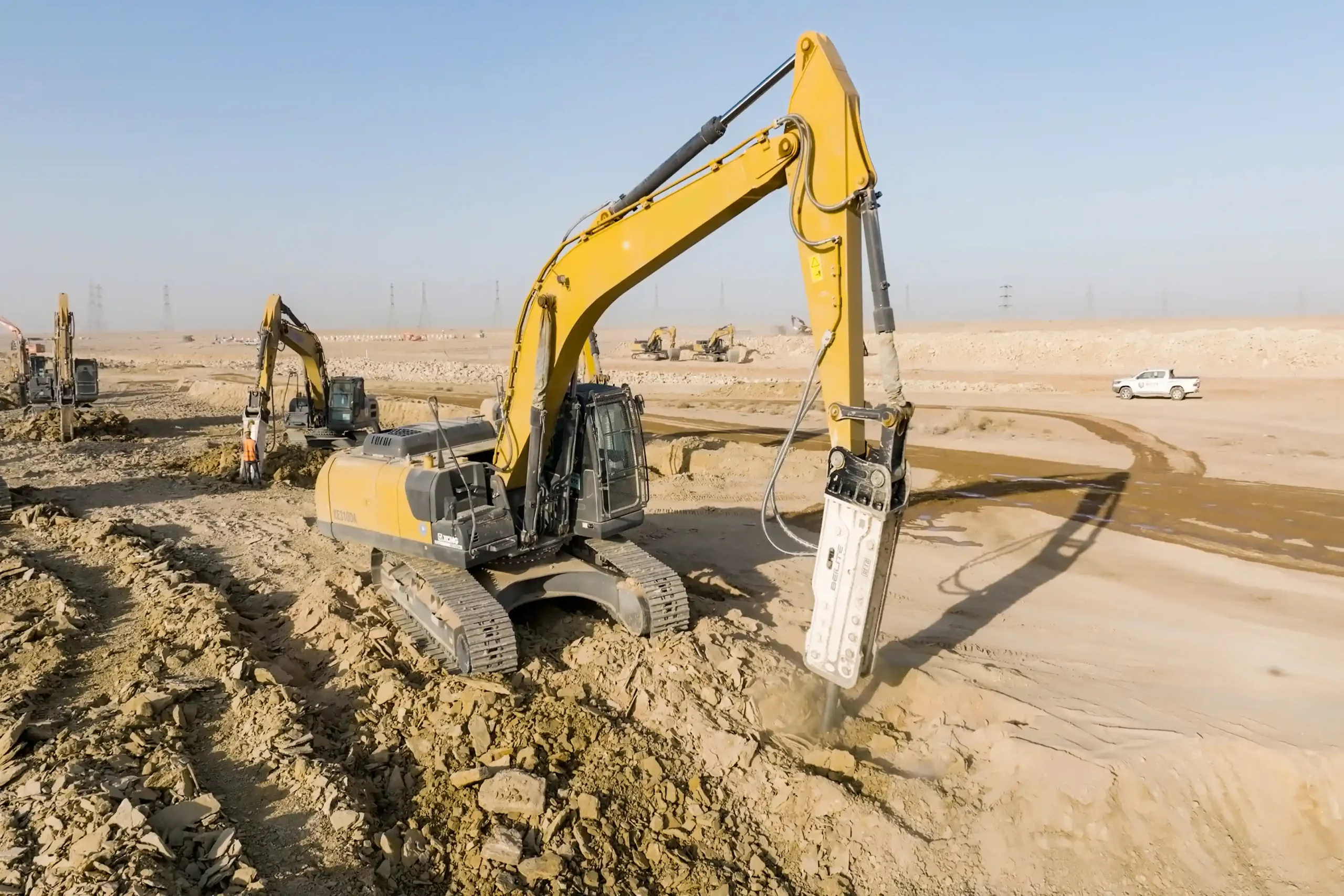
Finding the right hydraulic breaker for a long-reach excavator means examining technical specifications carefully. Impact energy, measured in joules, needs to match what you’re breaking—reinforced concrete demands different power than natural rock. Operating pressure and flow rate must align with your excavator’s auxiliary hydraulic circuit output. When these parameters don’t match, you get reduced efficiency, accelerated wear, or damage to both machines.
Weight matters enormously on long-reach applications. A breaker that works fine on a standard excavator might compromise stability when mounted at the end of an extended boom. Chisel diameter and tool steel quality also influence how effectively you break material and how long the tool lasts.
Here’s how several BEILITE hydraulic breaker models match up with different long-reach excavator classes:
| Model | Applicable Excavator (t) | Breaker Weight (kg) | Chisel Diameter (mm) | Operating Pressure (bar) | Flow Rate (L/min) |
|---|---|---|---|---|---|
| BLT-125 | 14–18 | 1357 | 125 | 150–170 | 90–120 |
| BLT-135 | 18–22 | 1736 | 135 | 160–180 | 100–150 |
| BLT-140 | 20–24 | 1910 | 140 | 160–180 | 120–180 |
| BLT-150 | 24–27 | 2310 | 150 | 180–200 | 150–210 |
| BLT-155 | 27–33 | 2610 | 155 | 200–220 | 180–240 |
The pattern is clear: excavator operating weight directly determines suitable breaker size.
Finding the Right Weight Balance for Stability
The general rule holds that breaker weight should stay within 10-12% of the excavator’s operating weight to maintain stability at extended reach. A 20-ton excavator typically pairs with a breaker weighing 2000-2400 kg. Beyond weight, the excavator’s auxiliary hydraulic flow and pressure must fall within the breaker’s specified operating range. This ensures efficient power transfer and prevents component damage.
How Hydraulic System Performance Shapes Breaker Output
Your long-reach excavator’s hydraulic system essentially powers everything the breaker does. Flow rate, operating pressure, and back pressure all play distinct roles. Insufficient flow reduces impact frequency. Inadequate pressure diminishes impact energy. Excessive pressure damages internal components.
Back pressure deserves particular attention. Restrictive hydraulic lines or worn quick couplers create resistance that causes overheating and premature seal failure. Modern excavators built for demanding attachments include dedicated auxiliary hydraulic circuits with adjustable flow and pressure settings, plus larger oil coolers to manage heat. These features ensure consistent, clean hydraulic power reaches the breaker.
Monitoring hydraulic fluid temperature and pressure regularly helps maintain peak performance over time.
Modern Breaker Technologies That Improve Productivity
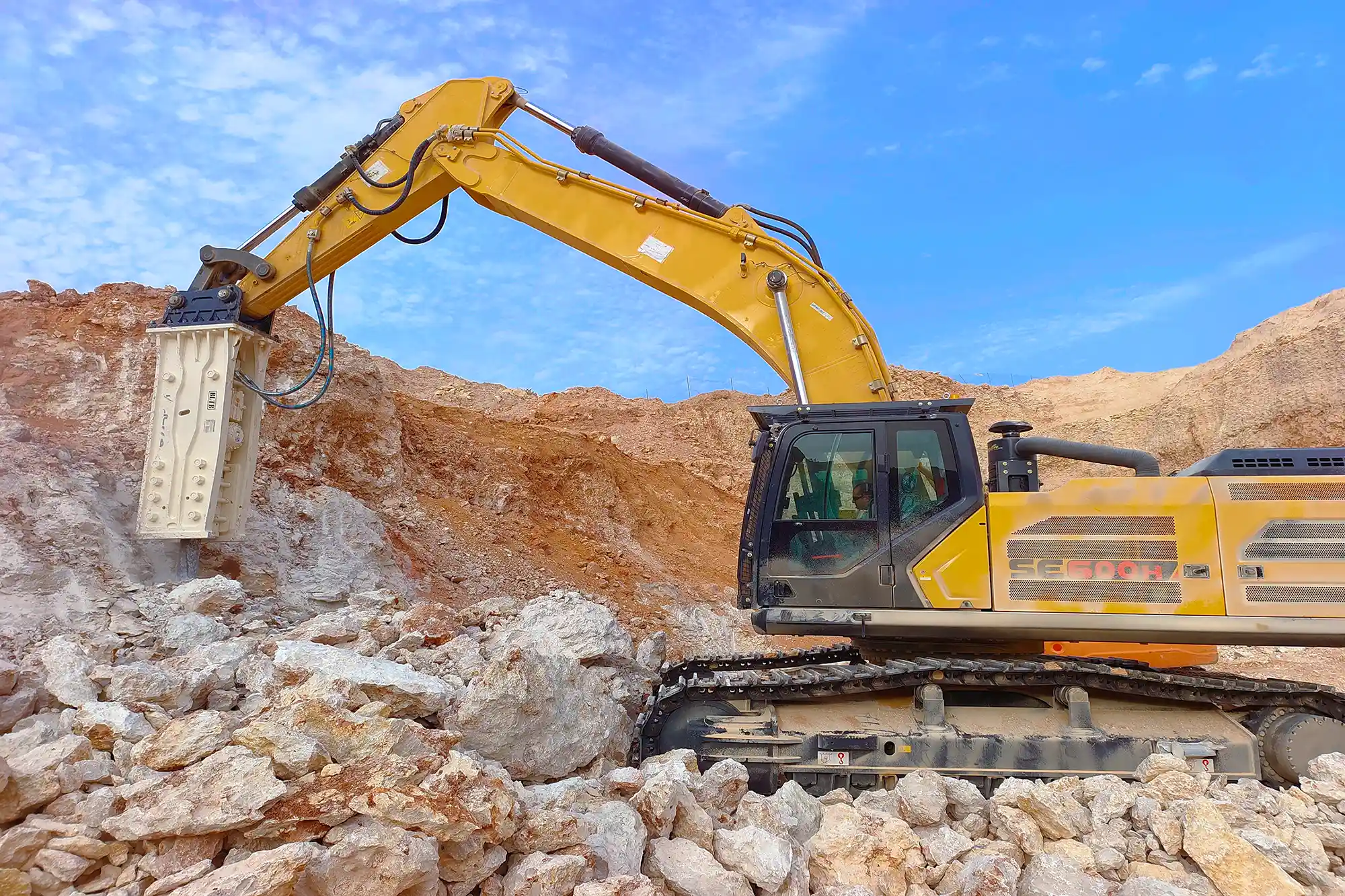
Hydraulic breaker technology has advanced considerably. Noise reduction systems using fully enclosed housings and sound-dampening materials help meet urban construction regulations while protecting nearby workers and residents. Vibration damping protects both the excavator and operator from stress that shortens equipment life and causes fatigue.
Automatic lubrication systems keep critical wear points greased consistently, reducing maintenance stops and extending tool life. Energy recovery systems capture rebound energy from the piston and convert it into additional impact force, improving efficiency while reducing fuel consumption. Anti-blank firing mechanisms prevent damage when the tool isn’t properly engaged with material.
These features add up to more efficient operations with lower long-term costs.
Maintenance Practices That Protect Your Investment
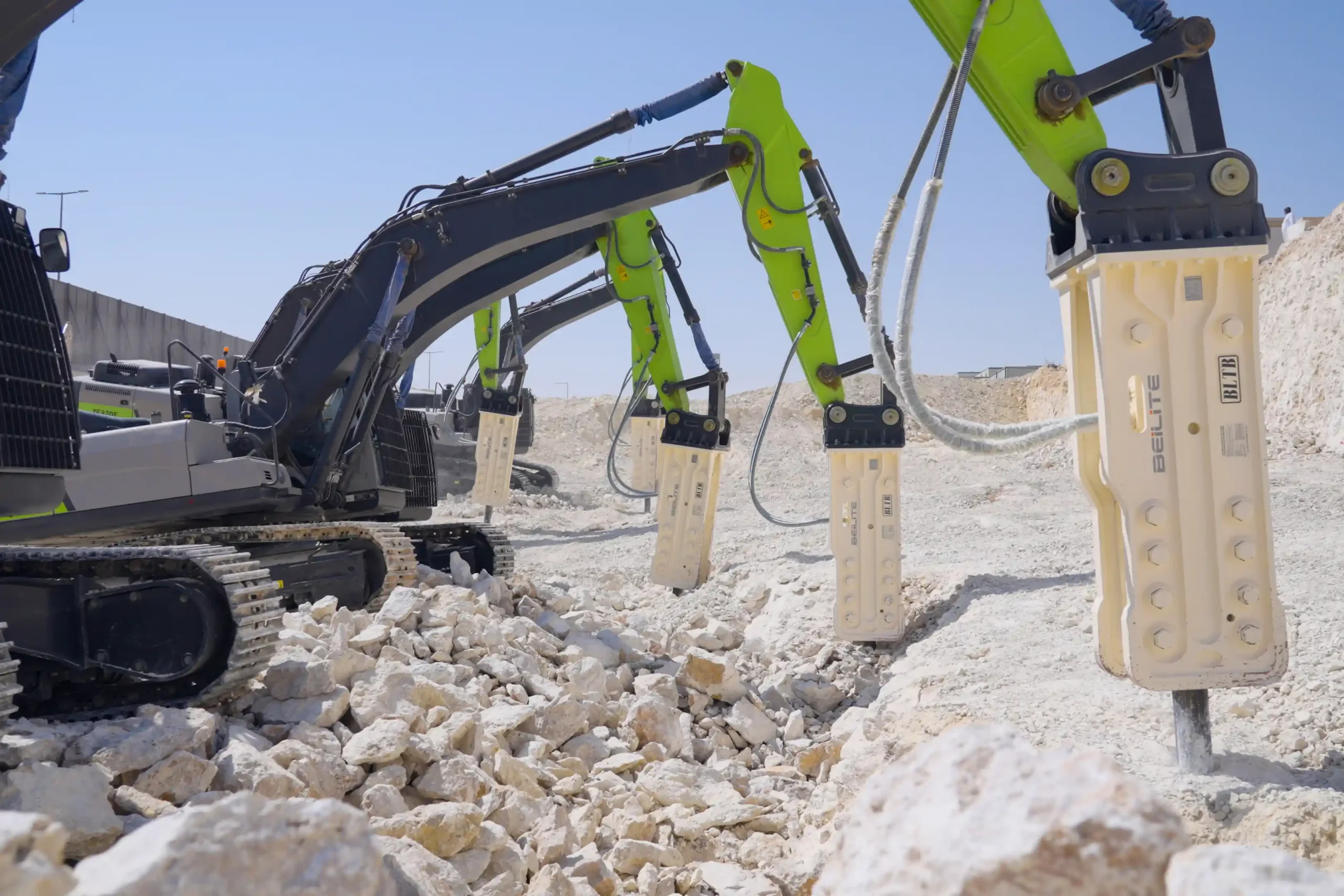
Hydraulic breakers on long-reach excavators face demanding conditions. Preventative maintenance extends service life and prevents expensive repairs. Daily inspection of the chisel and retaining pins catches wear or damage early, maintaining breaking performance and protecting internal components.
Greasing the tool bushing and pivot points according to manufacturer specifications reduces friction and wear. Hydraulic oil quality matters too—regular filter changes and contamination monitoring prevent premature component wear. Training operators to recognize reduced impact power or unusual noises helps catch problems before they escalate.
Following scheduled service intervals keeps the breaker operating safely and efficiently.
Proper Attachment Procedures for Safe Operation
Attaching a hydraulic breaker to a long-reach excavator follows specific steps. Position the excavator on stable, level ground first. Engage the parking brake and lower the boom. Depressurize the auxiliary hydraulic lines before proceeding.
Align the breaker’s mounting bracket with the excavator’s quick coupler or pin points. Insert the pins carefully and secure them with retaining clips or bolts. Connect the hydraulic supply and return lines, checking that all connections are tight and leak-free. Test the breaker at low power before moving to full operation.
BEILITE Engineering for Demanding Applications
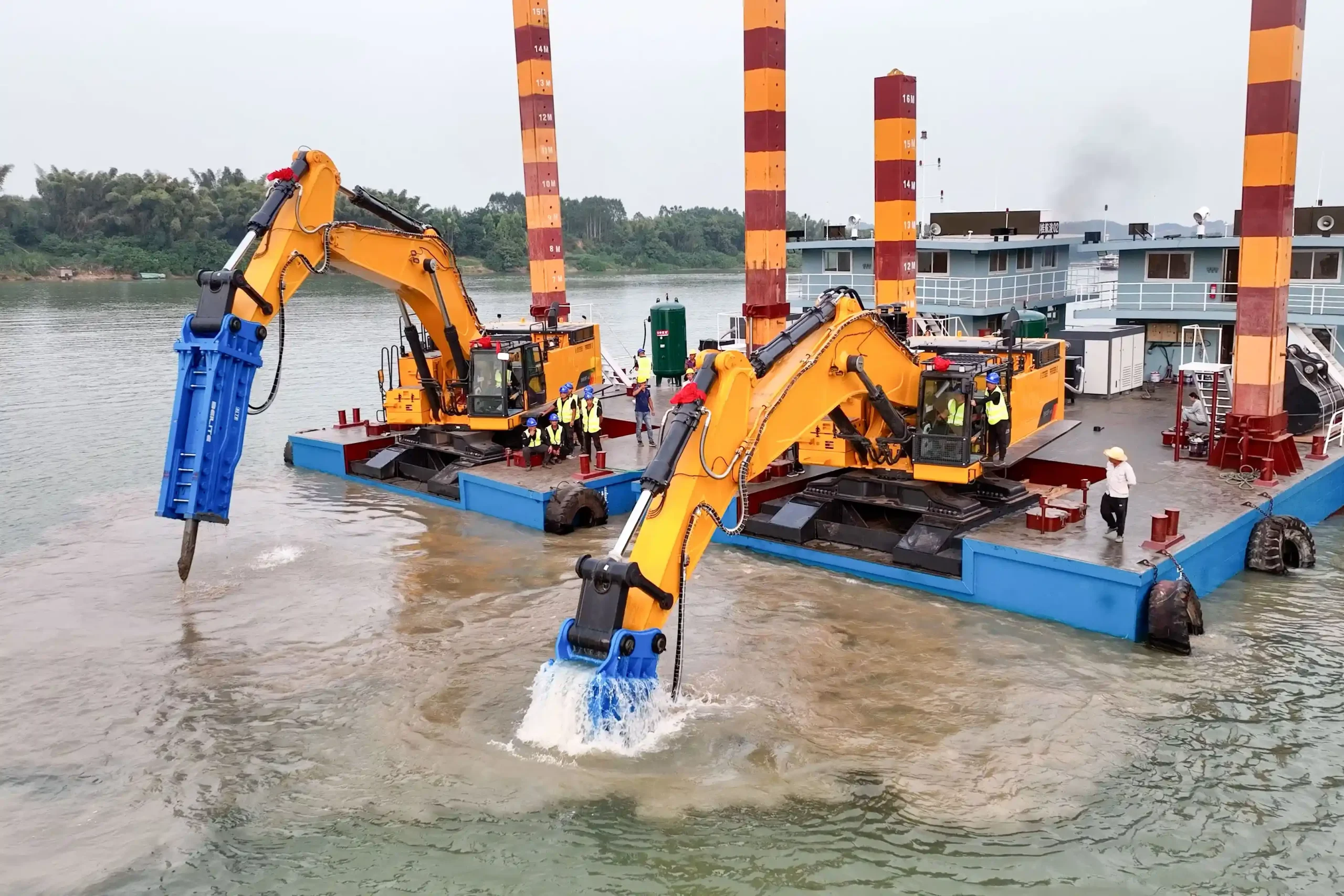
BEILITE Machinery Co., Ltd. has focused on hydraulic breaker development and manufacturing since 2002. As a national high-tech enterprise, we’ve contributed to formulating national standards for hydraulic breakers in China and hold hundreds of patents reflecting continuous innovation.
Our BLT and BLTB brand products perform reliably across diverse conditions, from Hydraulic Breaker Hammer for Mining and Quarrying to Hydraulic Breaker Hammer for Underwater Construction and Hydraulic Breaker Hammer for Demolition&Rock Breaking. We export to over 100 countries and regions. BEILITE continues working toward recognition as a hydraulic breaker brand known worldwide for quality and comprehensive service.
Find the Right Hydraulic Breaker for Your Project
Looking for a hydraulic breaker that integrates properly with your long-reach excavator? Contact BEILITE Machinery Co., Ltd. to discuss your specific requirements. Our team can help you select the right BLT or BLTB model for your application. Reach us at 40008-40008 or email [email protected] for consultation and support.
Frequently Asked Questions
What happens if the hydraulic breaker is too heavy for my long-reach excavator?
An oversized breaker compromises stability, especially at maximum reach where the extended boom already shifts the center of gravity forward. The excavator may tip, or the operator will need to limit reach significantly to work safely. Staying within the 10-12% weight guideline relative to operating weight prevents these problems.
Can I use a standard hydraulic breaker on a long-reach excavator?
Technically yes, but the breaker must still meet weight and hydraulic compatibility requirements for that specific machine. The long-reach configuration doesn’t change what breakers can physically attach—it changes what breakers can operate safely and effectively at extended distances.
How often should I grease a hydraulic breaker during heavy use?
Most manufacturers recommend greasing every 2-4 hours of continuous operation, though this varies by model and working conditions. Dusty or wet environments may require more frequent lubrication. Check your specific breaker’s manual for exact intervals.
What causes a hydraulic breaker to overheat on a long-reach excavator?
Common causes include high back pressure from restrictive lines or worn couplers, insufficient hydraulic oil flow, contaminated hydraulic fluid, or operating beyond the breaker’s rated duty cycle. Ensuring proper hydraulic system maintenance and matching specifications prevents most overheating issues.