 English
 French
Hydraulic Breaker Energy Recovery: Boost Efficiency, Cut Costs
The first time I watched a hydraulic breaker burn through fuel on a concrete demolition job, the waste felt almost physical. All that kinetic energy from the piston’s recoil—just disappearing into heat and vibration. Energy recovery systems change that equation entirely. They capture what used to be lost and feed it back into the next impact cycle. The result is a hydraulic breaker that hits just as hard while demanding less from the excavator’s hydraulic system. For operations where fuel costs and environmental compliance both matter, this technology represents a genuine shift in how demolition equipment performs.
What Makes Hydraulic Breaker Energy Recovery Systems Work
Hydraulic breaker energy recovery systems mark a meaningful step forward in hydraulic breaker technology. The core working principle centers on capturing kinetic energy during the piston’s recoil phase rather than letting it dissipate. A specialized hydraulic accumulator filled with nitrogen gas serves as the energy storage unit. When the piston retracts after impact, it compresses hydraulic fluid into this accumulator, which further compresses the nitrogen gas inside. That stored energy then releases during the next downward stroke, supplementing the excavator’s hydraulic flow and boosting fluid pressure to accelerate the piston.
This system integration within the hydraulic circuit creates efficient pressure regeneration and optimizes hydraulic fluid dynamics. The excavator no longer needs to supply peak power for every impact because the accumulator handles part of the load. Energy conversion efficiency improves, and the hydraulic system design minimizes what would otherwise be wasted energy.
The Mechanics of Kinetic Energy Recapture
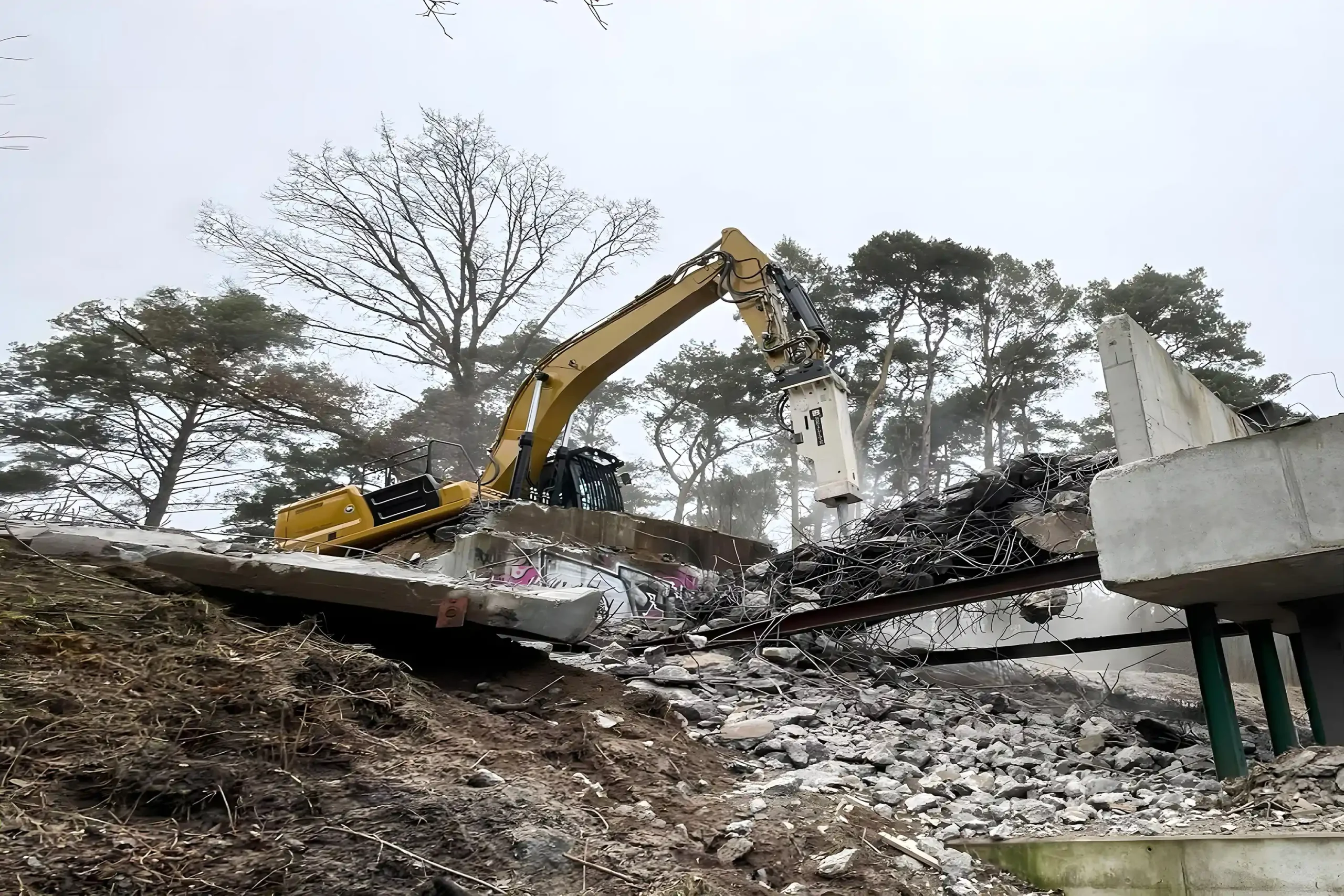
Kinetic energy recovery starts the moment the piston begins its upward stroke. As it retracts after striking the material, the piston movement compresses hydraulic fluid. This compressed fluid flows into the hydraulic accumulator, where it acts against the nitrogen gas charge. The gas compresses and stores the energy that would otherwise dissipate as heat.
When the piston begins its next downward stroke, the accumulator releases this stored energy. The nitrogen gas expands, pushing hydraulic fluid back into the circuit and significantly boosting hydraulic fluid pressure. This supplemental flow accelerates the piston without requiring the excavator to deliver maximum hydraulic output. The result is more consistent impact force and higher energy conversion efficiency across the entire operating cycle.
Measurable Advantages of Energy Recovery in Demolition Work
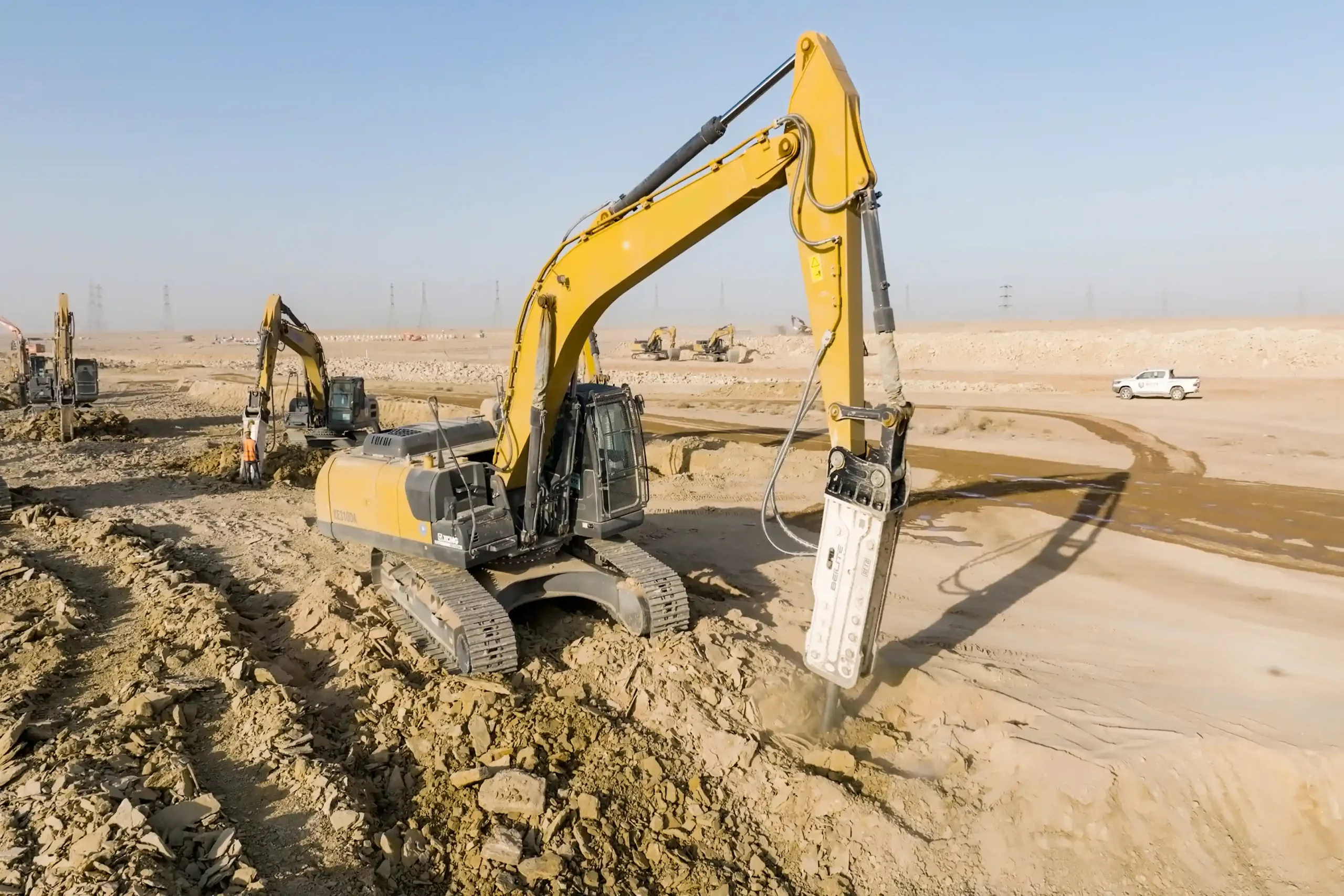
Energy recovery in hydraulic breakers delivers benefits that show up directly in project budgets and equipment performance. Fuel consumption reduction typically ranges from 10-20% depending on material hardness and operating conditions. This translates into lower operational costs and improved demolition efficiency on every job.
Beyond fuel savings, these systems reduce stress on the excavator’s hydraulic components. Less strain means increased uptime and fewer unplanned maintenance stops. Operators notice the difference too—vibration reduction and noise reduction improve operator comfort during long shifts. The improved impact power drives productivity gains, while reduced component wear extends equipment longevity.
| Feature | Traditional Breaker | ERS Breaker (Beilite) |
|---|---|---|
| Fuel Consumption | High | 10-20% Lower |
| Productivity | Standard | Up to 15% Higher |
| Noise Level | High | Noticeably Lower |
| Maintenance Costs | Standard | Reduced |
| Component Wear | Higher | Lower |
Fuel Efficiency Gains That Affect the Bottom Line
The most immediate financial impact comes from diesel consumption savings. A 10-20% reduction in fuel usage changes the cost per hour calculation significantly, especially on projects running multiple shifts. For contractors tracking ROI calculation closely, payback periods often fall within 1-3 years depending on utilization rates and local fuel prices.
These operational savings make cost-effective demolition achievable without sacrificing performance. Companies that adopt energy recovery technology improve their project margins while maintaining or exceeding productivity targets. The math works because the technology addresses the largest variable cost in breaker operations.
Environmental Performance and Regulatory Alignment
Energy recovery systems support sustainable construction practices in ways that matter for permit compliance and corporate environmental commitments. Lower fuel consumption directly reduces carbon footprint reduction metrics. Exhaust emissions drop proportionally, helping projects meet increasingly stringent environmental regulations.
Noise reduction carries particular importance for urban demolition standards. Quieter operation minimizes disruption to surrounding businesses and residents, which can determine whether certain projects proceed at all. Green technology adoption in demolition equipment has moved from optional to expected in many markets. Beilite’s approach to sustainable construction integrates these considerations into equipment design rather than treating them as afterthoughts.
Engineering Expertise Behind Beilite’s Energy Recovery Solutions
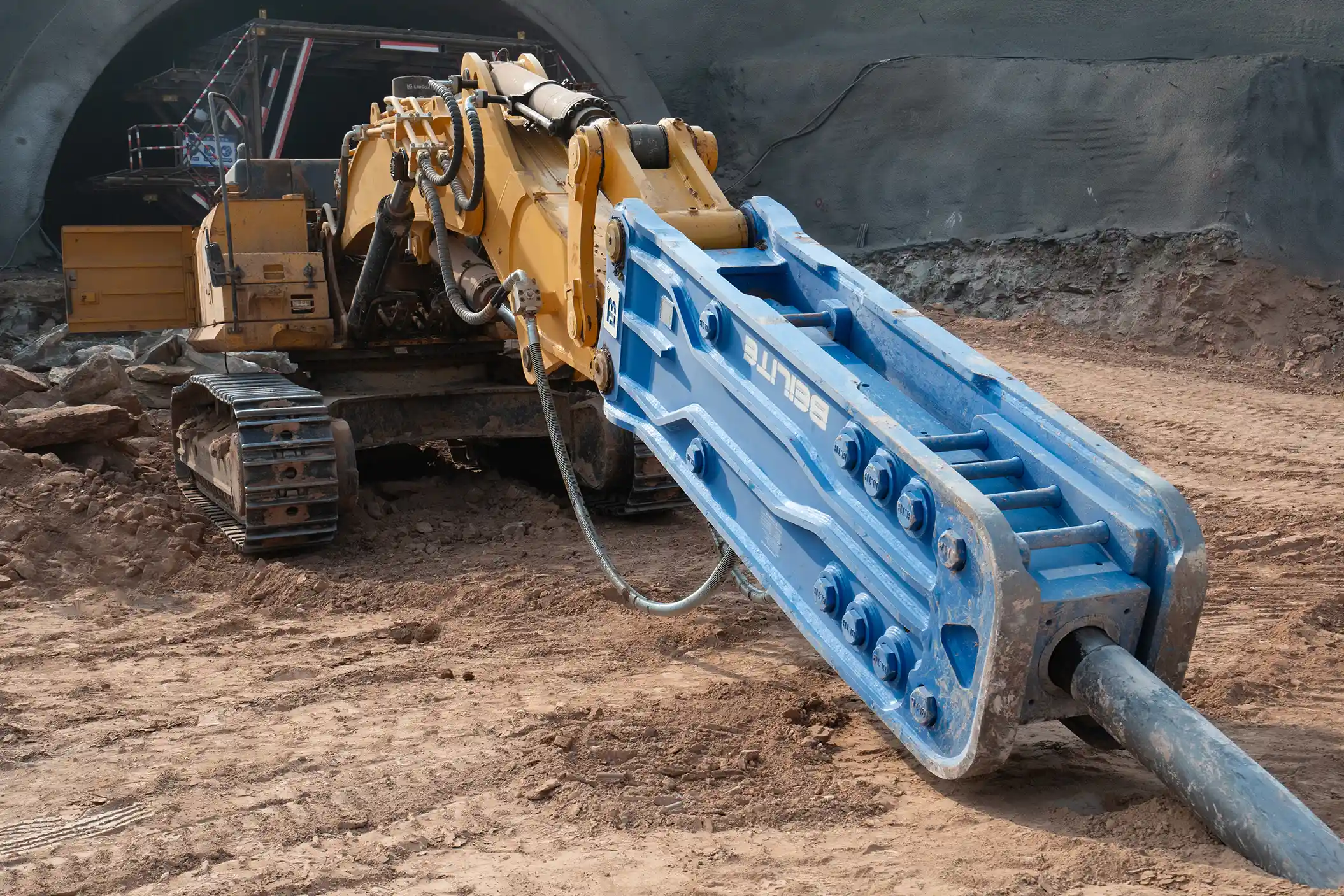
Beilite Machinery Co., LTD operates as a high-tech enterprise China based, with deep investment in R&D innovation hydraulic breakers. The company participated in national standards formulation for hydraulic breakers and holds hundreds of patent technology hydraulic solutions. This technical foundation shapes how BLT and BLTB products incorporate energy recovery—not as an add-on feature but as an integral part of the hydraulic system architecture.
Advanced manufacturing processes and rigorous quality assurance support product reliability across the global market presence Beilite has established. BLT hydraulic breakers are engineered to optimize energy utilization whether the application involves building demolition, infrastructure construction, or tunnel excavation.
Compatibility Considerations for Energy Recovery Integration
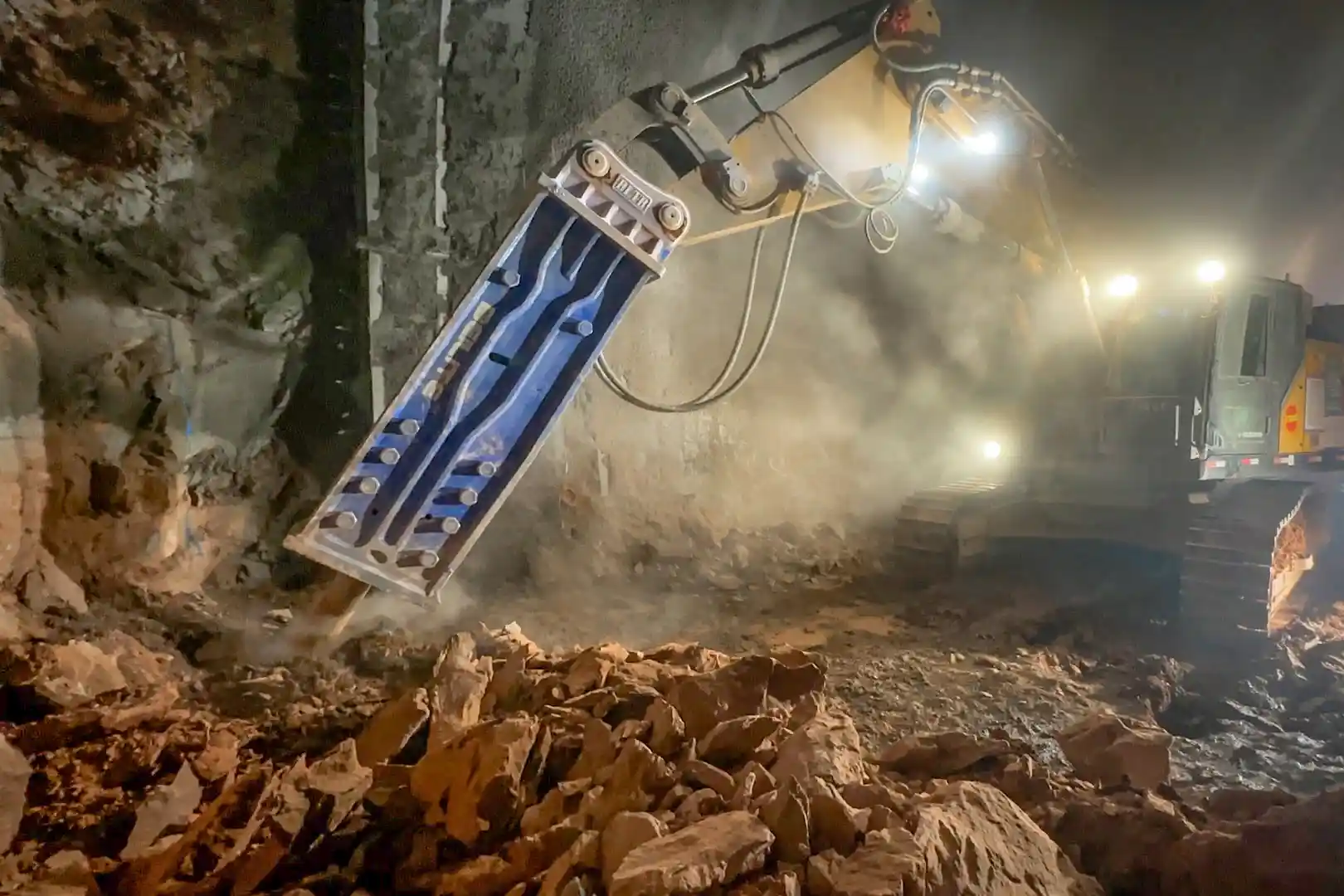
Hydraulic breaker compatibility with energy recovery systems requires careful engineering attention. Breaker size, operating pressure, and application specifics all influence system design challenges. Not every existing breaker can accept a retrofit without significant modification, and results from aftermarket solutions vary widely.
Beilite addresses this by developing optimized, integrated solutions rather than offering simple retrofitting options. The BLT and BLTB series are engineered from the ground up for energy recovery, ensuring seamless OEM integration and maximum performance. Where standard configurations don’t fit specific requirements, custom hydraulic solutions provide alternatives tailored to particular operating conditions.
Financial Case for Energy Recovery Technology
Investing in hydraulic breakers with energy recovery capabilities makes strategic sense when evaluated over equipment lifecycle costs. The return on investment (ROI) hydraulic breakers generate comes from multiple sources: reduced fuel costs, extended component life, and lower maintenance requirements. These factors combine to produce substantial long-term operational savings.
Companies that adopt this technology gain competitive advantage construction markets increasingly reward. Future hydraulic technology development will likely expand on energy recovery principles as efficiency and environmental performance become more important selection criteria. Current industry trends point toward smart demolition equipment that delivers more output per unit of fuel consumed. This capital expenditure justification becomes clearer as operational expenditure reduction compounds over years of equipment use.
Work with Beilite on Advanced Demolition Equipment
Beilite Machinery Co., LTD brings national high-tech enterprise credentials and proven hydraulic breaker technology to every project discussion. The BLT and BLTB series hydraulic breakers with integrated energy recovery systems offer a path to higher operational efficiency and stronger environmental compliance. Contact Beilite’s engineering team to explore how this equipment fits your specific demolition requirements.
Email: [email protected] | Phone: 40008-40008
Common Questions About Hydraulic Breaker Energy Recovery
What fuel savings can operators realistically expect from energy recovery systems?
Energy recovery systems typically reduce fuel consumption in hydraulic breakers by 10-20%. The actual percentage depends on material hardness, operating cycle frequency, and excavator configuration. Harder materials that require more impacts per unit of progress tend to show savings toward the higher end of this range. These diesel consumption savings translate directly into lower operating costs and reduced emissions.
Do energy recovery systems work with any hydraulic breaker model?
System integration requires specific design and engineering work. The core energy recovery principle applies broadly, but hydraulic breaker compatibility varies based on operating pressure, breaker size, and hydraulic circuit configuration. Beilite’s BLT and BLTB series are engineered with optimized energy recovery capabilities built into the original design, which delivers more reliable performance than retrofit approaches.
How long does it take to recover the investment in energy recovery equipment?
Return on investment (ROI) hydraulic breakers with energy recovery systems typically achieve payback within 1-3 years. The timeline depends on operational hours, local fuel prices, and how intensively the equipment runs. High-utilization operations see faster payback because fuel savings accumulate more quickly. Extended component life and reduced maintenance costs also contribute to the overall operational savings calculation.
How does energy recovery technology support environmental compliance?
Energy recovery systems lower fuel consumption and exhaust emissions proportionally, directly reducing the carbon footprint reduction metrics that environmental regulations increasingly require. Quieter operation helps projects meet urban demolition standards and noise ordinances. These sustainable construction practices align with both regulatory requirements and corporate environmental commitments.
Does energy recovery compromise hydraulic breaker power or reliability?
Effective energy recovery system design actually enhances performance rather than limiting it. By maintaining more consistent pressure and flow throughout the impact cycle, these systems deliver more stable and powerful impacts. The improved impact power and productivity gains come without additional stress on the excavator’s hydraulic system. Component wear decreases because the system operates more efficiently, which supports long-term reliability.