 English
 French
High-Altitude Hydraulic Breaker Performance: Engineered for Extreme Sites
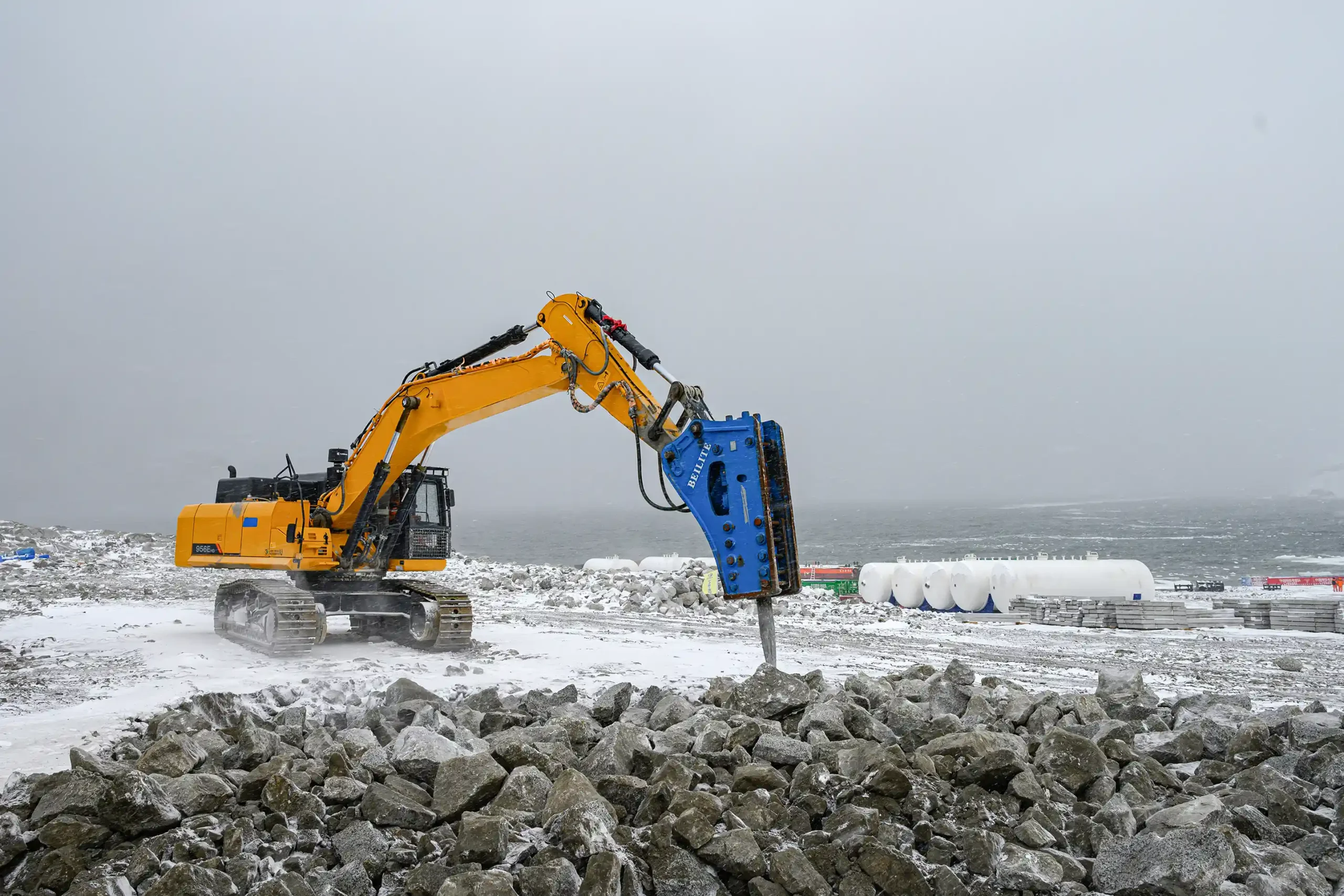
Working at 4,000 meters changes everything about how a hydraulic breaker performs. The air feels thin, engines struggle to breathe, and hydraulic systems behave differently than they do at sea level. I’ve seen standard equipment lose nearly a third of its striking power within the first week of high-altitude deployment. Beilite Machinery has spent two decades engineering solutions for exactly these conditions, developing patented technologies that keep our BLT and BLTB series breakers performing reliably where conventional equipment fails.
Why Standard Hydraulic Breakers Struggle Above 3,000 Meters
High-altitude environments create a perfect storm of challenges for heavy machinery. The physics are straightforward but unforgiving. Atmospheric pressure drops roughly 12% for every 1,000 meters of elevation gain. Oxygen density falls proportionally. These changes ripple through every system in a hydraulic breaker, from the engine that powers it to the seals that contain its hydraulic fluid.
Mountain construction sites and high-altitude mining operations compound these atmospheric effects with extreme temperature swings, intense ultraviolet exposure, and abrasive dust that infiltrates every component. Equipment designed for lowland conditions simply wasn’t built to handle this combination of stresses.
Engine Power Loss and the Derating Problem
Internal combustion engines need oxygen to burn fuel efficiently. At 4,500 meters, available oxygen is roughly 60% of what exists at sea level. The result is a phenomenon called engine derating, where combustion becomes incomplete and power output drops significantly.
An engine rated at 100 horsepower at sea level might deliver only 70 horsepower at high altitude without compensation. The engine works harder to maintain any useful output, burning more fuel while producing less power. Turbocharging helps by forcing additional air into the combustion chamber, but without proper calibration for specific elevations, even turbocharged engines underperform.
Hydraulic System Failures in Thin Air and Cold Temperatures
Reduced atmospheric pressure creates conditions where cavitation becomes a serious threat to hydraulic pumps. Small vapor bubbles form in the hydraulic fluid when pressure drops too low, then collapse violently when pressure increases. This process erodes metal surfaces inside pumps and valves, shortening component life dramatically.
Cold temperatures at high altitude create separate but equally damaging problems. Hydraulic fluid thickens as temperatures drop, requiring more pump power to move it through the system. Seals and hoses lose flexibility, becoming brittle and prone to cracking. A seal that performs perfectly at 20°C may fail completely at -25°C.
UV radiation at altitude is roughly 10% stronger for every 1,000 meters of elevation. External components, particularly rubber hoses and plastic housings, degrade faster under this constant bombardment. Fine glacial dust common in mountain environments accelerates wear on every moving part.
How Beilite Engineers Hydraulic Breakers for Extreme Elevation
Solving high-altitude performance problems requires addressing multiple systems simultaneously. Our R&D teams have developed integrated solutions that compensate for atmospheric effects while maintaining the durability needed for harsh mountain conditions. These innovations are protected by hundreds of patents and incorporated into national standards for hydraulic breaker performance.
Altitude-Compensating Power Systems
Beilite hydraulic breakers use electronic fuel injection systems that continuously adjust air-fuel mixtures based on actual operating conditions. Sensors monitor atmospheric pressure and oxygen levels, feeding data to engine management computers that optimize combustion in real time.
Intercooled turbochargers increase air density before it enters the engine, partially restoring the oxygen content lost to elevation. The intercooler prevents the compressed air from becoming too hot, which would reduce its density and negate the turbocharger’s benefits.
This combination of forced induction and electronic management maintains consistent power output at elevations where uncompensated engines would lose 30% or more of their rated capacity.
Hydraulic Systems Built for Low-Pressure Environments
Atmospheric pressure affects hydraulic system performance in ways that aren’t immediately obvious. The pressure differential between the hydraulic system and the surrounding atmosphere changes at altitude, affecting seal performance and fluid behavior.
Beilite addresses these challenges through several engineering approaches. High-pressure seals maintain integrity across wider temperature and pressure ranges than standard components. Specialized hydraulic fluids formulated for low-temperature operation maintain proper viscosity even in extreme cold.
Advanced filtration systems remove contaminants before they can damage precision components. Optimized accumulator designs store and release energy consistently regardless of external pressure conditions. These improvements work together to deliver reliable impact energy and extended service life in environments that would quickly destroy conventional equipment.
Operating Safely and Effectively at High Altitude
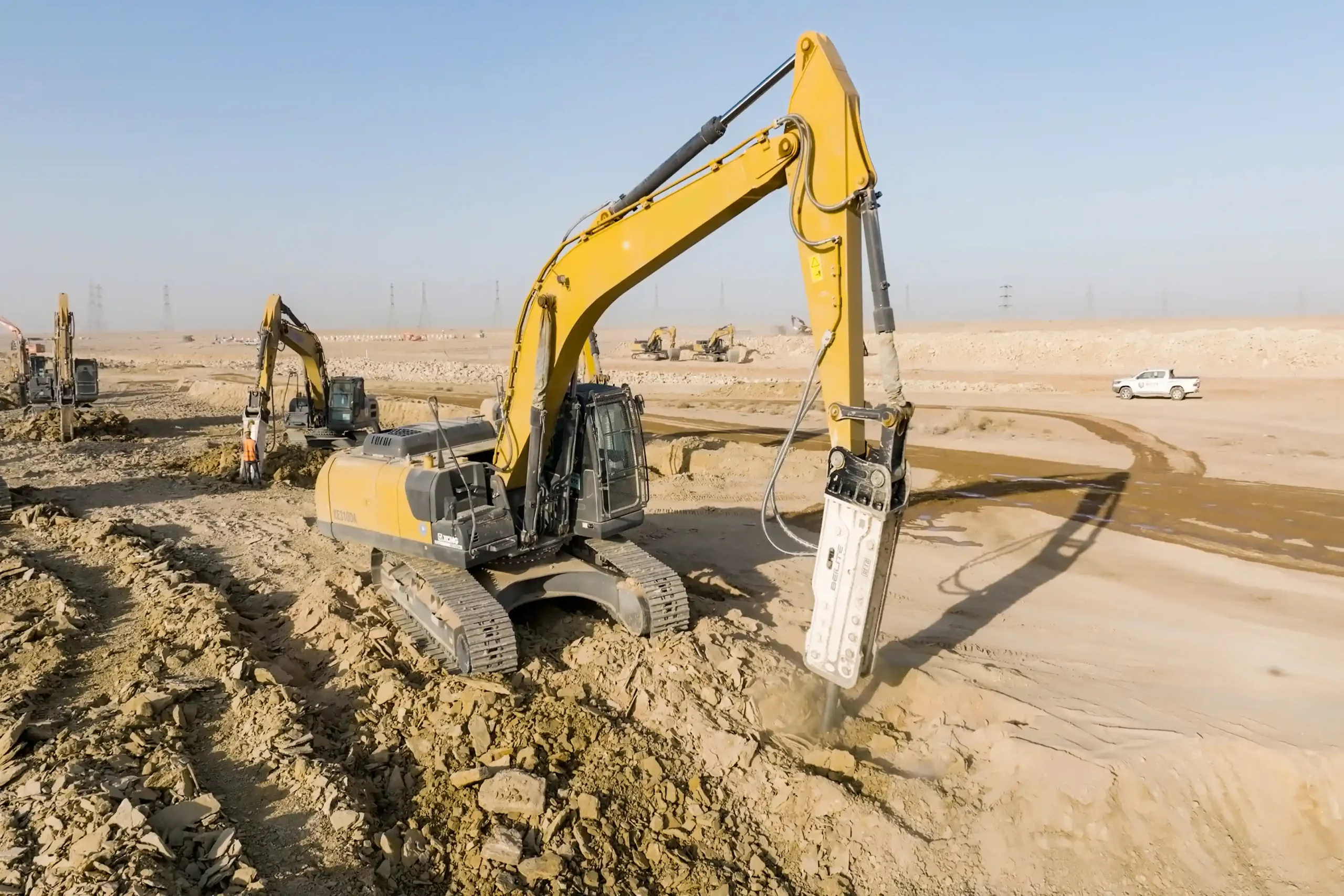
Equipment engineering solves only part of the high-altitude challenge. Operational practices must adapt to the environment as well. Operators working above 3,000 meters face physiological stress from altitude that affects judgment and reaction time. Equipment behaves differently than it does at lower elevations.
Pre-operation checks become more critical in high-altitude environments. Hydraulic fluid levels, seal condition, and engine performance all require daily verification. Weather at altitude changes rapidly, and operations must account for sudden temperature drops or wind events.
Matching the hydraulic breaker to the carrier excavator requires careful attention at altitude. Power losses affect both machines, and the combination must still deliver adequate performance for the work at hand. Chisel selection for specific rock types improves efficiency and reduces stress on the breaker.
Maintenance Requirements for High-Altitude Hydraulic Breakers
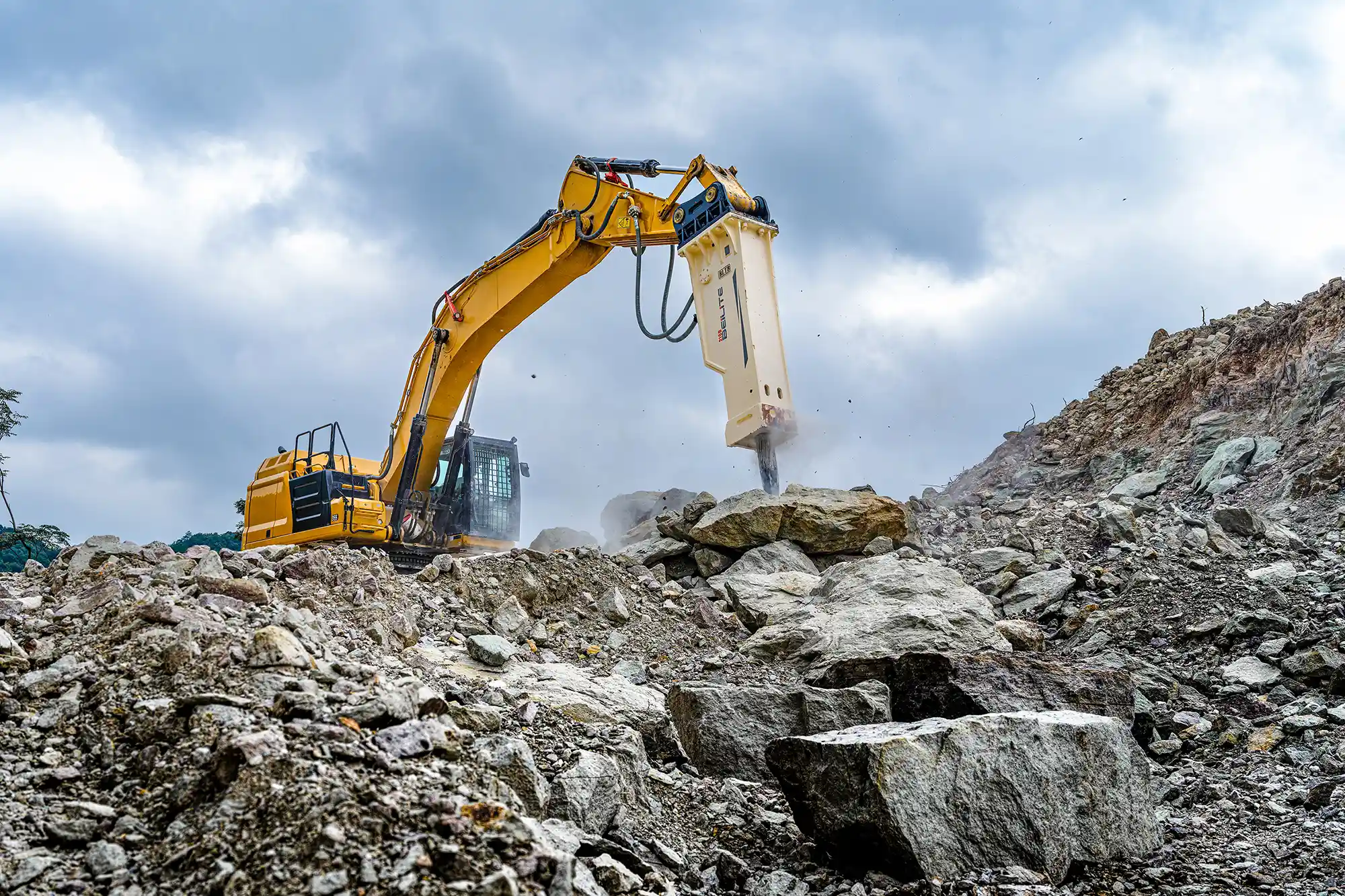
Service intervals for high-altitude operations differ from lowland schedules. The combination of temperature extremes, UV exposure, and atmospheric effects accelerates wear on multiple components. Waiting for standard service intervals often means waiting too long.
Lubricants must be selected for the actual operating temperature range, not the manufacturer’s default specification. Cold-weather greases and hydraulic fluids maintain proper viscosity and protective properties at temperatures that would cause standard products to fail.
Regular inspection for seal degradation, hose damage, and early signs of cavitation prevents small problems from becoming catastrophic failures. Beilite provides diagnostic tools and remote monitoring capabilities that help identify developing issues before they cause downtime.
| Model | Applicable Excavator (t) | Working Pressure (bar) | Impact Frequency (bpm) | Total Weight (kg) |
|---|---|---|---|---|
| BLT-45 | 0.8–1.5 | 90–120 | 700–1200 | 137 |
| BLT-75 | 6–8.5 | 120–150 | 400–800 | 466 |
| BLT-100 | 10–14 | 150–170 | 350–700 | 986 |
| BLT-140 | 20–24 | 160–180 | 350–500 | 1910 |
| BLT-165 | 33–38 | 210–230 | 150–300 | 3149 |
Beilite’s Position in High-Altitude Demolition Equipment
Beilite Machinery Co., LTD holds national high-tech enterprise certification, reflecting two decades of focused development in hydraulic breaker technology. Our participation in national standards formulation for hydraulic breakers demonstrates the technical depth behind our BLT and BLTB product lines.
We export to over 100 countries, with significant experience in high-altitude markets across multiple continents. This global presence provides continuous feedback that informs ongoing product development. Each generation of our hydraulic breakers incorporates lessons learned from real-world performance in demanding conditions.
Partner with Beilite for Your Extreme Demolition Needs
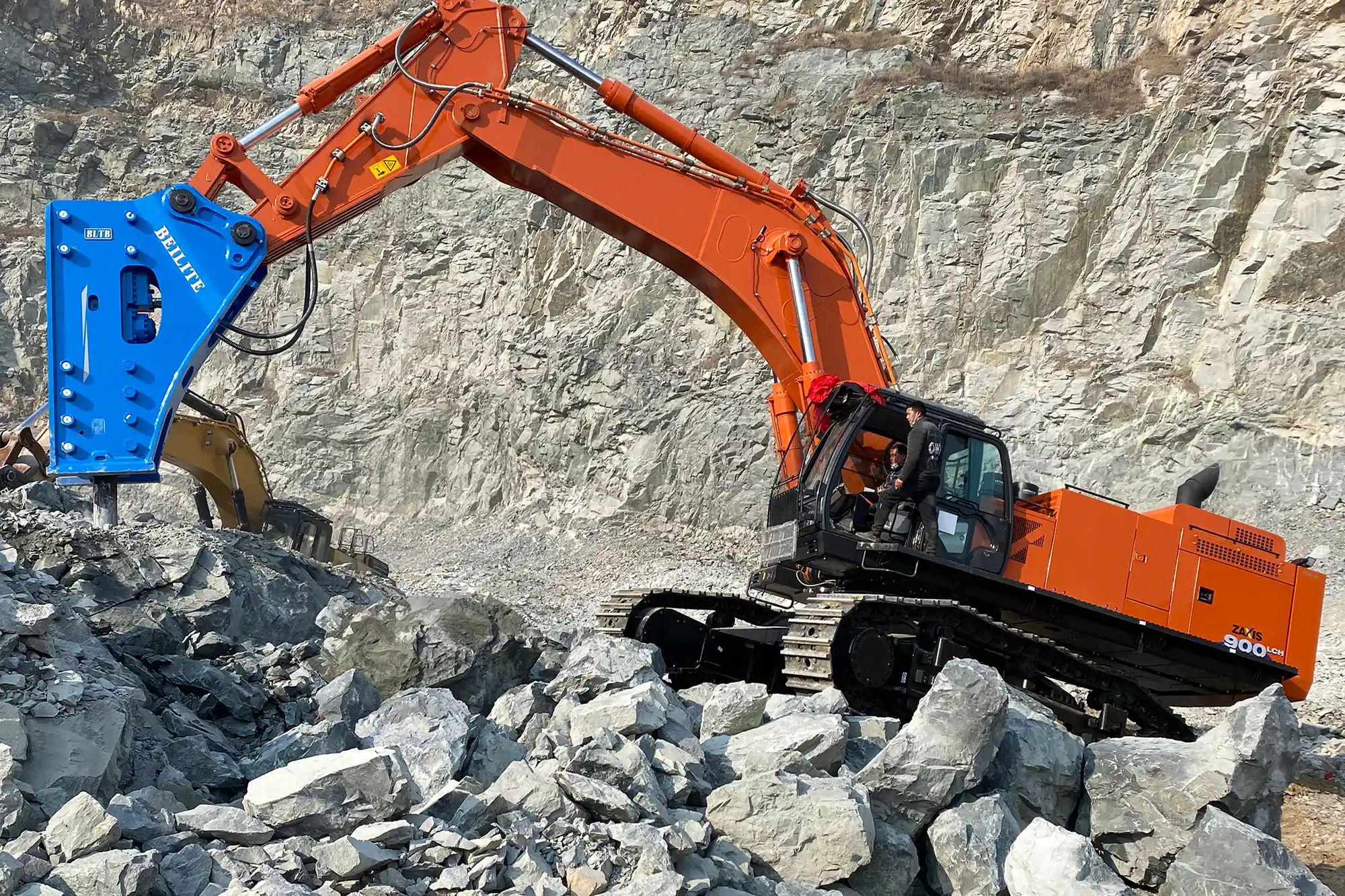
Facing extreme high-altitude demolition challenges? Beilite Machinery Co., LTD offers patented, high-end hydraulic breakers engineered for unparalleled performance and reliability. Leverage our two decades of innovation and global expertise. Contact us today to discuss how our BLT and BLTB series can optimize your projects in the toughest conditions. Reach us at 40008-40008 or [email protected].
Frequently Asked Questions About High-Altitude Hydraulic Breakers
What specific technologies allow Beilite hydraulic breakers to maintain power output at high altitude?
Beilite hydraulic breakers combine electronic fuel injection with intercooled turbocharging to compensate for reduced oxygen density. The engine management system continuously adjusts air-fuel ratios based on real-time atmospheric readings. High-pressure seals and cold-rated hydraulic fluids maintain system integrity in the low-pressure, low-temperature conditions typical of high-altitude sites.
At what elevation do standard hydraulic breakers begin experiencing significant performance loss?
Performance degradation becomes noticeable above 2,500 meters and increasingly severe beyond 3,500 meters. At 4,500 meters, uncompensated engines may lose 30% or more of their rated power. Hydraulic systems face increased cavitation risk and seal stress at any elevation where atmospheric pressure drops significantly below sea-level values.
Does Beilite offer hydraulic breaker configurations optimized for specific altitude ranges or project types?
Beilite works with clients to configure hydraulic breakers for their specific operating conditions. This includes selecting appropriate hydraulic fluids, seal materials, and engine calibrations based on expected elevation range and temperature extremes. Our engineering team can recommend optimal configurations for mining, construction, or demolition applications at various altitude bands.