 English
 French
Reliable Hydraulic Breakers: Engineered for Extreme Temperatures
Working in temperatures that swing from -40°C to over 50°C changes how you think about equipment. I’ve watched hydraulic breakers that performed flawlessly in temperate conditions struggle or fail outright when pushed into Arctic mining sites or Middle Eastern construction projects. The physics don’t lie—thermal stress affects everything from fluid behavior to metal fatigue, and standard equipment simply wasn’t designed for these extremes.
BEILITE Machinery Co., LTD has been engineering hydraulic breakers since 2002, and much of that work has focused on solving exactly these thermal challenges. Our BLT and BLTB series emerged from real-world testing in environments where conventional breakers couldn’t survive. The hundreds of patented technologies we’ve developed, along with our participation in formulating China’s national standards for hydraulic breakers, reflect lessons learned from equipment operating in the world’s harshest conditions.
Why Extreme Climates Demand Different Engineering
Operating hydraulic breakers across diverse global environments—from sub-zero Arctic conditions to scorching desert heat—creates problems that compound quickly. These extreme temperatures induce thermal stress that leads to equipment degradation, reduced efficiency, and operational risks. Effective cold weather demolition and high temperature excavation require specialized engineering to mitigate these environmental impacts.
Critical Challenges in Extreme Cold
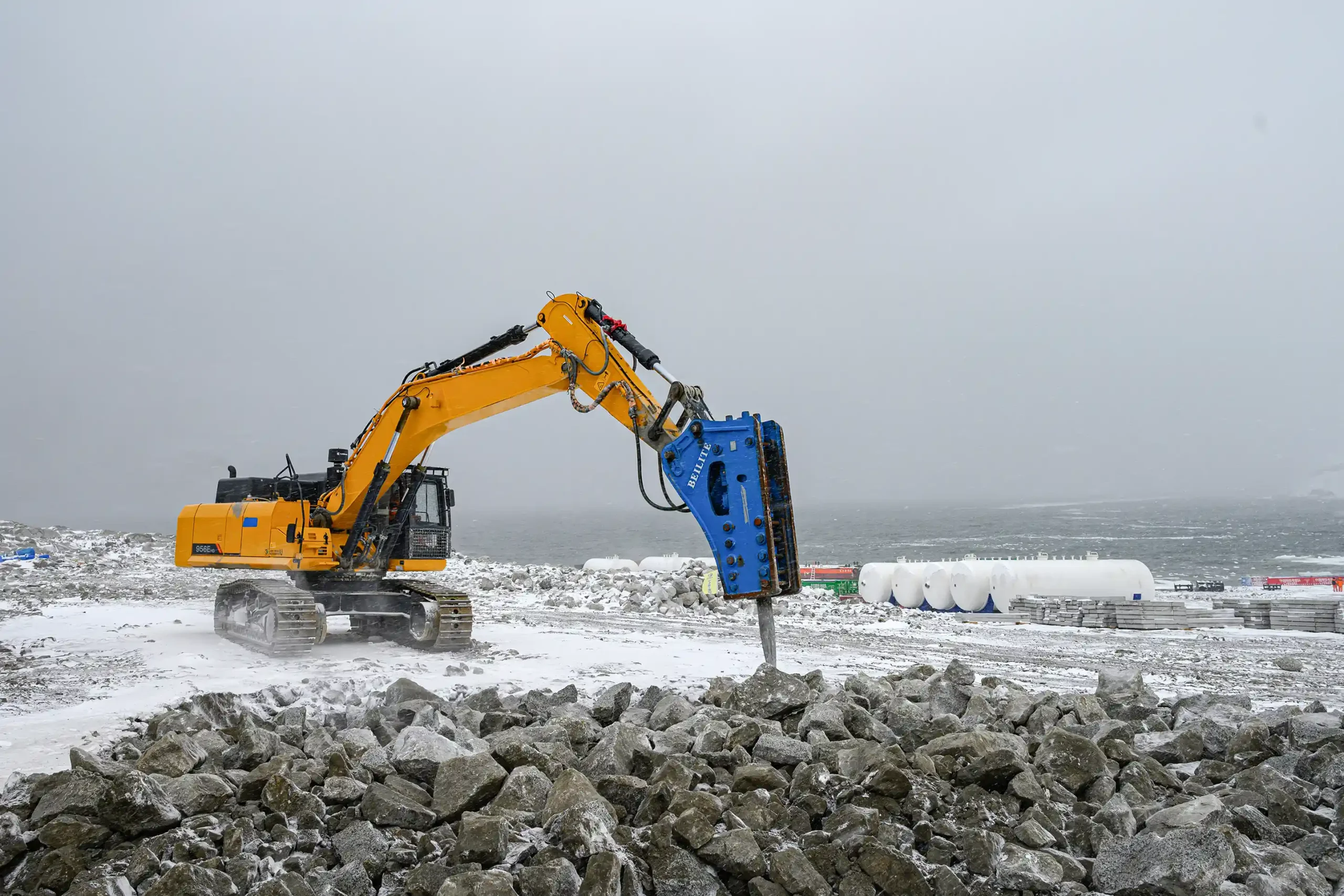
Extreme cold affects hydraulic breakers in ways that aren’t immediately obvious until something breaks. Hydraulic fluid viscosity increases dramatically, causing sluggish operation and cold start issues that can damage internal components. Steel parts become brittle through component embrittlement, making them susceptible to impact fractures during normal operation.
Seals present another serious problem. Frozen seals become rigid and lose their sealing capability, resulting in leaks and pressure loss. These factors combine to reduce impact energy and accelerate wear in arctic conditions and winter demolition applications, compromising low temperature performance across the entire system.
Performance and Longevity Under Thermal Stress
Both extreme cold and heat severely impact performance and longevity, though through different mechanisms. Cold conditions lead to reduced impact force and slower cycle times due to fluid resistance and material stiffness. Heat induces thermal expansion that can cause binding between components, and it accelerates fluid degradation that compromises lubrication.
The result is premature wear, seal failure, and compromised structural integrity. Operational efficiency decreases measurably, and equipment lifespan shortens—sometimes dramatically. A hydraulic breaker rated for 5,000 hours in moderate conditions might see that figure cut in half under sustained thermal stress.
Materials and Design That Withstand Thermal Extremes
BEILITE’s approach to thermal resilience starts with advanced metallurgy and extends through every design decision. We utilize specialized materials, including high-strength alloys specifically chosen for their stability across wide temperature ranges. Our heat treatment processes are meticulously controlled to enhance the hardness and toughness of critical components, ensuring fatigue resistance under repeated thermal cycling.
Robust sealing technology employs high-temperature elastomers and advanced designs to prevent leaks in extreme conditions. Structural reinforcement and anti-corrosion coatings protect the breaker body from environmental degradation, ensuring durable components that maintain their integrity over years of harsh use. These design innovations form the foundation of our engineering approach.
Material Selection for High-Heat Applications
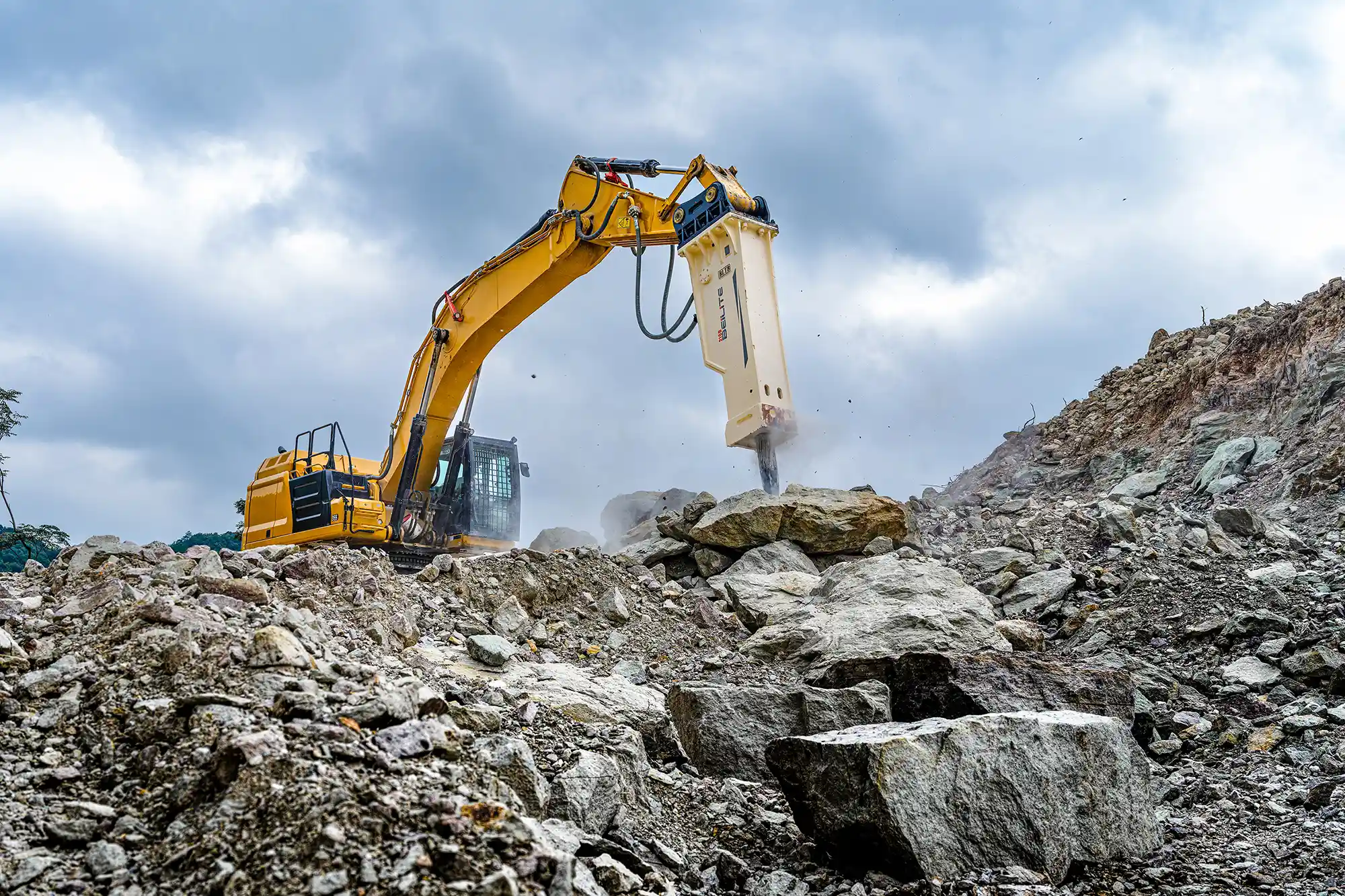
For extreme heat applications, material selection becomes critical. We specify heat-resistant steel alloys with superior thermal stability and strength at elevated temperatures—materials that maintain their mechanical properties when surface temperatures exceed 60°C.
High-temperature seals made from specialized elastomers like Viton maintain their elasticity and sealing integrity under scorching conditions where standard rubber compounds would harden and crack. Ceramic coatings on certain surfaces improve heat dissipation and reduce wear. Careful alloy composition minimizes thermal expansion differences between components, preventing the internal stresses that cause binding and premature failure.
Hydraulic System Design for Temperature Extremes
Effective hydraulic system design is paramount for extreme temperature operation. We integrate advanced fluid cooling systems and heat exchangers to maintain optimal fluid temperatures in hot climates, preventing the thermal breakdown that destroys hydraulic fluid properties. For cold environments, we recommend specialized low-viscosity hydraulic oil or high-performance synthetic fluids with excellent viscosity index properties, ensuring consistent flow and lubrication even at startup.
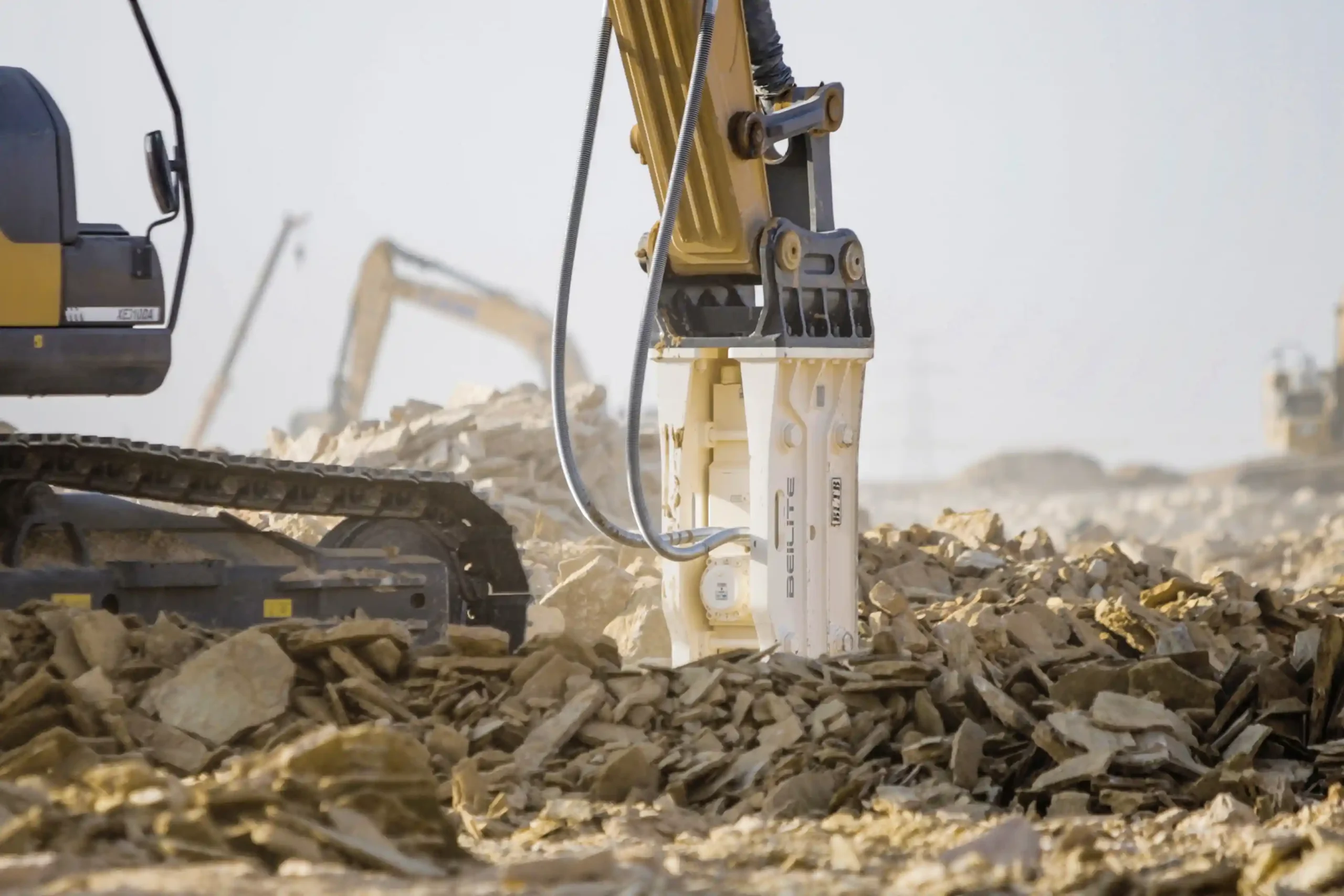
Our systems feature advanced filtration to prevent contamination, coupled with precise pressure regulation for stable power delivery across all conditions. This integrated approach ensures thermal stability and efficiency for our specialized hydraulic breaker Hammer.
| Model | Total Weight (kg) | Chisel Diameter (mm) | Working Oil Flow (L/min) | Applicable Excavator (t) |
|---|---|---|---|---|
| BLT-40 | 86 | 40 | 15–30 | 0.5–1.2 |
| BLT-70 | 362 | 70 | 40–70 | 4.5–6 |
| BLT-100 | 986 | 100 | 80–110 | 10–14 |
| BLT-135 | 1736 | 135 | 100–150 | 18–22 |
| BLT-165 | 3149 | 165 | 200–260 | 33–38 |
Why Specialized Hydraulic Fluid Matters
Specialized hydraulic fluid is essential because it maintains optimal viscosity and lubrication across extreme temperature ranges. Standard fluids thicken in cold conditions, causing cavitation and poor lubrication. In heat, they thin excessively, leading to reduced film strength and thermal breakdown.
High-performance fluids—often synthetic formulations—contain pour point depressants, anti-wear additives, and oxidation resistance properties. These ensure fluid shear stability, prevent premature wear, and maintain consistent hydraulic system efficiency. The impact on performance is direct: proper fluid selection affects impact energy delivery and component life in harsh climates.
Maintenance Practices That Extend Equipment Life
Maximizing the lifespan and performance of hydraulic breakers in extreme conditions requires strict adherence to operational best practices and a robust preventative maintenance schedule. The investment in proper maintenance pays returns through reduced downtime and extended equipment life.
For cold environments, implementing proper cold start procedures and warm-up routines is crucial. Hydraulic fluids need time to reach optimal viscosity before full-load operation—rushing this process causes damage that accumulates over time. In hot climates, monitoring hydraulic fluid temperature and ensuring adequate cooling prevents the thermal degradation that shortens fluid life and damages seals.
Regular inspection checklists, precise lubrication schedules, and timely seal replacement form the foundation of equipment care. Comprehensive operator training on troubleshooting extreme conditions minimizes downtime and enhances safety.
Service Intervals for Harsh Conditions
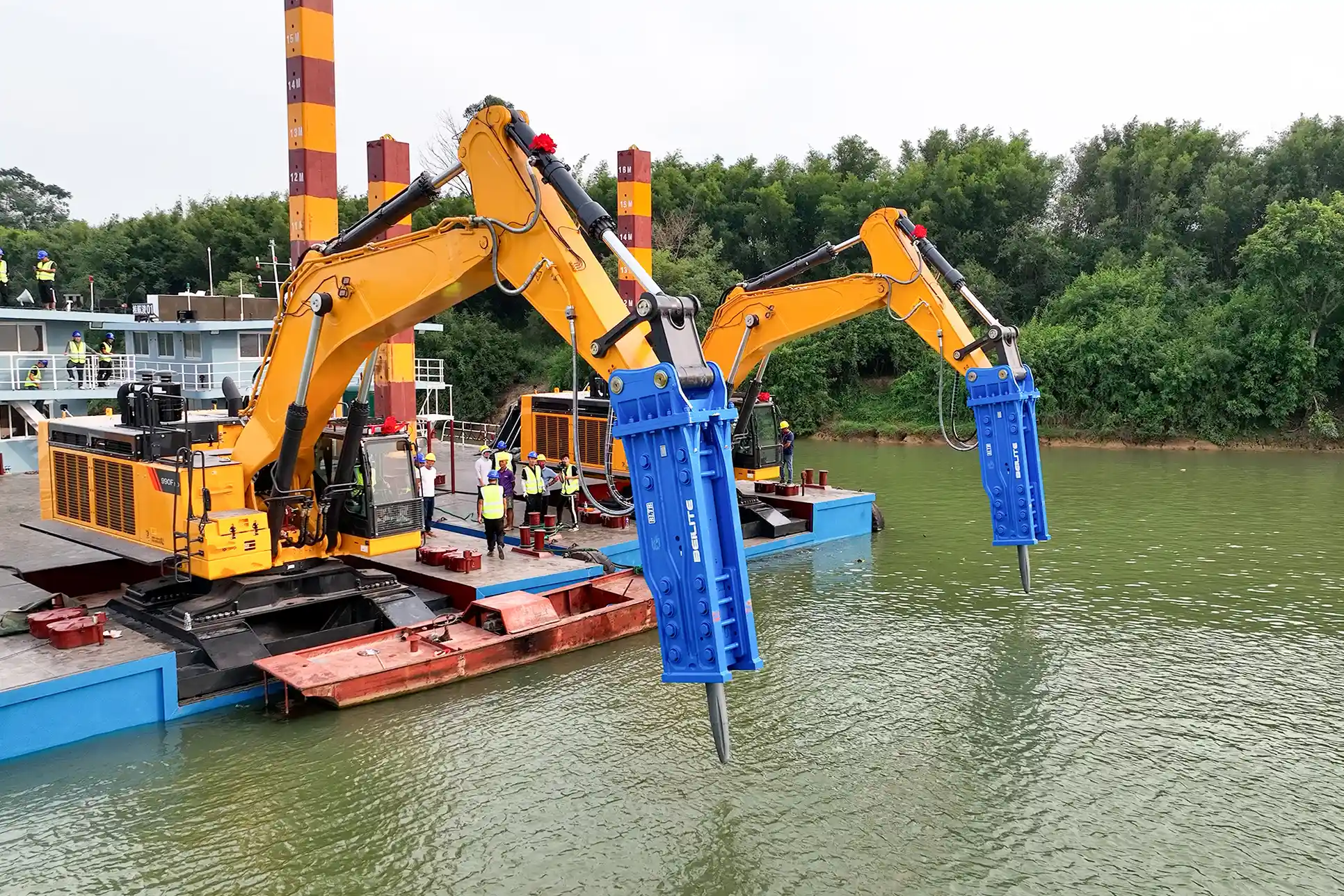
When operating in harsh conditions, hydraulic breakers require more frequent servicing than in moderate climates. We recommend reducing standard service intervals by 25-50%, depending on the severity of the environment.
This includes more frequent routine inspection of critical components, tighter lubrication schedules, and periodic hydraulic system flushing. Proactive repairs and seasonal maintenance checks prevent costly failures and extend equipment life. The specific intervals depend on your operating conditions—consult the manufacturer’s guidelines for your BLT or BLTB hydraulic breaker to establish an appropriate schedule.
Field Performance Across Global Environments
BEILITE hydraulic breakers demonstrate their capabilities across the globe’s most challenging environments. Our equipment is integral to large-scale mining operations in the Canadian Arctic, where BLT and BLTB units perform reliably in sub-zero conditions, efficiently breaking frozen ground and hard rock.
In the arid landscapes of the Middle East, our breakers support critical desert infrastructure projects, enduring intense heat and abrasive dust without compromise. We have documented success from quarrying and heavy duty applications in diverse climates, including demanding demolition projects. This extensive extreme environment testing in real-world scenarios validates our engineering approach.
Our global applications span remote site operations, underwater construction, and municipal engineering projects. The feedback from these diverse deployments continues to inform our development process.
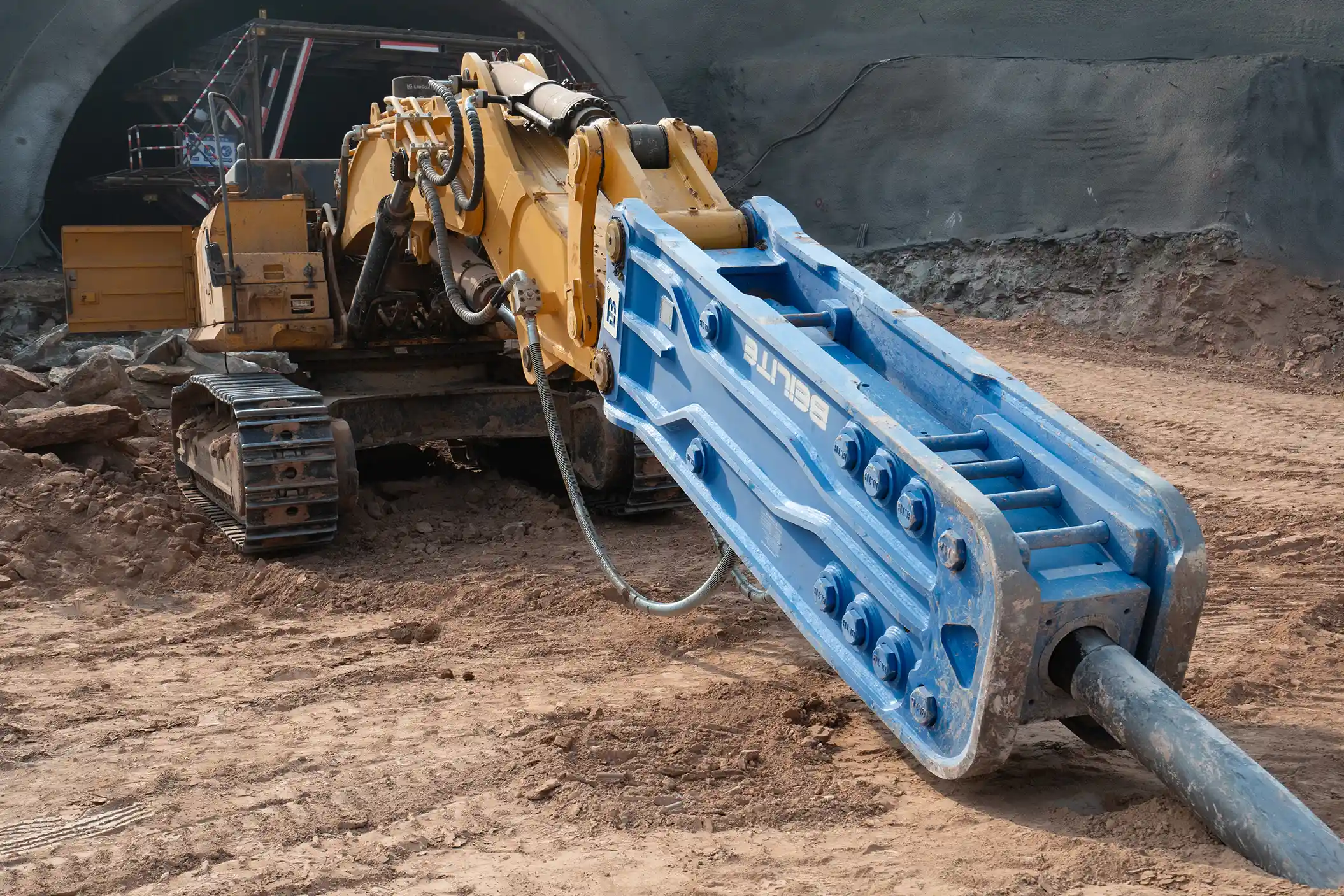
Engineering Excellence Built on Two Decades of Innovation
BEILITE Machinery Co., LTD, established in 2002, operates as a national high-tech enterprise focused on advancing hydraulic breaker technology. Our R&D efforts drive continuous innovation, resulting in breakthroughs in core technologies that address real operational challenges.
We actively participate in formulating national standards for hydraulic breakers in China, contributing to industry-wide improvements in quality and safety. Our hundreds of patented technologies ensure our products incorporate cutting-edge engineering. The BLT hydraulic breakers and BLTB products are exported to over 100 countries and regions worldwide, building the track record that supports customer confidence in our solutions.
Work With BEILITE on Your Extreme Environment Projects
For over two decades, BEILITE Machinery Co., LTD has engineered high-end hydraulic breakers designed to conquer the world’s most challenging environments. Our commitment to innovation, quality, and global standards ensures performance and reliability in conditions where standard equipment fails.
Discover how BEILITE’s specialized BLT and BLTB hydraulic breakers can support your operations in extreme temperatures. Contact our team for a consultation tailored to your specific conditions and requirements. Reach us at 40008-40008 or [email protected].
Frequently Asked Questions about Extreme Temperature Hydraulic Breakers
How do you prevent hydraulic fluid from freezing in cold weather?
Preventing hydraulic fluid from freezing requires a combination of fluid selection and operational procedures. Start by selecting a low pour point oil or specialized arctic hydraulic oil with a high viscosity index appropriate for your expected minimum temperatures. Fluid heaters help during cold weather startup procedures, warming the fluid gradually before full operation. Some applications benefit from antifreeze hydraulic fluid formulations with additives that maintain fluidity and prevent component damage at extreme low temperatures.
What are the signs of hydraulic breaker overheating in hot climates?
Overheating manifests through several warning signs. Fluid discoloration—darkening or a burning smell—indicates thermal breakdown. Reduced power or impact force suggests the hydraulic system is struggling. Unusual noises from the hydraulic system often accompany thermal stress. External indicators include seal leaks, particularly around the piston rod, or visible component damage. Monitor your hydraulic temperature gauge closely; consistently high readings require immediate attention to prevent severe component damage and potential thermal shutdown.
Can standard hydraulic breakers be modified for extreme temperature use?
Modifying standard hydraulic breakers for extreme temperature use is generally not advisable. While aftermarket parts exist, such modifications typically create performance limitations, compromise safety margins, and can invalidate warranties. Purpose-built breakers like BEILITE’s BLT and BLTB series feature specialized materials, robust sealing technology, and optimized hydraulic system designs engineered specifically for harsh climates. Retrofitting standard equipment rarely achieves the reliability or longevity of an engineered solution designed from the ground up for thermal extremes.