 English
 French
Hydraulic Breakers for Demolition Robots: Advanced Solutions
Robotic Demolition Systems: How Hydraulic Breakers Are Changing the Game
The first time I watched a demolition robot work through a compromised concrete structure, what struck me wasn’t the power—it was the quiet precision. The operator stood fifty meters away, coffee in hand, while the machine methodically reduced a wall that would have taken a crew days to approach safely. Robotic demolition systems have fundamentally altered how we think about tearing things down. These machines, paired with purpose-built hydraulic breakers, handle the dangerous, repetitive, and physically punishing work that used to put crews at risk. Beilite Machinery Co., LTD builds the attachments that make this possible.
Why Robotic Demolition Systems Make Strategic Sense
Robotic demolition systems solve problems that traditional methods simply cannot address well. The core advantage is straightforward: they put distance between workers and danger. When a structure is unstable, contaminated, or in a space too tight for conventional equipment, remote-controlled demolition becomes the only sensible option.
The safety math is compelling. Operators control these machines from positions where falling debris, structural collapse, dust exposure, and noise cannot reach them. That separation changes everything about how projects can be planned and executed. A robot can work continuously in conditions that would require rotating human crews every few hours due to fatigue or exposure limits.
Precision matters too. Robotic demolition systems can remove specific structural elements without damaging adjacent areas—critical when working near occupied buildings or sensitive infrastructure. The vibration and noise control these systems offer makes them viable in urban environments where traditional methods would face restrictions or community opposition.
How These Machines Transform Site Safety and Output
The productivity gains from robotic demolition systems come from an unexpected source: they eliminate the pauses. Human crews need breaks, shift changes, and safety stand-downs when conditions deteriorate. Robots keep working.
Consider a scenario that plays out regularly on demolition sites. A building’s interior needs to be stripped, but the structural assessment shows questionable floor integrity. With traditional methods, you either accept significant risk or spend days installing temporary shoring. With a robotic demolition system, an operator sends the machine in while monitoring from outside. If something shifts or collapses, the operator walks away from the control station and files an insurance claim for equipment rather than a workplace injury report.
This approach opens access to spaces that conventional machinery cannot reach. Basement demolition, interior work on upper floors, and confined industrial spaces all become manageable. The result is fewer accidents, lower insurance premiums, and project timelines that actually hold.
What Makes a Hydraulic Breaker Work on a Robot
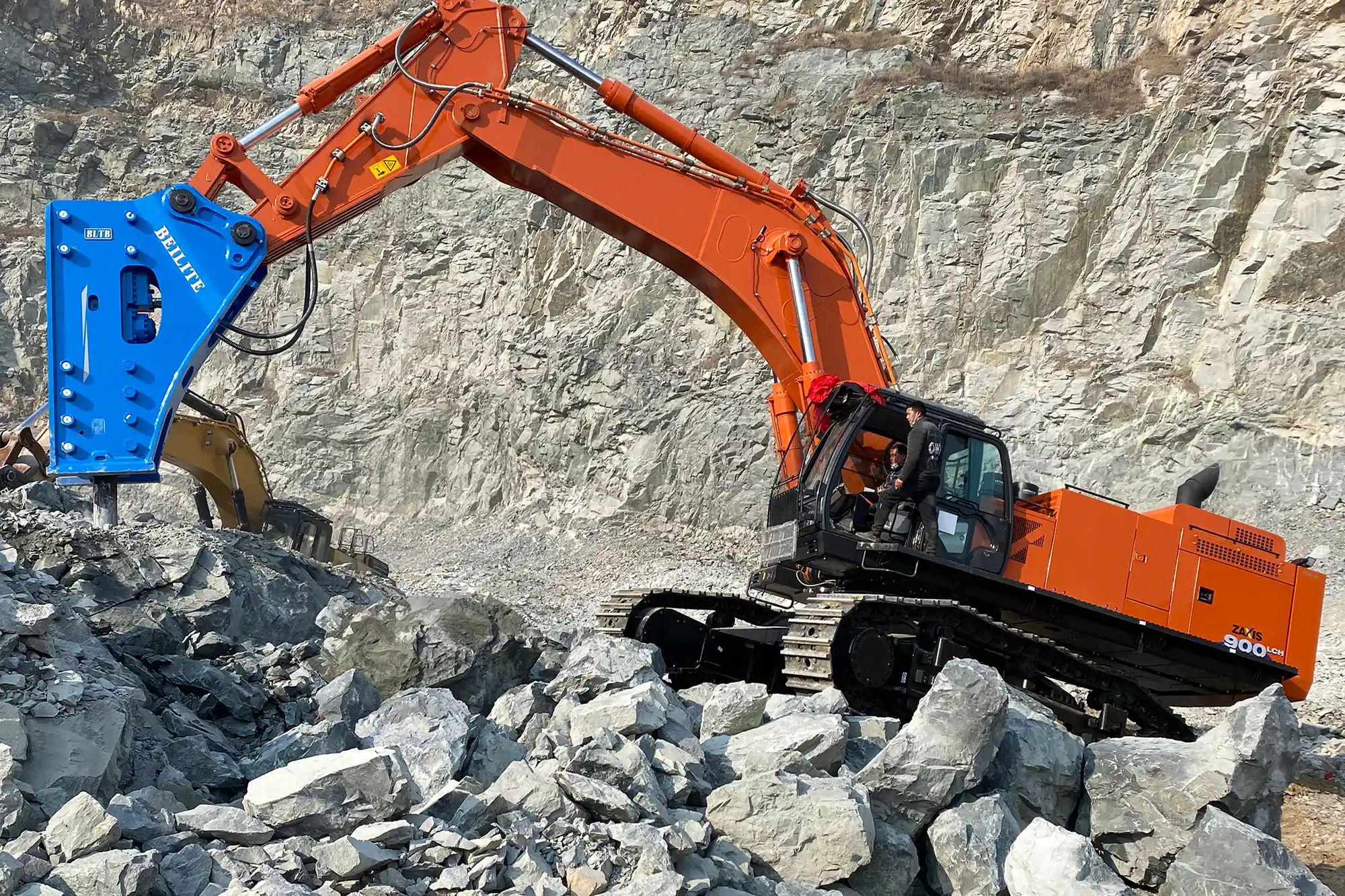
The hydraulic breakers designed for robotic demolition systems differ from their excavator-mounted cousins in ways that matter for performance. These robot-mounted hydraulic hammers must deliver consistent impact energy while staying within the weight and power constraints of smaller carrier machines.
The core components remain familiar: a hardened steel housing, a piston driven by hydraulic pressure, and a chisel that transfers energy into the target material. What changes is how these elements are optimized. Energy recovery systems capture and redirect hydraulic energy that would otherwise be lost as heat, maximizing impact force per unit of hydraulic flow. This efficiency matters when your carrier machine has limited hydraulic capacity.
Anti-blank firing mechanisms protect the breaker when the chisel loses contact with the work surface. Without this protection, the piston’s energy has nowhere to go, and internal components take the punishment. Chisel selection varies by application—blunt profiles for concrete breaking, pointed designs for rock breaking, and specialized geometries for specific materials.
Beilite’s BLT and BLTB series incorporate these features across a range of sizes, from compact units for precision work to heavy-duty models for primary demolition.
Getting the Breaker and Robot to Work Together
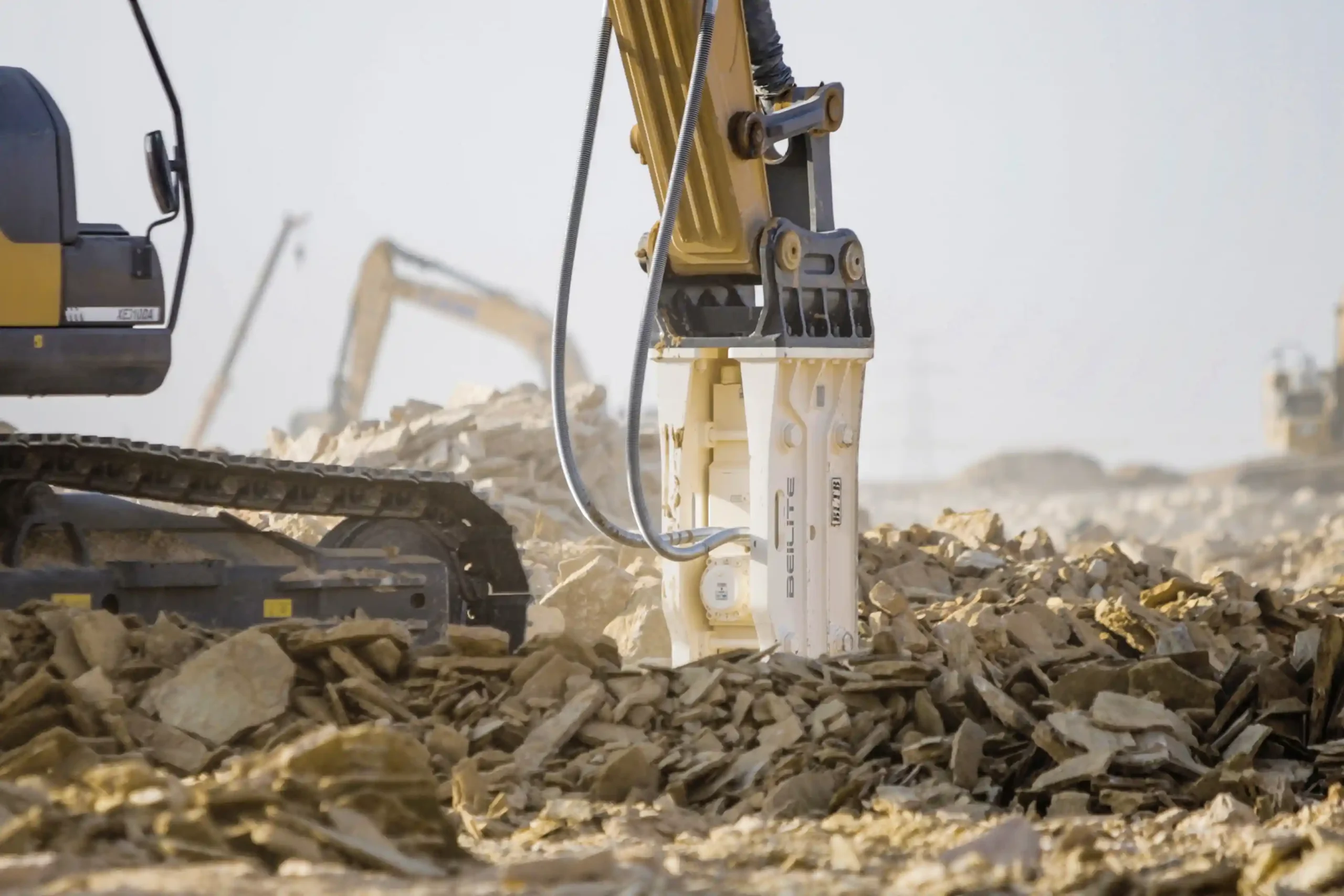
Matching a hydraulic breaker to a demolition robot requires attention to several specifications that must align. Weight is the obvious starting point—the robot’s payload capacity must exceed the breaker’s mass with margin for dynamic loads during operation. But hydraulic compatibility often proves more challenging.
The breaker’s flow requirements must fall within the robot’s hydraulic output range. Too little flow and the breaker underperforms. Too much and you risk damaging the robot’s hydraulic system. Operating pressure must also match, and the robot’s hydraulic circuit must be configured for the breaker’s specific requirements.
Quick couplers make attachment changes practical, which matters when a single project requires different tools for different phases. Following installation guidelines from both manufacturers prevents the integration problems that lead to premature failures.
This table shows how Beilite hydraulic breakers match up with different robot classes:
| Beilite Model | Total Weight (kg) | Chisel Diameter (mm) | Working Oil Flow (L/min) | Applicable Excavator (t) |
|---|---|---|---|---|
| BLT-40 | 86 | 40 | 15–30 | 0.5–1.2 |
| BLT-60 | 263 | 60 | 30–60 | 3–5.5 |
| BLT-85 | 666 | 85 | 60–100 | 7–11 |
| BLT-125 | 1357 | 125 | 90–120 | 14–18 |
| BLT-155 | 2610 | 155 | 180–240 | 27–33 |
Matching the Breaker to the Demolition Task
Selecting the right hydraulic breaker for a robotic demolition system starts with understanding what you’re breaking and where. Material hardness, project scale, and site constraints all factor into the decision.
A compact unit like the Hydraulic Breaker Hammer for Mini Compact Excavator BLT-40 handles precision work in tight spaces where larger equipment cannot fit. Heavier models suit primary Hydraulic Breaker Hammer for Demolition&Rock Breaking where volume matters more than finesse. Chisel geometry matters too—blunt profiles work well for concrete, while pyramidal points excel at rock breaking where the material needs to fracture along natural planes.
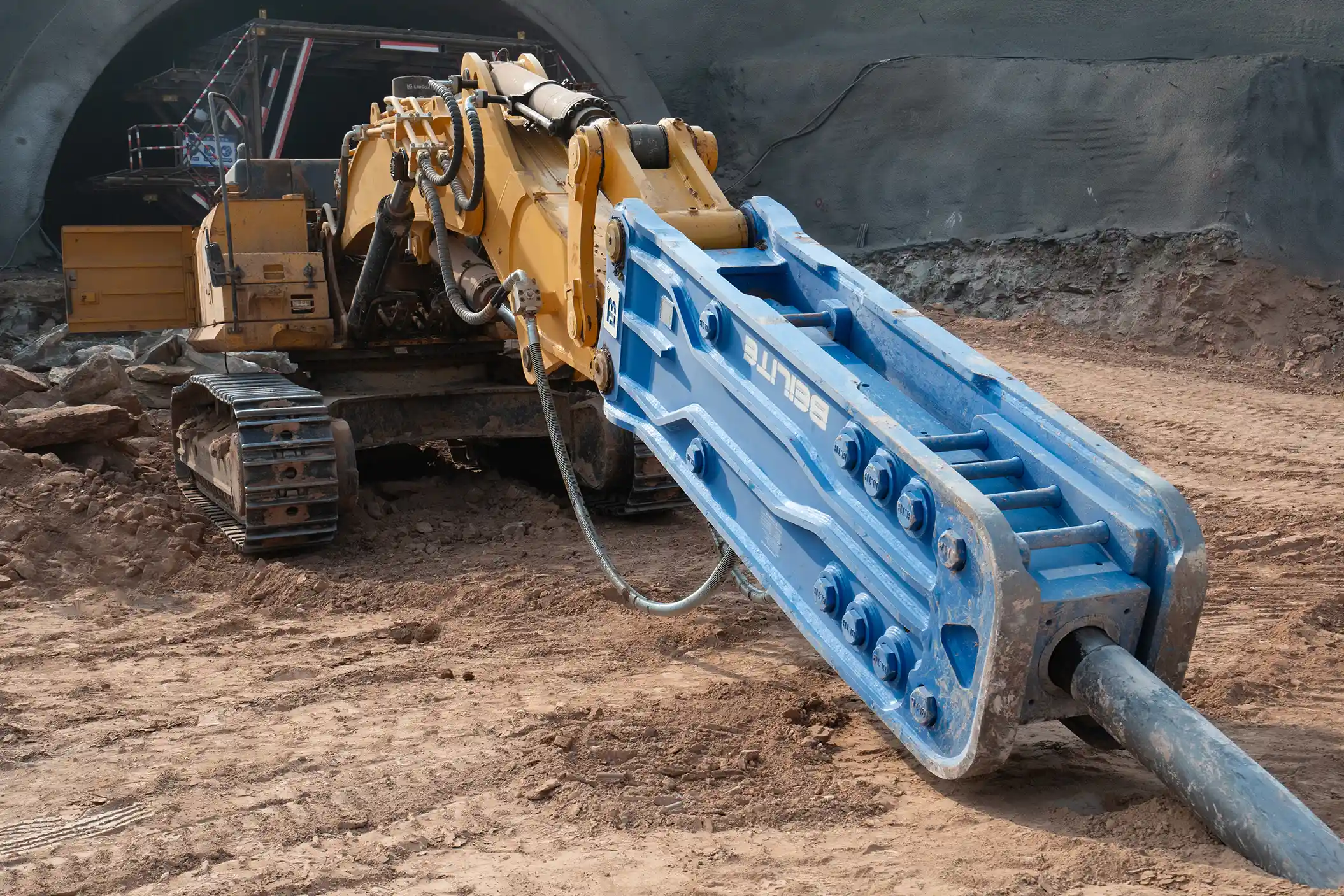
Secondary demolition tasks, where you’re reducing already-broken material to manageable sizes, often favor lighter and more maneuverable units. Tunneling applications and quarrying demand heavy-duty breakers built for continuous high-impact cycles over extended periods. Getting this selection right optimizes performance and keeps wear parts consumption reasonable.
Where Robotic Hydraulic Breakers Excel
Certain project types practically demand robotic demolition systems with hydraulic breakers. Hazardous material removal from contaminated industrial sites or nuclear facilities is the clearest example—no responsible contractor sends workers into radiation zones when a robot can do the job.
Sensitive structural demolition in dense urban areas benefits from the precision and vibration control these systems offer. When the building next door is occupied and the property line is three meters away, surgical accuracy matters.
Confined spaces present another strong case. Interior demolition in high-rise buildings, basement work, and tunnel rehabilitation all involve spaces where traditional equipment either cannot fit or cannot operate safely. Robotic demolition systems provide the reach and control these environments require while keeping operators at safe distances.
Keeping Robotic Hydraulic Breakers Running
Breaker maintenance directly affects both equipment lifespan and project economics. A well-maintained hydraulic breaker delivers consistent performance and avoids the unplanned downtime that throws schedules off track.
Daily checks should cover chisel wear, hydraulic connection integrity, and lubrication status. The chisel takes the most abuse and shows wear first—catching problems early prevents damage to the breaker housing. Hydraulic oil quality affects everything from impact power to internal component life. Contaminated or degraded oil accelerates wear throughout the system.
Troubleshooting common issues often starts with the basics. Reduced impact power frequently traces back to low oil levels or worn seals. Excessive noise usually indicates something loose or worn. Genuine spare parts maintain the tolerances and material properties the breaker was designed around. Cutting corners on parts often creates larger problems.
Following manufacturer service intervals keeps the cost-effectiveness of robotic demolition where it should be—favorable compared to traditional methods.
Where Robotic Breaker Technology Is Heading
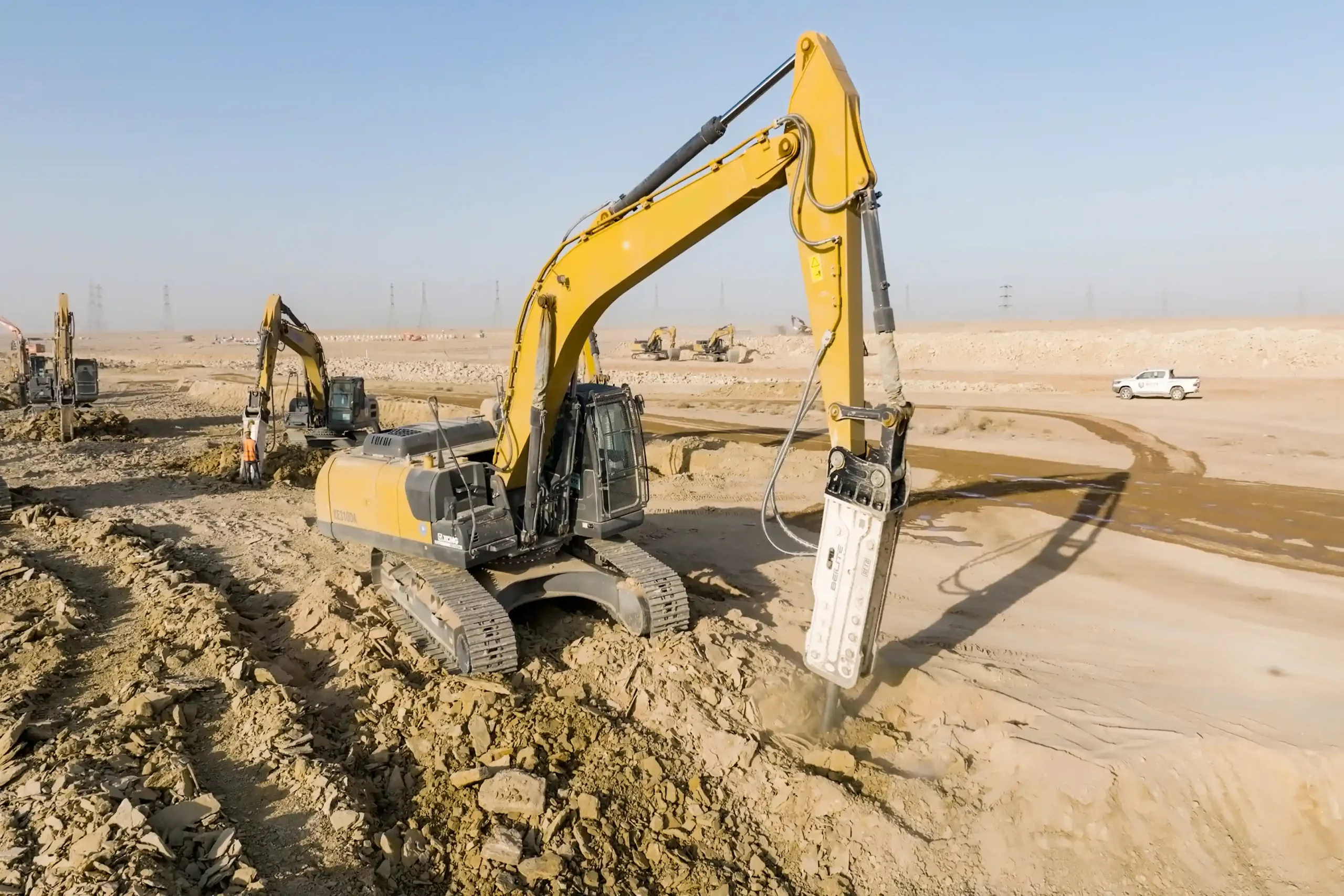
The future of demolition technology points toward greater automation and smarter systems. AI in construction applications are beginning to appear in predictive maintenance systems that flag developing problems before they cause failures. Pattern recognition could eventually optimize demolition sequences based on real-time feedback from the work.
Autonomous demolition remains largely developmental, but the building blocks are falling into place. Current robotic demolition systems already handle the mechanical execution—adding decision-making capabilities is the next step.
Electric hydraulic breakers address the noise and emissions concerns that limit where demolition can happen. Urban projects face increasing restrictions on both, and electric systems offer a path to compliance. Advanced sensors and remote diagnostics are making their way into production equipment, enabling faster troubleshooting and more proactive maintenance. These developments support sustainable demolition practices while improving operational efficiency.
Frequently Asked Questions About Robotic Hydraulic Breakers
What safety advantages do hydraulic breakers on demolition robots provide in dangerous conditions?
Robotic demolition systems with hydraulic breakers keep operators physically separated from the work zone. This eliminates direct exposure to falling debris, structural instability, airborne dust, excessive noise, and vibration. When something goes wrong—and in demolition, things do go wrong—the operator is positioned where the consequences cannot reach them. The machine absorbs the risk.
How do you verify that a hydraulic breaker will work properly with a specific demolition robot?
Start with the specifications. The breaker’s weight must fall within the robot’s payload capacity, and the hydraulic flow and pressure requirements must match what the robot can supply. Physical mounting compatibility matters too—the attachment interface must align. Manufacturer documentation for both the robot and the breaker should specify compatible ranges. When in doubt, contact both manufacturers before purchasing.
What maintenance routines keep a robotic hydraulic breaker operating reliably over time?
Daily visual inspections catch developing problems early. Regular lubrication of wear points prevents accelerated deterioration. Hydraulic oil quality and level checks should happen frequently—contaminated or low oil causes problems throughout the system. Following the manufacturer’s service schedule and using genuine replacement parts when components wear out maintains the performance the equipment was designed to deliver.
Partner with Beilite for Advanced Demolition Solutions
Beilite Machinery Co., LTD has been developing hydraulic breaker technology since 2002. With hundreds of patents and involvement in national standard development, our BLT and BLTB products are engineered for the demands of robotic demolition applications. Reach us at [email protected] or 40008-40008 to discuss how Beilite equipment can support your next project.