 English
 French
Optimizing Hydraulic Breaker Blow Frequency for Peak Performance
Getting the blow frequency right on a hydraulic breaker is one of those things that separates efficient jobsites from frustrating ones. Set it too high for hard rock and you’re just making noise. Too low for asphalt and you’re wasting time. The adjustment itself isn’t complicated, but understanding when and why to change it—that’s where operators start seeing real differences in penetration speed, fuel consumption, and how long their tools last before needing replacement.
What Blow Frequency Actually Controls in a Hydraulic Breaker
Hydraulic breaker blow frequency measures how many times the chisel strikes per minute, expressed as BPM. Inside the breaker, hydraulic pressure accelerates a piston through its stroke cycle, and the percussion rate depends on oil flow volume and system pressure working together. More flow generally means faster cycling. Higher pressure typically means harder hits.
A higher blow frequency delivers rapid, lighter impacts. This works well for softer materials or thin surface layers where you want quick material penetration without excessive force. Lower blow frequency does the opposite—fewer strikes per minute, but each one carries more impact energy. That concentrated force is what fractures dense granite or reinforced concrete.
The balance matters because energy transfer efficiency changes with material density. Mismatched settings don’t just slow you down. They burn more fuel, accelerate chisel impact wear, and stress the carrier’s hydraulic system. Operators who understand this relationship between operating pressure and blow frequency can match their settings to actual rock breaking conditions rather than running on defaults.
What Determines the Right Blow Frequency Setting
Several variables interact to define optimal blow frequency for any given application. No single factor dominates—you have to weigh them together.
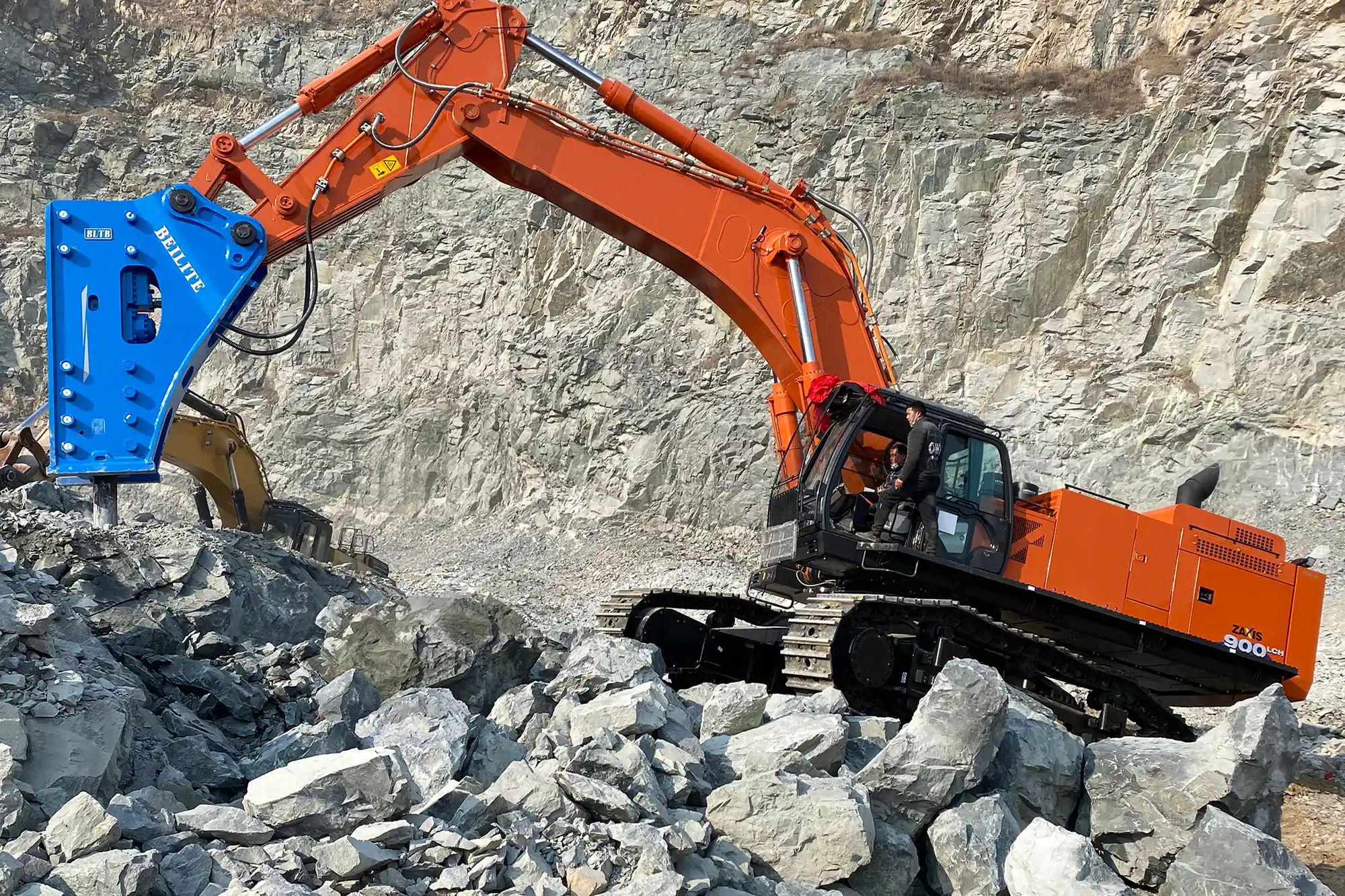
Material hardness is the starting point. Soft, layered rock or asphalt responds to higher frequencies because the material yields quickly and benefits from rapid surface removal. Harder materials like granite or high-strength concrete demolition need lower frequencies where each blow carries enough impact energy to propagate fractures through the rock type you’re working.
Job site conditions add complexity. Excavation depth affects how consistently the breaker can maintain contact. Ambient temperature influences hydraulic fluid viscosity. Confined spaces may limit how you position the carrier.
The carrier machine itself sets boundaries. Machine carrier weight determines how much recoil the system can absorb. The hydraulic flow rate and operating pressure the excavator supplies must fall within the breaker’s design range. Insufficient flow starves the breaker. Excessive flow generates heat faster than the system can dissipate it.
Breaker design characteristics—piston diameter, accumulator configuration, stroke length—establish the inherent frequency range the unit can achieve. Tool wear and maintenance history affect whether the breaker actually performs to specification.
Experienced operators develop a feel for this. They watch how the breaker responds, how the material reacts, and adjust accordingly.
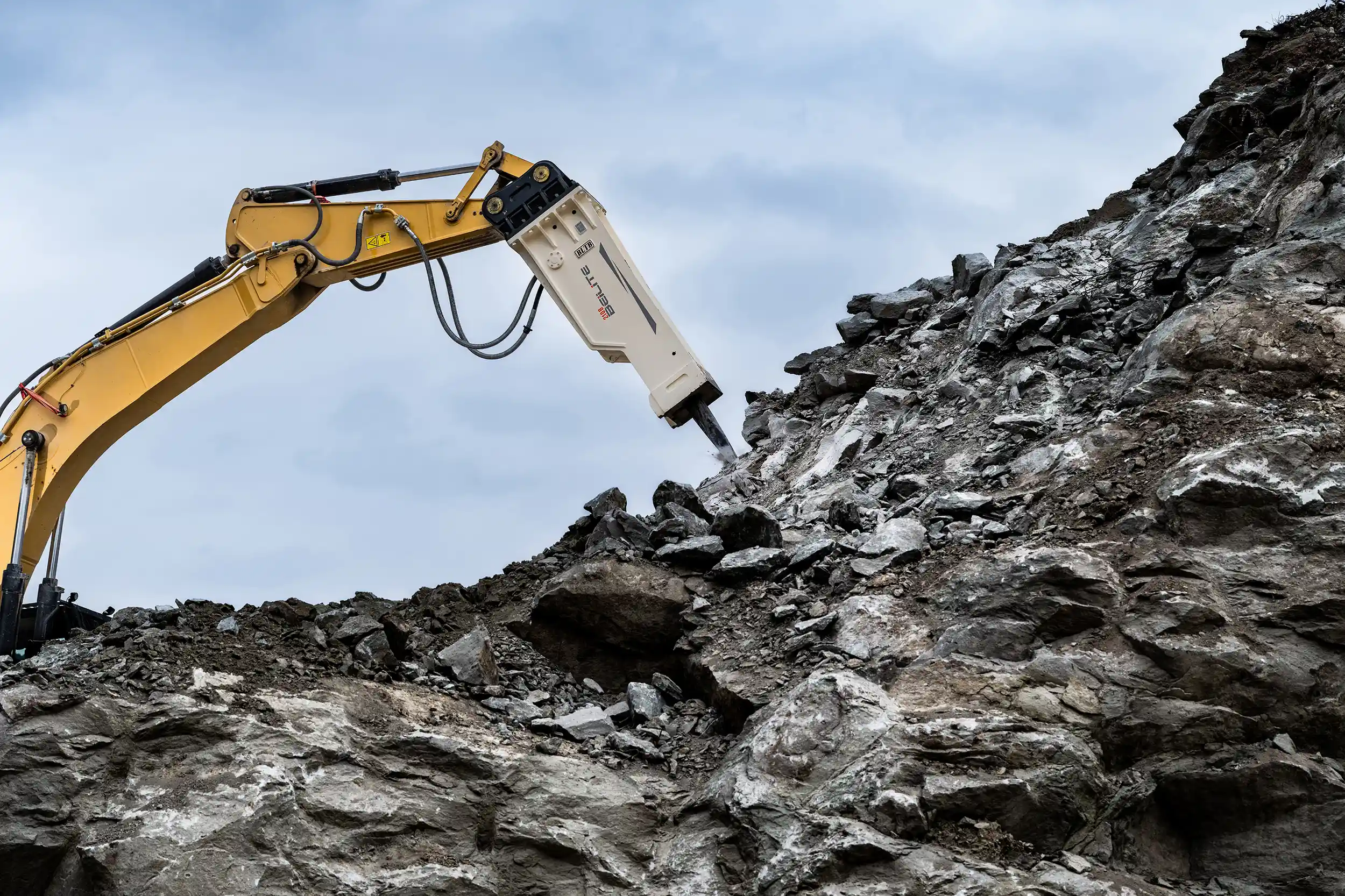
General frequency ranges by material type provide a starting framework:
| Material Type | Recommended Blow Frequency (BPM) | Impact Energy Profile | Typical Application |
|---|---|---|---|
| Soft Rock/Asphalt | 800 – 1400 | High Frequency, Lower | Road repair, trenching in soft ground |
| Medium Rock/Concrete | 500 – 800 | Balanced | General demolition, breaking medium-hard rock |
| Hard Rock/Reinforced Concrete | 300 – 500 | Lower Frequency, Higher | Quarrying, heavy demolition, primary rock breaking |
| Frozen Ground | 600 – 900 | Medium Frequency | Breaking permafrost, cold weather excavation |
How to Adjust Hydraulic Breaker Blow Frequency Safely
Adjusting blow frequency follows a systematic sequence. Rushing through it invites mistakes. Your manufacturer guidelines will have model-specific details, but the general approach applies broadly.
Before Making Any Adjustments
Safety procedures come first, not as a formality but because hydraulic systems store energy that can cause serious injury.
Park the carrier on level ground and shut down the engine. Engage the machine lockout so nothing can start unexpectedly. Put on your personal protective equipment—hard hat, safety glasses, gloves, hearing protection.
Inspect the tool visually for damage or hydraulic leaks. Check hose integrity at every connection point. Perform a hydraulic system bleed to release residual pressure. This step prevents sudden movement or fluid discharge when you access adjustment components.
Verify hydraulic oil temperature falls within the recommended operating range. Cold oil behaves differently than warm oil, and pressure readings taken at the wrong temperature will mislead you.
Verifying Performance After Adjustment
Once you’ve adjusted the adjustment valve, testing confirms whether the new setting actually works for your application.
Start the carrier and let the hydraulic system reach operating temperature. Position the breaker over a test block or representative section of your target material. Engage the breaker and observe.
Watch the penetration rate and how the material fragments. Listen for changes in noise level that might indicate problems. Pay attention to vibration analysis—unusual patterns often signal issues before they become failures.
Check the pressure gauge to confirm operating pressure stays within specification during operation. Note your observations about breaker response and effectiveness. Make small fine-tuning adjustments to the blow per minute setting if needed, watching how each change affects breaking behavior.
Document everything in a log book. This documentation becomes valuable when troubleshooting future issues or training other operators.
Recognizing Problems and Maintaining Consistent Performance
Even properly adjusted breakers develop issues over time. Catching problems early through preventative maintenance saves money and downtime.
Signs That Blow Frequency Needs Correction
Poor penetration despite adequate pressure often means blow frequency is too high for the material hardness—lots of hits, not enough force per hit.
Overheating in the hydraulic system suggests the breaker is working harder than it should. This can stem from incorrect frequency settings or insufficient hydraulic flow rate for the work being demanded.
Excessive recoil or bouncing indicates the impact energy exceeds what the material can absorb efficiently. The chisel impact isn’t transferring energy into fractures—it’s bouncing back into the carrier.
Reduced impact force or slow breaking speed points toward low blow frequency when conditions call for faster cycling, or problems with the nitrogen charge in the accumulator.
Abnormal noise—knocking, grinding, irregular rhythm—can indicate incorrect settings, piston wear, or seal failure developing.
Hydraulic fluid contamination degrades performance across all parameters and can affect frequency regulation even when mechanical components are sound.
Following scheduled service intervals and using diagnostic tools as specified in the service manual catches many issues before they cause failures. Beilite support can assist with complex diagnostic situations.
Beilite’s Approach to Hydraulic Breaker Engineering
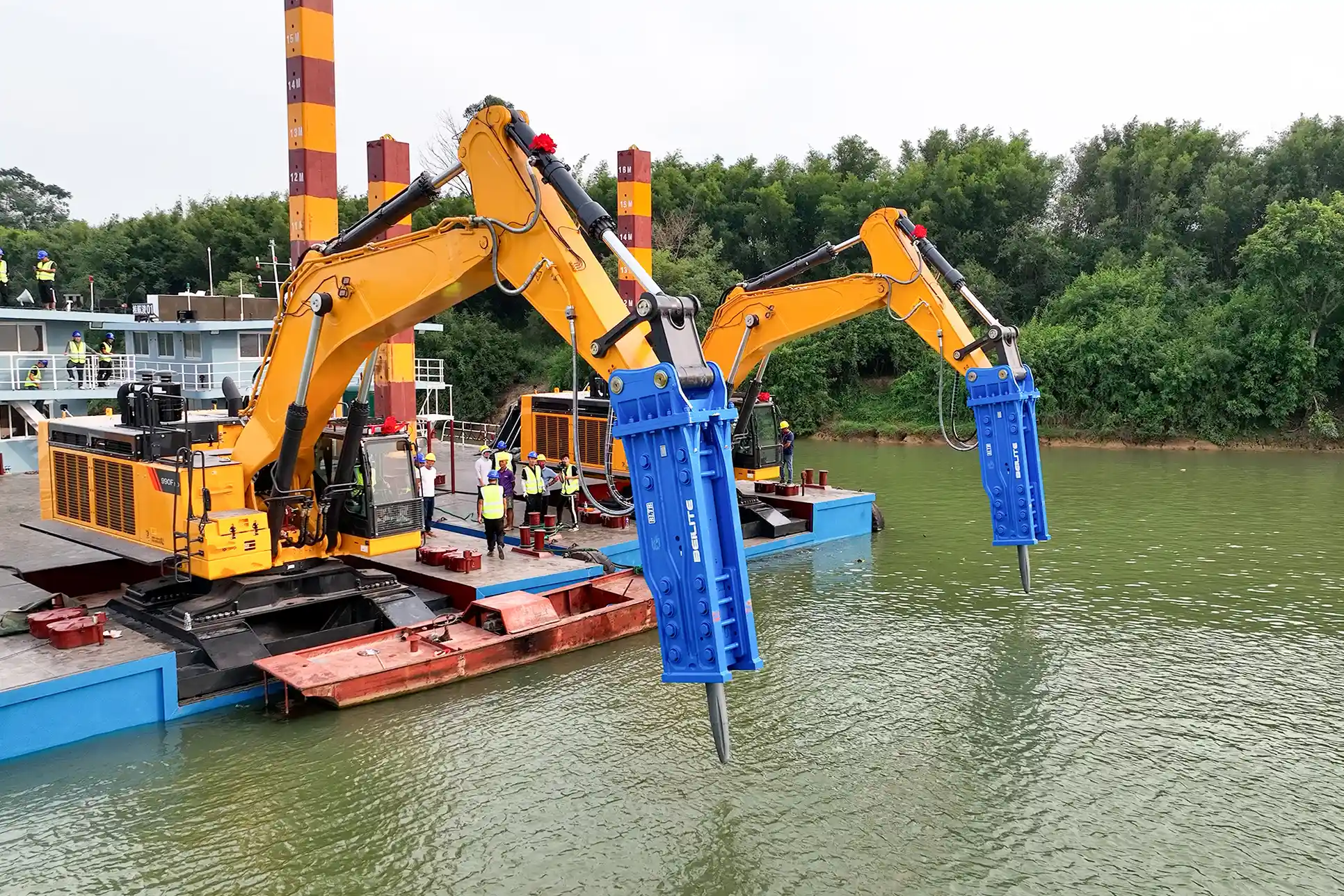
BEILITE Machinery Co., LTD has been developing and manufacturing hydraulic breakers since 2002. The company holds national high-tech enterprise status in China and has participated in formulating national standards for hydraulic breakers. Hundreds of patents reflect ongoing Beilite innovation in core technologies.
The BLT brand and BLTB products are built for precision engineering and durability across diverse working conditions. These hydraulic breaker hammer units serve applications from mining to demolition in over 100 countries. The design philosophy prioritizes reliability that builds customer trust over time rather than impressive specifications that don’t hold up in the field.
Representative BLT series models and their blow frequency ranges:
| Model | Applicable Excavator (t) | Working Oil Flow (L/min) | Working Pressure (bar) | Blow Frequency (bpm) |
|---|---|---|---|---|
| BLT-40 | 0.5 – 1.2 | 15 – 30 | 90 – 120 | 800 – 1400 |
| BLT-70 | 4.5 – 6 | 40 – 70 | 110 – 140 | 500 – 900 |
| BLT-100 | 10 – 14 | 80 – 110 | 150 – 170 | 350 – 700 |
| BLT-135 | 18 – 22 | 100 – 150 | 160 – 180 | 350 – 500 |
| BLT-165 | 33 – 38 | 200 – 260 | 210 – 230 | 150 – 300 |
Frequently Asked Questions About Hydraulic Breaker Blow Frequency
How does blow frequency affect penetration speed in different materials?
Higher blow frequency delivers more impacts per minute, which accelerates penetration in softer materials that yield readily to repeated strikes. Hard materials respond better to lower frequencies because each blow needs sufficient impact energy to initiate and propagate fractures. The relationship isn’t linear—doubling frequency doesn’t double penetration speed. Matching frequency to material characteristics ensures efficient energy transfer rather than wasted motion.
What distinguishes blow frequency from impact energy in breaker specifications?
Blow frequency counts strikes per minute. Impact energy measures the force delivered in each individual strike, typically expressed in joules. A breaker can cycle rapidly with moderate force per blow, or cycle slowly with high force per blow. Both parameters appear in specifications because applications require different combinations. Breaking thin asphalt benefits from high frequency and moderate energy. Fracturing massive granite needs lower frequency with maximum energy per impact.
When should operators reassess blow frequency settings?
Check settings whenever material type changes significantly—switching from soft shale to hard granite, for example, or moving from trenching work to heavy demolition. Include frequency verification in regular preventative maintenance routines. If breaking efficiency drops noticeably or the breaker behaves differently than expected, frequency settings should be among the first things investigated. Your Beilite manufacturer’s manual provides model-specific guidance on adjustment intervals.
Working with Beilite on Hydraulic Breaker Applications
Beilite Machinery Co., LTD brings two decades of hydraulic breaker development to technical consultations and equipment selection. For questions about blow frequency optimization, breaker specifications for specific applications, or the BLT and BLTB product range, contact the technical team at 40008-40008 or [email protected].