 English
 French
Operating Hydraulic Breakers in Tight Quarters with Precision
Working in tight spaces changes everything about how you approach a demolition job. The margin for error shrinks, the stakes climb, and suddenly every swing of the breaker matters more than it would on an open site. I’ve watched operators who excel in wide-open quarries struggle when walls close in around them—it’s a different discipline entirely, one that rewards patience and precision over raw power.
Why Confined Demolition Demands a Different Mindset
Tight quarters amplify problems that barely register on open sites. A slight miscalculation in swing radius can clip a load-bearing column. Dust that would dissipate outdoors hangs in the air. Noise bounces off walls and multiplies. Urban excavation projects, interior teardowns, and narrow access sites all share these constraints—restricted movement, limited sightlines, and structures close enough to touch.
The safety implications compound quickly. Falling debris has nowhere to go but down onto workers or equipment. Vibration travels through connected structures in ways that open-air work never experiences. Getting these jobs right means accounting for every limitation before the first chisel strike, not discovering problems mid-operation.
Choosing Equipment That Actually Fits the Job
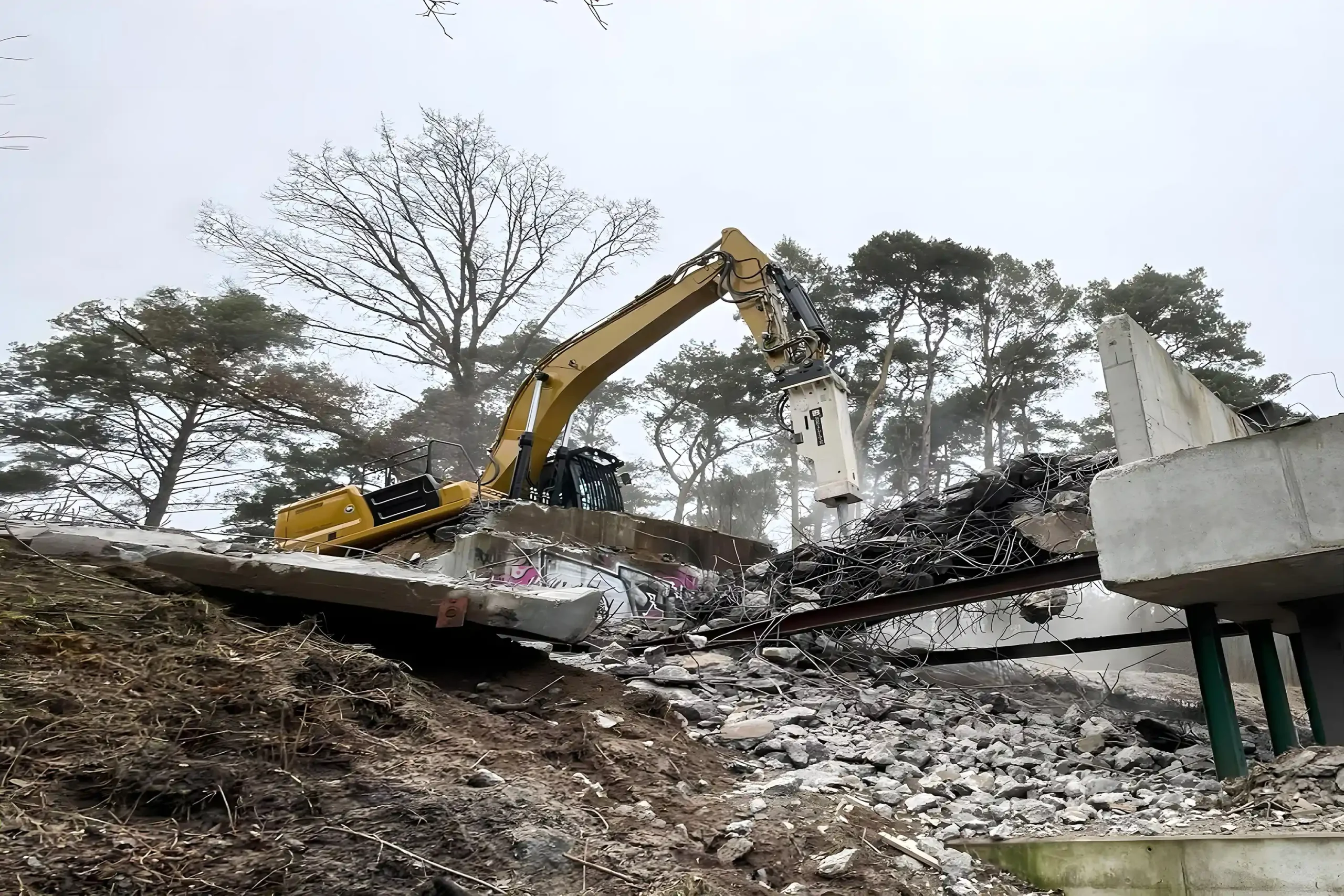
The hydraulic breaker you select determines whether a confined job flows smoothly or grinds to a halt. Oversized equipment in tight spaces creates more problems than it solves—you end up fighting the machine instead of the material.
Compact models designed for precision work make the difference. Beilite Machinery’s BLT series targets exactly this challenge. The BLT-40, BLT-45, BLT-53, and BLT-60 pair with mini excavators and skid steers, keeping the power-to-size ratio where it needs to be for limited access environments.
| Model | Weight (kg) | Chisel Diameter (mm) | Applicable Excavator (t) | Working Oil (L/min) |
|---|---|---|---|---|
| BLT-40 | 86 | 40 | 0.5–1.2 | 15–30 |
| BLT-45 | 137 | 45 | 0.8–1.5 | 20–40 |
| BLT-53 | 180 | 53 | 1.5–3.5 | 20–50 |
| BLT-60 | 263 | 60 | 3–5.5 | 30–60 |
What type of hydraulic breaker is best for small-scale demolition projects?
Light hydraulic breakers handle small-scale demolition most effectively. The Beilite BLT-40 and BLT-45 work well with micro excavators, delivering enough force for interior demolition and residential concrete breaking without the bulk that creates problems in tight quarters. Matching the right tool bit to your material—pointed for penetration, flat for surface breaking—extends their versatility across different job requirements.
Why is specialized equipment crucial for precision work in limited access areas?
The design features built into specialized equipment address problems that general-purpose breakers ignore. Silenced housings cut noise levels enough to work in urban settings without violating ordinances. Vibration dampening protects operators from fatigue and shields adjacent structures from transmitted shock. Precise control valves let operators modulate impact force rather than working in binary on-off mode. Remote operation capability keeps personnel out of hazardous zones entirely when conditions warrant it.
Operator Techniques That Separate Good From Great
Equipment only performs as well as the person running it. Confined space work exposes skill gaps that wider sites might hide.
Ground assessment comes first—machine stability on uneven or compromised surfaces determines whether precision work is even possible. Operators who rush this step often discover problems when the breaker is already committed to a strike.
Trigger control separates experienced operators from novices. Feathering the trigger for controlled, measured impacts prevents over-breaking that damages surrounding material. Maintaining consistent down pressure keeps the chisel engaged without bouncing, which wastes energy and accelerates wear.
Fatigue management matters more in tight spaces because concentration demands run higher. The mental load of tracking swing clearances, monitoring adjacent structures, and maintaining precision adds up over a shift. Scheduled breaks aren’t luxury—they’re operational necessity.
Managing Risk When the Margins Are Thin
Confined demolition leaves less room for recovery when things go wrong. Risk assessment before work begins identifies hazards that become much harder to address once operations start.
Site preparation sets the conditions for safe work. Shoring prevents unexpected collapses. Ventilation systems clear dust and fumes that accumulate in enclosed spaces. Debris management protocols keep escape routes clear—accumulated rubble in a confined area can trap personnel if conditions deteriorate suddenly.
Environmental controls address community impact. Dust suppression and noise mitigation aren’t optional in populated areas; they’re often legally mandated and always professionally expected. The reputation cost of ignoring these requirements outlasts any single project.
How do you ensure operator safety when working with heavy machinery in restricted spaces?
Multiple layers of protection work together. Clear communication protocols between operators and ground personnel prevent misunderstandings that lead to incidents. Spotters guide machinery through blind spots that mirrors and cameras can’t cover. Appropriate PPE—hearing protection, dust masks, high-visibility clothing—addresses the immediate physical hazards. Established emergency procedures and proper confined space entry permits complete the safety framework before anyone starts the engine.
Are there specific training requirements for operating hydraulic breakers in urban environments?
General heavy equipment certification provides the foundation, but urban demolition demands additional preparation. Specialized courses covering precision techniques, environmental impact mitigation, and urban-specific regulations fill the gaps that standard training leaves. The regulatory landscape and available technology both evolve, making ongoing professional development necessary rather than optional for operators handling complex projects.
Keeping Equipment Running in Demanding Conditions
Tight spaces create harsh operating conditions that accelerate wear if maintenance doesn’t keep pace. Dust infiltrates seals. Debris accumulates in places it wouldn’t reach on open sites. The confined environment concentrates heat that would dissipate in open air.
Regular preventative maintenance following manufacturer guidelines catches problems before they cause failures. Frequent lubrication, hydraulic fluid monitoring, and hose inspection form the baseline. Tool wear management—sharpening or replacing chisels before they lose effectiveness—maintains breaking force without forcing operators to compensate with excessive power.
The payoff extends beyond avoiding breakdowns. Well-maintained equipment operates more efficiently, consuming less fuel and delivering more consistent performance throughout its service life.
Frequently Asked Questions About Operating in Tight Quarters
What are the common challenges when operating hydraulic breakers in urban areas?
Space constraints force equipment choices that wouldn’t apply on open sites. Noise restrictions limit operating hours and require quieter equipment. Dust control becomes mandatory rather than optional. Adjacent structures demand precision that prevents collateral damage. Compact breakers and operators trained specifically for these conditions address the challenges that urban environments create.
How does Beilite Machinery ensure its hydraulic breakers perform effectively in confined spaces?
The BLT and BLTB series incorporate design priorities that match confined space requirements. Compact dimensions fit through restricted access points. Power-to-weight ratios deliver breaking force without excess bulk. Control systems allow precise operation rather than crude force application. Vibration reduction and noise suppression features address the environmental constraints that urban and interior work imposes.
What safety precautions are essential for operators using heavy equipment in restricted access sites?
Thorough site assessment identifies hazards before work begins. Clear communication protocols prevent misunderstandings between operators and ground personnel. Spotters provide guidance through blind spots. Proper ventilation addresses air quality in enclosed spaces. Regular equipment checks catch developing problems. Operator certification and confined space training ensure personnel understand both the equipment and the environment they’re working in.
Can hydraulic breakers be used with mini excavators for small demolition jobs?
Compact hydraulic breakers pair specifically with mini excavators and skid steers for this purpose. The combination delivers effective breaking force in spaces where larger machinery cannot operate. Interior demolition, residential projects, and tight access sites all benefit from this equipment pairing when the breaker matches the carrier’s hydraulic capacity.
What maintenance considerations are unique to hydraulic breakers used in tight, dusty environments?
Dusty confined conditions demand increased maintenance frequency. Lubrication intervals shorten because contaminants accelerate wear. Hose and seal inspections catch damage that dust infiltration causes. Air filter cleaning becomes more frequent. Hydraulic fluid monitoring detects contamination before it damages internal components. The investment in maintenance time pays back through reliable performance and extended equipment life.
Experience Beilite Precision in Confined Spaces
For over two decades, Beilite Machinery has led innovation in high-end hydraulic breaker technology, setting national standards and earning global trust. Discover how our BLT and BLTB series can elevate your precision demolition projects in even the most challenging confined spaces.
Contact our experts today for a tailored solution and experience the Beilite difference in performance and reliability. Email us at [email protected] or call us at 40008-40008.