 English
 French

Hydraulic Concrete Pile Breaker: Efficiency in Demolition
Hydraulic Concrete Pile Breakers: Technology, Applications, and Selection Guide
Breaking concrete pile foundations is one of those jobs that separates modern construction from the old days of jackhammers and manual labor. Having watched crews struggle with traditional methods—dust everywhere, noise complaints piling up, timelines slipping—the shift to hydraulic concrete pile breakers feels less like an upgrade and more like a fundamental change in how demolition gets done. These machines deliver the kind of controlled, repeatable force that manual methods simply cannot match, and they do it while keeping workers at a safer distance from the action.
How Hydraulic Concrete Pile Breakers Generate Breaking Force
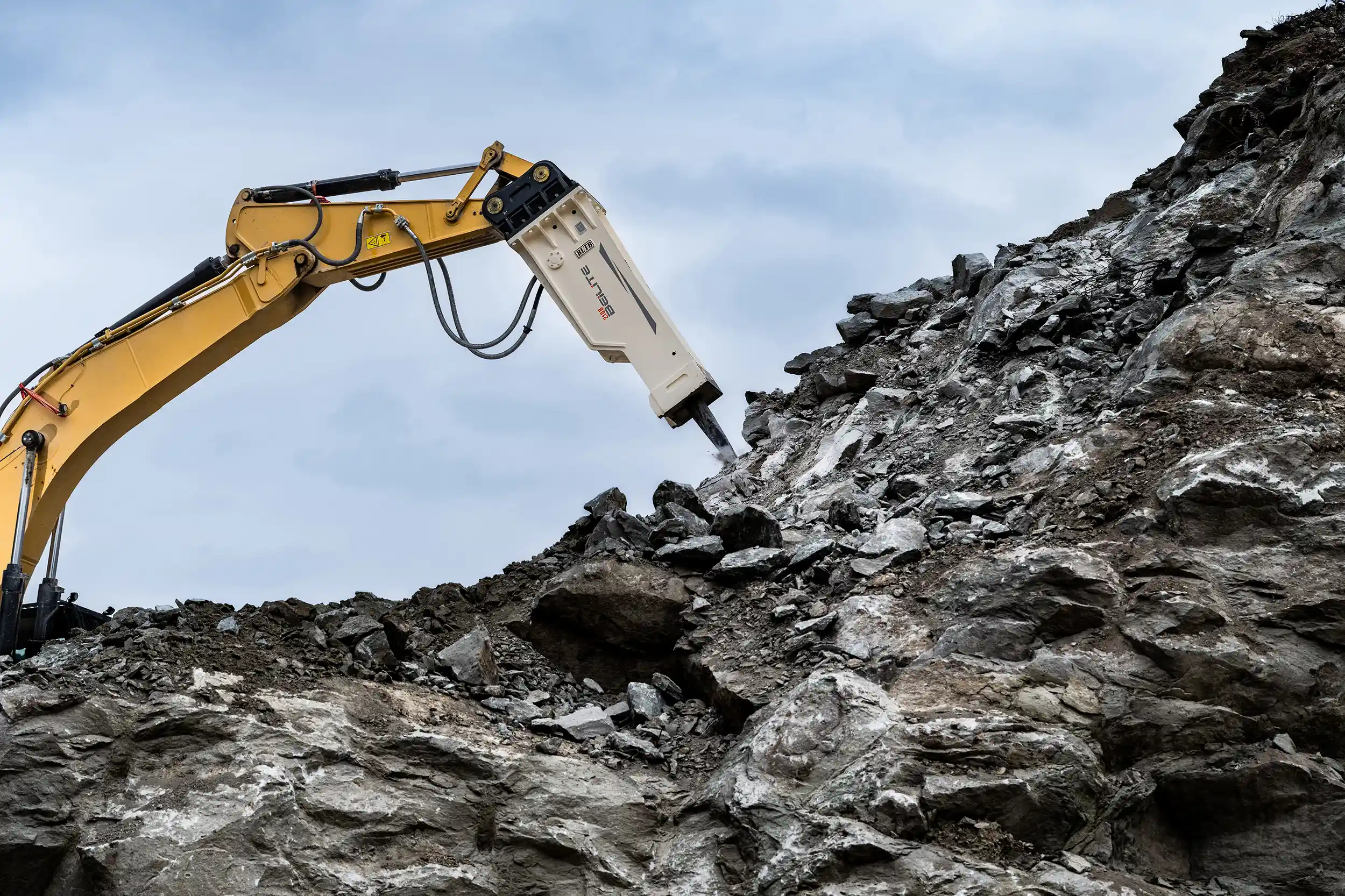
Hydraulic concrete pile breakers convert fluid pressure into mechanical force through a straightforward but powerful mechanism. High-pressure hydraulic fluid from an excavator’s system flows into the breaker, where it drives a piston against a chisel or activates a jaw assembly. The physics are simple—fluid under pressure moves a piston, the piston delivers force—but the engineering required to make this happen reliably under field conditions is anything but.
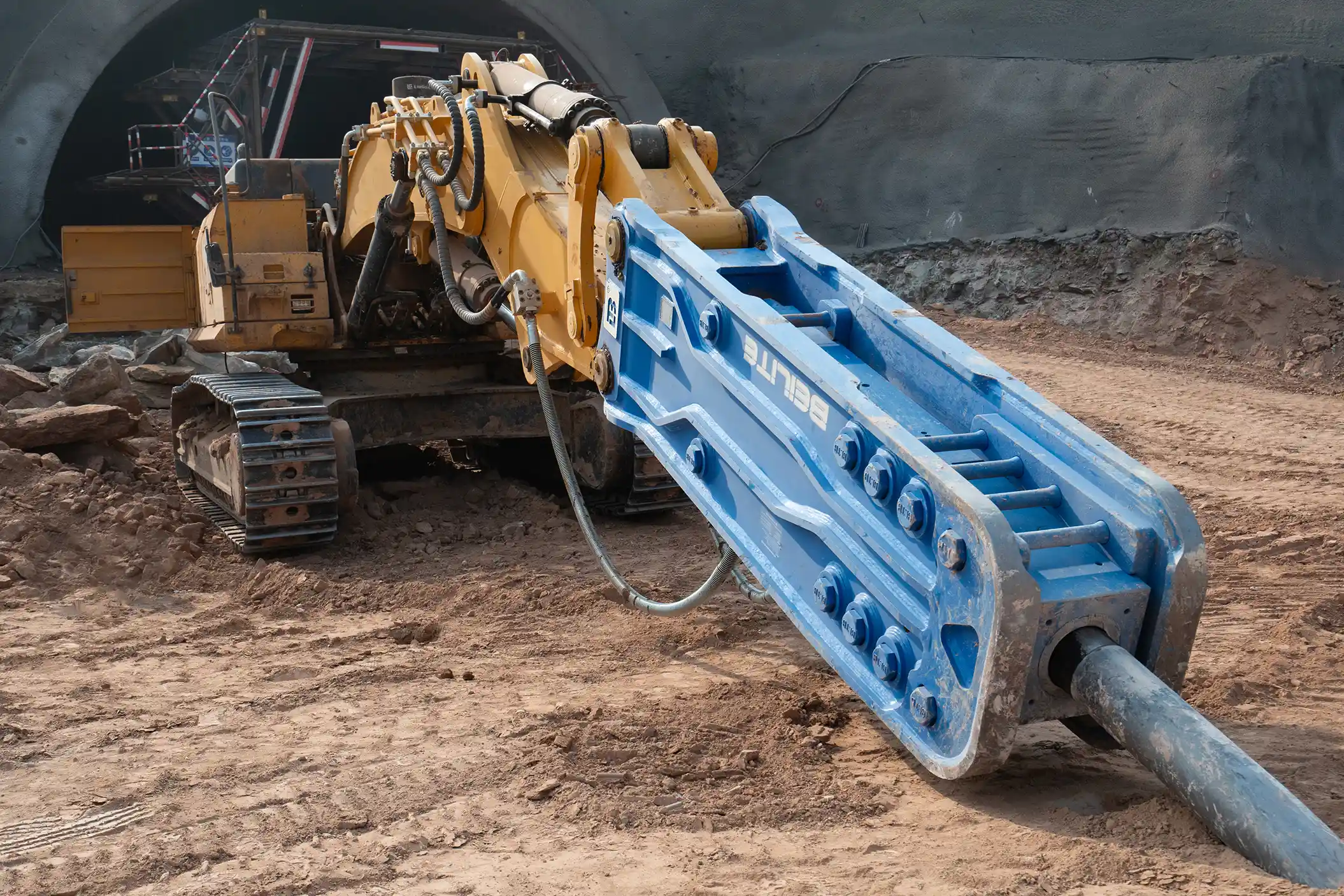
The BLT and BLTB series use this principle with several refinements that matter in practice. A heavy-duty housing contains the power cell, which consists of a piston and cylinder arrangement designed to withstand repeated high-force cycles. The working end varies by application: some units use chisel-style tools for general breaking, while pile-specific models feature jaw sets shaped to grip and fracture concrete piles of particular dimensions.
What makes these hydraulic attachments particularly useful for pile work is their integrated rebar cutting capability. Concrete piles contain steel reinforcement, and traditional methods often require separate cutting operations to deal with the steel after the concrete is broken. A well-designed hydraulic concrete pile breaker handles both materials in a single action—the jaws fracture the concrete while simultaneously shearing through the internal steel. This dual action eliminates the need for secondary equipment and keeps the demolition sequence moving.
Why Hydraulic Pile Breaking Changes Project Economics
The financial case for hydraulic pile breaking becomes clear when you track where time and money actually go on a demolition project. Manual breaking methods require more labor hours, expose workers to more risk, and produce inconsistent results that can slow downstream work. Hydraulic concrete pile breakers address all three problems.
Speed is the most visible benefit. A hydraulic pile breaker matched to the pile size can complete breaks in a fraction of the time required by manual methods. This acceleration compounds across a project—faster pile removal means earlier access for follow-on work, which means earlier completion dates. The labor cost reduction follows directly: fewer worker-hours per pile broken translates to lower direct costs.
Safety improvements are harder to quantify but no less real. Hydraulic operation keeps workers away from the immediate breaking zone, reducing exposure to flying debris and the physical strain of operating handheld equipment. The controlled fracturing action produces less unpredictable fragmentation than impact methods, making the work zone more predictable.
Environmental factors increasingly influence project planning, especially in urban demolition contexts. Hydraulic concrete pile breakers generate substantially less noise than pneumatic hammers and produce less airborne dust than explosive methods. Vibration levels are lower and more controlled, which matters when working near existing structures or in areas with vibration-sensitive neighbors. These characteristics make hydraulic pile breaking viable in locations where other methods would face restrictions or complaints.
Matching Breaker Types to Pile Configurations
Hydraulic concrete pile breakers come in configurations optimized for different pile shapes, sizes, and project conditions. The BLT and BLTB product lines cover a range of working conditions, with models designed for square piles, round piles, precast piles, and cast-in-situ piles.
Modular designs use adjustable jaw segments that can accommodate a range of pile diameters. This flexibility suits projects involving multiple pile sizes or contractors who work across different job types. Fixed-configuration units sacrifice some versatility for maximum breaking force on specific pile dimensions—a reasonable trade-off for repetitive work on uniform pile sizes.
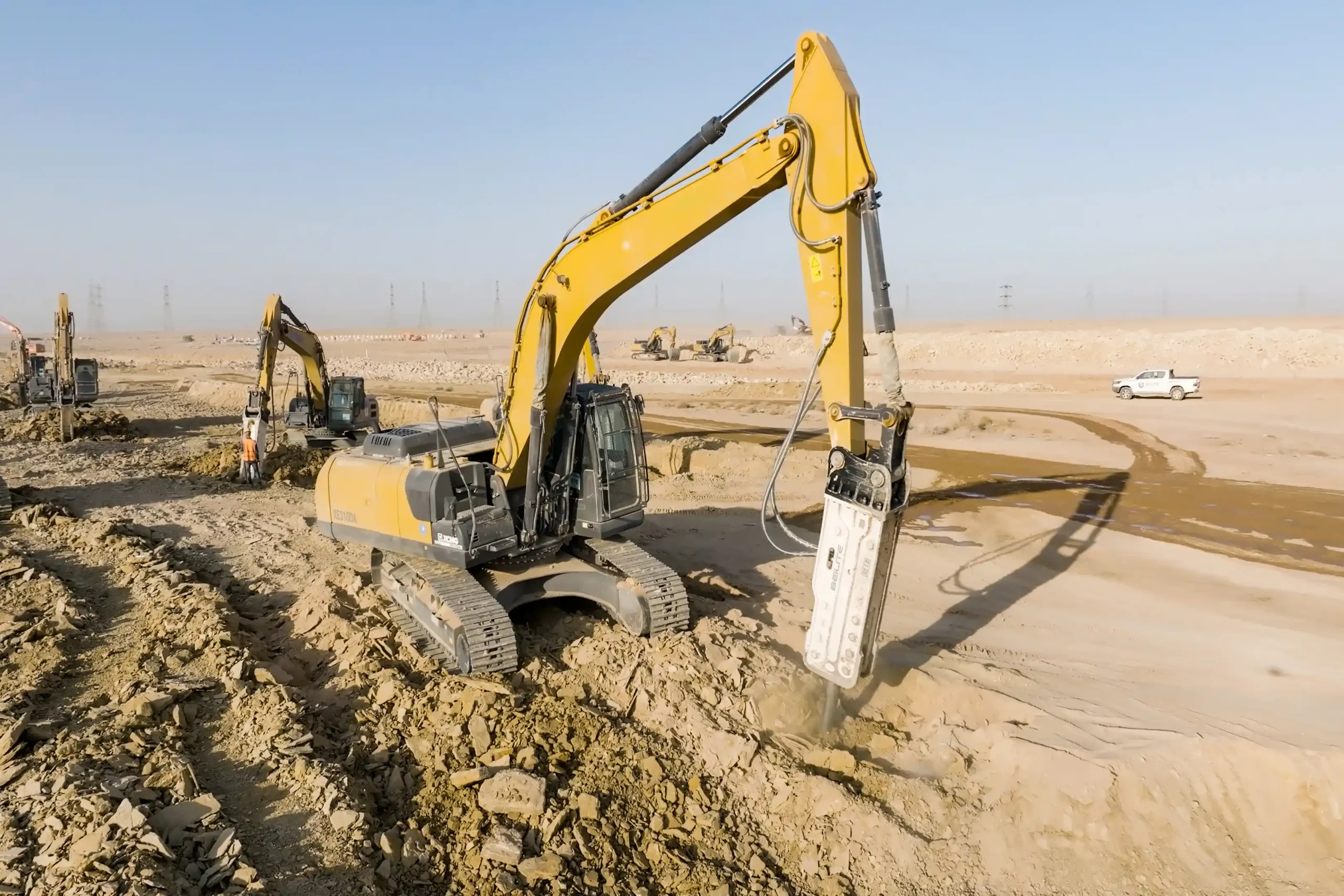
Most hydraulic concrete pile breakers mount to excavators, which provides the mobility needed to move between pile locations and the hydraulic power to drive the breaking mechanism. This arrangement works well for civil engineering and infrastructure projects where an excavator is already on site for other tasks.
The following table shows specifications for several BLT models across the size range:
| Model | Total Weight (kg) | Chisel Diameter (mm) | Applicable Excavator (t) | Ideal Application |
|---|---|---|---|---|
| BLT-40 | 86 | 40 | 0.5–1.2 | Small-scale urban demolition, light precast piles |
| BLT-70 | 362 | 70 | 4.5–6 | Medium-sized cast-in-situ piles, infrastructure projects |
| BLT-100 | 986 | 100 | 10–14 | Large round piles, bridge foundations |
| BLT-140 | 1910 | 140 | 20–24 | Heavy precast piles, deep foundations |
| BLT-165 | 3149 | 165 | 33–38 | Extra-large concrete piles, specialized civil engineering |
Hydraulic Breaker Hammer for Municipal Engineering,Urban Road & Utility Works
Operational Safety and Maintenance Practices That Extend Equipment Life
The service life of a hydraulic concrete pile breaker depends heavily on how it’s operated and maintained. These are powerful machines working under demanding conditions, and shortcuts in either area show up as premature wear, unexpected failures, and costly downtime.
Operator training is the foundation. Only personnel who understand both the equipment and the hazards should run hydraulic pile breakers. This means formal certification, not just informal instruction. Before each shift, operators should check hydraulic fluid levels, inspect hoses for damage or wear, and examine the chisel or jaw assembly for cracks or excessive wear.
Preventative maintenance follows a predictable pattern. Moving components need regular lubrication according to the manufacturer’s schedule. The chisel or jaw faces take the most abuse and should be inspected frequently for damage that could affect breaking efficiency or cause unpredictable fracturing. Accumulator nitrogen pressure affects the smoothness and power of the breaking action—checking and adjusting this pressure is part of routine maintenance.
Using manufacturer-specified hydraulic fluid and replacement parts matters more than it might seem. Hydraulic systems are engineered around specific fluid properties, and substituting different fluids can affect seal life, operating temperature, and system responsiveness. Aftermarket parts may fit physically but fail to meet the dimensional tolerances or material specifications that determine durability under load.
When problems appear—reduced breaking force, unusual sounds, erratic operation—addressing them promptly prevents escalation. A minor seal leak becomes a major hydraulic failure if ignored. A worn chisel that’s still functional but inefficient wastes fuel and time on every break.
Selecting the Right Hydraulic Pile Breaker for Specific Project Requirements
Choosing a hydraulic concrete pile breaker involves matching equipment capabilities to project demands. The wrong choice costs money—either through inadequate performance that slows work or through overcapacity that ties up capital unnecessarily.
Start with the piles themselves. Diameter and concrete strength determine the breaking force required. A breaker that’s marginal for the pile size will work slowly and wear faster; one that’s substantially oversized represents unnecessary expense. The chisel diameter specifications in manufacturer data provide guidance, but real-world concrete conditions vary, so some margin is prudent.
Project scale influences the decision differently. Large infrastructure projects may justify heavier-duty models or multiple units to maintain schedule. Urban sites often face noise and vibration constraints that favor smaller, more precise equipment even if it means slower individual breaks.
Budget analysis should look beyond purchase price to total cost of ownership. A more capable hydraulic concrete pile breaker that completes work faster reduces labor costs and shortens project duration. Maintenance costs, parts availability, and expected service life all factor into the real cost comparison. The return on investment calculation often favors higher-quality equipment, especially for contractors who will use the breaker across multiple projects.
Compatibility with existing equipment matters practically. The breaker must match the excavator’s hydraulic capacity and mounting system. Mismatches create problems ranging from underperformance to equipment damage.
Supplier support affects long-term value. Access to technical expertise, parts inventory, and service capability determines how quickly problems get resolved when they arise. Beilite’s involvement in developing national standards reflects engineering depth that translates to reliable products and informed support.
Frequently Asked Questions About Hydraulic Concrete Pile Breakers
What makes hydraulic pile breakers more effective than manual breaking methods?
Hydraulic concrete pile breakers deliver consistent, high-magnitude force that manual methods cannot match. They complete breaks faster, reduce the physical demands on workers, and produce more controlled fracturing with less noise and dust. For projects involving multiple piles, the time savings compound significantly, often cutting overall demolition duration by half or more compared to traditional approaches.
How do different pile breaker configurations suit different pile types?
Pile breaker designs vary primarily in jaw geometry and adjustability. Modular units with adjustable jaw segments handle a range of pile diameters, making them versatile for mixed-pile projects. Fixed-configuration units optimize breaking force for specific pile sizes, which suits repetitive work on uniform piles. Jaw shapes also differ for round versus square pile cross-sections, with each geometry designed to grip and fracture that particular shape efficiently.
What safety measures are essential when operating hydraulic pile breakers?
Operators must hold appropriate certification and understand both the equipment and site-specific hazards. Required precautions include proper personal protective equipment, maintaining safe distances from the breaking zone, and verifying that the breaker is correctly mounted and matched to the excavator’s hydraulic capacity. Pre-operation inspections should check hydraulic connections, wear part condition, and overall equipment integrity.
What determines the total cost of owning a hydraulic pile breaker?
Purchase price is only the starting point. Operating costs include fuel consumption, hydraulic fluid, and routine maintenance. Wear parts—chisels, jaw faces, seals—require periodic replacement based on usage intensity. Equipment durability affects how long the breaker remains productive before major overhaul or replacement. A higher-quality hydraulic concrete pile breaker often delivers lower total cost over its service life despite a higher initial price.
Can hydraulic pile breakers handle the steel reinforcement inside concrete piles?
Modern hydraulic concrete pile breakers designed for pile demolition include integrated rebar cutting capability. The jaw mechanism generates enough force to fracture concrete and shear through internal steel reinforcement simultaneously. This eliminates the need for separate cutting operations and keeps the demolition process moving without equipment changes.
Partner with Beilite for Advanced Demolition Solutions
BEILITE Machinery Co., LTD. has manufactured hydraulic breakers since 2002, building a technical foundation that includes hundreds of patents and participation in developing national standards. The BLT and BLTB product lines reflect this engineering depth, offering hydraulic concrete pile breakers suited to applications ranging from light urban work to heavy infrastructure demolition. For technical consultation or product information, contact the Beilite team at 40008-40008 or [email protected].