 English
 French

Hydraulic Breaker Selection for Foundation Work: Maximize Efficiency
Foundation demolition sits at the intersection of brute force and precision engineering. Get the hydraulic breaker selection wrong, and you’re looking at blown project timelines, excessive wear on your carrier, or worse—safety incidents that could have been avoided. The variables stack up quickly: material composition, reinforcement density, site access constraints, and the hydraulic capacity of your excavator all factor into what should be a calculated decision rather than a guess. Having worked through countless foundation removal scenarios, the pattern becomes clear—matching the right breaker to the job isn’t just about power ratings on a spec sheet. It’s about understanding how impact energy translates into actual material breakdown under real-world conditions.
Matching Breaker Tool Geometry to Foundation Materials
Foundation materials don’t behave uniformly under impact. Standard concrete fractures differently than heavily reinforced slabs, and solid rock formations demand an entirely different approach. The tool geometry you select determines whether you’re efficiently breaking material or just generating heat and wear.
Chisel-type tools work best when you need controlled fracturing along defined lines. They concentrate impact energy into a narrow edge, making them effective for cutting through concrete slabs or creating clean separation points. The trade-off is that they lack the mass distribution needed for pulverizing dense materials.
Blunt tools flip this equation. The broader contact surface spreads impact force across a larger area, generating the crushing action needed for hard rock or thick concrete sections where penetration matters less than material destruction. Attempting primary rock breaking with a chisel tool accelerates wear without proportional productivity gains.
Conical tools occupy the middle ground. The tapered profile provides reasonable penetration while maintaining enough mass behind the contact point for effective breaking force. This makes them practical for mixed-material foundations where you encounter both concrete and embedded rock.
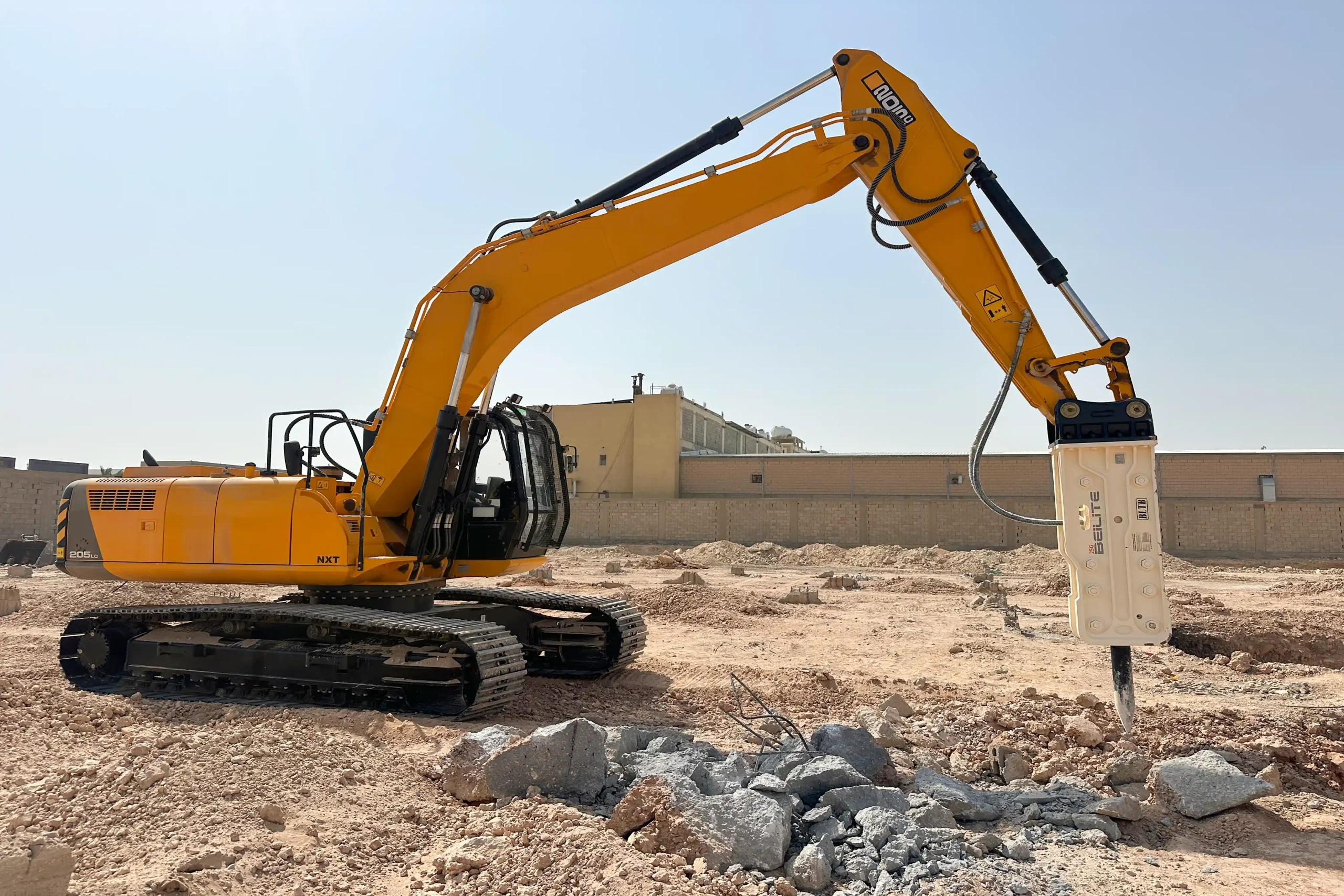
The relationship between tool type and material becomes clearer when mapped against specific applications:
| Breaker Tool Type | Primary Application | Material Suitability | Key Advantage |
|---|---|---|---|
| Chisel | Concrete cutting, trenching | Concrete, asphalt, softer rock | Precision, clean cuts |
| Blunt | Rock breaking, mass demolition | Hard rock, thick concrete | High impact force, pulverizing |
| Conical | General demolition, varied tasks | Concrete, medium-hard rock | Versatility, good penetration |
Sizing and Compatibility Factors That Determine Breaker Performance
Energy class ratings tell part of the story, but they don’t capture how that energy translates into actual breaking performance on your specific job. A hydraulic breaker for foundation work needs to match both the material demands and the hydraulic capacity of your carrier machine.
Impact frequency interacts with energy output in ways that affect material breakdown patterns. Higher blow rates work well against softer materials where rapid, lighter impacts prevent the tool from getting bound up. Harder materials respond better to lower frequencies with greater energy per blow—the material needs time to fracture before the next impact arrives.
Operating pressure and flow requirements determine whether your excavator can actually drive the breaker at rated performance. Undersized hydraulic systems create heat buildup and reduced impact energy. Oversized breakers strain carrier components and can damage hydraulic pumps over extended operation. The compatibility window matters more than raw specifications.
Site conditions add another layer of complexity. Confined spaces may require compact breakers that sacrifice some power for maneuverability. Deep foundation removal might demand extended tool lengths. Reinforcement density affects how quickly tools wear and whether you need to plan for mid-project tool changes.
What size hydraulic breaker is best for typical foundation removal?
The answer depends on your excavator’s operating weight and what you’re actually breaking. Residential and light commercial foundations typically fall within the capability range of medium-duty breakers. For 6-11 ton excavators, units like the BLT-75 or BLT-85 provide adequate impact energy without overwhelming the carrier’s hydraulic system.
Smaller projects or tight access situations call for a Hydraulic Hammer Breaker For Mini Excavator,Mini Excavator Breaker sized for 0.5-3.5 ton machines. The BLT-40 and BLT-53 models fit this category, offering the control needed for precision work near existing structures or utilities.
Massive reinforced foundations or thick concrete sections require stepping up to heavy-duty units. The BLT-155, designed for 27-33 ton excavators, delivers the concentrated impact energy needed when material resistance exceeds what medium-duty breakers can efficiently handle.
Technology Features That Affect Real-World Productivity
Modern hydraulic breaker technology has moved beyond simple piston-and-chisel mechanics. The features built into current-generation breakers directly affect how much material you move per hour and how long the equipment stays operational between service intervals.
Automatic lubrication systems address one of the most common causes of premature wear. Manual greasing depends on operator discipline and often happens inconsistently. Automated systems deliver lubricant at programmed intervals regardless of operator attention, maintaining the film layer that prevents metal-to-metal contact in the tool bushing area.
Anti-blank firing mechanisms protect both the breaker and the carrier when the tool loses contact with the work surface. Without this protection, the full impact energy transfers into the breaker housing and carrier boom rather than the material. Repeated blank firing accelerates structural fatigue and can damage hydraulic components.
Energy recovery systems capture a portion of the rebound energy that would otherwise dissipate as heat and vibration. Redirecting this energy back into the next impact cycle increases effective power output without requiring additional hydraulic flow from the carrier.
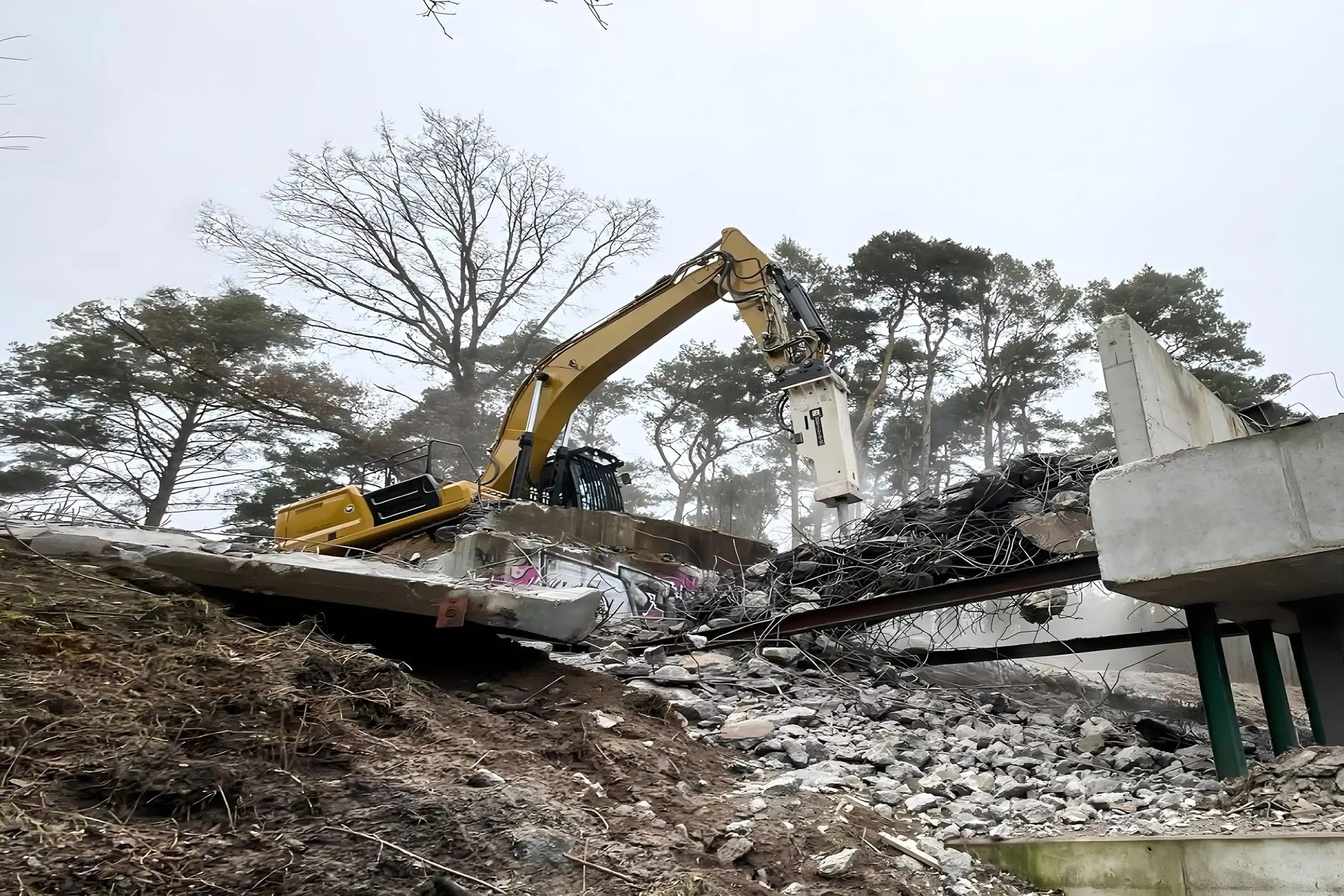
How do hydraulic breaker technologies enhance foundation demolition efficiency?
Variable speed controls allow operators to match impact characteristics to material resistance in real time. Softer sections respond to higher frequencies, while harder zones benefit from reduced blow rates with concentrated energy. This adaptability prevents the wasted cycles that occur when running fixed-frequency breakers across variable materials.
Auto-greasing eliminates the productivity losses associated with manual lubrication stops. More importantly, it prevents the accelerated wear that occurs when lubrication intervals get stretched during high-production periods.
Advanced hydraulic optimization reduces material scattering and improves precision. This matters particularly in urban settings where debris control affects neighboring properties and cleanup costs factor into project economics.
Maintenance Practices That Extend Equipment Life
Hydraulic breakers operate under severe conditions—repeated high-energy impacts, exposure to dust and debris, and thermal cycling from hydraulic fluid heating and cooling. Equipment longevity depends on maintenance discipline that addresses these stresses before they cause failures.
Daily inspections should cover visible wear on the tool, condition of hydraulic hoses and fittings, and any unusual sounds or behaviors during operation. Catching problems early prevents the cascade failures that occur when worn components damage adjacent parts.
Service intervals for hydraulic fluid and filter changes exist for reasons grounded in fluid chemistry. Hydraulic oil degrades under heat and contamination, losing its lubricating properties and potentially damaging pump components. Filter changes prevent circulating debris from scoring valve surfaces and cylinder walls.
Reduced impact force or unusual operating sounds signal developing problems that warrant immediate attention. Continuing operation with degraded performance rarely improves the situation and often converts minor repairs into major rebuilds.
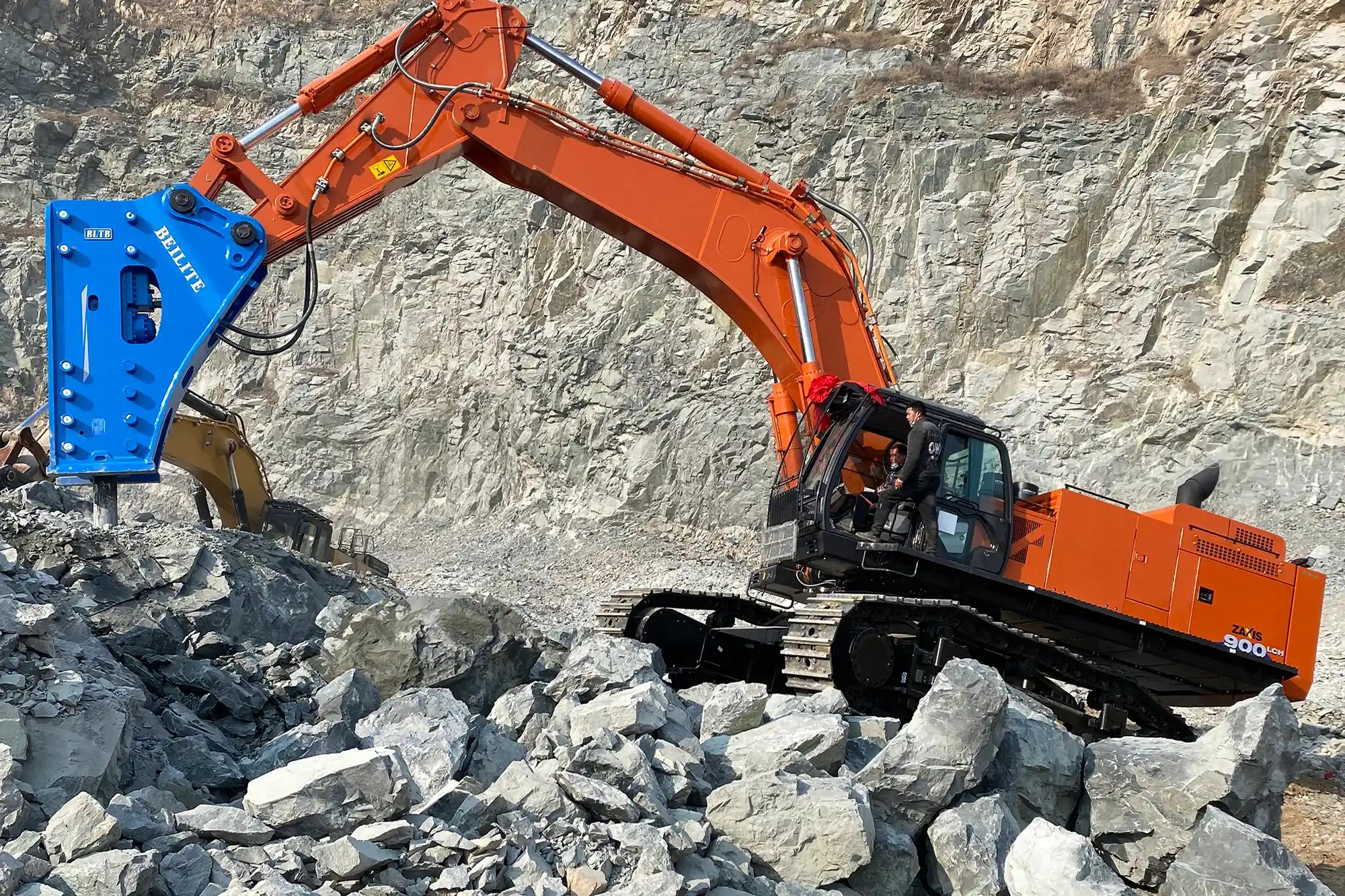
How to minimize noise and vibration in urban foundation projects?
Urban demolition operates under constraints that don’t apply to remote sites. Noise ordinances, vibration limits to protect adjacent structures, and public perception all influence how work gets scheduled and executed.
Noise-dampened breakers incorporate enclosed housings and sound-absorbing materials that reduce acoustic emissions at the source. The difference between standard and dampened units can determine whether you can operate during normal business hours or get restricted to limited windows.
Vibration isolators mounted between the breaker and carrier boom absorb shock energy before it transmits into surrounding soil and structures. This protection matters when working near buildings with sensitive foundations or equipment.
Operational scheduling provides another control layer. Concentrating high-impact work during less sensitive hours—typically mid-morning through early afternoon—reduces complaints and maintains community relations on extended projects.
What safety precautions are essential for hydraulic breaker operations?
Personal protective equipment requirements for hydraulic breaker operations include hard hats, safety glasses with side shields, hearing protection rated for the noise levels generated, and steel-toed boots. Flying debris and high noise levels make these non-negotiable.
Site hazard assessment before work begins should identify underground utilities, structural instability in adjacent areas, and any conditions that could create unexpected material behavior. Reinforced concrete with post-tensioned cables, for example, can release stored energy suddenly when cut.
Exclusion zones around the working area prevent bystanders and other workers from entering the debris field. The radius depends on material type and breaker size, but erring toward larger zones costs nothing compared to injury incidents.
Only trained and certified operators should run hydraulic breaker equipment. The learning curve for efficient, safe operation is steeper than it appears, and inexperienced operators tend to damage equipment while creating safety hazards.
Practical Application Patterns and Industry Direction
Complex foundation projects reveal patterns in how hydraulic breaker for foundation work selection affects outcomes. Urban renewal projects involving reinforced concrete foundations demonstrate the value of matching breaker capability to material resistance. The BLT-series Hydraulic Breaker Hammer for Demolition&Rock Breaking deployed on recent projects achieved efficient removal while maintaining the control needed to protect adjacent infrastructure.
The trajectory of foundation demolition technology points toward increased automation and remote operation capability. Smart monitoring systems that track operating parameters and predict maintenance needs are already entering the market. Remote operation capability addresses safety concerns in hazardous environments and potentially reduces labor requirements on straightforward demolition tasks.
Sustainability considerations are reshaping how projects approach material handling and equipment selection. Efficient breakers that maximize material breakdown per unit of fuel consumed align with both cost management and environmental compliance requirements.
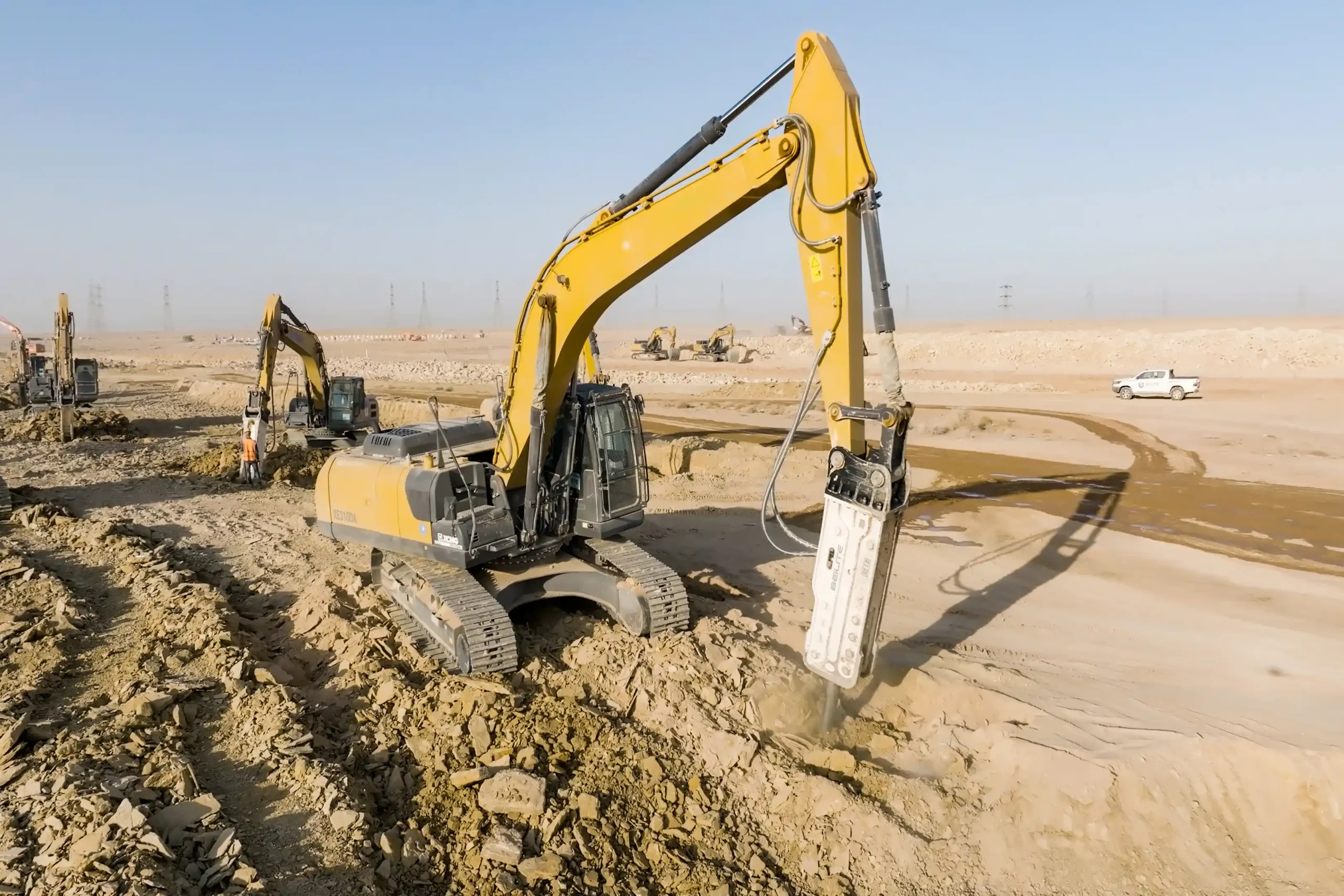
Beilite Hydraulic Breaker Solutions for Foundation Applications
Foundation project requirements vary widely, and equipment selection should reflect the specific demands of each application. Beilite hydraulic breakers are engineered with the precision and durability that demanding foundation work requires. The BLT and BLTB series products have established performance records across diverse operating conditions globally.
For project-specific consultation on hydraulic breaker selection and application, contact Beilite at 40008-40008 or [email protected].
Frequently Asked Questions About Hydraulic Breakers for Foundation Work
Why is proper maintenance crucial for hydraulic breakers in demanding foundation projects?
Foundation demolition subjects breakers to sustained high-energy impacts, abrasive materials, and thermal stress. Without consistent maintenance, wear accumulates faster than visible symptoms suggest. By the time performance degradation becomes obvious, internal damage has often progressed to the point where component replacement costs multiply. Regular service intervals catch problems during the minor repair phase and maintain the operating efficiency that project schedules depend on.
What are the key considerations for choosing the right hydraulic breaker for specific foundation types?
Material composition drives the initial selection—reinforced concrete, mass concrete, and rock each respond differently to impact characteristics. Energy class must match material resistance without exceeding carrier hydraulic capacity. Tool geometry should align with the primary breaking mode required. Project scale affects whether you optimize for peak performance or sustained operation over extended periods. Site access constraints may limit physical breaker dimensions regardless of other factors.
How does Beilite Machinery ensure the quality and performance of its hydraulic breakers for foundation work?
Beilite operates as a national high-tech enterprise with active participation in industry standards development. The engineering approach incorporates hundreds of patents addressing impact mechanics, hydraulic efficiency, and durability under severe operating conditions. Manufacturing processes apply quality controls calibrated to the performance demands of foundation demolition applications. The BLT and BLTB product lines reflect this engineering depth across the full range of carrier sizes and application requirements.