 English
 French

Hydraulic Breakers for Tunneling: Mastering Underground Rock Excavation
Underground rock doesn’t care about your schedule. When a tunneling crew hits unexpected hard strata at depth, the equipment either performs or the project bleeds time and money. I’ve watched hydraulic breakers turn what could have been week-long delays into manageable setbacks, and that kind of reliability shapes how modern tunnel construction actually gets done.
Why Tunneling Projects Depend on Hydraulic Breakers
Hydraulic breakers have become fundamental to current tunneling operations and underground mining operations. Traditional drilling and blasting methods create significant logistical headaches in confined spaces, not to mention the safety concerns that come with handling explosives underground. Hydraulic breakers provide a controlled, precise approach to rock excavation that sidesteps many of these problems.
This heavy-duty attachment handles the demanding work of breaking hard rock, scaling tunnel walls, and managing overburden. The consistent impact force these machines deliver directly improves project efficiency and reduces operational challenges. Their effect on project timelines is measurable, and rock breaking efficiency gains translate into real cost savings. For complex tunneling operations, they’ve become the go-to solution.
Engineering Hydraulic Breakers for Demanding Geological Conditions
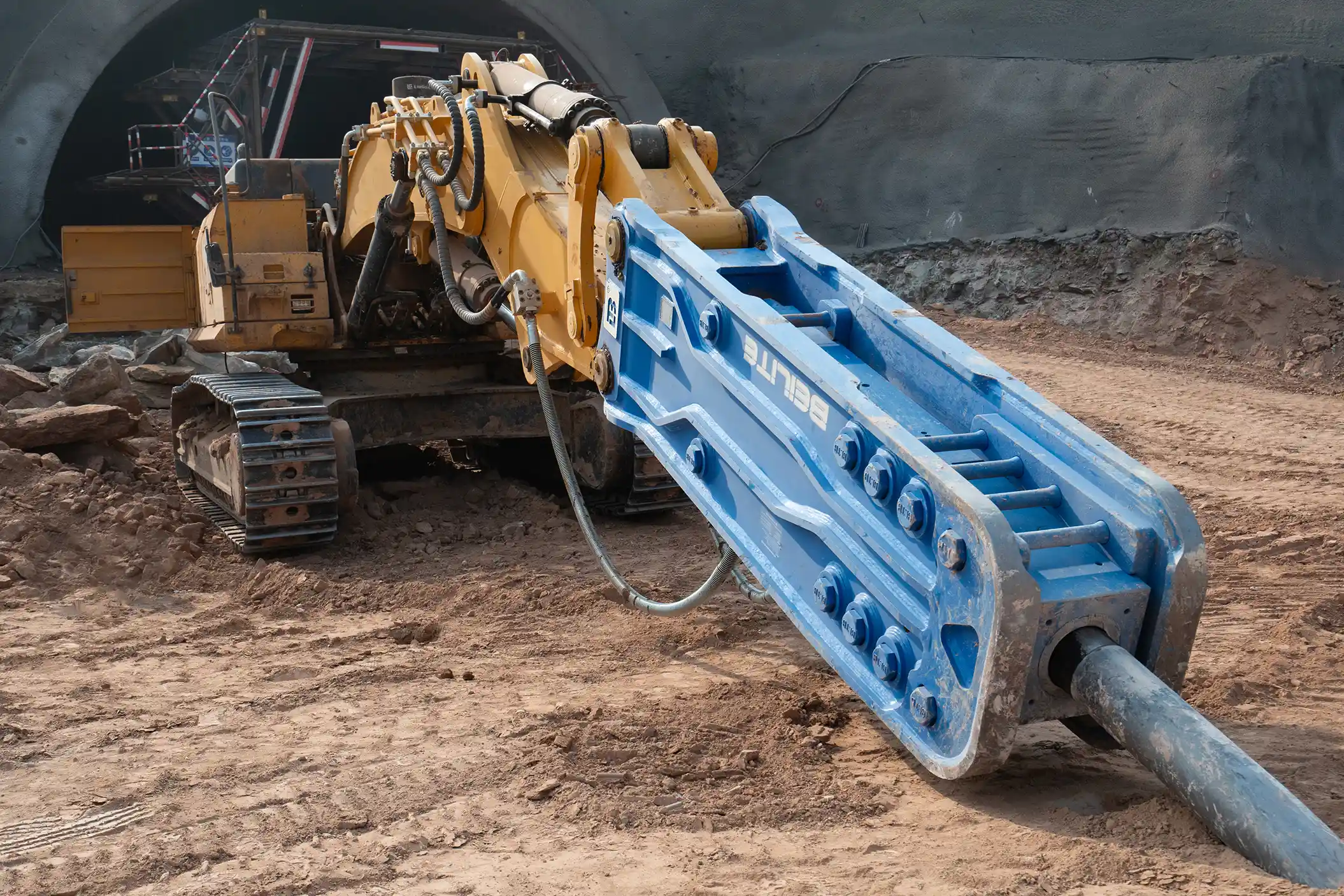
Beilite Machinery Co., LTD, a national high-tech enterprise, develops hydraulic hammer technology specifically for the geological conditions that make tunneling difficult. Our breakers incorporate features that optimize impact energy, control vibration, and suppress dust. These design choices result in superior heavy equipment performance across varying underground environments.
Advanced materials and precision engineering enhance durability and reliability. The equipment operates effectively whether encountering soft sedimentary formations or extremely hard crystalline rock. Our design philosophy prioritizes maximum output while minimizing stress on both the carrier machine and the operator running it.
Adjusting Impact Energy and Frequency for Different Rock Types
Different rock formations require different approaches. Our chisel design and hydraulic systems give operators the ability to adjust settings based on specific rock characteristics. Hard rock tunneling demands higher impact force to fracture dense materials efficiently. The breaker needs to hit hard enough to overcome the rock’s compressive strength.
Soft rock applications present different challenges. Shale, sandstone, and similar materials respond better to higher frequency impacts. This approach maintains momentum without excessive pulverization that creates handling problems. The adaptability ensures maximum rock breaking efficiency across varying strata within the same tunnel drive.
Protecting Operators Working in Confined Tunnel Spaces
Confined spaces create unique hazards that equipment design must address. Our hydraulic breakers incorporate safety features including anti-blank firing systems and robust housing designs. Blank firing, where the chisel strikes air instead of rock, generates damaging shock loads through the system. Preventing this protects both equipment and operators.
Operator comfort matters for sustained productivity. Effective vibration control and noise reduction technologies reduce fatigue during long shifts. Remote monitoring options allow operators to manage equipment from safer distances when conditions warrant. Combined with proper ventilation and personal protective equipment (PPE), these features create workable conditions underground.
Choosing the Right Hydraulic Breaker for Specific Tunneling Requirements
Selecting the correct hydraulic breaker for tunneling affects everything downstream. The decision involves excavator compatibility, required power output, and the specific tunneling methods being employed. Getting this right ensures cost-effectiveness, maximizes productivity, and prevents the premature equipment failures that derail schedules. Our team helps clients navigate these factors for optimal attachment selection.
| Model | Chisel Diameter (mm) | Working Oil Flow (L/min) | Working Pressure (bar) | Impact Frequency (bpm) | Applicable Excavator (t) |
|---|---|---|---|---|---|
| BLT-75 | 75 | 50–90 | 120–150 | 400–800 | 6–8.5 |
| BLT-100 | 100 | 80–110 | 150–170 | 350–700 | 10–14 |
| BLT-125 | 125 | 90–120 | 150–170 | 350–650 | 14–18 |
| BLT-140 | 140 | 120–180 | 160–180 | 350–500 | 20–24 |
| BLT-155 | 155 | 180–240 | 200–220 | 200–300 | 27–33 |
Matching Breakers to Carrier Machines and Hydraulic Systems
Proper excavator compatibility cannot be treated as optional for tunneling excavation equipment. The breaker’s operating weight, hydraulic flow, and pressure requirements must align with the carrier machine specifications. Mismatched systems produce reduced performance, accelerated wear, and potential damage to expensive components.
Whether integrating with a mini excavator, backhoe loader, or heavy excavator, following manufacturer specifications ensures optimal hydraulic power delivery. System longevity depends on this alignment. Pushing a carrier machine beyond its rated capacity to run an oversized breaker creates problems that compound over time.
How Geology Shapes Breaker Selection and Performance
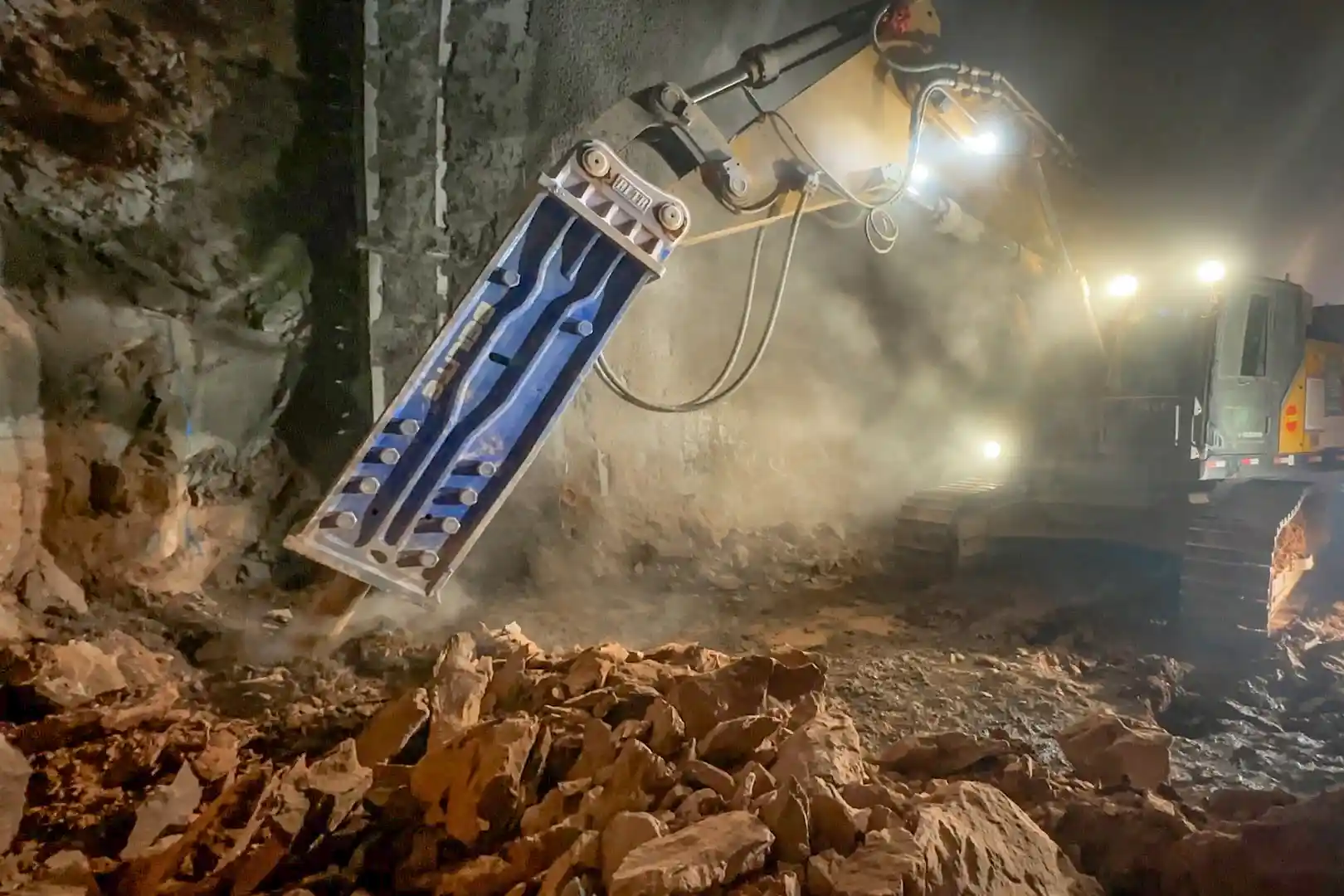
Geological conditions determine what a hydraulic breaker can accomplish. Rock hardness, abrasiveness, and fracture patterns dictate the necessary impact force and chisel types. Abrasive rock formations demand specialized tool steel chisels engineered to resist accelerated wear.
Fractured ground presents different considerations. Lower impact frequency sometimes proves more effective because it avoids further destabilizing already compromised rock masses. Comprehensive geological surveys and rock mass classification provide the information needed for selecting the most appropriate breaker model and operational strategy.
Keeping Hydraulic Breakers Running in Underground Conditions
Maintenance, service, and equipment longevity become magnified concerns underground. Downtime in tunneling projects carries steep costs because the entire operation often depends on a single piece of equipment advancing the face. Proactive strategies keep machines running and extend service life.
Regular inspections, timely spare parts availability, and adherence to recommended service intervals maximize reliability. This approach minimizes operational costs over the equipment’s working life.
Building Effective Maintenance Routines
Preventative maintenance schedules for a hydraulic breaker for tunneling should become routine. Daily checks including visual inspections for leaks and damage take minutes but catch problems early. Routine service covering lubrication, component inspection, and fluid level monitoring prevents minor issues from becoming major failures.
Following these schedules significantly reduces unexpected breakdowns. Consistent performance in underground construction depends on this discipline.
Getting More Life from Chisels in Tough Rock
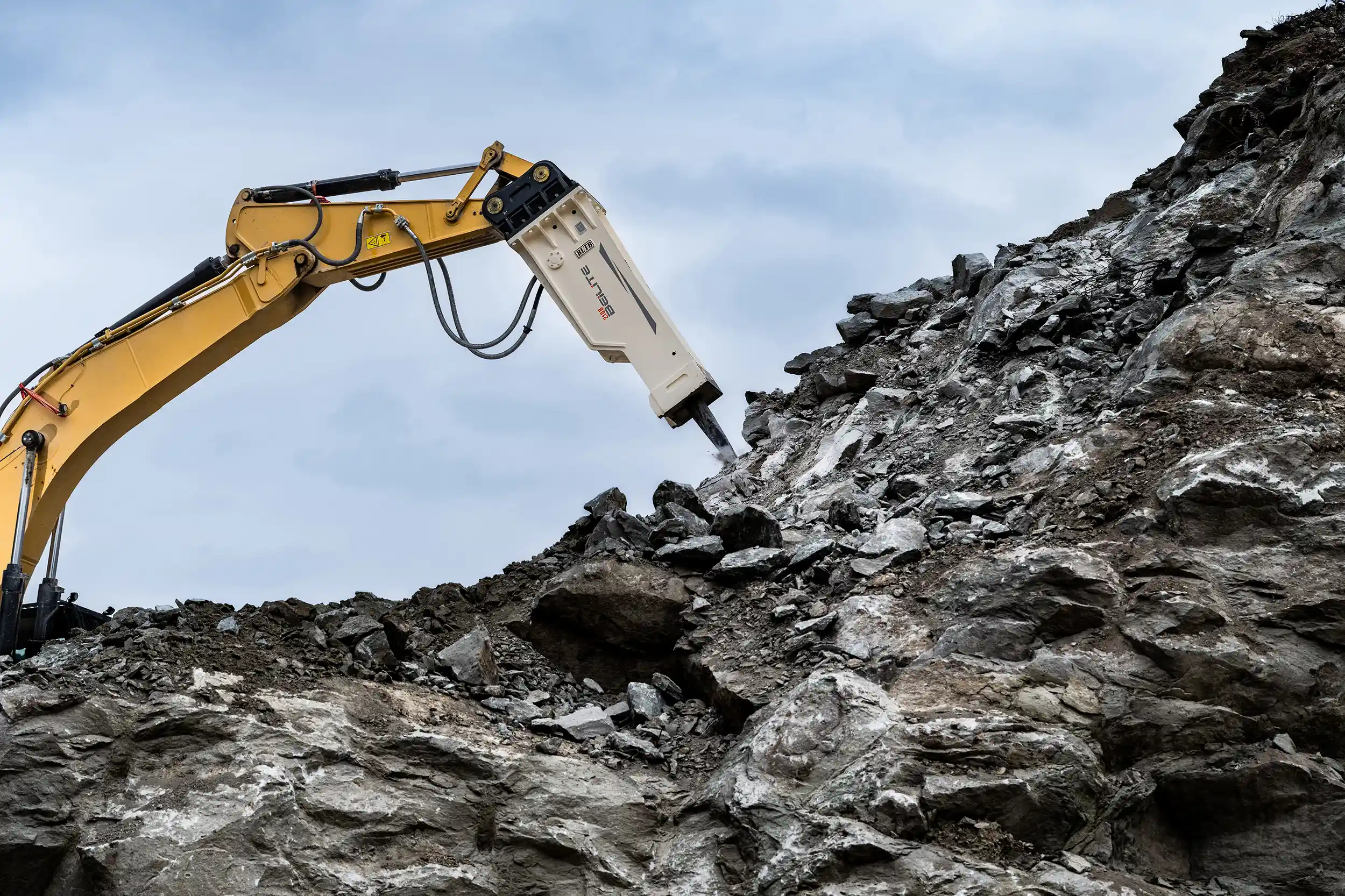
Chisel lifespan directly affects project economics, particularly in abrasive rock formations. Our chisels use high-grade tool steel engineered for maximum resistance to chisel wear. The metallurgy matters because it determines how many tons of rock a single chisel can break before replacement.
Proper operating techniques extend tool life considerably. Avoiding blank firing prevents unnecessary stress. Regular inspection catches dulling before it reduces efficiency. Regrinding when applicable and hardfacing treatments can further prolong tool life, reducing replacement frequency and associated costs.
Where Hydraulic Breaker Technology Is Heading
Tunneling operations will continue evolving as hydraulic hammer technology advances. Automation, remote operation, and smart technology are changing how breakers get deployed and managed. These developments promise enhanced safety features, improved energy efficiency, and greater precision in rock breaking.
Digital integration including predictive maintenance systems will minimize human intervention in routine decisions while optimizing operational workflows. Beilite continues developing sustainable practices and working to reduce the environmental impact of underground construction equipment.
Working with Beilite on Tunneling Projects
As a national high-tech enterprise with decades of innovation and hundreds of patents, Beilite Machinery Co., LTD focuses on advancing hydraulic breaker technology for demanding tunneling applications. Our BLT and BLTB brand tunneling solutions optimize project efficiency, enhance safety, and deliver the reliability that underground work requires. Contact our team at [email protected] or 40008-40008 for a consultation on your specific requirements.
Frequently Asked Questions About Tunneling Hydraulic Breakers
What advantages do hydraulic breakers offer compared to drilling and blasting in tunnels?
A hydraulic breaker for tunneling provides precision that drilling and blasting cannot match. Overbreak decreases, which means less material to remove and less ground support to install. The controlled operation enhances safety by eliminating explosive handling in confined spaces while limiting vibration and noise. Hydraulic breakers for tunneling adapt to various rock types and deliver consistent rock breaking efficiency without the permitting and logistical complexity that comes with explosives.
How do I verify that a hydraulic breaker will work with my excavator?
Excavator compatibility for tunneling excavation equipment requires matching three specifications: operating weight, hydraulic flow, and pressure requirements. Check both the hydraulic breaker hammer and carrier machine documentation. The excavator’s auxiliary hydraulic circuit must deliver adequate flow at the correct pressure without exceeding system limits. When specifications fall in borderline ranges, consulting with equipment specialists prevents costly mismatches.
What maintenance practices extend hydraulic breaker life underground?
Hydraulic hammer maintenance for underground mining operations starts with daily visual inspections for leaks, loose fittings, and visible damage. Regular lubrication at specified intervals keeps moving parts functioning properly. Chisel inspection should happen frequently because worn tools reduce efficiency and increase stress on the breaker. Following manufacturer service intervals for component replacement and fluid changes, and using genuine spare parts, protects durability and service life.
Are hydraulic breakers suitable for tunneling near sensitive areas?
Hydraulic breakers work well in environmentally sensitive tunneling projects. They generate substantially less noise and vibration than blasting, reducing disturbance to surrounding ecosystems and nearby structures. Many current models support dust suppression systems that improve air quality in underground construction. These characteristics make them appropriate where blast restrictions or community concerns limit other methods. The approach supports sustainable practices in sensitive locations.
Why does impact energy matter when selecting a breaker for hard rock?
Impact energy directly determines rock breaking efficiency in dense formations. Higher impact energy fractures very hard or abrasive rock more effectively because each blow delivers enough force to exceed the rock’s failure threshold. For hard rock tunneling, insufficient impact energy means the breaker bounces rather than breaks, wasting time and accelerating wear. The selected impact energy must balance against the carrier machine’s capacity to avoid overloading the hydraulic system.