 English
 French

Hydraulic Breaker Price: Mastering Investment for Optimal ROI
Buying a hydraulic breaker is one of those decisions that stays with you for years. The upfront number on the quote matters, but what really determines whether you made a smart call is everything that happens after — the fuel it burns, the parts it needs, the hours it runs without complaint. I’ve seen operations where a cheaper breaker ended up costing twice as much as a premium unit within three years. The math only works when you look at the full picture.
What Actually Drives the Purchase Price
The price tag on a Hydraulic Breaker Hammer for Demolition&Rock Breaking reflects several layers of engineering and business decisions. Manufacturing quality sits at the top. Breakers built with high-grade alloys and tight tolerances cost more to produce, but they hold up under sustained impact loads that would crack lesser units. Heat treatment processes, precision machining, and the grade of steel in the housing and chisel all factor into what you pay.
Brand reputation carries weight too. Manufacturers with long track records of reliable equipment can charge more because buyers know what they’re getting. That premium often includes better documentation, more consistent quality control, and a support network that actually answers the phone.
Technology adds cost in ways that sometimes pay back quickly. A hydraulic breaker Hammer with an energy recovery system or automatic lubrication runs more efficiently and needs less manual attention. Noise reduction features matter on urban job sites where regulations are strict. These aren’t luxury items — they’re practical features that affect daily operations.
R&D investment shows up in the price too. Developing a better piston seal or a more efficient gas chamber takes years and significant capital. Manufacturers spread those costs across their product lines. A comprehensive warranty signals confidence in the product and shifts some risk away from the buyer, which has real value when you’re committing to equipment that might run for a decade.
| Factor | Description | Impact on Price |
|---|---|---|
| Manufacturing Quality | Grade of materials, precision engineering, heat treatment | High |
| Brand Reputation | Market standing, reliability track record, innovation history | Moderate to High |
| Technology & Features | Energy recovery, noise reduction, auto-lube, advanced hydraulic systems | Moderate to High |
| R&D Investment | Cost of developing patented designs and performance enhancements | Moderate |
| Warranty Coverage | Length and comprehensiveness of manufacturer’s guarantee | Moderate |
| Market Demand & Supply | Current economic conditions, availability of raw materials, competition | Variable |
Operating Costs Tell the Real Story
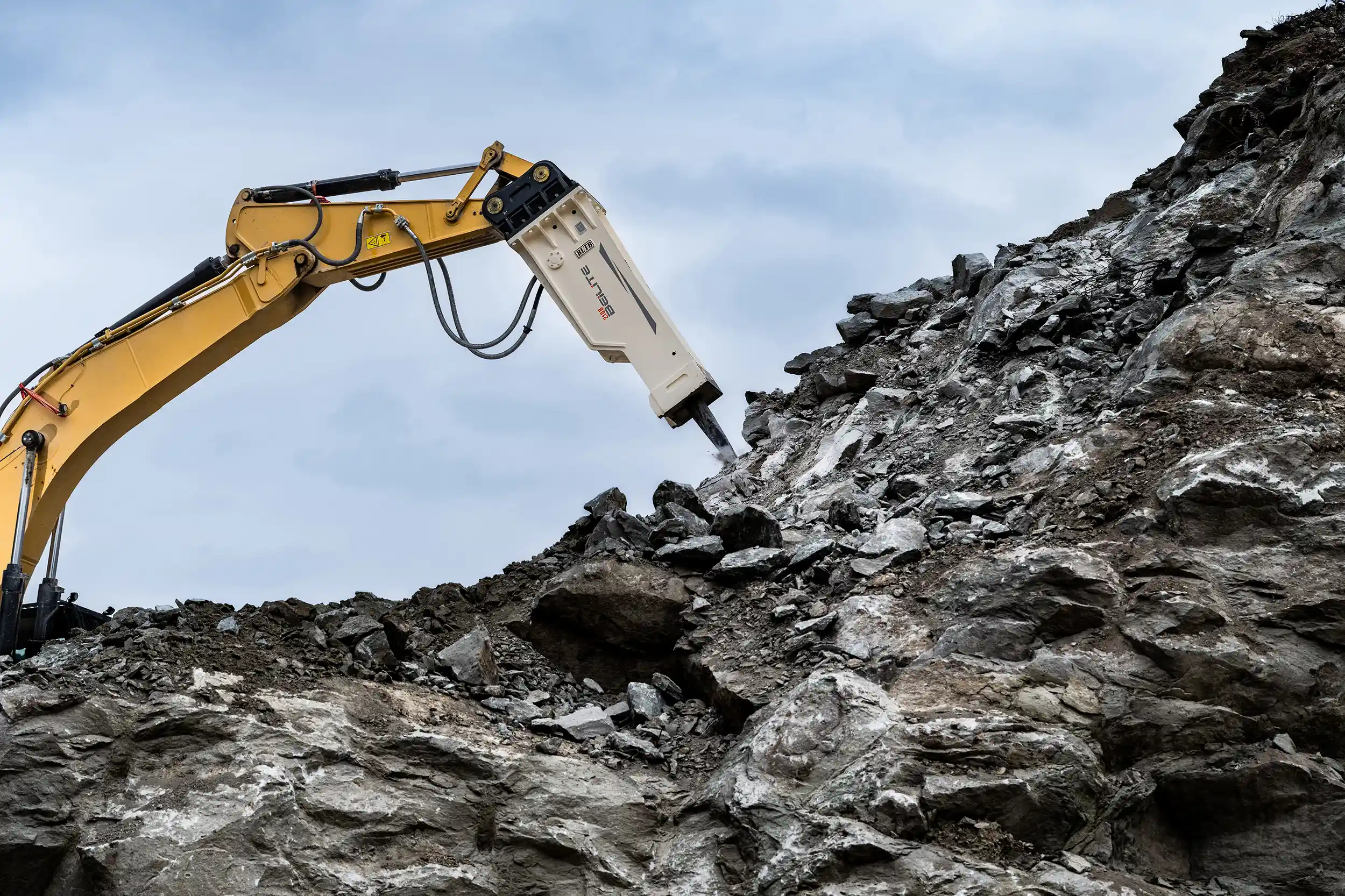
The purchase price is just the entry fee. What you spend over the next five to ten years on fuel, maintenance, parts, and downtime determines whether the investment was sound. A less efficient hydraulic breaker demands more hydraulic flow from the carrier, which means burning more diesel every hour. Over thousands of operating hours, that difference compounds.
Maintenance costs split into predictable and unpredictable categories. Routine servicing — lubrication, hydraulic fluid changes, seal inspections — follows a schedule you can budget for. Repair frequency is harder to predict, but quality shows up here. Well-built breakers go longer between major repairs and need fewer replacement parts. When parts are needed, genuine components from the original manufacturer typically last longer than aftermarket alternatives, even if they cost more upfront.
Labor costs for maintenance and operation add up quietly. A breaker that needs frequent attention pulls technicians away from other work. Downtime costs often hit hardest. Every hour a Hydraulic Breaker Hammer for Mining and Quarrying sits idle means lost production. On tight project schedules, that delay can cascade into penalty clauses and crew overtime.
Chisel wear is a consumable expense that varies dramatically based on what you’re breaking and how the operator works. Hard granite eats through chisels faster than concrete. Proper technique — avoiding blank firing, maintaining correct angles — extends chisel life significantly. The right hydraulic fluid, changed at appropriate intervals, protects internal components and prevents the kind of wear that leads to expensive rebuilds.
What Factors Influence Hydraulic Breaker Pricing?
Impact energy and carrier weight compatibility are the primary technical drivers. Higher impact energy requires heavier internal components and more sophisticated hydraulic circuits, which increases manufacturing cost. A breaker matched correctly to its carrier operates efficiently; one that’s too large or too small creates problems that show up as premature wear and poor performance.
Chisel diameter and material grade matter because larger, harder chisels break tougher materials but cost more to produce. Manufacturing precision affects how long seals last and how efficiently energy transfers from the piston to the chisel. Brand value and after-sales support round out the pricing equation — you’re paying for the product and the relationship.
Selecting for Performance, Not Just Price
Return on investment depends on matching the hydraulic breaker to the actual work. A unit designed for light demolition won’t survive long in a quarry. A massive breaker on a small excavator wastes fuel and stresses the carrier’s hydraulic system. Getting this match right is the foundation of good ROI.
Impact frequency and energy transfer efficiency are the metrics that matter most. Higher frequency works well in softer materials where rapid strikes prevent re-compaction. Harder materials need slower, more powerful blows. Efficient energy transfer means less hydraulic power lost as heat and more delivered to the chisel tip.
Application suitability drives the selection process. For continuous heavy-duty operation — the kind you see in mining — you need a breaker built for that duty cycle. The BLT-150, designed for 24-27t excavators, delivers 200–300 bpm at 180–200 bar and handles sustained operation in demanding conditions. Smaller tasks call for different equipment. The BLT-40 fits 0.5–1.2t Hydraulic Hammer Breaker For Mini Excavator,Mini Excavator Breaker and handles light demolition and trenching work where a larger unit would be overkill.
| Breaker Model | Carrier Weight (t) | Chisel Diameter (mm) | Impact Frequency (bpm) | Typical Application |
|---|---|---|---|---|
| BLT-40 | 0.5–1.2 | 40 | 800–1400 | Light demolition, small trenching |
| BLT-75 | 6–8.5 | 75 | 400–800 | Medium demolition, road breaking |
| BLT-125 | 14–18 | 125 | 350–650 | Heavy demolition, quarrying |
| BLT-155 | 27–33 | 155 | 200–300 | Primary breaking, large-scale mining |
| BLT-165 | 33–38 | 165 | 150–300 | Extreme breaking, specialized mining |
Warranty and Support Reduce Long-Term Risk
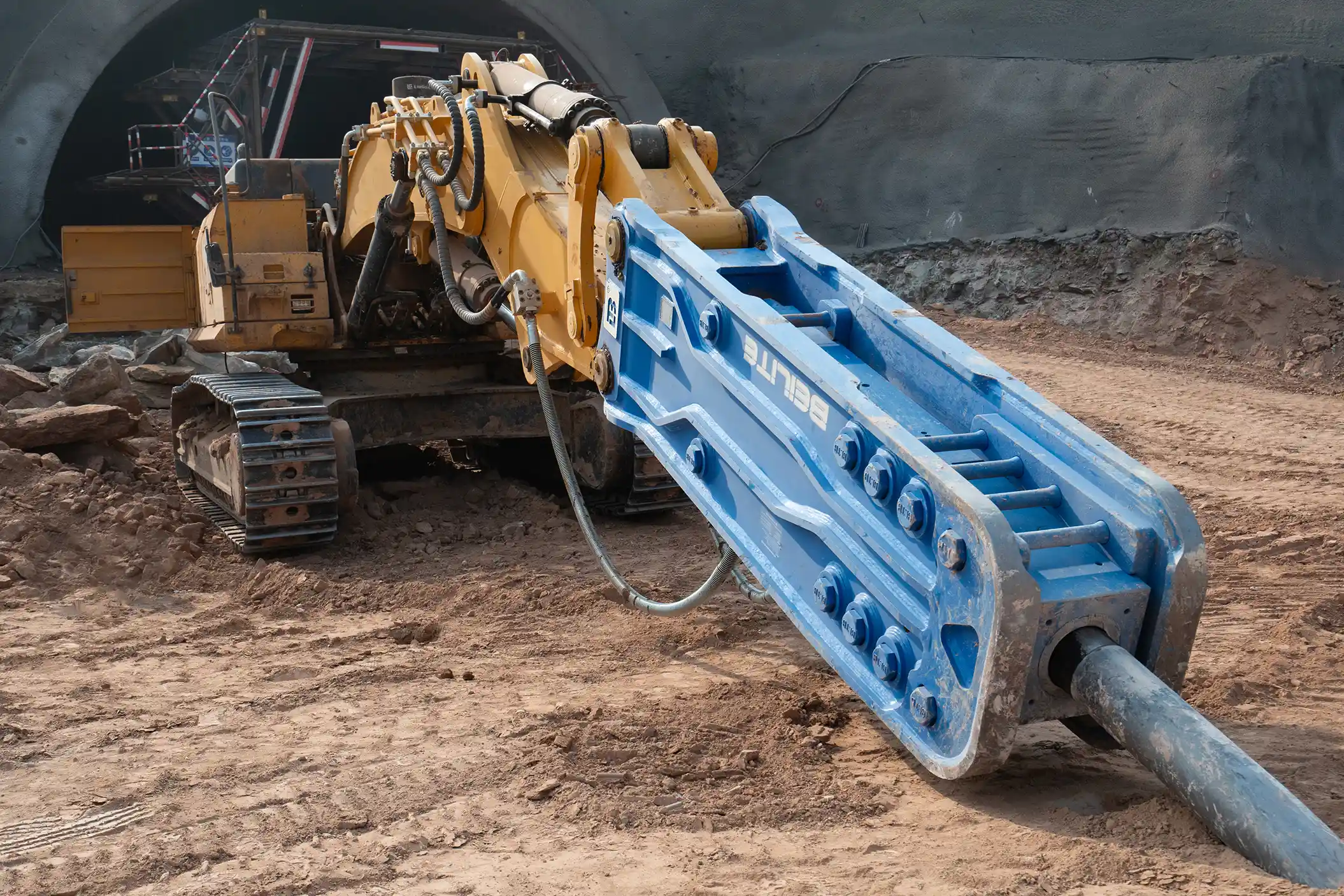
A strong warranty does more than cover repair costs — it signals that the manufacturer stands behind the product. When something fails, and eventually something always does, the warranty determines whether that failure is a minor inconvenience or a major expense. Coverage scope and duration vary significantly between manufacturers, and the details matter.
Technical support availability affects how quickly you can diagnose problems and get back to work. Genuine spare parts, while sometimes more expensive than aftermarket options, are engineered to fit and perform correctly. Using non-genuine parts can void warranties and sometimes creates new problems.
Training programs for operators and maintenance staff pay dividends over the equipment’s entire life. Operators who understand proper technique cause less wear. Maintenance technicians who know the equipment can spot developing problems before they become failures. A widespread service network means help is available regardless of where the project is located.
How Can You Optimize the Total Cost of Ownership for a Hydraulic Breaker?
Preventative maintenance is the single most effective strategy. Following manufacturer schedules, using specified fluids and lubricants, and replacing wear items before they fail prevents the cascading damage that turns small problems into major repairs. Operator training reduces misuse — blank firing, over-pressuring, and improper angles all accelerate wear.
Monitoring systems that track operating hours, impact counts, and hydraulic pressures help identify issues early. Some problems develop gradually, and catching them before failure saves both repair costs and downtime. Resale value is worth considering too. High-quality hydraulic breakers from recognized manufacturers retain value better than budget alternatives, which affects the total cost calculation when it’s time to upgrade.
Engineering That Delivers Value Over Time
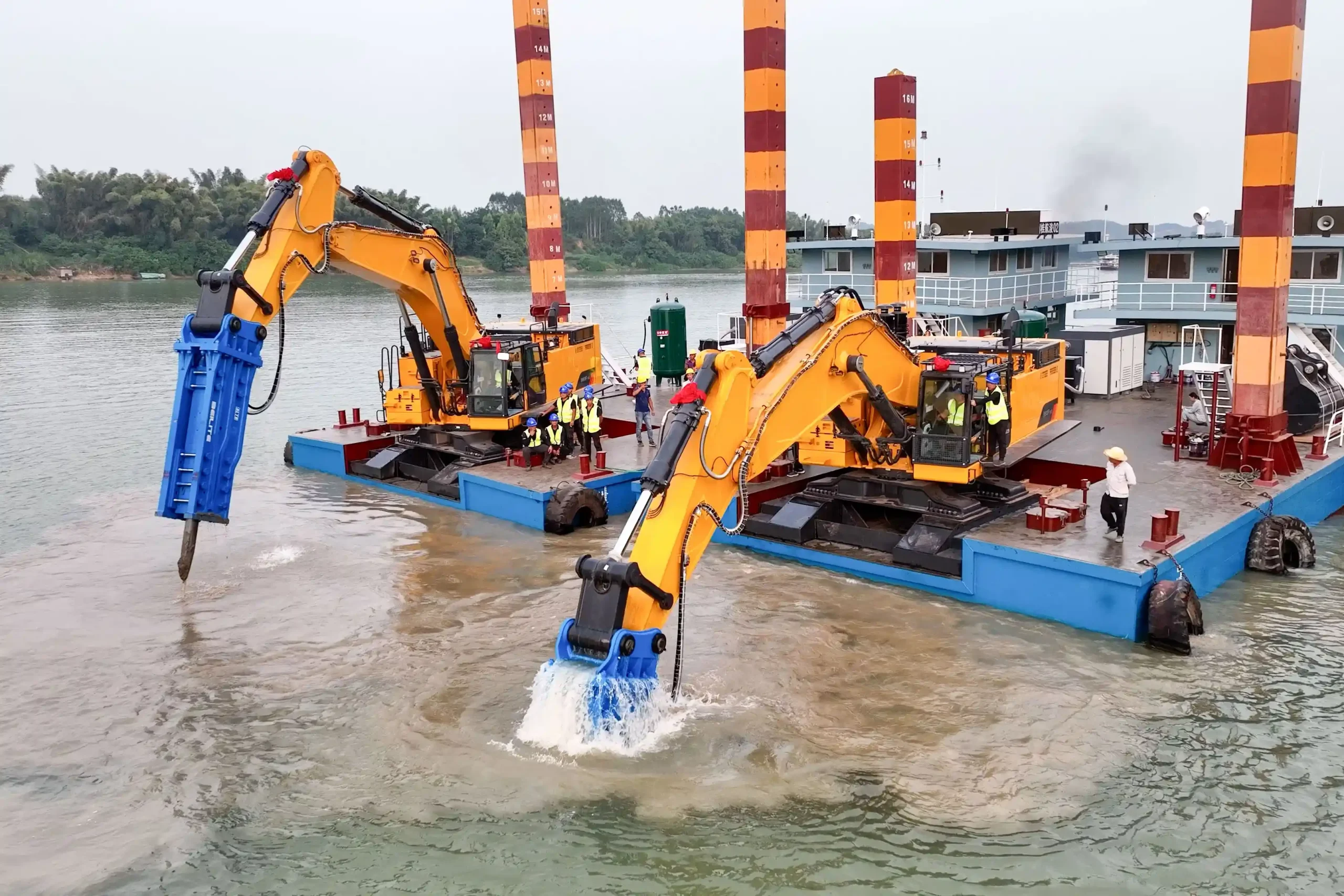
BEILITE Machinery Co., LTD. has been building hydraulic breakers since 2002. As a national high-tech enterprise in China, the company focuses on R&D and manufacturing of high-end hydraulic breakers. That focus has produced meaningful advances in core technologies — the kind that show up in longer service intervals and better energy efficiency rather than marketing brochures.
Participation in developing national standards for hydraulic breakers in China reflects technical depth. Hundreds of patents cover innovations in piston design, gas chamber efficiency, and wear-resistant materials. The BLT and BLTB product lines serve applications from light demolition to heavy Hydraulic Breaker Hammer for Mining and Quarrying work, with each model engineered for its specific duty cycle.
Manufacturing precision matters because hydraulic breakers operate under extreme conditions. Repeated high-energy impacts stress every component. Tight tolerances and quality materials determine whether a unit runs for 5,000 hours or 10,000. Beilite’s products export to over 100 countries, building a track record across diverse conditions and applications. That global presence creates a feedback loop — field experience from varied environments informs design improvements.
Move Forward with Confidence
Securing a strong return on your hydraulic breaker investment starts with understanding the full cost picture and selecting equipment that matches your actual needs. Beilite Machinery’s engineering expertise and global support network provide the foundation for equipment that performs reliably and costs less to own over its operational life. Contact our specialists at [email protected] or call 40008-40008 to discuss your specific requirements and explore the BLT and BLTB product lines.
Frequently Asked Questions About Hydraulic Breaker Investment
What is the average lifespan of a hydraulic breaker and how does it impact cost?
Lifespan ranges from 5,000 to over 10,000 operating hours depending on build quality, maintenance practices, and application severity. A breaker that runs 10,000 hours before major rebuild costs half as much per hour as one that needs attention at 5,000 hours. This makes initial quality a direct driver of long-term economics, not just a nice-to-have feature.
How does carrier machine weight affect breaker compatibility and overall cost?
Carrier weight determines the hydraulic flow and pressure available to the breaker. An undersized breaker on a large excavator wastes the carrier’s capacity. An oversized breaker on a small excavator strains the hydraulic system and can damage both machines. Proper matching ensures efficient operation and prevents the premature wear that drives up maintenance costs.
Are cheaper hydraulic breakers a good investment in the long run, considering their price?
Lower initial price often correlates with higher lifetime cost. Budget breakers typically use lower-grade materials, have less precise manufacturing tolerances, and come with limited support. The result is more frequent repairs, shorter service life, and lower productivity. A well-built hydraulic breaker from a reputable manufacturer usually delivers better total cost of ownership despite the higher purchase price.
What role does after-sales service play in the total cost of owning a hydraulic breaker?
After-sales service directly affects downtime duration and repair quality. Readily available genuine spare parts mean faster repairs. Expert technical support helps diagnose problems correctly the first time. Comprehensive warranty coverage shifts repair costs to the manufacturer. Together, these factors can significantly reduce the total cost of ownership over the equipment’s life.
How do Beilite’s innovations contribute to reducing hydraulic breaker operational costs?
Beilite’s R&D focuses on practical improvements — better energy transfer efficiency, longer-lasting seals, more durable wear components. These translate to lower fuel consumption per ton of material broken, extended intervals between maintenance, and fewer unplanned repairs. The cumulative effect is lower operating cost and higher productivity across the hydraulic breaker’s service life.