 English
 French

Hydraulic Breaker for Sale: Invest in Unmatched Durability
Buying a hydraulic breaker is one of those decisions where the upfront price tells you almost nothing about what you’ll actually spend over the next five years. I’ve watched contractors agonize over a few thousand dollars on the purchase, then burn through that difference in a single month of downtime and repair bills. The real question isn’t what a breaker costs—it’s what it costs you to operate, maintain, and eventually replace. That’s the lens we’ll use here: performance specs that actually matter, matching logic that prevents expensive mistakes, and the maintenance realities that separate equipment investments from money pits.
Matching the Breaker to Your Carrier Machine and Worksite
Getting this match wrong is the fastest way to turn a capital investment into a liability. The relationship between your excavator and the hydraulic breaker isn’t just about physical fit—it’s about hydraulic compatibility, weight distribution, and operational efficiency.
Your excavator’s hydraulic flow capacity and operating pressure set hard boundaries on what breakers will actually perform. An undersized hydraulic breaker for sale will struggle through material that a properly matched unit would handle in half the time. An oversized one risks hydraulic system damage, accelerated wear on your carrier, and potentially dangerous operating conditions.
Consider the BLT-40, designed for 0.5–1.2 ton mini excavators. It requires 15–30 L/min hydraulic flow. Compare that to the BLT-155, built for 27–33 ton machines, which demands 180–240 L/min. That’s not a minor difference—it’s an entirely different operational category. A skid steer breaker or mini excavator breaker has completely different flow requirements than a heavy duty hydraulic breaker built for quarry work.
The material you’re breaking matters just as much as the machine you’re mounting to. Hard rock demands higher impact energy and slower, more deliberate strikes. Concrete demolition often benefits from faster impact frequency. Trenching applications need precision and visibility over raw power.
| Breaker Type | Primary Application | Key Advantage |
|---|---|---|
| Side-Mounted | Demolition, Trenching | Excellent visibility |
| Top-Mounted | Quarrying, Road Work | Superior reach |
| Box-Type | Urban Demolition, Tunneling | Enhanced sound suppression, protection |
Box-type breakers have become increasingly common in urban demolition precisely because noise regulations have teeth now. The sound suppression isn’t just a comfort feature—it’s often a permit requirement.
Performance Specifications That Actually Predict Job Site Results
Impact frequency gets a lot of attention in spec sheets, but it’s only meaningful in context. A hydraulic breaker running at 300 beats per minute sounds impressive until you realize those strikes might be delivering insufficient energy to fracture the material you’re working. The relationship between frequency and energy class determines real-world breaking speed.
Energy class, measured in joules, tells you how much force each strike delivers. Higher energy means better penetration in hard materials. The BLT-150, designed for 24-27 ton excavators, operates at 180-200 bar with 200-300 bpm impact frequency. That combination delivers substantial breaking power because the energy per strike is calibrated to the frequency.
Operating pressure and working oil flow need to stay within specified ranges for consistent performance. Running a hydraulic hammer outside its designed parameters doesn’t just reduce efficiency—it accelerates wear on internal components and can void warranty coverage.
Two features worth paying attention to: nitrogen accumulators and anti-blank firing systems. The accumulator stores energy between cycles and cushions the hydraulic system from pressure spikes. Anti-blank firing prevents the piston from striking when the tool bit isn’t engaged with material. That sounds like a minor convenience until you calculate the cost of replacing a damaged piston assembly.
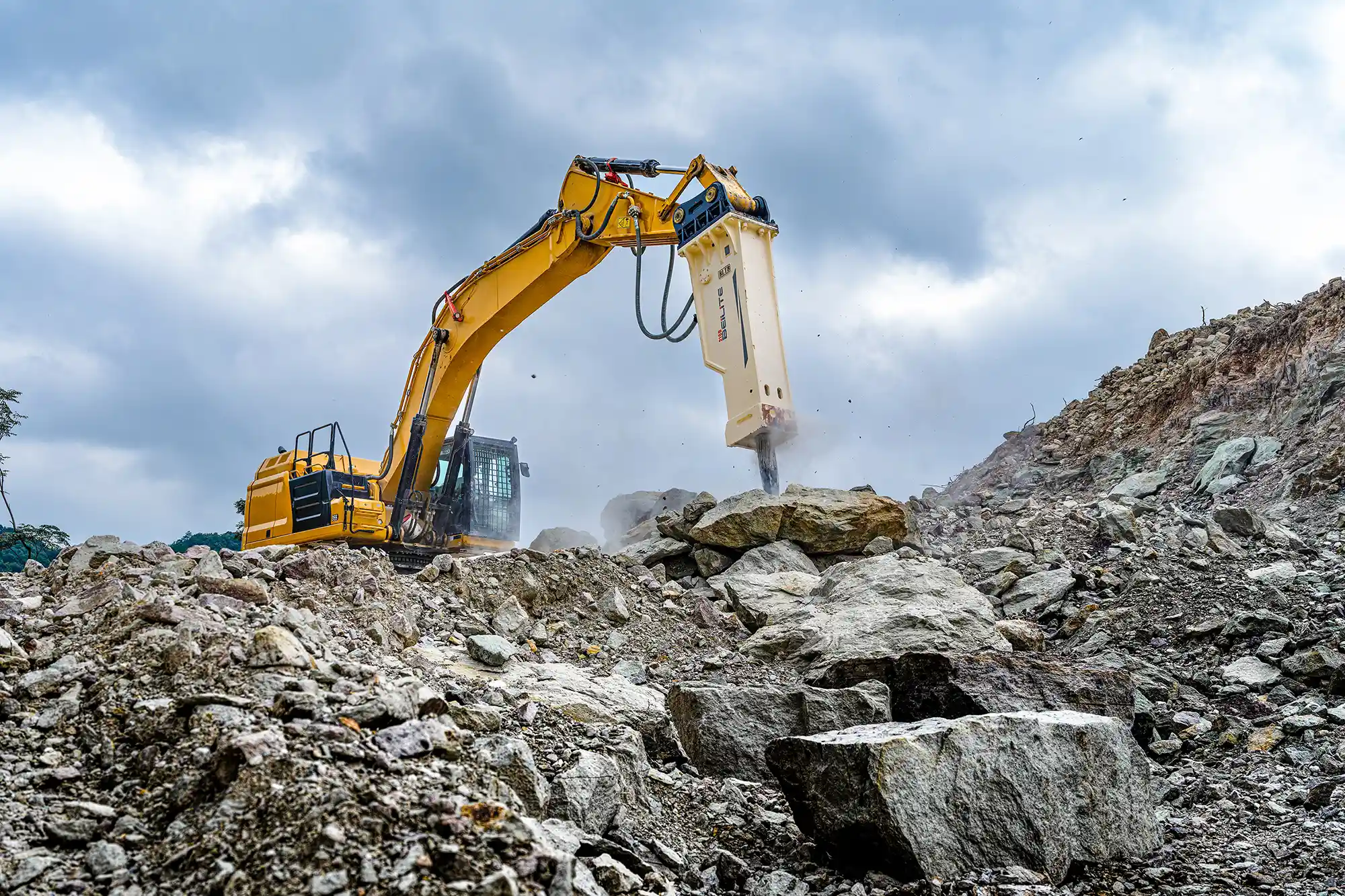
Mining hydraulic breaker and quarrying hydraulic breaker applications demand the highest power-to-weight ratios because downtime in those operations costs thousands per hour. The engineering that goes into those models reflects that economic reality.
Durability Engineering and the Maintenance Reality
No hydraulic breaker is maintenance-free. The question is whether maintenance is predictable and manageable or whether you’re constantly reacting to failures. Build quality determines which category your equipment falls into.
High-strength alloys in the housing and internal components resist the constant stress of impact operations. But material quality only matters if the design accounts for real-world abuse. Dust infiltration, temperature extremes, and operator error all test equipment in ways that lab conditions don’t replicate.
The tool bit takes the most punishment. Chisel diameter affects both breaking power and penetration characteristics, but chisel quality determines how often you’re stopping work to swap in a replacement. Cheap tool bits cost less per unit and more per month.
Maintenance Practices That Extend Operational Life
Preventative maintenance isn’t optional if you want predictable equipment performance.
- Greasing Frequency: Lubricate the tool bit and bushings according to manufacturer guidelines. Under-greasing accelerates wear; over-greasing attracts debris.
- Hydraulic Oil Quality:: Contaminated oil is the leading cause of premature seal failure. Check levels and condition regularly.
- Chisel Inspection: Look for wear patterns, cracks, or blunting before each shift. A damaged chisel reduces efficiency and stresses other components.
- Seal Kits: Replace seals on schedule, not just when they start leaking. By the time you see fluid, internal damage may already be occurring.
- Nitrogen Pressure: The accumulator loses pressure over time. Verify at manufacturer-recommended intervals.
- Hose Connections: Loose connections cause pressure drops and create leak points. Tighten during routine inspections.
Genuine spare parts cost more than aftermarket alternatives. They also fit correctly, meet original specifications, and don’t void your breaker warranty. That math usually favors genuine parts once you factor in downtime from failed components.
Realistic Expectations for Equipment Lifespan
Asking how long a hydraulic breaker lasts is like asking how long a truck lasts. The answer depends entirely on how it’s used and maintained. High-quality breakers operating in reasonable conditions with proper maintenance can deliver thousands of operational hours across many years of service.
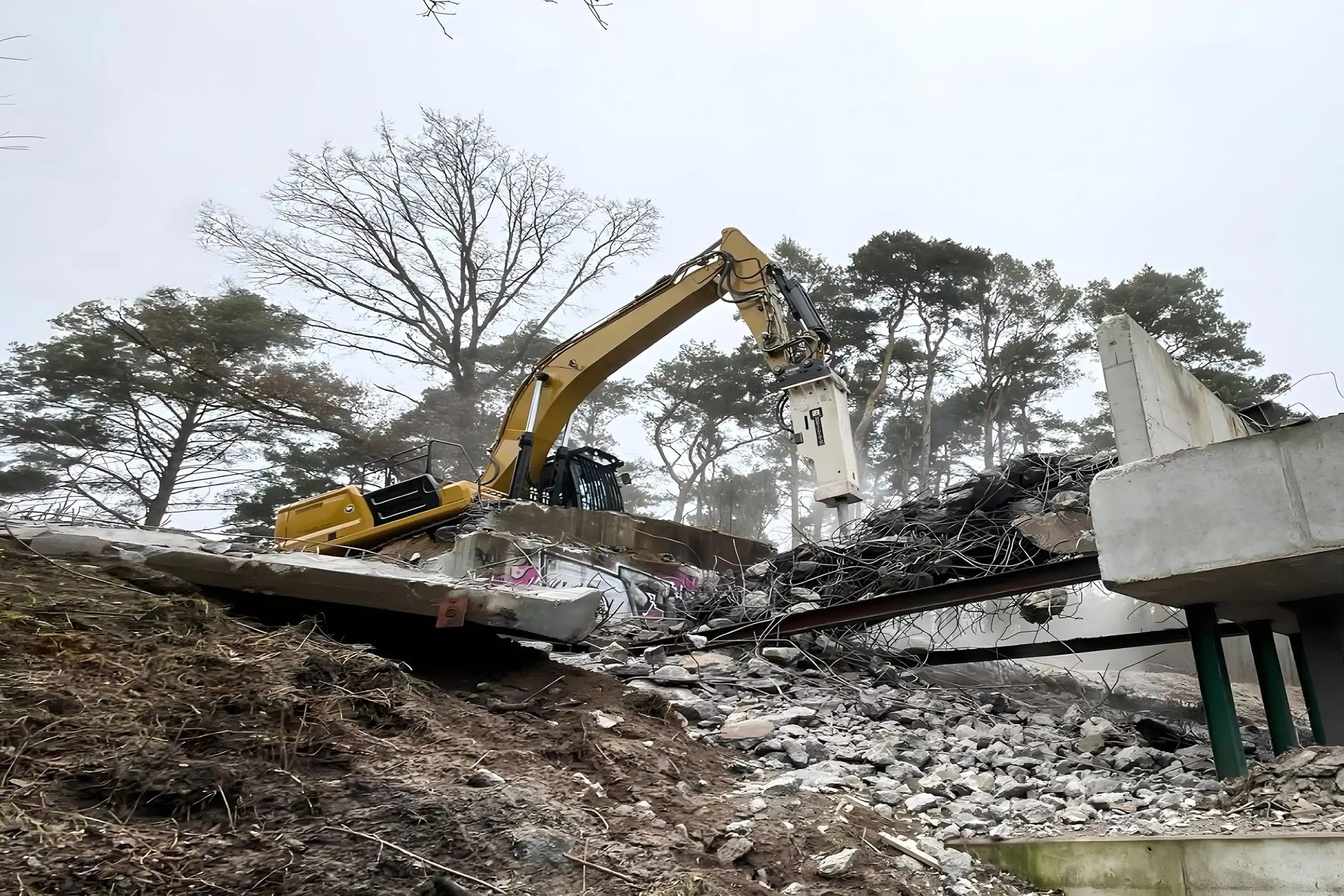
Hard rock applications wear equipment faster than concrete demolition. Continuous operation accelerates wear compared to intermittent use. Operator technique matters more than most buyers realize—blank firing, improper angles, and excessive force all shorten lifespan.
The breaker repair services and after-sales support available from your supplier become increasingly important as equipment ages. A manufacturer with a global parts network and technical support infrastructure protects your investment in ways that a discount supplier cannot.
Total Cost of Ownership Beyond the Purchase Price
The hydraulic hammer price on the invoice represents maybe 30% of what you’ll actually spend over the equipment’s useful life. Fuel consumption, maintenance costs, spare parts, and downtime make up the rest.
New hydraulic breakers from established hydraulic breaker manufacturers typically deliver lower total cost of ownership despite higher purchase prices. The engineering quality reduces maintenance frequency, the parts availability minimizes downtime, and the warranty coverage protects against early failures.
Used hydraulic breakers can make financial sense in specific situations—short-term projects, backup equipment, or applications where utilization will be low. But the inspection required to evaluate used equipment properly takes expertise, and hidden wear can turn a bargain into an expensive mistake.
The breaker rental vs. purchase calculation depends on utilization rate. If you’re running a rock breaker attachment regularly, ownership almost always wins. For occasional use, rental avoids capital commitment and maintenance responsibility.
A realistic ROI calculation should include:
- Productivity gains from proper equipment matching
- Maintenance costs based on manufacturer guidelines
- Downtime probability based on equipment quality and support availability
- Resale value at end of useful life
Long-Term Value From Quality Equipment
The difference between adequate equipment and excellent equipment shows up in daily productivity, not just in dramatic failures. A well-engineered hydraulic breaker starts faster, breaks material more efficiently, runs cooler, and requires less operator compensation for equipment limitations.
Participation in national standards formulation indicates a manufacturer’s technical depth and commitment to the industry. Companies that help write the standards understand the engineering at a level that shows up in product quality.
Global export presence—serving over 100 countries, for example—demonstrates that equipment performs across diverse conditions and that support infrastructure exists wherever the equipment operates. A Hydraulic Breaker Hammer for Mining and Quarrying that works in Australian iron ore operations and Canadian winter conditions has been tested in ways that regional products haven’t.
Frequently Asked Questions About Hydraulic Breakers
What types of hydraulic breakers are best for specific applications?
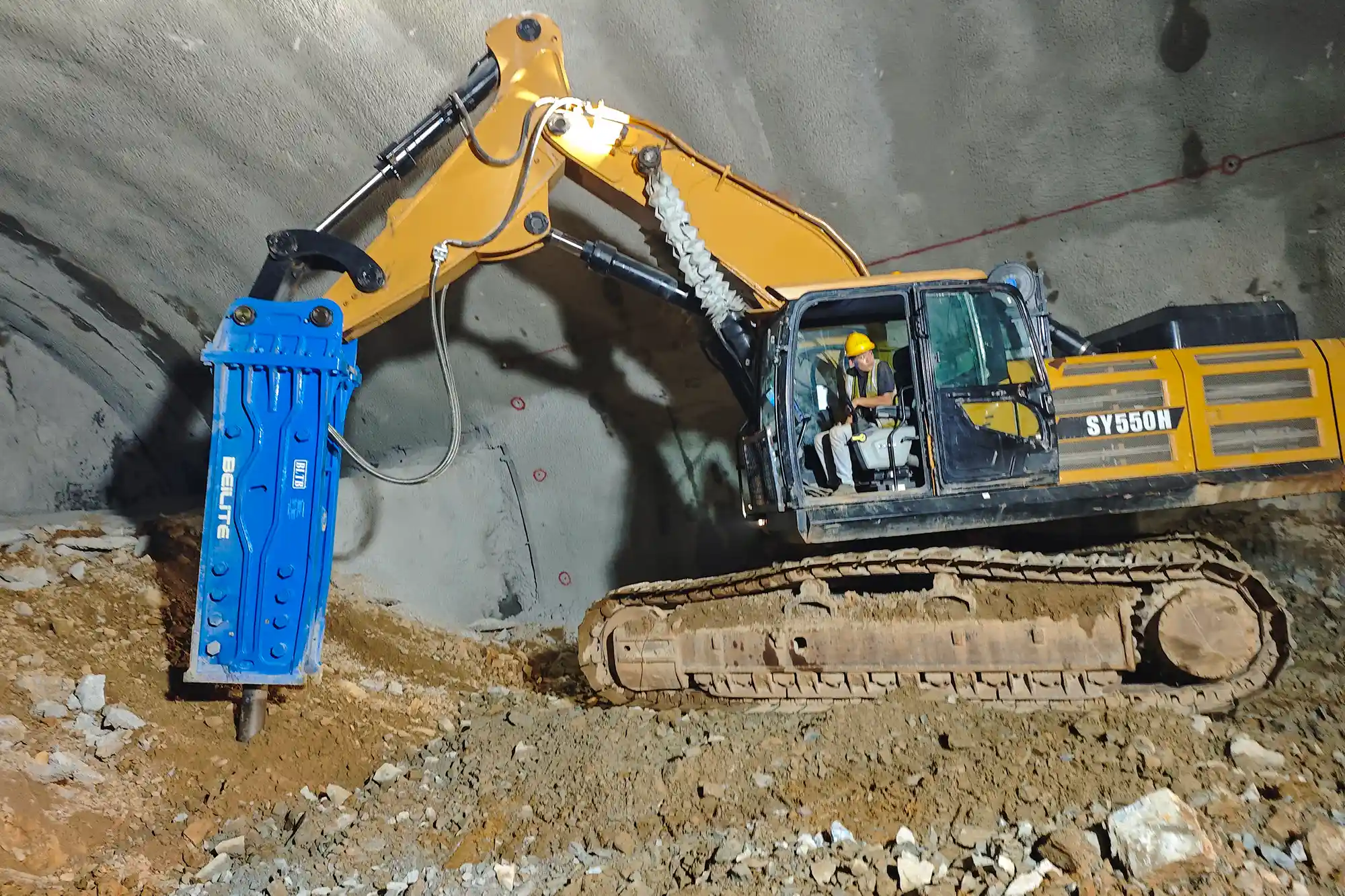
Side-mounted breakers give operators the best sightlines for precision work like trenching and selective demolition. Top-mounted configurations provide reach advantages for quarrying and road work where the breaker needs to extend beyond the carrier’s footprint. Box-type designs suppress noise and protect internal components, making them the practical choice for urban demolition where regulations limit sound levels. The rock breaker attachment that works best depends on matching these characteristics to your actual job site conditions.
How does impact energy relate to breaking efficiency?
Impact energy determines how much force each strike delivers to the material. Higher energy allows faster breakdown of hard rock and reinforced concrete. But energy alone doesn’t predict efficiency—it needs to match the material hardness and the carrier’s hydraulic capacity. A hydraulic breaker for sale with impressive energy specs will underperform if your excavator can’t supply adequate flow, or if you’re working material that responds better to higher frequency and lower energy.
What safety considerations matter most during operation?
Correct matching between breaker and excavator prevents the mechanical and hydraulic failures that cause the most serious incidents. Maintaining proper hydraulic pressure keeps the system operating as designed. Securing the work area protects ground personnel from flying debris. Regular inspection of the hydraulic hammer and all connections catches problems before they become dangerous. Operator training on proper technique—avoiding blank firing, maintaining correct tool angles, recognizing warning signs—prevents both equipment damage and personal injury.
Can one hydraulic breaker work across different excavator models?
Adapter plates allow some flexibility, but the hydraulic requirements set hard limits. A breaker designed for a 20-ton excavator won’t perform correctly on a 10-ton machine regardless of mounting hardware. The flow and pressure mismatch will either starve the breaker or stress the carrier’s hydraulic system. Always verify compatibility through the manufacturer before assuming a breaker can move between machines in your fleet.
Partner with Beilite for Your Hydraulic Breaker Needs
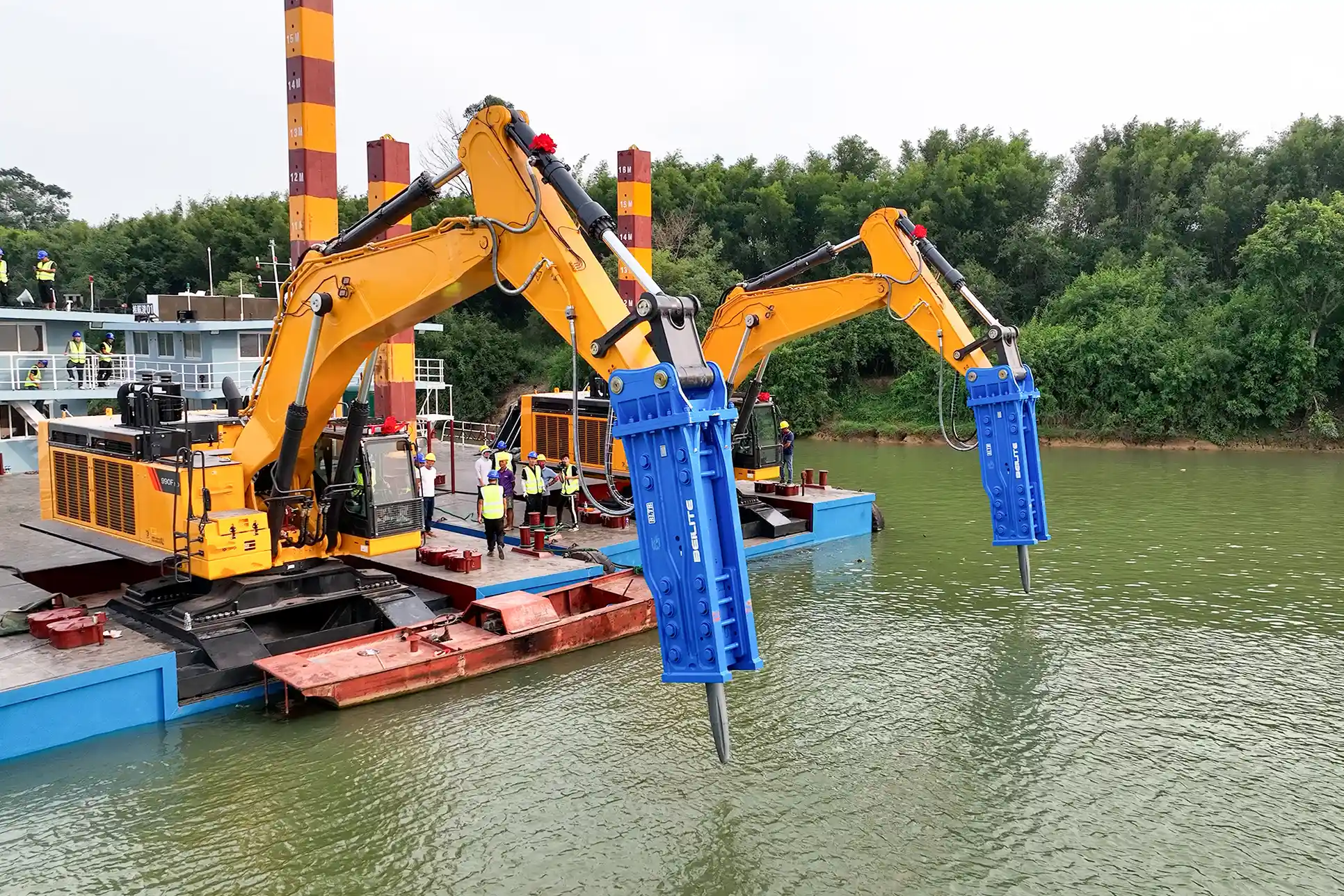
Beilite Machinery Co., LTD brings decades of engineering development and global deployment experience to the BLT and BLTB hydraulic breaker lines. As a national high-tech enterprise with equipment operating in over 100 countries, we provide the technical consultation and after-sales support that protects your equipment investment. Contact us to discuss your specific application requirements and identify the right hydraulic breaker solution for your operation.
Email: [email protected]
Phone: 40008-40008