 English
 French
Hydraulic Breaker Manufacturing Process: Engineering for Durability
Building hydraulic breakers that hold up under relentless punishment requires getting the fundamentals right from the start. After years of refining our BLT and BLTB lines at Beilite Machinery, certain truths have become clear: material choices made at the design stage determine failure modes years later, heat treatment protocols separate equipment that lasts from equipment that cracks, and assembly precision affects everything from seal life to impact consistency. What follows reflects how we approach hydraulic breaker manufacturing—not as a checklist of processes, but as an integrated system where each decision affects downstream performance.
Design Foundations That Determine Field Performance
The durability of a hydraulic breaker gets locked in long before metal meets machine. Our R&D teams spend considerable time on stress distribution modeling and impact simulation before any physical prototype exists. CAD/CAM analysis lets us identify weak points in component geometry and refine them iteratively. The goal is straightforward: predict where failures will occur and engineer them out.
Material selection follows directly from these simulations. We analyze alloy steel properties against the specific stress profiles each component will face. A piston experiences different forces than a cylinder housing, and the metallurgy needs to reflect that. This upfront investment in design and material science has built our patent portfolio over time, but more importantly, it prevents field failures that no amount of after-sales support can truly fix.
What materials are used to make high-performance hydraulic breakers?
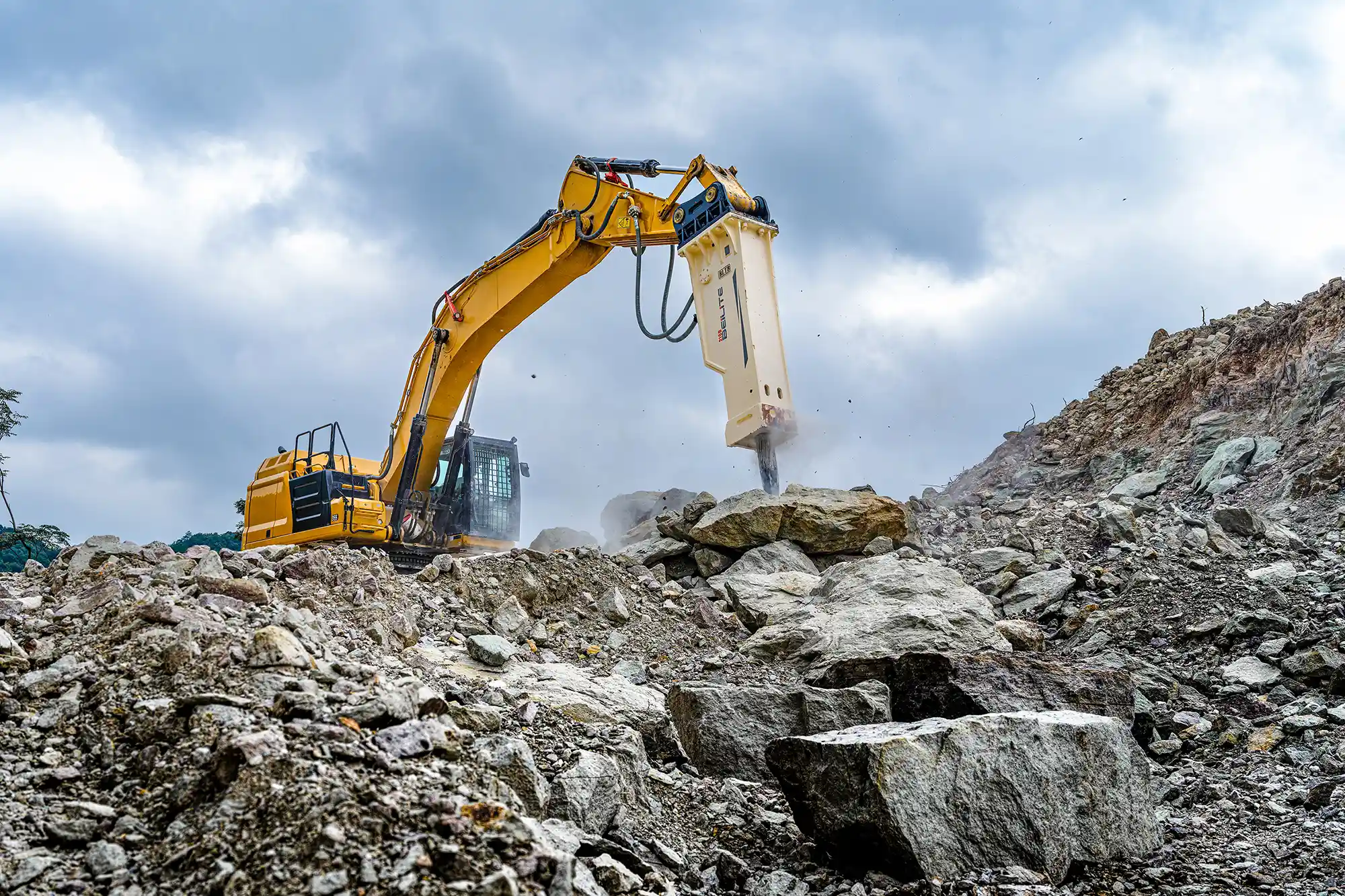
High-performance hydraulic breakers like our BLT and BLTB models rely on specialized high-strength alloy steels selected for specific performance characteristics. Chromium-molybdenum steel handles the piston and chisel because it delivers the impact strength and wear resistance these components demand under repeated cycling. Nickel alloys appear where fatigue resistance and toughness matter most. Some designs incorporate composite materials to optimize the weight-to-performance ratio. The selection process is methodical rather than formulaic—each material choice traces back to the stress analysis for that specific component.
From Raw Steel to Precision Components
Turning material specifications into actual parts involves multiple transformation stages. Each step either preserves or degrades the properties we designed for, so process control matters as much as equipment capability.
-
Forging Process: High-strength steel billets get shaped into component blanks through controlled forging. The mechanical working refines grain structure in ways that casting cannot replicate, producing blanks with improved strength characteristics before any machining begins.
-
CNC Machining: Cylinders, pistons, and chisels move through multi-axis CNC operations to achieve the geometric precision hydraulic systems require. We work to micron-level tolerances because the fit between moving parts directly affects pressure consistency and wear patterns.
-
Precision Grinding: Post-machining grinding brings components to final dimensions while creating the surface finishes that reduce friction during operation. Smoother surfaces mean less heat generation and slower wear progression.
-
Heat Treatment Processes: This stage transforms good components into durable ones. Surface hardening, nitriding, and induction hardening get applied based on what each part needs to survive. A chisel tip sees different thermal processing than a cylinder bore. These treatments dramatically improve wear resistance and impact strength—the difference between a hydraulic breaker that performs for years and one that develops problems within months.
Assembly Precision and Hydraulic System Integration
Individual components only become a functional hydraulic breaker through careful assembly. Our production lines combine automated processes with hands-on verification at critical junctures. The hydraulic system integration work focuses on power transfer efficiency—how much of the energy entering the breaker actually reaches the work surface.
Seal technology prevents the pressure losses that degrade impact force over time. Accumulator and valve designs affect response speed and energy utilization. We pay attention to fluid dynamics throughout the system because hydraulic inefficiency shows up as heat, wear, and reduced percussive power. Multiple quality checkpoints during assembly catch issues before they become field problems.
Testing Protocols That Validate Real-World Performance
Quality control at Beilite goes beyond dimensional inspection. We run comprehensive testing regimes aligned with national standards and global benchmarks because specifications on paper mean nothing if the equipment fails under load.
Why is rigorous testing crucial for hydraulic breaker performance?
Testing identifies weaknesses that design analysis might miss and validates that manufacturing actually achieved what engineering intended. Durability testing, stress testing, and fatigue testing simulate the conditions hydraulic breakers face in mining, demolition, and construction applications. Equipment that passes these protocols has demonstrated it can handle harsh operating environments without premature failure. For customers, this translates to operational safety, predictable equipment life, and the warranty assurance that comes from verified performance.
What quality standards govern hydraulic breaker manufacturing?
Our hydraulic breaker manufacturing follows ISO 9001 quality management system requirements, which establishes the process controls that ensure consistent production quality. Products carrying CE certification meet European market requirements. Beyond compliance, Beilite participates in developing national industry standards for hydraulic breakers in China—involvement that keeps us connected to evolving best practices and regulatory expectations across global markets.
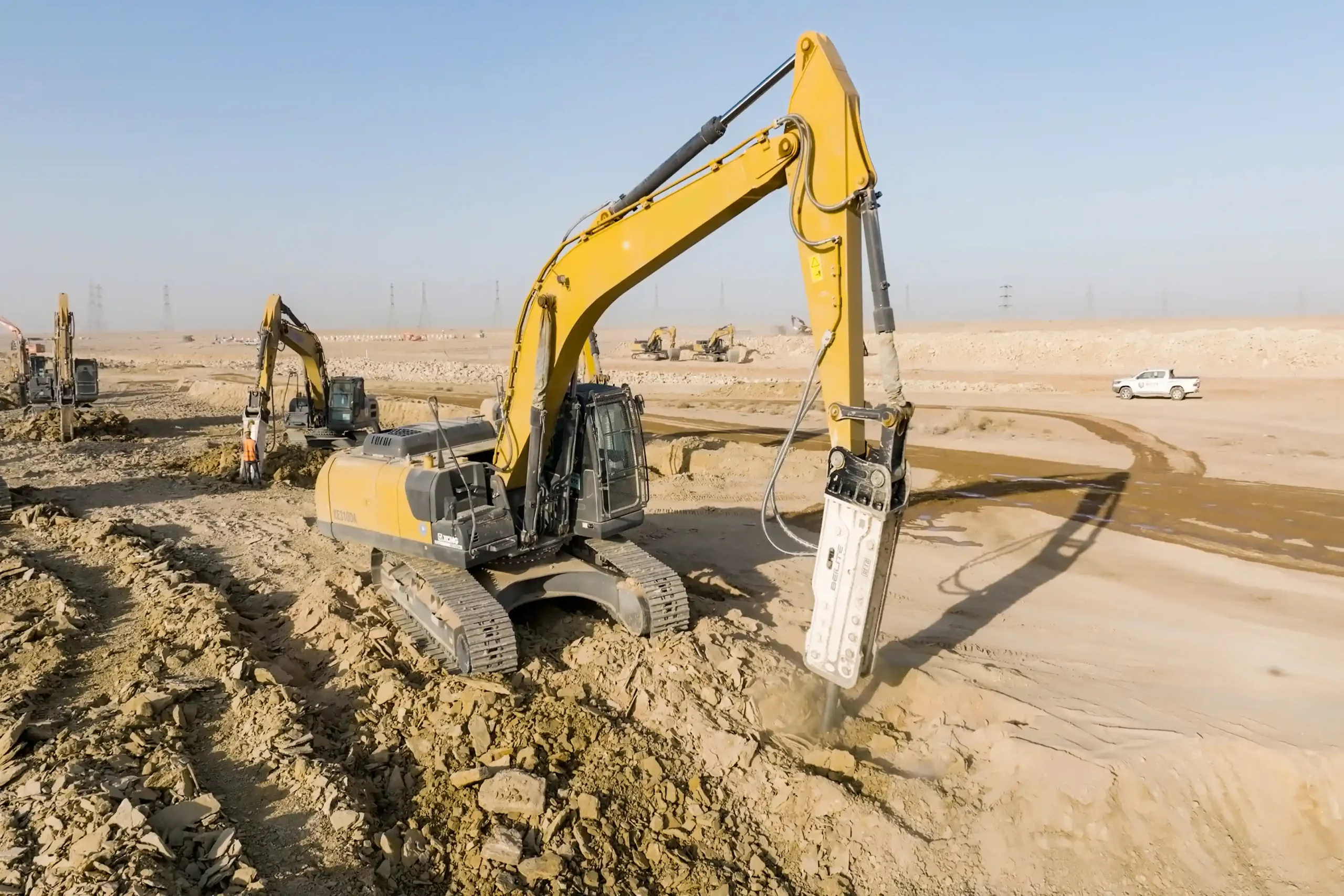
Beilite Hydraulic Breaker Specifications (Selected Models)
| Model | Weight (kg) | Chisel Dia. (mm) | Working Pressure (bar) | Applicable Excavator (t) |
|---|---|---|---|---|
| BLT-40 | 86 | 40 | 90–120 | 0.5–1.2 |
| BLT-70 | 362 | 70 | 110–140 | 4.5–6 |
| BLT-100 | 986 | 100 | 150–170 | 10–14 |
| BLT-140 | 1910 | 140 | 160–180 | 20–24 |
| BLT-165 | 3149 | 165 | 210–230 | 33–38 |
Testing extends to vibration analysis, noise measurement, and field trials that validate performance against established KPIs. Every BLT and BLTB hydraulic breaker ships after demonstrating it meets the safety and performance standards our customers depend on.
What Two Decades of Manufacturing Has Taught Us
Beilite Machinery Co., LTD. has been building hydraulic breakers since 2002. That timeframe has allowed us to see how design decisions play out over equipment lifecycles and refine our approach accordingly. Our R&D investment continues generating patent breakthroughs, but the real measure is field performance across diverse applications.
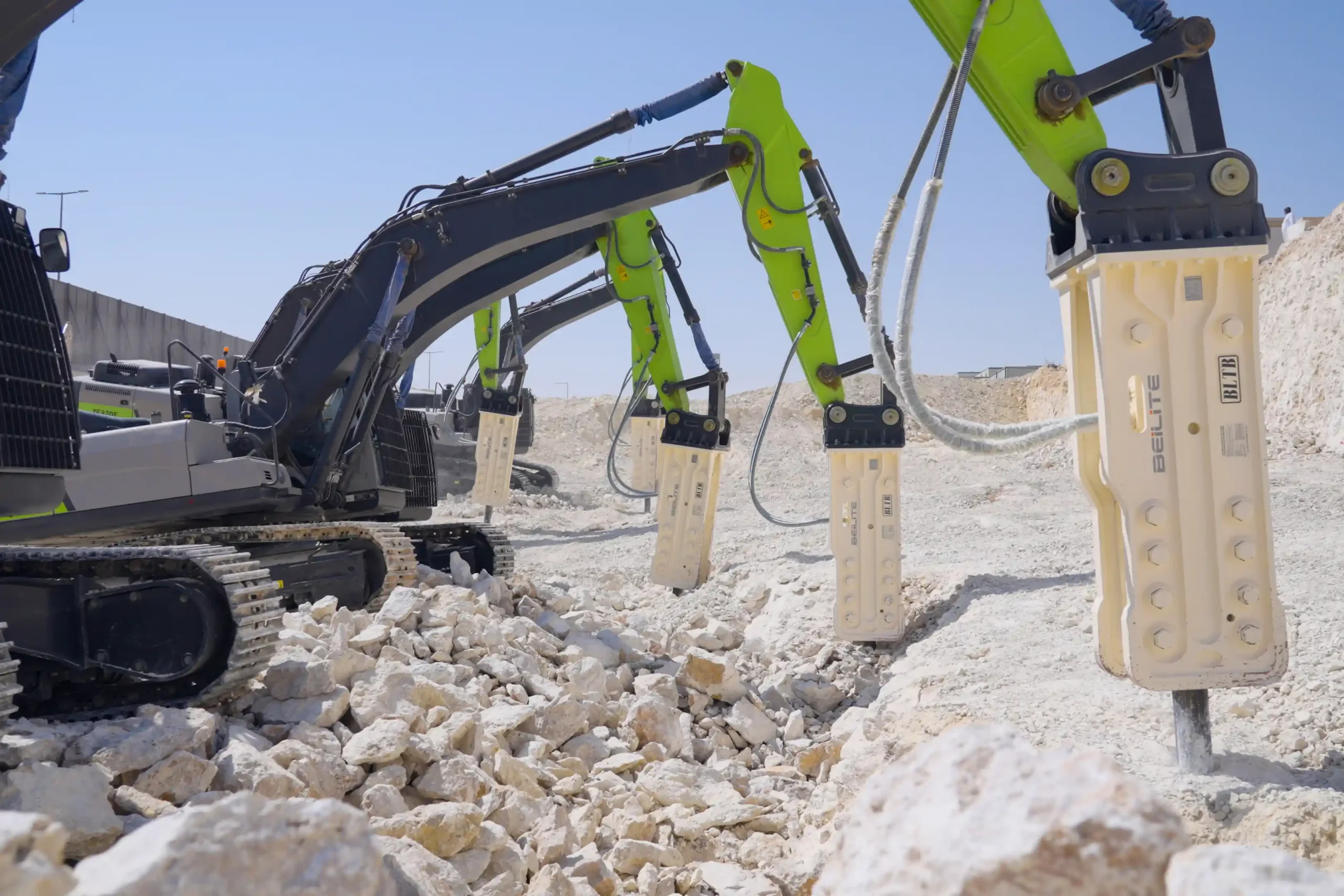
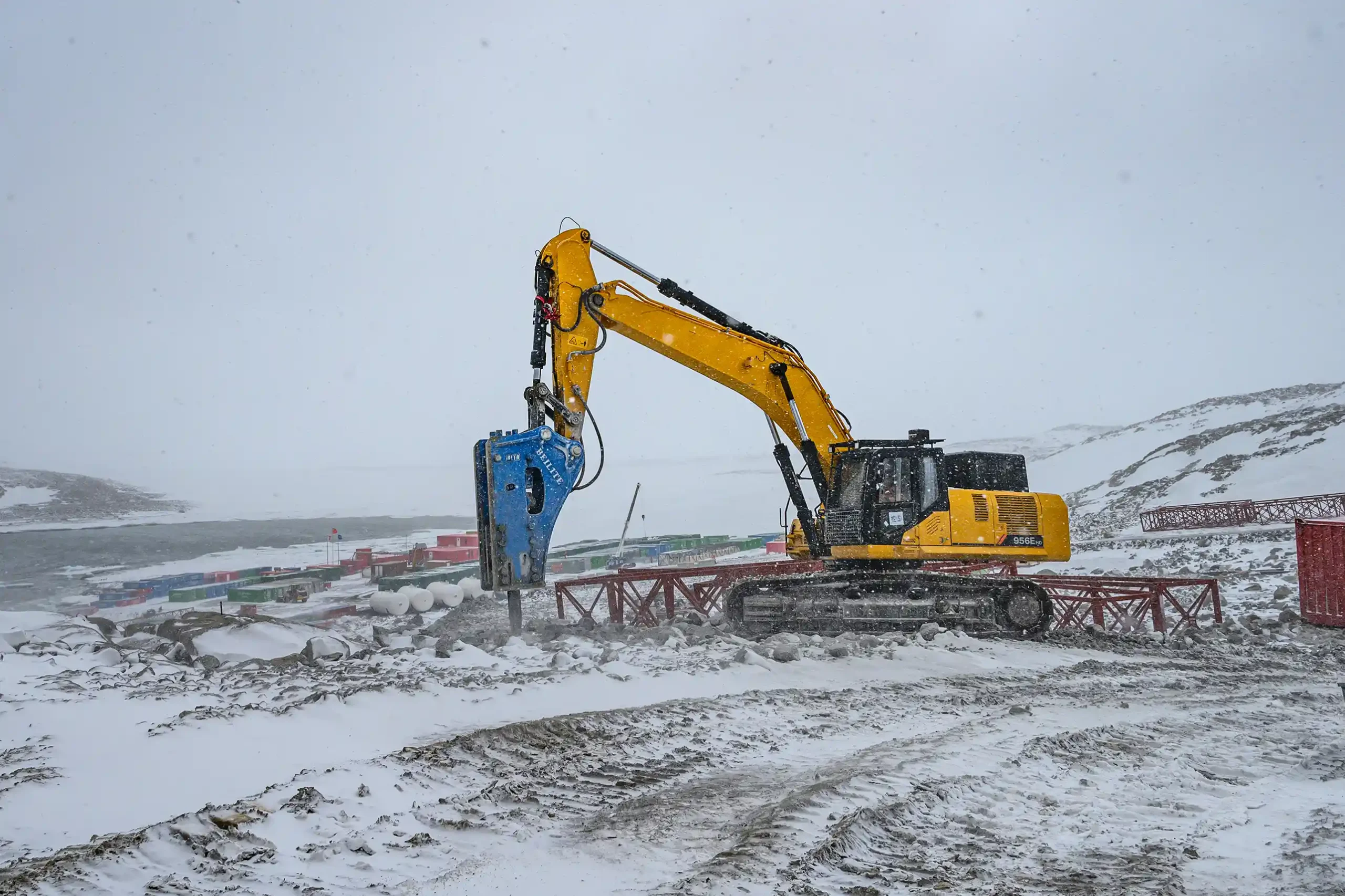
BLT and BLTB products work in Hydraulic Breaker Hammer for Mining and Quarrying operations and Hydraulic Breaker Hammer for Demolition&Rock Breaking projects across more than 100 countries. Export volume matters less than the customer trust built through equipment that performs as specified and support that responds when needed. Our role in shaping national standards reflects accumulated expertise, but it also keeps us accountable to the broader industry.
How does Beilite ensure long-term durability and customer satisfaction?
Long-term durability starts with material selection and manufacturing precision, continues through multi-stage testing including durability and stress protocols, and extends into our after-sales support network. Technical support, spare parts availability, and maintenance guidance help customers maximize equipment lifespan and minimize unplanned downtime. The approach works because each element reinforces the others—well-built equipment needs less support, and good support catches issues before they become failures.
Discover the Beilite Difference: Partner with a leader in high-end hydraulic breaker technology. Explore our innovative BLT and BLTB product lines, engineered for unparalleled durability and performance across diverse global applications. Contact us today for expert consultation and to elevate your operational efficiency. Email: [email protected] | Phone: 40008-40008
FAQs
What is the typical lifespan of a high-quality hydraulic breaker?
With proper maintenance and operation, a well-manufactured hydraulic breaker can deliver 5-10 years of service or longer. Application intensity matters significantly—continuous mining use differs from intermittent demolition work. Maintenance frequency and operator technique also affect longevity. Our manufacturing approach prioritizes durability precisely because replacement costs and downtime hit customers harder than the initial equipment investment.
How does Beilite’s manufacturing process contribute to product reliability?
Reliability emerges from the integration of multiple controlled processes rather than any single step. Advanced R&D informs material selection. Proprietary heat treatment protocols harden components appropriately. CNC machining achieves the precision hydraulic systems require. Multi-stage quality control catches deviations before they ship. Each BLT and BLTB hydraulic breaker reflects this systematic approach, which is why customers experience consistent power delivery and reduced unplanned downtime.
Can Beilite hydraulic breakers be customized for specific applications?
The BLT and BLTB product lines cover a broad range of working conditions through standard configurations. For applications with unusual requirements, our engineering team can recommend the most suitable existing model or discuss potential adaptations. The consultation process helps identify whether a standard product fits or whether modifications would better serve the specific operational context.
What maintenance is required for hydraulic breakers manufactured by Beilite?
Regular maintenance extends equipment life and prevents unexpected failures. Daily greasing keeps moving parts lubricated. Hydraulic hose connections need periodic inspection for wear or loosening. Chisel and bushing condition should be monitored and addressed before excessive wear develops. Hydraulic system checks at recommended intervals catch fluid degradation or pressure issues early. We provide detailed maintenance guidelines and stock spare parts to support these routines.