 English
 French
Hydraulic Breaker for Soil Compaction: Engineered for Stability
Getting soil packed tight enough to support what comes next isn’t glamorous work, but it’s the kind of thing that separates projects that hold up from ones that crack and shift within a few years. Hydraulic breakers have carved out a real niche here, delivering the kind of concentrated force that actually moves soil particles where they need to go. The approach works differently from vibration-based methods, and for certain ground conditions, that difference matters more than most people realize.
Why Soil Compaction Determines What Happens Later
Soil compaction sets the baseline for everything built on top of it. When soil particles pack tightly together, the ground gains the density needed to carry structural loads without shifting. Skip this step or do it poorly, and settlement becomes almost inevitable. Buildings develop cracks. Roads develop waves. Foundations move in ways they shouldn’t.
The mechanics are straightforward. Loose soil contains air pockets and voids between particles. Under load, those voids collapse unevenly, creating differential settlement. One corner of a structure sinks more than another. Stress concentrates where it shouldn’t. The fix at that point costs far more than proper compaction would have cost upfront.
Dense, well-compacted soil distributes loads more evenly. It resists water infiltration better, which matters because saturated soil loses bearing capacity. For infrastructure projects where the stakes run high, the compaction phase deserves the attention it often doesn’t get.
How Hydraulic Breakers Handle Soil Compaction Differently
Hydraulic breakers approach soil compaction through direct impact rather than vibration or static weight. Each blow delivers concentrated energy that physically rearranges soil particles, forcing them closer together and pushing air out of the voids between them. The mechanism differs fundamentally from vibratory compaction or plate compactors.
This impact-based method proves particularly effective in situations where other approaches struggle. Trench compaction presents one common example. The confined space limits what equipment can access the area, and the depth makes surface-applied vibration less effective at reaching lower layers. A hydraulic breaker mounted on an excavator can work vertically, delivering compaction energy where it’s actually needed.
Backfill compaction around utilities or foundations presents similar challenges. The soil composition varies. Access is often restricted. Achieving uniform density throughout the fill requires equipment that can adapt to these constraints.
The precision matters too. Operators can target specific zones, applying more energy where soil conditions demand it and less where adequate density already exists. This selective approach improves efficiency compared to methods that treat the entire area uniformly regardless of actual conditions.
Cohesive soils like clay respond well to this treatment. Granular soils like sand and gravel compact effectively too, though the optimal tool selection changes based on what’s being compacted.
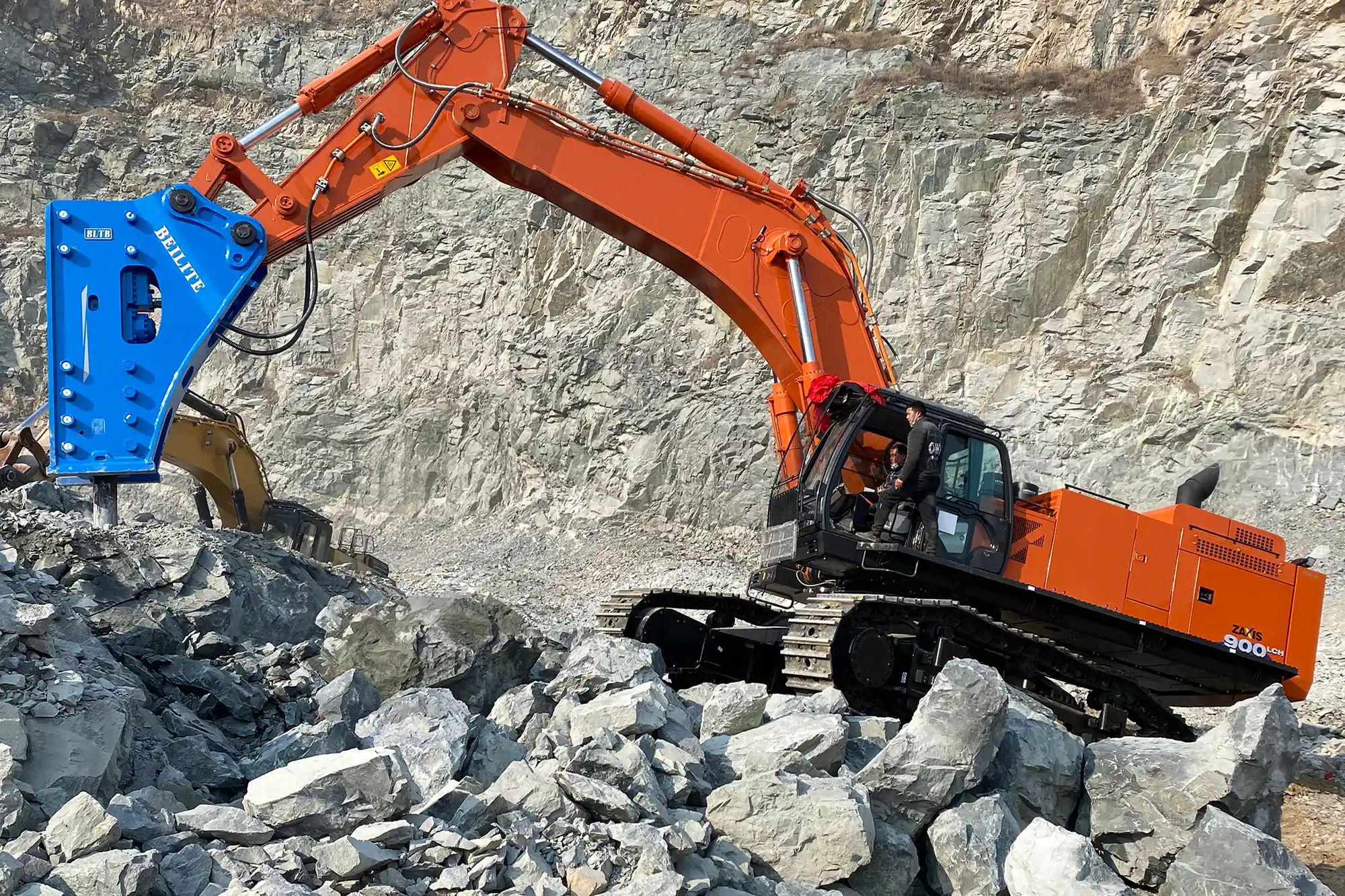
Selecting Tools for Cohesive Soil Conditions
Clay and other cohesive soils present specific challenges for compaction. The particles bind together through electrochemical forces, resisting rearrangement. Breaking those bonds requires concentrated impact energy rather than distributed force.
A heavy duty breaker fitted with a blunt tool or cone tool typically delivers the best results in these materials. The geometry concentrates impact energy over a smaller contact area, generating the pressure needed to overcome cohesive resistance. The soil structure breaks down, particles shift, and air escapes.
Chisel tools work poorly for this application. They penetrate rather than compact, creating channels through the soil instead of densifying it. The tool shape matters as much as the energy delivered.
The Density Advantage Over Vibration-Based Methods
Vibratory compactors and plate compactors work well in many situations, but they have limitations. The energy they deliver dissipates as it travels through soil, losing effectiveness with depth. Surface layers compact more than deeper layers, creating density gradients that can cause problems later.
Hydraulic breakers deliver energy more directly. Each impact creates a pressure wave that travels through the soil mass, affecting particles at depth as well as near the surface. The result is more uniform density throughout the compacted layer.
For shallow lifts in accessible areas, vibratory methods often make sense. For deeper compaction, confined spaces, or challenging soil types, the direct impact approach offers advantages that justify the different equipment choice.
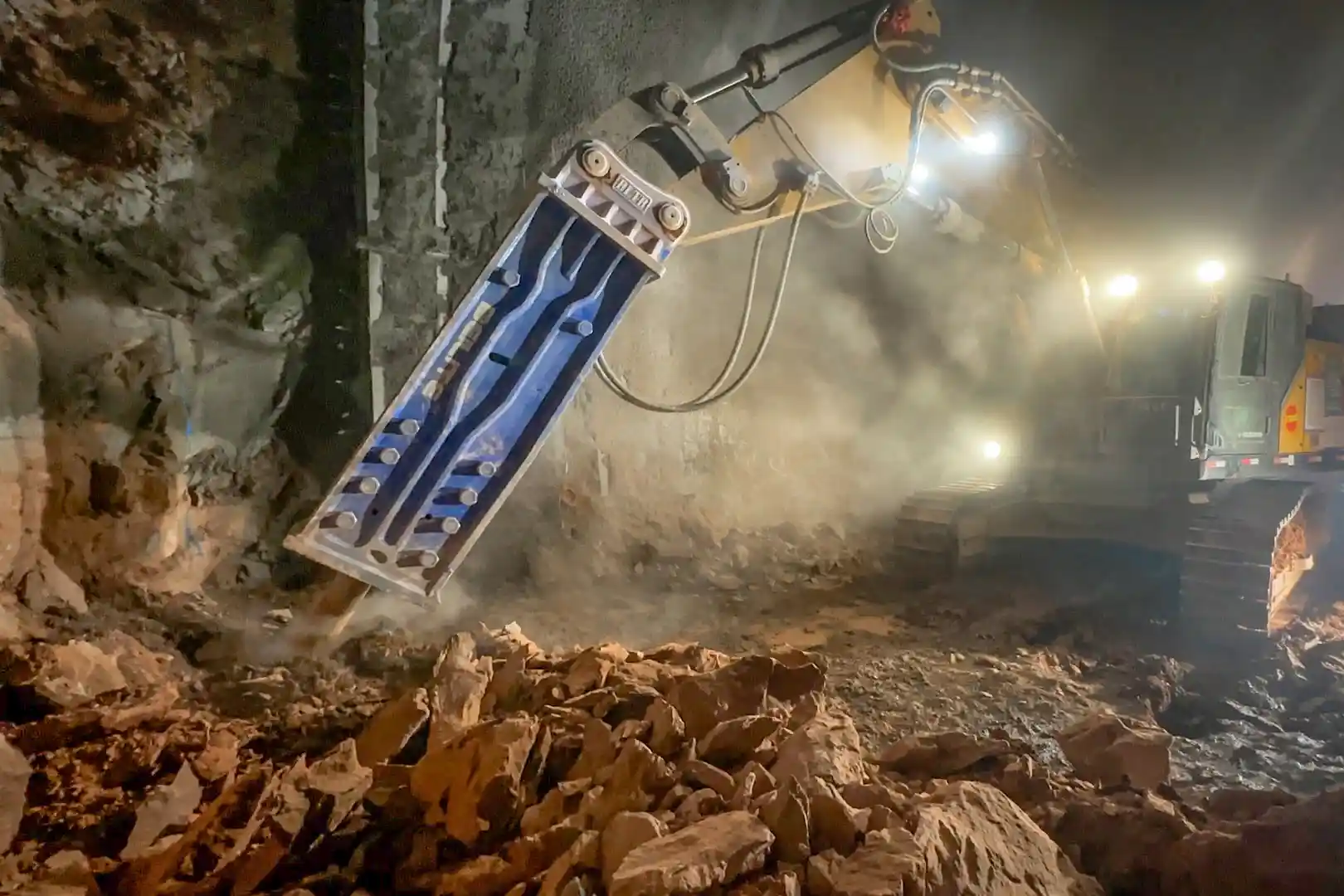
Matching Breaker Specifications to Project Requirements
Selecting the right hydraulic breaker for soil compaction involves matching several specifications to the actual job conditions. The breaker must work with the available excavator. The impact characteristics must suit the soil type. The size must fit the access constraints.
Operating weight determines what carrier can handle the attachment. A breaker that’s too heavy for the excavator creates safety issues and accelerates wear on both machines. One that’s too light may lack the impact energy needed for effective compaction.
Impact frequency and impact energy work together. Higher frequency with lower energy per blow suits some applications. Lower frequency with higher energy suits others. Cohesive soils generally respond better to fewer, harder impacts. Granular soils often compact efficiently with more frequent, lighter blows.
Working pressure and flow rate must match the excavator’s hydraulic system. Mismatches reduce performance and can damage equipment. These specifications deserve attention during equipment selection, not discovery during operation.
| Breaker Model | Applicable Excavator (t) | Operating Weight (kg) | Chisel Diameter (mm) | Impact Frequency (bpm) |
|---|---|---|---|---|
| BLT-45 | 0.8 – 1.5 | 137 | 45 | 700 – 1200 |
| BLT-75 | 6 – 8.5 | 466 | 75 | 400 – 800 |
| BLT-100 | 10 – 14 | 986 | 100 | 350 – 700 |
| BLT-135 | 18 – 22 | 1736 | 135 | 350 – 500 |
| BLT-155 | 27 – 33 | 2610 | 155 | 200 – 300 |
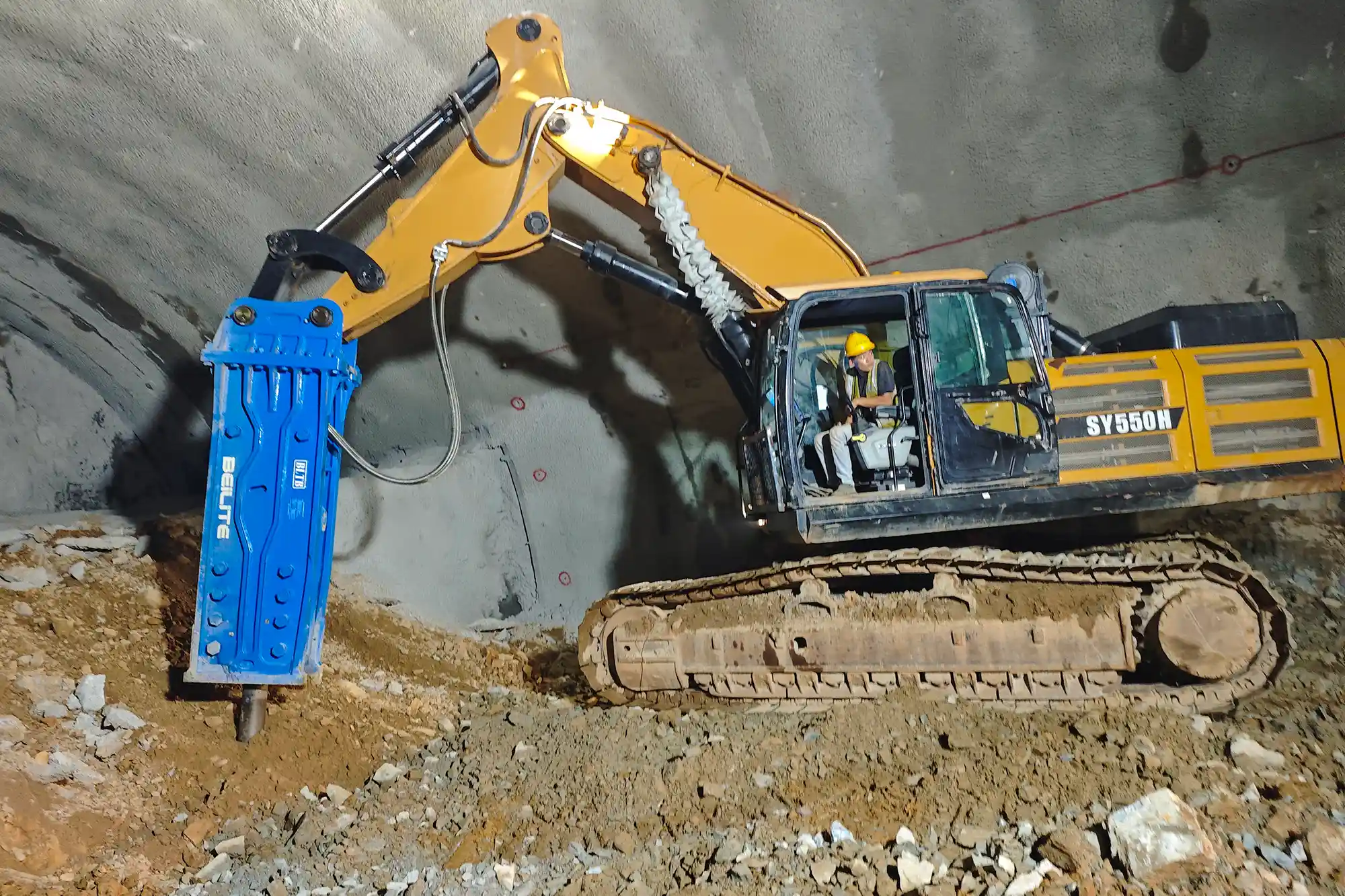
Keeping Compaction Breakers Running Reliably
Hydraulic breakers used for soil compaction face demanding operating conditions. The repetitive impacts stress components. Soil particles work their way into joints and seals. Maintaining performance requires consistent attention to maintenance practices that prevent small issues from becoming expensive failures.
Lubrication tops the priority list. The tool and bushings need greasing every few hours of operation. Without adequate lubrication, metal-to-metal contact accelerates wear and generates heat that damages seals and bushings. The maintenance interval varies by manufacturer and operating conditions, but every two to four hours provides a reasonable baseline.
Hydraulic oil quality affects everything downstream. Contaminated oil damages pumps, valves, and seals throughout the system. Regular checks catch problems before they cascade. Filter changes at recommended intervals prevent contamination from accumulating.
Tool condition matters more than many operators realize. A worn, cracked, or mushroomed chisel reduces compaction efficiency and can damage the breaker itself. Inspection should happen daily. Replacement should happen before the tool fails completely.
Seals and hoses deteriorate over time. Leaks reduce hydraulic pressure and waste oil. Periodic inspection catches degradation before it causes operational problems. Nitrogen pressure in gas-charged breakers needs checking according to the manufacturer’s schedule.
Operator training ties everything together. Proper technique reduces equipment stress. Recognition of abnormal sounds or behaviors catches problems early. Understanding the hydraulic system helps operators avoid operating conditions that accelerate wear.
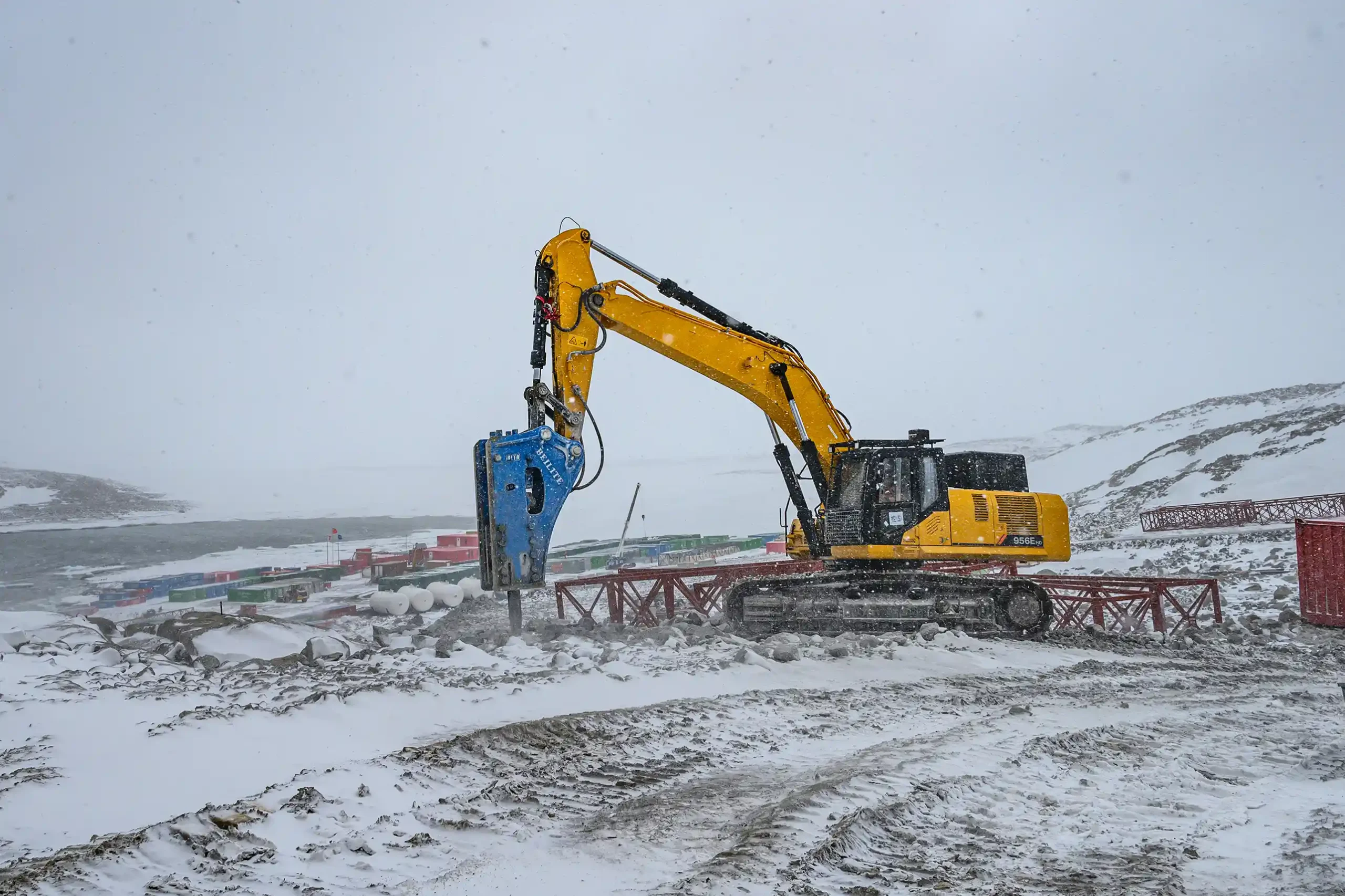
Maintenance Practices That Extend Service Life
Daily maintenance for soil compaction applications should include greasing the tool and bushings, checking hydraulic oil level and condition, and inspecting the chisel for wear or damage. These tasks take minutes but prevent problems that cost hours or days to fix.
Periodic maintenance extends to seal inspection, hose condition assessment, filter replacement, and nitrogen pressure verification. The specific intervals depend on operating intensity and manufacturer recommendations, but establishing a consistent schedule matters more than the exact timing.
Preventative maintenance costs less than reactive repairs. The breaker that gets consistent attention stays in service. The one that gets neglected eventually fails at the worst possible time.
Beilite’s Approach to Hydraulic Breaker Engineering
Beilite Machinery Co., Ltd. has manufactured hydraulic breakers since 2002, developing the technology through continuous refinement rather than static production. The company holds hundreds of patents covering core technologies and participated in establishing national standards for hydraulic breakers in China.
The BLT and BLTB series products serve demanding applications including ground stabilization work. These breakers operate in over 100 countries, which provides ongoing feedback about performance under varied conditions. That global deployment informs engineering decisions and quality control processes.
Manufacturing quality determines field reliability. Beilite maintains quality assurance processes designed to catch problems before breakers ship rather than after they fail in the field. The approach reflects an understanding that equipment downtime costs customers more than the repair itself.
Working with Beilite on Compaction Equipment
Beilite Machinery offers consultation for projects requiring hydraulic breaker solutions for soil compaction and ground stabilization. The BLT and BLTB series provide options across a range of excavator sizes and application requirements.
Contact information: 40008-40008 or [email protected]
Common Questions About Hydraulic Breaker Soil Compaction
Do hydraulic breakers work effectively across different soil types?
Hydraulic breakers handle both cohesive and granular soils effectively, though optimal results require matching the tool to the material. Blunt or cone tools work better in clay and similar cohesive soils. The impact force can be adjusted based on soil response. This adaptability makes hydraulic breakers useful across varied site conditions, though operators need to understand how different soils respond to impact compaction.
What safety practices apply when using hydraulic breakers for compaction?
Operators need proper training on the specific equipment being used. Personal protective equipment should include hearing protection, eye protection, hard hat, and steel-toed boots. Maintaining distance from other personnel during operation prevents injuries from flying debris or unexpected equipment movement. Daily equipment inspection catches damage that could create hazards during operation.
How do hydraulic breakers affect project schedules and budgets?
The high energy delivery of hydraulic breakers typically reduces the number of passes needed to achieve target density, which shortens the compaction phase. Fewer passes means less fuel consumption and reduced labor hours. The uniform compaction achieved also reduces rework from failed density tests. These factors combine to improve both timeline and cost performance compared to methods that require more passes or produce less consistent results.
What distinguishes Beilite hydraulic breakers for heavy compaction work?
Beilite integrates patented technologies developed through two decades of manufacturing experience. The company’s participation in establishing national standards reflects technical credibility. Global deployment across more than 100 countries provides real-world validation of durability and performance. The BLT and BLTB series are engineered for sustained high-intensity operation, which matters for compaction work where the breaker runs continuously rather than intermittently.