 English
 French
Advanced Hydraulic Breaker Sound Dampening for Compliance
Sound Dampening for Hydraulic Breakers: Practical Approaches to Quieter Operations
Anyone who has spent time near a working hydraulic breaker knows the sound is relentless. The percussive rhythm cuts through everything else on a job site, and after a few hours, you start to feel it in your chest as much as hear it. Managing that noise has become one of the more pressing challenges in modern construction—not just for the crews working the equipment, but for the neighborhoods that have to live with it.
Why Noise Control Matters More Than Ever
The sound levels produced by hydraulic breakers create real problems on multiple fronts. Operators face cumulative hearing damage from prolonged exposure to high decibel limits, along with stress and chronic fatigue that affect both health and job performance. These are not abstract concerns—they translate directly into worker compensation claims, turnover, and reduced productivity.
Beyond the immediate crew, construction noise pollution generates community impact that can derail projects. Neighbors file complaints. City officials get involved. What started as a straightforward demolition job becomes a public relations problem with real schedule consequences.
Regulatory pressure has intensified accordingly. OSHA standards, local noise ordinances, and environmental regulations now impose specific permissible exposure limits that carry meaningful penalties for violations. The financial exposure from non-compliance—fines, legal liability, project shutdowns—often exceeds the cost of addressing the problem proactively.
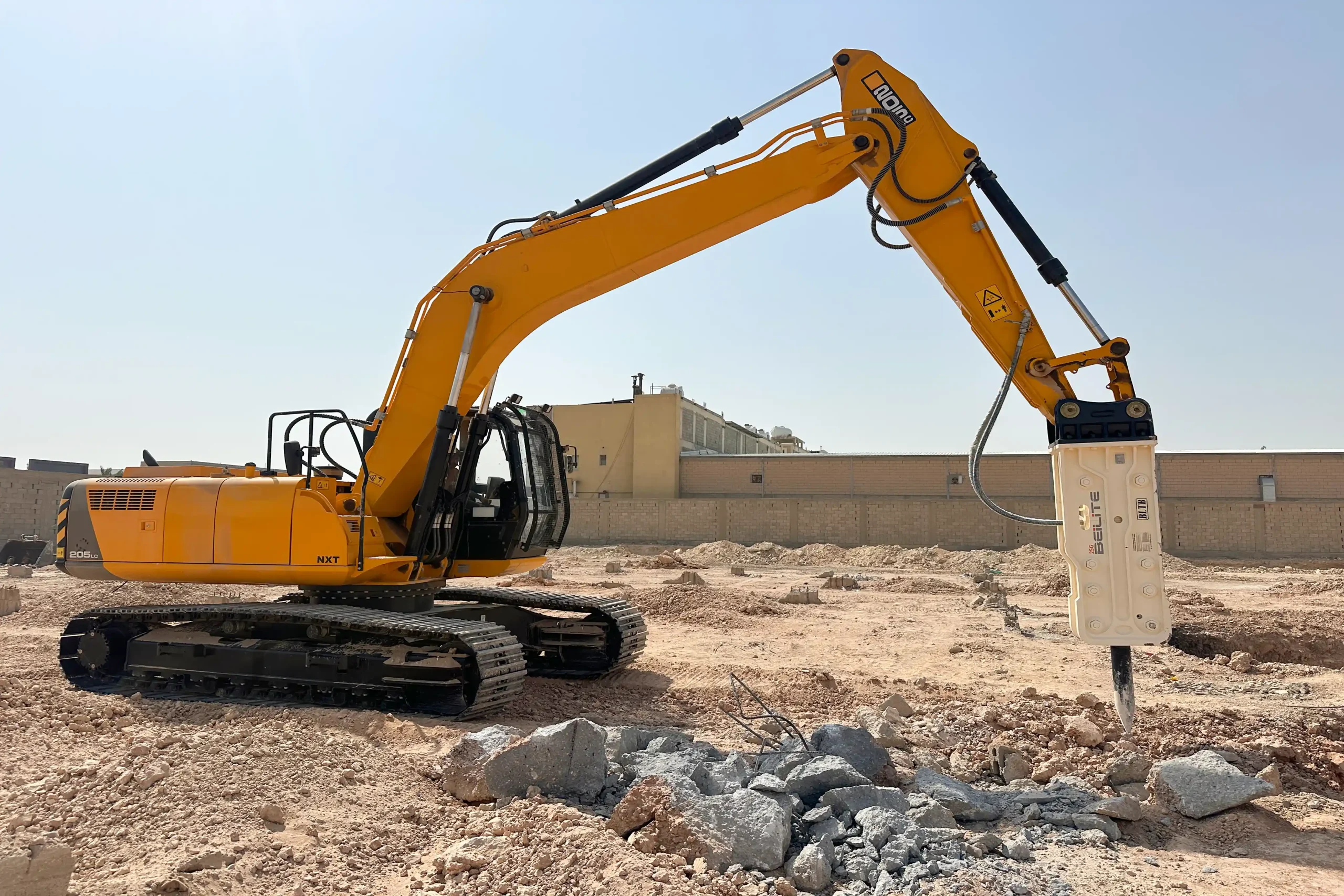
How Hydraulic Breakers Create Noise
Understanding where the noise comes from helps explain why certain solutions work better than others. Hydraulic breakers generate sound through several distinct mechanisms, each requiring different mitigation approaches.
The dominant source is the piston impact against the chisel. This creates intense impact energy that radiates outward as percussive sound. The mechanical action also triggers structural vibration that travels through the breaker body and into the excavator arm, effectively turning the entire machine into a resonating surface.
Hydraulic system noise adds another layer. High-pressure fluid flow generates hydraulic pulsation, and under certain conditions, cavitation noise develops within the system. The exhaust gas release from internal components contributes as well. When mechanical resonance amplifies any of these sources, the combined effect produces the characteristic noise signature that makes hydraulic breakers so difficult to work around.
Legal Thresholds Vary Widely
Construction noise regulations differ substantially depending on where you’re working. OSHA sets worker exposure limits at 90 dBA for an 8-hour time-weighted average, but that’s just the floor. EU directives specify sound power levels for outdoor equipment ranging from 93 to 113 dBA depending on equipment class.
Local noise ordinances often impose tighter restrictions, particularly near residential areas. Urban zones commonly cap daytime noise at 65-75 dBA measured at the property line, with nighttime limits dropping to 45-55 dBA. International standards like ISO 3744 provide measurement protocols that regulatory bodies reference when evaluating compliance.
| Region/Authority | Typical Noise Limit (dBA) | Context |
|---|---|---|
| OSHA (USA) | 90 dBA (8-hour TWA) | Worker Exposure |
| EU Directive | 93-113 dBA (LwA) | Outdoor Equipment |
| Urban Residential | 65-75 dBA (Daytime) | Community Impact |
| Nighttime Zones | 45-55 dBA (Nighttime) | Community Impact |
Engineering Approaches to Sound Dampening
Modern hydraulic breaker sound dampening relies on multiple technologies working together rather than any single solution. The most effective designs address noise at its source while also controlling how sound propagates outward.
Acoustic enclosures that wrap the breaker mechanism reduce direct sound transmission. Anti-vibration mounts isolate the breaker from the carrier machine, preventing vibration transmission from turning the excavator into an amplifier. High-performance soundproofing materials—including composite materials and polyurethane buffers—absorb and attenuate sound waves within the housing itself.
The sealed housing design found in low noise hydraulic hammers keeps more of the acoustic energy contained. These approaches combine to produce what the industry sometimes calls silent breakers, though “quieter” would be more accurate than truly silent.
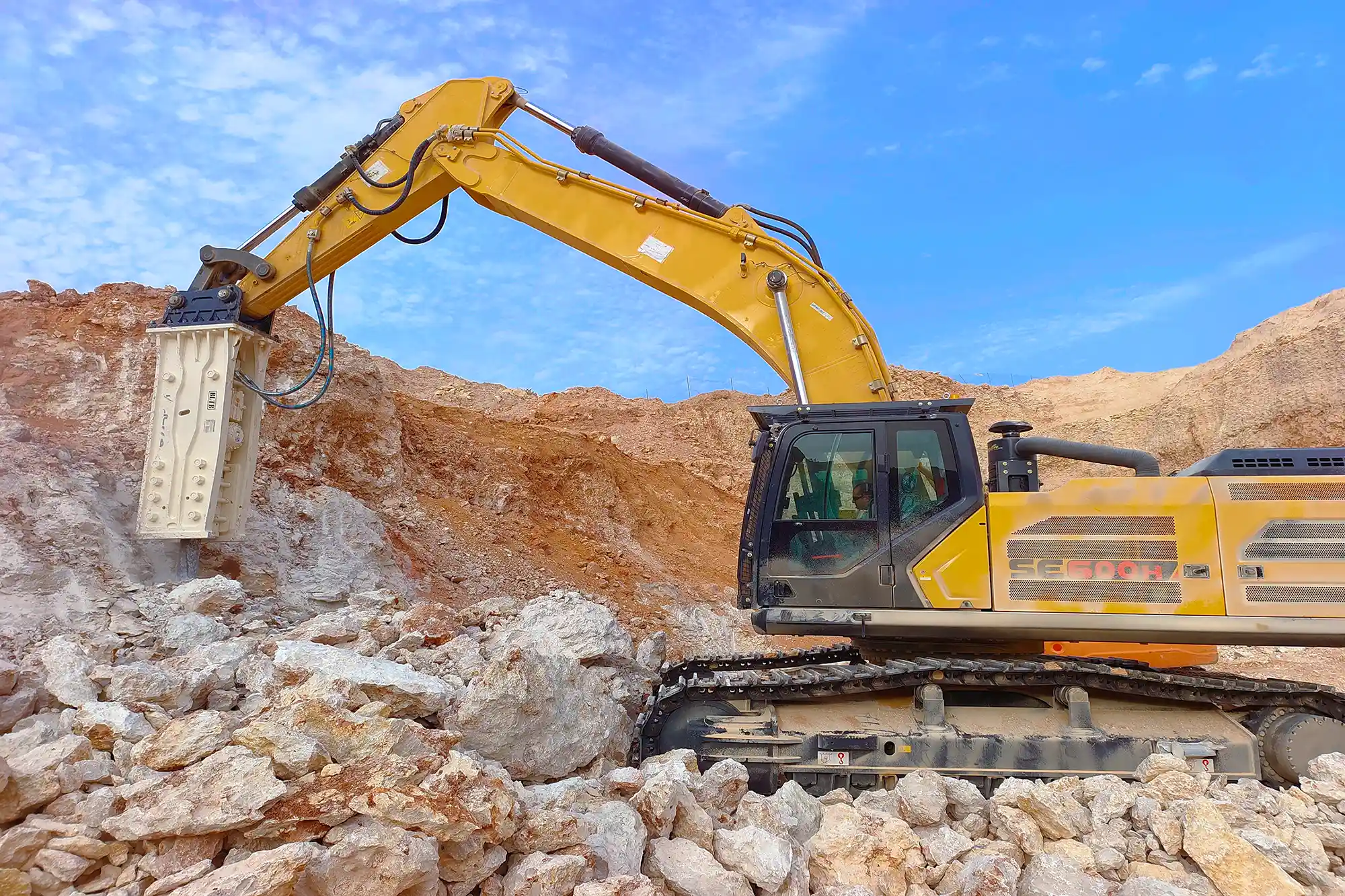
Performance Trade-offs Are Smaller Than Expected
A reasonable question is whether sound dampening affects hydraulic breaker performance. The concern makes sense—adding enclosures and dampening materials could theoretically interfere with the mechanical action that makes these tools effective.
In practice, modern engineering has largely resolved this tension. Well-designed dampening elements integrate without compromising impact force maintenance or energy transfer optimization. The key is optimizing the acoustic design alongside the mechanical design rather than treating noise reduction as an afterthought.
Contemporary low-noise breakers demonstrate that reduced acoustic output and robust breaking capability can coexist. The performance gap between traditional and sound-dampened equipment has narrowed considerably as manufacturers have refined their approaches.
| Feature | Traditional Breaker | Low-Noise Breaker |
|---|---|---|
| Noise Level | High (120+ dBA) | Reduced (100-110 dBA) |
| Vibration | Significant | Minimized |
| Operator Comfort | Low | High |
| Regulatory Risk | High | Low |
| Technology | Basic | Advanced Acoustic Design |
Site Management Strategies
Equipment design is only part of the equation. How you manage the job site determines whether sound dampening technology delivers its full potential.
Strategic site planning starts with positioning noisy equipment away from sensitive boundaries when possible. Physical noise barriers and acoustic screens provide additional attenuation, particularly for fixed work locations. Operational scheduling—concentrating high-noise activities during less sensitive hours—reduces community friction even when absolute noise levels remain unchanged.
Regular equipment maintenance protocols matter more than many operators realize. Worn seals, degraded dampening components, and loose housings all increase noise output. Keeping equipment in proper condition sustains the noise reduction built into the original design.
Noise monitoring solutions provide real-time data that enables adaptive management. When you can see exactly how loud operations are at the property line, you can adjust before complaints arrive. For urban demolition strategies and other sensitive projects, remote operation systems reduce operator exposure while maintaining productivity.
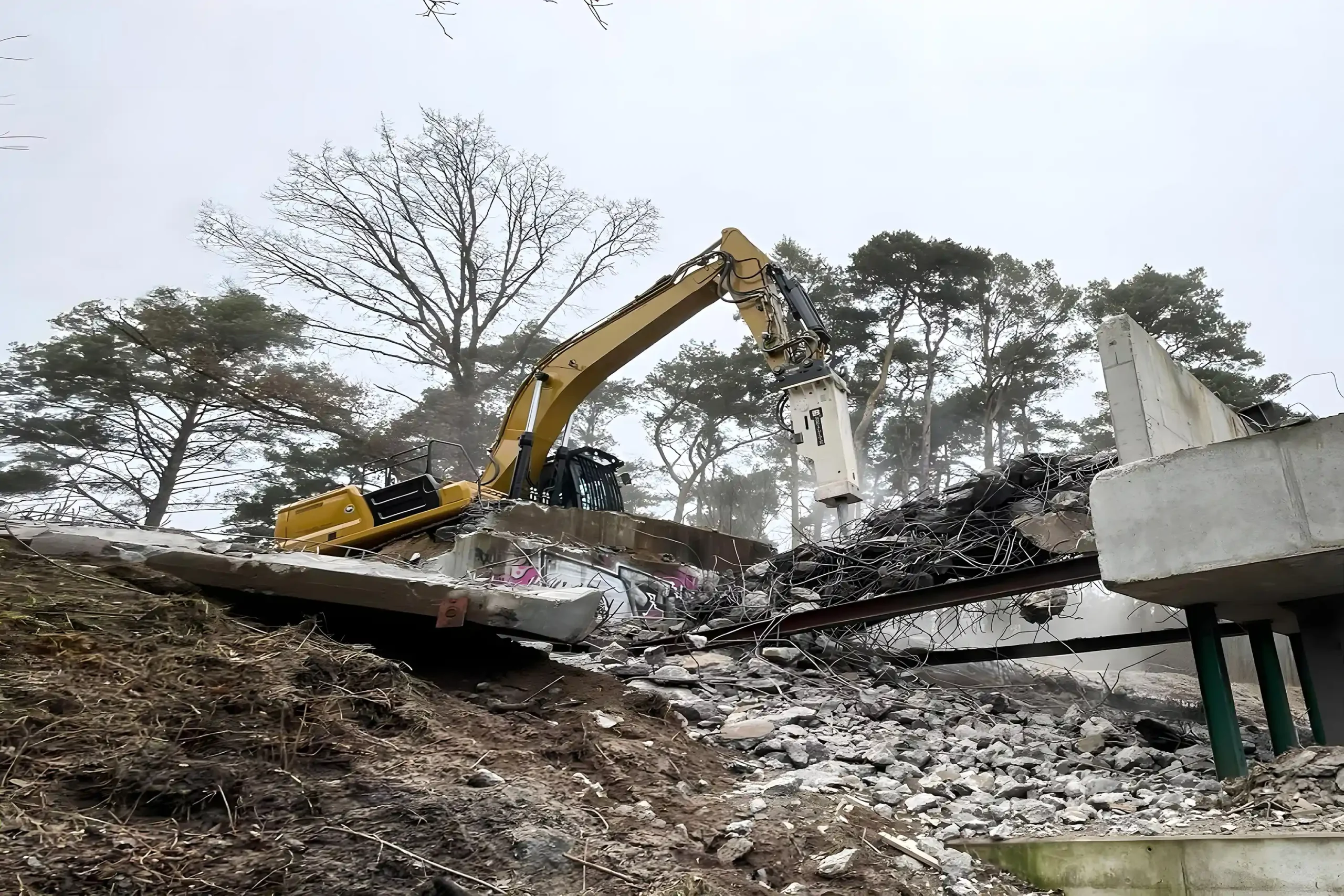
The Business Case for Quieter Operations
The financial argument for investing in hydraulic breaker sound dampening extends well beyond avoiding fines. Companies that prioritize noise control experience fewer project delays from community complaints and regulatory interventions. The return on investment calculation should include these avoided costs, which can be substantial on urban projects.
Worker retention improves when crews don’t dread the physical toll of their equipment. Reduced hearing damage claims and fewer health-related absences translate into measurable savings. Operator morale affects productivity in ways that are harder to quantify but no less real.
Reputation effects compound over time. Contractors known for responsible operations win more bids in sensitive areas. Project approval rates increase when neighbors and officials have positive prior experience with a company’s work. The competitive advantage from quieter operations often outweighs the incremental equipment cost.
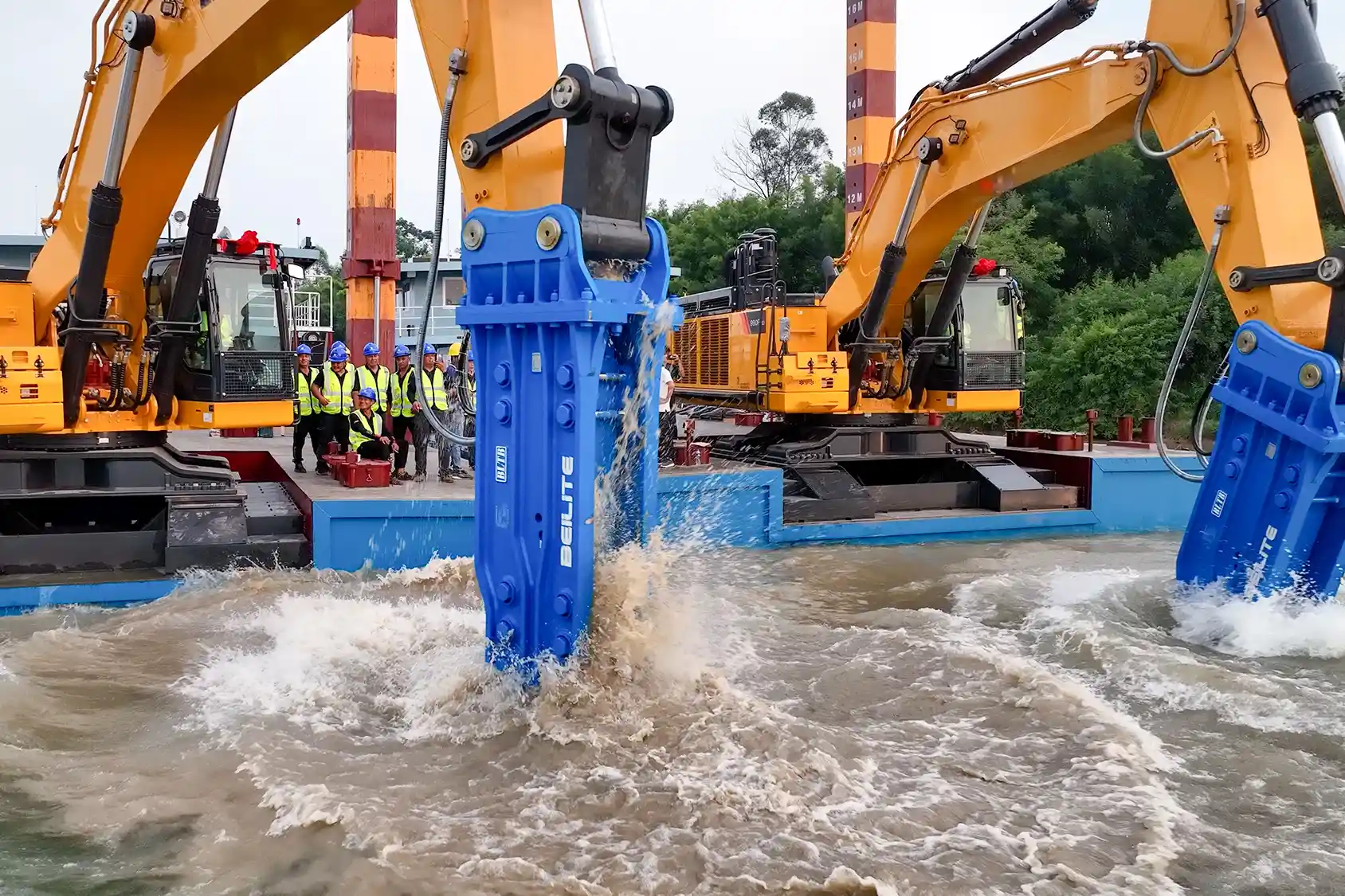
Where Acoustic Engineering Is Heading
Several trends are shaping the next generation of hydraulic breaker sound dampening technology. Active noise cancellation systems—similar to what you find in premium headphones—are beginning to appear in industrial applications, actively generating sound waves that counter the breaker’s acoustic output.
AI-driven acoustic optimization represents another frontier. These systems analyze noise in real time and adjust dampening parameters based on operating conditions and environmental factors. The goal is adaptive performance that responds to the specific circumstances of each job.
Materials research continues to yield lighter, more effective sound-absorbing composites. Electric hydraulic breakers offer inherently quieter operation along with reduced emissions, though they’re still working through power density and runtime limitations. Digital noise management platforms are emerging to integrate monitoring, reporting, and control across entire project sites.
The trajectory is clear: quieter equipment with better performance, supported by smarter site management tools. The technology is moving faster than regulations, which means early adopters gain advantages before compliance becomes mandatory.
Frequently Asked Questions About Hydraulic Breaker Sound Dampening
What are the primary benefits of investing in hydraulic breaker sound dampening?
The immediate benefit is reduced noise pollution, which protects operator hearing and improves working conditions. Beyond the crew, quieter operations reduce community complaints and the project delays they cause. Regulatory compliance becomes more straightforward, lowering the risk of fines and legal exposure. Over time, companies also see reputational benefits that translate into easier project approvals and stronger competitive positioning.
How do manufacturers achieve effective sound dampening without sacrificing power?
Modern designs integrate acoustic elements into the mechanical architecture rather than adding them as external constraints. Anti-vibration mounts, sealed housings, and sound-absorbing materials are engineered to work with the impact mechanism rather than against it. The result is equipment that maintains full impact force while reducing the acoustic energy that escapes the housing. The engineering challenge is real, but contemporary solutions have largely solved it.
Can sound-dampened hydraulic breakers be easily maintained?
Yes, though they do require attention to components that traditional breakers lack. Soundproofing materials and anti-vibration mounts need periodic inspection and occasional replacement. These maintenance tasks are straightforward and typically integrate into standard service schedules. The key is recognizing that acoustic components are functional parts of the system, not optional accessories. Neglecting them degrades noise performance over time.
Experience the Quiet Power of Beilite Breakers
As a national high-tech enterprise with decades of experience and hundreds of patents, BEILITE Machinery Co., LTD is at the forefront of hydraulic breaker innovation. Our BLT and BLTB series exemplify superior performance combined with advanced sound dampening. Discover how Beilite’s high-end hydraulic breakers can elevate your project’s efficiency, compliance, and operator well-being. Contact us today for a consultation or to explore our trusted solutions. Email: [email protected] | Phone: 40008-40008