 English
 French
Hydraulic Breaker for Backhoe: Optimize Demolition & Rock Breaking
Hydraulic breakers turn a backhoe into something far more capable than a digging machine. When you watch one crack through reinforced concrete or split solid rock, there’s a certain satisfaction in seeing raw hydraulic power applied with precision. Getting the most from these attachments comes down to three things: picking the right size for your carrier, keeping up with maintenance, and understanding what the newer technology actually delivers in practice.
How Hydraulic Breakers Generate Impact Force
The mechanism inside a hydraulic breaker is straightforward in concept but demanding in execution. High-pressure fluid from the backhoe’s auxiliary circuit drives a piston downward at considerable speed. That piston strikes a chisel tool, and the impact energy transfers into whatever material you’re breaking. The system’s operating pressure and flow rate determine both how hard each blow lands and how many blows per minute the breaker can deliver.
Accumulators store hydraulic energy between cycles, which serves two purposes. They boost the available force at the moment of impact, and they absorb pressure spikes that would otherwise stress the carrier machine’s hydraulic system. The nitrogen gas charge in the accumulator acts as a cushion, smoothing out the violent pressure fluctuations that occur with each strike.
Chisel geometry matters more than most operators realize. Blunt tools spread force across a wider area, which works well for breaking up concrete slabs. Conical or pointed tools concentrate energy at a smaller contact point, making them more effective for penetrating hard rock or driving into material that needs to fracture along natural planes.
The two main housing designs each have their place:
Open-type breakers expose the working mechanism, which simplifies maintenance access and allows heat to dissipate more readily. They tend to weigh less and work well for general demolition where noise isn’t a primary concern.
Box-type breakers enclose everything in a sound-dampening housing. The noise reduction is substantial enough to make urban work practical, and the sealed design keeps dust and debris away from internal components. The trade-off is slightly more weight and less convenient access when something needs attention.
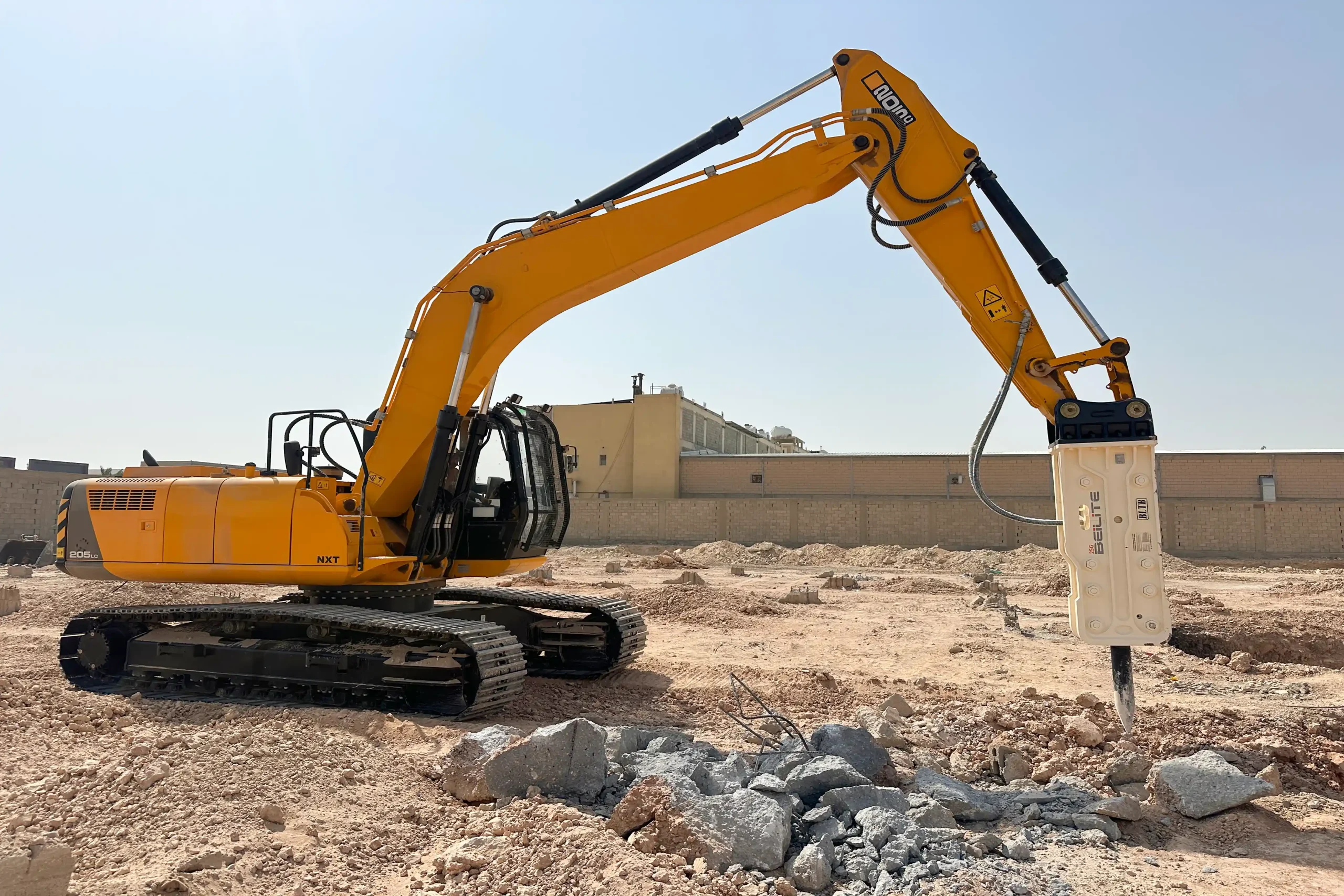
Matching Breaker Size to Your Backhoe
Getting the size match right prevents problems that show up gradually and then all at once. An undersized breaker wastes time because it lacks the impact energy to break material efficiently. An oversized breaker stresses the boom, stick, and undercarriage in ways the machine wasn’t designed to handle. Neither situation ends well for productivity or equipment longevity.
The carrier’s operating weight, hydraulic flow rate, and system pressure together define which breaker class fits. Light-duty applications like breaking up sidewalks or small foundations call for smaller units. Heavy-duty work in quarries or major road construction demands breakers with substantially more impact energy. Quick coupler systems make switching between attachments practical when job requirements vary throughout a project.
Calculating the Right Breaker Weight
The general guideline puts breaker weight, including the mounting bracket, at 8-12% of the backhoe’s operating weight. This range keeps the machine stable during operation and prevents excessive structural loading. Both the backhoe manufacturer’s specifications and the breaker manufacturer’s compatibility charts should inform the final decision.
| Model | Applicable Backhoe Operating Weight | Breaker Weight (kg) | Chisel Diameter (mm) | Impact Frequency (bpm) |
|---|---|---|---|---|
| BLT-40 | 0.5–1.2 t | 86 | 40 | 800–1400 |
| BLT-45 | 0.8–1.5 t | 137 | 45 | 700–1200 |
| BLT-53 | 1.5–3.5 t | 180 | 53 | 600–1100 |
| BLT-60 | 3–5.5 t | 263 | 60 | 500–1000 |
| BLT-70 | 4.5–6 t | 362 | 70 | 500–900 |
What the Performance Numbers Actually Mean
Impact energy, measured in Joules, tells you how much force each blow delivers. Higher numbers break harder material faster, but only if the carrier can supply adequate hydraulic flow. Blow frequency indicates cycle speed. A breaker running at 1,000 bpm delivers more total energy per minute than one running at 500 bpm, assuming similar impact energy per blow.
The relationship between impact energy and frequency involves trade-offs. Higher frequency with lower individual impact works well on brittle materials like concrete. Lower frequency with higher impact suits dense rock that needs more force to fracture. Modern breakers with variable frequency settings let operators adjust to match conditions rather than accepting a fixed compromise.
Noise and vibration characteristics matter beyond operator comfort. Reduced vibration means less fatigue on the carrier’s boom and stick joints. Lower noise levels expand where and when you can work without running into regulatory problems or neighbor complaints.
Maintenance Practices That Extend Service Life
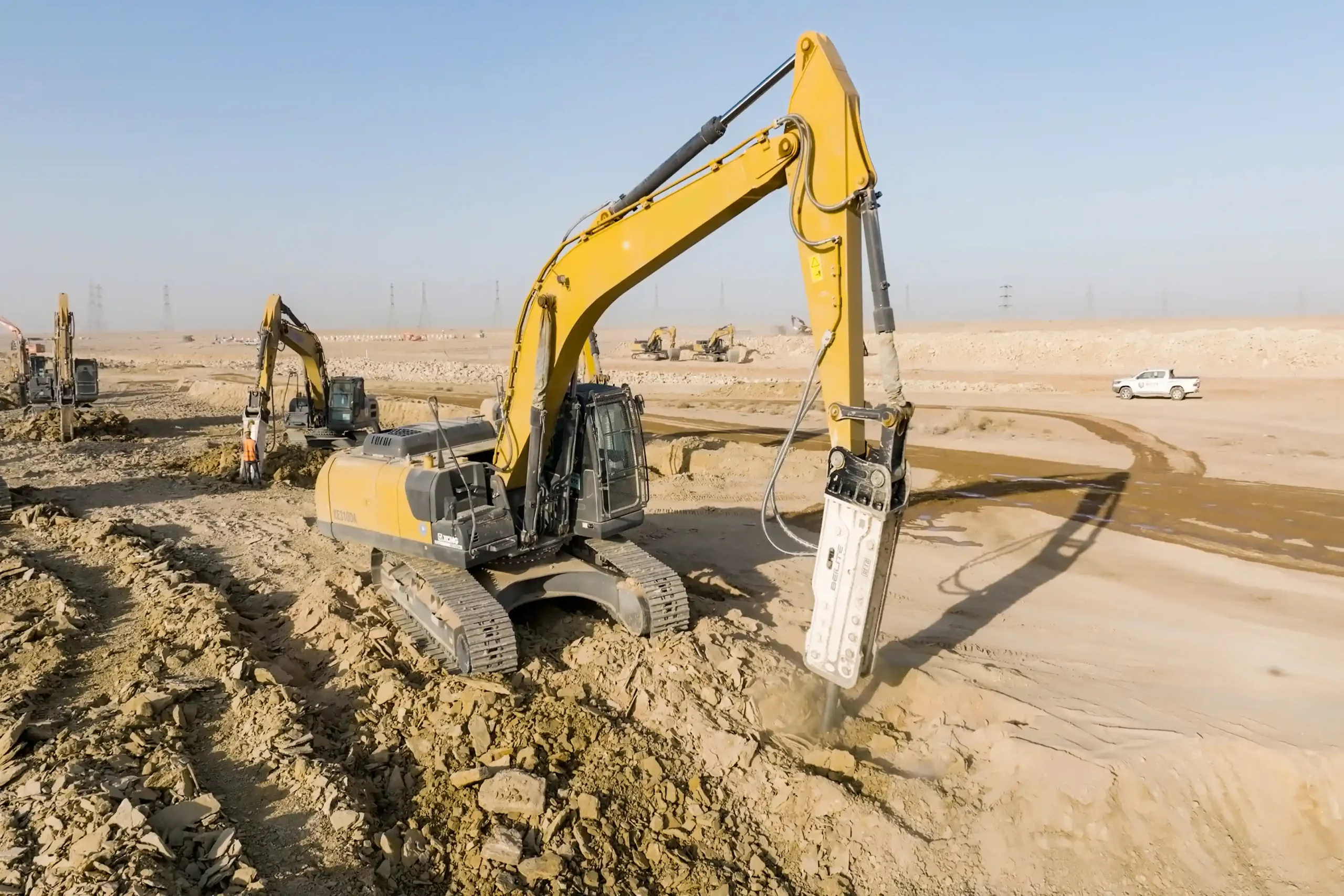
A hydraulic breaker represents a significant investment, and its useful life depends heavily on how well it’s maintained. The difference between 5,000 hours and 10,000 hours of service often comes down to consistent attention to a few critical areas.
Greasing ranks as the single most important maintenance task. The tool bushing and chisel interface experience extreme friction and impact loading. Without adequate lubrication, wear accelerates dramatically. Most manufacturers recommend greasing every two hours of operation, though conditions vary. Dusty environments or particularly demanding applications may require more frequent attention.
Daily inspection of the tool bit catches problems before they cascade. Cracks, excessive wear, or mushrooming at the striking end all indicate a tool that needs replacement. Running a damaged tool reduces breaking efficiency and can damage the breaker’s internal components.
The nitrogen charge in the accumulator requires periodic checking. Low pressure reduces impact energy and causes the piston to bottom out harder than designed. High pressure creates excessive recoil. Either condition shortens component life. Most operators check accumulator pressure monthly, though the interval depends on usage intensity.
Hydraulic connections deserve attention because leaks waste energy and contaminate the work area. Hoses age and fittings loosen over time. Catching these issues early prevents the sudden failures that strand equipment mid-project.
Realistic Expectations for Breaker Longevity
Service life varies widely based on application severity and maintenance consistency. A breaker used primarily for light concrete demolition with religious maintenance attention can exceed 10,000 hours. The same model used for hard rock quarrying with minimal maintenance might not reach 5,000 hours.
Extending service life comes down to following the manufacturer’s service intervals, replacing wear parts before they fail catastrophically, and maintaining correct hydraulic system parameters. Genuine replacement parts cost more initially but fit properly and last longer than aftermarket alternatives of uncertain quality. Storage matters too. Protecting the breaker from weather when not in use prevents corrosion and seal degradation.
Technology Improvements Worth Knowing About
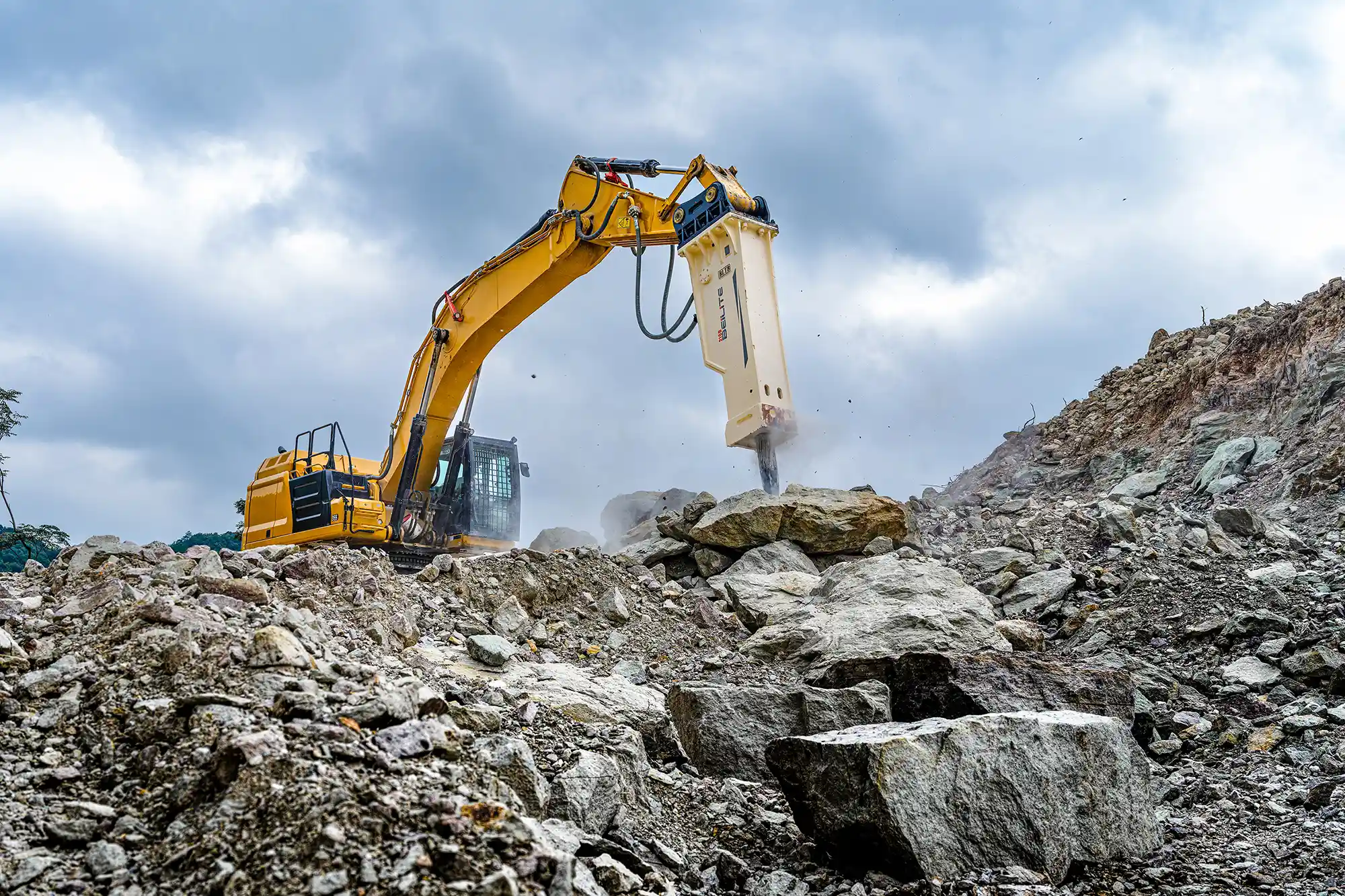
Hydraulic breaker technology continues advancing, though not every new feature delivers equal value in practice. Understanding what actually matters helps separate genuine improvements from marketing claims.
Automatic lubrication systems pump grease to critical points at preset intervals. They reduce manual maintenance burden and ensure consistent lubrication even when operators forget. The systems add cost and complexity, but for high-utilization applications, they often pay for themselves in extended component life.
Energy recovery captures some of the recoil energy that would otherwise dissipate as heat and vibration. That recovered energy contributes to the next strike, improving efficiency. The practical benefit shows up as slightly lower fuel consumption and marginally higher impact energy for a given hydraulic input. The improvement is real but modest.
Variable impact frequency lets operators dial in the blow rate to match material characteristics. Softer materials break efficiently at higher frequencies. Harder materials respond better to slower, more powerful individual blows. Having adjustment capability beats accepting a fixed compromise.
Dust suppression systems spray water at the chisel point, controlling airborne particles. This improves visibility, reduces respiratory hazards, and may be required for compliance in some jurisdictions. The systems add maintenance requirements and water consumption, but where dust control matters, they’re worth having.
Smart diagnostics and remote monitoring represent the current frontier. Sensors track operating parameters and flag developing problems before they cause failures. Fleet managers can monitor utilization and schedule maintenance based on actual operating hours rather than calendar intervals. The technology is still maturing, but the direction is clear.
Where Hydraulic Breakers Deliver Value
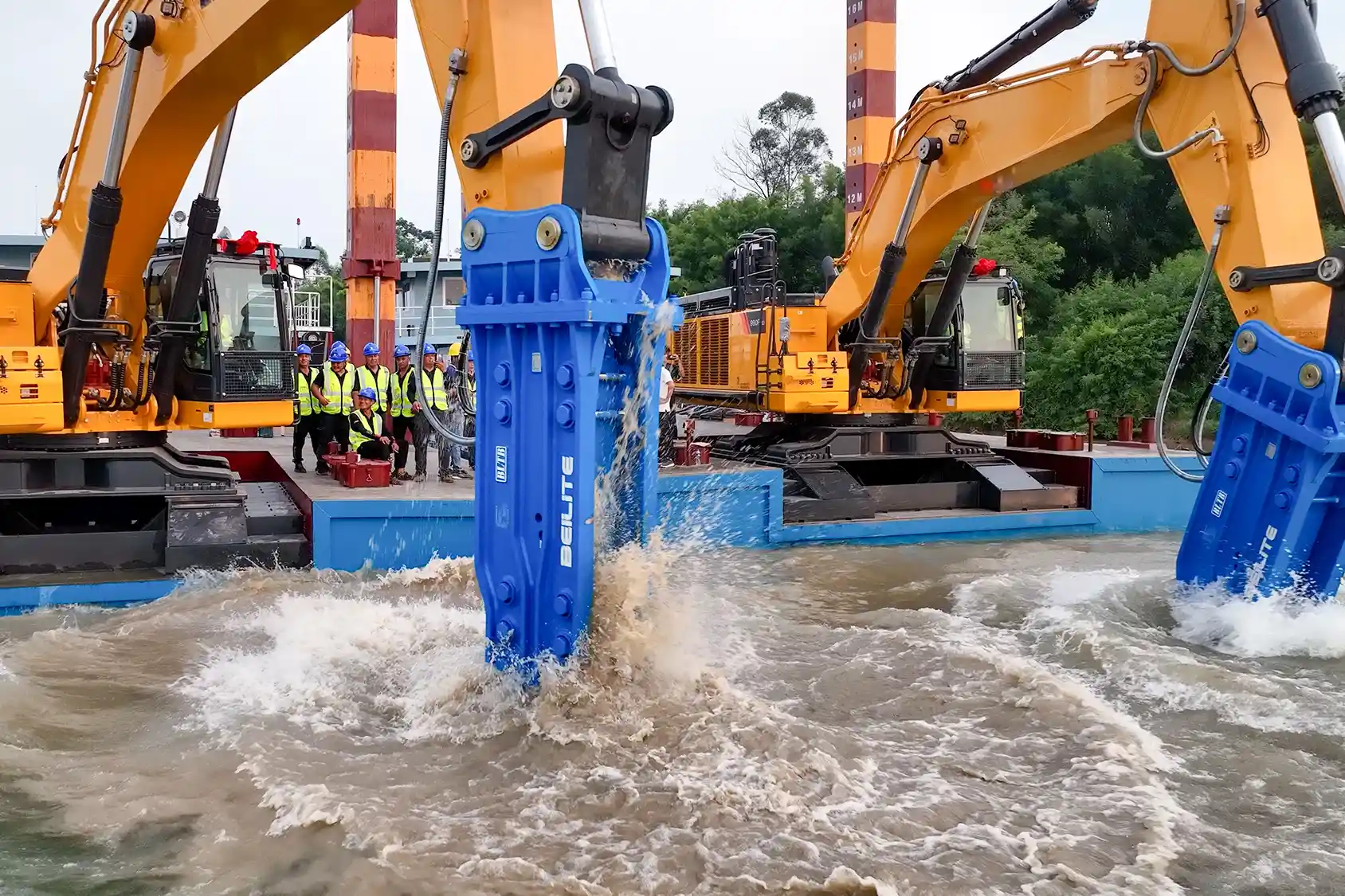
The applications span nearly every construction sector. Urban demolition projects use hydraulic breakers to reduce concrete structures efficiently. The controlled breaking minimizes collateral damage to adjacent structures compared to wrecking balls or explosives. Quarrying operations rely on rock breakers to extract material and reduce oversize pieces to manageable dimensions.
Road construction and utility work involve breaking through existing pavement, concrete, and rock. Pipeline trenching through hard ground would be impractical without hydraulic breaking capability. Site preparation for new construction often requires removing boulders, breaking up old foundations, or fracturing rock to grade.
The return on investment calculation favors quality equipment. A more capable hydraulic breaker completes tasks faster, which directly reduces labor costs and shortens project timelines. Reliable equipment minimizes the unplanned downtime that disrupts schedules and frustrates clients. Lower fuel consumption from efficient designs adds up over thousands of operating hours.
The productivity difference between a well-matched, well-maintained hydraulic breaker and an undersized or neglected one is substantial. Projects that should take days can stretch to weeks with inadequate equipment. The initial cost difference between economy and premium breakers looks smaller when measured against total project costs.
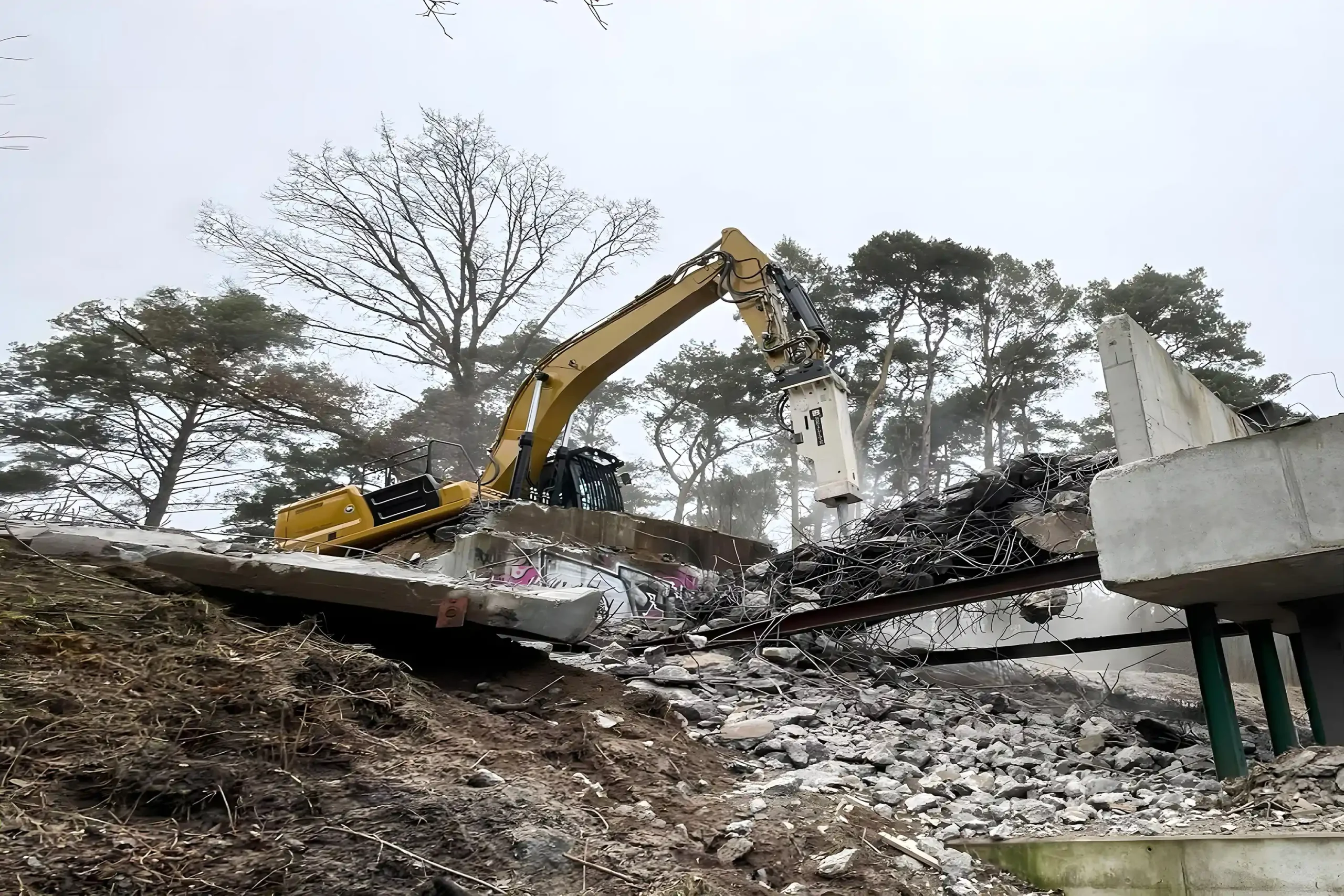
BEILITE Hydraulic Breakers for Demanding Applications
BEILITE manufactures hydraulic breakers engineered for consistent performance in challenging conditions. With decades of development and deployment across more than 100 countries, the BLT and BLTB product lines address applications from light demolition to heavy quarrying. Contact the engineering team at 40008-40008 or [email protected] to discuss specific project requirements and equipment recommendations.
Frequently Asked Questions About Hydraulic Breakers
What safety measures does hydraulic breaker operation require?
Personal protective equipment forms the baseline. Hard hat, safety glasses, hearing protection, and steel-toed boots are non-negotiable. Pre-operation inspection should verify that the breaker and carrier are in proper working condition. Establish and maintain safe distances for bystanders. Select the appropriate tool bit for the material being broken. Operating beyond the breaker’s rated capacity or the carrier’s hydraulic specifications risks equipment damage and operator injury. Formal training ensures operators understand both the equipment capabilities and the hazards involved.
How do hydraulic breakers affect overall project economics?
The impact shows up in multiple areas. Faster breaking reduces labor hours and shortens project duration. Mechanical breaking eliminates or reduces manual labor with jackhammers, which is both slower and harder on workers. Modern breakers with energy recovery features consume less fuel per unit of work accomplished. Reliable equipment minimizes unplanned downtime, which disrupts schedules and often triggers penalty clauses. Quality hydraulic breakers require less frequent maintenance and last longer, spreading the initial cost over more productive hours.
Can BEILITE hydraulic breakers work with different backhoe brands?
BEILITE designs hydraulic breakers for compatibility across major backhoe manufacturers. The engineering team can recommend mounting configurations, including quick coupler options, that ensure proper fit and optimal hydraulic matching. Providing the specific backhoe model, its operating weight, and hydraulic specifications allows for precise compatibility verification and performance optimization recommendations.