 Anglais
 Français
Hydraulic Breakers: Mastering Efficient Foundation Excavation
Breaking through a concrete foundation last month reminded me why hydraulic breakers remain the backbone of serious excavation work. The way a well-matched breaker transforms stubborn reinforced concrete into manageable rubble—without the unpredictable fractures of older methods—still impresses after years on job sites. Getting foundation excavation right means understanding not just the equipment, but how to match breaking force to material resistance, carrier weight to attachment size, and maintenance schedules to operating conditions.
How Hydraulic Breakers Actually Work in Foundation Demolition
Hydraulic breakers convert hydraulic pressure from the carrier excavator into concentrated percussive energy. A piston driven by hydraulic fluid strikes a chisel tool at high frequency, transferring immense force directly into concrete or rock. This mechanism replaced slower manual and pneumatic methods that couldn’t match the breaking force modern foundations demand.
The technology has matured considerably. Beilite Machinery, a national high-tech enterprise involved in national standards formulation, holds numerous patents covering piston dynamics, energy transfer efficiency, and wear reduction. Our BLT and BLTB series reflect this engineering depth, delivering consistent impact across varying material densities and working conditions in over 100 countries.
Matching Breaker Specifications to Foundation Requirements
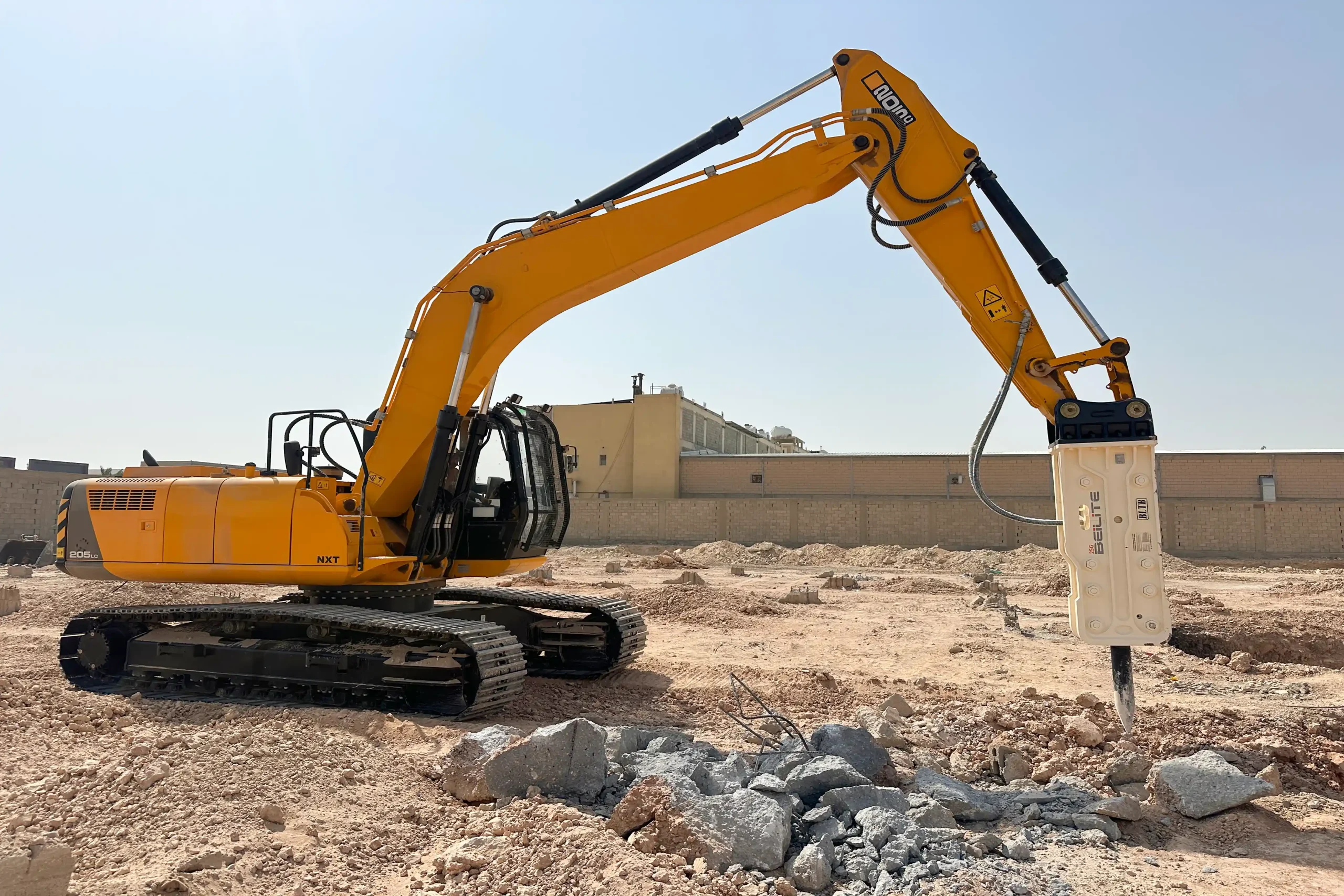
Choosing the wrong hydraulic breaker wastes fuel, accelerates wear, and slows the entire project. The selection process starts with three variables: carrier excavator operating weight, target material hardness, and required breaking force for the foundation type.
A 1-ton mini-excavator paired with a BLT-40 handles light concrete slabs efficiently. Reinforced commercial foundations demand something like a BLT-140 or BLT-165 mounted on a 20-38 ton carrier. Mismatching these creates problems—undersized breakers struggle and overheat, while oversized units stress the carrier’s hydraulic system and frame.
Selecting Hydraulic Breakers for Reinforced Concrete Foundations
Reinforced concrete requires breakers with high impact energy and appropriate chisel geometry. Higher operating pressure combined with larger piston diameter delivers the breaking force needed to fracture steel-reinforced sections without excessive passes.
Chisel selection matters as much as breaker size. Wedge chisels split concrete effectively along natural fracture lines. Pyramidal chisels penetrate dense, heavily reinforced areas where wedge tools would deflect. Beilite’s BLT-70 and BLT-75 models incorporate vibration-dampening features that reduce operator fatigue during extended reinforced concrete demolition—a practical consideration for urban sites where work windows are limited.
Adapting Breaker Settings for Variable Ground Conditions
Foundation excavation rarely involves uniform material. Mixed conditions—rock interspersed with compacted soil, concrete over natural stone—require operators to adjust hydraulic flow and pressure settings mid-task.
Hard rock excavation benefits from pointed chisels and maximum impact energy. When the material shifts to softer substrates, reducing pressure prevents the breaker from “blank firing” into minimal resistance, which damages internal components. Beilite hydraulic breakers feature adjustable settings that let operators match breaking power to real-time conditions, extending equipment lifespan while maintaining productivity.
| Modèle | Excavateur applicable (t) | Diamètre du ciseau (mm) | Pression de service (bar) |
|---|---|---|---|
| BLT-40 | 0.5-1.2 | 40 | 90-120 |
| BLT-70 | 4.5-6 | 70 | 110-140 |
| BLT-100 | 10-14 | 100 | 150-170 |
| BLT-140 | 20-24 | 140 | 160-180 |
| BLT-165 | 33-38 | 165 | 210-230 |
Operational Practices That Protect Equipment and Personnel
Hydraulic breaker efficiency depends on technique as much as specifications. Operators who maintain correct attack angles—typically 60-90 degrees to the material surface—achieve faster fracture with less chisel wear. Blank firing, where the breaker strikes without material resistance, damages internal seals and shortens piston life.
Dust suppression and noise reduction aren’t optional on most sites. Regulatory compliance aside, controlling airborne particulates protects workers and neighboring properties. Modern hydraulic breakers integrate vibration control that reduces structural fatigue on the carrier machine while improving operator comfort during long shifts.
Daily pre-operation checks catch problems before they become expensive. Hydraulic line integrity, chisel condition, and mounting bracket torque take minutes to verify but prevent hours of unscheduled downtime.
Safety Protocols for Hydraulic Breaker Operation
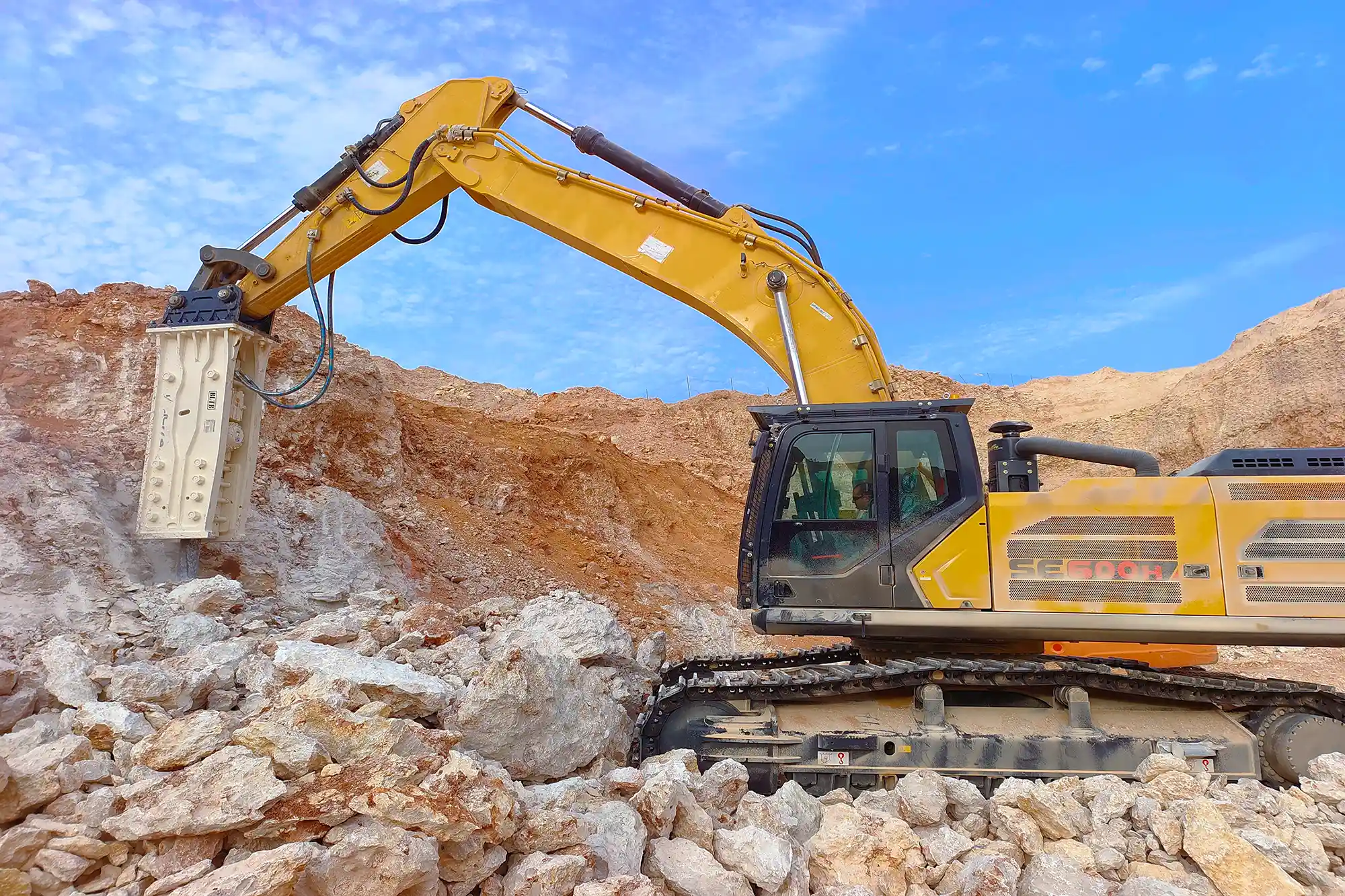
Site safety around hydraulic breakers requires layered precautions. Operators need comprehensive training covering equipment function, site-specific hazards, and emergency response procedures. Personal protective equipment—hard hats, safety glasses, hearing protection, steel-toed boots—is mandatory, not suggested.
Exclusion zones around the working area prevent injuries from flying debris. The radius depends on material type and breaker size, but 15-20 meters is common for heavy-duty foundation demolition. Regular risk assessments and strict adherence to manufacturer operational guidelines complete the safety framework.
Maintenance Strategies That Extend Hydraulic Breaker Service Life
The difference between a hydraulic breaker lasting 5,000 hours and one reaching 10,000 hours comes down to maintenance discipline. Preventative care costs far less than reactive repairs and keeps projects on schedule.
Hydraulic fluid quality directly affects internal component wear. Contaminated fluid accelerates seal degradation and can score cylinder walls. Regular fluid analysis catches contamination before damage occurs. Nitrogen gas pressure in the accumulator requires periodic checking—incorrect pressure reduces breaking force and increases shock loading on internal mechanisms.
Chisel replacement timing matters more than many operators realize. Worn chisels transfer impact energy inefficiently and stress the tool holder. Using genuine spare parts from the manufacturer’s service network ensures compatibility and performance. Beilite maintains parts availability across our global distribution network specifically to minimize downtime for customers.
Why Preventative Maintenance Determines Hydraulic Breaker Longevity
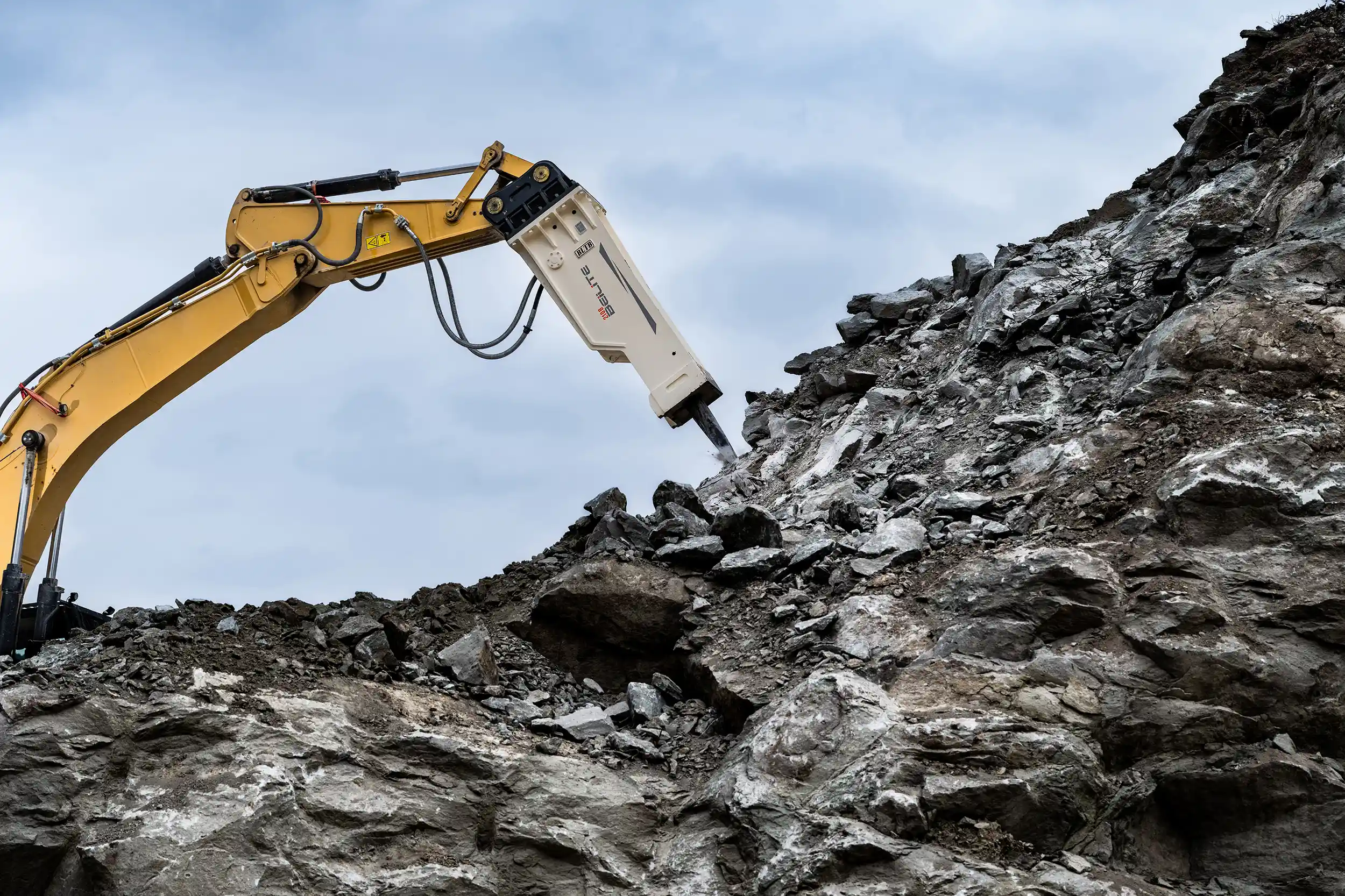
Skipping maintenance accelerates wear in predictable ways. Contaminated hydraulic fluid causes overheating and component scoring. Low nitrogen pressure allows excessive piston travel, damaging seals and increasing shock loads. Worn chisels create stress concentrations in the tool holder that can crack housings.
Proactive inspection of wear parts—bushings, seals, mounting pins—catches developing problems before they cascade into major failures. Tracking operating hours against service intervals ensures nothing gets overlooked. This discipline preserves breaking force consistency and extends total service life, directly improving return on investment.
Managing Deep Foundation Excavation Challenges
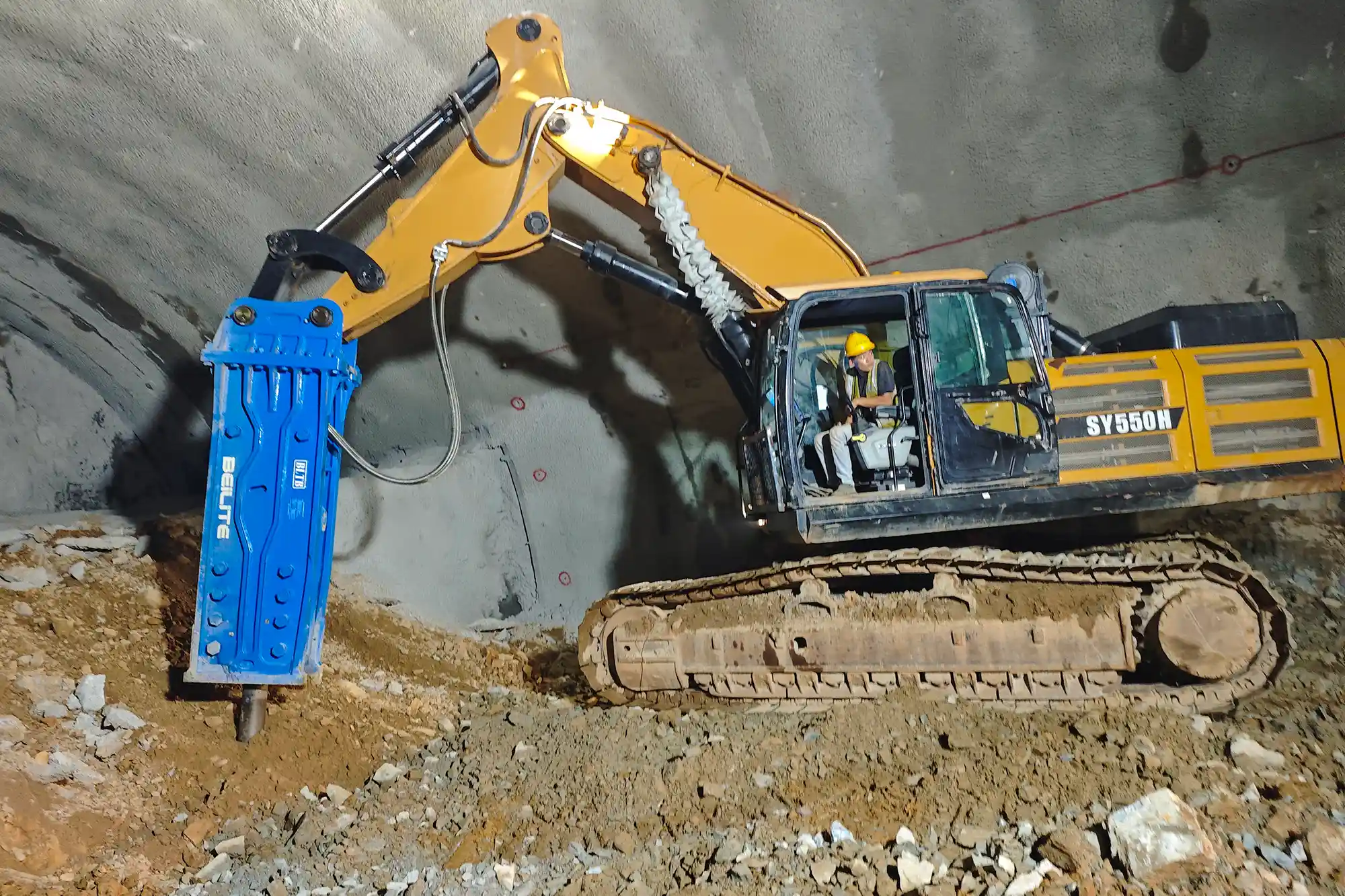
Deep foundation work introduces complications that surface excavation doesn’t face. Restricted access limits excavator maneuverability. Material removal from confined spaces requires secondary equipment coordination. Ground stability demands continuous monitoring and often temporary shoring.
Vibration control becomes critical when working near existing structures. Excessive ground vibration can damage adjacent foundations or underground utilities. Beilite’s experience in tunneling, mining, and underwater applications informs our breaker designs, which emphasize precise control alongside high breaking force.
Addressing Common Deep Excavation Obstacles
Limited space in deep pits restricts swing radius and repositioning options. Operators often work at awkward angles that reduce breaking efficiency. Efficient material removal requires coordinated bucket work or conveyor systems to prevent debris accumulation that further limits movement.
Ground stability monitoring should be continuous, not periodic. Vibration from hydraulic breaker operation can destabilize trench walls, particularly in cohesive soils. Beilite breakers offer the precise control needed to work safely in these conditions while maintaining productive breaking rates.
Frequently Asked Questions About Foundation Excavation with Hydraulic Breakers
What is the average lifespan of a high-quality hydraulic breaker used in foundation excavation?
A well-maintained hydraulic breaker typically delivers 5,000 to 10,000 operating hours over 5 to 10 years. Actual lifespan depends heavily on maintenance consistency, operator technique, and material conditions. Premium manufacturing quality and genuine replacement parts extend service life toward the upper end of this range.
How do Beilite hydraulic breakers contribute to environmental sustainability on demolition sites?
Optimized hydraulic systems reduce fuel consumption per ton of material broken, lowering emissions proportionally. Noise reduction and vibration dampening minimize disturbance to surrounding areas—a practical necessity on urban sites with residential neighbors. Efficient breaking also reduces secondary pulverization needs, decreasing dust generation during foundation demolition.
Can Beilite hydraulic breakers be adapted for various excavator models and sizes?
Beilite produces hydraulic breakers spanning carrier weights from 0.5-ton mini-excavators to 38-ton heavy equipment. Universal mounting systems and adaptable hydraulic flow requirements ensure compatibility across major excavator brands. This range means contractors can standardize on Beilite across mixed equipment fleets without compatibility concerns.
Partner with Beilite for Your Foundation Excavation Projects
Beilite Machinery Co., LTD brings national high-tech enterprise credentials and proven hydraulic breaker innovation to foundation excavation challenges worldwide. Our BLT and BLTB series serve contractors in over 100 countries who need reliable breaking force and responsive technical support.
Contact us to discuss your specific project requirements: [email protected] or call 40008-40008.