 Anglais
 Français
Precision Pile Driving: Hydraulic Breaker Technology for Foundation Projects
Hydraulic Breaker Hammer Technology for Modern Pile Driving Operations
The first time I watched a hydraulic breaker drive a concrete pile through dense clay, the precision caught me off guard. The operator adjusted impact frequency mid-stroke, responding to subtle resistance changes I couldn’t even see. That level of control simply didn’t exist with the drop hammers I’d grown up around on job sites. brise-roche hydraulique Hammer technology has fundamentally changed how we approach pile foundation work, not just in raw power, but in the finesse that separates a clean installation from a cracked pile. Beilite Machinery Co., LTD. has built its reputation on this kind of engineering refinement, developing hydraulic breakers that handle the unpredictable realities of foundation work across soil types and pile materials.
Hydraulic Breakers Outperform Traditional Pile Driving Methods
The gap between hydraulic breakers and older pile driving approaches becomes obvious once you’ve worked with both systems on the same site. Vibratory hammers struggle in consolidated ground. Drop hammers deliver inconsistent energy that’s difficult to calibrate for sensitive pile materials. Hydraulic breakers solve both problems through controlled, repeatable impact delivery.
Ground penetration improves because the operator can match impact energy to actual soil resistance rather than relying on gravity or vibration frequency alone. This matters enormously for Brise-roche hydraulique pour le génie municipal, les routes urbaines et les travaux d'utilité publique where noise ordinances and vibration limits aren’t suggestions—they’re enforceable conditions that can shut down a project. The hydraulic system’s precision keeps impact force within acceptable ranges while still achieving required penetration depths.
Cost savings emerge from multiple directions. Energy efficiency runs higher because power delivery is optimized rather than wasted on excessive strokes. Equipment failures drop when operators aren’t forcing undersized hammers through conditions they weren’t designed for. Project timelines compress when pile installation proceeds without the stop-start rhythm that plagues less adaptable systems.
Specific Performance Gains Over Vibratory and Drop Hammer Systems
Vibratory hammers hit their limits in hard ground. The vibration frequency that works beautifully in loose sand becomes nearly useless when the pile tip encounters compacted gravel or weathered rock. Hydraulic breakers deliver direct impact energy that doesn’t depend on soil resonance to function.
Drop hammers carry their own problems. The impact energy varies with drop height, which changes as the pile advances. Operators compensate by adjusting winch settings, but the process remains inherently inconsistent. Pile damage rates run higher because energy spikes occur unpredictably. Hydraulic systems eliminate this variability through regulated pressure delivery.
The noise and vibration reduction isn’t just a regulatory convenience. It protects adjacent structures from settlement and cracking. On urban infill projects where existing buildings sit within meters of new foundation work, this protection determines whether the project proceeds at all.
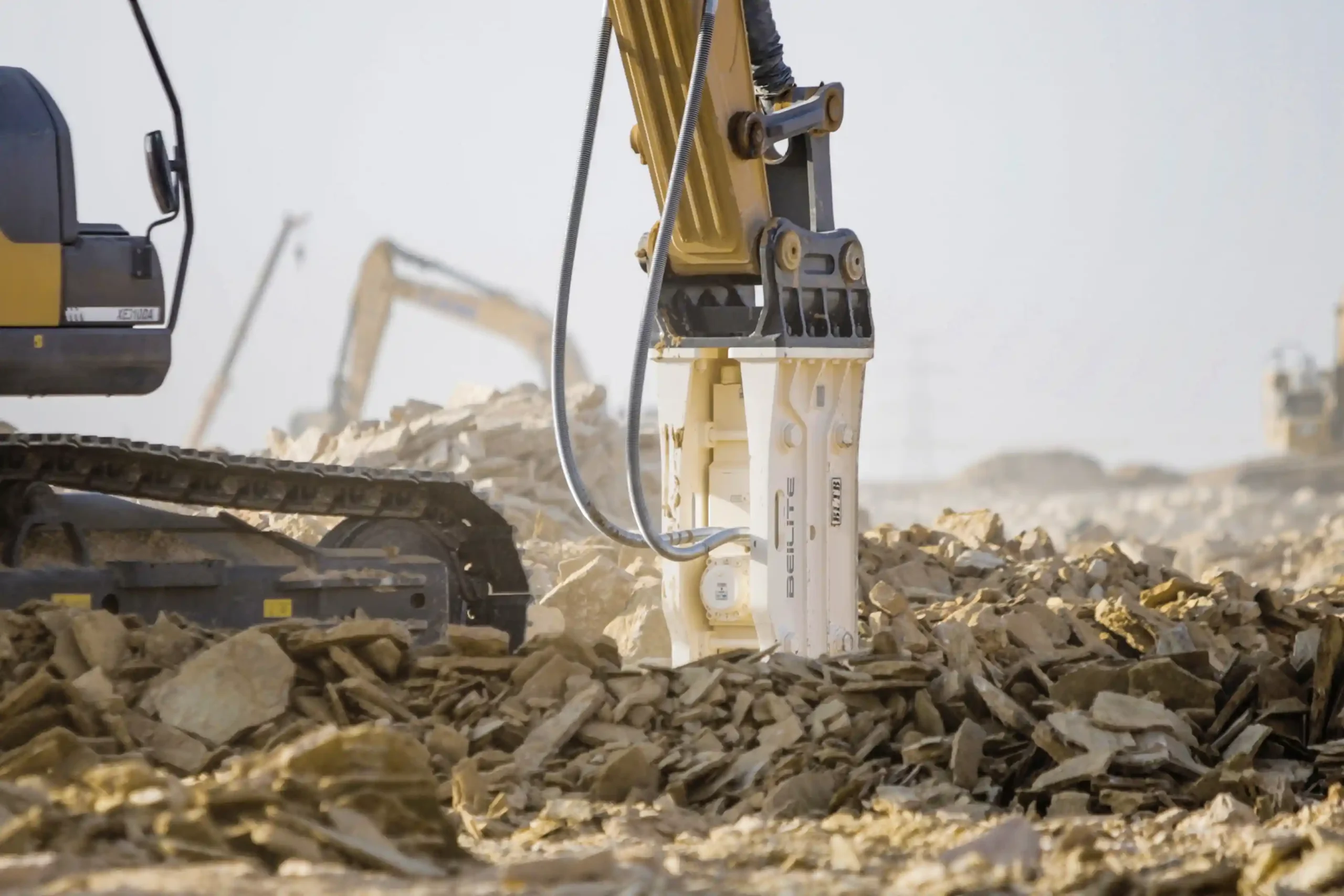
Matching Hydraulic Breaker Specifications to Pile Types and Ground Conditions
Breaker selection requires honest assessment of what the ground will actually demand, not optimistic assumptions about soil reports. Beilite’s BLT and BLTB hydraulic breaker lines cover the full range of pile driving scenarios, but choosing the right model means understanding how impact energy, frequency, and chisel geometry interact with specific materials.
Concrete piles absorb impact differently than steel. The pile material’s ability to transmit energy without cracking determines how much force you can safely apply per stroke. Steel H-piles and sheet piling tolerate higher peak loads but benefit from chisel profiles that distribute force across the pile head. Timber piles demand the opposite approach—lower frequency, controlled energy to prevent splitting.
For smaller equipment, selecting a Marteau piqueur hydraulique pour mini-pelle,Marteau piqueur pour mini-pelle involves different calculations. The excavator’s hydraulic flow capacity sets hard limits on breaker performance. Oversizing the breaker relative to the carrier creates pressure drops that reduce actual impact energy below rated specifications.
| Modèle de disjoncteur (exemple) | Excavator Weight (t) | Diamètre du ciseau (mm) | Impact Energy (Approx. Joules) | Suitable Pile Types | Ground Conditions |
|---|---|---|---|---|---|
| BLT-75 | 6-8.5 | 75 | Medium | Steel, Concrete | Medium-Hard Soil |
| BLT-100 | 10-14 | 100 | Haut | Concrete, H-Piles | Hard Soil, Rock |
| BLT-125 | 14-18 | 125 | Very High | Large Concrete, Steel | Hard Rock |
| BLT-140 | 20-24 | 140 | Extreme | Sheet Piling, Large H-Piles | Very Hard Rock |
Ground Conditions Drive Equipment Decisions
Soil investigation reports provide starting points, but actual conditions vary across a site. Harder, rocky soils require higher impact energy and chisel geometries designed for point loading rather than distributed force. The breaker needs enough power reserve to handle unexpected boulders or cemented layers without stalling.
Softer, cohesive soils present different challenges. Clay and silt can grip piles through suction effects that resist extraction if driving stops mid-stroke. Higher frequency impacts help overcome this resistance by preventing the soil from consolidating around the pile during pauses. The breaker’s ability to maintain consistent cycling matters more than peak power in these conditions.
Correct matching between breaker specifications and site conditions protects both the equipment and the foundation quality. Underpowered breakers suffer accelerated wear from extended operation at maximum output. Overpowered units risk pile damage and excessive ground disturbance that compromises bearing capacity.
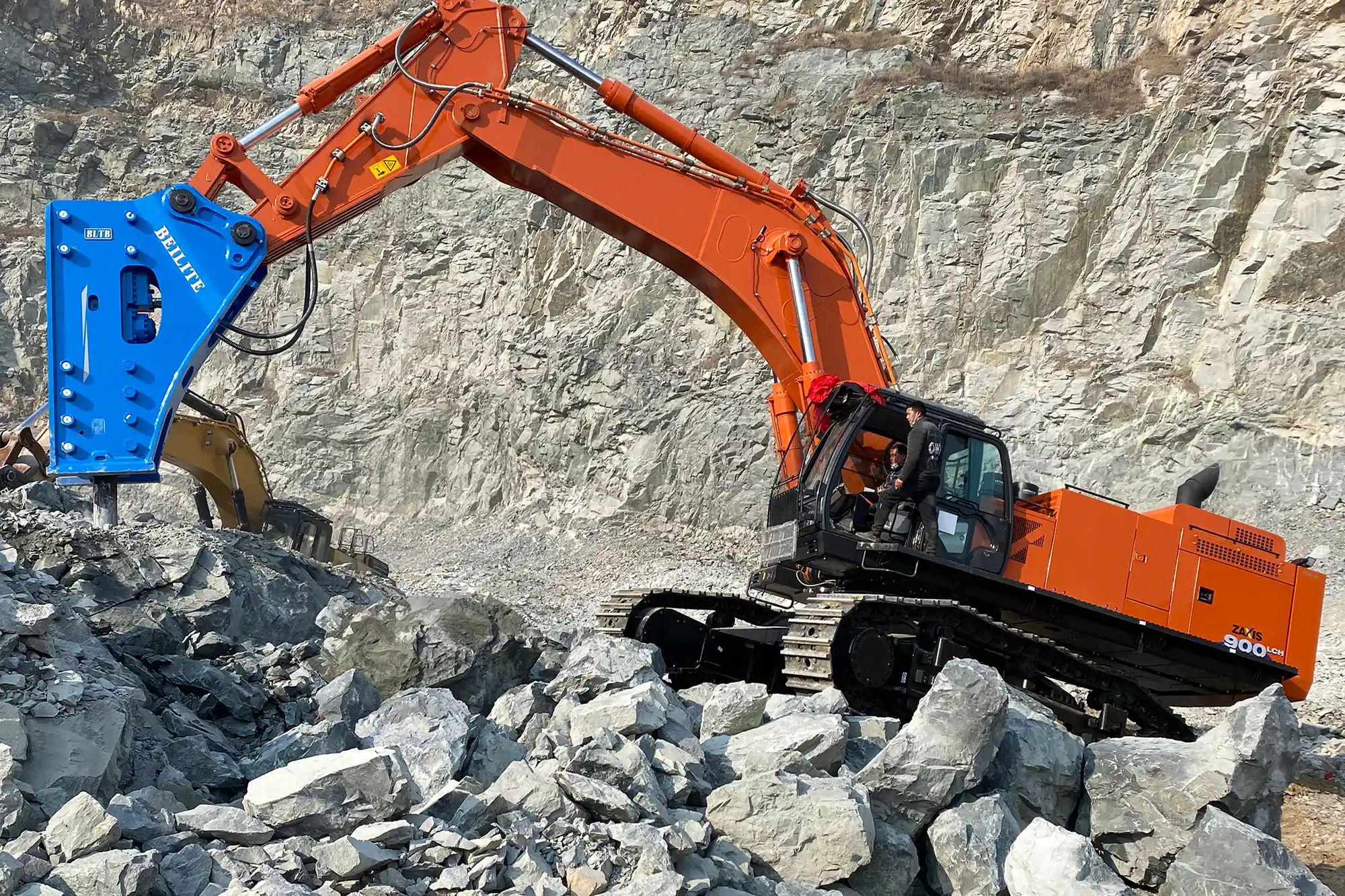
Operational Protocols That Protect Equipment and Personnel
Productivity and safety connect directly on pile driving sites. Rushing through pre-operation checks leads to hydraulic line failures that cause hours of downtime. Skipping exclusion zone enforcement creates injury risks that no project schedule justifies.
Operator training covers more than button sequences. Experienced operators read ground response through the breaker’s behavior—changes in rebound, variations in sound, shifts in cycling rhythm. These signals indicate when to adjust impact energy or frequency before problems develop. Emergency procedures need practice, not just documentation, because hydraulic system failures can create dangerous conditions rapidly.
Pre-operation inspections follow a consistent sequence. Hydraulic lines get checked for abrasion, kinking, and fitting security. Chisel condition determines whether the tool can transmit impact energy effectively or will absorb force through deformation. Mounting pins and bushings show wear patterns that predict failure timing. Catching these issues before work begins prevents mid-shift breakdowns.
Dust suppression and noise mitigation aren’t afterthoughts. Environmental compliance requirements vary by jurisdiction, but the underlying concerns—respiratory health, hearing protection, community relations—apply everywhere. Integrating these measures into standard operating procedures keeps projects moving without regulatory interruptions.
Reducing Downtime Through Proactive Maintenance
Equipment uptime depends on catching problems before they escalate. Lubrication schedules exist because metal-on-metal contact without adequate grease creates wear rates that shorten component life dramatically. The few minutes required for daily greasing prevent repairs that take days.
Hydraulic fluid quality affects every component in the system. Contaminated fluid damages pumps, valves, and seals progressively. Regular fluid analysis identifies contamination sources before they cause widespread damage. Filter replacement at specified intervals maintains the cleanliness levels that hydraulic components require.
Beilite’s support network provides genuine spare parts that match original specifications. Aftermarket components often introduce dimensional variations or material differences that create new failure modes. Access to manufacturer-backed service ensures that repairs restore full performance rather than introducing new problems.
Advanced Engineering Features in Modern Hydraulic Breakers
Current hydraulic breaker designs incorporate refinements that weren’t available a decade ago. Energy recovery systems capture recoil energy that older designs simply dissipated as heat. This recovered energy contributes to the next impact stroke, improving fuel efficiency without reducing output.
Anti-blank firing mechanisms protect internal components when the chisel loses contact with the work surface. Blank firing—striking without resistance—creates shock loads that damage piston faces, cylinder walls, and mounting structures. Automatic detection systems interrupt the firing cycle when contact loss occurs, resuming operation only when the chisel reengages the material.
Chisel metallurgy has advanced significantly. Modern alloys maintain hardness at the working face while providing toughness through the body that resists fracture. Heat treatment processes create wear surfaces that last longer under the abrasive conditions pile driving creates. These improvements reduce chisel replacement frequency and the associated downtime.
Beilite’s engineering team holds hundreds of patents covering hydraulic system optimization, impact mechanism design, and durability enhancements. Participation in national standards formulation ensures that BLT technology meets or exceeds industry requirements across global markets.
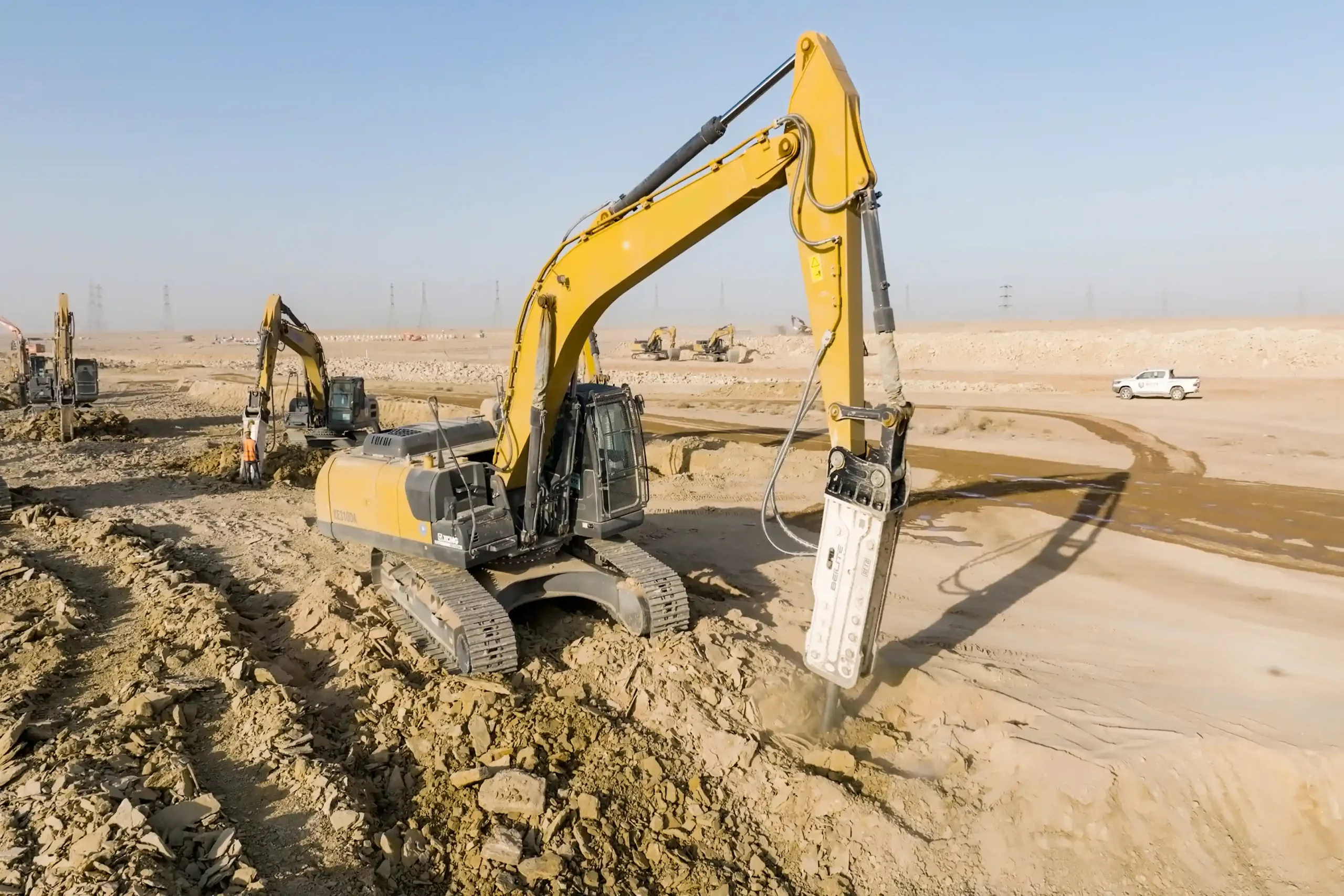
Maintenance Requirements for Pile Driving Applications
Pile driving subjects hydraulic breakers to sustained high-output operation that accelerates wear on every component. Maintenance practices that work for demolition or trenching applications need adjustment for the continuous cycling that pile installation demands.
Daily inspections focus on the components most affected by repetitive impact loading. Chisel wear patterns indicate whether the tool is striking squarely or absorbing side loads that accelerate bushing wear. Retainer pins show stress marks before they fail completely. Hydraulic hoses develop fatigue cracks at flex points that precede rupture.
Lubrication intervals shorten under pile driving conditions. The grease that protects sliding surfaces gets displaced more rapidly when impact frequency stays high for extended periods. Operators who follow demolition-oriented schedules find themselves replacing bushings and pins far sooner than expected.
Hydraulic system maintenance becomes more critical as well. Accumulator pressure affects impact energy delivery directly. Low accumulator charge reduces output even when the pump provides full flow. Regular pressure checks catch slow leaks before they compromise performance noticeably.
Heavy-Duty Maintenance for Continuous Operation
The stress levels in continuous pile driving demand inspection frequencies that might seem excessive for other applications. Daily chisel and retainer pin checks aren’t optional—they’re the minimum standard for preventing failures that strand equipment mid-project.
Lubrication points need attention at the start of each shift and sometimes during extended operations. The grease consumption rate under pile driving conditions exceeds what most operators expect based on other applications.
Hydraulic fluid analysis should occur more frequently than manufacturer minimums suggest. Contamination sources multiply when equipment operates continuously in dusty, debris-filled environments. Catching contamination early prevents the progressive damage that spreads through the entire hydraulic circuit.
Professional servicing at scheduled intervals ensures that wear items get replaced before they cause secondary damage. Seal kits, accumulator bladders, and valve components all have finite service lives that pile driving conditions shorten. Diagnostic tools help identify components approaching failure so replacements can be scheduled during planned downtime rather than emergency stops.
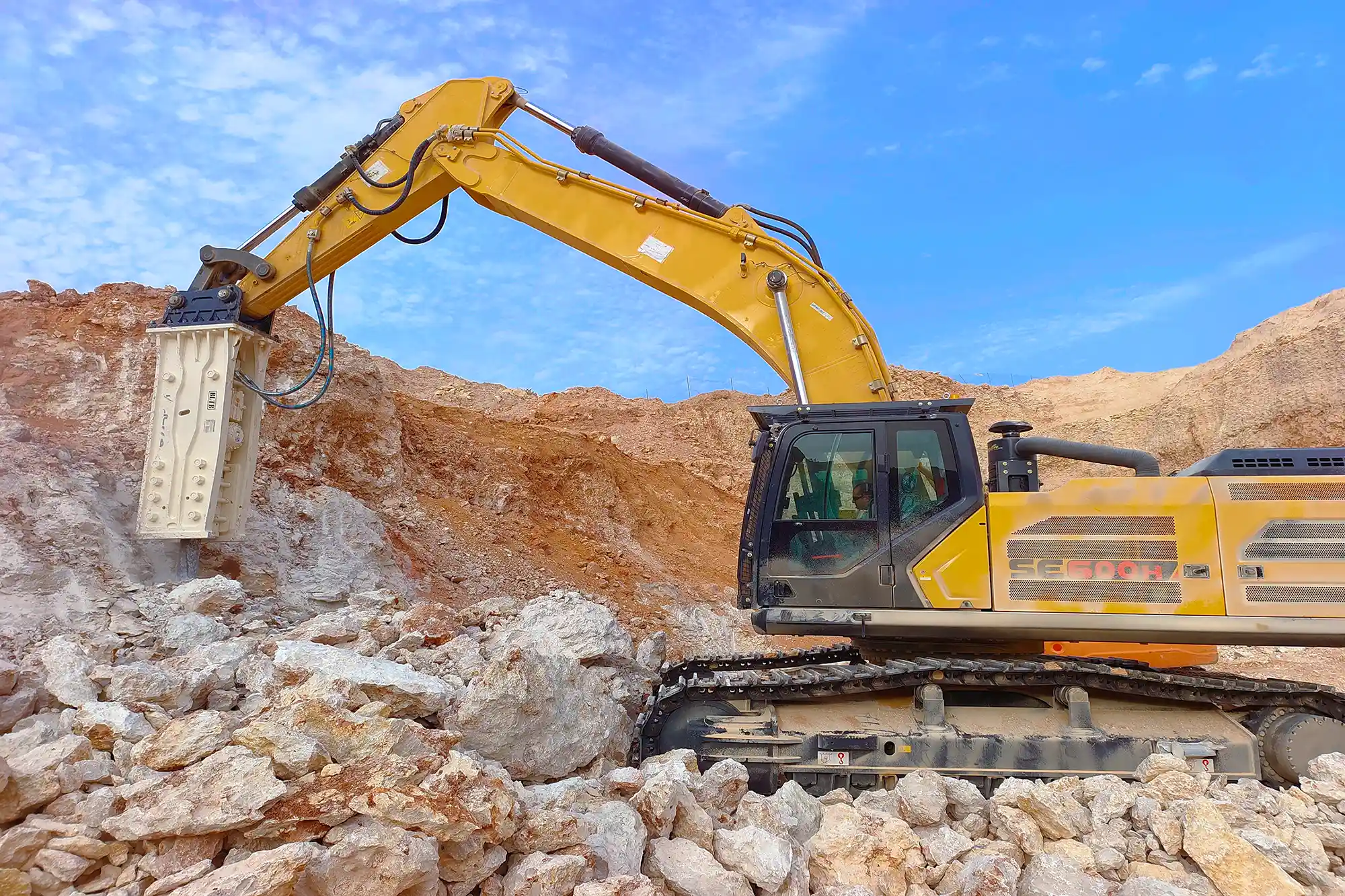
Frequently Asked Questions About Hydraulic Breakers for Pile Driving
What makes hydraulic breakers more effective than vibratory hammers in hard ground?
Hydraulic breakers deliver direct impact energy to the pile tip regardless of soil characteristics. Vibratory hammers depend on soil resonance effects that diminish in consolidated or rocky ground. The controlled impact force of hydraulic systems penetrates hard strata that would stall vibratory equipment, while the adjustable energy output prevents pile damage that occurs when vibratory methods are forced beyond their effective range.
How should soil conditions influence hydraulic breaker selection for pile driving?
Harder soils and rock require higher impact energy ratings and chisel geometries designed for concentrated force delivery. Softer, cohesive soils benefit from higher frequency operation that prevents soil consolidation around the pile during driving pauses. The selection process should account for the worst conditions expected across the site, not average values, since undersized equipment suffers accelerated wear when pushed beyond design limits.
What maintenance frequency does continuous pile driving demand?
Daily inspections of chisels, retainer pins, and hydraulic connections are mandatory. Lubrication intervals should be shortened compared to intermittent-use applications, often requiring attention at shift start and during extended operations. Hydraulic fluid analysis frequency should increase to catch contamination before it damages system components. These practices prevent the accelerated wear that continuous high-output operation creates.
Partner with Beilite for Superior Pile Driving Solutions
As a national high-tech enterprise with decades of innovation and hundreds of patents, BEILITE Machinery Co., LTD. is dedicated to providing high-end hydraulic breaker solutions for your most demanding pile driving projects. Our BLT and BLTB brands are trusted globally for their exceptional quality and performance. Contact our experts today to discuss how our advanced hydraulic breakers can optimize your foundation engineering, enhance productivity, and ensure project success. Partner with BEILITE for reliable, high-performance equipment that meets national standards and exceeds expectations. Email: [email protected] | Phone: 40008-40008