 Anglais
 Français
Hydraulic Breaker Performance for Optimal Block Holing
Working with oversized rock in mining and quarrying teaches you quickly that not all breaking equipment performs equally when conditions get difficult. Block holing sits at the intersection of precision and brute force—you need enough impact energy to fracture dense material, but controlled enough to avoid wasting energy on over-pulverization or creating safety hazards. The hydraulic breaker you choose determines whether a shift runs smoothly or grinds to a halt waiting on secondary processing.
Block Holing Presents Distinct Operational Challenges
Block holing operations rarely offer consistent conditions. Geological formations shift from brittle sedimentary layers to dense igneous rock within the same site, and each transition demands different breaking approaches. Oversized rocks that escape primary crushing create bottlenecks in material flow, while excessive fragmentation reduces aggregate yield and burns through fuel unnecessarily.
Mining and quarrying operations measure success in throughput and uptime. Every hour spent on secondary breaking represents lost production capacity. Safety compounds these pressures—uncontrolled rock movement and fly rock incidents carry serious consequences that extend beyond immediate injury to regulatory scrutiny and operational shutdowns. Traditional manual breaking methods remain an option, but the labor intensity and slower cycle times rarely justify their use when hydraulic alternatives exist.
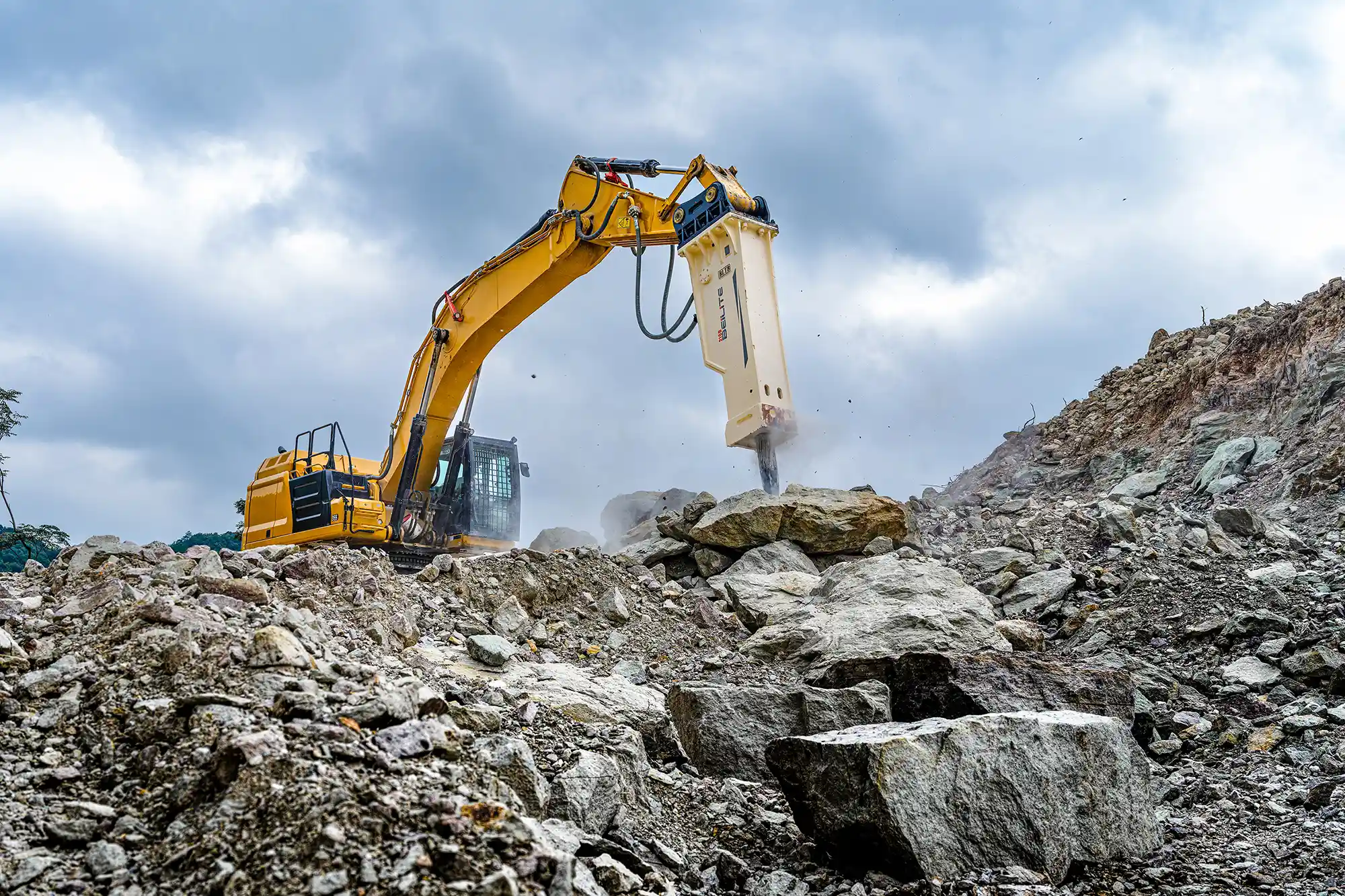
Selecting the Right Hydraulic Breaker for Block Holing Operations
Matching equipment to application requirements prevents the common mistake of under-specifying or over-investing in breaking capacity. Impact energy, operating weight, hydraulic flow rates, and chisel geometry each influence how effectively a breaker handles specific rock types and site conditions.
Rock Hardness Determines Required Impact Force
Material compressive strength sets the baseline for breaker selection. Fractured or softer rock responds well to higher operating frequency with moderate impact energy—the rapid cycling breaks material efficiently without excessive force. Hard rock applications flip this equation. Dense formations with high compressive strength require heavy-duty hydraulic breakers delivering substantial impact energy per blow.
Chisel selection follows similar logic. Moil point designs penetrate concrete and softer rock effectively, concentrating force at a narrow contact point. Harder, more abrasive materials perform better with blunt or wedge chisels that distribute impact across a wider surface, reducing point loading that accelerates tool wear.
Carrier Compatibility Affects Operational Reliability
The hydraulic breaker and excavator function as an integrated system. Mismatched operating weights strain carrier hydraulics and structural components, while incorrect flow rates either starve the breaker of power or overwhelm its internal systems. Proper mounting bracket design and quick coupler systems ensure secure attachment without introducing stress points.
Auxiliary hydraulic integration requires attention to pressure ratings and flow capacity. Undersized lines restrict performance; oversized systems risk damage to breaker components not designed for higher pressures. Getting this interface right prevents the cascading failures that turn a single compatibility issue into extended downtime.
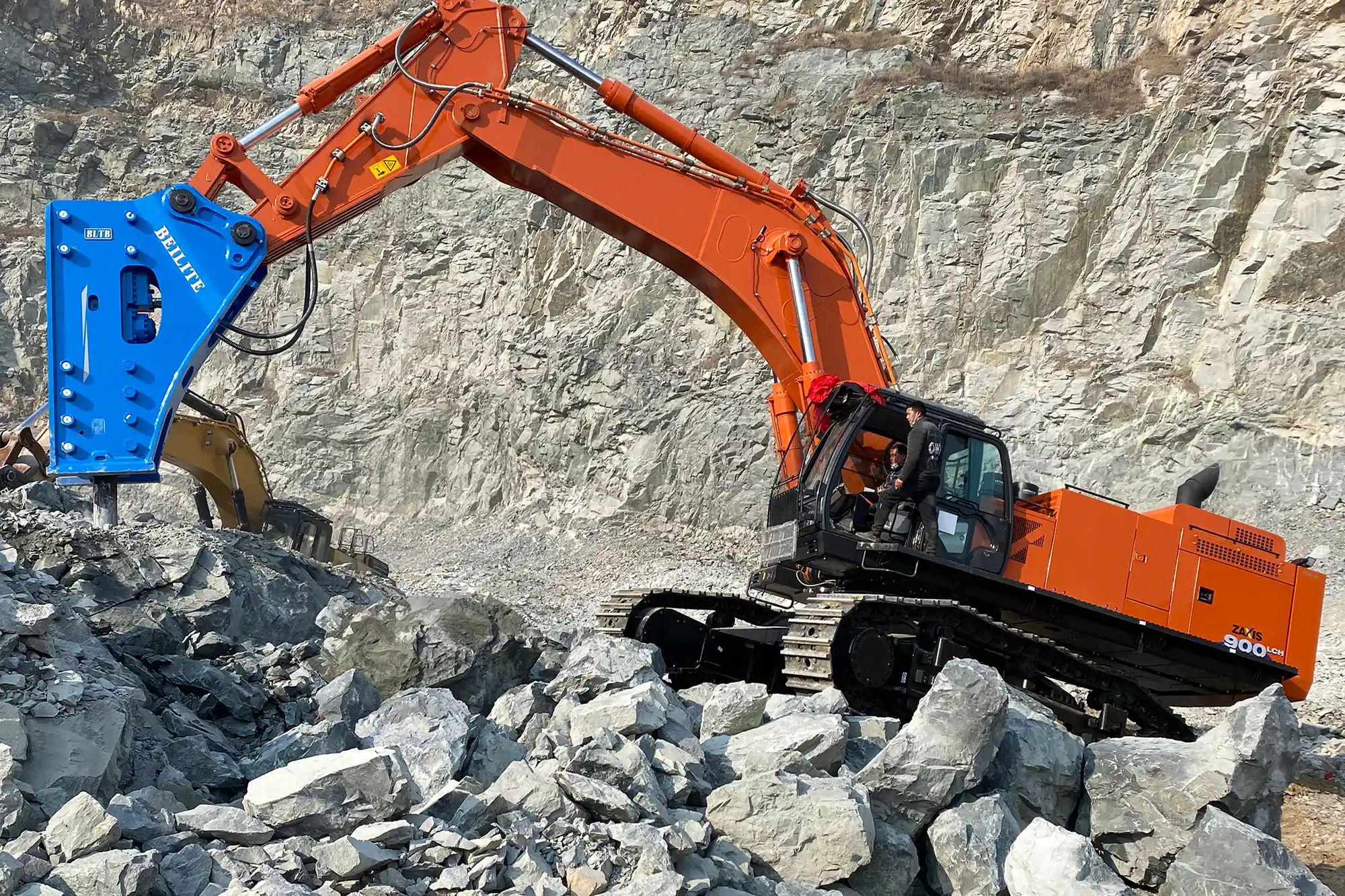
Technical Features That Improve Block Holing Performance
Current hydraulic breaker designs incorporate systems that address the specific demands of sustained heavy breaking work. Energy recovery mechanisms capture rebound force and redirect it into subsequent impacts, extracting more breaking power from the same hydraulic input while reducing fuel consumption.
Auto-lube systems maintain consistent lubrication on chisel bushings and wear surfaces without operator intervention. This continuous protection extends component life and reduces the maintenance burden that accumulates during intensive block holing campaigns. Anti-blank firing protection prevents the internal damage that occurs when a breaker fires without resistance—a common occurrence when chisels slip off rock surfaces or material fractures unexpectedly.
Remote monitoring capabilities track operating parameters and flag developing issues before they cause failures. This predictive approach to maintenance scheduling reduces unplanned downtime and allows parts ordering before components reach critical wear thresholds. The cumulative effect shows up in faster cycle times, reduced operator fatigue from vibration exposure, and more consistent production rates across shifts.
Quality Manufacturing Delivers Long-Term Value
Equipment investment decisions extend beyond initial purchase price. Hydraulic breakers operating in block holing applications face sustained high-stress conditions that expose manufacturing weaknesses quickly. Inferior materials and inconsistent tolerances translate directly into premature failures and replacement costs.
BEILITE Machinery Co., LTD brings over two decades of hydraulic breaker development to demanding applications. As a national high-tech enterprise that participated in formulating China’s national standards for hydraulic breakers, the company holds hundreds of patents reflecting continuous engineering advancement. BLT and BLTB brand products incorporate robust construction and superior wear resistance developed through extensive field testing across global markets.
This manufacturing quality translates into extended service life, reduced unplanned downtime, and consistent performance throughout the equipment’s operational lifespan. Global support networks ensure spare parts availability and warranty coverage regardless of deployment location.
Heavy-Duty Breakers Handle Hard Rock Applications
Hard rock block holing demands large hydraulic breakers delivering high impact energy. These heavy-duty units generate the force necessary to penetrate and fracture dense formations with high compressive strength. Chisel point tools provide effective initial penetration, while blunt configurations break larger blocks into manageable pieces for downstream processing.
Matching breaker capacity to geological conditions prevents the frustration of equipment that cannot deliver adequate breaking force. Undersized breakers operating at maximum capacity wear rapidly and still fail to achieve acceptable production rates.
Safety and Productivity Improvements Work Together
Modern hydraulic breaker designs address safety and productivity as interconnected objectives. Anti-blank firing mechanisms prevent both equipment damage and the unpredictable tool movement that creates operator hazards. Advanced vibration damping reduces the cumulative fatigue that degrades operator alertness and decision-making over long shifts.
Controlled breaking minimizes the uncontrolled rock movement that creates fly rock hazards and unpredictable material behavior. These design features enable faster cycle times with fewer secondary operations, delivering productivity gains while simultaneously reducing incident exposure.
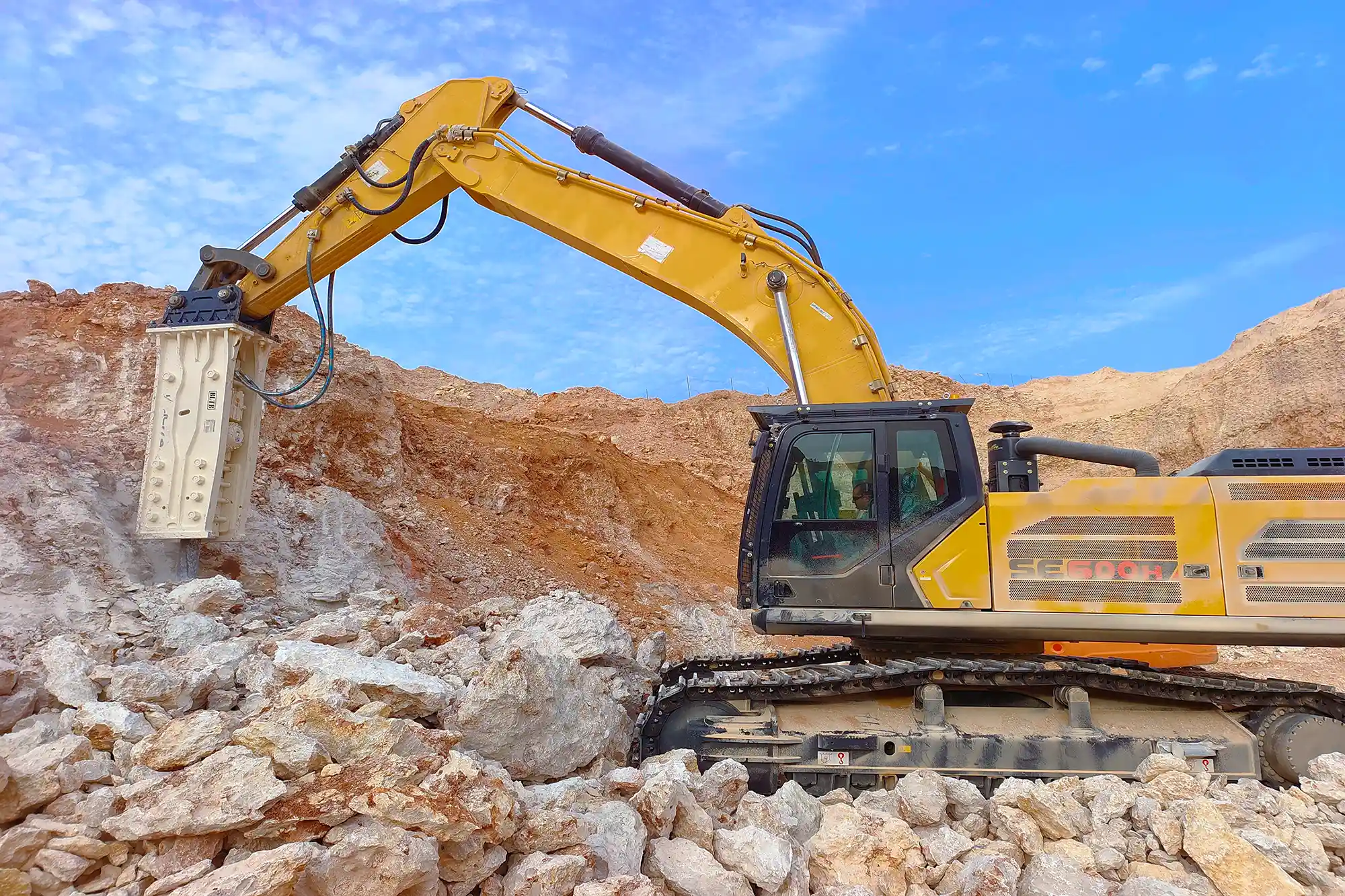
Maintenance Practices That Protect Equipment Investment
Proactive maintenance extends hydraulic breaker service life and maintains consistent breaking performance. The demanding conditions of block holing applications accelerate wear on components that receive inadequate attention.
| Tâche de maintenance | Fréquence | Key Action | Bénéfice |
|---|---|---|---|
| Chisel Lubrication | Quotidiennement | Apply grease to chisel and bushings | Reduces wear, prevents seizing |
| Inspection visuelle | Quotidiennement | Check for leaks, cracks, and loose bolts | Early detection of potential failures |
| Hydraulic Fluid Management | Hebdomadaire | Check fluid levels and quality | Ensures proper power transmission, prevents overheating |
| Wear Parts Replacement | Selon les besoins | Replace worn chisels, bushings, and seal kits | Maintains breaking efficiency, prevents internal damage |
| Nitrogen Gas Pressure Check | Mensuel | Verify rear cylinder and accumulator pressures | Ensures consistent impact energy |
Daily chisel lubrication prevents the metal-to-metal contact that accelerates bushing wear and can lead to tool seizure. Visual inspections catch developing issues—hydraulic leaks, structural cracks, loosening fasteners—before they progress to failures requiring major repairs.
Hydraulic fluid quality directly affects power transmission and heat management. Contaminated or degraded fluid reduces breaking efficiency and accelerates internal component wear. Timely replacement of wear parts, including seal kits, prevents the progressive damage that occurs when worn components allow contamination or pressure loss.
Nitrogen gas pressure in accumulators and rear cylinders requires periodic verification. Incorrect pressures reduce impact energy and alter operating characteristics in ways that may not be immediately obvious but steadily degrade performance and increase component stress.
Working with BEILITE on Block Holing Applications
BEILITE Machinery Co., LTD has spent over two decades developing hydraulic breaker technology for demanding applications. The company’s role in establishing national standards and extensive patent portfolio reflect deep expertise in breaking equipment engineering.
BLT and BLTB series hydraulic breakers address the specific requirements of block holing operations across diverse geological conditions. Contact BEILITE for consultation on equipment selection matched to your project requirements. Reach the team at [email protected] or 40008-40008.
Questions fréquemment posées
What maintenance schedule keeps hydraulic breakers performing in block holing work?
Daily chisel and bushing lubrication forms the foundation of effective maintenance. Combine this with daily leak and wear inspections, weekly hydraulic fluid checks, and seal replacement based on condition monitoring. Following manufacturer service intervals for professional inspection catches developing issues that routine checks might miss. This systematic approach prevents the accumulated wear that leads to unexpected failures during production.
How does impact energy specification affect breaking productivity?
Impact energy determines how effectively a hydraulic breaker penetrates and fractures rock. Higher impact energy reduces the number of blows required to break material, directly increasing production rates. The key lies in matching breaker impact energy to rock compressive strength—insufficient energy extends cycle times, while excessive energy wastes fuel without proportional productivity gains.
Do hydraulic breakers adapt to different rock types in block holing?
Modern hydraulic breakers with adjustable impact frequency and energy settings handle a range of geological conditions. Softer fractured rock responds to higher frequency operation, while dense formations require concentrated high-energy impacts. Tool selection—moil, chisel, or blunt configurations—allows further optimization for specific rock characteristics encountered during operations.