 English
 French
Extend Your Breaker’s Life: Critical Maintenance for Longevity
Hydraulic breakers take a beating by design. They pound through concrete, shatter rock, and absorb forces that would destroy lesser equipment. When one fails early, the cost goes beyond the repair bill—projects stall, schedules slip, and the ripple effects hit the bottom line hard. After two decades of building these machines at Beilite Machinery, we’ve seen what separates breakers that last from those that don’t. Most of the difference comes down to how they’re treated between jobs, not just during them.
Daily Habits That Actually Extend Breaker Life
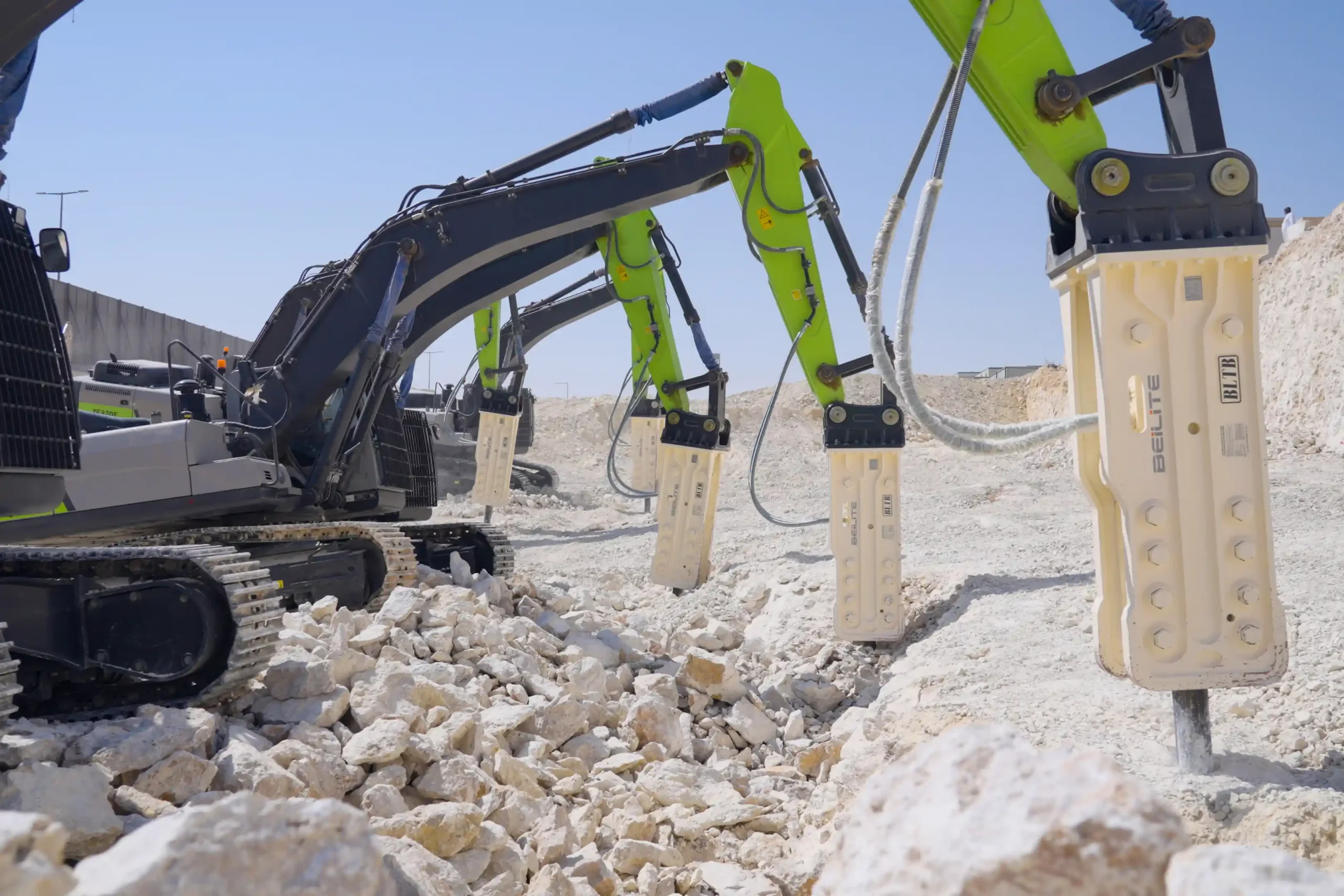
The routines that matter most happen before the first strike of the day. Consistent daily practices directly reduce wear on internal components and catch small problems before they become expensive ones. Our BLT and BLTB hydraulic breaker Hammer models are engineered for punishment across demanding conditions, but no design can compensate for neglected maintenance. Monitoring impact energy, managing back pressure, and keeping dust out of critical areas all contribute to sustained performance. Vibration control matters too—not just for the machine, but for the operator running it.
What are the critical daily checks for hydraulic breakers?
These pre-start inspections take minutes but prevent hours of downtime. Make them non-negotiable.
- Walk around the entire breaker looking for visible damage, cracks, or bolts that have worked loose.
- Examine the chisel closely. Excessive wear, cracks, or mushrooming at the strike end means replacement time.
- Check every hydraulic hose connection for leaks or abrasion damage. Tighten anything that’s loosened up.
- Verify nitrogen pressure in the accumulator against manufacturer specs. Wrong pressure directly affects impact performance.
- Confirm the attachment mounts securely to the excavator with proper compatibility.
- Hit every designated greasing point with fresh lubricant.
Building a Maintenance Schedule That Prevents Failures
Daily checks form the foundation, but a structured preventative maintenance program determines whether your breaker reaches its full service potential. This proactive approach catches component degradation before it cascades into system-wide damage. Our engineering team designs for reliability, but even the most robust breaker needs scheduled attention to critical wear items. Following recommended service intervals protects both your warranty coverage and the asset’s long-term value.
| Maintenance Task | Recommended Interval (Operating Hours) | Key Benefit |
|---|---|---|
| Chisel & Bushing Inspection | Daily / 8-10 | Prevents accelerated wear, maintains impact |
| Lubrication | Every 2-4 | Reduces friction, extends component life |
| Nitrogen Pressure Check | Weekly / 50 | Optimizes impact force, protects internals |
| Hydraulic Oil Analysis | Monthly / 200 | Detects contamination, prevents system failure |
| Filter Replacement | Quarterly / 500 | Maintains hydraulic system health |
| Seal Kit Inspection | Annually / 1000 | Prevents leaks, preserves hydraulic integrity |
How does proper lubrication impact breaker lifespan?
Lubrication isn’t just maintenance—it’s the barrier between normal operation and accelerated destruction. The grease forms a protective film between moving surfaces, cutting friction and carrying heat away from high-stress contact points. This anti-wear protection proves critical for the chisel, bushings, and internal piston. Regular application of specialized breaker grease at designated points prevents metal-to-metal contact that grinds components down prematurely. Automatic lubrication systems remove the human variable from this equation, delivering consistent protection without relying on memory.
Recognizing Problems Before They Become Expensive
Early diagnosis separates a quick fix from a major rebuild. Understanding what symptoms mean allows operators and technicians to troubleshoot effectively rather than guessing. Reduced impact power, unusual noise, oil leakage, and overheating all signal specific problems requiring immediate attention. Hydraulic system diagnostics can pinpoint root causes quickly. The key is acting on warning signs rather than running the breaker until something breaks completely.
| Common Issue | Potential Cause | Recommended Solution |
|---|---|---|
| Reduced Impact Power | Low nitrogen pressure, worn piston/chisel | Recharge nitrogen, replace worn parts, check hydraulic flow |
| Excessive Noise/Vibration | Loose bolts, worn bushings, incorrect oil flow | Tighten fasteners, replace bushings, adjust hydraulic settings |
| Oil Leakage | Damaged seals, loose connections | Replace seal kits, tighten connections, inspect hoses |
| Overheating | Contaminated hydraulic oil, insufficient flow | Change hydraulic oil, replace filters, check cooling system |
| Chisel Jamming | Improper operation, worn chisel/bushings | Use correct technique, replace worn parts, inspect pin |
Why Genuine Parts Matter More Than Price Suggests
Component quality directly determines how long a hydraulic breaker performs at spec. Using genuine parts isn’t about brand loyalty—it’s about engineering compatibility. Our BLT parts and BLTB components undergo specific design and testing for the loads and tolerances our breakers encounter. These OEM components guarantee material strength, precise fit, and consistent performance. Aftermarket alternatives might cost less upfront, but they often accelerate wear on adjacent components and can void warranty coverage when problems arise.
| Feature | Genuine Beilite Parts | Aftermarket Parts (Generic) |
|---|---|---|
| Material Quality | High-grade, tested alloys, specific heat treatment | Variable, often lower quality, inconsistent metallurgy |
| Precision Fit | Engineered to exact specifications, seamless integration | May require modification, loose tolerances |
| Performance | Optimized for BLT/BLTB breakers, full impact power | Reduced efficiency, potential for premature failure |
| Durability | Extended lifespan, designed for heavy-duty use | Shorter service life, increased replacement frequency |
| Warranty | Maintained | Potentially voided |
| System Compatibility | Guaranteed | Risk of hydraulic system issues |
The Operator Factor in Equipment Longevity
Training often gets overlooked when budgets tighten, but the person running the breaker has more influence over its lifespan than almost any other variable. Skilled operators understand machine limits, recognize early warning signs, and avoid the operational errors that stress components beyond their design parameters. This expertise prevents premature wear and maintains structural integrity over thousands of operating hours.
Can improper operation significantly reduce my breaker’s life?
Absolutely. Certain operator habits can cut a breaker’s service life in half or worse. Blank firing—running the breaker without material to absorb the impact—sends shock loads through internal components with nowhere to go. Excessive prying with the chisel creates lateral forces the tool wasn’t designed to handle. Operating at incorrect angles concentrates stress on bushings and tie rods. These misuses cause rapid wear, overheating, and component failures that proper technique would prevent entirely. Following manufacturer guidelines isn’t optional if longevity matters.
Protecting Your Investment During Downtime
What happens when a breaker sits idle matters almost as much as how it’s used. Proper long-term storage and seasonal care prevent the degradation that catches owners off guard when they need equipment ready. Corrosion, seal deterioration, and hydraulic contamination all occur during storage if precautions aren’t taken. Thorough cleaning, complete lubrication of moving parts, and verification of hydraulic fluid condition form the baseline. Extended storage in variable climates requires additional measures—protecting exposed surfaces and properly sealing hydraulic ports keeps the breaker ready for immediate re-commissioning.
Maximize Your Breaker’s Potential
Ensure your hydraulic breaker operates at peak performance for years to come. For expert advice on maintenance, genuine parts, or to explore Beilite’s high-end BLT and BLTB hydraulic breakers, contact our specialists today.
Email: [email protected]
Phone: 40008-40008
Frequently Asked Questions About Breaker Longevity
How often should I service my hydraulic breaker?
Operating hours and working conditions determine the right schedule. Daily checks are mandatory, with lubrication required every 2-4 operating hours. More thorough preventative maintenance typically falls at monthly intervals (around 200 hours), quarterly (500 hours), and annually (1000 hours). Your specific Beilite service manual provides recommendations calibrated to your model and typical application severity.
What are the signs of a failing hydraulic breaker?
Watch for reduced impact power, excessive vibration, unusual noise, and visible oil leaks. A hot chisel or tool housing, difficulty starting, or dropping hydraulic pressure all indicate problems developing. Acting on these symptoms early usually means simpler repairs. Ignoring them tends to compound damage across multiple components.
What is the average lifespan of a well-maintained hydraulic breaker?
Properly maintained breakers commonly reach 5,000 to over 10,000 operating hours, though the range depends heavily on model, application intensity, and maintenance consistency. The breakers that hit the upper end of that range share common traits: owners who follow preventative maintenance schedules, operators trained in proper technique, and a commitment to genuine quality components throughout the machine’s service life.