 English
 French
Using Diagnostic Tools for Precision Hydraulic Breaker Maintenance
Heavy equipment doesn’t forgive neglect. When a hydraulic breaker goes down unexpectedly, the ripple effects hit hard—crews standing idle, project timelines slipping, and costs climbing fast. Unplanned downtime on heavy machinery can run past $10,000 per hour, a figure that makes proactive diagnostics look less like an expense and more like insurance. The right diagnostic tools turn guesswork into precision, catching problems before they escalate and keeping hydraulic breakers performing at their best. This isn’t about fancy gadgets for their own sake. It’s about having the data to make smart maintenance decisions.
What Makes a Complete Diagnostic Toolkit for Hydraulic Breakers
A proper diagnostic toolkit does more than sit in a technician’s truck—it cuts fault-finding time by 30-50% compared to trial-and-error approaches. Each instrument serves a specific purpose, and understanding those purposes is where effective hydraulic breaker maintenance begins.
Core Instruments and How They Reveal System Health
Hydraulic systems operate within tight tolerances. Even a 10% pressure deviation can drag down performance noticeably. Here’s what each diagnostic tool brings to the table:
Pressure Gauges measure hydraulic pressure at multiple points throughout the circuit. When readings fall outside specified ranges, they point toward clogged filters, pump wear, or accumulator issues. Simple in concept, invaluable in practice.
Flow Meters quantify how much hydraulic fluid moves through the system per minute. A hydraulic breaker’s impact energy and frequency depend directly on adequate flow—when flow drops, so does breaking power.
Temperature Sensors track fluid temperature to prevent the cascade of problems that overheating causes. Degraded hydraulic fluid, damaged seals, shortened component life—all trace back to heat. Elevated temperatures often signal internal leakage or cooling system deficiencies.
Vibration Analysis Kits pick up abnormal oscillations that indicate mechanical wear. Worn bushings, loose pins, damaged pistons—these problems announce themselves through vibration patterns before they cause complete failure.
Oil Sampling Kits provide a window into what’s happening inside the system. Contaminants, wear particles, and fluid breakdown all show up in laboratory analysis, revealing internal component wear that visual inspection can’t detect.
Nitrogen Pressure Gauges check the accumulator’s gas charge, a measurement specific to hydraulic breakers. Proper nitrogen pressure maintains impact energy and cushions the system against shock loads.
| Diagnostic Tool | Primary Function | Key Measurement | Potential Issues Detected |
|---|---|---|---|
| Pressure Gauge | Measures hydraulic circuit pressure | Bar/PSI | Pump failure, valve malfunction, accumulator issues |
| Flow Meter | Quantifies hydraulic fluid volume | L/min (GPM) | Insufficient supply, internal leakage, pump wear |
| Temperature Sensor | Monitors fluid and component temperatures | °C/°F | Overheating, fluid degradation, cooling system faults |
| Vibration Analysis Kit | Detects abnormal mechanical oscillations | Hz, g | Component wear, loose parts, structural integrity checks |
| Oil Sampling Kit | Analyzes fluid condition and contaminants | Particle count, viscosity | Contamination, wear metals, fluid breakdown |
| Nitrogen Gauge | Checks accumulator gas charge | Bar/PSI | Low impact energy, piston damage |
A Structured Method for Fault Finding Hydraulic Breaker Problems
Random troubleshooting wastes time and often misses the real issue. About 80% of hydraulic system failures trace back to fluid contamination or improper operating conditions—a statistic that shapes how systematic fault finding hydraulic breaker diagnostics should proceed.
Step 1: Visual Inspection — Start with what you can see. External leaks, damaged hoses, loose fittings, unusual wear patterns. These observations often narrow down the problem area immediately.
Step 2: Operational Observation — Run the breaker and pay attention. Changes in impact energy, frequency, noise characteristics, or temperature behavior all provide diagnostic clues.
Step 3: Basic Parameter Testing — Connect pressure gauges and flow meters. Compare readings against manufacturer specifications. A BLT-100 hydraulic breaker, for example, requires operating pressure between 150-170 bar and flow rates of 80-110 L/min.
Step 4: Fluid Analysis — Pull oil samples for laboratory testing. The results reveal contamination levels and degradation that affect system performance.
Step 5: Component Isolation — Initial findings point toward specific components. Isolate the control valve, accumulator, or other suspected parts for focused testing.
Step 6: Manual Reference — Manufacturer documentation contains troubleshooting trees and diagnostic values specific to each model. For BEILITE units like the BLT-125 or BLT-150, these manuals provide the baseline specifications that make diagnostic readings meaningful.
Common Faults That Diagnostic Tools Catch
Low impact energy, excessive noise, and overheating top the list of reported hydraulic breaker problems. Diagnostic tools connect these symptoms to their causes.
A pressure gauge showing low operating pressure points toward a worn pump or faulty relief valve—the direct cause of reduced impact force. Flow meters detecting insufficient oil delivery explain sluggish operation. Temperature sensors identifying overheating often reveal internal leakage or incorrect fluid viscosity as the underlying problem.
Vibration analysis catches excessive play in bushings or piston damage before these conditions progress to catastrophic failure. Oil sampling uncovers contamination that causes seal leaks identification and accelerates component wear. The pattern is consistent: diagnostic tools transform vague symptoms into specific, actionable findings.
Predictive Maintenance Through Advanced Diagnostic Techniques
Reactive maintenance—fixing things after they break—costs more than it should. Predictive maintenance hydraulic strategies flip this approach, using continuous monitoring and data analysis to anticipate failures. The payoff: 15-30% lower maintenance costs and 10-20% higher equipment availability.
Modern diagnostic software for heavy equipment collects real-time operational data across pressure, flow, temperature, and vibration parameters. Algorithms analyze this data stream, identifying trends and anomalies that signal developing problems.
Consider a scenario where hydraulic fluid temperature rises gradually over several weeks—still within acceptable limits, but trending upward. Traditional maintenance might miss this entirely until the system overheats. Condition monitoring catches the trend early, allowing investigation and correction before damage occurs.
This approach enables component failure prediction with meaningful lead time. For BLT and BLTB series hydraulic breakers, understanding each unit’s operational profile allows maintenance schedules tailored to actual wear patterns rather than arbitrary intervals.
Predicting Failures Before They Happen
Continuous monitoring of vibration and temperature trends can achieve up to 90% accuracy in predicting bearing or seal failures weeks before they occur. The method relies on establishing baseline performance data for a healthy breaker, then flagging significant deviations.
A gradual increase in specific vibration frequencies might indicate bushing wear. Sustained temperature rises could point toward internal leakage or declining pump efficiency. Trend analysis of oil samples revealing increasing wear metal concentrations signals component degradation in progress.
These early warning systems let maintenance teams schedule repairs during planned downtime windows, avoiding the premium costs and operational disruption of emergency breakdowns.
Building Preventative Maintenance and Safety Protocols Around Diagnostic Data
Diagnostic findings only create value when they inform action. Integrating these insights into preventative maintenance schedules protects both equipment and personnel—strict adherence to safety protocols reduces workplace accidents by over 50% in heavy equipment operations.
When oil analysis shows consistent contamination, the response is clear: increase filter change frequency and consider more frequent fluid replacement. Regular visual inspections complement diagnostic testing, covering chisel wear, pin and bushing condition, and housing integrity.
Nitrogen accumulator pressure requires particular attention for hydraulic breaker maintenance. The BLT-135 specifies rear cylinder nitrogen pressure of 6-8 bar, while models like the BLT-75 need 14-17 bar. These aren’t arbitrary numbers—they directly affect impact energy and system protection.
Every maintenance procedure should follow lockout/tagout protocols. The few minutes these procedures add to a job are insignificant compared to the consequences of working on equipment that unexpectedly activates.
Determining Diagnostic Check Frequency
Usage intensity and operating conditions drive how often hydraulic breakers need diagnostic evaluation. General guidance suggests checks every 250-500 operating hours, or quarterly for lighter use. Extreme applications—mining, heavy demolition—warrant more frequent regular diagnostic testing.
Continuous monitoring systems change this calculation by providing real-time data and triggering alerts when parameters drift outside normal ranges. For BEILITE hydraulic breakers, model-specific operation manuals provide the most accurate maintenance schedule best practices, accounting for design characteristics and expected wear patterns.
Turning Diagnostic Insights Into Performance Gains
The purpose of all this diagnostic work is hydraulic breaker performance optimization. Pressure, flow, temperature, and vibration data combine to reveal system efficiency improvements that would otherwise remain hidden.
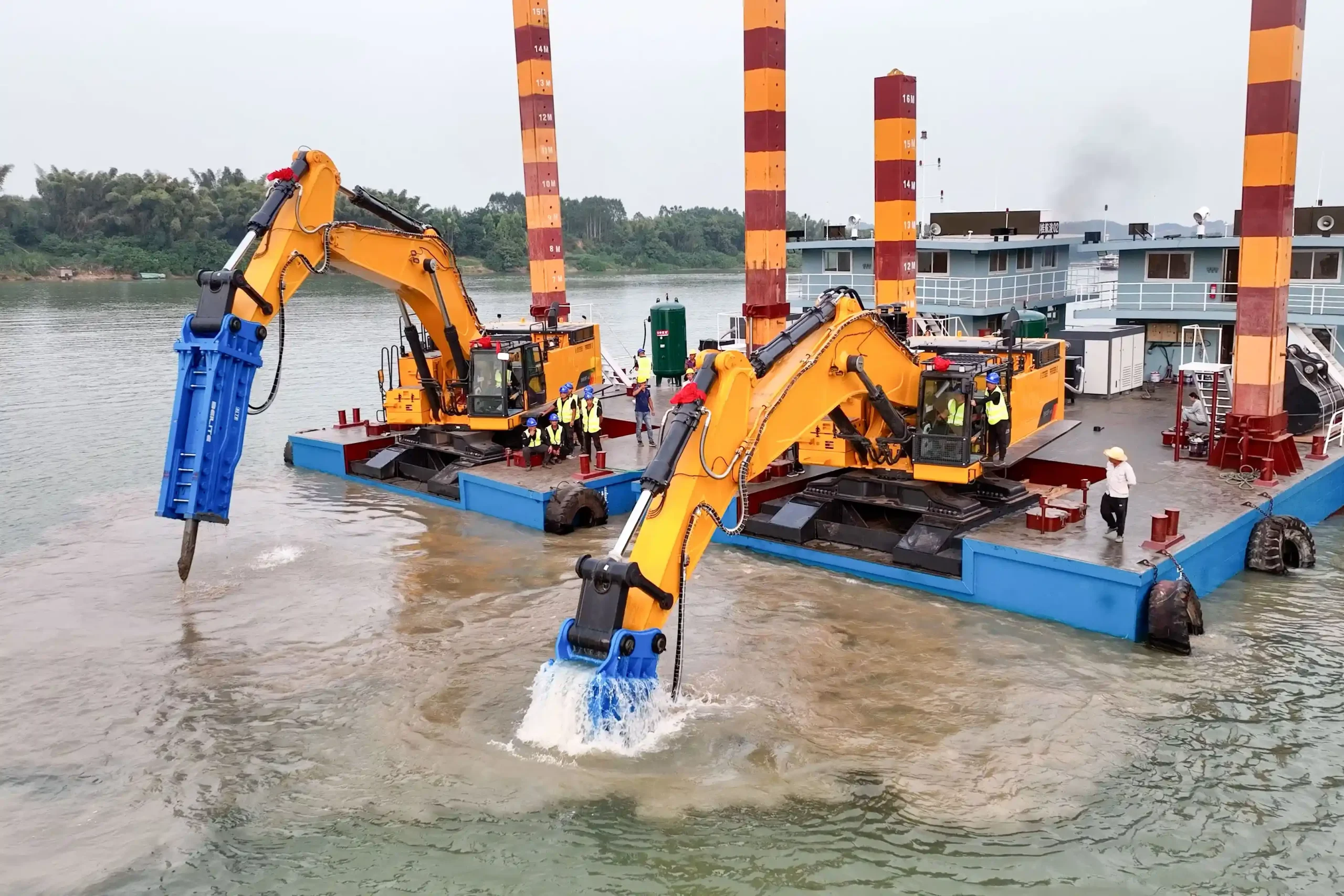
When diagnostics show a slight drop in impact frequency on a Hydraulic Breaker Hammer for Mining and Quarrying like the BLT-165, investigation might uncover a partially clogged hydraulic line. Clearing that restriction restores full power and prevents the strain that would otherwise accelerate wear elsewhere in the system.
Consistent accumulator pressure monitoring ensures optimal energy transfer—a direct contribution to breaking effectiveness. This applies across the full range of equipment, from a compact Hydraulic Hammer Breaker For Mini Excavator,Mini Excavator Breaker like the BLT-40 to heavy-duty units like the BLT-155.
Understanding each unit’s exact operational state enables informed decisions about deployment, maintenance timing, and replacement planning. The result is higher output with lower operational costs—the definition of optimized performance.
Partner with BEILITE for Hydraulic Breaker Solutions Built on Precision Engineering
For hydraulic breakers engineered to deliver consistent performance and backed by decades of manufacturing expertise, BEILITE Machinery Co., LTD offers the BLT and BLTB series. Our participation in national standards formulation and extensive patent portfolio reflect a commitment to advancing hydraulic breaker technology. Contact [email protected] or 40008-40008 to discuss how these solutions fit your operational requirements.
What are the primary benefits of using diagnostic tools for hydraulic breaker maintenance?
Diagnostic tools for hydraulic breaker maintenance deliver early fault detection, reduced unscheduled downtime, lower repair costs, extended equipment lifespan, and improved operational safety. They replace guesswork with precise data, making troubleshooting faster and more accurate. For operations where heavy machinery downtime carries significant costs, this proactive approach protects both the equipment investment and project schedules.
How can I ensure the accuracy of my hydraulic breaker diagnostic readings?
Accurate hydraulic breaker diagnostic readings require calibrated instruments, adherence to manufacturer testing procedures, and consistent operating conditions during tests. The diagnostic equipment itself needs regular maintenance and calibration verification. Always compare readings against the specified parameters in your breaker’s technical manual—these baseline values give diagnostic data its meaning.
Are there specific diagnostic tools recommended for BEILITE hydraulic breakers?
Standard diagnostic tools—pressure gauges, flow meters, temperature sensors, vibration analysis equipment—work effectively with BEILITE hydraulic breakers. The key is following the diagnostic procedures and specifications outlined in model-specific operational and service manuals. These documents provide the reference values and testing protocols that ensure diagnostic work maintains optimal performance and supports warranty coverage.