 English
 French
Optimal Breaker Positioning: Enhance Performance and Safety
Getting breaker positioning right changes everything about how a job runs. I’ve watched crews burn through chisels in weeks because no one thought twice about angle or pressure, and I’ve seen the same equipment last years when operators actually understood what they were doing. The difference isn’t subtle—it shows up in maintenance bills, downtime, and whether you’re still breaking rock efficiently at the end of a shift or fighting the machine. What follows covers the mechanics behind why positioning matters, the specific techniques that work, and the mistakes that cost money.
How Breaker Mechanics Determine Your Impact Results
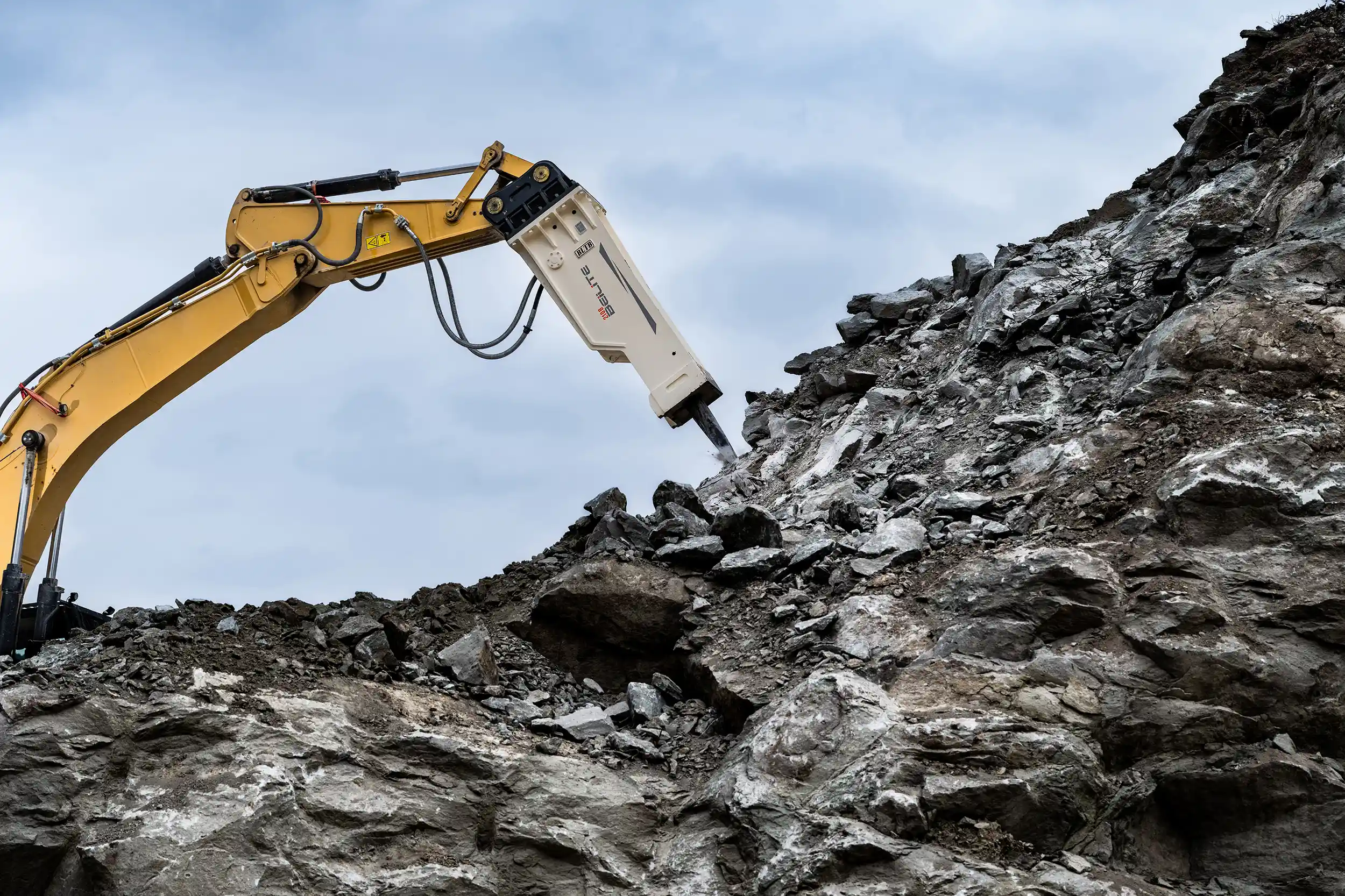
A hydraulic breaker converts hydraulic power into percussive energy, delivering high-frequency impacts to fracture material. The angle at which the chisel meets the target surface directly controls how much of that energy actually transfers into the rock or concrete versus bouncing back into the machine.
The sweet spot sits between 75 and 90 degrees relative to the working surface. At this near-perpendicular alignment, the chisel penetrates efficiently and energy loss stays minimal. Drift outside that range and problems stack up fast—inefficient breaking, stronger rebound forces, accelerated wear on both the chisel and internal components.
Hydraulic system compatibility matters just as much as angle. The breaker needs consistent working pressure and optimal oil flow to deliver its rated performance. A BLT-100, for example, requires 80–110 L/min working oil volume and 150–170 bar working pressure. Hit those parameters and you get the specified 350–700 bpm impact frequency. Miss them and you’re fighting the equipment instead of the material.
A Practical Sequence for Positioning Your Hydraulic Breaker
Good positioning isn’t instinct—it’s method. Following a consistent sequence eliminates guesswork and keeps operations predictable across different sites and materials.
Pre-Operation Checks That Prevent Problems
Before the breaker fires once, certain conditions need verification:
- Inspect the hydraulic breaker and excavator for visible damage or leaks.
- Verify all hydraulic connections are secure and free from obstructions.
- Confirm working pressure and oil flow align with excavator specifications.
- Assess ground conditions for stability and potential hazards.
- Ensure safety protocols are active, including exclusion zones and proper PPE.
Matching Position and Parameters to Material
Different materials demand different approaches. Adapting positioning and operating parameters to what you’re actually breaking protects equipment and improves efficiency.
- Select the appropriate chisel for material hardness and the specific breaking task.
- Position the hydraulic breaker at 75-90 degrees to the material surface.
- Apply consistent downward pressure, allowing gradual penetration.
- Avoid prolonged breaking in a single spot—overheating and premature wear follow.
- Reposition as needed to exploit natural fault lines or weaker points.
For reference, here’s how Beilite models match to different applications:
| Model | Chisel Diameter (mm) | Working Oil Volume (L/min) | Working Pressure (bar) | Applicable Excavator (t) |
|---|---|---|---|---|
| BLT-45 | 45 | 20–40 | 90–120 | 0.8–1.5 |
| BLT-75 | 75 | 50–90 | 120–150 | 6–8.5 |
| BLT-135 | 135 | 100–150 | 160–180 | 18–22 |
| BLT-155 | 155 | 180–240 | 200–220 | 27–33 |
Positioning Errors That Drain Budgets and Shorten Equipment Life
Certain mistakes show up repeatedly across sites, and they all trace back to positioning fundamentals.
Operating at an acute angle creates excessive side loading on the chisel and tool bushings. The wear accelerates dramatically, and breakage becomes a matter of when, not if. Maintaining that 75-90 degree range keeps impact force direct and material penetration efficient.
Blank firing—activating the hydraulic breaker Hammer without proper material contact—sends damaging shockwaves through the hydraulic system and internal components. The fix is simple: confirm the chisel is firmly pressed against the material before triggering.
Pressure calibration trips up even experienced operators. Too little pressure causes bouncing and wasted impact energy. Too much can stall the breaker or destabilize the excavator. The target is just enough pressure to keep the chisel engaged without bouncing.
Mismatching breaker capacity to material hardness compounds all these issues. An undersized breaker on hard rock means prolonged breaking times and accelerated wear. An oversized breaker on softer material wastes fuel and reduces precision. Proper operator training on hydraulic breaker positioning techniques prevents most of these failures before they start.
Why Positioning Precision Pays Back Over Equipment Lifetime
The connection between correct breaker positioning and equipment longevity is direct and measurable. Precision in operation minimizes stress on critical components, extending service life for both the hydraulic breaker and the excavator.
Maintaining optimal impact angles reduces side loading on chisels and bushings, which slows wear rates. Fewer replacements of costly wear parts and less maintenance downtime follow naturally.
Consistent application of appropriate downward pressure prevents blank firing damage to the piston and hydraulic system. These internal components are expensive to repair and time-consuming to replace. Protecting them through correct positioning is straightforward preventive maintenance.
The financial picture becomes clearer when you add up reduced fuel consumption, optimized breaking cycles, and prolonged component life. Total cost of ownership drops. The cumulative savings, combined with sustained productivity, directly improve return on investment for Hydraulic Breaker Hammer for Demolition&Rock Breaking equipment. Operator training focused on positioning pays back through improved reliability and consistent performance over years of operation.
Safety Measures That Complement Correct Positioning
Correct positioning and safety protocols work together—neither substitutes for the other.
Operators need appropriate PPE at all times: hard hats, safety glasses, hearing protection, steel-toed boots. Exclusion zones around the working area protect ground personnel from flying debris and machine movements.
Ground conditions assessment before operation identifies unstable surfaces or hidden hazards that could compromise machine stability. This step takes minutes but prevents incidents that cost days.
Noise and vibration exposure creates long-term health risks. Beilite hydraulic breakers incorporate features to minimize these impacts, but operator awareness remains necessary. Understanding emergency shutdown procedures and communication protocols completes the safety framework. A comprehensive checklist incorporating these measures protects both personnel and equipment.
Beilite Machinery: Engineering Behind the Performance
BEILITE Machinery Co., Ltd., established in 2002, is a national high-tech enterprise focused on research, development, and manufacturing of high-end hydraulic breaker Hammer. Our engineering work has contributed to the formulation of national standards for hydraulic breakers in China, backed by hundreds of patents.
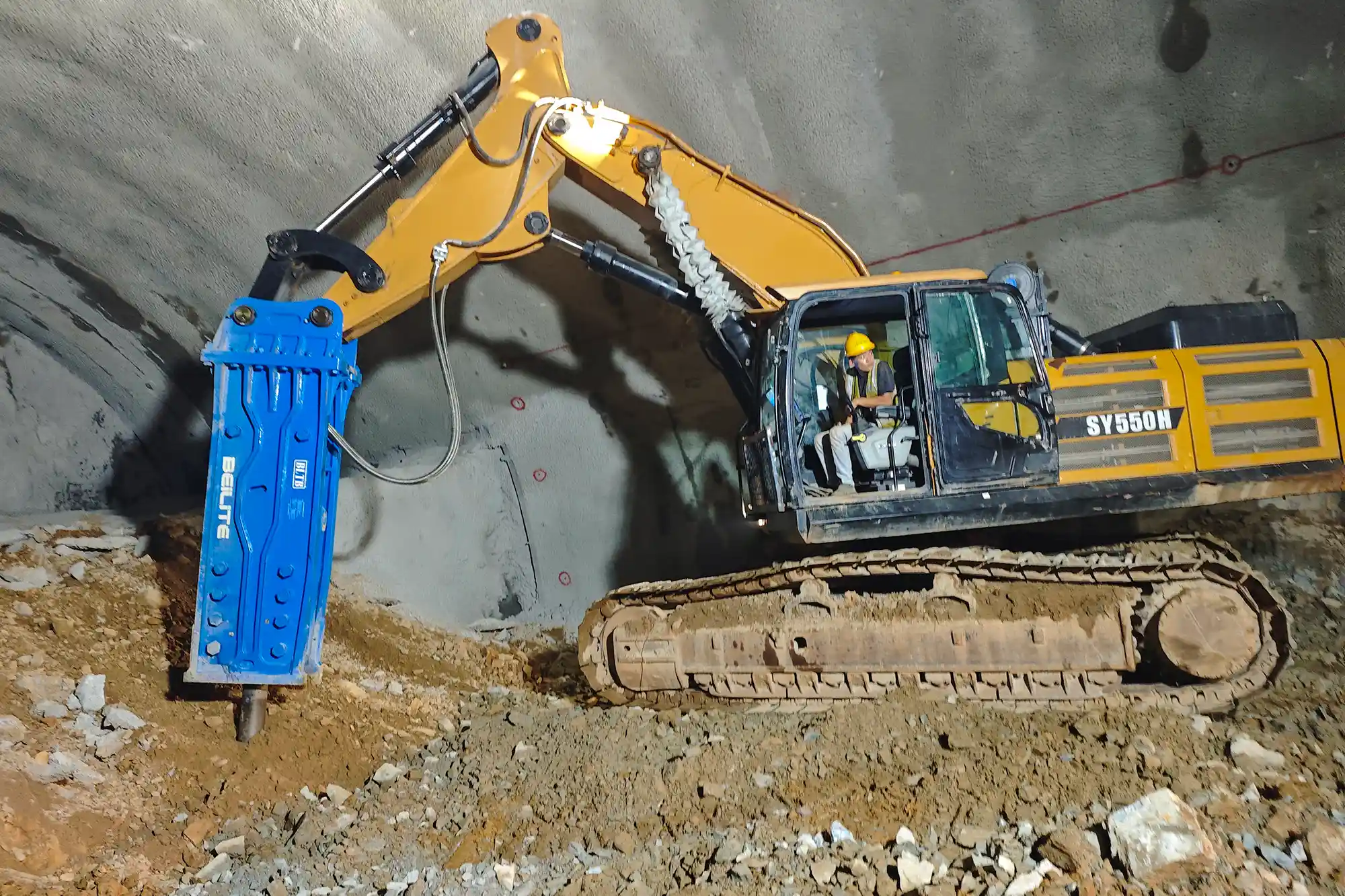
BLT and BLTB brand products perform across diverse working conditions—mining, demolition, tunneling, and extreme environments. We export to over 100 countries and regions, building trust through quality and service. Our product range includes models like the BLT-165, with its 165 mm chisel diameter and 210–230 bar working pressure, designed to meet demanding operational requirements.
Putting Positioning Knowledge Into Practice
Mastering hydraulic breaker positioning affects every metric that matters: operational performance, site safety, equipment lifespan. The techniques covered here minimize wear, reduce maintenance costs, and keep productivity consistent through demanding work. Correct positioning isn’t a detail—it’s the foundation that determines whether equipment performs reliably or becomes a recurring problem.
Frequently Asked Questions About Breaker Positioning
What is the ideal angle for a hydraulic breaker to maximize efficiency?
Between 75 and 90 degrees relative to the working surface works best for most applications. This range ensures optimal impact force, minimizes blank firing risk, and directs energy efficiently into the material. Material hardness and specific breaking tasks may require minor adjustments within this range.
How does improper breaker positioning affect equipment lifespan and safety?
Improper positioning accelerates wear on chisels, bushings, and the hydraulic system, often leading to premature failure that requires expensive repairs. Safety risks include uncontrolled material scattering, machine instability, and increased injury potential for operators and nearby personnel. Both outcomes trace directly to positioning errors that correct technique prevents.
What are the common mistakes to avoid when operating a hydraulic breaker?
The most damaging mistakes include operating at acute angles (causing side loading and chisel breakage), blank firing (damaging internal mechanisms), and applying incorrect downward pressure. Mismatching breaker capacity to material hardness, skipping pre-operation checks, and inadequate operator training compound these problems. Each error is preventable with proper technique and attention to fundamentals.
Partner with Beilite for Superior Hydraulic Breaker Solutions
Contact us at [email protected] or call +86-40008-40008 to discuss how Beilite Machinery’s hydraulic breakers can support your operations.