 English
 French
Hydraulic Hand Breaker Technology for Modern Demolition
Hydraulic hand breakers changed how I think about demolition work. The first time I watched one cut through reinforced concrete that would have taken hours with manual methods, something clicked. These tools represent a genuine shift in what’s possible on a job site—not just faster work, but safer, more controlled outcomes. The technology keeps improving, and manufacturers like BEILITE Machinery continue pushing the engineering forward through dedicated research and development in hydraulic breaker manufacturing.
How Hydraulic Hand Breakers Generate Their Impact Force
Hydraulic hand breakers convert fluid pressure into concentrated impact energy through a straightforward but effective mechanism. A hydraulic power pack delivers pressurized fluid to the breaker’s internal system, driving a piston that strikes the chisel or tool bit. This approach outperforms pneumatic and electric alternatives in one critical area: consistent power delivery regardless of operating conditions.
The power-to-weight ratio matters enormously for handheld equipment. Every extra kilogram the operator carries reduces productivity and increases fatigue. Our engineering team optimizes operating pressure and flow rate to extract maximum impact energy from the smallest practical package. The piston design works alongside a nitrogen accumulator system that stores and releases energy in a controlled cycle. This accumulator technology amplifies both impact force and frequency beyond what hydraulic pressure alone could achieve.
Each component contributes to the overall performance envelope. The valve block controls timing. The chisel retainer maintains alignment under repeated impacts. The housing absorbs reaction forces. When these elements work together properly, the result is a tool that delivers reliable performance even under demanding conditions.
The Energy Transfer Mechanism Behind Superior Breaking Power
The impact energy that makes hydraulic hand breakers effective comes from a carefully orchestrated energy transfer sequence. High-pressure hydraulic fluid pushes the piston through its stroke. As the piston moves, it compresses nitrogen gas in the accumulator, converting kinetic energy into stored potential energy.
When the hydraulic pressure reverses, something interesting happens. The compressed nitrogen releases its stored energy simultaneously with the returning hydraulic pressure, propelling the piston downward at velocities that neither force could achieve independently. This rapid acceleration generates the controlled impact force that transfers into the tool bit.
The hydraulic system’s valving precisely controls impact frequency. Operators can match the breaker’s rhythm to the material they’re demolishing—faster for softer materials, slower and more powerful for dense concrete or rock. Tool bit geometry also plays a role. Optimized designs ensure efficient energy transfer into the target material rather than wasting force on deflection or vibration.
Where Handheld Hydraulic Demolition Tools Prove Their Value
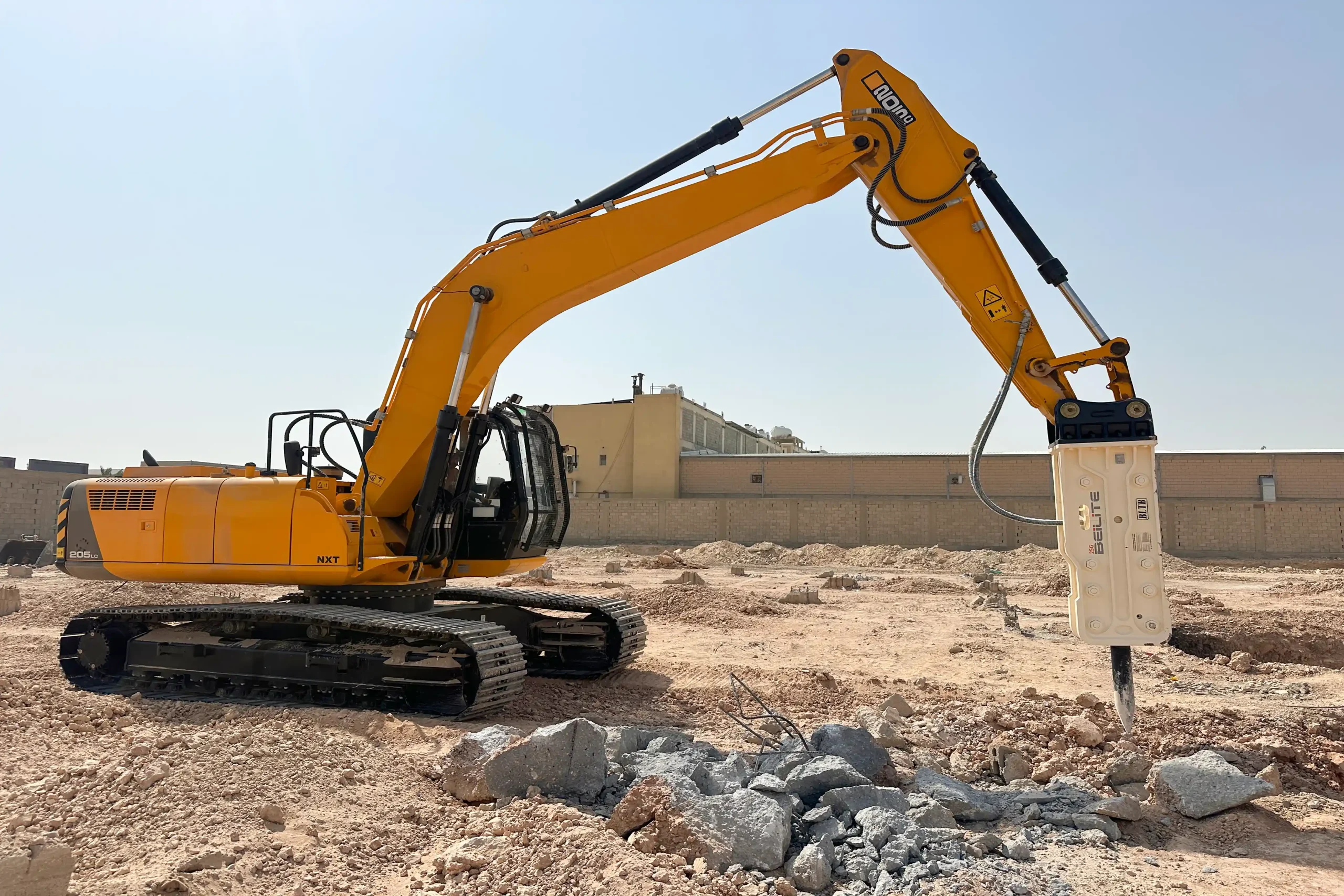
Handheld hydraulic demolition tools handle an impressive range of tasks. Concrete breaking and asphalt cutting are the obvious applications, but these portable hydraulic breakers also excel at rock excavation, foundation removal, and precision work near existing structures.
Urban demolition presents particular challenges. Space constraints limit equipment options. Noise and vibration affect neighboring properties. Precision matters because you’re often working inches from utilities or structural elements you need to preserve. These conditions favor handheld hydraulic breakers over larger machinery.
Trenching and road repair depend on rapid material removal. Utility work—breaking through concrete to access pipes or cables—requires both power and control. These efficient demolition hammers adapt to diverse project requirements because their fundamental design balances capability with maneuverability.
Working Effectively in Tight Spaces and Populated Areas
Confined spaces and urban environments demand equipment that can deliver power without bulk. Hydraulic hand breakers fit this requirement through their compact design and favorable power-to-weight ratio. Operators can access areas where excavator-mounted breakers simply cannot reach.
Noise reduction and vibration dampening technology address the environmental concerns that urban projects face. Densely populated areas have strict regulations about both. Advanced features minimize disturbance while maintaining breaking effectiveness. Low emissions from associated hydraulic power packs help meet environmental requirements that would disqualify higher-emission alternatives.
Precision demolition capability protects surrounding infrastructure. When you’re breaking concrete next to a live gas line or adjacent to a historic building foundation, controlled power matters more than raw force. This makes hydraulic hand breakers the preferred choice for sensitive utility work and interior demolition where collateral damage carries serious consequences.
Safety Features and Productivity Gains in Modern Breaker Design
Demolition work carries inherent risks. Modern hydraulic hand breakers incorporate features specifically designed to reduce those risks while improving operational efficiency. The engineering decisions that protect operators also tend to increase productivity—a useful alignment of interests.
Ergonomic design starts with anti-vibration handles. These significantly reduce operator fatigue and lower the risk of hand-arm vibration syndrome (HAVS), a serious occupational health concern for workers who use vibrating tools regularly. Noise dampening technology protects hearing and reduces complaints from nearby residents or businesses.
Some models integrate dust suppression systems. Concrete dust creates visibility problems and respiratory hazards. Controlling it at the source improves both safety and working conditions. Quick coupler systems allow rapid tool changes, reducing the downtime that accumulates across a project. Low maintenance requirements and durable construction keep equipment running when it’s needed.
Why Vibration Control Determines Long-Term Operator Health
Sustained operation of demolition tools creates cumulative stress on the operator’s body. Vibration exposure is particularly insidious because damage accumulates gradually. By the time symptoms appear, significant harm may have already occurred.
We prioritize vibration control in our hydraulic breaker designs because the consequences of neglecting it are severe. Anti-vibration handles incorporate dampening materials and mechanisms that absorb shock before it reaches the operator’s hands and arms. The goal is preventing hand-arm vibration syndrome rather than treating it.
Ergonomic grip design and proper tool balance reduce strain in other ways. An operator who isn’t fighting the tool’s weight distribution can work longer without fatigue. This translates directly to productivity gains while protecting health. The investment in better ergonomics pays returns through both reduced injury claims and increased output.
Long-Term Economics Favor Quality Hydraulic Breakers
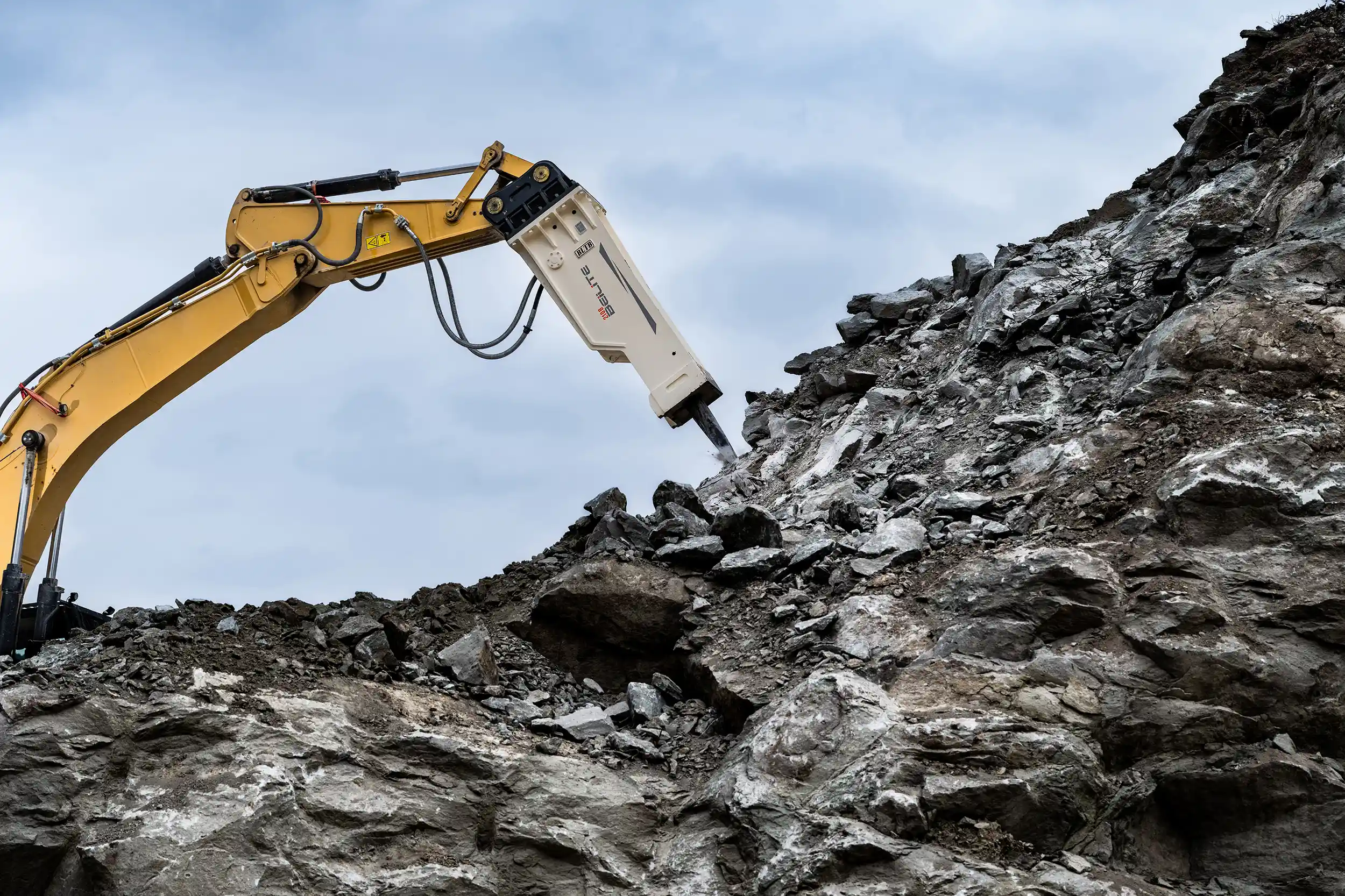
High-quality hydraulic breakers justify their purchase price through performance over their entire lifespan. The cost-effectiveness calculation includes several factors that become apparent only over time.
Operating costs run lower than pneumatic systems. Fuel efficiency is better. The robust construction and advanced engineering translate into extended equipment lifespan and longer intervals between maintenance. Spare parts availability and comprehensive after-sales support reduce the risk of extended downtime when something does need attention.
Project managers track return on investment through faster completion times and reduced labor costs. When considering asset depreciation and total cost of ownership, hydraulic breakers demonstrate superior long-term value compared to alternatives that may cost less initially but require more frequent replacement or repair.
Matching the Right Hydraulic Hand Breaker to Specific Project Requirements
Selecting hydraulic breaker equipment requires honest assessment of what the project actually demands. The optimal choice depends on several factors that interact with each other.
Impact energy requirements depend on the material. Concrete breaking and asphalt cutting have different characteristics. Reinforced concrete requires more force than unreinforced. Rock varies enormously depending on type and condition. Weight class affects operator fatigue and maneuverability. Power source compatibility with existing hydraulic power packs determines whether additional equipment purchases are necessary.
Supplier reputation and after-sales support matter for long-term reliability. Compliance with national standards ensures the equipment meets established safety and performance benchmarks. Our commitment to research and development means we continue refining solutions for diverse applications rather than relying on static designs.
How Hydraulic Hand Breakers Compare to Electric and Pneumatic Alternatives
Hydraulic hand breakers outperform electric and pneumatic alternatives in several important dimensions. Power output is higher and impact energy remains consistent throughout operation. Hydraulic systems convert more input energy into usable force, which can reduce operating costs over time.
Reliability in harsh conditions gives hydraulic tools an edge. Wet environments, dust, and temperature extremes affect electric tools more severely. Pneumatic breakers require large air compressors that limit portability. Hydraulic breakers operate with more compact power packs, offering greater flexibility on job sites where space and access are constrained.
Selecting Breakers for Concrete Demolition Applications
Concrete demolition requires matching tool capability to material characteristics. Thickness and reinforcement determine the impact force needed. Hydraulic Breaker Hammer for Demolition&Rock Breaking feature robust designs and powerful impact mechanisms suited to demanding applications.
Chisel selection affects performance. Moil points and chisels designed specifically for concrete breaking fracture the material efficiently. Models like our BLT-40 or BLT-45, paired with appropriate power packs, deliver sufficient power for many concrete demolition tasks while remaining manageable for operators.
Here is a comparison of compact hydraulic breakers suitable for various demolition needs:
| Model | Weight (kg) | Chisel Diameter (mm) | Working Oil Flow (L/min) | Working Pressure (bar) | Impact Frequency (bpm) | Applicable Excavator (t) |
|---|---|---|---|---|---|---|
| BLT-40 | 86 | 40 | 15–30 | 90–120 | 800–1400 | 0.5–1.2 |
| BLT-45 | 137 | 45 | 20–40 | 90–120 | 700–1200 | 0.8–1.5 |
| BLT-53 | 180 | 53 | 20–50 | 90–120 | 600–1100 | 1.5–3.5 |
Partner with BEILITE for Advanced Demolition Solutions
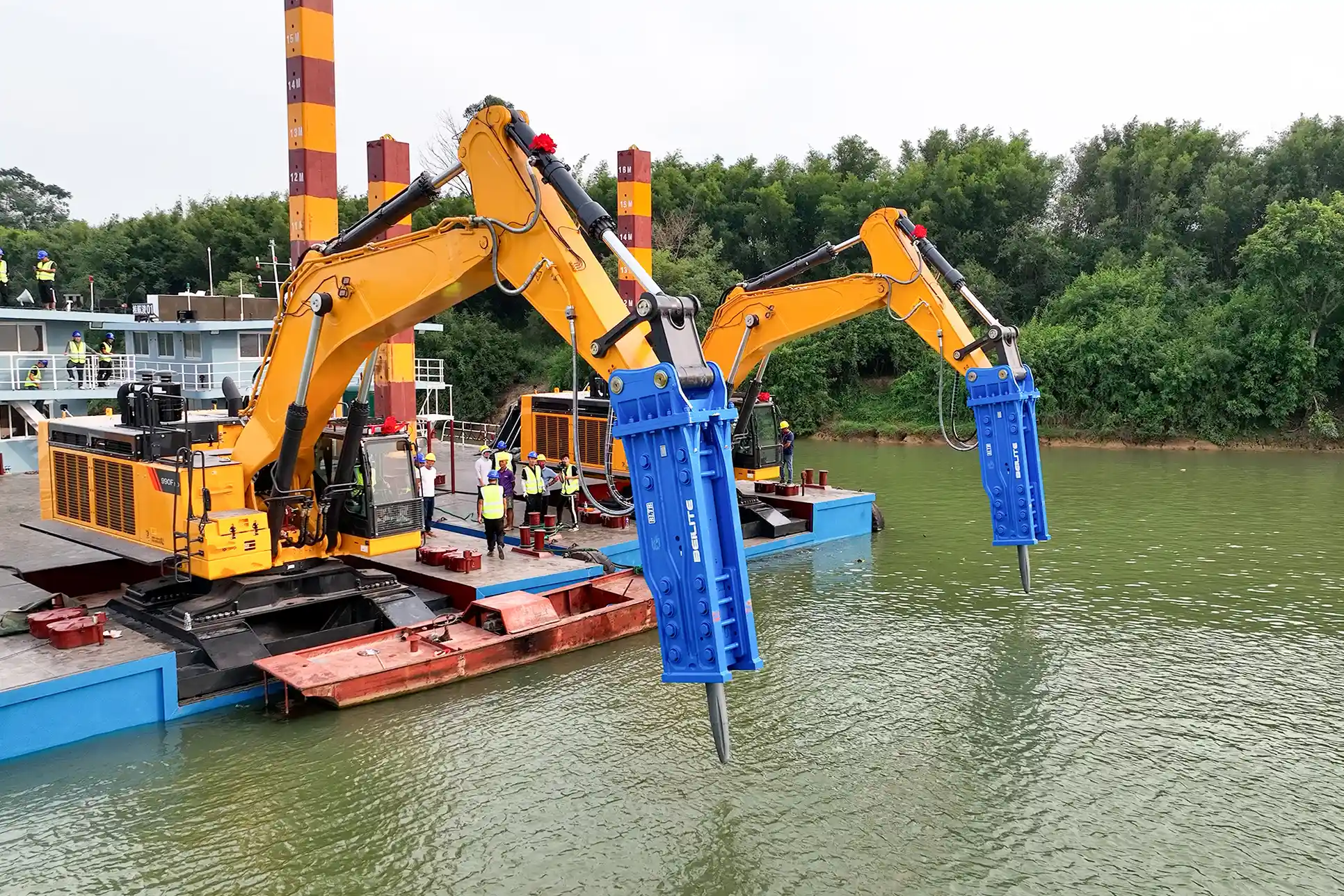
BEILITE Machinery Co., LTD brings decades of innovation and hundreds of patents to hydraulic breaker technology. As a national high-tech enterprise that participates in formulating national standards, we ensure our products meet the highest benchmarks in the industry. Our BLT and BLTB product lines serve professionals in over 100 countries who need robust, efficient, and reliable demolition solutions. Contact us at [email protected] or 40008-40008 to discuss your project requirements.
Frequently Asked Questions About Hydraulic Hand Breakers
How often should a hydraulic breaker be serviced?
Service intervals depend on usage intensity, but daily checks should cover hydraulic fluid levels, hose condition, and chisel wear. More comprehensive servicing—including seal inspections and accumulator checks—typically falls every 200-500 operating hours or annually, whichever comes first. Following manufacturer guidelines for your specific hydraulic rock breaker maintains high impact energy and prevents premature failures that could sideline equipment during critical project phases.
Why choose a high-performance hydraulic hand breaker for demanding projects?
High-performance hydraulic hand breakers deliver power-to-weight ratios and consistent impact energy that simpler tools cannot match. Heavy concrete breaking and rock excavation require sustained force that would quickly exhaust lesser equipment. Advanced hydraulic systems operate more efficiently, vibration dampening reduces operator fatigue, and durable construction withstands the punishment these applications deliver. The result is faster project completion and lower operating costs across the equipment’s lifespan.
What factors matter most when purchasing a hydraulic hand breaker?
Start with the impact energy your typical applications require. Concrete breaking demands different characteristics than asphalt cutting or rock excavation. Weight and ergonomics affect how long operators can work effectively. Compatibility with existing hydraulic power packs determines whether additional equipment purchases become necessary. Manufacturer reputation for quality and after-sales support predicts whether problems get resolved quickly or become extended headaches. These factors together determine whether a purchase decision proves sound over years of use.