 English
 French
Hydraulic Breaker Solutions for Efficient Landscaping Projects
Landscaping work has a way of humbling even experienced crews. You plan for soil conditions, drainage, weather windows—and then the excavator hits a buried concrete slab nobody knew existed. Or a boulder the size of a washing machine sits exactly where the new retaining wall needs to go. These moments used to mean days of manual labor, jackhammering in shifts, or waiting for specialized equipment. Hydraulic breakers changed that equation. They deliver concentrated impact force through the same excavator already on site, turning what used to be project-stopping obstacles into manageable tasks that fit within the original timeline.
Why Hydraulic Breakers Have Become Standard Equipment for Site Preparation
The shift toward hydraulic breakers in landscaping reflects a practical reality: most projects involve some combination of rock, concrete, or root systems that resist conventional excavation. A standard bucket can move loose material efficiently, but it struggles against anything consolidated or reinforced. Hydraulic breakers fill that gap without requiring a separate machine or crew.
The efficiency gains are substantial. What might take a crew with handheld equipment an entire day—breaking up an old patio foundation, for instance—often takes an hour or two with a properly sized hydraulic breaker. The carrier machine provides stability and positioning control, while the breaker delivers repeated high-energy impacts that fracture material predictably.
Our demolition hammer attachments are engineered for this kind of sustained use. The design prioritizes durability under repetitive stress, which matters when you’re working through reinforced concrete or dense rock formations that require hundreds of impact cycles.
Breaking Concrete and Pavement Without Destroying Everything Around It
Hardscape demolition in landscaping differs from large-scale construction demolition in one critical way: precision matters. You’re often working within feet of structures, utilities, or plantings that need to remain intact. A hydraulic breaker allows controlled material removal because the operator can position each strike precisely and adjust impact force based on what the material requires.
Reinforced concrete slabs present a common challenge. The steel reinforcement holds fractured sections together, which means the breaker needs enough energy to crack the concrete while the operator works systematically to expose and cut the rebar. Older walkways and asphalt surfaces break more easily but often sit over utility lines that require careful attention.
The process typically starts at edges or existing cracks, where the material is weakest. Working inward from these points reduces the total energy required and gives the operator better control over fragment size—important when debris needs to be loaded and hauled efficiently.
Rock and Boulder Removal Without Blasting or Specialized Crews
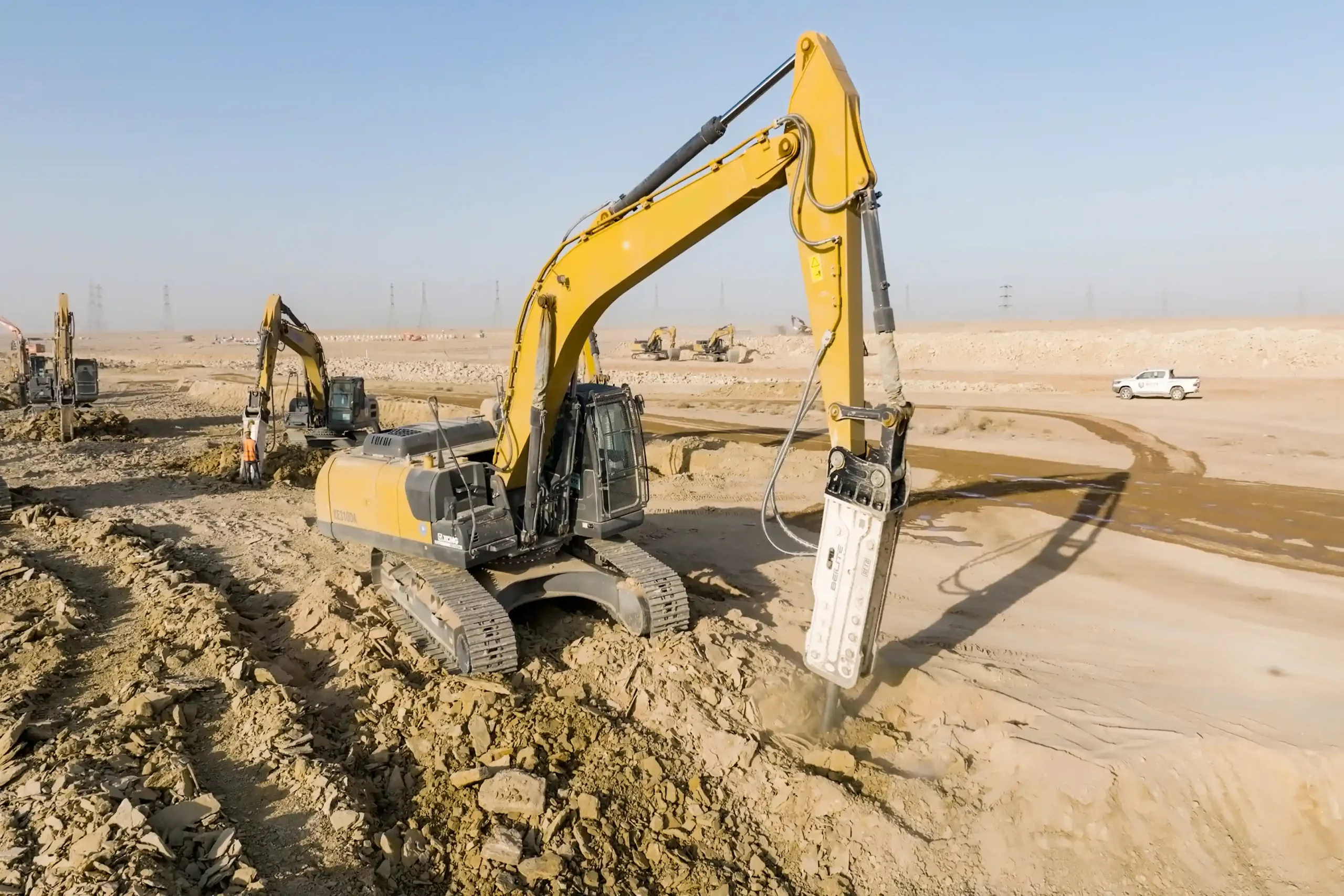
Large rocks embedded in soil create problems that standard excavation cannot solve. The bucket slides off, the machine loses traction trying to pry them loose, and progress stops. Hydraulic breakers approach this differently. Instead of trying to move the rock whole, they fracture it in place, reducing it to pieces the excavator can handle normally.
The technique requires reading the rock. Natural fracture lines, visible as seams or color changes in the stone, indicate where the material will split most readily. Starting impacts along these lines concentrates energy where it will do the most work. Dense, homogeneous rock without obvious fracture planes requires more systematic coverage, working across the surface to create stress patterns that eventually cause failure.
For boulder removal in garden design or new construction, this capability eliminates the need for blasting permits, specialized drilling equipment, or manual breaking with sledgehammers. The same excavator and operator handle the entire process, keeping the project moving without waiting for outside contractors.
Tree Stumps and Root Systems Respond to Impact Force
Stump grinding works well for isolated stumps in accessible locations, but it has limitations. The grinder removes material slowly, struggles with dense hardwoods, and cannot address root systems that extend beyond the stump itself. When a project requires complete removal—for foundation work, deep planting beds, or grade changes—hydraulic breakers offer an alternative approach.
The wood fibers in stumps and roots fracture under repeated impact differently than they respond to grinding. A breaker with a chisel tool can split the stump along its grain, breaking it into sections that separate from the root ball. The same approach works on major lateral roots, fracturing them at points where they can be pulled free with the excavator bucket.
This method leaves the ground ready for immediate reuse. There’s no sawdust to decompose, no chemical residue from stump removal treatments, and no waiting period before construction or planting can proceed. The result is a cleaner, more stable base for whatever comes next.
Selecting the Right Breaker Size for Your Carrier and Material
Hydraulic breakers span a wide range of sizes, from units weighing under 100 kg for mini excavators to massive attachments for 50-ton machines. Choosing correctly requires matching three variables: the carrier’s hydraulic capacity, the material being broken, and the working conditions.
An undersized breaker wastes time. It delivers impacts too weak to fracture the material efficiently, requiring many more cycles to accomplish what a properly sized unit would handle quickly. An oversized breaker creates different problems—it can overload the carrier’s hydraulic system, cause stability issues, and deliver more force than the application requires, potentially damaging surrounding areas.
For landscaping work, the carrier machine is usually a compact or mini excavator in the 1-10 ton range. These machines pair with breakers that deliver enough impact energy for concrete and medium-density rock while maintaining the maneuverability that landscaping sites require.
Compact Breakers for Mini Excavators and Tight Spaces
Small landscaping projects often involve working in backyards, between structures, or in established landscapes where access is limited. Micro excavator breakers and compact hydraulic hammers are designed for these conditions. They provide meaningful impact force while keeping overall weight and dimensions manageable.
| Model | Applicable Excavator | Weight (kg) | Chisel Diameter (mm) | Working Oil Flow (L/min) |
|---|---|---|---|---|
| BLT-40 | 0.5–1.2 t | 86 | 40 | 15–30 |
| BLT-45 | 0.8–1.5 t | 137 | 45 | 20–40 |
| BLT-53 | 1.5–3.5 t | 180 | 53 | 20–50 |
The working oil flow specification matters as much as weight. The carrier machine must supply hydraulic fluid within the breaker’s operating range—too little flow reduces impact frequency and force, while excessive flow can damage seals and internal components.
Tool Selection Changes How the Breaker Performs
The business end of a hydraulic breaker—the tool or chisel—determines how impact energy transfers into the material. Different tool shapes concentrate force differently, making them suited to specific applications.
A pointed moil tool focuses energy on a small contact area, generating high pressure that penetrates hard rock and creates pilot holes for subsequent breaking. This geometry works best when you need to fracture dense, homogeneous material that resists broader impacts.
Chisel tools spread force along a linear edge, cutting through concrete and asphalt along predictable lines. They’re the standard choice for hardscape demolition because they produce cleaner breaks and more manageable fragment sizes.
Flat or blunt tools distribute impact across a wider area, useful for breaking up softer materials or situations where penetration isn’t the goal. They see less use in landscaping but have applications in certain soil compaction or material processing tasks.
Hydraulic System Compatibility Prevents Expensive Problems
Every hydraulic breaker has specifications for operating pressure and flow rate that must match the carrier machine’s hydraulic system. Mismatches cause problems ranging from poor performance to component failure.
When flow rate falls below the breaker’s minimum requirement, impacts become weak and infrequent. The tool may bounce rather than penetrate, accomplishing little while still wearing components. Excessive flow rate forces oil through the system faster than designed, generating heat and pressure spikes that damage seals and valves.
Operating pressure mismatches create similar issues. A breaker designed for higher pressure than the carrier provides will underperform. One receiving more pressure than rated can fail catastrophically.
Our technical specifications include detailed hydraulic requirements for each model. Matching these to your excavator’s auxiliary hydraulic circuit ensures the breaker operates within its design parameters.
Technology That Makes Hydraulic Breakers More Productive and Safer
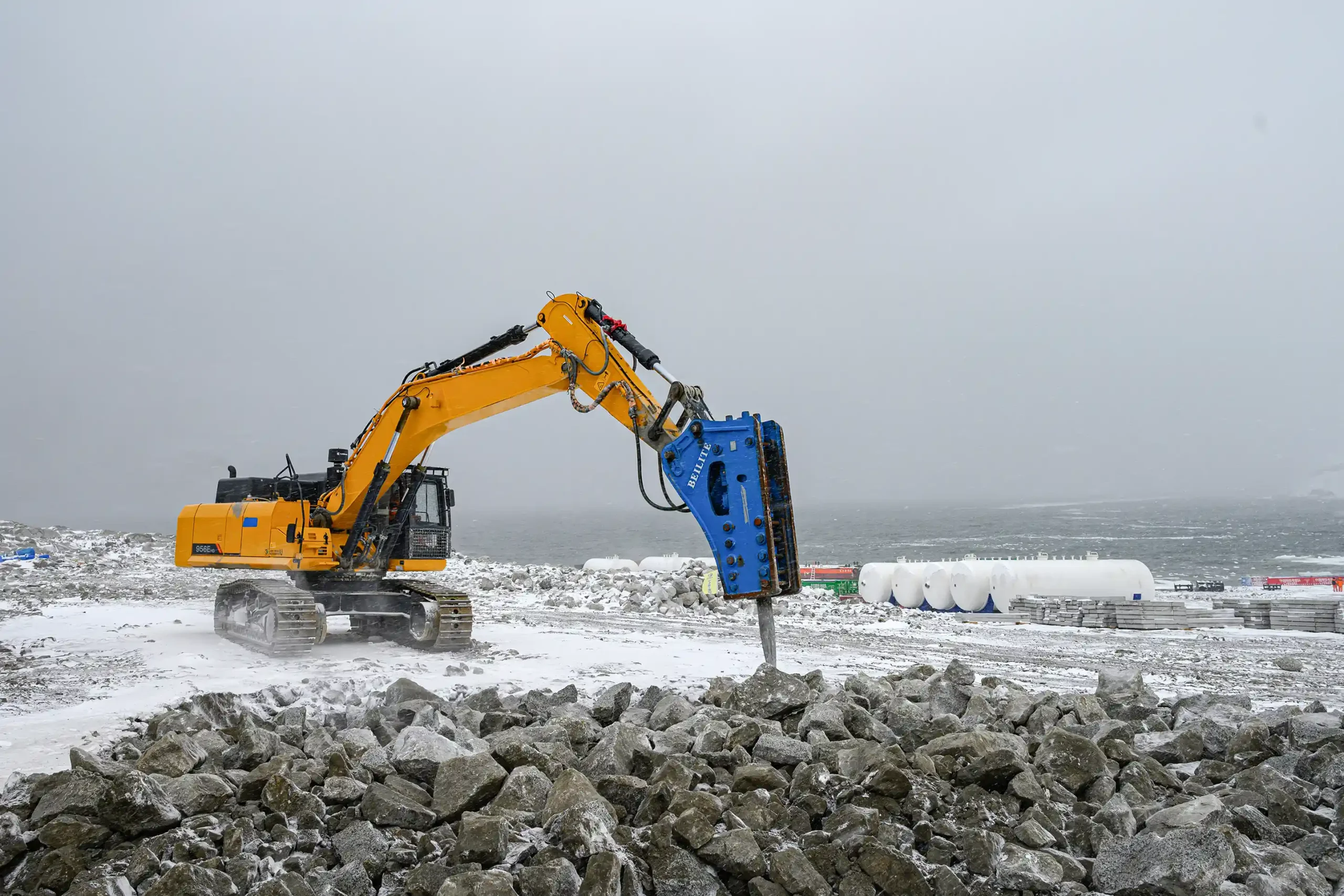
Modern hydraulic breakers incorporate features that weren’t available a generation ago. These improvements address the practical challenges operators face: fatigue from vibration, noise restrictions in populated areas, and the need for consistent performance across long work sessions.
The underlying hydraulic technology has also advanced. Better valve designs, optimized gas chamber pressures, and improved energy transfer efficiency mean current breakers deliver more useful impact force per unit of hydraulic input than older designs. This translates to faster work with less strain on the carrier machine.
Vibration Control Protects Operators and Improves Precision
Operating a hydraulic breaker exposes the carrier machine and operator to significant vibration. Without mitigation, this vibration causes fatigue, reduces precision, and accelerates wear on the excavator’s components.
Current breaker designs incorporate dampening systems at multiple points. The housing isolates the impact mechanism from the mounting bracket, preventing vibration transmission into the excavator arm. Internal accumulators absorb pressure spikes that would otherwise create harsh feedback.
For the operator, reduced vibration means less physical strain during extended use. It also improves control—when the machine isn’t shaking violently, positioning the tool accurately becomes easier, and the operator can work closer to sensitive areas without risking damage.
Noise Reduction Opens Up Urban and Residential Work
Many landscaping projects occur in populated areas where noise regulations limit when and how loudly equipment can operate. Traditional hydraulic breakers produce sound levels that restrict their use to certain hours or require special permits.
Enclosed housing designs and sound-dampening materials reduce noise output substantially. Some models qualify as low-noise equipment under urban construction regulations, allowing work during hours when louder equipment would be prohibited.
The practical benefit extends beyond regulatory compliance. Quieter operation improves communication between crew members, reduces complaints from neighbors and clients, and creates a less stressful work environment overall.
Maintenance Practices That Keep Breakers Working
Hydraulic breakers operate under severe conditions. Each impact cycle subjects internal components to extreme forces, while external parts endure abrasion from rock and concrete debris. Without proper maintenance, performance degrades and component failures become likely.
The good news is that breaker maintenance follows predictable patterns. Daily attention to a few key points, combined with scheduled service intervals, keeps most units operating reliably for years.
Daily and Weekly Maintenance Tasks
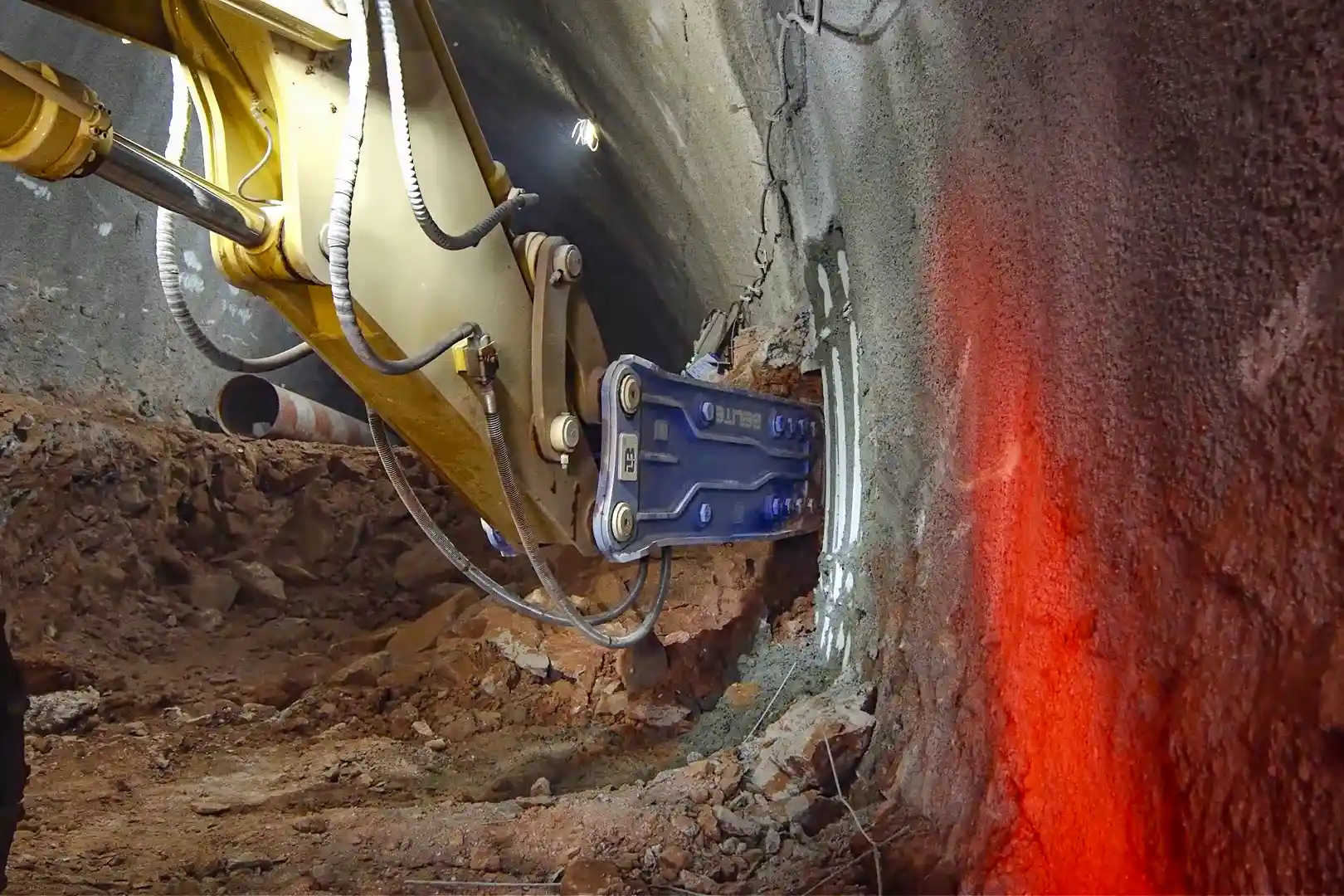
Before each use, visual inspection catches problems early. Check the tool for cracks, excessive wear, or mushrooming at the impact end. Examine the housing for oil leaks, loose bolts, or damage. Verify that the mounting bracket and pins show no unusual wear.
Greasing the tool and bushings should happen at least daily during active use, more frequently in dusty or abrasive conditions. The grease prevents metal-to-metal contact that accelerates wear and provides a barrier against debris intrusion.
Weekly, inspect hydraulic hoses and fittings for damage or leaks. Check accumulator pressure if the breaker includes a gas-charged dampening system. Clean accumulated debris from around seals and moving parts.
Recognizing When Components Need Replacement
Certain parts wear predictably and require periodic replacement regardless of apparent condition. Bushings that guide the tool gradually enlarge, allowing excessive play that reduces impact efficiency and accelerates wear on other components. Seals harden and lose flexibility over time, eventually failing to contain hydraulic fluid.
Tool wear follows patterns specific to the material being broken. Concrete and rock abrade the tool surface, gradually reducing its effective length. When wear reaches manufacturer-specified limits, continued use damages the breaker’s internal components.
Replacement schedules vary by model and usage intensity. Manufacturers provide guidelines based on operating hours or impact cycles, but environmental conditions matter too. Abrasive materials and dusty conditions accelerate wear beyond standard estimates.
BEILITE Engineering for Professional Landscaping Applications
BEILITE Machinery has manufactured hydraulic breakers since 2002, developing expertise through continuous production and real-world feedback from users across more than 100 countries. Our involvement in establishing national standards for hydraulic breakers in China reflects the technical depth behind our BLT and BLTB product lines.
The research and development investment shows in performance characteristics that matter for landscaping work: consistent impact energy across operating temperature ranges, durability under sustained use, and compatibility with the compact excavators common in this industry.
Our range includes models specifically suited for mini and compact excavators, delivering the precision and power that landscaping professionals need without requiring oversized carrier machines.
Start a Conversation About Your Project Requirements
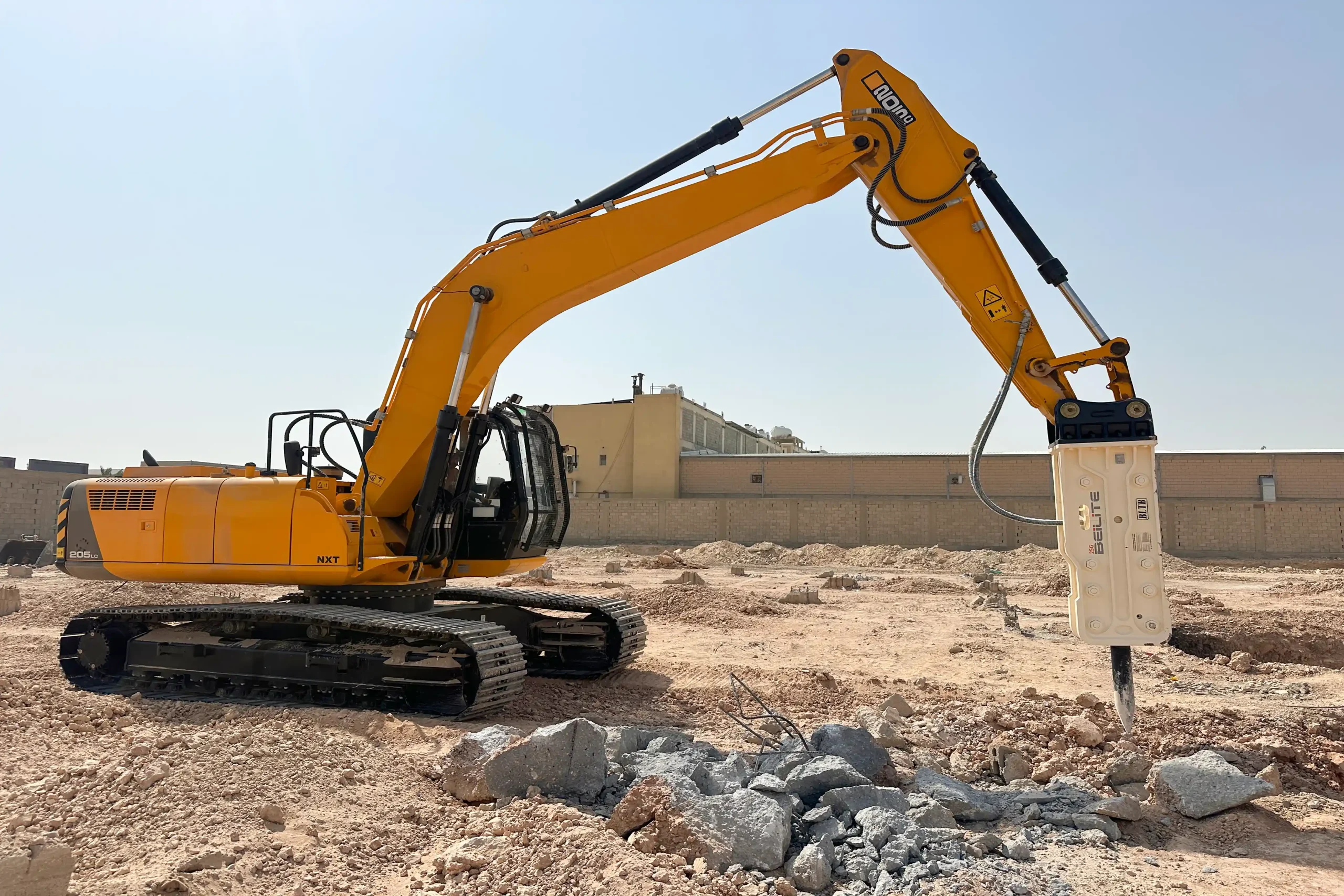
Finding the right hydraulic breaker involves matching specifications to your specific equipment and typical applications. Our technical team can review your carrier machine’s hydraulic capacity, discuss the materials you commonly encounter, and recommend models that fit both factors.
Whether you’re expanding an existing fleet or adding hydraulic breaking capability for the first time, we provide the detailed specifications and application guidance needed to make an informed decision.
Email: [email protected]
Phone: 40008-40008
Frequently Asked Questions About Hydraulic Breakers in Landscaping
Can hydraulic breakers be used for tree stump removal in landscaping?
Hydraulic breakers handle tree stump removal effectively, particularly for large stumps or situations requiring complete root system extraction. The impact force fractures wood fibers along natural grain lines, splitting stumps into sections that separate from the root ball. A chisel tool works best for this application, allowing the operator to work systematically from the stump’s perimeter inward. The method removes material completely rather than grinding it in place, leaving stable ground ready for immediate construction or planting. Match the breaker size to both the carrier machine and stump density—hardwoods require more impact energy than softwoods.
What safety precautions are essential when operating a hydraulic breaker for landscaping?
Personal protective equipment forms the baseline: hard hat, safety glasses, hearing protection, and steel-toed boots. Beyond PPE, site preparation matters significantly. Identify and mark underground utilities before any breaking work begins—striking a gas line or electrical conduit creates serious hazards. Establish a clear zone around the work area where other personnel cannot enter during operation. Ensure the carrier machine sits on stable, level ground with adequate traction. Follow the manufacturer’s operating guidelines for tool handling, impact frequency, and working angles. Never operate a breaker with damaged tools or visible hydraulic leaks.
How do hydraulic breakers compare to other demolition methods for landscaping tasks?
For rock breaking, concrete demolition, and stump removal, hydraulic breakers outperform most alternatives in speed and cost-effectiveness. Manual methods using sledgehammers or handheld breakers require far more labor hours and physical effort. Chemical stump removers work slowly—often requiring weeks—and leave residue that may affect subsequent plantings. Standard excavator buckets cannot fracture consolidated materials. Hydraulic breakers deliver controlled, high-energy impacts through equipment already present on most landscaping sites, eliminating the need for specialized crews or additional machinery. The precision available with modern breakers also reduces collateral damage to surrounding areas, which matters when working near structures or established plantings.