 English
 French
Hydraulic Breaker Reviews: Expert Guide to Performance & Value
Hydraulic Breaker Selection: Performance Metrics and Matching Criteria
The first time I watched a properly matched hydraulic breaker tear through reinforced concrete, the efficiency was striking. The operator barely adjusted his grip. No excessive vibration traveling up the boom, no hesitation between strikes. That machine had been selected with precision—carrier weight, hydraulic flow, material hardness all accounted for. Most selection mistakes I’ve encountered since then trace back to skipping one of those variables. This guide covers the technical criteria that separate productive hydraulic breaker setups from problematic ones.
How Hydraulic Breakers Convert Hydraulic Power to Percussive Force
Hydraulic breakers operate by converting hydraulic power from an excavator into percussive energy through a relatively straightforward but precisely engineered mechanism. The hydraulic system pressurizes fluid, which drives a piston to strike a chisel tool at controlled intervals. A nitrogen-charged accumulator stores energy between cycles while a valve system regulates piston movement and timing. The impact energy generated depends on piston mass, stroke length, and the pressure differential across the valve.
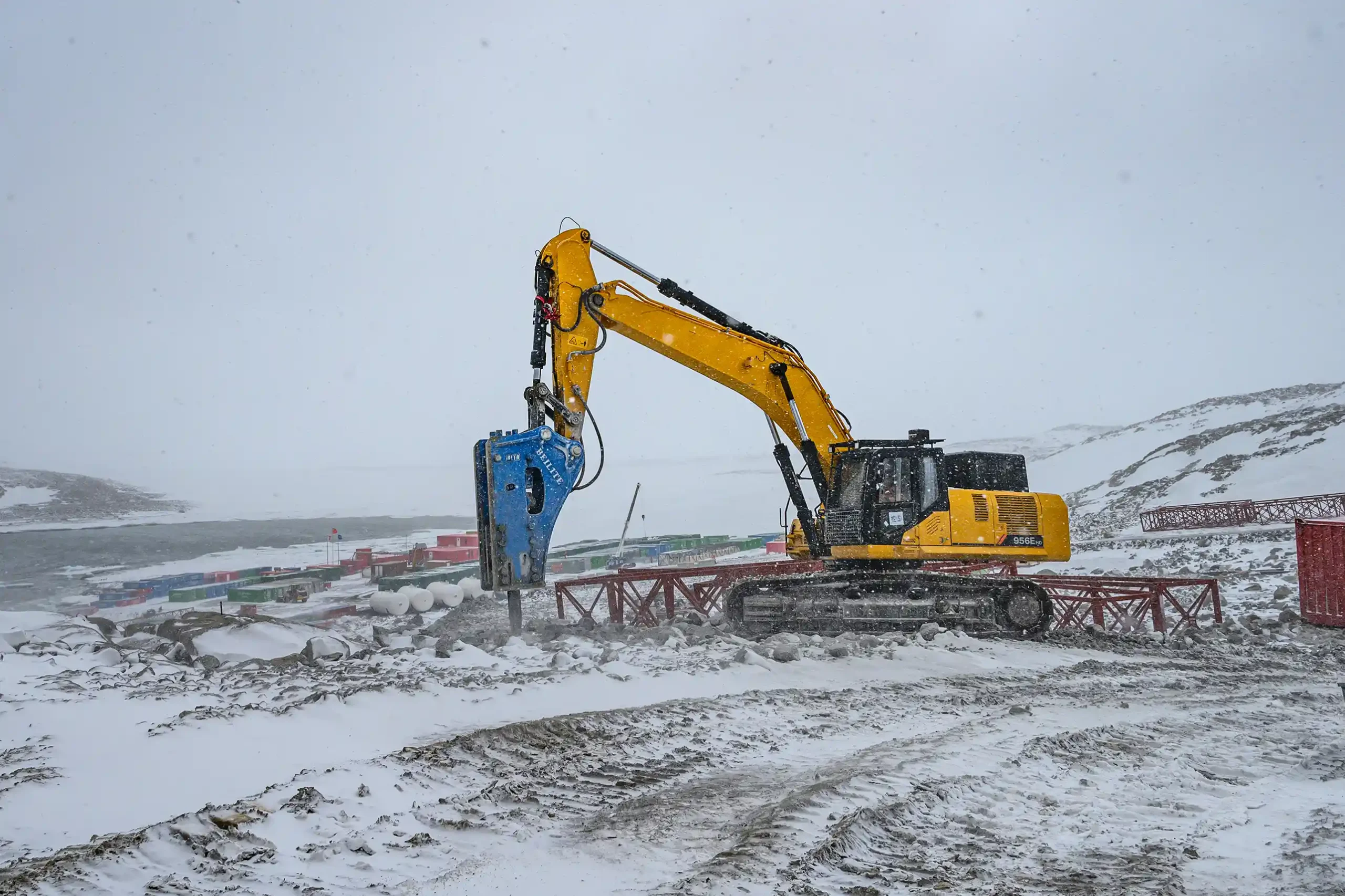
Beilite Machinery Co., LTD. has developed proprietary improvements in these core areas. The company participated in establishing national standards for hydraulic breakers in China, which required deep engagement with the underlying physics and failure modes. Hundreds of patented technologies now enhance efficiency and reliability across their hydraulic breaker types. These engineering refinements show up most clearly in rock breaking and concrete demolition tasks where consistent strike energy matters.
Common Hydraulic Breaker Types and Their Optimal Applications
Hydraulic breakers fall into size categories based on chisel diameter and corresponding impact energy output. Small hydraulic breakers like the BLT-40, BLT-45, and BLT-53 handle light concrete demolition, trenching, and urban demolition work where precision matters more than raw power. Medium hydraulic breakers including the BLT-70, BLT-75, and BLT-85 suit general construction, quarrying, and roadwork applications. Heavy-duty breakers such as the BLT-150, BLT-155, and BLT-165 excel in primary rock breaking, mining, and large-scale infrastructure projects where material hardness demands maximum force.
| Breaker Type | Chisel Diameter (mm) | Applicable Excavator (t) | Primary Applications |
|---|---|---|---|
| BLT-40 | 40 | 0.5–1.2 | Light demolition, trenching, landscaping |
| BLT-75 | 75 | 6–8.5 | General construction, roadworks, quarrying |
| BLT-155 | 155 | 27–33 | Heavy rock breaking, mining, large-scale demolition |
Performance Metrics That Determine Hydraulic Breaker Effectiveness
Evaluating hydraulic breaker performance requires attention to several interdependent metrics. Impact frequency, measured in blows per minute, indicates strike rate. Higher frequency generally means faster material breakdown, though this relationship isn’t linear—frequency must be balanced against impact energy per strike.
Operating pressure and flow rate dictate the hydraulic power available to the breaker. These parameters must match the carrier excavator’s hydraulic system specifications. Running a breaker outside its designed pressure range causes accelerated wear at best and catastrophic failure at worst. The energy class of a hydraulic breaker quantifies its destructive capacity, correlating directly with its ability to fracture tough materials. Power-to-weight ratio reflects performance relative to mass, which affects carrier stability during operation.
Noise reduction and vibration damping features improve operator comfort over long shifts and help meet environmental regulations in urban settings. Breaker performance tests assess these factors systematically. A BLT-155 hydraulic breaker operates with a flow rate of 180–240 L/min and an operating pressure of 200–220 bar, delivering an impact frequency of 200–300 bpm. This combination provides the breaking force needed for demanding rock breaking and concrete demolition applications.
Material Quality and Maintenance Practices That Extend Service Life
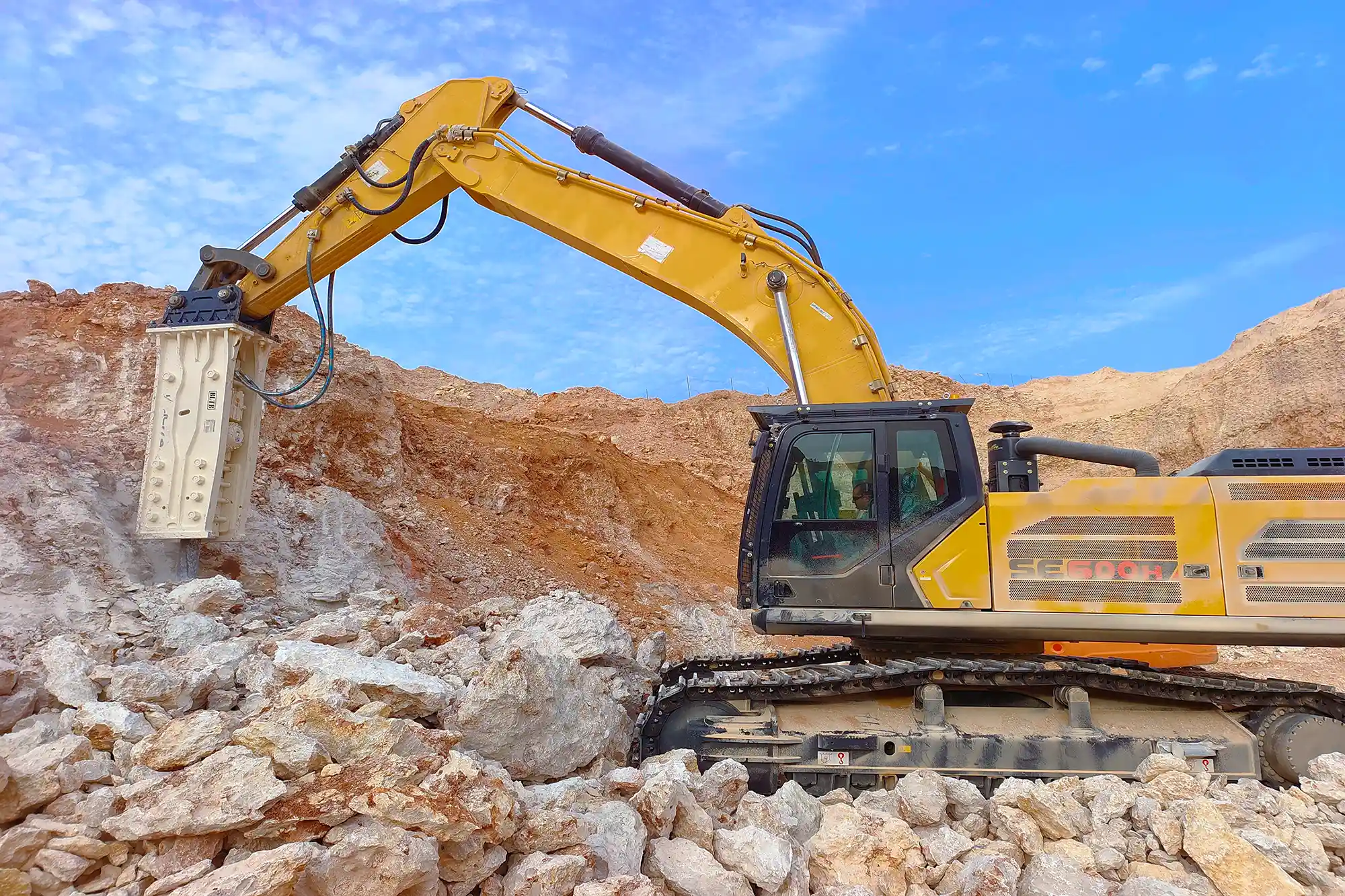
The service life of a hydraulic breaker depends heavily on material quality and maintenance discipline. High-grade steel in the piston and cylinder, precision-machined valve components, and properly heat-treated chisels all contribute to durability. Beilite uses advanced metallurgy and tight manufacturing tolerances in their BLT and BLTB product lines, which accounts for much of their reliability record.
Routine maintenance remains the controllable variable in equipment longevity. Timely inspection and replacement of wear parts—chisels, bushings, seal kits—prevents minor wear from cascading into major failures. Spare parts availability matters here; a breaker sitting idle waiting for a seal kit costs money every day.
Beilite maintains comprehensive after-sales support for their global customer base. Their warranty program reflects confidence in the engineering, but proper care by the operator still determines whether a hydraulic breaker reaches its full service life potential.
Maintenance Practices That Maximize Hydraulic Breaker Longevity
Effective maintenance follows a predictable pattern that most experienced operators already know but sometimes skip under schedule pressure.
Daily checks should cover hoses, connections, and the chisel tool for visible damage or wear. Lubrication of the chisel and bushings before each shift prevents metal-on-metal contact that accelerates wear. Hydraulic fluid levels and quality need monitoring, with filter replacement on schedule rather than when problems appear.
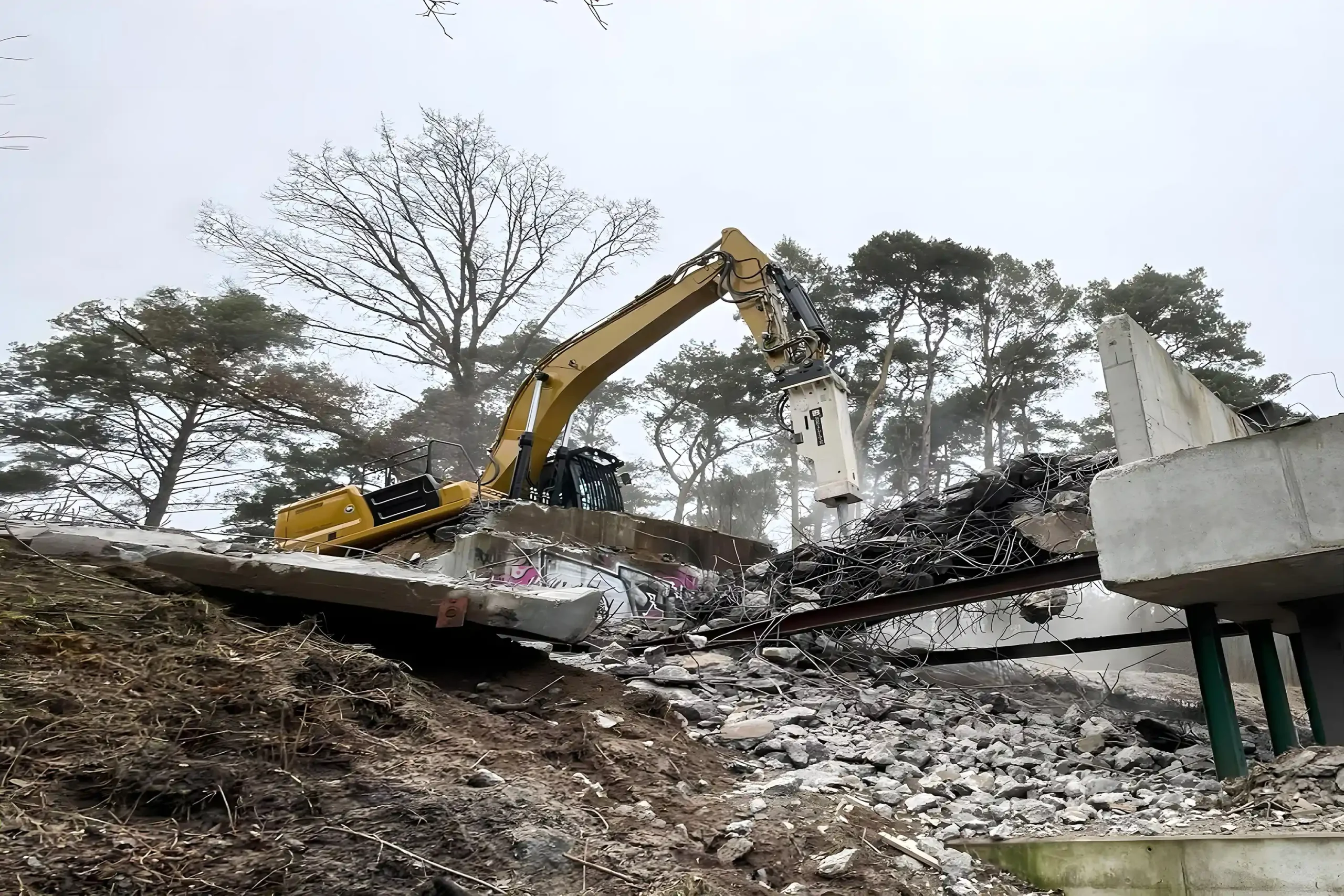
Chisel replacement timing matters more than many operators realize. A worn chisel transfers shock back into the piston, causing internal damage that’s expensive to repair. Seal kits should be replaced at manufacturer-recommended intervals to maintain hydraulic integrity. Proper storage when the hydraulic breaker isn’t in use protects against corrosion and contamination. Regular inspection by qualified technicians catches developing problems before they cause downtime.
Matching Hydraulic Breakers to Carriers and Applications
Selecting the right hydraulic breaker involves matching several variables simultaneously. Excavator compatibility comes first—the carrier weight and hydraulic output must align with the breaker’s requirements. An undersized breaker on a large excavator wastes the carrier’s capacity. An oversized breaker on a small excavator creates stability problems and potential hydraulic system damage.
Job site conditions and material hardness determine the appropriate breaker configuration within the compatible range. Softer rock or aged concrete requires different impact characteristics than hard granite or fresh reinforced concrete. The BLT-75 hydraulic breaker handles general construction materials efficiently, while the BLT-155 provides the force needed for primary rock breaking.
Budget considerations matter, but prioritizing purchase price over long-term performance usually costs more in the end. Beilite’s BLT and BLTB brands have built their reputation on this principle, with products exported to over 100 countries. Their range covers everything from Hydraulic Breaker Hammer for Mini Compact Excavator for confined spaces to heavy-duty units for large-scale rock breaking and demolition work.
Verifying Excavator and Hydraulic Breaker Compatibility
Compatibility verification follows a specific sequence. Start by confirming the excavator weight class falls within the breaker’s recommended carrier weight range. Match the excavator’s hydraulic flow capacity in liters per minute and system pressure in bar to the breaker’s specifications.
Mounting systems and pin sizes must be compatible, or appropriate quick couplers need to be specified. The excavator’s attachment weight limits shouldn’t be exceeded—structural stress from an overweight attachment creates safety risks and accelerates wear on the boom and arm. Manufacturer compatibility charts provide precise matching data for specific hydraulic breaker models.
| Breaker Model | Applicable Excavator (t) | Work Oil Flow (L/min) | Work Pressure (bar) |
|---|---|---|---|
| BLT-40 | 0.5–1.2 | 15–30 | 90–120 |
| BLT-75 | 6–8.5 | 50–90 | 120–150 |
| BLT-155 | 27–33 | 180–240 | 200–220 |
Calculating Return on Investment for Hydraulic Breaker Attachments
The financial case for quality hydraulic breaker attachments rests on productivity and uptime. High-performance breakers process material faster, which directly reduces project timelines and labor costs. A BLT-155 breaking through granite at its rated impact frequency completes work that would take significantly longer with an undersized or poorly matched unit.
Fuel efficiency improves when the hydraulic system operates within its designed parameters rather than straining against mismatched equipment. Downtime reduction provides perhaps the largest financial benefit—reliable hydraulic breakers with good durability and available spare parts keep projects moving. A breaker sitting idle while waiting for parts costs the rental rate plus the delay to the overall schedule.
Safety features and designs that reduce operator fatigue contribute to productivity over full shifts. Beilite’s global export reach includes comprehensive after-sales support that helps clients maintain uptime. Their focus on high-end manufacturing supports demand for superior Hydraulic Breaker Hammer for Demolition&Rock Breaking.
Frequently Asked Questions About Hydraulic Breakers
What engineering factors make Beilite hydraulic breakers suitable for harsh conditions?
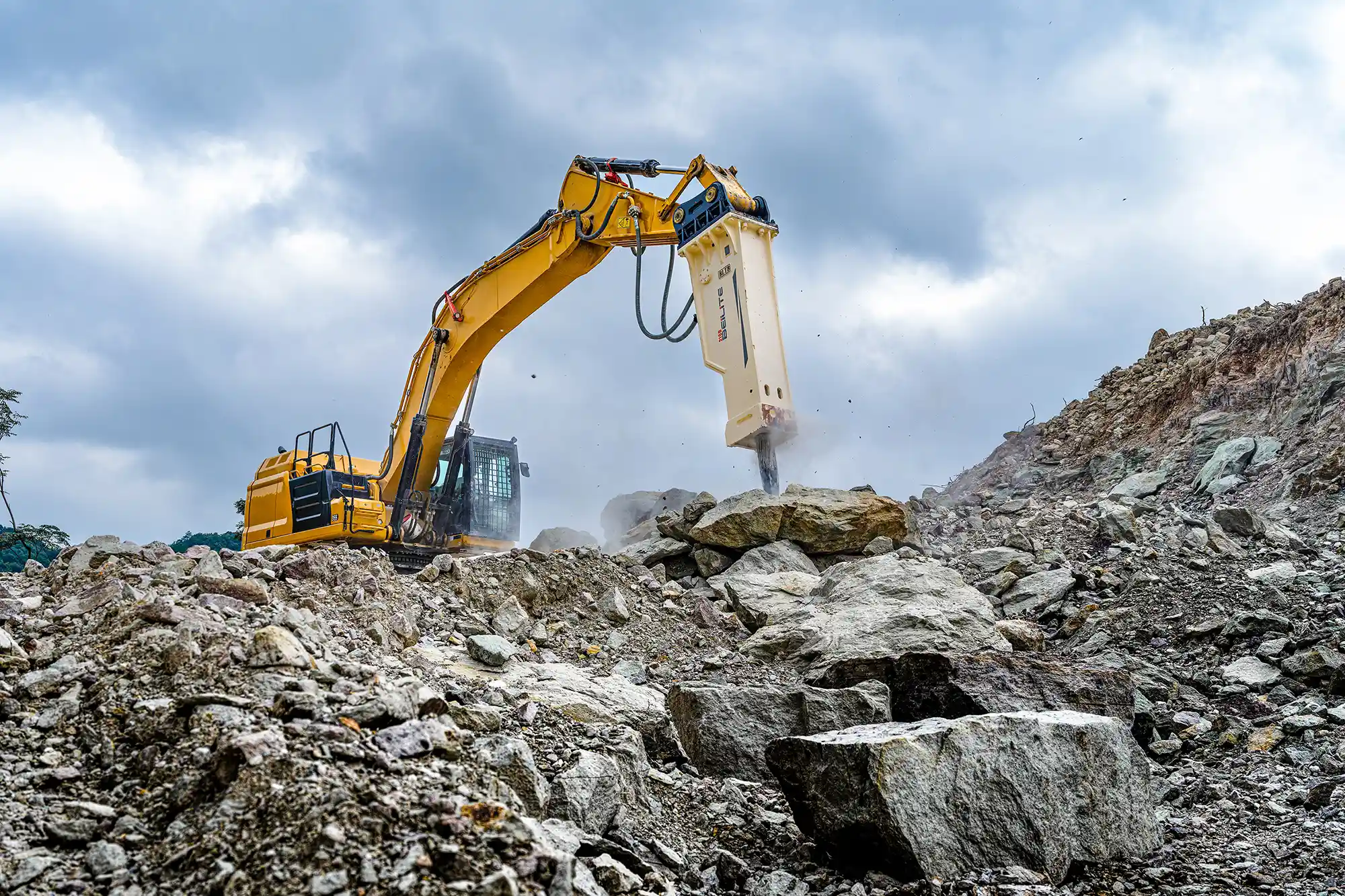
Beilite hydraulic breakers under the BLT and BLTB brands incorporate proprietary core technologies developed through participation in national standards work. The combination of advanced metallurgy, precision manufacturing, and hundreds of patented improvements produces equipment that maintains performance across temperature extremes, dusty environments, and continuous heavy use. Field reliability in over 100 countries provides ongoing validation of these engineering choices.
How do modern hydraulic breaker technologies reduce cycle times on job sites?
Current hydraulic breaker technologies optimize the relationship between impact energy, strike frequency, and hydraulic efficiency. Features like improved valve timing, reduced internal friction, and better energy recovery from the nitrogen accumulator allow more of the carrier’s hydraulic power to reach the chisel tip. Vibration reduction systems decrease operator fatigue, maintaining productivity through longer shifts. These factors combine to measurably reduce breaking cycles compared to older designs.
Where can I find detailed specifications for BLT and BLTB hydraulic breaker models?
Complete technical specifications for BLT and BLTB hydraulic breakers are available through Beilite’s official website and technical support team. Their specialists can match specific project requirements—material types, carrier specifications, duty cycle expectations—to appropriate models. This consultation approach tends to produce better outcomes than selecting based on specification sheets alone, since real-world conditions often involve variables that don’t appear in standard documentation.
Experience Beilite Excellence Today
BEILITE Machinery Co., LTD. has manufactured high-end hydraulic breakers since 2002, earning national high-tech enterprise recognition through sustained R&D investment. Breakthroughs in core technologies, participation in national standards development, and hundreds of patents back the BLT and BLTB product lines trusted by operators globally. Contact [email protected] or 40008-40008 to discuss how Beilite’s hydraulic breaker solutions match your operational requirements.