 English
 French
Hydraulic Breaker Primary Breaking: Enhancing Project Productivity
Heavy breaking work sets the rhythm for everything that follows on a demolition or excavation site. When the first blows land clean and the material fractures predictably, the rest of the project flows. When they don’t, delays compound fast. I’ve watched crews lose entire shifts to undersized equipment or poorly matched tooling, and the cost shows up in every line item downstream. Getting primary breaking right isn’t just about raw power—it’s about understanding how hydraulic breaker technology translates force into results across different materials and conditions.
What Primary Breaking Actually Involves
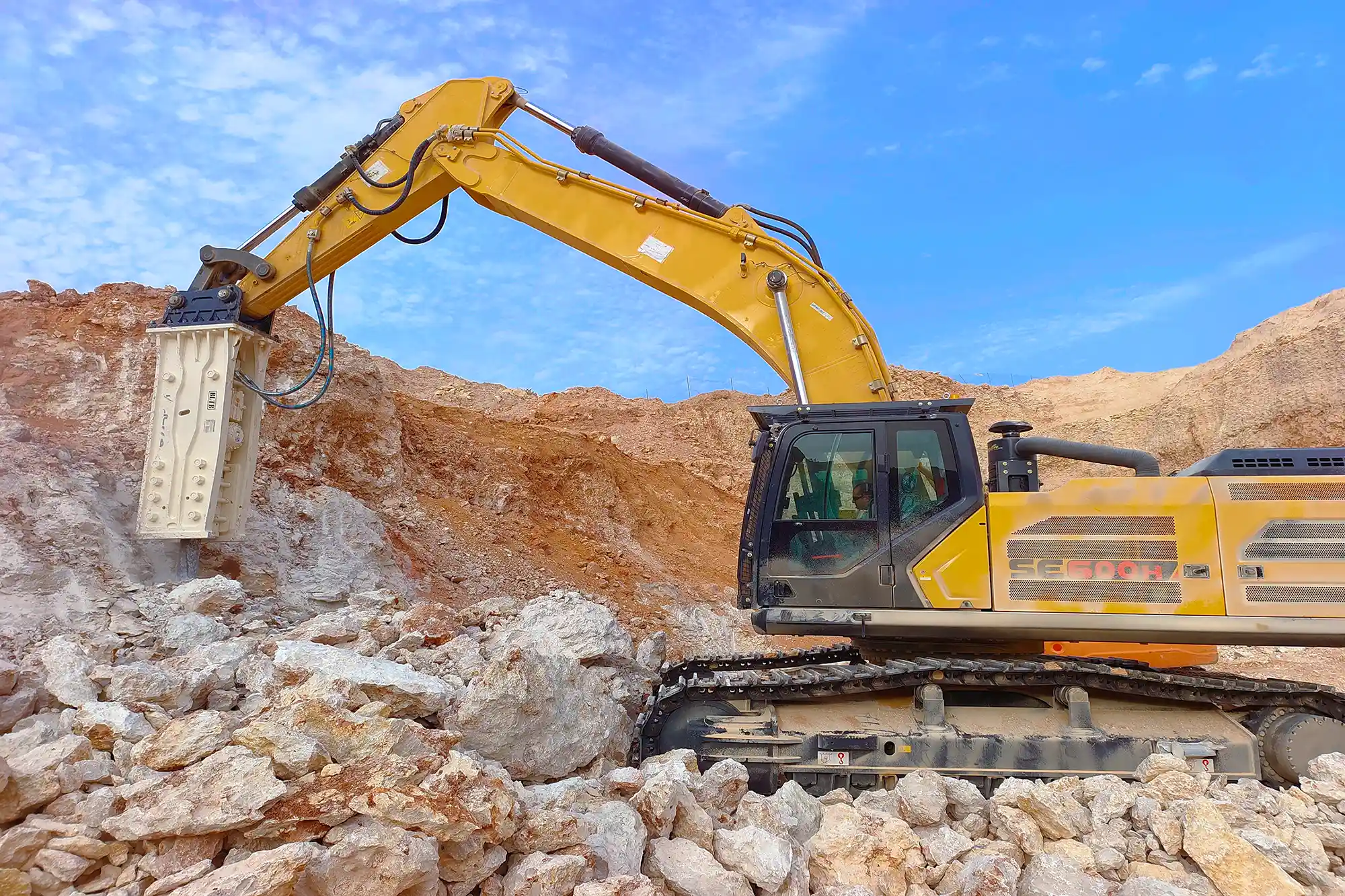
Primary breaking is the first pass at reducing oversized material into pieces that can be moved, loaded, or processed further. Whether it’s solid rock in a quarry face or a reinforced concrete foundation slab, the goal is the same: fracture the mass into manageable fragments without wasting energy or destroying equipment. Heavy demolition equipment handles this phase, applying rock breaking principles that account for material structure, fracture propagation, and energy transfer. The challenges vary by site—some formations crack cleanly along natural planes, others absorb impact and demand sustained effort.
How a Hydraulic Breaker Performs Primary Breaking
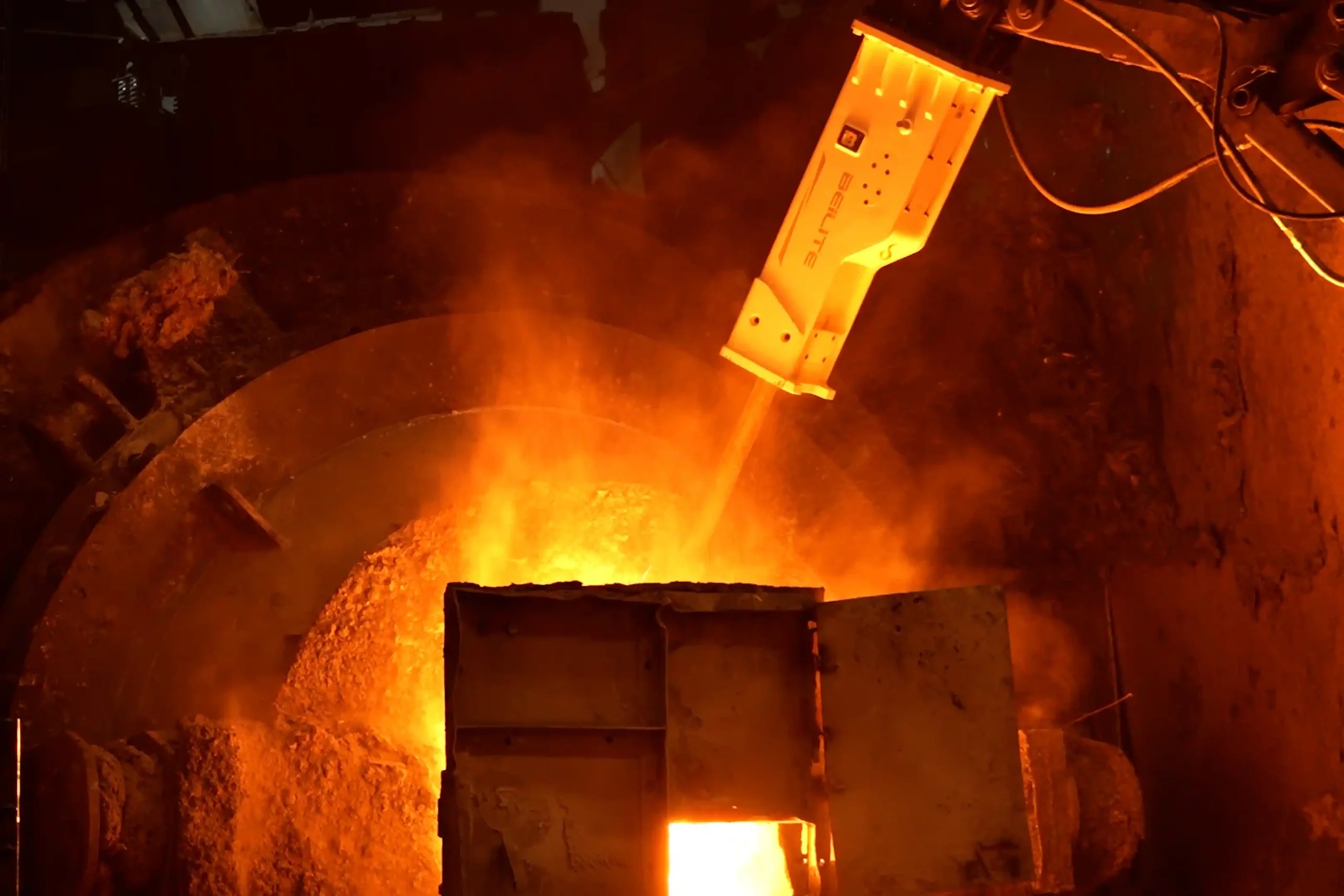
A hydraulic breaker delivers concentrated percussive force through a hardened tool, fracturing material at the point of contact. In primary breaking, this means targeting large, intact masses—quarry rock faces, thick concrete slabs, or oversized boulders—and reducing them to sizes that secondary equipment can handle. The hydraulic breaker function relies on rapid piston cycling driven by the carrier’s hydraulic system, converting fluid pressure into mechanical impact. Large rock breaking in quarries or concrete slab removal from infrastructure sites depends on this initial fracture phase to establish workable material sizes.
Primary Breaking Versus Secondary Breaking
Primary breaking addresses intact structures and rock masses, setting the pace for everything downstream. Secondary breaking takes the fragments from primary operations and reduces them further for transport, recycling, or aggregate production. The equipment differs accordingly. Primary operations typically use powerful hydraulic breaker hammer attachments mounted on large excavators, while secondary breaking might involve smaller breakers, crushers, or pulverizers designed for finer material processing.
| Feature | Primary Breaking | Secondary Breaking |
|---|---|---|
| Objective | Initial material reduction, site clearance | Further size reduction, processing, recycling |
| Material Size | Large, intact rock/concrete | Smaller fragments from primary breaking |
| Equipment Scale | Heavy-duty hydraulic breakers on large excavators | Smaller breakers, crushers, pulverizers |
| Application | Quarrying, large-scale demolition, trenching | Material sorting, recycling, aggregate production |
| Productivity | Focus on initial volume reduction | Focus on material refinement and usability |
Matching the Hydraulic Breaker to Primary Breaking Demands
Choosing the right hydraulic breaker for primary breaking determines whether a project runs efficiently or burns through time and maintenance budgets. The decision involves several interdependent factors, and getting any one wrong creates problems that compound over the equipment’s service life.
Factors That Drive Hydraulic Breaker Selection
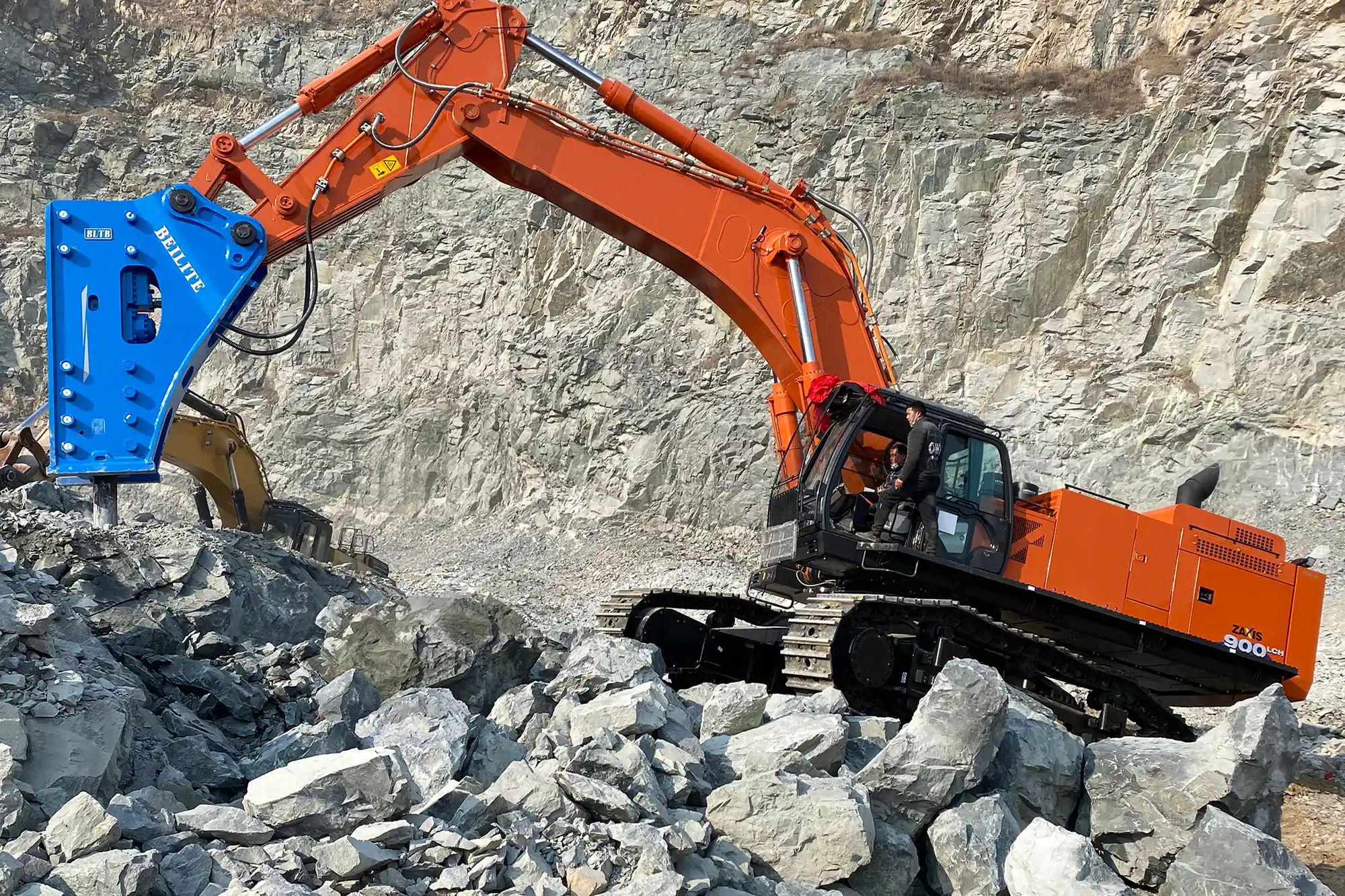
Carrier machine compatibility comes first. The breaker’s weight and hydraulic requirements—operating pressure and flow rate—must align with the excavator’s specifications. An oversized breaker strains the carrier’s hydraulic system and frame; an undersized one wastes the carrier’s capacity and slows production. Material hardness and type dictate the required impact energy and chisel geometry. Granite demands different tooling than reinforite concrete, and the wrong chisel type selection accelerates wear without improving fracture rates. Project scale and application—quarrying, trenching, heavy demolition—influence the required breaker tonnage and tool diameter. Breaker reliability and access to application-specific tools matter for sustained productivity, especially on remote sites where downtime costs multiply.
| Beilite Breaker Model | Applicable Excavator Weight | Chisel Diameter | Working Pressure (bar) | Impact Frequency (bpm) | Key Applications |
|---|---|---|---|---|---|
| BLT-40 | 0.5–1.2 t | 40 mm | 90–120 | 800–1400 | Mini demolition, light rock |
| BLT-75 | 6–8.5 t | 75 mm | 120–150 | 400–800 | Medium rock, concrete |
| BLT-125 | 14–18 t | 125 mm | 150–170 | 350–650 | Heavy rock, quarrying |
| BLT-155 | 27–33 t | 155 mm | 200–220 | 200–300 | Large-scale demolition |
| BLT-165 | 33–38 t | 165 mm | 210–230 | 150–300 | Extreme heavy-duty |
How Advanced Hydraulic Breaker Technology Improves Efficiency
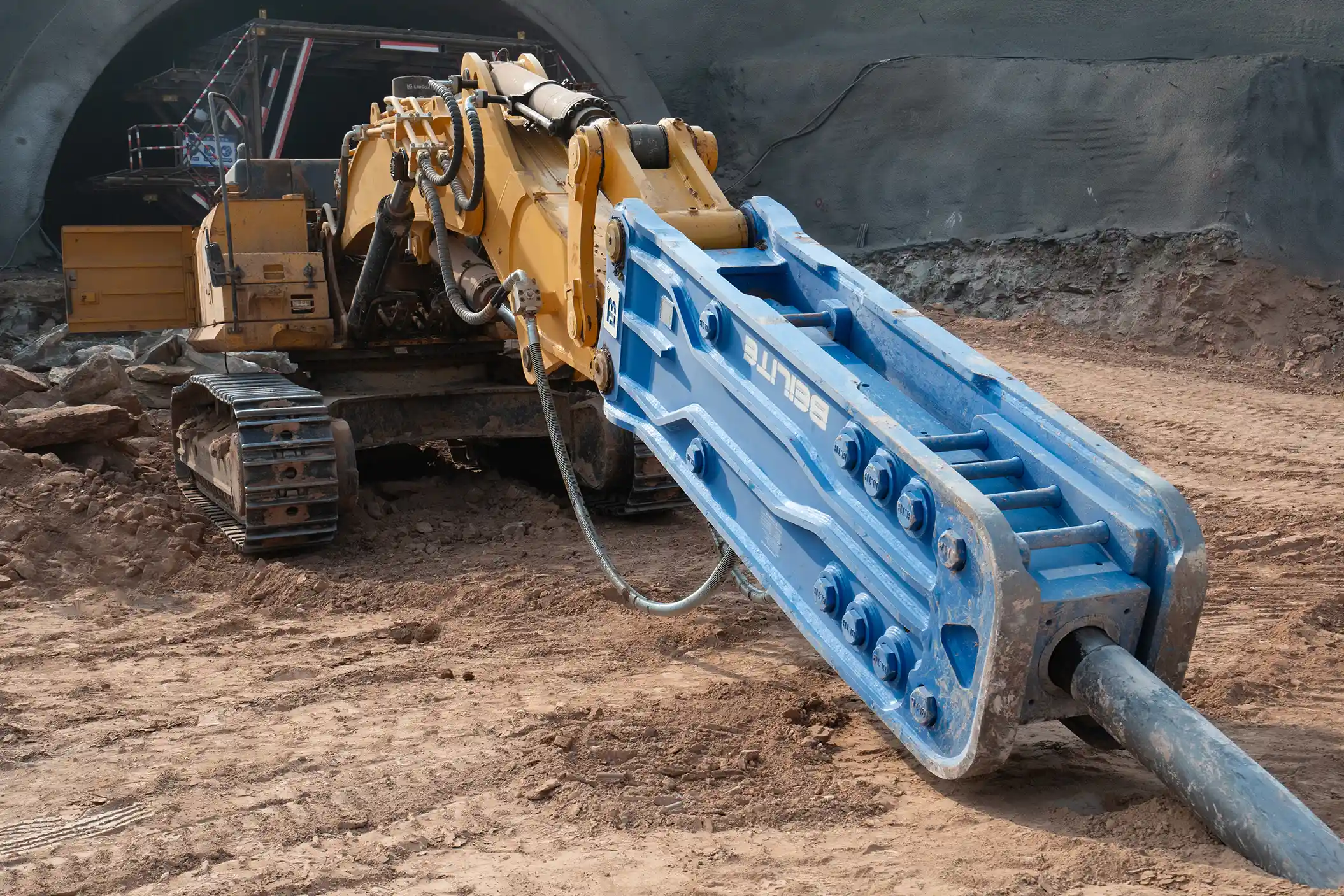
Modern hydraulic breakers incorporate engineering refinements that directly affect output and operating costs. Energy recovery systems capture recoil energy and redirect it into the next blow cycle, increasing impact force without drawing additional hydraulic power from the carrier. This efficiency gain compounds over thousands of operating hours. Auto-lubrication systems maintain consistent greasing at the tool and bushing interfaces, reducing friction-related wear in demanding primary breaking conditions where manual lubrication schedules often slip. Noise suppression technology and vibration dampening address operator fatigue and regulatory compliance, particularly on urban sites where decibel limits apply. Intelligent control systems adjust breaker performance based on material resistance—softer zones receive less energy, preventing over-penetration and tool damage, while harder sections get full impact. Dust control solutions reduce airborne particles at the point of impact, improving visibility and respiratory safety. These high-tech manufacturing advancements, often protected by patented breaker technology, translate directly into higher daily output and lower cost per ton of material broken.
Operational Practices That Protect Performance and Safety
Primary breaking generates significant forces and hazards, making operational discipline non-negotiable. Comprehensive operator training covers equipment handling, site risk assessment, and emergency response procedures. Before each shift, operators conduct daily pre-operation safety checks—inspecting hydraulic connections, verifying tool retention, and confirming accumulator pressure. Environmental compliance requirements vary by jurisdiction but typically include noise pollution control measures, vibration monitoring near structures, and dust management strategies. Urban and sensitive-area operations face stricter limits.
Breaking technique affects both productivity and equipment longevity. Optimal breaking angles maximize energy transfer into the material rather than deflecting force back into the breaker housing. Operators learn to read fracture patterns and reposition rather than hammering repeatedly in one spot, which generates heat and accelerates tool wear. Blank firing—operating the breaker without material contact—damages internal components and voids warranties. These practices collectively maintain safe working conditions while sustaining the production rates that primary breaking demands.
Maintenance Strategies That Protect Your Investment
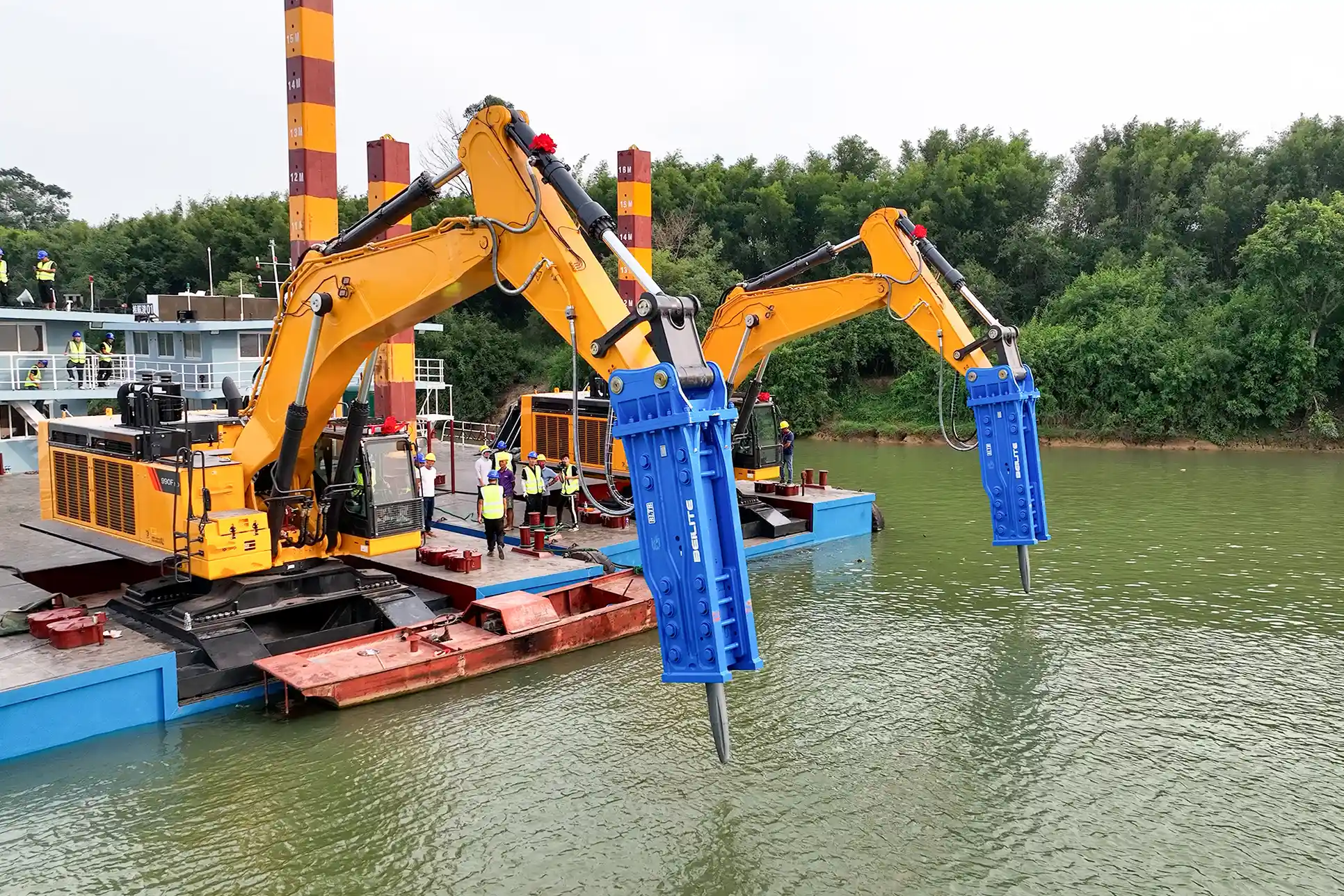
Hydraulic breakers in primary breaking applications absorb tremendous stress, and maintenance practices directly determine service life and total cost of ownership. Equipment durability depends on consistent preventive maintenance schedule adherence and the use of genuine spare parts designed to original tolerances.
Maintenance Requirements for Primary Breaking Applications
Daily breaker checks establish the baseline. Operators inspect the tool for wear patterns, verify pin retention, and examine hydraulic hose connections for leaks or abrasion damage. Regular hydraulic fluid checks confirm that contamination levels remain within acceptable limits—dirty fluid accelerates wear on seals and valve components. Chisel pin replacement follows manufacturer intervals or responds to visible wear, whichever comes first. Periodic servicing includes seal kit inspection and replacement, plus verification of nitrogen charging pressures in the accumulator and back head. Correct gas pressure ensures consistent impact energy; low pressure reduces breaking force while high pressure stresses internal components. Proper lubrication of the tool and bushings minimizes friction and heat buildup, preserving the precision fit that efficient energy transfer requires. Effective wear parts management—tracking consumption rates and maintaining inventory—prevents unplanned downtime when components reach end of life.
Beilite’s Contribution to Primary Breaking Performance
BEILITE Machinery Co., LTD. has focused on hydraulic breaker development since 2002, building a track record in demanding primary breaking applications. As a national high-tech enterprise, the company participates in standards formulation and holds hundreds of patents covering core breaker technologies. BLT and BLTB brand products deliver the impact energy and durability that primary breaking conditions require, with models ranging from hydraulic breaker hammer for mini compact excavator applications to heavy-duty units for large excavators. The product line addresses diverse working conditions including hydraulic breaker hammer for demolition and hydraulic breaker hammer for mining and quarrying operations. Manufacturing quality and global distribution across more than 100 countries support consistent performance and parts availability regardless of project location.
Start Your Next Primary Breaking Project Right
Beilite Machinery Co., LTD. engineers BLT and BLTB hydraulic breakers for the performance, durability, and efficiency that primary breaking demands. Decades of innovation and hundreds of patents back every unit. Contact us at [email protected] or call 40008-40008 to discuss how our hydraulic breaker solutions can improve productivity and reliability on your project.
Frequently Asked Questions About Hydraulic Breaker Primary Breaking
What makes Beilite hydraulic breakers suitable for demanding primary breaking work?
Beilite hydraulic breakers incorporate proprietary technologies developed through extensive R&D and protected by hundreds of patents. The BLT and BLTB product lines deliver high impact energy with durability engineered for continuous primary breaking in rock and concrete. Participation in national standards development ensures the engineering reflects current best practices, while global distribution supports parts availability and service access.
How does tool selection affect primary breaking efficiency?
The chisel, wedge, or blunt tool must match both the material characteristics and the breaking method. Correct tool selection improves energy transfer into the material, reduces wear rates, and prevents unnecessary stress on the hydraulic breaker and carrier. Mismatched tooling wastes hydraulic energy, accelerates component wear, and slows production—problems that compound across a project timeline.
Can hydraulic breakers handle primary breaking in environmentally sensitive locations?
Modern hydraulic breakers include features designed for regulated environments. Noise reduction technology, vibration dampening, and dust suppression systems address common environmental concerns. Operational best practices—proper technique, equipment maintenance, and compliance monitoring—allow primary breaking to proceed responsibly while meeting productivity requirements. Site-specific regulations determine the exact measures required.