 English
 French
Hydraulic Breaker for Confined Spaces: Optimal Mini Excavator Tools
Working in tight spots changes everything about how you approach demolition. The margin for error shrinks, the stakes climb, and suddenly equipment that performs fine on open sites becomes a liability. Compact hydraulic breakers built for mini excavators have become the go-to solution for these scenarios, but choosing the right one requires understanding what actually matters when space is limited and precision is non-negotiable.
What Makes Confined Space Demolition Different
Confined space demolition operates under a completely different set of rules than open-site work. Restricted movement, nearby structures that cannot be damaged, and the constant awareness that one wrong move could compromise structural integrity all factor into every decision. Add noise ordinances, vibration limits, and dust control requirements common in urban settings, and the complexity multiplies quickly.
The term “confined space” in demolition covers a range of situations. Interior work inside existing buildings qualifies, as does underground utility access, tunnel projects, and any site where equipment movement is severely restricted. These environments share a common thread: they demand compact, controllable tools that can deliver meaningful breaking power without the footprint of standard equipment.
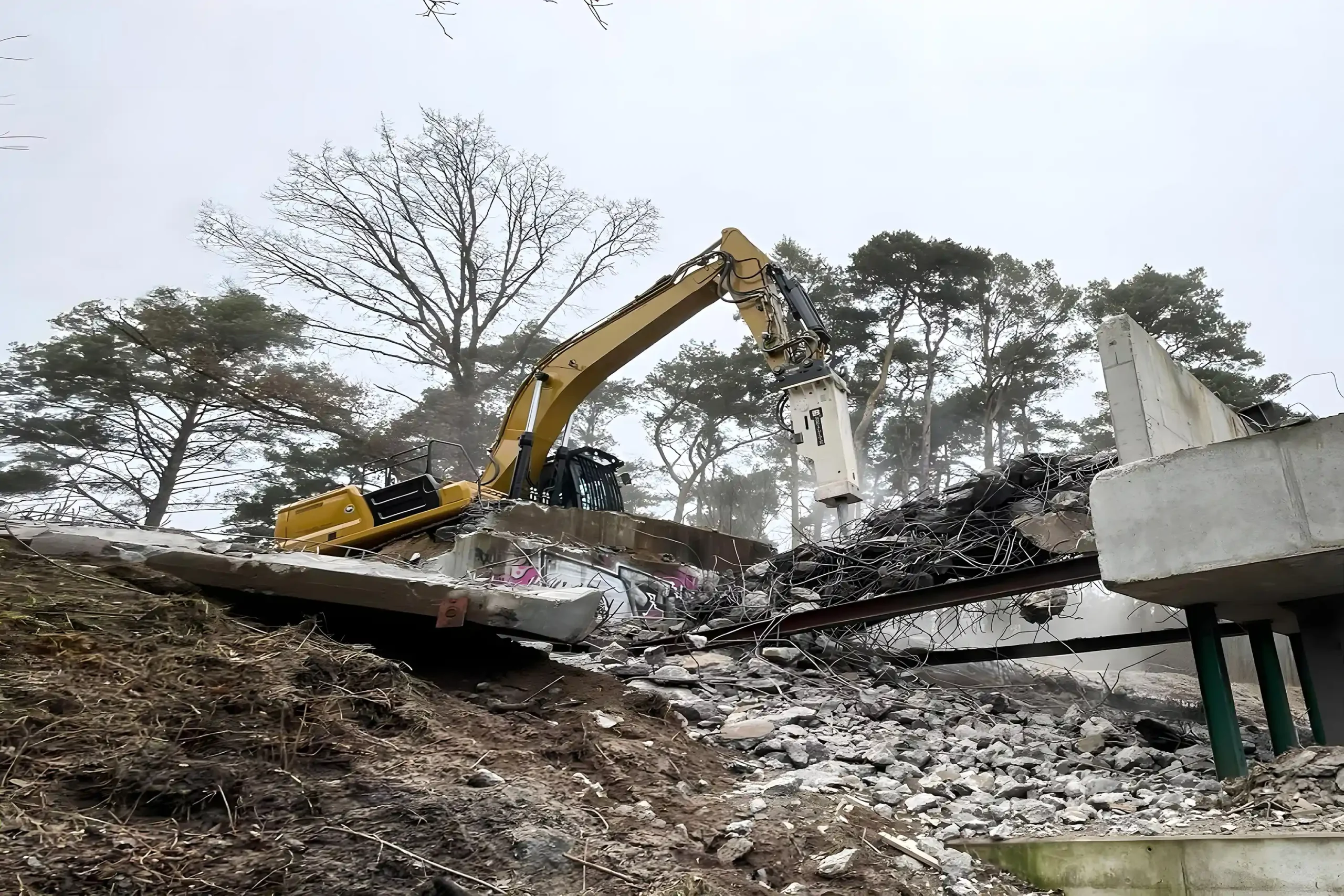
Matching the Breaker to the Machine and the Job
Getting the hydraulic breaker selection right starts with understanding the relationship between the breaker and the mini excavator carrying it. Too heavy, and you risk tipping or excessive wear on the carrier. Too light, and you sacrifice the impact energy needed to get the job done efficiently.
A practical guideline puts breaker weight at roughly 5-10% of the mini excavator’s operating weight. A 1-ton machine, for example, pairs well with a breaker in the 80-100 kg range. This balance maintains stability while delivering enough force for effective breaking.
The BLT series offers options across this spectrum:
| Model | Total Weight (kg) | Chisel Diameter (mm) | Working Oil Flow (L/min) | Applicable Excavator (t) |
|---|---|---|---|---|
| BLT-40 | 86 | 40 | 15–30 | 0.5–1.2 |
| BLT-45 | 137 | 45 | 20–40 | 0.8–1.5 |
| BLT-53 | 180 | 53 | 20–50 | 1.5–3.5 |
| BLT-60 | 263 | 60 | 30–60 | 3–5.5 |
Hydraulic compatibility matters just as much as weight. Oil flow requirements must align with what the carrier can supply, or performance suffers and equipment wear accelerates.
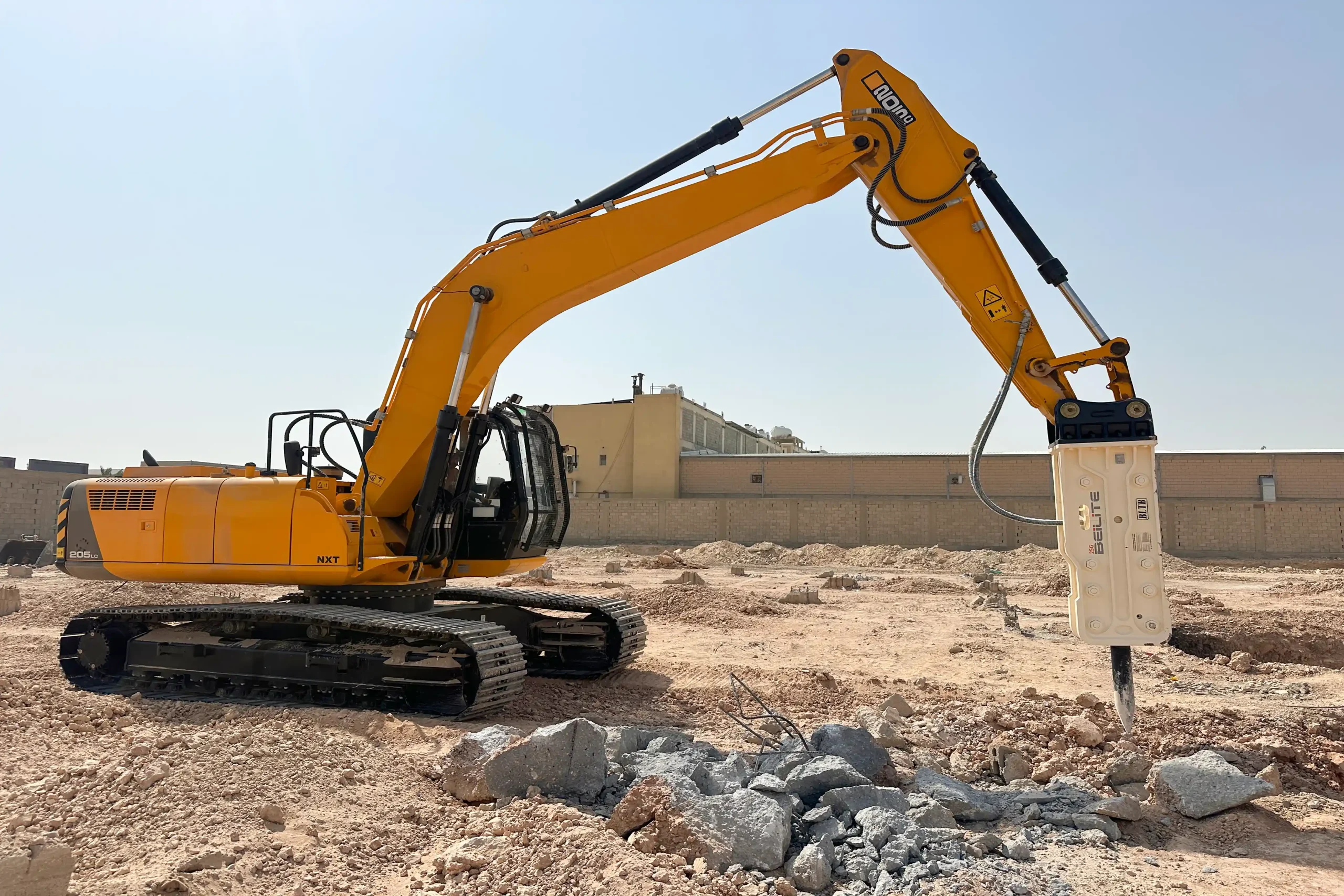
Technology That Actually Helps in Tight Quarters
Modern compact hydraulic breakers incorporate features that directly address confined space challenges. High material strength and robust construction translate to reliability when access for repairs is difficult. Specialized chisel designs allow operators to match the tool to specific breaking tasks, whether that means reinforced concrete, masonry, or rock.
Remote operation capabilities have become increasingly valuable in hazardous environments, keeping operators at a safe distance while maintaining precise control. Smart monitoring systems track performance metrics and flag potential issues before they become breakdowns. Anti-vibration technology reduces operator fatigue during extended use, which matters more than you might expect when a job stretches across multiple shifts.
Safety Protocols That Cannot Be Skipped
Operating a hydraulic breaker in tight areas requires protocols beyond standard demolition safety practices. Confined space safety training for all personnel is the foundation. Ventilation planning addresses dust and fumes that accumulate quickly in enclosed areas. Emergency response plans need to account for limited exit routes and restricted rescue access.
PPE requirements include hearing protection rated for the specific noise levels involved, respirators appropriate for the dust and debris generated, and hard hats rated for overhead hazards. Equipment inspections before each shift catch problems that could lead to dangerous malfunctions in environments where a breakdown creates serious complications.
Controlling Noise and Dust in Sensitive Settings
Urban confined space work often happens within earshot of occupied buildings, making noise control a practical necessity rather than just a regulatory checkbox. low noise hydraulic breakers with sound-dampening features can reduce acoustic impact significantly. Acoustic enclosures around the work area provide additional reduction when neighbors are particularly close.
Dust suppression through water misting at the point of impact keeps airborne particles under control. This protects workers, satisfies environmental requirements, and prevents complaints that can shut down a project. The combination of these approaches allows work to proceed in locations that would otherwise be off-limits.
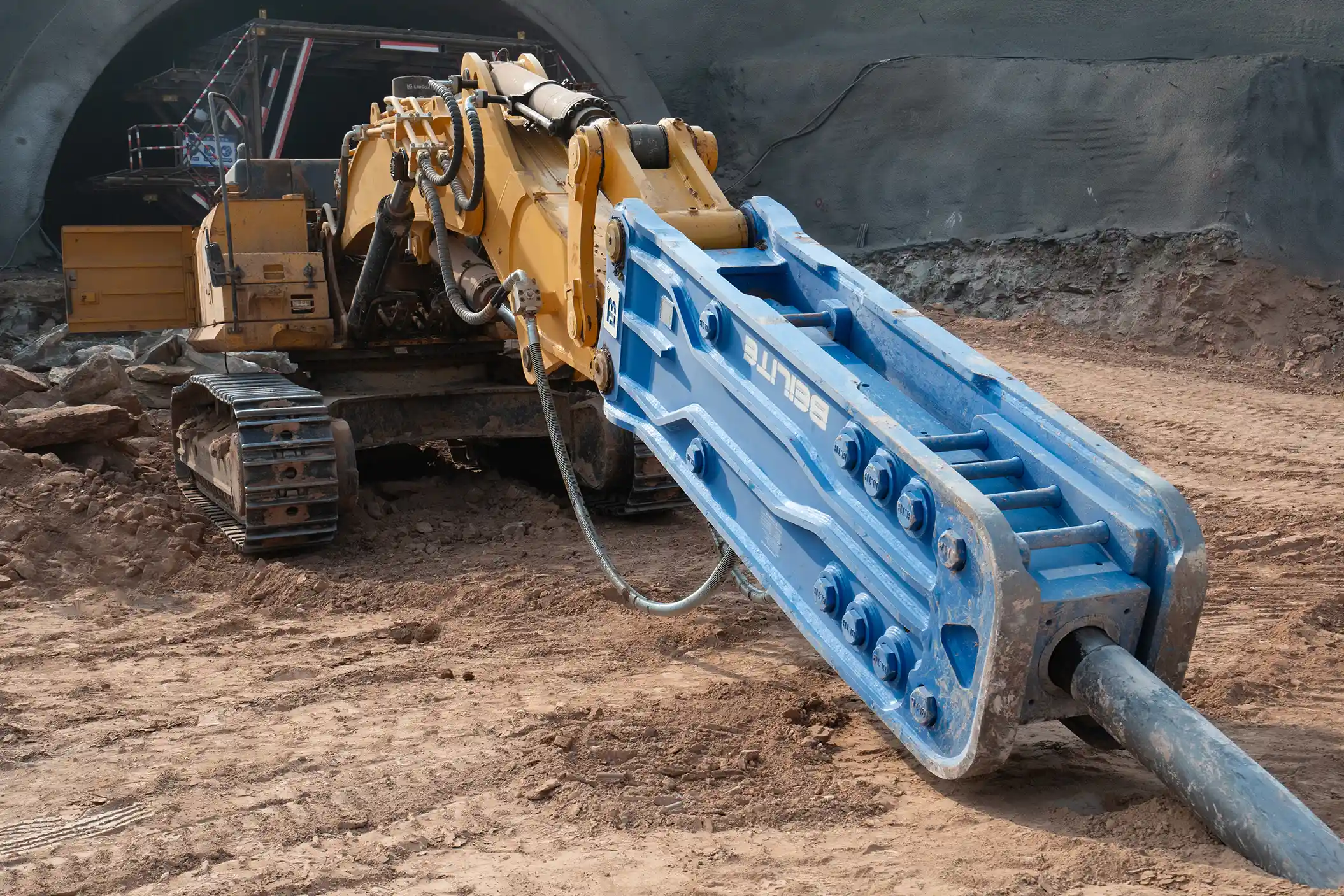
The Numbers Behind Equipment Decisions
The right equipment selection affects project economics in measurable ways. Proper tools can compress project timelines by around 20% and reduce operational costs by approximately 15%. These gains come from multiple sources: higher productivity per hour, better fuel efficiency, and fewer breakdowns requiring expensive repairs and idle time.
Quality equipment paired with comprehensive after-sales support minimizes the downtime that kills project margins. Preventive maintenance programs catch wear before it becomes failure, extending service life and maintaining consistent performance throughout a project’s duration.
Manufacturing Background and Product Range
BEILITE Machinery Co., Ltd. has focused on hydraulic breaker development and manufacturing since 2002. The company holds national high-tech enterprise status in China and has accumulated hundreds of patents through continuous R&D investment. Participation in formulating national standards for hydraulic breakers reflects the technical depth behind the product line.
The BLT and BLTB brand products address applications ranging from mining and tunneling to building demolition and underwater construction. Export relationships span more than 100 countries, providing exposure to diverse working conditions and application requirements. This experience informs product development for specialized applications like confined space demolition.
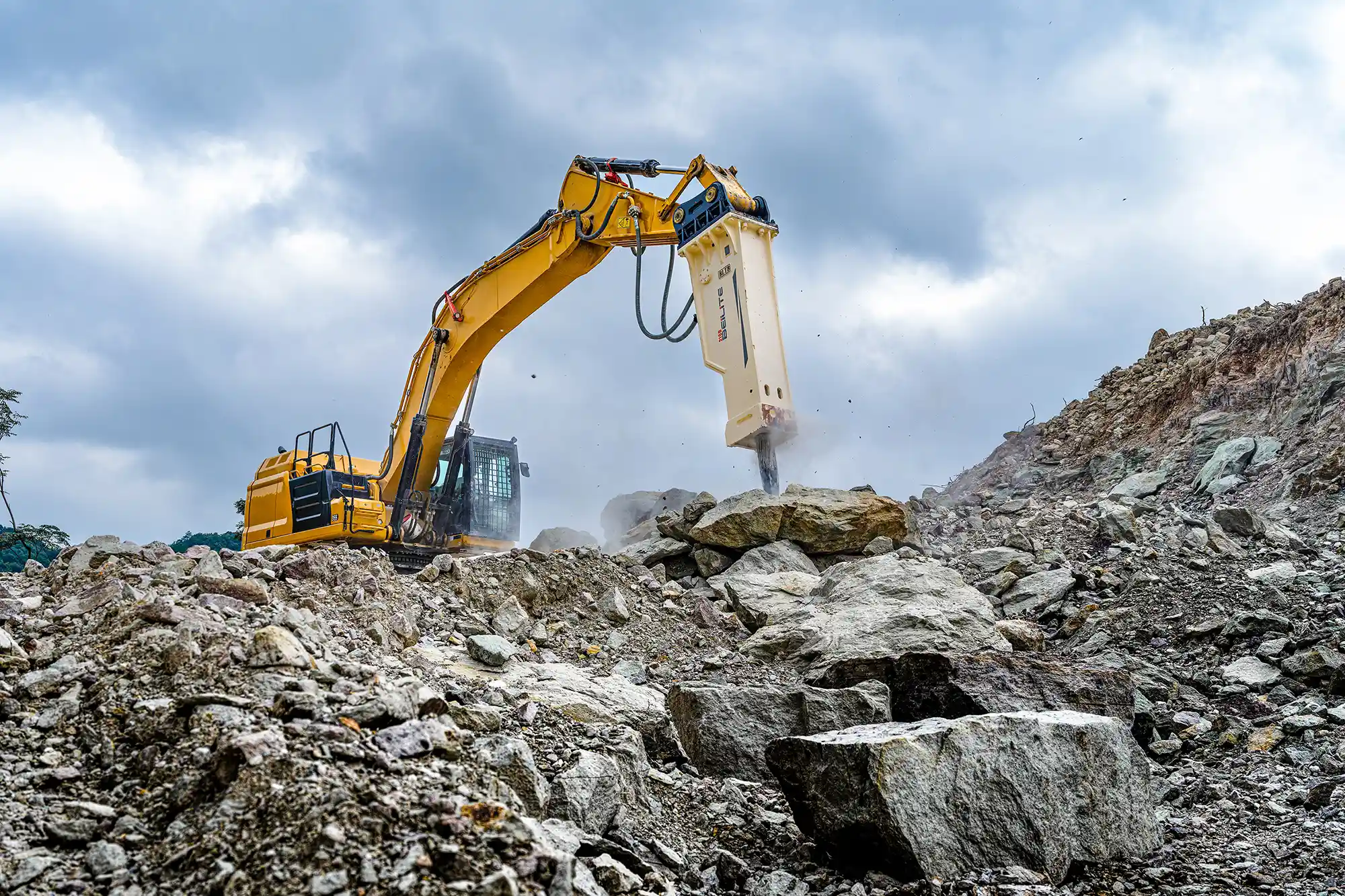
Where This All Leads
Confined space demolition will only become more common as urban renovation and infrastructure work continues in established areas. The equipment that succeeds in these environments combines compact dimensions with meaningful breaking power, robust construction with precise control, and advanced features with straightforward operation. Getting the selection right determines whether a project runs smoothly or becomes a case study in what can go wrong.
Elevate Your Demolition Projects with Beilite
Elevate your confined space demolition projects with Beilite’s advanced hydraulic breaker Hammer technology. Partner with a national high-tech enterprise committed to innovation, quality, and global service. Contact Beilite Machinery Co., LTD today for a tailored consultation and discover how our BLT and BLTB series can optimize your operational efficiency and safety. Email [email protected] or call 40008-40008.
Frequently Asked Questions About Hydraulic Breakers for Confined Spaces
What specific features should I look for in a hydraulic breaker for interior demolition?
Interior demolition puts a premium on noise and vibration control. A Hydraulic Hammer Breaker For Mini Excavator,Mini Excavator Breaker with sound-dampening features reduces disruption to adjacent occupied spaces and limits operator fatigue over long shifts. Compact dimensions and responsive controls allow the precise movements that interior work demands, particularly when working near structural elements that must remain intact. Power-to-weight optimization ensures effective breaking without the bulk that restricts movement in hallways, rooms, and other interior spaces.
How does hydraulic breaker maintenance impact project timelines in tight access areas?
Maintenance accessibility becomes critical when the equipment is difficult to extract for repairs. A hydraulic breaker breakdown in a confined space can halt work entirely while the machine is removed, repaired, and repositioned. Regular preventive maintenance catches wear patterns before they cause failures. Equipment designed with durability and service accessibility in mind reduces both the frequency and duration of maintenance interruptions, keeping projects on schedule.
Are there training requirements for operating compact hydraulic breakers in confined spaces?
Specialized training covers the unique hazards and operating considerations of restricted environments. Standard equipment operation knowledge is the starting point, but confined space work adds layers of complexity around emergency procedures, communication protocols, and awareness of structural conditions. Proper training improves both safety outcomes and equipment utilization, since operators who understand the equipment’s capabilities can work more efficiently without pushing beyond safe limits.