 English
 French
How to Inspect Breaker Housing Cracks for Safety
Working around hydraulic breakers long enough, you develop an instinct for when something feels off—a subtle change in vibration, a sound that wasn’t there last week. Housing cracks rarely announce themselves dramatically. They start small, almost invisible, and by the time they’re obvious, you’re already looking at serious downtime or worse. The housing takes every blow the breaker delivers, absorbing forces that would shatter lesser components. When it starts to fail, everything downstream follows.
Why Housing Integrity Determines Everything Else
The housing of a hydraulic breaker isn’t just a shell. It’s the structural backbone that absorbs and distributes operational stress across the entire assembly. Every impact the chisel delivers sends force rippling back through the system, and the housing must contain it all without deforming or cracking. This is why design principles and manufacturing quality matter so much at the production stage—once a housing leaves the factory, its ability to resist material fatigue is largely set.
Beilite Machinery approaches this challenge through rigorous engineering standards applied to our BLT and BLT and BLTB products. The goal isn’t just meeting specifications but building in margin for the unpredictable conditions equipment actually faces in the field. Regular housing integrity checks remain essential regardless of build quality, because even the best-engineered components operate in harsh environments where damage accumulates over time. A hydraulic breaker is only as reliable as its weakest structural point, and the housing is too critical to leave uninspected.
Where Cracks Come From and What They Look Like
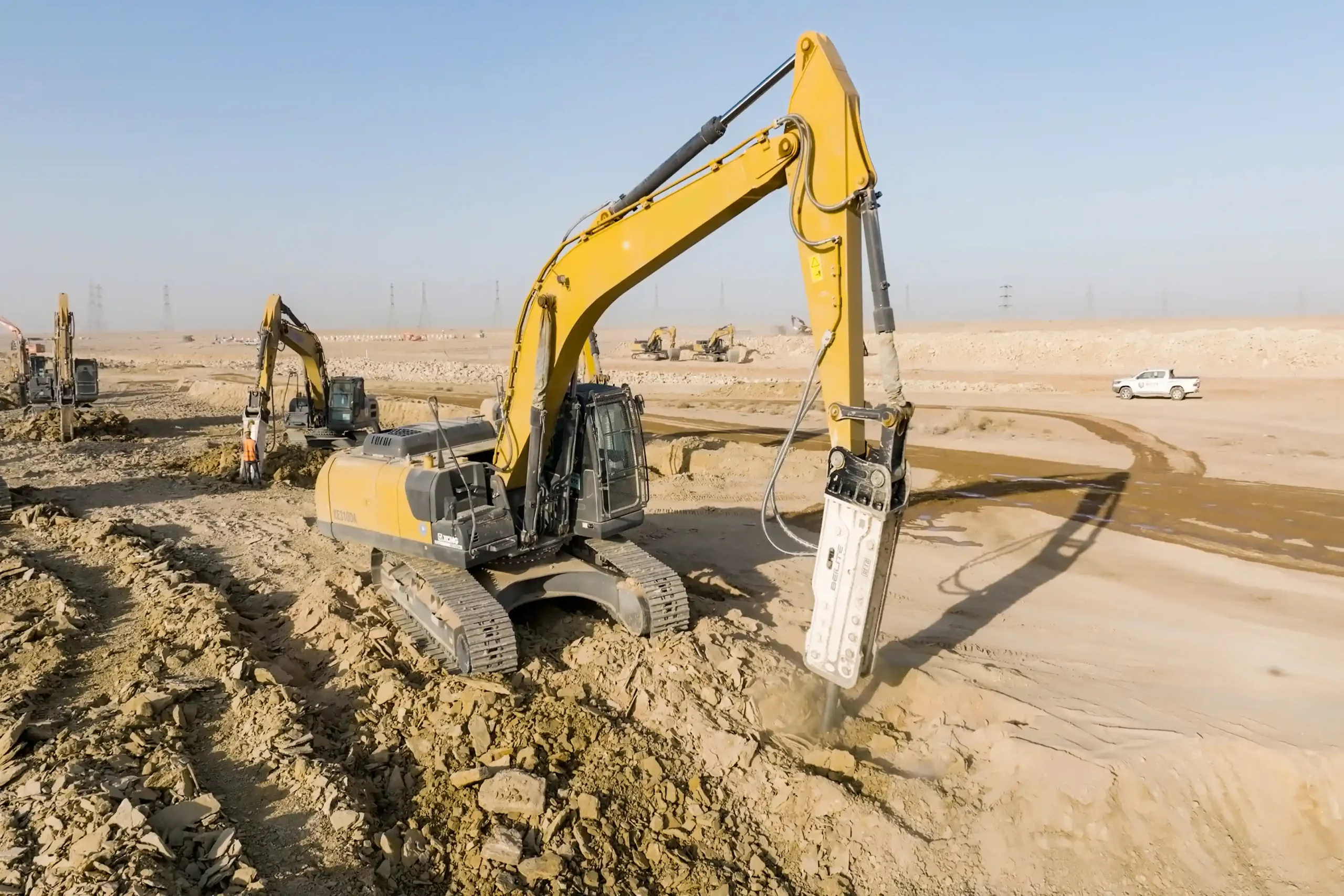
Cracks don’t appear randomly. They follow patterns dictated by how stress concentrates in the housing structure. Repetitive impact forces during normal operation create cyclical loading that gradually weakens metal at specific points. Add material defects from manufacturing—microscopic inclusions or porosity—and you have starting points where cracks nucleate.
Stress cracks typically show up where geometry changes abruptly, like corners or mounting holes. The metal can’t distribute load evenly at these transitions, so stress concentrates until something gives. Fatigue cracks develop more slowly, propagating a tiny amount with each loading cycle until they reach critical length. Hairline cracks are the deceptive ones—barely visible but indicating that the failure process has already begun.
Several operational factors accelerate crack formation. Operational misuse ranks high on the list, particularly blank firing where the piston strikes without material resistance. This sends shock loads directly into the housing with nowhere to dissipate. Thermal stress from extreme temperature swings causes expansion and contraction cycles that fatigue metal over time. Persistent vibration damage loosens connections and creates fretting wear that initiates cracks at contact surfaces. Together, these factors compound normal wear and tear and degrade breaker performance faster than design life projections assume. Understanding these mechanisms makes preventative measures more targeted and effective.
What Happens When You Ignore a Cracked Housing
Running a hydraulic breaker with a cracked housing is gambling with consequences that escalate quickly. A crack that seems stable under normal loads can propagate suddenly when conditions change—harder material, colder temperatures, or just accumulated fatigue reaching a tipping point. Catastrophic failure doesn’t give warning. The housing separates, internal components lose containment, and you’re looking at component damage that extends far beyond the original crack.
The safety implications are serious. Operator injury from flying debris or sudden equipment collapse is a real risk, not a theoretical concern. Beyond human safety, the financial impact compounds rapidly. Equipment replacement costs are obvious, but downtime prevention failures hurt more—projects stall, contracts face penalties, and the ripple effects spread through operations. Operating damaged equipment also typically voids warranties, leaving you fully exposed to replacement costs that proper operational safety practices would have avoided.
How Environment Shapes Crack Development
Where you operate matters as much as how you operate. Extreme temperatures create thermal gradients that stress housing materials through expansion and contraction. Metal that’s perfectly sound at moderate temperatures becomes brittle in severe cold or softens slightly in extreme heat, changing how it responds to impact loading.
Corrosive environments attack housing surfaces chemically. Coastal operations with high salinity, demolition sites with chemical exposure, or mining applications with acidite groundwater all accelerate material degradation. The surface pitting and oxide formation that result create stress concentrators where cracks initiate more easily.
Even seemingly minor factors matter. Dust ingress and moisture compromise seals and work their way into joints, creating abrasive wear and corrosion in areas you can’t easily inspect. Adapting working conditions awareness into maintenance scheduling—more frequent inspections in harsh environments, protective measures where feasible—extends housing life significantly.
How to Conduct a Thorough Visual Inspection
Effective visual inspection requires method, not just attention. Start with proper cleaning procedures—you can’t assess what you can’t see. Pressure washing or solvent cleaning removes the accumulated grime that hides surface defects. This isn’t optional preparation; it’s essential for meaningful inspection.
Build inspection into operational rhythm. Pre-operation checks should happen daily, focusing on obvious damage and changes from the previous shift. Post-operation checks allow more detailed assessment when the equipment is still accessible and any new damage is fresh. Proper lighting conditions matter more than most operators realize—angled lighting reveals surface irregularities that direct illumination misses. A magnifying glass or loupe helps identify hairline cracks that would otherwise escape notice.
Focus attention on critical areas where stress concentrates. Mounting brackets experience high loads during operation and are common crack initiation sites. The chisel retainer area takes direct impact loading and shows wear patterns that indicate developing problems. The cylinder body and its welds deserve careful examination, particularly along seam lines where manufacturing defects may exist.
| Inspection Area | Common Crack Type | Visual Indicators |
|---|---|---|
| Mounting Brackets | Fatigue, Stress | Surface discoloration, paint chipping, fine lines |
| Chisel Retainer Area | Impact, Stress | Deformation, visible fractures, material loss |
| Cylinder Body Welds | Stress, Fatigue | Linear cracks along weld seams, porosity |
| Front Head Area | Impact, Fatigue | Dents, gouges, radial cracks from impact point |
| Accumulator Housing | Stress, Thermal | Bulging, linear cracks, fluid leaks |
Document everything you find, even anomalies that seem insignificant. Tracking changes over time reveals developing problems before they become critical.
When Visual Inspection Isn’t Enough
Some cracks hide below the surface or are too fine for visual detection. This is where non-destructive testing (NDT) methods prove their value, offering detection capabilities that extend well beyond what eyes can see.
Dye penetrant inspection works by capillary action—a colored liquid draws into surface-breaking discontinuities, then a developer pulls it back out to create visible indications. Simple in principle, effective in practice for finding surface cracks that visual inspection misses.
Magnetic particle inspection detects both surface and shallow subsurface defects in ferromagnetic materials. Magnetic field distortion at crack locations attracts iron particles, making defects visible. This method catches problems that haven’t yet broken through to the surface.
Ultrasonic testing sends sound waves through material and analyzes reflections. Internal flaws reflect sound differently than solid material, allowing detection of buried defects and measurement of crack depth. This information is critical for repair-versus-replace decisions.
Eddy current testing induces electrical currents in conductive materials and measures disturbances caused by discontinuities. It’s particularly effective for surface and near-surface crack detection without requiring direct contact.
These methods require specialized equipment and certified technicians to execute properly and interpret accurately. The investment in professional NDT services pays off through reliable detection that prevents costly failures. A comprehensive hydraulic breaker inspection protocol combines visual assessment with appropriate NDT methods based on equipment age, operating conditions, and inspection history.
Setting the Right Inspection Frequency
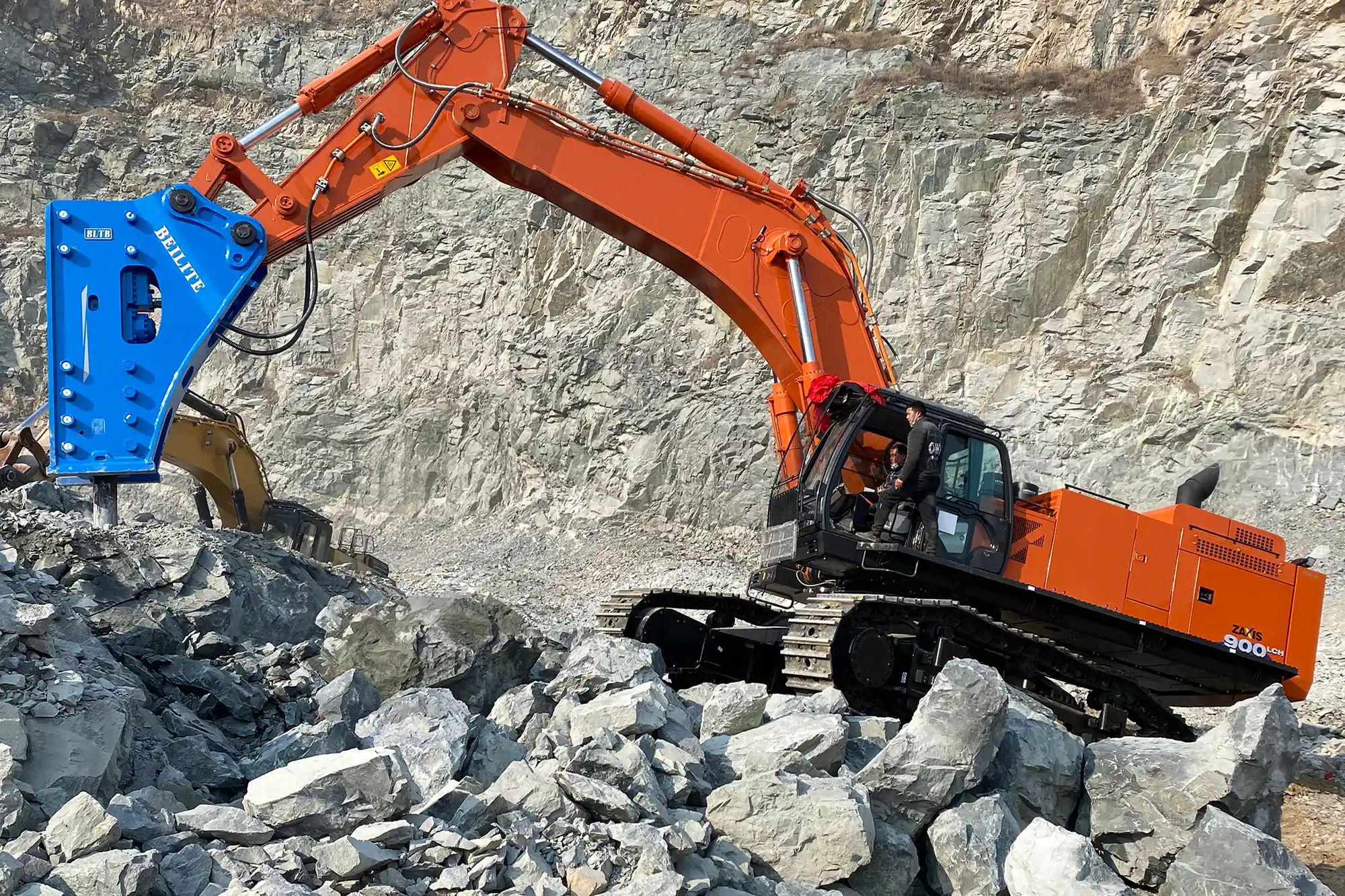
How often you inspect depends on how hard you’re running the equipment. For typical applications, daily pre-operation checks catch obvious problems before they cause operational issues. More thorough routine inspection should happen weekly or after every 50-100 operational hours, whichever comes first.
Severe applications demand more attention. Quarrying, heavy demolition, and continuous-duty operations stress housings faster than intermittent use. Increase inspection frequency proportionally to operating intensity. Manufacturer recommendations provide baseline guidance, but actual conditions should drive adjustments. The goal is catching problems early enough that preventative maintenance can address them before they threaten service life or safety.
Deciding Between Repair and Replacement
Finding a crack forces a decision that balances safety, cost, and practicality. The right choice depends on specifics that require careful evaluation.
Crack location matters enormously. A small crack in a non-structural area might be repairable. The same crack in a load-bearing zone probably isn’t. Structural integrity assessment should consider not just the crack itself but the surrounding material condition and the housing’s overall state.
Crack repair through welding procedures can restore functionality when conditions are right—the crack is accessible, the base material is sound, and qualified specialists perform the work. But welding changes material properties in the heat-affected zone, potentially creating new stress concentrators. Poor repairs make things worse, not better.
Housing replacement with genuine parts eliminates uncertainty. The cost is higher upfront, but you’re starting fresh with known material properties and full design strength. A thorough cost analysis should include not just immediate expenses but the probability and consequences of future failure. Safety standards exist for good reasons, and cutting corners on structural repairs rarely saves money in the long run. Prioritizing service life extension through proper repair or timely replacement protects both people and investment.
When Repair Makes Sense and When It Doesn’t
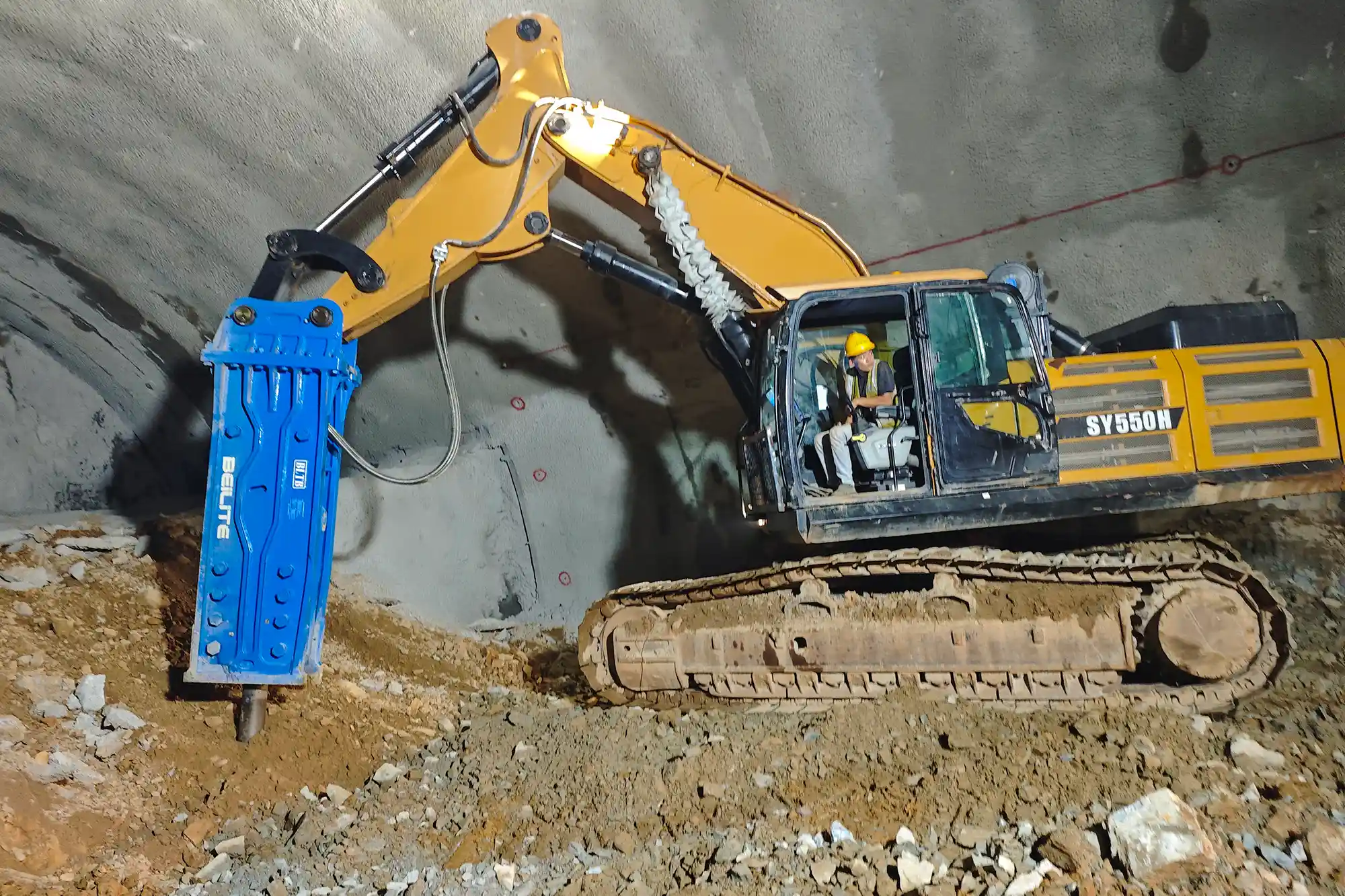
Minor cracks in non-critical locations can sometimes be addressed through structural welding performed by qualified technicians. The crack must be superficial, the surrounding material must retain adequate load-bearing capacity, and the repair procedure must use compatible materials and techniques.
Expert assessment is non-negotiable before attempting any repair. Someone with metallurgical knowledge needs to evaluate crack characteristics, material condition, and repair feasibility. Material compatibility between base metal and filler material affects weld quality and long-term durability. Improper repair procedures—wrong filler material, inadequate preheat, poor joint preparation—can leave the housing weaker than before the repair.
When cracks are extensive, located in high-stress areas, or when the housing shows multiple defects, replacement is the safer path. The cost of a new housing is finite and predictable. The cost of a failed repair is neither.
Preventing Cracks Before They Start
The most effective crack management happens before cracks form. Proactive preventative maintenance addresses the conditions that cause housing damage rather than just responding to damage after it occurs.
Proper lubrication reduces friction throughout the system, minimizing heat generation and wear that stress housing components. Follow manufacturer specifications for lubricant type and application frequency. Skipping lubrication cycles to save time costs far more in accelerated wear.
Correct operating procedures prevent the abuse that causes premature failure. Blank firing—running the breaker without material contact—sends shock loads directly into the housing with no work absorption. Prolonged operation at excessive pressure stresses components beyond design limits. Training operators on these fundamentals prevents damage that no amount of inspection can undo.
Regular servicing according to manufacturer schedules keeps all systems functioning within parameters. Worn seals allow contamination. Depleted nitrogen pressure changes impact characteristics. Accumulated wear in bushings and pins alters load paths. Each deviation from design condition adds stress to the housing.
Impact absorption depends partly on technique. Correct tool selection for the material being broken and proper operating angles distribute forces more evenly. Optimal chisel selection matches tool geometry to application, reducing the shock loading that housing structures must absorb.
Comprehensive operator training ties all these elements together. Operators who understand why procedures matter follow them more consistently. This investment in knowledge translates directly to equipment longevity and downtime prevention that compounds over the life of the equipment.
Frequently Asked Questions About Breaker Housing Cracks
What are the most critical areas to inspect for cracks on a hydraulic breaker housing?
Mounting points take the highest loads during operation and deserve primary attention. The chisel retainer area absorbs direct impact forces and shows wear patterns that indicate developing problems. Cylinder body welds are potential weak points where manufacturing defects may exist. Any area subjected to high impact or vibration concentrates stress and is prone to fatigue cracks. Thorough inspection of these critical areas catches problems early, which is essential for hydraulic breaker safety. Small issues in these zones escalate quickly if ignored.
How does regular maintenance contribute to preventing housing cracks in hydraulic breakers?
Consistent preventative maintenance keeps all systems operating within design parameters, which directly reduces housing stress. Proper lubrication minimizes friction and heat that accelerate material fatigue. Maintaining correct operating pressures prevents overloading. Timely replacement of wear parts—bushings, seals, pins—preserves proper load paths and prevents abnormal stress concentrations. This systematic approach significantly reduces the risk of stress cracks and extends the service life of your hydraulic breaker. Components operating as designed last longer than components operating under compromised conditions.
What advanced technologies does Beilite Machinery employ to enhance breaker housing durability and prevent cracking?
Beilite Machinery applies advanced material science and rigorous testing protocols throughout development and production. Sophisticated simulation modeling predicts stress distribution and identifies potential weak points before physical prototypes exist. NDT methods verify material integrity during manufacturing, catching defects before they reach customers. This engineering approach ensures superior housing integrity and resistance to the stresses that cause cracking in lesser designs. Our BLT and BLT and BLTB products reflect this commitment to durability through measurable reliability in demanding applications.
Partner with Beilite for Unmatched Breaker Durability
Ensure the peak performance and safety of your hydraulic breakers with Beilite Machinery. As a national high-tech enterprise with decades of innovation and hundreds of patents, we engineer BLT and BLTB products for unmatched durability and reliability. For expert consultation on maintenance best practices, genuine parts, or to explore our advanced hydraulic breaker solutions, contact our specialists today. Trust Beilite for enduring quality and global-standard service. Reach us at [email protected] or 40008-40008.