 Anglais
 Français
Hydraulic Hose Tension: Mastering Installation for Longevity
Getting hydraulic hose tension right feels like one of those details that separates equipment that lasts from equipment that constantly needs attention. I’ve seen systems where everything looked fine on paper, but the hoses were either stretched tight as guitar strings or hanging loose enough to rub against the frame. Neither situation ends well. The tension itself isn’t complicated to get right, but it requires understanding what the hose actually experiences during operation and making deliberate choices about routing, clamping, and slack management. This piece walks through the mechanics of why tension matters, the specific techniques that work, and how to spot problems before they become expensive.
What Happens Inside a Hydraulic Hose During Operation
Hydraulic hoses don’t just sit there carrying fluid. They experience constant internal pressure fluctuations, absorb vibrations from the engine and working attachments, and flex with every movement of the machine. Managing these forces properly determines whether a hose lasts its expected service life or fails prematurely.
Pressure pulsation creates fatigue in the hose wall over time. Each pressure cycle introduces microscopic stress that accumulates, eventually forming small cracks that grow with continued use. When a hose is tensioned incorrectly, this internal stress concentrates at specific points rather than distributing evenly across the hose length. The problem compounds quickly.
Excessive tension pulls on fittings and stretches the hose material beyond its design parameters. The stress concentrates at connection points and any location where the hose changes direction. Material degradation accelerates in these zones. On the other end of the spectrum, insufficient tension allows the hose to move freely during operation. That movement translates directly into abrasion as the hose contacts the machine frame, adjacent hoses, or other components. The outer cover wears through, exposing the reinforcement layers to moisture, dirt, and whatever else the operating environment throws at it.
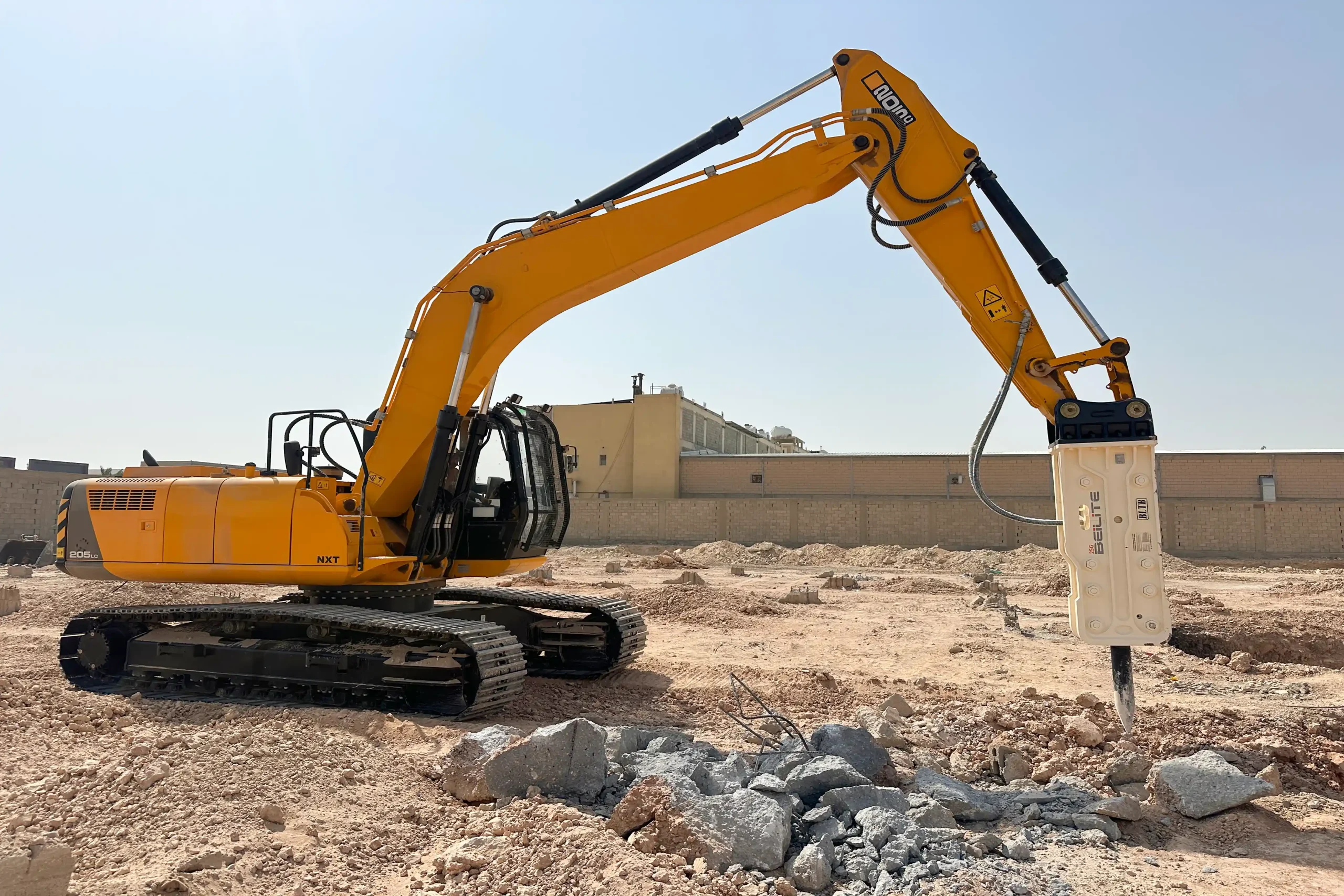
Vibration fatigue deserves particular attention for equipment running attachments like a Marteau brise-roche hydraulique pour la démolition et le cassage de roches. The continuous high-frequency vibrations from impact tools stress hose materials at every unsecured point. Without proper clamping and tension management, these vibrations cause material weakening that leads to failure at connection points or along unsupported spans.
Each routing decision, clamp placement, and bend radius affects how stress distributes through the hose assembly. Ignoring these principles shortens hose life and increases the frequency of unplanned maintenance.
Techniques That Actually Work for Proper Hydraulic Hose Tension
Getting hydraulic hose tension right requires following specific practices during installation. Skipping steps or eyeballing measurements leads to the problems described above.
Respect the minimum bend radius. Every hose has a manufacturer-specified minimum bend radius for a reason. Bending tighter than this specification creates internal stress, restricts fluid flow, and dramatically shortens service life. Route hoses to maintain or exceed this radius at every turn.
Build in controlled slack. Hoses change length during operation. Internal pressure causes slight expansion, and temperature changes affect material dimensions. A hose installed with zero slack becomes over-tensioned when these changes occur. Provide enough slack to accommodate these variations without allowing excessive movement.
Route away from trouble. Sharp edges, heat sources, and moving parts all damage hoses over time. Plan routes that avoid these hazards entirely when possible. Where hoses must pass near potential abrasion points, install protective sleeves or guards.
Clamp at strategic intervals. Proper clamp placement prevents excessive movement and absorbs vibration before it fatigues the hose material. Position clamps at recommended intervals and at any location where the hose might otherwise contact other components. Avoid over-tightening clamps, which damages the hose just as surely as leaving them too loose.
Follow torque specifications. Fitting connections require specific torque values. Under-tightening creates leak paths. Over-tightening damages threads and deforms sealing surfaces. Use a torque wrench and follow the manufacturer’s specifications.
Eliminate twists before installation. A twisted hose operates at reduced pressure capacity and fails faster than a properly aligned one. Mark the hose during assembly to verify it hasn’t twisted during routing. Even a single twist significantly impacts service life.
What Goes Wrong When Hydraulic Hose Tension Misses the Mark
The consequences of incorrect hydraulic hose tension extend well beyond the hose itself. System-wide damage, safety incidents, and significant financial losses all trace back to installation shortcuts.
Over-tensioned hoses experience constant tensile stress that weakens both the hose material and fitting connections. This stress makes the assembly susceptible to sudden failure. When an over-tensioned hose bursts, the result is rapid fluid loss, a slippery work environment, and potential injury to nearby personnel. The sudden pressure drop can also cause machinery to malfunction unexpectedly, creating additional hazards.
Under-tensioned hoses suffer different but equally serious problems. Excessive slack allows uncontrolled movement during operation. The hose rubs against whatever it contacts, whether that’s another hose, the machine frame, or the ground. This constant friction erodes the outer cover, exposing reinforcement wires to moisture and contaminants. Corrosion follows, and the hose’s structural integrity degrades rapidly. The friction also generates heat, which further compromises the hose material.
Both conditions lead to shortened equipment lifespan and increased operating costs. Frequent hose replacements add up, and secondary damage to other components often accompanies hose failures.
| Symptôme | Causes communes | System Impact |
|---|---|---|
| Visible Sagging or Kinking | Insufficient slack, improper routing, inadequate clamping | Restricted flow, abrasion, premature wear |
| Excessive Tautness | Overly short hose, insufficient slack, improper routing | Fitting stress, material fatigue, sudden bursts |
| Rubbing or Chafing Marks | Insufficient clamping, poor routing, excessive movement | Abrasion damage, reinforcement exposure, leaks |
| Unusual Vibrations or Noise | Loose hoses, improper routing, pressure pulsation | Fatigue, component wear, structural damage |
| Premature Leaks Near Fittings | Over-tightening, under-tightening, hose twisting | Fluid loss, contamination, safety hazards |
| Hose Hardening or Cracking | Over-tensioning, heat exposure, chemical incompatibility | Loss of flexibility, brittle failure, fluid leaks |
Catching Hydraulic Hose Tension Problems Early
Identifying tension issues before they cause failure saves significant time and money. Regular inspection routines should include specific checks for tension-related problems.
Visual inspection reveals many issues. Look for chafing marks where the hose contacts itself or other machine parts. These marks indicate insufficient slack or routing problems. Check for excessive sagging, which suggests inadequate support or an overly long hose that could kink or snag during operation. Examine hoses for extreme tautness, particularly after the machine has been operating and components have reached working temperature.
Sound provides useful diagnostic information. Squeaking or rubbing noises during operation often signal contact between the hose and other components. These sounds indicate routing or clamping problems that need correction.
Leak detection catches fitting stress early. Use absorbent pads around connections or UV dye in the hydraulic fluid to spot minor leaks before they become major failures. Even small leaks near fittings often indicate tension-related stress on connections.
Any visible abrasion on the outer cover demands immediate attention. Once the reinforcement layers become exposed, failure follows quickly. Addressing these early warning signs prevents minor issues from becoming major system failures.
For more information on maintaining your equipment, consider reading 《Hydraulic Breaker Hammer For Backhoe,Factory Direct Price》.
Keeping Hydraulic Hoses Performing Over the Long Term
Initial installation quality matters, but ongoing maintenance determines whether hoses reach their full service life. A structured maintenance program catches problems early and prevents unexpected failures.
Daily visual checks should become routine. Look for obvious damage, verify proper routing hasn’t changed due to vibration or component movement, and confirm clamps remain secure. These quick inspections take minutes but catch problems before they escalate.
More detailed inspections should occur weekly or monthly depending on how hard the equipment works. During these inspections, examine bend points and connection areas closely. These locations experience the highest stress and show wear first. Check that hoses haven’t shifted position and that protective sleeves remain in place.
Replacement schedules should factor in hose age, operating hours, and visual condition rather than waiting for failure. Proactive replacement during planned maintenance windows costs far less than emergency repairs and the associated downtime.
Environmental factors affect hose life significantly. Extreme temperatures, UV exposure, and abrasive dust all accelerate degradation. Select hoses rated for the specific operating conditions the equipment will encounter. Verify that the hydraulic fluid is compatible with the hose liner material. Incompatible fluids cause the liner to swell or degrade, leading to contamination and premature failure.
Matching Hydraulic Hose Specifications to Application Demands
Proper tensioning only works when the hose itself suits the application. Selecting the right hose for demanding conditions ensures the system performs reliably under actual operating stresses.
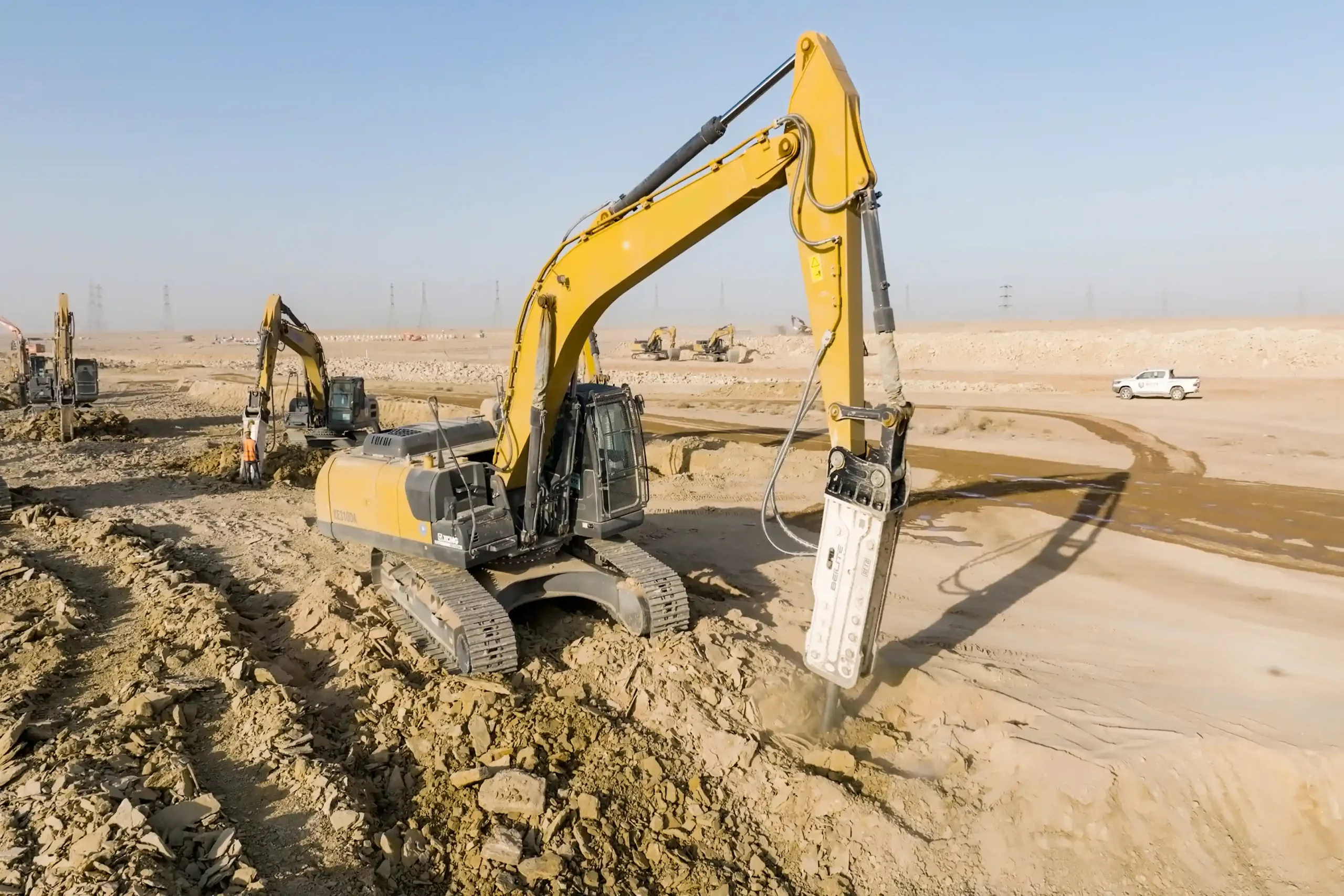
Pressure ratings must exceed the maximum system pressure with appropriate safety margin. For applications involving Marteau brise-roche hydraulique pour les mines et les carrières or demolition work, hoses experience extreme pressure spikes during each impact cycle. Standard single-wire braid hoses often lack the capacity for these applications. Multi-spiral wire constructions handle the pressure demands better.
Temperature resistance matters in extreme environments. Standard hoses typically handle -40°C to +100°C. Operations in arctic conditions or near high-heat sources require hoses rated for wider temperature ranges.
Abrasion resistance becomes critical when routing options are limited. Standard rubber covers work for protected installations. Hoses that must pass near potential contact points benefit from polyurethane or high-density polyethylene covers that resist wear better.
| Hose Characteristic | Standard Application | Demanding Application |
|---|---|---|
| Pression nominale | Single wire braid (R1AT) | Multi-spiral wire (R12, 4SP, 6SP) |
| Plage de température | -40°C à +100°C | -50°C to +150°C |
| Résistance à l'abrasion | Standard rubber cover | Polyurethane or HDPE cover |
| Compatibilité avec les fluides | Mineral oil based fluids | Synthetic fluids, biodegradable fluids |
| Flexibilité | Modéré | High (for tight spaces, dynamic movement) |
| Renforcement | Steel wire braid | Multiple layers of high-tensile steel wire spiral |
The BLT-155, designed for 27–33 ton excavators operating at 200–220 bar with a 1¼ inch oil pipe diameter, demands hoses capable of handling these specifications consistently. The BLT-165, for 33–38 ton excavators at 210–230 bar, requires even more robust hose assemblies. Matching hose specifications to actual operating conditions prevents premature failures regardless of how well the installation is executed.
Engineering Hydraulic Systems That Last
BEILITE Machinery Co., Ltd. has focused on hydraulic technology since 2002, developing and manufacturing hydraulic breakers that perform reliably across demanding applications. The company has participated in formulating national standards for hydraulic breakers in China and holds hundreds of patents reflecting ongoing technological development.
The BLT and BLTB product lines include brise-roche hydraulique Hammer models ranging from the compact BLT-40 for 0.5–1.2 ton excavators to the heavy-duty BLT-165 for 33–38 ton machines. Each product addresses the hydraulic flow and pressure management requirements that directly affect hose longevity and system performance.
Product engineering focuses on minimizing stress on hydraulic lines. This includes optimizing port locations, managing pressure pulsation characteristics, and designing mounting arrangements that support proper hose routing. These design choices help maintain correct hydraulic hose tension and prevent common failure modes.
Equipment like Marteau piqueur hydraulique pour mini-pelle,Marteau piqueur pour mini-pelle and larger demolition tools depends on every component working together reliably. The hydraulic hoses connecting the carrier machine to the attachment experience some of the harshest conditions in the system. Products engineered to work with properly specified and installed hoses deliver consistent performance across their service life.
Frequently Asked Questions About Hydraulic Hose Tension
What are the common indicators of incorrect hydraulic hose tension?
Visible sagging or excessive tautness provides the most obvious indication of tension problems. Rubbing or chafing marks on the hose or adjacent components show that movement is occurring where it shouldn’t. Unusual vibrations during operation and premature wear near fittings or bend points also signal tension issues. Regular inspection for these signs catches problems before they cause failures.
How does improper hose tension impact the lifespan of hydraulic systems?
Improper hydraulic hose tension creates stress concentrations that accelerate wear on hoses and fittings. Over-tensioned hoses experience fatigue at connection points and along their length. Under-tensioned hoses suffer abrasion damage from contact with other components. Both conditions lead to leaks, potential catastrophic failures, unplanned downtime, and repair costs that exceed what proper installation would have required.
Are there specific tools or methods recommended for achieving proper hydraulic hose tension?
Achieving proper hydraulic hose tension involves several tools and methods. Torque wrenches ensure fittings reach correct tightness without over-tightening. Manufacturer specifications provide bend radius requirements and routing guidelines. Specialized hose clamps and routing clips maintain correct slack and prevent contact with other components. Following these specifications and using appropriate tools produces installations that perform reliably over their intended service life.
Partner with Beilite for Hydraulic Reliability
Ensure your hydraulic systems operate at peak performance and reliability. Partner with BEILITE Machinery Co., LTD for high-end hydraulic breakers and components engineered for durability and precision. Contact us today for expert consultation and discover how our innovative solutions can enhance your operational efficiency and equipment longevity. Reach us at 40008-40008 or [email protected].