 Anglais
 Français
How to Flush a Hydraulic System: Expert Maintenance Guide
Hydraulic system of hydraulic hammers carry the load in heavy machinery. They generate the force that drives critical operations, and when they falter, everything stops. I’ve seen equipment sidelined for weeks because contamination went unnoticed until a pump seized. The fix is straightforward but often overlooked: hydraulic system flushing. Done right, it clears out the particles, moisture, and degraded fluid that quietly erode performance. What follows covers the essential steps, the tools that matter, and the judgment calls that separate routine maintenance from real protection.
Why Contamination Drives Most Hydraulic Failures
Contamination causes up to 80% of hydraulic system failures. That number sounds high until you consider what’s circulating through these systems: metal particles from normal wear, water from condensation or seal leaks, and oxidation byproducts that thicken over time. Each contaminant attacks differently. Particles abrade pump surfaces and score valve spools. Water accelerates corrosion and degrades fluid lubricity. Oxidation products form varnish that restricts flow and sticks valves.
Hydraulic system flushing removes these threats before they compound. The practice extends component life measurably, not just in theory but in documented service intervals. Pumps last longer. Seals hold. Cylinders maintain their precision. The efficiency gains matter too. Clean fluid transmits power with less energy loss, which translates directly to lower operating costs. Regular flushing isn’t maintenance theater. It’s an investment that pays back in uptime and avoided repairs.
Recommended Reading: Optimisation de la température de l'huile hydraulique pour une performance maximale du système
Recognizing When Your System Needs Attention
Several indicators signal that contamination has reached problematic levels. Pumps that whine or valves that chatter often point to cavitation or restricted flow from particulate buildup. Sluggish response, reduced lifting capacity, or movements that jerk instead of flowing smoothly suggest the fluid can no longer do its job properly.
Visual inspection reveals other clues. Fluid that appears milky typically contains water. A dark or burnt appearance indicates oxidation and thermal breakdown. Sight glasses tell part of the story, but laboratory analysis provides the definitive answer. Elevated particle counts, increased viscosity, or acid number changes confirm what symptoms suggest. Acting on these signs early prevents the cascade of damage that follows when contamination goes unchecked.
Recommended Reading: Hydraulic Breaker for Mini Excavator: Selection and Performance

Recommended Reading: Comment graisser un brise-roche hydraulique pour une performance optimale
A Practical Flushing Procedure That Actually Works
Effective hydraulic system flushing follows a logical sequence. Each step builds on the previous one, and shortcuts tend to leave contaminants behind or introduce new problems.
Isolate and drain the system. Disconnect power and drain fluid from the reservoir, cylinders, and lines. Gravity alone won’t empty everything, so plan for residual fluid in low points.
Clean the reservoir thoroughly. Open the tank and remove accumulated sludge from the bottom. This debris won’t circulate out during flushing, so manual removal is essential.
Bypass sensitive components. Install flushing plates or jumper lines around pumps, motors, and proportional valves. High flow rates during flushing can damage components designed for controlled operation.
Add temporary high-efficiency filters. These should be finer than your operational filters, often in the 3-micron range. They capture contaminants that normal filtration would miss.
Fill with appropriate flushing fluid. Match the fluid to your system type and contamination level. Ensure adequate volume for full circulation.
Circulate at controlled parameters. Run the system at low pressure while cycling all actuators. Every line needs flow to carry contaminants to the filters.
Monitor cleanliness continuously. Sample the fluid periodically and test particle counts. Continue circulation until you reach target cleanliness levels, typically ISO 16/14/11 or better for precision systems.
Drain completely. Remove all flushing fluid from the system. Residual flushing fluid dilutes your operating fluid and can affect performance.
Restore normal configuration. Remove flushing plates and temporary filters. Reinstall original components.
Install fresh filters. New filters start clean and provide maximum protection for the fresh fluid.
Refill with specified operating fluid. Use the correct type and ensure it meets cleanliness standards before it enters the system.
Bleed all air. Trapped air causes cavitation, erratic operation, and accelerated wear. Work through each circuit methodically.
Verify operation. Run functional tests while monitoring pressure, temperature, and response. Confirm normal behavior before returning to service.
For equipment that demands reliable hydraulic power, our range of high-performance hydraulic breaker Hammer delivers the durability that clean systems support.
Recommended Reading: Brise-roche hydraulique pour l'exploitation minière : Optimisation de l'efficacité du cassage de roches
Selecting the Right Equipment and Fluids
The tools and fluids you choose determine whether flushing actually removes contaminants or just moves them around. Portable filtration units with adequate flow capacity form the core of most flushing setups. These units circulate fluid through high-efficiency elements while monitoring cleanliness in real time.
Sampling equipment matters equally. Without accurate particle counts, you’re guessing at cleanliness. Portable particle counters provide immediate feedback, while laboratory analysis offers detailed contamination profiles including water content and wear metals.
Fluid selection depends on your system and the severity of contamination. For routine maintenance, using your normal operating fluid with enhanced filtration often suffices. The fluid is already compatible, and you avoid introducing foreign chemistry. Heavily contaminated systems or those recovering from component failures benefit from dedicated flushing fluids. These formulations dissolve varnish deposits and suspend particles more effectively than standard hydraulic oils.
Recommended Reading: Mastering Hydraulic Schematics: A Technical Interpretation Guide
Matching Flushing Fluid to System Requirements
The base stock of your flushing fluid should match your operating fluid. Mixing incompatible chemistries risks seal degradation, additive precipitation, or corrosion. Mineral oil systems flush with mineral-based fluids. Synthetic systems require synthetic-compatible flushing agents. Fire-resistant systems using water-glycol or phosphate ester fluids need specialized flushing products designed for those chemistries.
| Flushing Fluid Type | Best Application | Key Strengths | Limitations |
|---|---|---|---|
| Operating Fluid | Light contamination, routine maintenance | No compatibility concerns, cost-effective | Less effective against heavy deposits |
| Petroleum-based | General industrial systems | Strong solvency, widely available | Environmental considerations, potential residue |
| Synthetic-based | High-performance or specialized systems | Thermal stability, chemical resistance | Higher cost, specific compatibility requirements |
| Water-glycol | Fire-resistant applications | Fire resistance maintained | Limited lubricity, material restrictions |
| Biodegradable | Environmentally sensitive operations | Non-toxic, eco-friendly | Higher cost, narrower compatibility |
Building Long-Term Protection Into Your Maintenance Program
Flushing addresses existing contamination. Preventing future contamination requires ongoing attention to several factors that influence fluid cleanliness between service intervals.
Regular fluid analysis provides the data needed for informed decisions. Trending particle counts, water content, and viscosity changes reveals whether contamination is building faster than expected. This information guides both flushing frequency and filter selection.
Filter efficiency directly affects how quickly contaminants accumulate. Upgrading to higher-efficiency elements, particularly on return lines and case drains, reduces particle loads throughout the system. The cost difference between standard and premium filters is trivial compared to the component protection they provide.
Breathers deserve more attention than they typically receive. Standard vented caps allow airborne particles and moisture into reservoirs as fluid levels change. Desiccant breathers remove water from incoming air while filtering particles. This simple upgrade prevents contamination at its most common entry point.
Off-line filtration systems circulate and filter fluid continuously, independent of system operation. They’re particularly valuable for large reservoirs or systems that operate intermittently. The additional filtration capacity maintains cleanliness between equipment cycles.
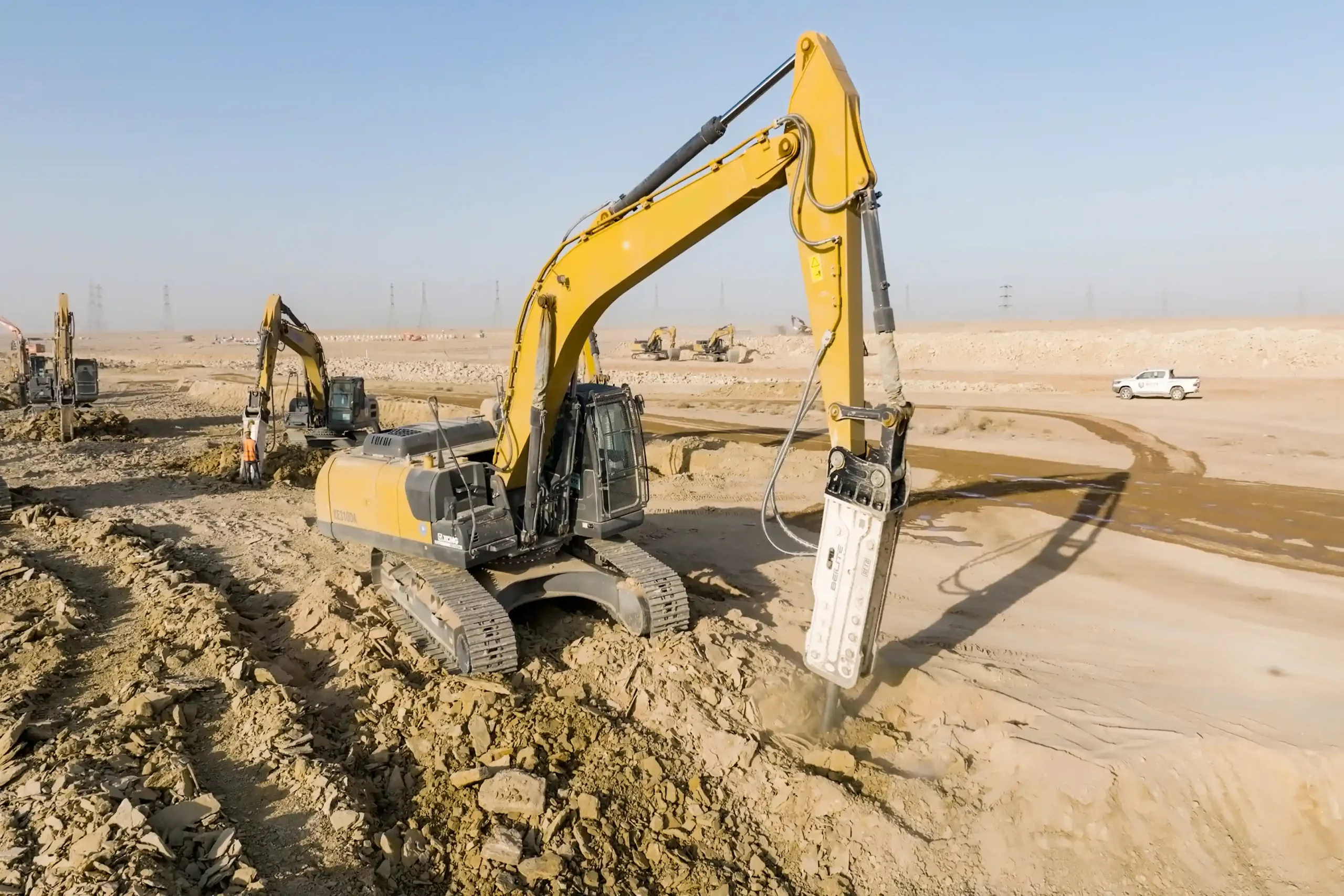
Determining Appropriate Flushing Intervals
No single schedule fits all applications. Operating conditions dictate maintenance frequency more than calendar time. Systems running in dusty environments, at elevated temperatures, or under heavy loads contaminate faster than those in controlled settings.
Fluid analysis provides the most reliable guidance. When particle counts approach your cleanliness targets, flushing becomes necessary regardless of elapsed time. Some critical systems warrant annual flushing as a baseline. Less demanding applications may extend to multi-year intervals if analysis confirms acceptable fluid condition.
Equipment manufacturers often specify maintenance intervals, but these represent starting points rather than absolute requirements. Your operating data should refine these recommendations based on actual conditions.
Recommended Reading:
Replace a Hydraulic Breaker Diaphragm: Expert Steps
Piston de brise-roche hydraulique : Ingénierie, performance et longévité
Partner With Beilite for Hydraulic System Excellence
Maintaining hydraulic systems at peak performance requires both proper procedures and quality components. Beilite Machinery Co., LTD brings decades of hydraulic breaker innovation to every aspect of system design and support. Our engineering team understands that clean, well-maintained hydraulic systems form the foundation for equipment reliability.
Whether you need high-performance hydraulic components, technical consultation on maintenance practices, or solutions for demanding applications, we’re prepared to help. Contact us to discuss how proper hydraulic system flushing and maintenance can extend the service life of your equipment.
Courriel : [email protected]
Téléphone : 40008-40008
Frequently Asked Questions About Hydraulic System Flushing
Can I flush a hydraulic system myself, or should I hire a professional?
The answer depends on system complexity and your available resources. Smaller systems with straightforward circuits can be flushed successfully with proper equipment and careful attention to procedure. Larger systems, particularly those with multiple circuits, proportional controls, or specialized fluids, present challenges that often justify professional service. Professionals bring calibrated particle counters, experience with various contamination scenarios, and the ability to troubleshoot unexpected findings. For high-value equipment where flushing errors could cause significant damage, professional service typically proves cost-effective despite the higher upfront expense.
What are the long-term benefits of regular hydraulic system flushing?
Consistent flushing delivers measurable returns across several categories. Component lifespan extends significantly when abrasive particles and corrosive contaminants are removed before they cause damage. Maintenance costs decrease as fewer pumps, valves, and seals require replacement. Operational efficiency improves because clean fluid transmits power more effectively, reducing energy consumption and improving response. Perhaps most valuable is the reduction in unplanned downtime. Equipment that receives proper hydraulic maintenance rarely fails catastrophically, allowing operations to proceed without the disruption and expense of emergency repairs.
How does flushing impact the performance of high-end hydraulic equipment like breakers?
Precision hydraulic equipment operates within tight tolerances that contamination quickly compromises. Hydraulic breakers, including our BLT and BLTB series, depend on clean fluid to maintain seal integrity, protect precision-machined surfaces, and ensure consistent impact energy. Contaminated fluid degrades seals prematurely, scores piston surfaces, and restricts flow through control orifices. The result is reduced breaking force, erratic operation, and accelerated wear. Regular hydraulic system flushing maintains the fluid quality these tools require, directly supporting sustained performance and extended service intervals.