 Anglais
 Français
Mastering Hydraulic Breaker Operations on Challenging Slopes
Working a hydraulic breaker on a slope changes everything about how you approach the job. The machine behaves differently, the ground shifts under you in ways flat terrain never does, and the margin for error shrinks considerably. After enough hours on inclined sites, you start to feel the subtle warnings—a slight track slip, the boom wanting to drift downhill, hydraulic pressure fluctuating as gravity pulls at the attachment. These operations demand respect for physics and a willingness to slow down when conditions push back.
Reading the Ground Before the Breaker Touches It
Site assessment on slopes goes beyond checking a gradient number. The soil tells a story if you know how to read it—compacted clay holds differently than loose fill, and recent rain changes everything about what seemed stable yesterday. Erosion patterns reveal where water has undermined the surface, creating hidden weak points that might give way under machine weight.
A proper ground conditions assessment starts with walking the site, not just viewing it from the cab. Look for cracks in the soil surface, areas where vegetation has died back (often indicating drainage issues), and any signs of previous movement. Weather forecasting becomes part of your planning cycle because a slope that felt secure on Tuesday morning might be questionable after Wednesday’s downpour.
| Slope Gradient | Risk Level | Mesures recommandées |
|---|---|---|
| 0-10 degrees | Faible | Standard operation with vigilance |
| 10-20 degrees | Modéré | Increased caution, stability checks |
| 20-30 degrees | Haut | Specialized equipment, expert supervision |
| >30 degrees | Extreme | Avoid operation if possible, extensive planning |
The risk assessment process should document specific hazards unique to each site. Underground utilities, buried debris from previous construction, and natural features like rock outcroppings all affect how you position the machine and where you can safely operate the hydraulic breaker.
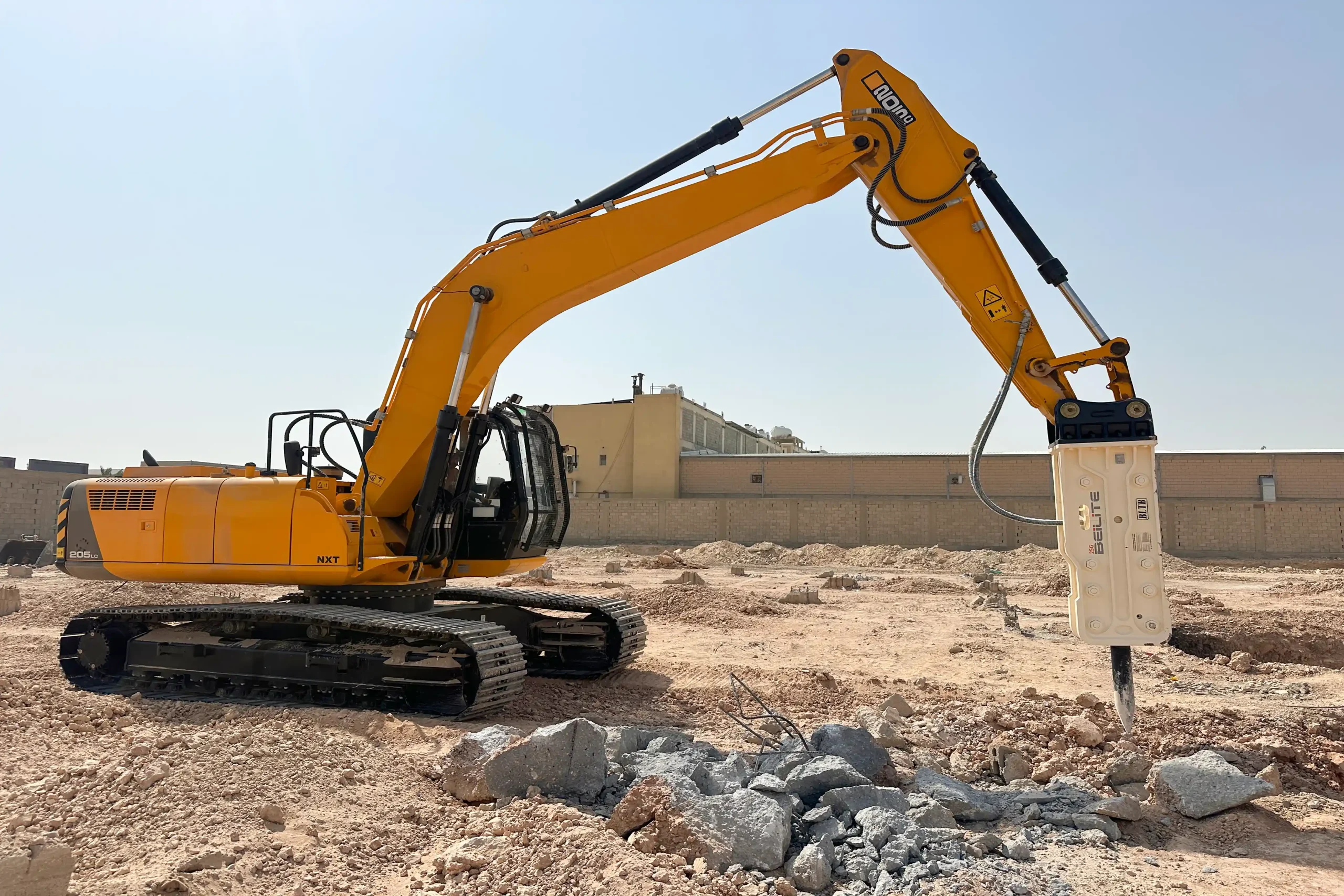
Keeping the Machine Planted When Gravity Wants Otherwise
Excavator stability on inclined terrain comes down to understanding where your center of gravity sits at any given moment. That point shifts constantly during hydraulic breaker operation—every time the boom extends, every time the attachment strikes, every time you reposition. Experienced operators develop an almost unconscious awareness of this shifting balance point.
Track tension matters more on slopes than anywhere else. Loose tracks lose grip at exactly the wrong moment, while over-tensioned tracks create unnecessary stress on the undercarriage. Finding the sweet spot requires checking tension more frequently during sloped operations, sometimes daily depending on conditions.
Tilt angle limits exist for good reasons, and they’re not suggestions. Manufacturers calculate these limits based on the machine’s geometry and weight distribution. Exceeding them, even briefly, introduces rollover risk that no amount of skill can fully compensate for. The dynamic forces generated when a hydraulic breaker strikes add momentary instability that compounds any existing tilt issues.
How Slope Gradient Changes Breaker Performance and Machine Behavior
Slope gradient affects hydraulic breaker performance in ways that aren’t immediately obvious. On steeper inclines, the excavator’s hydraulic pump works against gravity differently depending on boom position, which can reduce effective power delivery to the attachment. Breaker performance on incline typically drops as angles increase, requiring operators to adjust expectations and techniques accordingly.
The machine’s stability systems—if equipped—provide valuable feedback but shouldn’t be relied upon as the sole safety measure. These systems detect tilt and can warn operators or limit certain functions, but they respond to conditions rather than preventing them. Proactive positioning and conservative operation remain the primary defenses against instability.
Striking Techniques That Work With the Slope
Advanced hydraulic breaker techniques for sloped demolition start with positioning. The breaker attachment angle relative to the material being broken affects both efficiency and machine stability. Striking at awkward angles wastes energy and can cause the attachment to deflect unpredictably.
Strategic positioning means thinking several moves ahead. Where will the broken material fall? How will that change the ground surface you’re working on? Will debris accumulation create new hazards or actually improve traction in certain areas? These demolition techniques on slopes require constant reassessment as conditions evolve.
Hydraulic system pressure management becomes critical when operating on inclines. The system works harder to maintain consistent power delivery, and operators should monitor temperature and pressure more closely than during flat-ground operations. Overloading the excavator’s hydraulic capacity leads to reduced performance and accelerated wear. For specific demolition and rock breaking applications, Marteau brise-roche hydraulique pour la démolition et le cassage de roches configurations offer optimized performance characteristics.
Training That Prepares Operators for Real Slope Conditions
Operator training for sloped hydraulic breaker work needs to go beyond classroom instruction. Simulated scenarios help, but nothing replaces supervised experience on actual inclines with gradually increasing difficulty. Personnel develop judgment through exposure to varied conditions, learning to recognize when a situation is manageable versus when it’s time to reassess.
PPE for slope work includes standard requirements plus considerations specific to inclined terrain. Footwear with aggressive tread, high-visibility gear that accounts for sightline challenges on slopes, and communication equipment that works reliably in areas where terrain might block signals all matter.
Fatigue management deserves particular attention because sloped operations demand more mental focus than flat-ground work. Operators tire faster when constantly compensating for gravity’s effects, and tired operators make mistakes. Scheduled breaks, rotation between tasks, and honest self-assessment about alertness levels prevent fatigue-related incidents.
A designated safety officer provides an external perspective that operators immersed in the work might miss. This person monitors conditions, enforces protocols, and maintains readiness for emergency response.
Pre-Operation Safety Checks That Actually Matter
Before operating a hydraulic breaker on a slope, critical safety checks follow a logical sequence. Start with the excavator’s stability systems—verify they’re functioning and properly calibrated. Inspect tracks for wear patterns that might indicate reduced grip capability, and confirm tension falls within specifications.
The hydraulic breaker attachment itself requires inspection of mounting hardware, hydraulic line connections, and the tool (chisel or moil point) condition. Worn tools reduce efficiency and can cause unpredictable behavior during operation. All hydraulic lines should be secure and show no signs of leaks, which would indicate potential pressure loss or fire hazard.
Ground conditions get a final assessment immediately before work begins. Conditions change, and what looked stable during initial site evaluation might have shifted due to weather, adjacent operations, or natural settling.
Maintenance Practices for Equipment Working Against Gravity
Specialized machine maintenance for sloped operations acknowledges that equipment experiences stress patterns different from flat-ground use. The swing mechanism absorbs lateral forces it wouldn’t normally encounter. Track components wear asymmetrically. Hydraulic systems run hotter due to increased demand.
Regular inspection schedules should tighten during periods of intensive slope work. Components that might last months under normal conditions can show wear in weeks when gravity constantly pulls at them. Proactive replacement of wear items prevents failures that could strand equipment in difficult positions.
Advanced hydraulic systems in modern breakers, including BEILITE models, incorporate features that help manage the demands of slope operation. Enhanced pressure regulation, improved heat dissipation, and more precise control systems all contribute to better performance and longer service life.
Telematics for heavy equipment provides data that supports maintenance decisions. Real-time monitoring of hydraulic temperature, engine load, and operational patterns helps identify developing issues before they become failures. This technology proves especially valuable for equipment working in demanding conditions where access for inspection might be limited.
Techniques That Extend Equipment Life on Slopes
Minimizing wear and tear on equipment during sloped operations requires conscious operator choices. Avoid sudden movements—smooth, deliberate control inputs reduce shock loading on mechanical components. Excessive slewing, particularly when the boom is extended with a heavy hydraulic breaker attached, stresses the swing mechanism and upper structure bearings.
Hydraulic system care includes monitoring fluid levels and condition more frequently than the standard maintenance schedule might suggest. Fluid that appears clean under normal conditions might show contamination or degradation faster when the system runs hotter. Filter replacement intervals should shorten accordingly.
Track maintenance extends beyond tension adjustment. Inspect track pads for uneven wear that indicates the machine has been operating consistently on slopes. Rotate or replace pads as needed to maintain even grip across the track surface. Prolonged operation on extreme angles accelerates wear on track components and undercarriage rollers.
Getting More Done Without Cutting Corners on Safety
Productivity on slopes improves through planning rather than rushing. Efficient project management on inclines means organizing work sequences to minimize repositioning, which is both time-consuming and introduces additional risk during each move. Staging areas, material handling routes, and equipment positioning all benefit from advance planning.
Site logistics on sloped terrain often require creative solutions. Material removal paths that work on flat ground might be impractical or dangerous on inclines. Broken material tends to migrate downhill, which can be advantageous if planned for or problematic if it accumulates in the wrong areas.
Cost-effective demolition on sloped terrains results from the combination of skilled operators who work efficiently within safety constraints, equipment matched to the specific demands of the site, and project management that anticipates challenges rather than reacting to them. For operations involving smaller excavators on slopes, Hydraulic Breaker Hammer For Mini Excavator,Mini Excavator Breaker options provide appropriate power-to-weight ratios.
BEILITE Equipment Built for Demanding Slope Conditions
BEILITE Machinery Co., LTD. engineers brise-roche hydraulique Hammer specifically for challenging operating environments, including the demanding conditions found on sloped construction and demolition sites. The BLT and BLTB breaker lines incorporate design features that address the unique stresses of inclined operation—robust mounting systems, efficient hydraulic circuits, and durable striking mechanisms.
Our engineering team understands that slope operations push equipment harder than standard applications. That understanding shapes every aspect of breaker design, from material selection to hydraulic system architecture. Contact us at [email protected] or 40008-40008 to discuss your specific project requirements and find equipment matched to your operational challenges.
Frequently Asked Questions About Sloped Hydraulic Breaker Operations
What are the primary risks associated with operating a hydraulic breaker on a steep slope?
Machine rollover tops the list of concerns when operating a hydraulic breaker on steep slopes. The combination of an elevated center of gravity (due to the heavy attachment) and inclined terrain creates conditions where relatively small shifts in position can trigger instability. Loss of traction compounds this risk—tracks that slip even momentarily can initiate uncontrolled movement that’s difficult to recover from.
The hydraulic system and chassis experience stress patterns they weren’t primarily designed for, which accelerates wear and increases the likelihood of component failure. Material slides present another hazard, as broken debris naturally moves downhill and can undermine the machine’s position or create hazards for personnel.
Mitigating these risks requires thorough ground conditions assessment, strict adherence to machine-specific tilt limits, and continuous operator awareness of changing conditions throughout the work period.
How can I effectively manage the center of gravity to ensure excavator stability during sloped operations?
The fundamental principle is keeping heavy components downhill whenever possible. When traversing or working across a slope, position the boom and hydraulic breaker on the downhill side. This lowers the overall center of gravity and increases the machine’s resistance to tipping.
Operate at reduced speeds compared to flat-ground work. Sudden movements shift the center of gravity rapidly, potentially faster than the machine can compensate. Smooth, deliberate control inputs maintain stability. Maximize track contact with the ground—avoid situations where portions of the track lose contact due to uneven terrain.
Understanding your specific hydraulic breaker’s weight characteristics helps with positioning decisions. Heavier attachments require more conservative operating angles, and BEILITE breaker specifications include weight information that factors into stability calculations.
What role does operator experience and training play in safe hydraulic breaker operation on inclines?
Experience provides pattern recognition that no amount of theoretical training can replicate. Operators who have logged significant hours on slopes develop intuitive responses to subtle warning signs—the feel of tracks beginning to lose grip, the sound of hydraulic systems working harder than normal, the visual cues of ground beginning to shift.
Training establishes the knowledge foundation that experience builds upon. Effective training programs cover slope assessment methodology, machine control techniques specific to inclined operation, emergency procedures for various scenarios, and the operational characteristics of the specific equipment being used. BEILITE hydraulic breakers have particular performance characteristics that operators should understand before deploying them on challenging terrain.
The combination of solid training and accumulated experience significantly reduces accident probability while improving productivity. Neither element alone provides adequate preparation for the demands of sloped hydraulic breaker operations.