 Anglais
 Français
Hydraulic Breakers for Underwater Demolition in Marine Projects
Working beneath the surface changes everything about demolition. The pressure alone at depth can crush equipment that performs flawlessly on land, and saltwater corrodes components faster than most project timelines allow for replacement. I’ve watched teams struggle with conventional tools that simply weren’t built for these conditions. Hydraulic breakers engineered specifically for subsea work solve problems that surface equipment cannot touch, delivering the precision and power needed when visibility drops to near zero and every minute of diver exposure carries real risk.
Why Subsea Demolition Demands Different Thinking
Marine engineering projects carry complexity that land-based work rarely approaches. Executing subsea demolition operations means accounting for factors that would never cross a surface contractor’s mind. Limited visibility forces operators to work largely by feel and instrument. Extreme pressures compress seals and stress housings. Saltwater attacks every exposed surface. Safety protocols must anticipate scenarios that simply don’t exist above water. These realities push equipment requirements far beyond standard specifications.
What Pressure and Saltwater Actually Do to Equipment
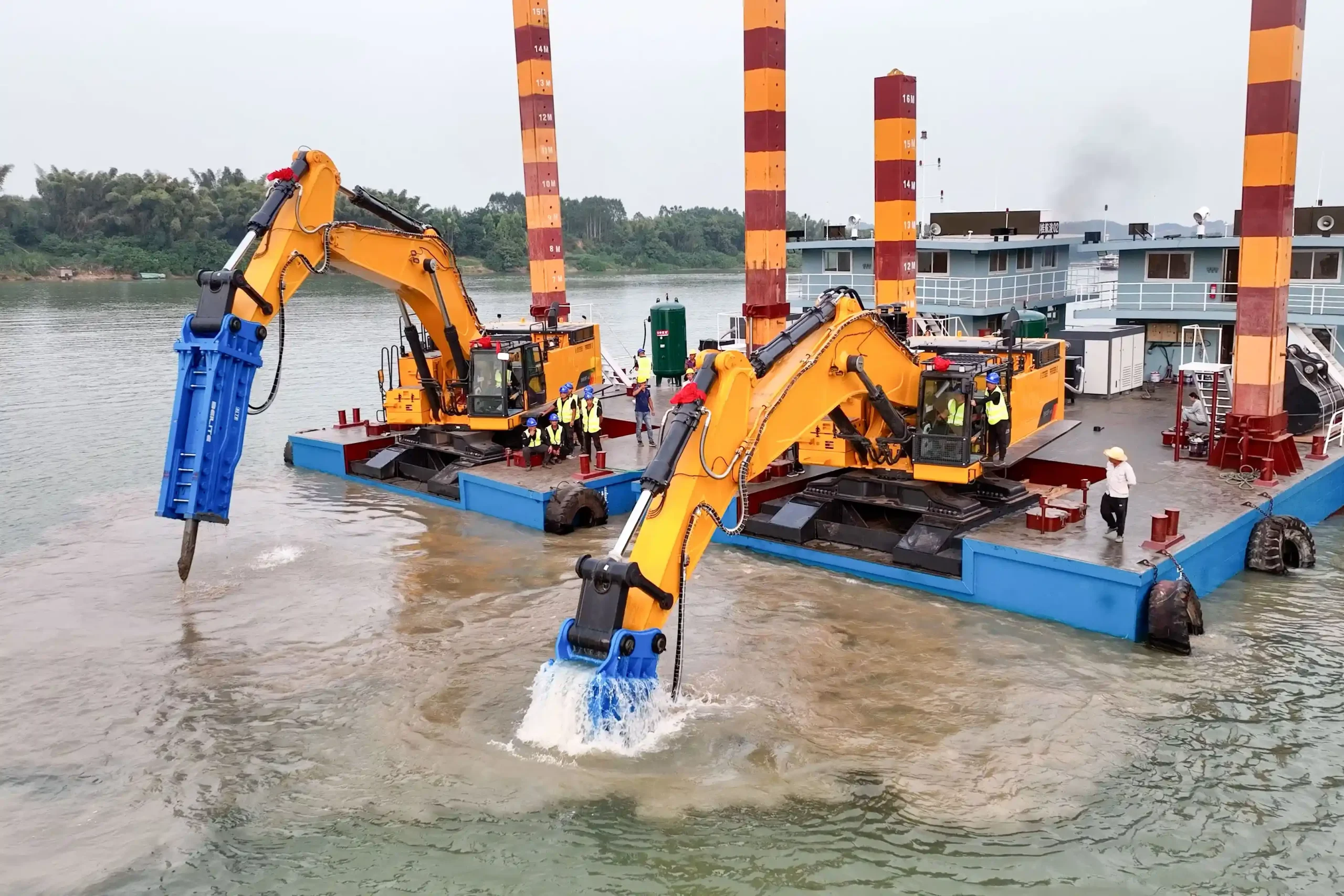
Hydrostatic pressure increases roughly one atmosphere for every ten meters of depth. At working depths common in offshore projects, that pressure can compromise standard hydraulic seals within hours. The force doesn’t just squeeze components—it finds every microscopic gap and exploits it. Meanwhile, saltwater functions as an aggressive corrosive agent that attacks conventional steel and aluminum alloys. Equipment designed for subsea demolition operations requires specialized coatings and corrosion resistant marine alloys to maintain saltwater equipment durability. Without these protections, even expensive tools become disposable after a single deployment.
Keeping Divers Out of Harm’s Way
Diver safety protocols drive much of modern underwater demolition safety planning. The risks compound quickly: confined spaces limit escape routes, currents can pin operators against structures, and falling debris behaves unpredictably in water. Progressive operations increasingly rely on remote operated vehicles and advanced robotics to handle the most dangerous tasks. This approach improves diver protection subsea while extending operational windows into conditions where human presence would be reckless.
Building Hydraulic Breakers That Work Underwater
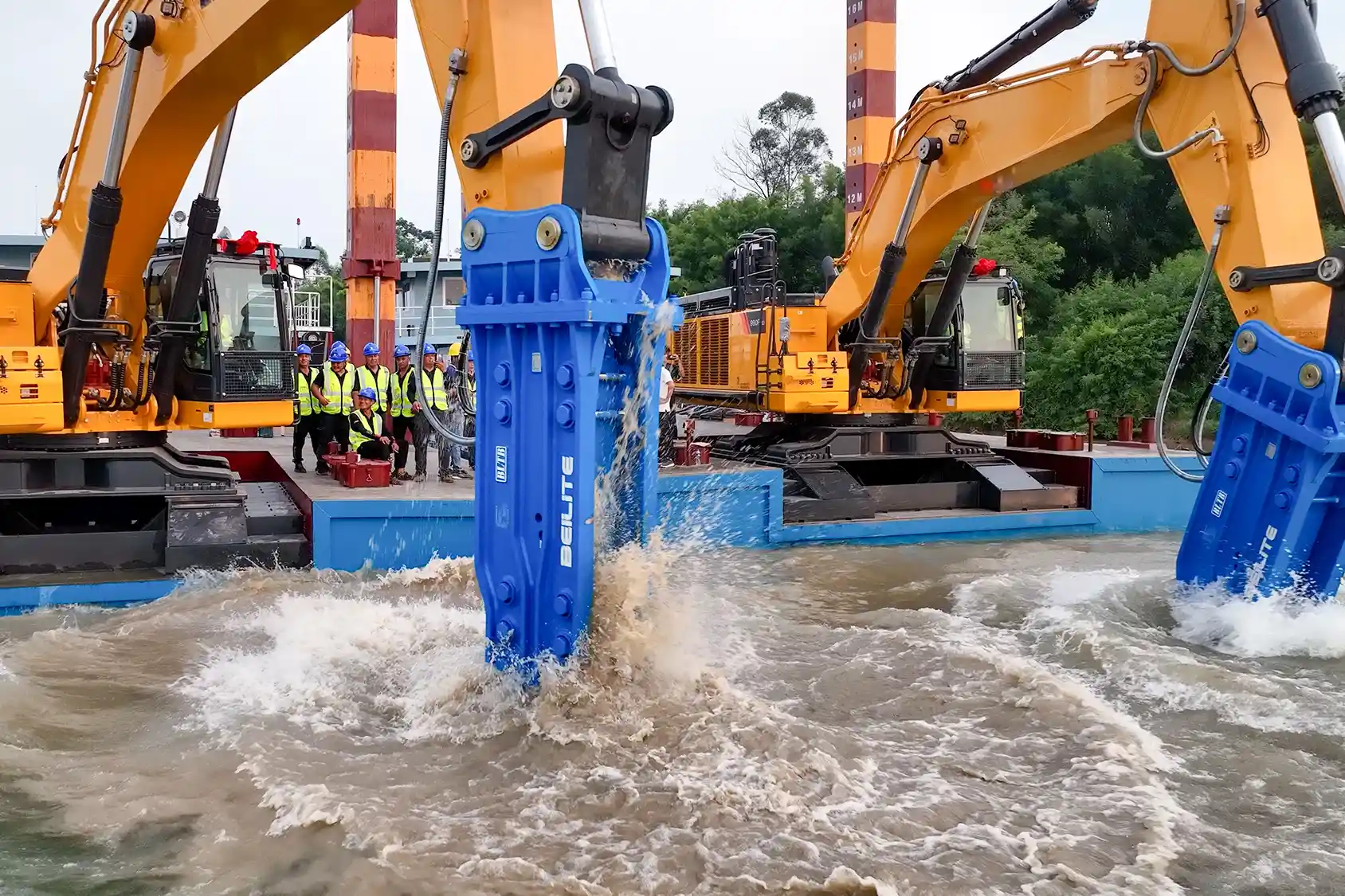
Adapting a terrestrial hydraulic breaker for subsea use requires more than waterproofing. Every component from the power unit to the chisel tip must be reconsidered for constant immersion and external pressure that fights against internal hydraulic forces. Effective underwater hydraulic breaker design addresses these competing pressures while maintaining the impact energy needed for subsea rock breaking technology applications.
Making Hydraulic Systems Perform at Depth
Consistent hydraulic power underwater depends on closed-loop systems that prevent water intrusion while managing internal pressure fluctuations. Subsea power requirements differ fundamentally from surface applications because external pressure works against the hydraulic fluid trying to move through the system. Engineers must optimize hydraulic flow and pressure delivery to maintain impact energy regardless of depth. This involves specialized fluid management, reinforced hose connections, and pressure-compensating mechanisms that automatically adjust to ambient conditions.
Materials and Seals That Survive the Ocean
Selecting corrosion resistant materials determines whether subsea hydraulic demolition equipment lasts months or years. High-grade stainless steels resist pitting. Bronze alloys handle the combination of pressure and saltwater exposure. Advanced composites provide strength without the weight penalty of solid metal construction. But materials alone aren’t enough. Underwater sealing technology must create multiple barriers against water ingress, with pressure-compensated designs that equalize forces across seal surfaces. Marine equipment metallurgy has advanced significantly, but the fundamental challenge remains: keeping water out while letting hydraulic force through.
Where Underwater Hydraulic Breakers Prove Essential
These specialized tools enable work that would otherwise require far more dangerous or expensive methods. Their precision and power address submerged structures, rock formations, and foundations across marine construction and decommissioning projects.
Taking Out Piles and Foundations
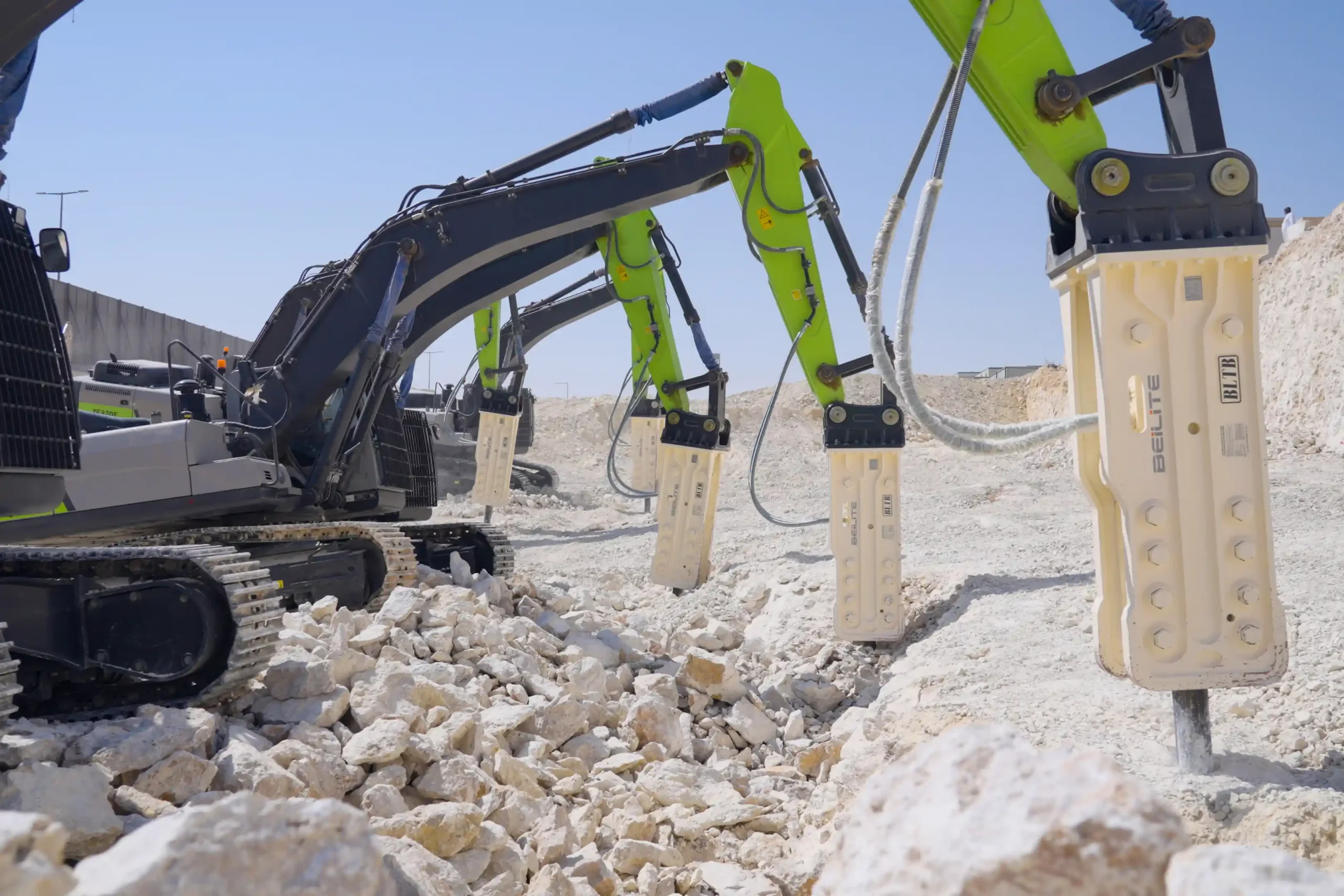
Underwater pile cutting and marine foundation removal rank among the most common applications. Concrete piles supporting aging docks, steel piles beneath bridges, timber structures from decades-old installations—all require controlled demolition. Efficient subsea concrete piles removal shortens project timelines and reduces the environmental footprint of extended operations. Specialized breakers can cut or fracture piles at precise locations, making extraction safer and more predictable.
Dismantling Offshore Infrastructure
Offshore platform demolition and subsea oil rig removal projects present some of the largest-scale challenges in marine engineering. Underwater hydraulic breakers enable controlled disassembly of massive concrete gravity-based structures, steel jacket frameworks, and pipeline systems. This capability proves critical for decommissioning marine assets in compliance with environmental regulations while clearing sites for future use or restoration.
Getting Reliable Performance When Conditions Fight Back
Consistent hydraulic breaker reliability in marine environments requires attention to design, operation, and ongoing care. Subsea equipment maintenance schedules and performance monitoring underwater help maintain operational efficiency marine projects demand. This proactive approach reduces unexpected downtime and extends useful equipment life in extreme environment equipment applications.
How does water depth affect hydraulic breaker performance?
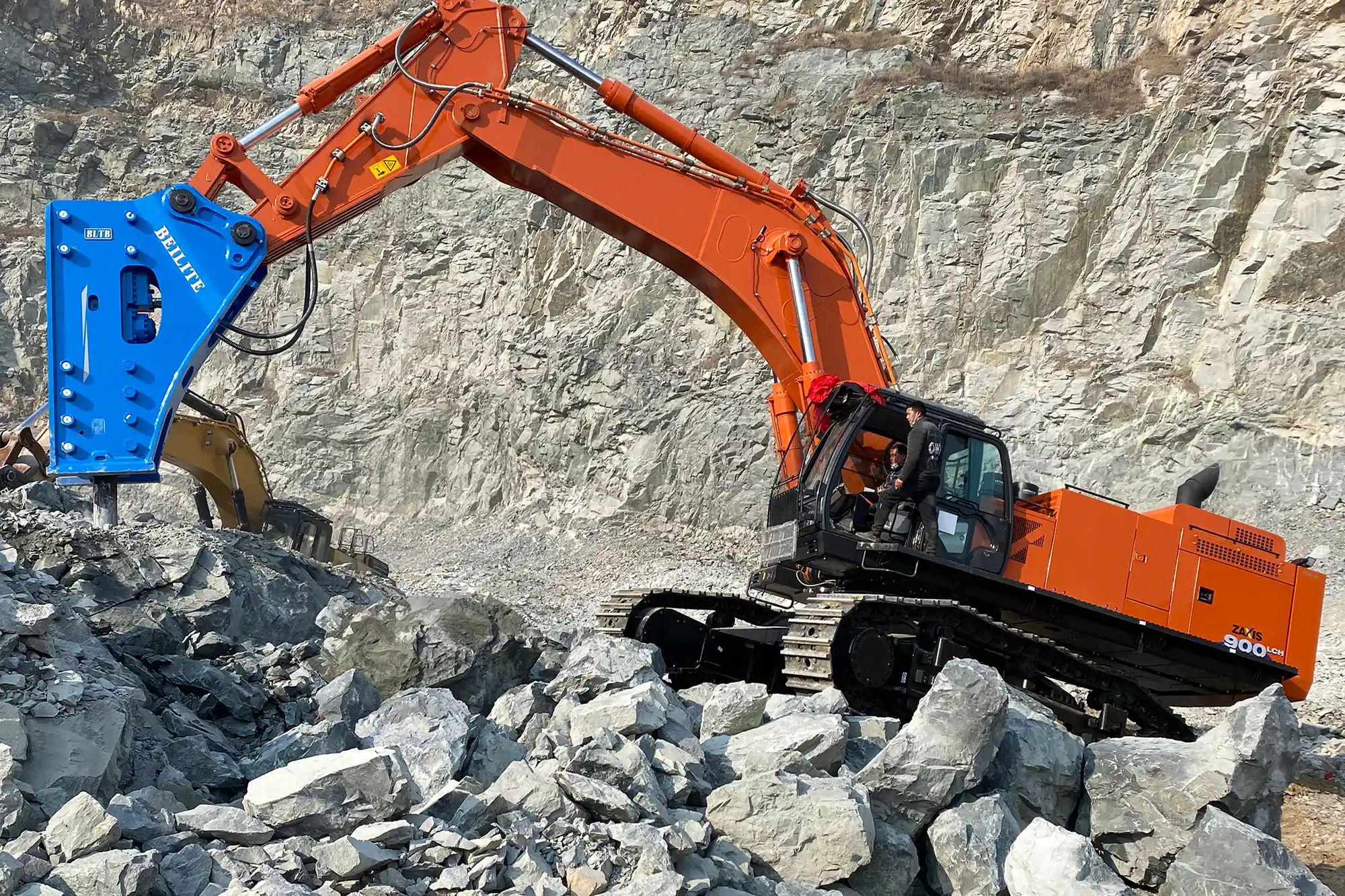
Depth creates a direct challenge to impact energy. Increased hydrostatic pressure at greater depths can upset the internal pressure balance that hydraulic systems depend on, potentially reducing striking force. Advanced subsea pressure compensation systems work against these deep-sea pressure effects by maintaining optimal operating pressures inside the tool. Properly compensated equipment delivers consistent deep water breaker efficiency by minimizing hydraulic losses even as external pressure climbs.
What maintenance is required for subsea hydraulic demolition equipment?
The marine environment accelerates wear on every component. Regular underwater equipment servicing includes seal inspection and replacement, hydraulic fluid analysis for contamination, and reapplication of protective coatings. A strict subsea breaker maintenance schedule catches developing problems before they cause failures. Proper lubrication and corrosion prevention hydraulic practices extend equipment life significantly beyond what neglected tools achieve.
Building Equipment That Lasts
Designing for durability means selecting robust materials, applying proven manufacturing techniques, and testing beyond expected operational limits. Equipment lifespan underwater depends on resistance to impact fatigue, environmental degradation, and the cumulative stress of repeated deployment cycles. Continuous development work focuses on enhancing these characteristics, ensuring durable subsea equipment can handle sustained demanding operations.
What BEILITE Brings to Underwater Demolition
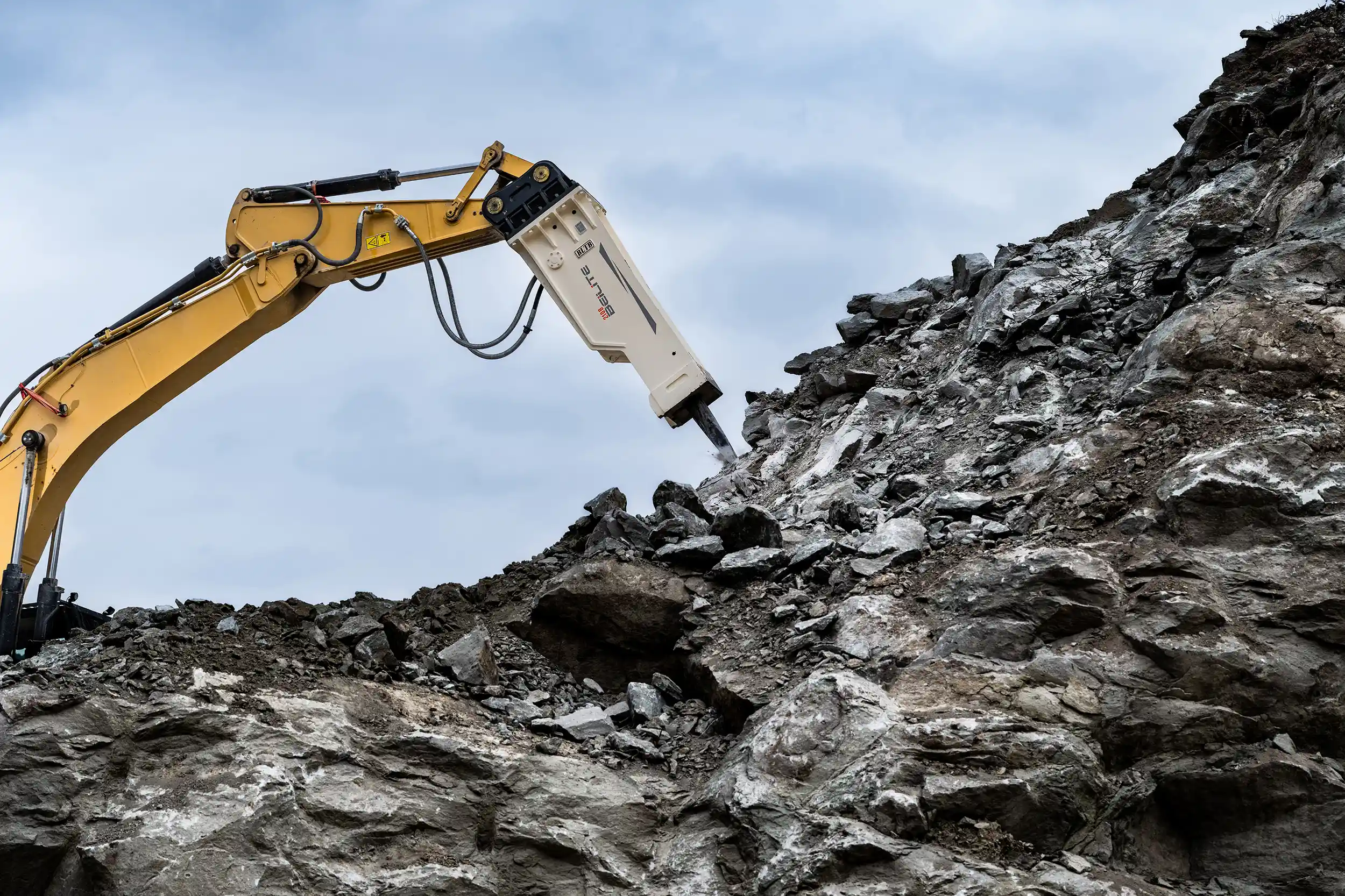
BEILITE Machinery Co., LTD operates as a national high-tech enterprise focused on advancing hydraulic breaker technology for challenging applications. Our high-end hydraulic breakers address the specific demands of underwater demolition through engineering that prioritizes both performance and longevity. As a hydraulic breaker manufacturer serving global markets, we develop innovative marine construction equipment built for the realities of subsea work.
Engineering That Keeps Advancing
BEILITE R&D hydraulic investment has produced hundreds of patented breaker technology improvements. These innovations enhance efficiency and durability across our product lines. Our advanced hydraulic systems incorporate specific engineering for subsea applications, delivering superior power transfer and operational stability. This development work drives continuous improvement in our BLT and BLTB series for underwater use.
Standards Participation and Global Reach
BEILITE participates in formulating national standards hydraulic breakers in China, contributing technical expertise to industry-wide best practices. Our BLT and BLTB series products reach over 100 countries, establishing our position as a global hydraulic breaker supplier. This international adoption reflects our standing as a trusted marine equipment brand delivering consistent quality across diverse operating conditions.
The following models represent our range of hydraulic breakers suitable for various underwater demolition tasks:
| Modèle | Poids total (kg) | Diamètre du ciseau (mm) | Pression de service (bar) | Excavateur applicable (t) |
|---|---|---|---|---|
| BLT-70 | 362 | 70 | 110-140 | 4.5-6 |
| BLT-100 | 986 | 100 | 150-170 | 10-14 |
| BLT-140 | 1910 | 140 | 160-180 | 20-24 |
| BLT-155 | 2610 | 155 | 200-220 | 27-33 |
Partner with BEILITE for Your Underwater Demolition Needs
As a national high-tech enterprise with decades of innovation and global reach, BEILITE Machinery Co., LTD is dedicated to providing high-end hydraulic breaker solutions for the most demanding underwater demolition projects. Discover how our BLT and BLTB series, backed by extensive R&D and national standard participation, can enhance your project’s efficiency, safety, and reliability. Contact us today at [email protected] or 40008-40008 for expert consultation and customized solutions.
Frequently Asked Questions About Underwater Hydraulic Demolition
What are the safety considerations for using hydraulic breakers underwater?
Strict diver safety protocols and thorough equipment pre-checks form the foundation of safe underwater operations. Remote operation benefits significantly reduce human exposure to hazards by keeping operators at the surface or aboard vessels. Emergency procedures subsea must cover equipment malfunction, sudden environmental changes, and communication failures. Teams that rehearse these scenarios regularly respond more effectively when problems actually occur.
What are the typical power requirements for underwater hydraulic breakers?
A robust hydraulic power unit capable of delivering consistent flow and pressure is non-negotiable. The specific breaker energy class determines minimum power output requirements. Compatibility with the excavator or carrier vehicle matters as much as raw power—the carrier must supply adequate subsea power delivery without compromising its own stability or overtaxing its hydraulic system.
How do specialized hydraulic breakers minimize environmental impact during subsea operations?
Precision demolition techniques reduce collateral damage to surrounding structures and seabed. Many specialized units incorporate noise reduction technology and vibration control systems that protect marine life from acoustic stress. Effective containment strategies manage debris and prevent contaminant spread, preserving the subsea ecosystem that regulations increasingly require operators to protect.
What role does remote operation play in modern underwater demolition?
ROV integration and unmanned subsea demolition systems have transformed what’s possible in underwater work. These technologies enhance operator safety by eliminating human presence in the most hazardous zones. Remote control efficiency also improves because machines can work longer shifts without fatigue, maintain steadier precision, and operate in conditions that would force human divers to surface.
Can standard hydraulic breakers be adapted for underwater use?
Standard hydraulic breakers lack the specialized modifications needed for subsea work. Comprehensive waterproofing requirements cover all electrical and hydraulic components, while enhanced pressure resistance must protect the entire housing assembly. Attempting to use unmodified equipment underwater typically results in rapid failure and may void warranty implications that would otherwise cover repairs.