 Anglais
 Français
Hydraulic Breakers for Hot Slag: Mastering Extreme Demolition
Working around molten slag changes how you think about equipment. The heat alone—often well above 1000°C—warps standard tools within hours. Add the abrasive, glass-like texture of cooling slag, and you’re looking at a material that punishes anything not built specifically for it. Hydraulic breakers designed for these conditions aren’t just heavy-duty versions of regular demolition tools. They’re engineered from the ground up to survive thermal shock, resist wear at rates that would destroy conventional chisels, and keep running when everything around them is glowing. For steel mills and foundries, these machines determine whether slag removal stays on schedule or becomes a bottleneck that ripples through the entire operation.
Why Hot Slag Demolition Pushes Equipment Beyond Normal Limits
Steel mill operations and foundry demolition generate slag that presents a unique combination of problems. The temperature alone would be enough to challenge most machinery, but slag also solidifies into a dense, abrasive mass that grinds down contact surfaces with every strike. Operations managers face a constant tension: push for faster slag pot cleaning to minimize production downtime, or slow down to protect equipment and operators. Neither option is ideal when the tools aren’t designed for the job.
Thermal stress accelerates wear in ways that aren’t always visible until something fails. Refractory lining damage becomes a real concern when breakers can’t handle the heat transfer, and the cost of replacing furnace linings far exceeds the cost of using the right equipment from the start. The dust and fumes generated during breaking add another layer of complexity, requiring environmental controls that standard demolition setups rarely include.
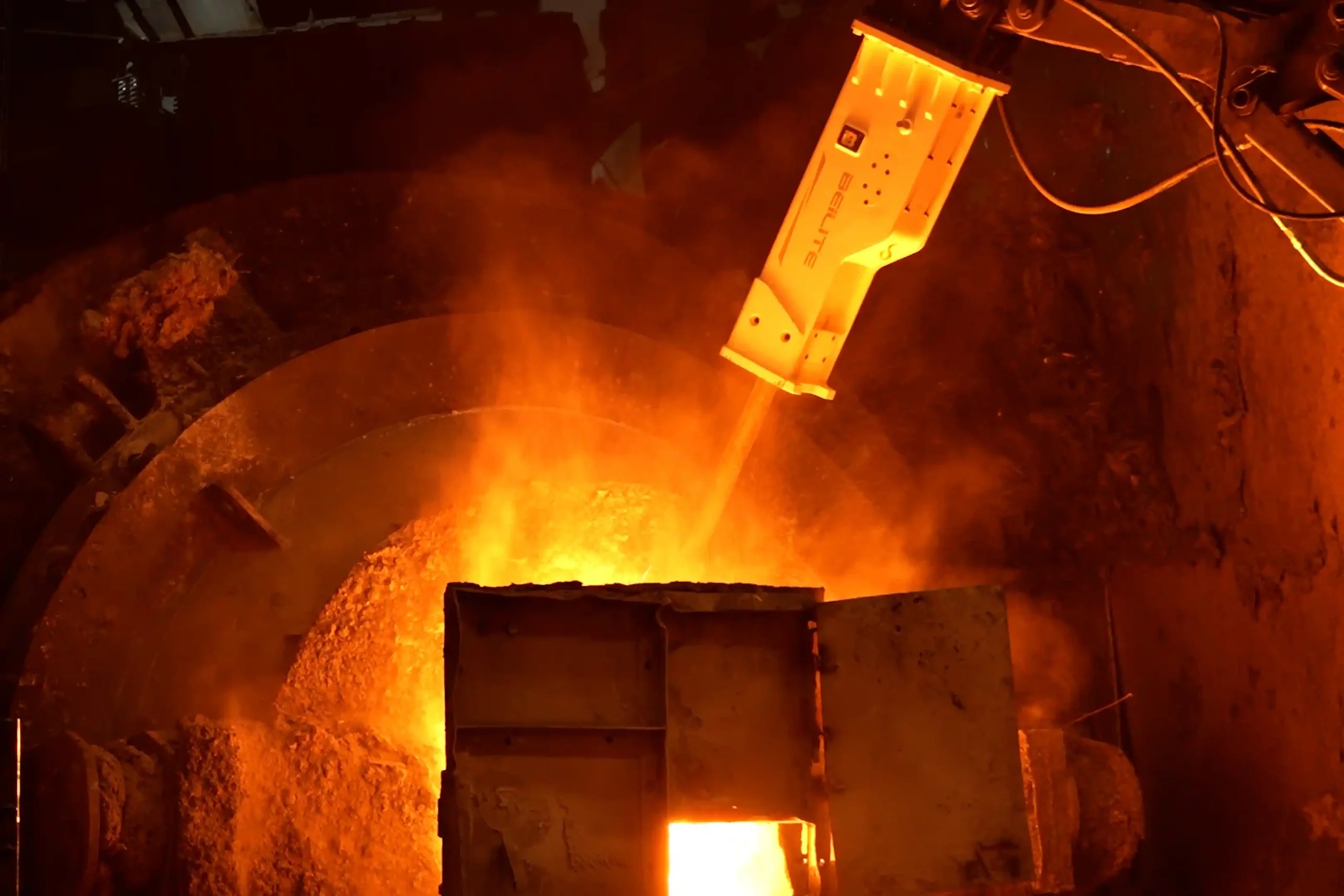
What makes breaking hot slag so difficult compared to standard demolition?
Several factors combine to make hot slag demolition exceptionally demanding. Extreme temperatures cause thermal shock that degrades standard tool steels rapidly—sometimes within a single shift. The slag itself is dense and abrasive, wearing down chisels at rates five to ten times faster than concrete demolition. Dust and fumes create both health hazards and visibility problems. Without specialized hydraulic breakers, operations risk refractory lining damage from improper technique and face extended production downtime when equipment fails unexpectedly.
How Hydraulic Breakers Are Engineered for Extreme Heat
Building a hydraulic breaker that survives metallurgical conditions requires rethinking nearly every component. Standard hydraulic hammer technology fails because the materials and seals weren’t selected for sustained high-temperature exposure. Impact energy delivery matters, but so does maintaining that performance hour after hour in conditions that would cook ordinary hydraulic fluid.
Wear resistance in these applications comes down to material selection at the chisel level and throughout the housing. The chisel types used for hot slag differ significantly from those designed for rock or concrete—they’re made from alloys that maintain hardness at elevated temperatures rather than softening and deforming. Durability and reliability in extreme heat environments depend on getting these material choices right, along with addressing the breaker design challenges specific to metallurgical settings.
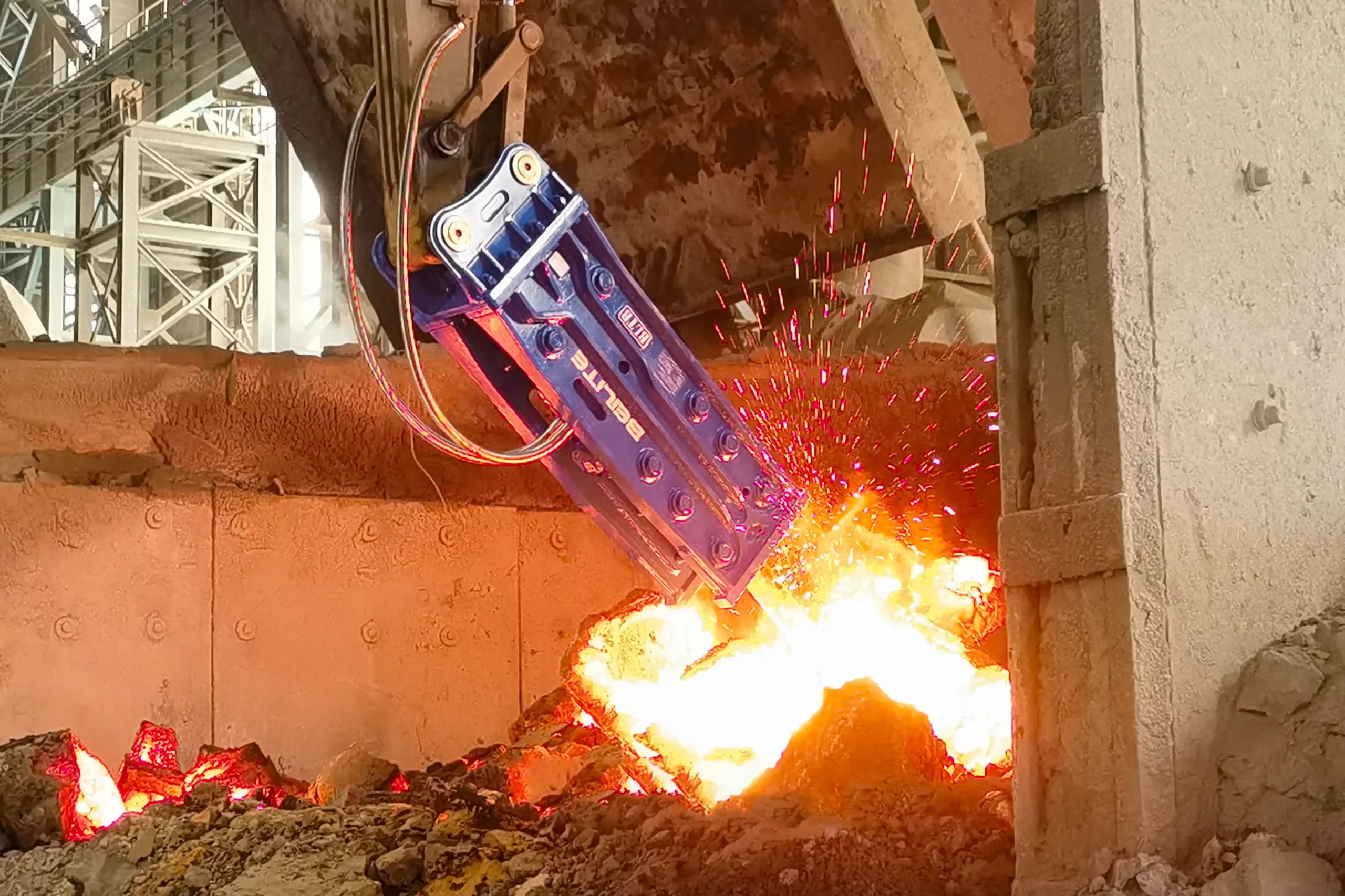
What design features protect a hydraulic breaker from extreme heat?
Specialized hydraulic breakers incorporate multiple layers of protection. Heat resistant components use advanced alloys that retain structural integrity at temperatures that would anneal standard steels. Hydraulic fluid management systems employ fluids rated for high-temperature service, often with integrated cooling circuits to prevent viscosity breakdown. Sealed housing designs block dust, debris, and radiant heat from reaching internal components. Thermal shielding and insulation layers reduce heat transfer to sensitive hydraulic elements. High-temperature seals prevent fluid leaks and contamination ingress, extending operational life significantly compared to standard seals that would harden and crack within days.
Balancing Efficiency and Safety in Slag Processing
Effective hot slag removal requires more than powerful equipment—it demands a systematic approach that addresses both cost efficiency and operator safety. Specialized hydraulic breakers reduce production downtime by breaking solidified slag quickly and consistently, but they only deliver that value when supported by proper maintenance strategies.
Equipment longevity in these applications depends heavily on preventive care. Dust suppression systems protect both operators and machinery, while industrial automation options can remove workers from the most hazardous positions entirely. The return on investment from specialized equipment becomes clearer when you factor in reduced maintenance costs, fewer unplanned shutdowns, and lower injury rates.
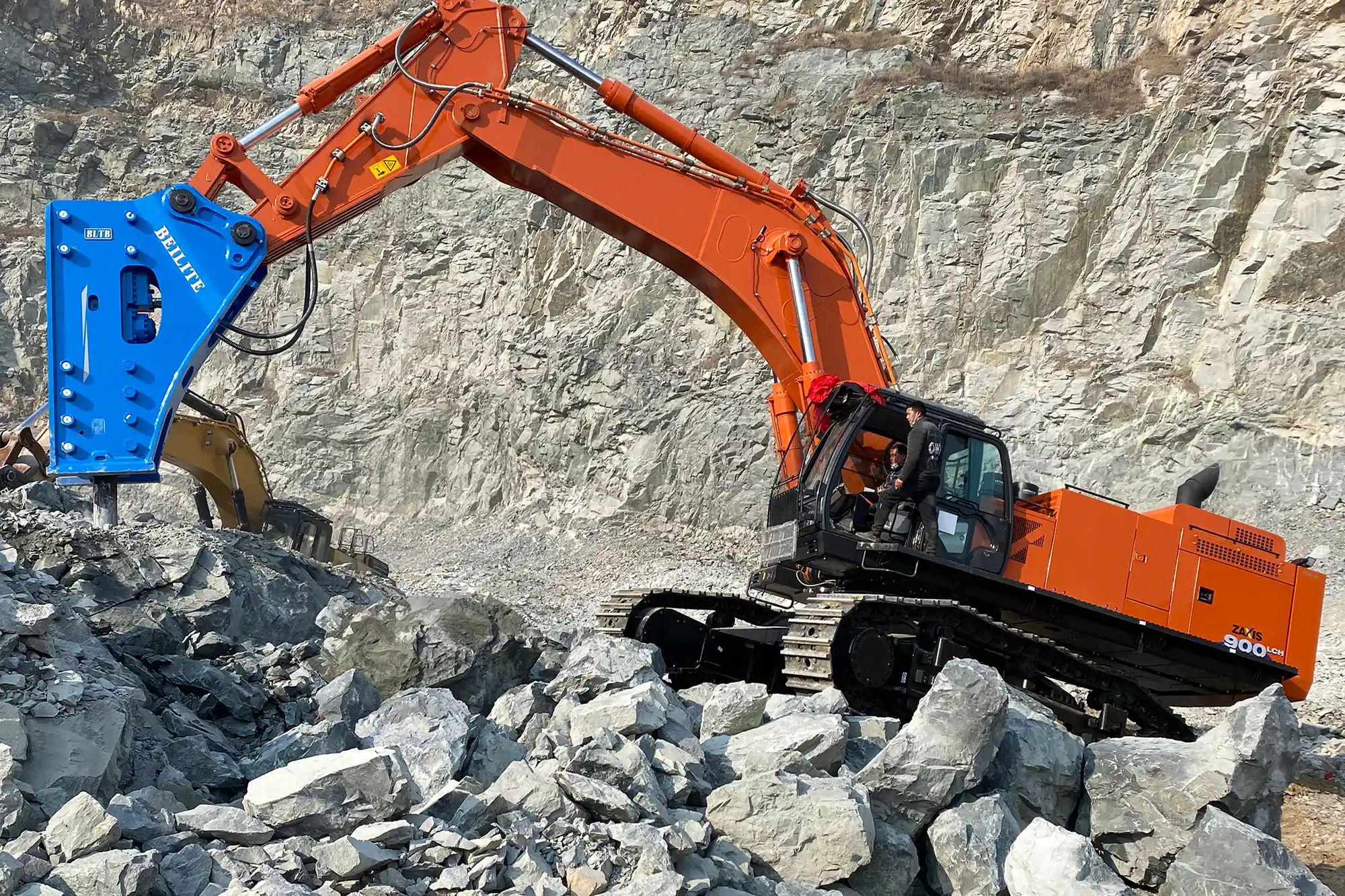
What maintenance do hydraulic breakers need in slag applications?
Slag applications demand a strict preventative maintenance schedule that goes beyond standard recommendations. Daily chisel lubrication with high-temperature grease prevents accelerated wear at the tool-bushing interface. Wear part inspection should happen at the start of each shift, looking for cracks, excessive abrasion, or deformation that indicates imminent failure. Hydraulic system checks—monitoring fluid levels, temperature, and pressure—catch problems before they cause component failure. Replacing wear parts like chisels and bushings promptly, rather than running them to failure, maintains performance and extends equipment longevity. Following these routines consistently prevents the unexpected breakdowns that disrupt production schedules.
Matching the Right Hydraulic Breaker to Your Operation
Selecting the correct hydraulic breaker starts with understanding your specific conditions. Carrier machine compatibility determines whether you need an excavator mounted breaker or a loader mounted breaker configuration. The volume of slag you process daily, its typical temperature when breaking begins, and the specific tasks—whether slag pot cleaning or larger-scale demolition—all influence which model fits best.
Application specific tools matter in metallurgical settings. A breaker sized for high-temperature demolition in a steel mill may differ from one optimized for foundry work or even quarrying equipment and mining solutions that occasionally encounter slag-like materials. The equipment selection guide below provides starting points based on carrier size and typical operating parameters.
| Modèle | Diamètre du ciseau (mm) | Poids en ordre de marche (kg) | Excavateur applicable (t) | Fréquence d'impact (bpm) |
|---|---|---|---|---|
| BLT-135 | 135 | 1736 | 18-22 | 350-500 |
| BLT-140 | 140 | 1910 | 20-24 | 350-500 |
| BLT-150 | 150 | 2310 | 24-27 | 200-300 |
| BLT-155 | 155 | 2610 | 27-33 | 200-300 |
| BLT-165 | 165 | 3149 | 33-38 | 150-300 |
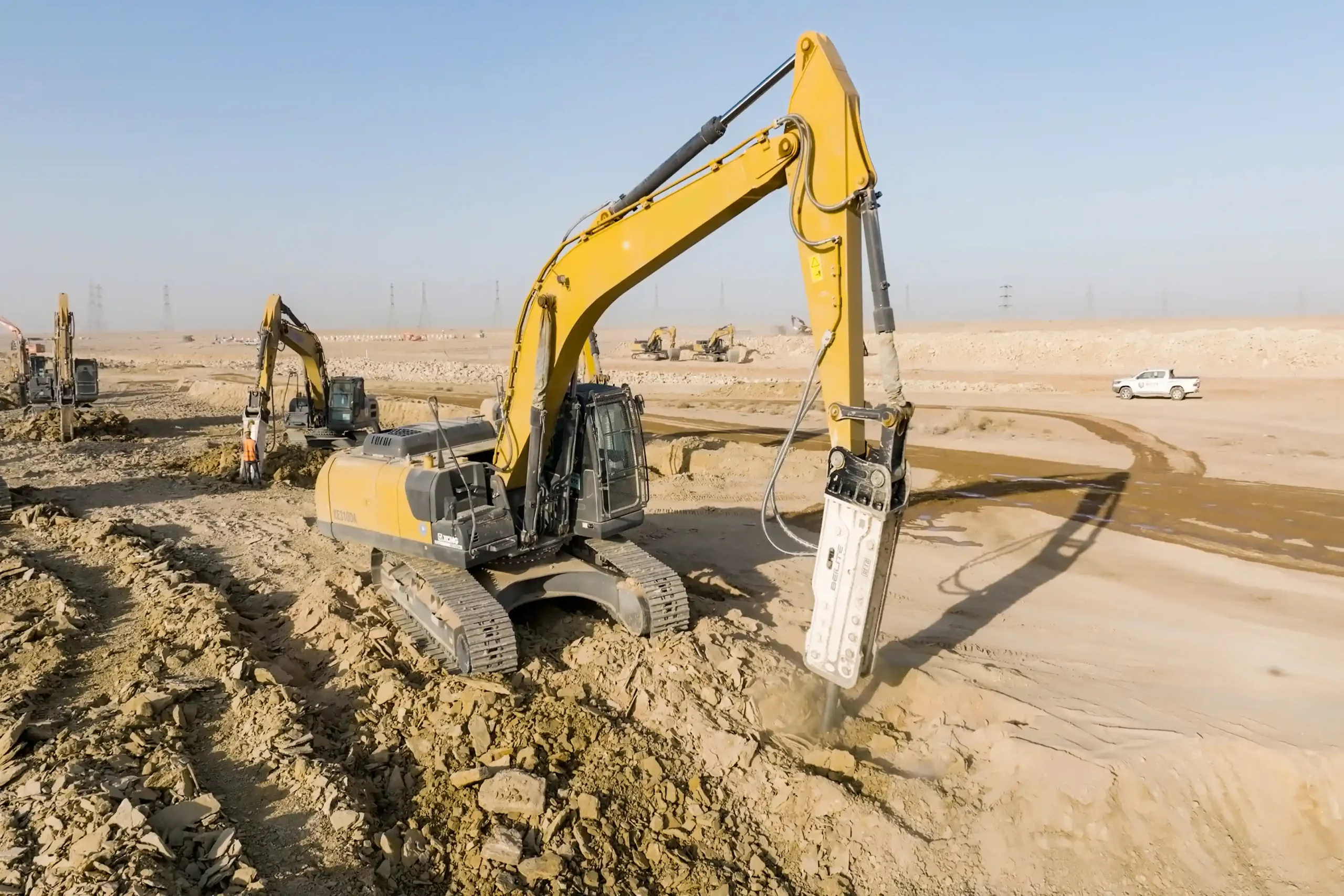
What Sets Beilite Apart in High-Temperature Breaker Technology
BEILITE Machinery Co., Ltd. has focused on hydraulic breaker development since 2002, earning recognition as a national high-tech enterprise in China. The company’s approach to innovation in hydraulic breakers centers on solving real operational problems rather than incremental improvements to existing designs. This has produced breakthroughs in core technologies and resulted in hundreds of patents.
Beilite’s involvement in formulating national standards for hydraulic breaker manufacturer practices in China reflects the company’s technical depth. The BLT brand products are engineered for diverse working conditions, with specific attention to the extreme demands of hot slag applications. These products reach over 100 countries, building customer trust through consistent quality and responsive service. The company remains focused on advancing Chinese high-end equipment in global markets.
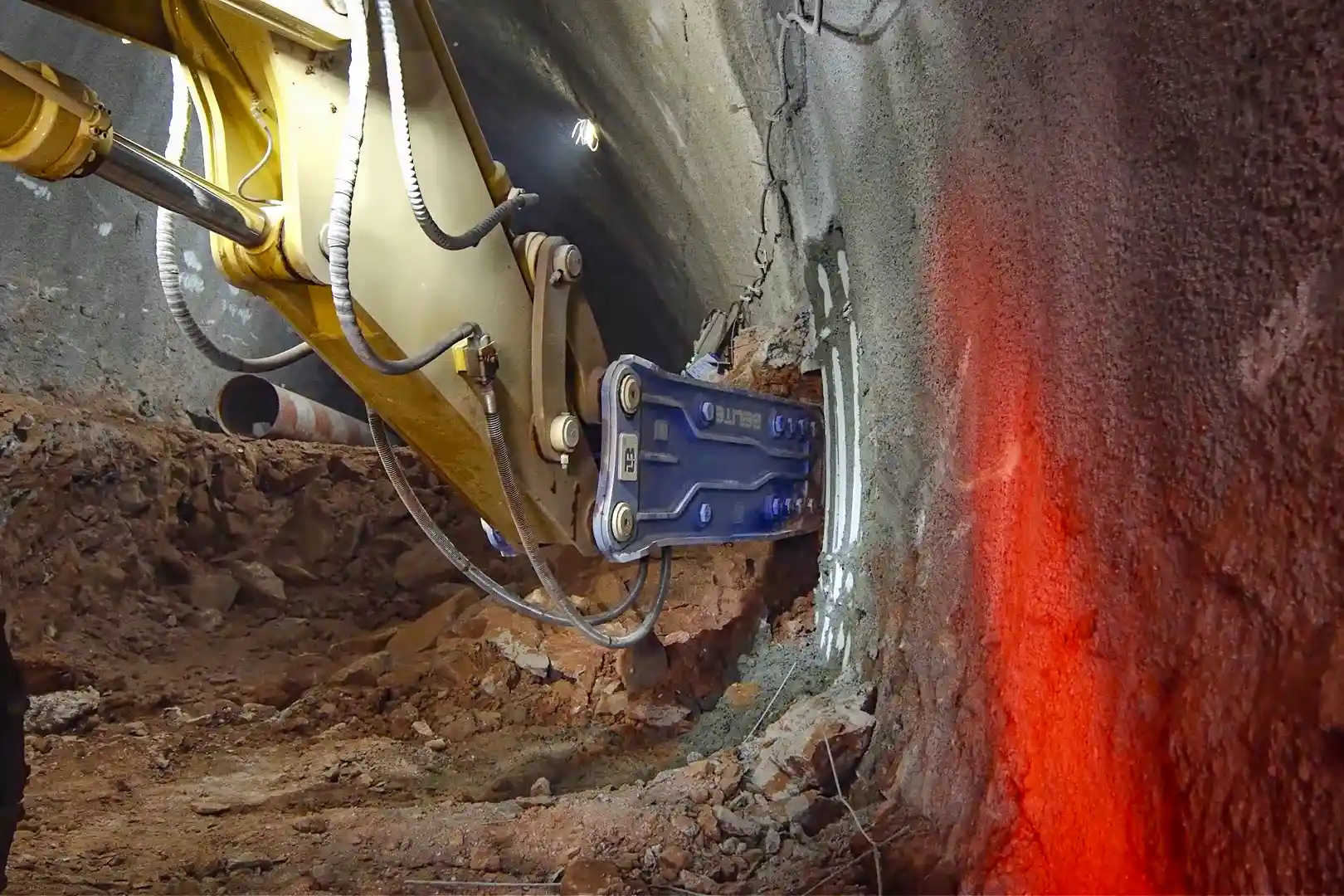
Making Hot Slag Management a Controlled Process
Effective hot slag solutions transform what could be a chaotic, equipment-destroying task into a predictable part of metallurgical operations. Specialized hydraulic breakers represent an investment in industrial reliability and operational excellence—not just tools, but infrastructure that enables consistent production schedules.
The advanced design and robust construction of purpose-built breakers allow them to handle high-temperature demolition conditions that would sideline conventional equipment. Minimizing downtime and enhancing safety aren’t competing goals when the right equipment is in place. Diligent maintenance turns a challenging byproduct into a manageable process step. Working with an experienced hydraulic breaker manufacturer provides access to both the technology and the application knowledge needed to optimize slag removal operations.
Start Improving Your Slag Removal Operations
Contact Beilite Machinery Co., LTD for consultation on hydraulic breakers tailored to your hot slag removal requirements. The company’s engineering team can help match equipment specifications to your specific operating conditions and production goals. Reach Beilite at 40008-40008 or [email protected].
Common Questions About Hot Slag Hydraulic Breakers
How often should a hydraulic breaker used for hot slag be serviced?
Hot slag applications require more frequent servicing than standard demolition work. Daily checks should cover wear parts and lubrication points. Comprehensive servicing—including hydraulic system inspection, nitrogen pressure verification, and seal condition assessment—should happen weekly or bi-weekly rather than monthly. The severe operating conditions accelerate wear patterns, and catching problems early prevents the cascading failures that lead to extended downtime.
Can standard hydraulic breakers be adapted for hot slag applications?
Standard hydraulic breakers lack the fundamental design elements needed for hot slag work. The materials, seals, and thermal management systems are different at a basic level—not just upgraded versions of standard components. Attempting to use or modify a standard unit leads to rapid component failure, potential safety hazards, and likely warranty issues. The cost of proper specialized equipment is far lower than the cost of repeated failures and the production disruptions they cause.
What are the primary safety considerations when operating a hot slag breaker?
Operator training specific to high-temperature environments and specialized equipment forms the foundation of safe operations. Personal protective equipment must include heat-resistant clothing, face shields rated for radiant heat exposure, and respiratory protection appropriate for the dust and fumes generated. Remote operation capabilities reduce direct human exposure to the most hazardous conditions. Effective dust and fume control systems—both for operator health and visibility—complete the safety framework for hot slag breaking operations.