 Anglais
 Français
Hydraulic Breaker Specifications: Decoding Size Charts for Optimal Performance
Getting hydraulic breaker specifications right isn’t just about matching numbers on a chart. I’ve watched operators struggle with breakers that looked correct on paper but performed poorly in the field because someone overlooked a single hydraulic parameter. The difference between a productive shift and an expensive repair often comes down to understanding what those specification numbers actually mean for your specific application. Whether you’re breaking concrete on a demolition site or fracturing hard rock in a quarry, the technical details in a hydraulic breaker size chart determine everything from cycle times to equipment longevity.
What Makes Hydraulic Breaker Specifications Critical for Performance
Hydraulic breaker specifications define how a unit performs under real working conditions. The core technical parameters include impact energy, operating pressure, oil flow, blow frequency, and chisel diameter. Each of these directly affects breaking force and power output in measurable ways.
Impact energy tells you how much force each strike delivers. Operating pressure and flow rate determine whether your excavator’s hydraulic system can actually power the breaker efficiently. Blow frequency indicates how many impacts occur per minute. Chisel diameter affects penetration characteristics and tool life.
Internal components matter just as much as the headline numbers. The nitrogen accumulator stores energy between strikes, while piston diameter influences the force multiplication within the hydraulic system. These engineering details explain why two breakers with similar specifications can perform quite differently.
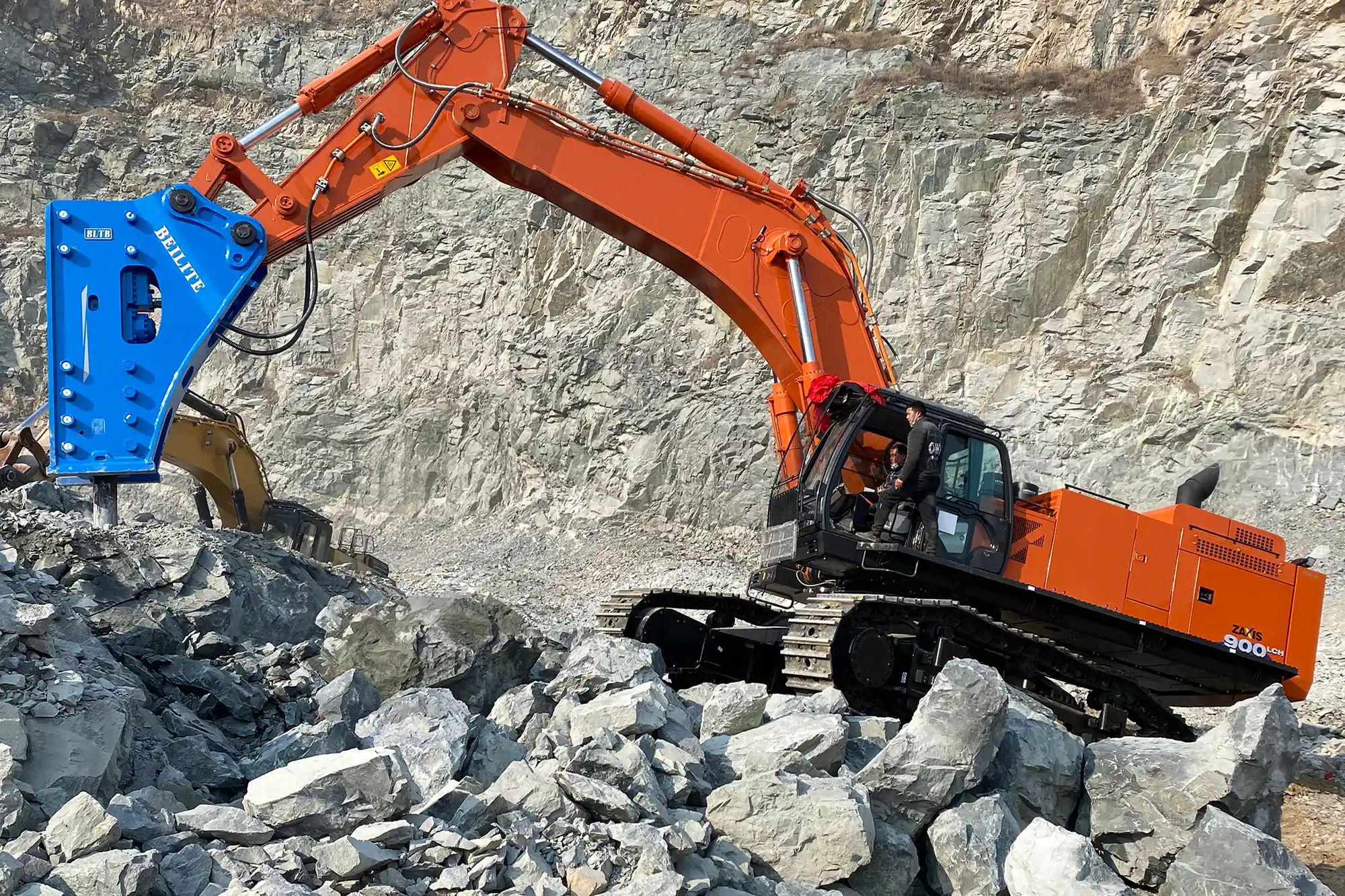
How Impact Energy and Blow Frequency Work Together
Impact energy, measured in joules per blow, quantifies the force delivered by each strike. Blow frequency, expressed in BPM (blows per minute), indicates how many impacts occur in a given time period. These two metrics interact to determine effectiveness against different materials.
Hard rock requires high impact energy to fracture. The material needs substantial force concentrated in each blow to overcome its compressive strength. Softer materials like concrete respond better to higher blow frequency because the material yields more readily, and rapid successive impacts clear debris efficiently.
| Type de matériau | Typical Impact Energy (Joules) |
|---|---|
| Béton | 1,000 – 3,000 |
| Medium Rock | 3,000 – 8,000 |
| Hard Rock | 8,000 – 15,000+ |
The balance between these parameters determines demolition efficiency. A breaker optimized for one material type may underperform on another, even if the total energy output appears adequate.
Why Operating Pressure and Oil Flow Alignment Matters
Operating pressure and oil flow requirements are fundamental to hydraulic breaker performance and longevity. The breaker’s specified operating pressure (measured in bar or psi) must align with what the carrier’s hydraulic pump can deliver. The required flow rate (measured in LPM) dictates how much hydraulic oil volume the system needs.
A mismatch creates problems quickly. Insufficient pressure reduces impact energy. Excessive pressure causes overheating and accelerates wear on seals and internal components. Incorrect flow rates lead to either sluggish operation or system damage.
The relief valve setting on the excavator protects the hydraulic system from pressure spikes. This setting must accommodate the breaker’s operating range while preventing damage to both machines. Proper hydraulic compatibility prevents premature wear and keeps both the breaker and excavator performing at peak levels.
Answers PAA: What is the ideal operating pressure for a hydraulic breaker?
The ideal operating pressure depends on the specific breaker model and manufacturer specifications. Operating outside the recommended range reduces efficiency or damages the unit and carrier. Check your hydraulic breaker’s specifications against your excavator’s hydraulic output before operation. The manufacturer’s documentation provides the exact pressure range for optimal performance.
How to Match Hydraulic Breaker Size to Your Excavator
Selecting the correct hydraulic breaker size for your excavator affects both operational safety and productivity. The matching process involves correlating the breaker’s weight and hydraulic demands with the carrier’s capacity.
Carrier weight, attachment weight, and mounting bracket specifications all factor into the equation. Pin diameter and pin spacing determine physical compatibility with your excavator’s arm. Hydraulic requirements must fall within what your machine can supply without modifications.
An oversized breaker creates instability and stresses the excavator’s boom and arm beyond design limits. An undersized breaker lacks sufficient breaking force for the applications your excavator class can handle, wasting the machine’s potential.
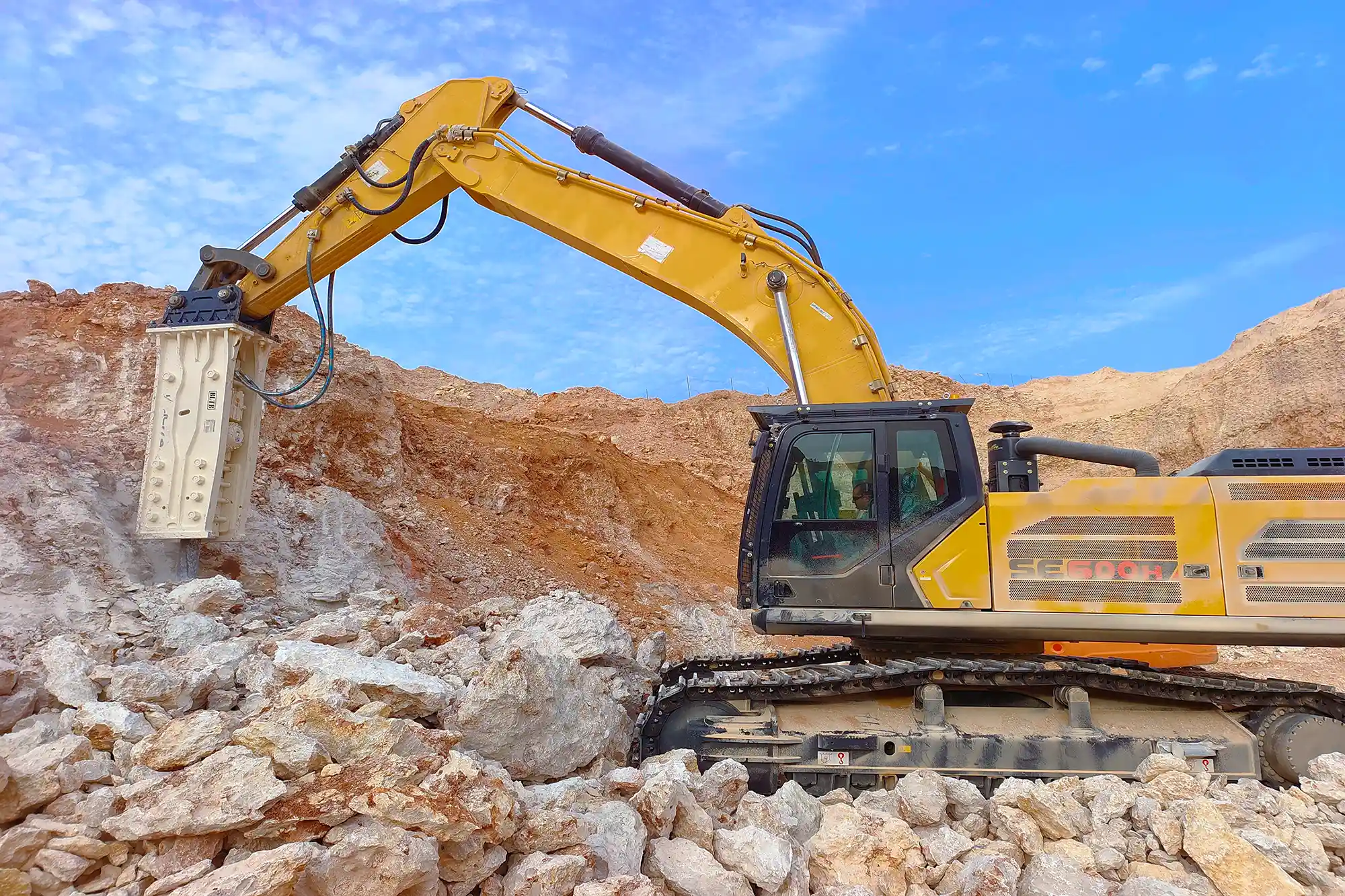
Reading a Hydraulic Breaker Size Chart Correctly
A hydraulic breaker size chart provides the data needed for equipment compatibility decisions. These charts typically correlate excavator operating weight (tonnage) with recommended breaker models, showing total weight, chisel diameter, and hydraulic requirements.
The chart below illustrates how specifications scale across different excavator classes:
| Beilite Model | Poids du disjoncteur (kg) | Diamètre du ciseau (mm) | Operating Oil Flow (L/min) | Pression de fonctionnement (bar) | Excavateur applicable (t) |
|---|---|---|---|---|---|
| BLT-40 | 86 | 40 | 15-30 | 90-120 | 0.5-1.2 |
| BLT-75 | 466 | 75 | 50-90 | 120-150 | 6-8.5 |
| BLT-100 | 986 | 100 | 80-110 | 150-170 | 10-14 |
| BLT-140 | 1910 | 140 | 120-180 | 160-180 | 20-24 |
| BLT-165 | 3149 | 165 | 200-260 | 210-230 | 33-38 |
Notice how oil flow and pressure requirements increase with breaker size. Your excavator’s hydraulic system must meet these specifications for the breaker to function properly. Manufacturer guidelines clarify weight class boundaries and prevent costly pairing errors.
Carrier Weight and Physical Compatibility Factors
Carrier weight serves as the primary constraint in hydraulic breaker selection. The breaker must fall within a range that maintains machine balance and prevents structural stress on the excavator arm and boom.
Oversizing creates multiple problems. The excavator becomes unstable during operation, especially when working on slopes or uneven ground. The boom and arm experience forces beyond their design specifications, accelerating wear and risking structural failure. Undersizing wastes the carrier’s capability and extends project timelines.
Quick hitch systems add another compatibility layer. The mounting bracket must match your excavator’s quick coupler dimensions exactly. Pin diameter and spacing vary between manufacturers and regions. Verifying these physical specifications prevents field modifications and operational hazards.
Answers PAA: How does carrier weight influence hydraulic breaker selection?
Carrier weight determines the maximum safe operating weight the excavator can handle as an attachment. A breaker that exceeds this limit creates instability and structural damage to the boom or arm. It also compromises breaking force because the machine cannot position the tool effectively. The hydraulic breaker size chart shows recommended carrier weight ranges for each model. Staying within these boundaries ensures both safety and efficiency.
How Specifications Affect Project Economics
Precise hydraulic breaker specifications translate directly into project ROI and operational costs. An accurately matched breaker optimizes demolition efficiency and quarrying productivity by reducing project timelines and fuel consumption.
The financial impact extends beyond immediate productivity. Properly specified breakers experience fewer breakdowns and require less frequent wear parts replacement. This reliability reduces downtime costs and extends service life, affecting profitability over the equipment’s entire operational span.
Specification choices are investments. The time spent verifying compatibility and understanding performance parameters pays returns through sustained uptime and predictable maintenance schedules.

Extending Equipment Life Through Proper Specification
Careful specification selection extends hydraulic breaker longevity and minimizes costly downtime. Operating within the recommended pressure and flow ranges prevents internal component stress. Seals last longer. Pistons and cylinders maintain their tolerances.
Manufacturing quality amplifies these benefits. Heat treatment processes strengthen critical components. High-tensile steel construction resists the repeated impact forces that would fatigue lesser materials. These engineering choices determine how many operating hours you can expect before major overhaul.
Adhering to the recommended maintenance schedule compounds the advantages. Regular inspection catches developing problems before they cause failures. Lubrication systems, whether manual or automatic, protect moving parts from accelerated wear. This proactive approach maximizes the breaker’s operational life.
Industry Standards and Safety Compliance
Adherence to industry standards and safety protocols is non-negotiable in heavy equipment operation. Breakers that comply with ISO certification and CE marking meet established safety and performance benchmarks. These certifications indicate that the equipment has passed testing for the conditions it claims to handle.
National standards vary by region, but the underlying principles remain consistent. Equipment must perform safely under specified conditions. Operators must have access to accurate technical documentation. Maintenance procedures must follow established practices.
Compliance matters beyond regulatory requirements. Certified equipment typically holds resale value better and qualifies for insurance coverage more readily. The documentation trail simplifies troubleshooting and parts sourcing throughout the equipment’s service life.
Answers PAA: Are there universal standards for hydraulic breaker mounting brackets?
No single universal standard exists for hydraulic breaker mounting brackets. Many manufacturers follow common industry practices for pin diameters and pin spacing, but variations occur across brands and regions. Before purchasing, verify the exact specifications of both your excavator’s quick coupler or mounting system and the breaker’s bracket. This confirmation ensures attachment compatibility, prevents operational hazards, and avoids costly modifications.
Advanced Selection Factors for Specialized Applications
Beyond fundamental specifications, advanced considerations optimize hydraulic breaker selection for challenging environments and specialized applications. These features address operator comfort, site compliance, and performance under unusual conditions.
Noise level reduction matters on urban demolition sites where regulations limit sound output. Vibration dampening systems reduce operator fatigue during extended shifts. Dust suppression features help meet environmental requirements on certain projects.
Auto lube systems enhance preventative maintenance by delivering grease to critical points at programmed intervals. This automation reduces manual maintenance requirements and ensures consistent lubrication even during intensive operation.
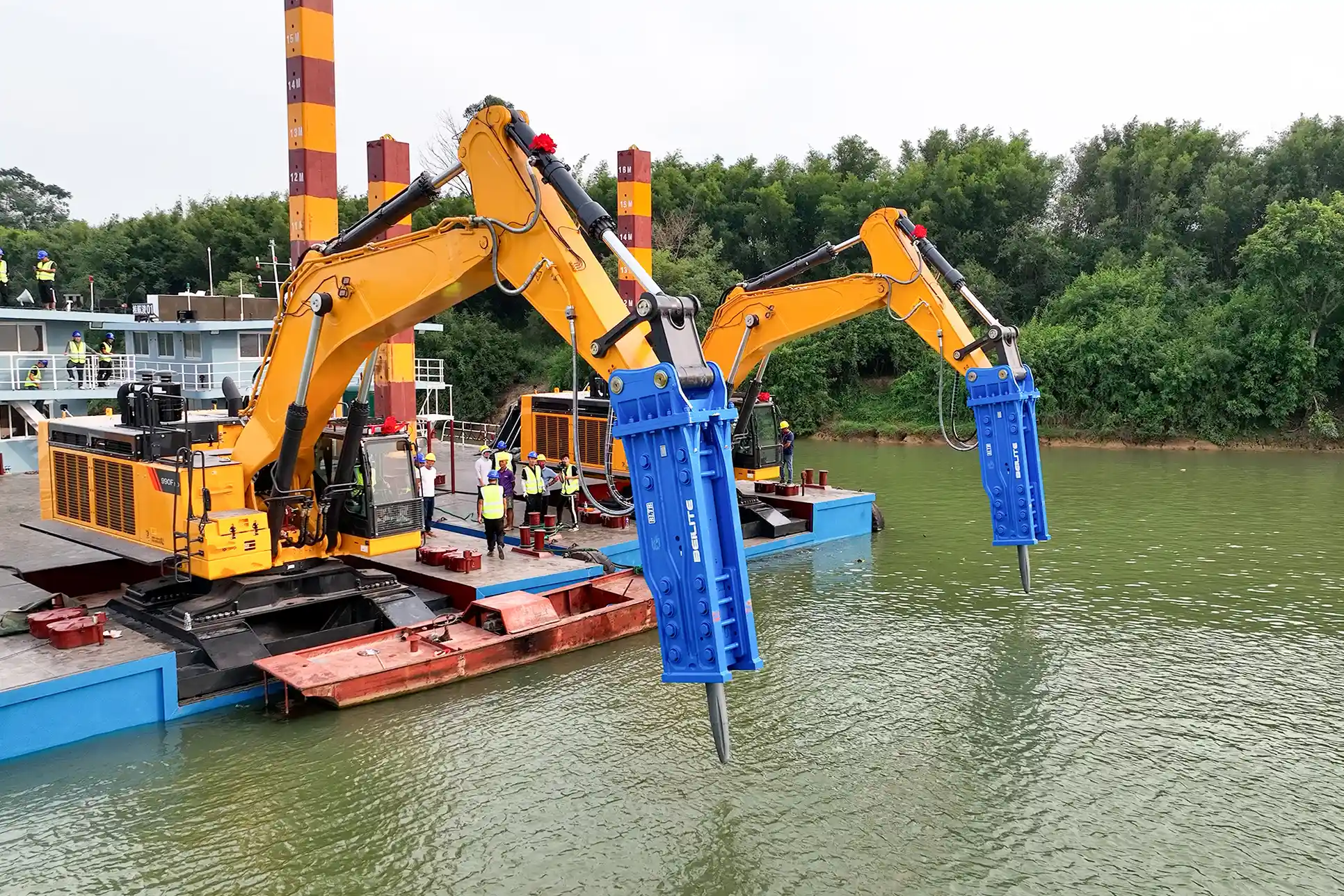
Specialized designs enable underwater operation for marine construction or dam maintenance. Extreme temperature variants perform in arctic conditions or tropical heat where standard hydraulic fluids and seals would fail. These application-specific features expand the range of projects a single breaker can handle.
For detailed technical consultation on hydraulic breaker specifications for your specific project requirements, contact Beilite Machinery Co., LTD at 40008-40008 or [email protected]. Our engineering team can help match BLT and BLTB brand products to your excavator class and application requirements.
Frequently Asked Questions About Hydraulic Breaker Specifications
What is the ideal operating pressure for a hydraulic breaker?
The ideal operating pressure depends on the specific breaker model and manufacturer specifications. Operating outside the recommended range reduces efficiency or damages the unit and carrier. Check your hydraulic breaker’s specifications against your excavator’s hydraulic output before operation. The manufacturer’s documentation provides the exact pressure range for optimal performance.
How does carrier weight influence hydraulic breaker selection?
Carrier weight determines the maximum safe operating weight the excavator can handle as an attachment. A breaker that exceeds this limit creates instability and structural damage to the boom or arm. It also compromises breaking force because the machine cannot position the tool effectively. The hydraulic breaker size chart shows recommended carrier weight ranges for each model. Staying within these boundaries ensures both safety and efficiency.
Are there universal standards for hydraulic breaker mounting brackets?
No single universal standard exists for hydraulic breaker mounting brackets. Many manufacturers follow common industry practices for pin diameters and pin spacing, but variations occur across brands and regions. Before purchasing, verify the exact specifications of both your excavator’s quick coupler or mounting system and the breaker’s bracket. This confirmation ensures attachment compatibility, prevents operational hazards, and avoids costly modifications.