 Anglais
 Français
Hydraulic Breaker Secondary Breaking: Optimize Site Efficiency
Efficient Site Management Through Secondary Breaking
Large rocks and concrete chunks don’t move themselves. When primary blasting or demolition leaves behind oversized fragments, everything downstream—crushers, trucks, processing lines—grinds to a halt waiting for material they can actually handle. Secondary breaking solves this bottleneck. Hydraulic breakers deliver the controlled force needed to reduce these stubborn pieces into workable sizes, keeping material flowing and operations profitable. The difference between a site that runs smoothly and one plagued by delays often comes down to how well this reduction step is managed.
Why Secondary Breaking Determines Site Productivity
Secondary breaking addresses a fundamental reality of extraction and demolition work: primary operations rarely produce uniformly sized material. Quarry blasts yield boulders that exceed crusher feed dimensions. Demolition drops concrete sections too massive for efficient removal. These oversized pieces create chokepoints that ripple through entire operations.
The material handling efficiency costs of poor secondary breaking add up quickly. Equipment sits idle waiting for properly sized feed stock. Trucks make fewer trips because loading takes longer. Crushers run below capacity or suffer damage from oversized input. Each delay compounds into lost production hours and increased operating expenses.
Effective rock processing through secondary breaking maintains continuous material flow. When reduction keeps pace with upstream production and downstream demand, sites achieve the throughput rates that project budgets assume. The hydraulic breaker becomes the regulator that balances the entire material chain.
How Modern Hydraulic Breaker Technology Delivers Results
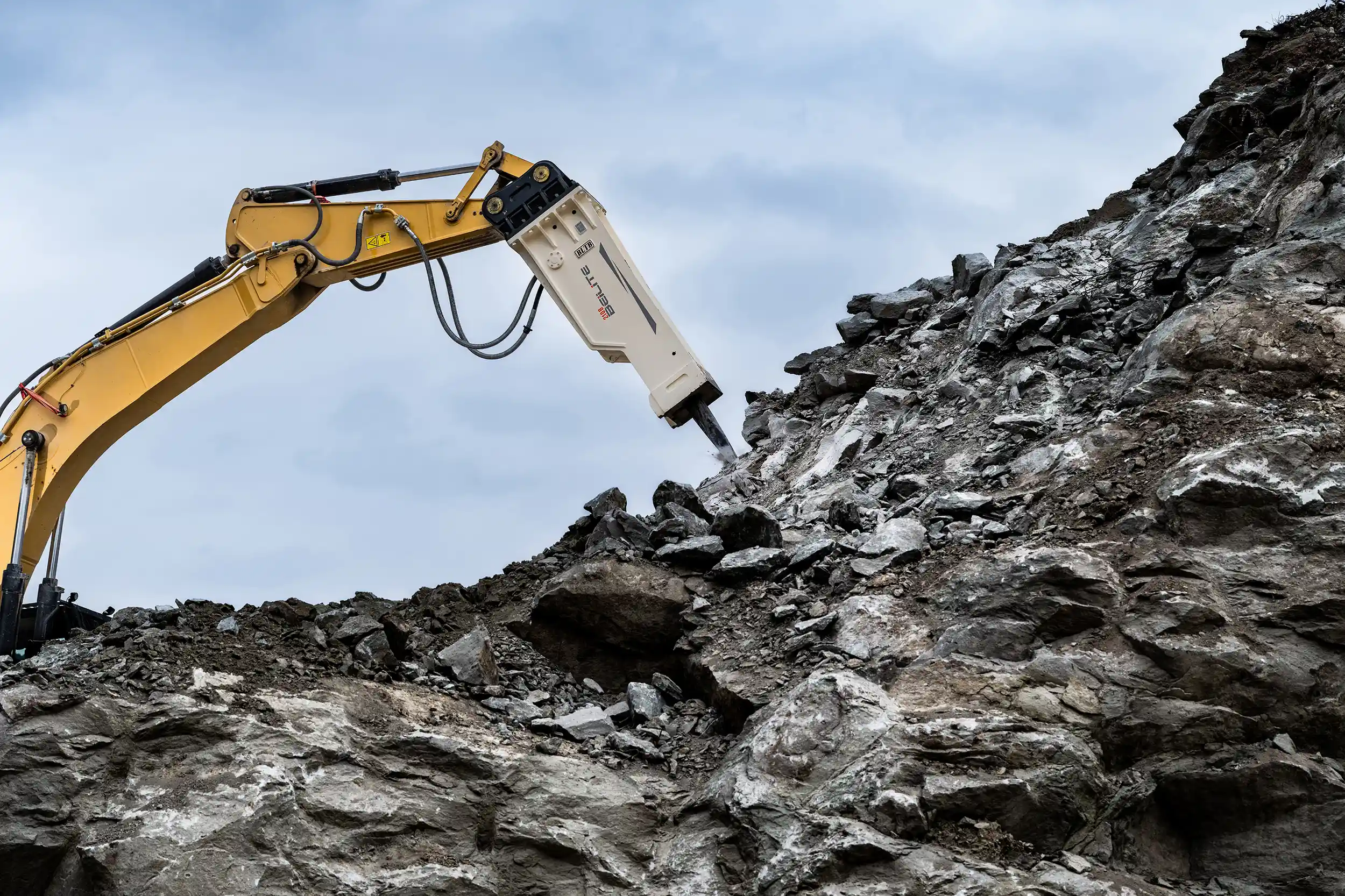
Contemporary hydraulic breaker technology reflects decades of engineering refinement focused on two goals: maximizing impact energy transfer and minimizing component wear. The hydraulic hammer design principles that achieve these goals involve several interconnected systems.
Nitrogen accumulators store hydraulic energy between piston cycles, releasing it to amplify each blow. This accumulator technology delivers consistent strike force regardless of variations in carrier hydraulic output, directly improving breaker efficiency in sustained operation.
Auto lube systems address one of the primary failure modes in hydraulic breakers: inadequate chisel and bushing lubrication. Continuous, metered grease delivery to friction surfaces reduces heat buildup and wear, extending service intervals and preventing premature component failure.
Vibration dampening mechanisms protect both the carrier machine and operator from the repetitive shock loads inherent in breaking work. Noise reduction technology similarly addresses operator fatigue and site compliance requirements.
Chisel selection matters more than many operators realize. Moil points concentrate force for penetrating hard, dense materials. Chisel profiles spread impact across a wider area for faster reduction of softer materials. Blunt tools work best for materials that fracture rather than chip. Matching the tool to the material maximizes breaking speed while minimizing chisel wear.
Attachment compatibility spans the full range of carrier machines. Beilite Machinery’s BLT hydraulic breakers and BLTB rock breakers mount on everything from compact excavators to large mining machines, with hydraulic requirements matched to carrier capabilities.
What Advantages Do Hydraulic Breakers Offer for Secondary Breaking?
Hydraulic breakers transform secondary breaking from a labor-intensive bottleneck into a controlled, efficient process. Site productivity increases because material reduction keeps pace with production demands rather than constraining them.
Operational cost reduction follows from multiple factors: less manual handling, fewer equipment delays, and optimized material processing speed that maximizes throughput per operating hour. The demolition efficiency gains prove particularly significant on urban sites where debris management directly affects project timelines.
Safety improvements come from eliminating manual breaking methods and reducing worker exposure to unstable material piles. Controlled hydraulic breaking produces predictable fragment sizes and trajectories, making material reduction a managed process rather than an unpredictable hazard.
Matching Equipment to Application Requirements
Equipment selection criteria for secondary breaking center on three factors: material properties, carrier compatibility, and site conditions. Getting any of these wrong compromises performance and accelerates wear.
Rock hardness assessment determines the impact energy required for efficient breaking. Harder materials demand higher energy per blow, while softer materials benefit from higher blow frequency at lower energy. Concrete strength varies widely depending on age, mix design, and reinforcement, requiring similar evaluation.
Carrier machine compatibility involves more than mounting dimensions. The breaker’s weight must fall within the carrier’s attachment capacity. Hydraulic flow rate and pressure requirements must match what the carrier can deliver. Mismatches in either direction cause problems: undersized breakers lack breaking power, while oversized units strain carrier hydraulics and structures.
Application suitability extends to working environment factors. Confined spaces limit breaker size and carrier maneuverability. Temperature extremes affect hydraulic fluid behavior and seal performance. Dusty conditions accelerate wear on exposed components.
How Should Operators Select the Right Hydraulic Breaker?
The selection process starts with material type considerations. Identify the hardest material the breaker will regularly encounter, not just the average. Occasional encounters with harder-than-expected material shouldn’t damage equipment.
Carrier machine compatibility verification requires checking manufacturer specifications for both the breaker and excavator. Match oil flow rates, operating pressures, and weight limits. When specifications fall between breaker sizes, the smaller unit typically proves more reliable than pushing carrier limits.
Application requirements include desired output size, production rate targets, and operating schedule. Continuous operation demands more robust equipment than intermittent use.
Expert consultation from manufacturers like Beilite helps navigate edge cases where standard selection criteria don’t clearly indicate the best choice. Field experience with similar applications often reveals considerations that specifications alone don’t capture.
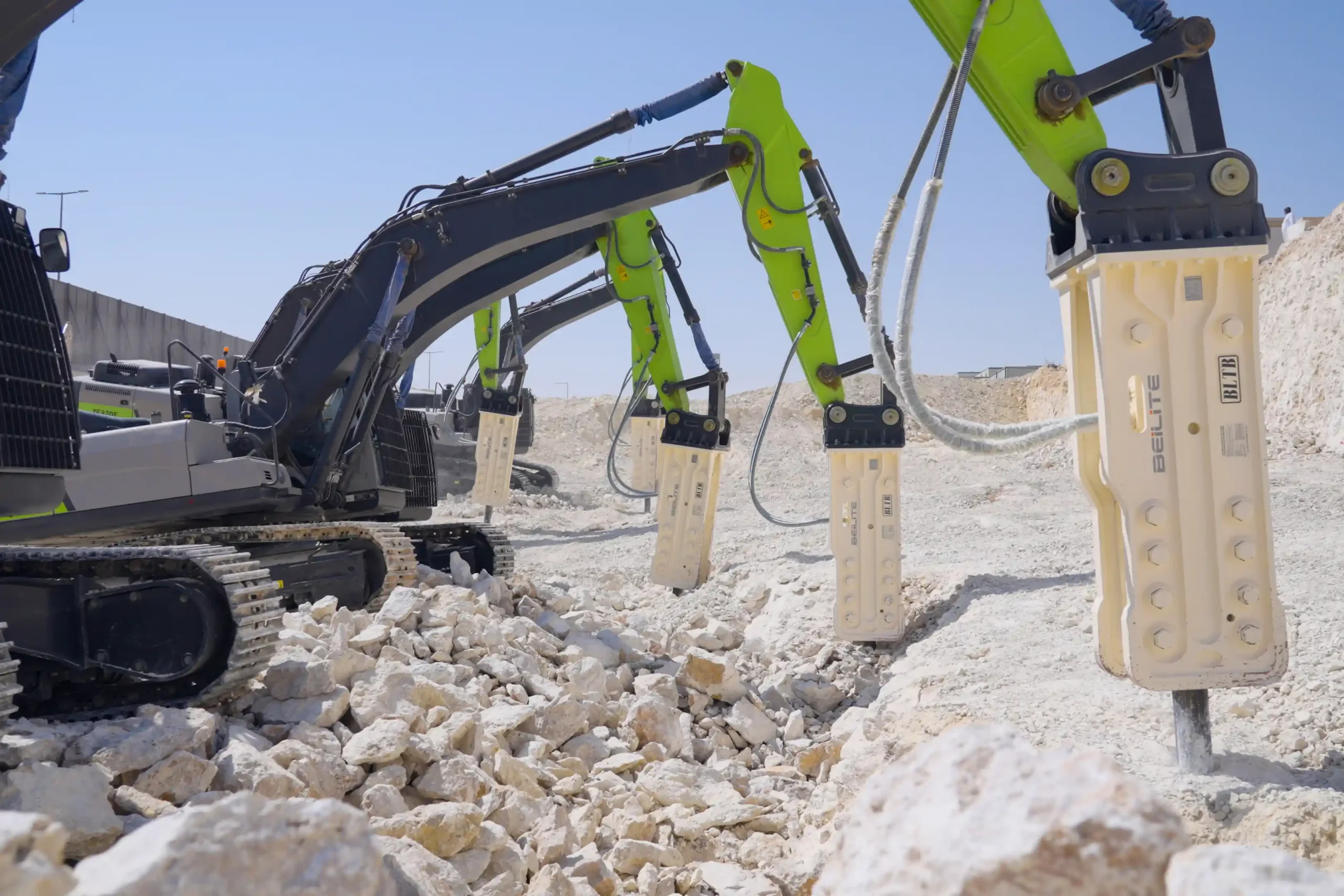
The following Beilite hydraulic breaker models address common secondary breaking applications:
| Modèle | Excavateur applicable (t) | Poids du disjoncteur (kg) | Diamètre du ciseau (mm) | Fréquence d'impact (bpm) | Application clé |
|---|---|---|---|---|---|
| BLT-60 | 3-5.5 | 263 | 60 | 500-1000 | Small-scale demolition, light quarrying |
| BLT-100 | 10-14 | 986 | 100 | 350-700 | Medium rock breaking, concrete reduction |
| BLT-140 | 20-24 | 1910 | 140 | 350-500 | Heavy-duty quarrying, large concrete breaking |
Maintenance Practices That Protect Equipment Investment
Equipment longevity depends on consistent attention to breaker maintenance tips that prevent small problems from becoming expensive failures. A preventive maintenance schedule catches wear before it causes damage.
Daily visual inspections take minutes but reveal developing issues: hydraulic leaks, loose fasteners, chisel wear patterns, bushing condition. Catching these early prevents field failures that halt production.
Hydraulic system checks verify fluid level, condition, and filter status. Contaminated hydraulic fluid accelerates wear throughout the system. Regular sampling and analysis catches degradation before it causes damage.
Greasing frequency typically runs every 2-4 hours of operation, though dusty conditions may require more frequent attention. Insufficient lubrication generates heat and accelerates bushing wear. Excess grease wastes material without providing additional protection.
Wear parts replacement follows predictable patterns. Chisels wear from the tip back; replacement timing depends on material hardness and operating hours. Seals degrade with age and use; replacement intervals depend on operating conditions and fluid quality.
Operator training proves as valuable as mechanical maintenance. Skilled operators understand correct breaking techniques that maximize efficiency while minimizing equipment stress. Blank firing—operating the breaker without material contact—damages internal components. Excessive prying stresses the chisel and bushings beyond design limits.
Troubleshooting common issues quickly minimizes downtime. Operators who recognize symptoms of developing problems can often address them before they cause failures.
What Maintenance Extends Hydraulic Hammer Service Life?
Routine inspections form the foundation of preventive care. Check daily for wear indicators, damage, and leaks. Address findings promptly rather than deferring maintenance.
Proper greasing frequency maintains the lubrication film that protects high-wear surfaces. Use manufacturer-recommended lubricants; substitutes may not provide adequate protection under operating conditions.
Seal monitoring and replacement prevents hydraulic fluid contamination that damages pumps, valves, and cylinders throughout the system. Replace seals at recommended intervals or when inspection reveals degradation.
Chisel maintenance includes regular inspection for wear patterns that indicate misalignment or improper technique. Sharpen or replace chisels before wear compromises breaking efficiency or damages the breaker’s internal components.
Beilite Machinery’s Approach to Secondary Breaking Equipment
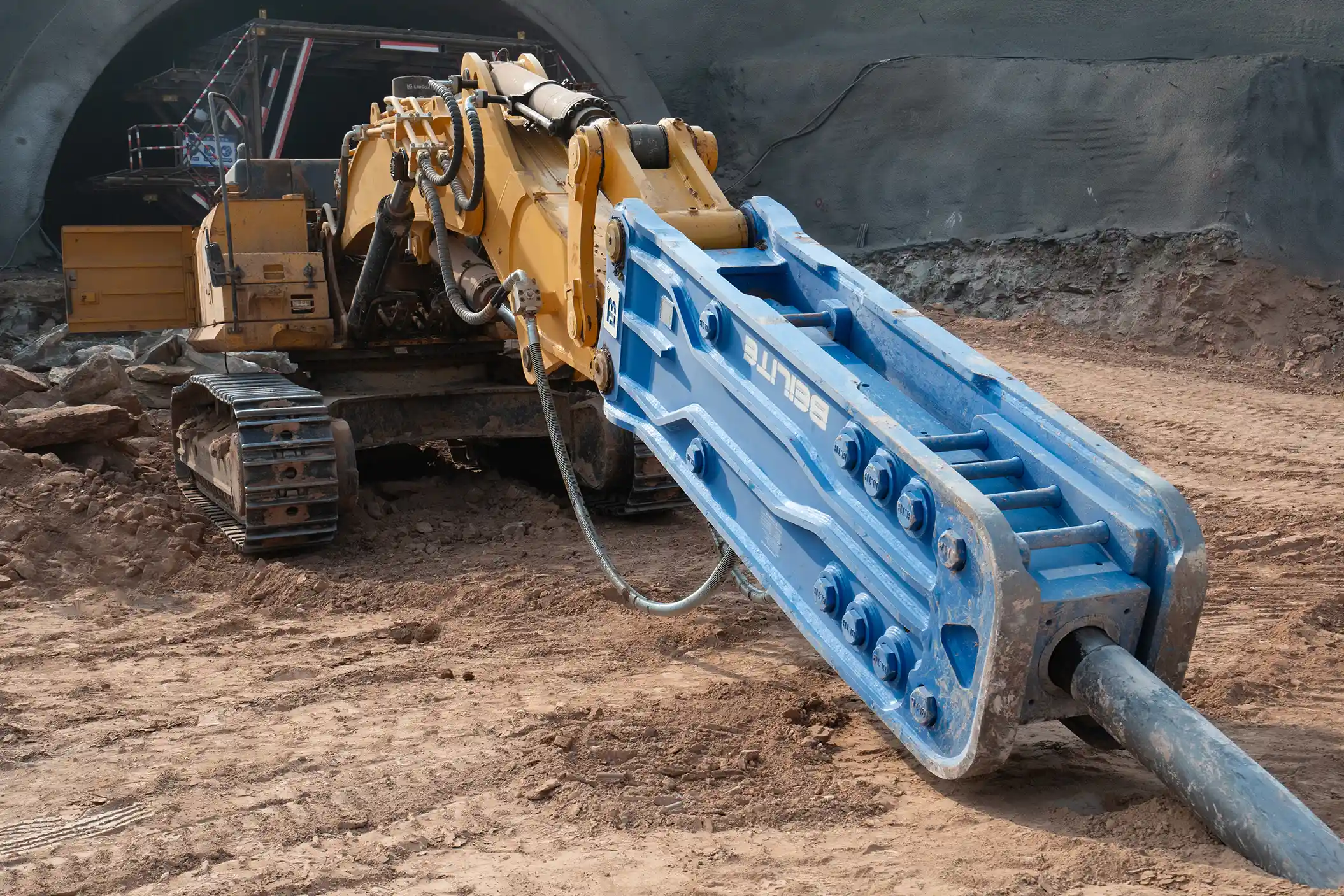
BEILITE Machinery Co., Ltd. has focused on hydraulic breaker development since 2002. That focus has produced breakthroughs in core technologies and active participation in national standards formulation for hydraulic breakers in China. Hundreds of patents document the engineering innovations incorporated into BLT brand products and BLTB brand products.
These hydraulic breakers perform across working conditions ranging from quarrying to demolition to specialized applications. Export presence in over 100 countries reflects the customer trust built through consistent quality and responsive service.
Frequently Asked Questions About Hydraulic Breaker Secondary Breaking
What Distinguishes Primary Breaking from Secondary Breaking?
Primary breaking extracts material from its original formation through blasting or initial structural collapse. The goal is separation, not size control. Secondary breaking reduces the resulting oversized fragments into pieces suitable for handling, transport, and processing equipment. It refines primary output into usable material.
How Do Environmental Conditions Affect Hydraulic Breaker Performance?
Temperature extremes alter hydraulic fluid viscosity, affecting response and power delivery. Cold conditions thicken fluid, slowing operation; heat thins it, potentially reducing pressure. Seals perform differently across temperature ranges and may require material changes for extreme conditions.
Dust accelerates wear on exposed surfaces and contaminates hydraulic systems if filtration proves inadequate. Moisture introduces corrosion concerns and, in underwater applications, requires specialized sealing systems designed for submersion.
Can Hydraulic Breakers Operate Underwater?
Specialized hydraulic breakers designed for underwater applications feature enhanced sealing systems and corrosion-resistant materials. Marine construction, port maintenance, and sub-aquatic demolition projects use these adapted units. Operation requires specific procedures and carrier modifications for safe, effective performance.
What Safety Protocols Apply to Secondary Breaking Operations?
Personal Protective Equipment requirements include hard hats, safety glasses, hearing protection, and steel-toed boots. Clear the work area of personnel and debris before breaking. Maintain safe distances from the breaking point to avoid flying fragments.
Regular equipment inspections identify developing hazards before they cause incidents. Operator training on safe operating procedures establishes the knowledge base for consistent safe practice.
How Does Beilite Engineer Durability into Its Hydraulic Breakers?
Durability engineering starts with material selection and heat treatment processes that enhance hardness and wear resistance in critical components. Chisels and cylinders undergo treatments that extend service life under intensive breaking equipment demands.
Factory testing under simulated harsh conditions verifies that production units meet national standards for hydraulic breakers before shipment. This testing protocol ensures field performance matches design specifications.
Transform Your Breaking Operations with Beilite Machinery
Two decades of hydraulic breaker innovation stand behind every Beilite product. Contact us for a consultation on how BLT and BLTB solutions can improve your secondary breaking efficiency, safety, and profitability. Reach us at 40008-40008 or [email protected].