 Anglais
 Français

Hydraulic Breaker Lubrication: Extend Tool Life, Boost Performance
Running a hydraulic breaker without proper lubrication is like driving a car with no oil in the engine. The damage happens fast, and by the time you notice something’s wrong, you’re already looking at expensive repairs. I’ve seen breakers that should have lasted years get destroyed in months because someone skipped the grease or used the wrong product. The internal components operate under brutal conditions—constant impact, extreme friction, temperatures that would melt standard lubricants. Getting the lubrication right isn’t complicated, but it does require attention to detail and the right materials.
What Makes Hydraulic Breaker Lubrication So Critical
The forces inside a working hydraulic breaker are genuinely extreme. Each strike delivers massive impact energy while the tool bit reciprocates at speeds that generate serious friction. That friction produces heat, and the heat compounds with thermal transfer from the hydraulic system itself. Standard lubricants simply cannot survive in this environment.
The tool bit and its bushings take the worst of it. Without a protective film between these metal surfaces, you get direct metal-on-metal contact. The wear accelerates exponentially once it starts. Impact energy drops because the components can no longer move freely. The piston surface scores. Bushings wear out of tolerance. What started as a skipped greasing interval becomes a full rebuild.
Specialized extreme pressure lubricants exist specifically for these conditions. They contain additives that maintain their protective properties even under loads and temperatures that would cause conventional grease to break down completely. The formulations often include solid lubricants that continue protecting surfaces even when the base grease gets squeezed out by pressure.
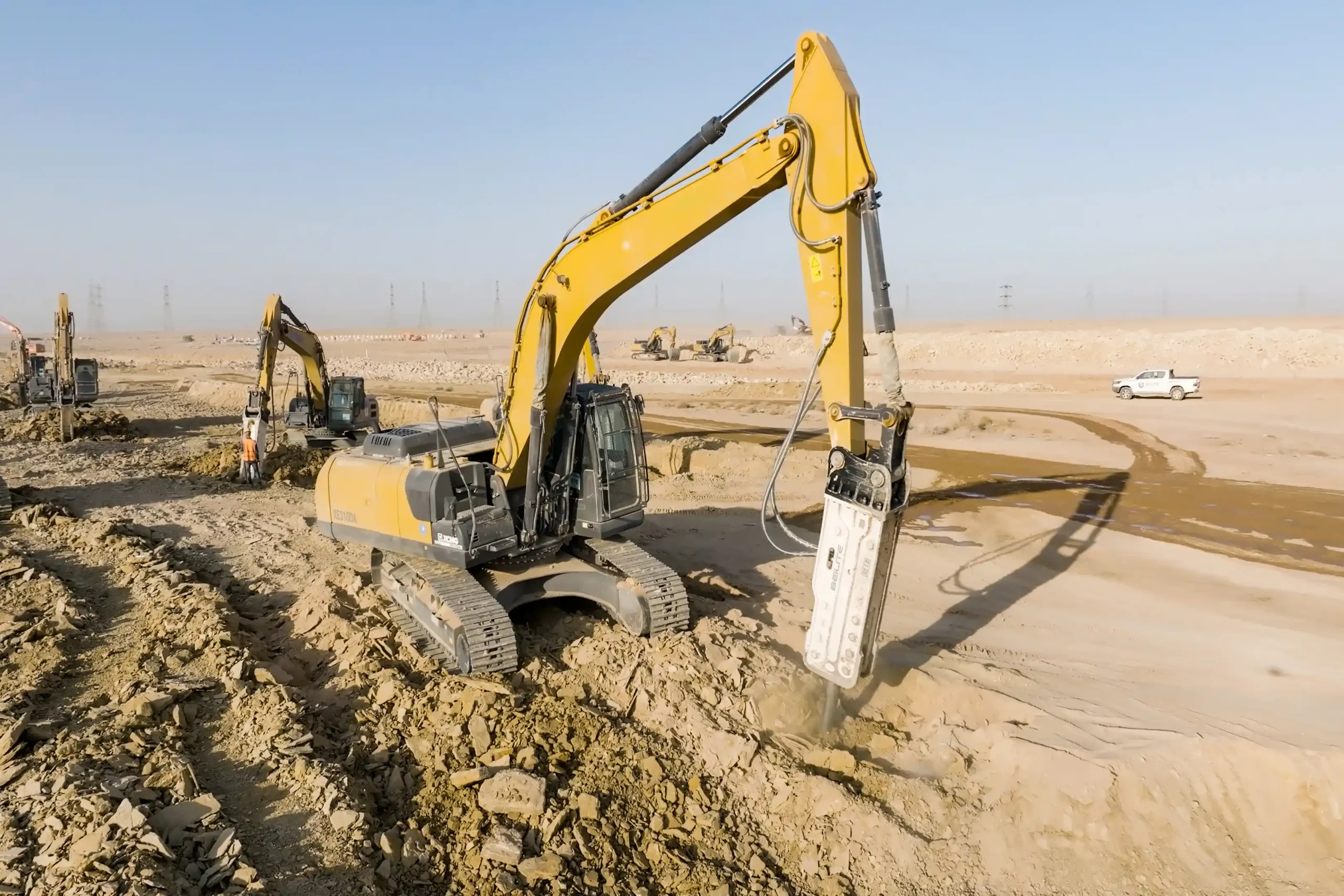
Selecting the Correct Lubricant for Your Equipment
Not every grease that works on heavy equipment will work in a hydraulic breaker. The operating conditions are simply too demanding. Manufacturers specify particular lubricant types for good reason—using the wrong product is one of the fastest ways to destroy expensive components.
Specialized chisel paste differs fundamentally from standard multi-purpose grease. These formulations typically contain copper or graphite particles that provide anti-seize protection and maintain lubrication under extreme pressure. The base grease has a high dropping point, meaning it won’t liquify and run off when temperatures climb. Standard chassis grease lacks these properties entirely.
| Lubricant Type | Key Properties for Breakers | Pour | Cons |
|---|---|---|---|
| Specialized Chisel Paste | High dropping point, extreme pressure additives, solid lubricants | Excellent wear protection, high temperature stability, anti-seize | Higher cost, specific application |
| Lithium Complex Grease | Good water resistance, high temperature range | Versatile, good for general heavy equipment | May lack sufficient solid lubricants for extreme breaker impact |
| Calcium Sulfonate Grease | Superior water resistance, anti-corrosion, extreme pressure | Excellent for wet conditions, strong wear protection | Can be more expensive, less common |
| Standard Multi-Purpose Grease | General lubrication | Inexpensive, widely available | Inadequate for high impact/temperature, rapid breakdown |
The cost difference between specialized chisel paste and standard grease is minimal compared to the cost of replacing worn bushings or a damaged tool bit. This is one area where cutting corners makes no financial sense.
Proper Hydraulic Breaker Lubrication Technique
The actual process of lubricating a hydraulic breaker matters as much as the frequency. Done incorrectly, even the right grease applied on schedule won’t reach the surfaces that need protection.
- Stop operation: Never attempt to grease a running breaker.
- Clean the nipple: Wipe grease nipples thoroughly before connecting the gun. Dirt pushed into the system causes wear just like inadequate lubrication.
- Position the tool: Lower the tool bit slightly into the ground with light downward pressure. This compresses the front bushing and opens a gap for grease to penetrate.
- Apply grease: Use a grease gun with steady pressure. Automatic greasing systems need regular verification that they’re actually dispensing product.
- Monitor flow: Keep greasing until fresh grease appears around the tool bit at the lower bushing. This confirms the lubricant has reached the critical wear surfaces.
- Avoid over-greasing: Stop once you see that bead of fresh grease. Excess lubricant attracts dirt and can damage seals.
- Check frequency: Adjust intervals based on actual operating conditions. A BLT-100 running 350-700 bpm in hard rock needs more frequent attention than a BLT-40 used intermittently.
- Inspect daily: Make hydraulic breaker lubrication checks part of every pre-shift inspection.
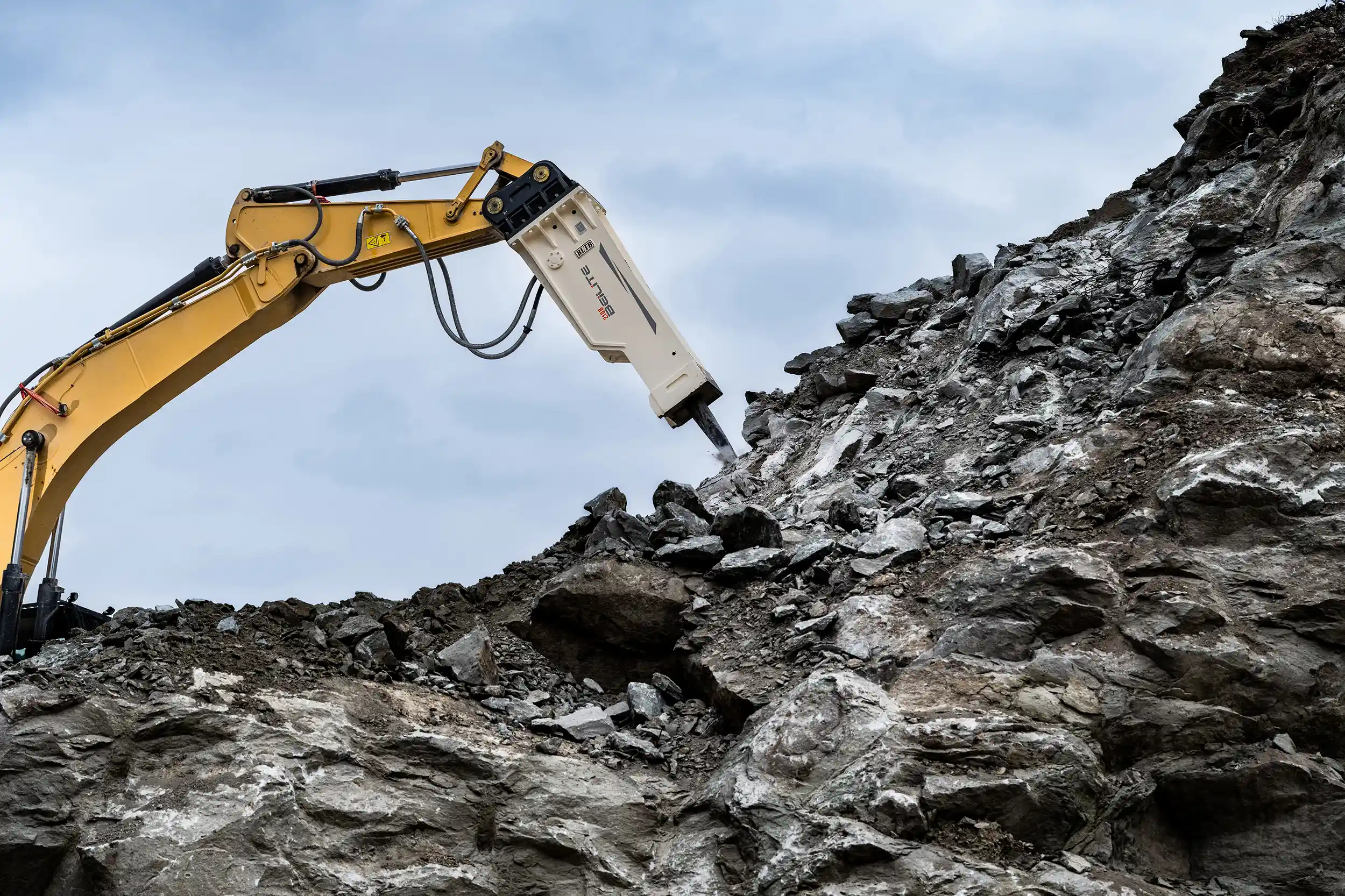
Mistakes That Destroy Hydraulic Breakers
Most hydraulic breaker lubrication failures come down to a handful of common errors. Recognizing these patterns helps prevent them.
Under-lubrication causes more damage than any other single factor. The recommended interval of every 2-4 operating hours exists because that’s how long the lubricant actually lasts under working conditions. In severe applications—continuous hard rock breaking, for example—hourly greasing may be necessary. Skipping intervals because the equipment “seems fine” leads to accelerated wear that isn’t visible until components fail.
Over-lubrication creates different problems. Excess grease pushes past seals, damaging them and creating pathways for contamination. It also wastes lubricant and can actually attract more dirt than properly applied amounts.
Using the wrong grease type remains surprisingly common despite clear manufacturer guidance. Standard chassis grease breaks down almost immediately under hydraulic breaker operating conditions. The money saved on cheaper lubricant disappears many times over in premature component replacement.
Neglecting to clean grease nipples introduces abrasive particles directly into the system. Every speck of dirt that enters with the grease acts like sandpaper on precision surfaces.
Incorrect tool positioning prevents lubricant from reaching the lower bushing area where it’s most needed. Without that slight downward pressure during greasing, the grease simply fills the upper cavity without penetrating to the critical wear zone.
Ignoring manufacturer guidelines for specific Hydraulic breaker Hammer models leads to problems that could easily be avoided. Each breaker has particular requirements based on its design and operating parameters.
Long-Term Value of Proper Hydraulic Breaker Lubrication
The financial case for consistent hydraulic breaker lubrication is straightforward. Proper maintenance costs a fraction of what repairs and replacements cost. The benefits compound over the equipment’s lifetime.
| Benefit Category | Impact of Consistent Lubrication |
|---|---|
| Operational Costs | Reduces spare parts consumption by up to 50%, lowers fuel usage |
| Downtime | Minimizes unexpected breakdowns, increasing uptime by 20-30% |
| Equipment Lifespan | Extends the operational life of the breaker by years, maximizing ROI |
| Performance | Maintains consistent impact energy and breaking force |
| Valeur de revente | Well-maintained equipment retains higher market value |
| Sécurité | Reduces component failures, leading to a safer working environment |
A well-maintained BLT-125 will deliver consistent performance for years while a neglected unit of the same model may require major repairs within months. The difference comes down to discipline around basic maintenance practices, particularly hydraulic breaker lubrication. Components protected from excessive friction and heat simply last longer and perform better throughout their service life.
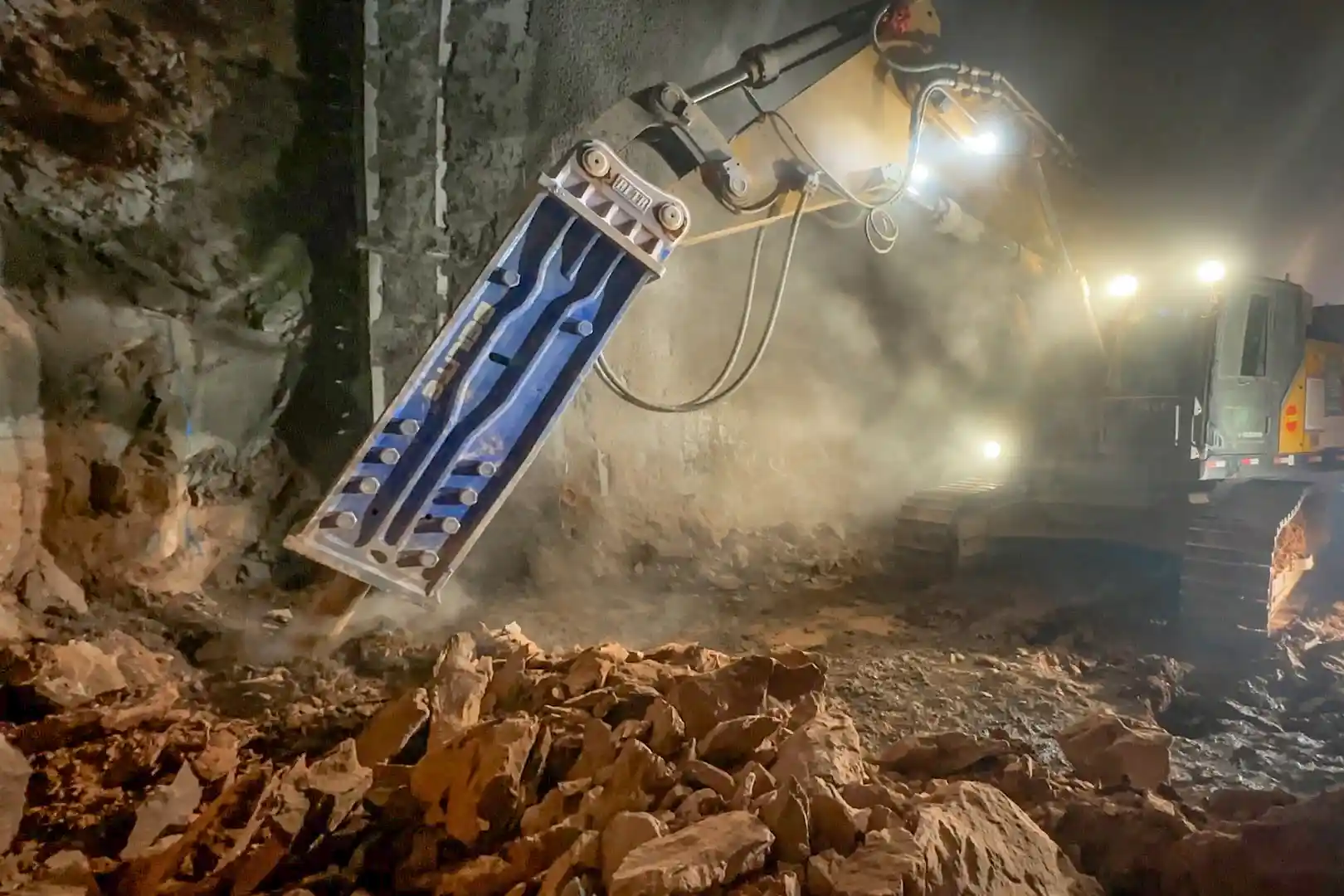
Frequently Asked Questions About Hydraulic Breaker Lubrication
Quelle est la fréquence de graissage d'un brise-charge hydraulique ?
Most hydraulic breakers need greasing every 2-4 operating hours under normal conditions. Demanding applications like continuous hard rock breaking may require hourly lubrication. The specific interval depends on your equipment model, operating intensity, and environmental conditions. Your breaker’s manual provides the baseline recommendation, but actual field conditions often require more frequent attention.
What type of grease is best for hydraulic breakers?
Specialized chisel paste outperforms all other options for hydraulic breaker lubrication. These products contain extreme pressure additives and solid lubricants like copper or graphite that maintain protection under the intense impact and heat that would destroy standard greases. Multi-purpose chassis grease lacks these properties and will fail rapidly in breaker applications.
What happens if you don’t lubricate a hydraulic breaker?
Without proper lubrication, the tool bit, bushings, and piston experience rapid wear from metal-on-metal contact. Impact energy drops as components lose their precision fit. Friction generates excessive heat that accelerates damage. The result is frequent component failures, emergency repairs, extended downtime, and a dramatically shortened equipment lifespan. What should be routine maintenance becomes expensive crisis management.
Partenariat avec Beilite pour une performance supérieure des marteaux hydrauliques
For over two decades, Beilite Machinery Co., LTD has engineered high-end hydraulic breakers, setting national standards and earning global trust. Ensuring optimal performance and longevity for your BLT and BLTB equipment is our priority. Contact our expert team today for tailored advice on hydraulic breaker maintenance, product compatibility, or to explore our advanced range designed for unparalleled reliability. Let Beilite empower your operations with superior quality and support. Reach us at 40008-40008 or [email protected].