 Anglais
 Français
Hydraulic Breaker for 30 Ton Excavator: Maximize Efficiency
When you’re running a 30-ton excavator on a demolition site or pushing through solid rock in a quarry, the hydraulic breaker you bolt on makes all the difference. I’ve seen crews lose entire shifts to undersized breakers that couldn’t handle the material, and I’ve watched the right attachment turn a week-long job into a three-day sprint. The match between carrier and breaker isn’t just about fitting the mounting brackets—it’s about hydraulic flow, impact energy, and whether the whole system works as a unit or fights itself.
What Makes a Hydraulic Breaker Work on a 30-Ton Excavator
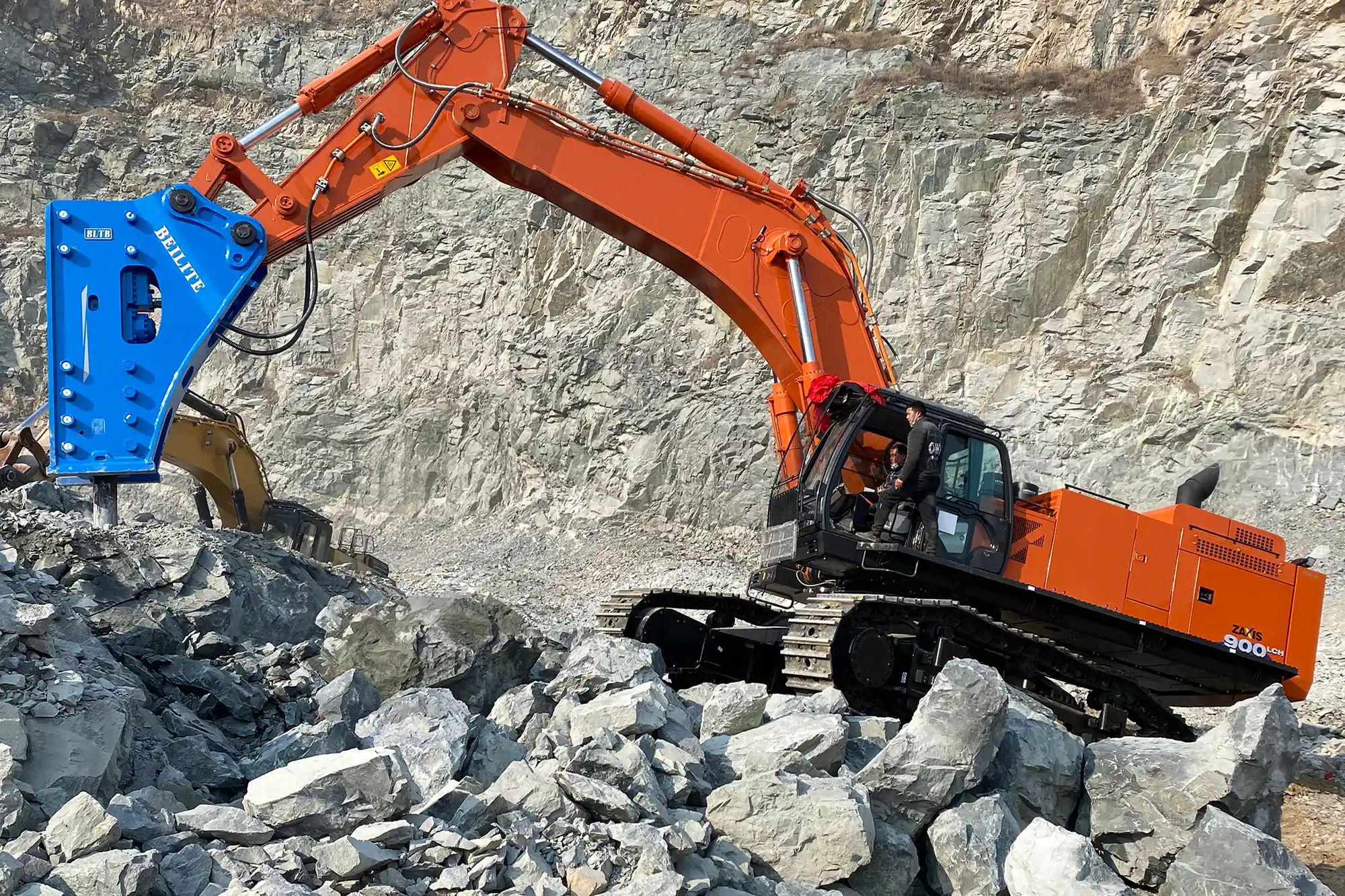
A hydraulic breaker converts the excavator’s hydraulic power into concentrated impact force. Inside the housing, a piston driven by pressurized oil strikes a chisel at high speed, fracturing rock or concrete on contact. The cycle repeats hundreds of times per minute.
Two accumulator designs dominate the market: piston-type and membrane-type. Piston accumulators handle higher pressures and suit heavy-duty rock breaking. Membrane accumulators respond faster and work well for lighter, repetitive tasks. The choice affects how the breaker feels under load and how efficiently it transfers energy to the material.
For a 30-ton excavator, the breaker’s operating weight matters as much as its impact rating. Mount something too heavy, and the excavator becomes front-heavy and unstable. Go too light, and the breaker bounces off hard material instead of fracturing it. The hydraulic system also has limits—flow rate and pressure must fall within what the excavator can supply without starving other functions or overheating.
 ;
;
Des indicateurs de performance qui comptent vraiment
Numbers on a spec sheet mean nothing if you don’t know how to read them. The metrics below determine whether a breaker will perform on your job site or become an expensive disappointment.
Matching the Breaker to Your Excavator and Application
Start with the excavator’s hydraulic output. A 30-ton machine typically delivers 180–240 liters per minute at 200–220 bar. The breaker must operate within these ranges, or you’ll either starve it of oil or blow seals from excess pressure.
Next, consider what you’re breaking. Hard granite demands high impact energy—measured in joules—delivered at a moderate frequency. Reinforced concrete benefits from faster blow rates that prevent the material from absorbing shock between impacts. Softer materials like asphalt need less energy but benefit from rapid cycling.
Chisel diameter affects penetration. A larger diameter spreads force over a wider area, useful for fracturing slabs. A smaller diameter concentrates energy for deeper penetration into solid rock.
Finally, look at features that protect the equipment. Blank firing protection prevents the piston from slamming forward when the chisel loses contact with material—a common cause of internal damage. Auto-lube systems keep the chisel bushing greased without operator intervention.
Key Specifications Explained
Impact energy tells you how hard each blow hits. For a 30-ton excavator working hard rock, you want at least 8,000 joules per strike.
Blow frequency indicates cycle speed. Rates between 200–300 blows per minute suit most heavy applications. Faster isn’t always better—excessive speed on hard material generates heat without improving breakage.
Operating pressure must match your excavator’s hydraulic system. Running a breaker above its rated pressure shortens component life. Running below it reduces impact force.
Oil flow rate determines whether the breaker cycles at full speed. Insufficient flow causes sluggish performance and incomplete piston strokes.
Power-to-weight ratio reveals efficiency. A breaker that delivers high impact energy relative to its mass puts less strain on the excavator’s boom and stick.
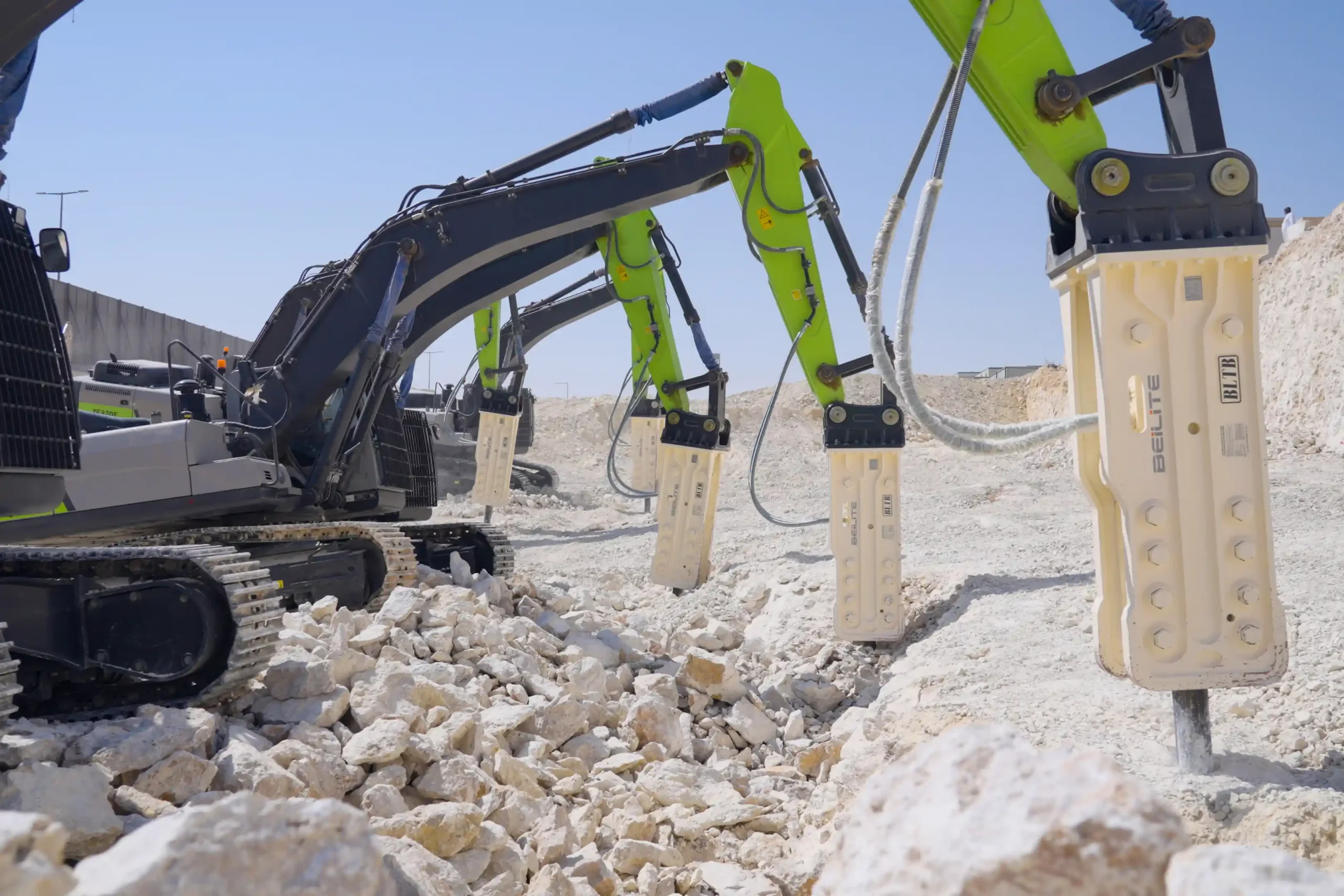
For 30-ton excavators, the BLT-155 model fits the operating envelope precisely. Here’s how it compares to adjacent models:
| Modèle | Excavator Weight (t) | Poids en ordre de marche (kg) | Diamètre du ciseau (mm) | Oil Flow (L/min) | Pression de fonctionnement (bar) | Impact Rate (bpm) |
|---|---|---|---|---|---|---|
| BLT-150 | 24-27 | 2310 | 150 | 150-210 | 180-200 | 200-300 |
| BLT-155 | 27-33 | 2610 | 155 | 180-240 | 200-220 | 200-300 |
| BLT-165 | 33-38 | 3149 | 165 | 200-260 | 210-230 | 150-300 |
 ;
;
Keeping the Breaker Running: Maintenance That Pays Off
A hydraulic breaker for a 30-ton excavator represents a significant investment. Protecting that investment comes down to consistent maintenance and operator discipline.
Why Maintenance Determines Equipment Life
The nitrogen charge inside the accumulator cushions each piston stroke. When nitrogen pressure drops, metal-to-metal contact increases, accelerating wear on the piston, cylinder, and seals. Checking and recharging nitrogen every 100–200 operating hours prevents this cascade of damage.
Chisel lubrication reduces friction at the bushing, where the tool slides back and forth thousands of times per hour. Grease must reach this interface continuously. Manual greasing works, but auto-lube systems deliver more consistent coverage.
Hydraulic oil quality affects every moving part. Contaminated oil carries particles that score cylinder walls and clog valves. Changing oil at recommended intervals—and using the correct viscosity—keeps the system clean.
Seal kits wear out predictably. Replacing them on schedule costs far less than repairing the damage caused by a blown seal.
 ;
;
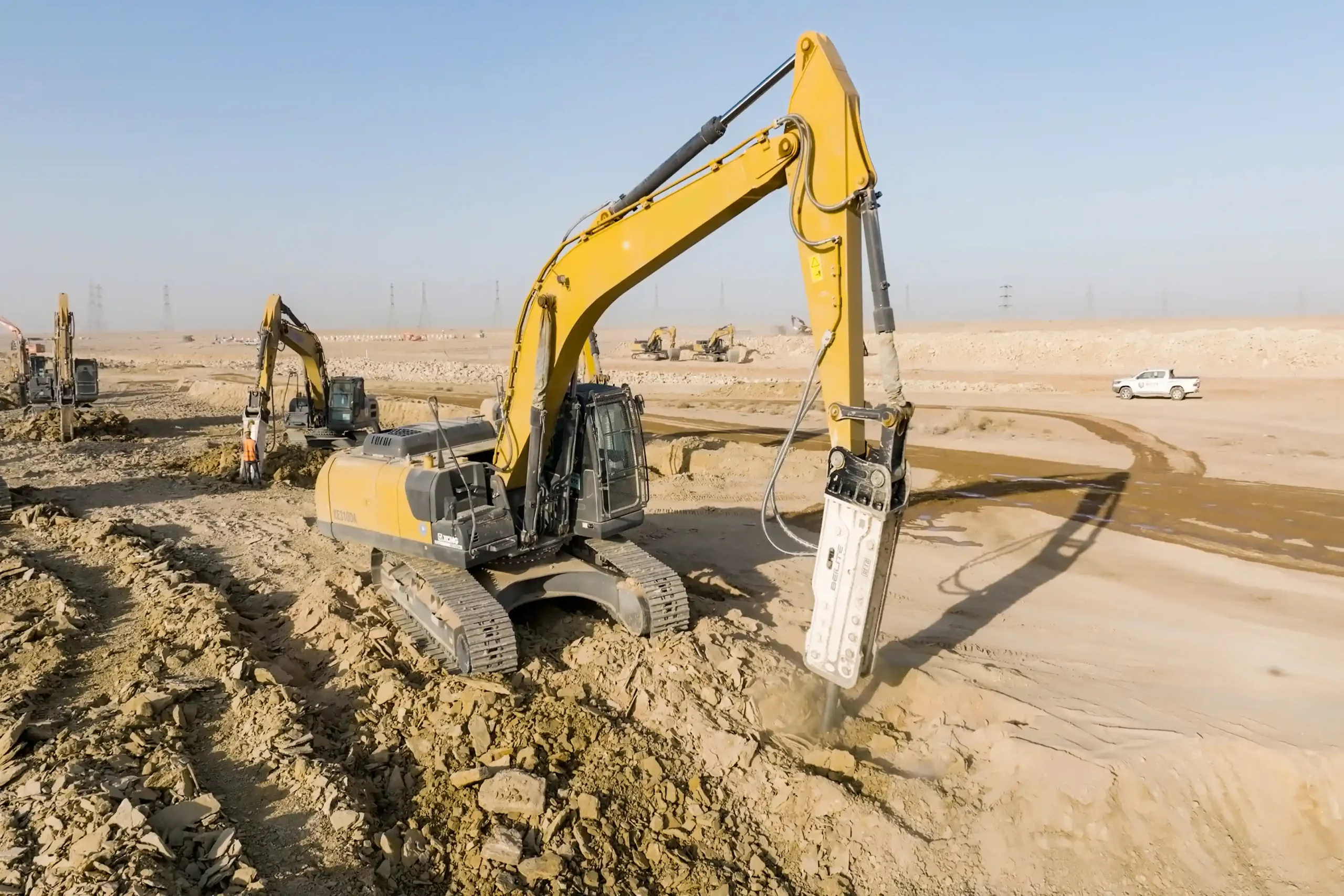
Operator habits matter as much as scheduled maintenance. Blank firing—running the breaker without material contact—sends shock waves through the housing that crack welds and damage the accumulator. Training operators to maintain tool contact and avoid prolonged breaking in one spot extends equipment life significantly.
Wear parts like chisels and bushings should be inspected daily. A worn chisel reduces breaking efficiency and increases stress on the breaker body. Replacing it before it fails completely prevents secondary damage.
Technology That Changes How Breakers Perform
Modern hydraulic breakers pack features that weren’t available a decade ago. These innovations address the persistent challenges of durability, efficiency, and operator fatigue.
Auto-lube systems pump grease to the chisel bushing at timed intervals, eliminating the variability of manual greasing. The result is consistent lubrication regardless of operator attention.
Smart control systems adjust impact energy based on resistance. When the chisel meets hard material, the system increases power. When resistance drops, it scales back to prevent blank firing. This adaptive response protects the breaker and improves fuel efficiency.
Energy recovery captures the rebound force when the piston bounces back after impact. Instead of dissipating as heat, this energy feeds back into the next stroke, boosting power output without increasing hydraulic demand.
Noise suppression and vibration dampening reduce operator fatigue and make urban job sites more manageable. Enclosed housings and rubber-mounted components absorb sound and shock that would otherwise transfer to the excavator cab.
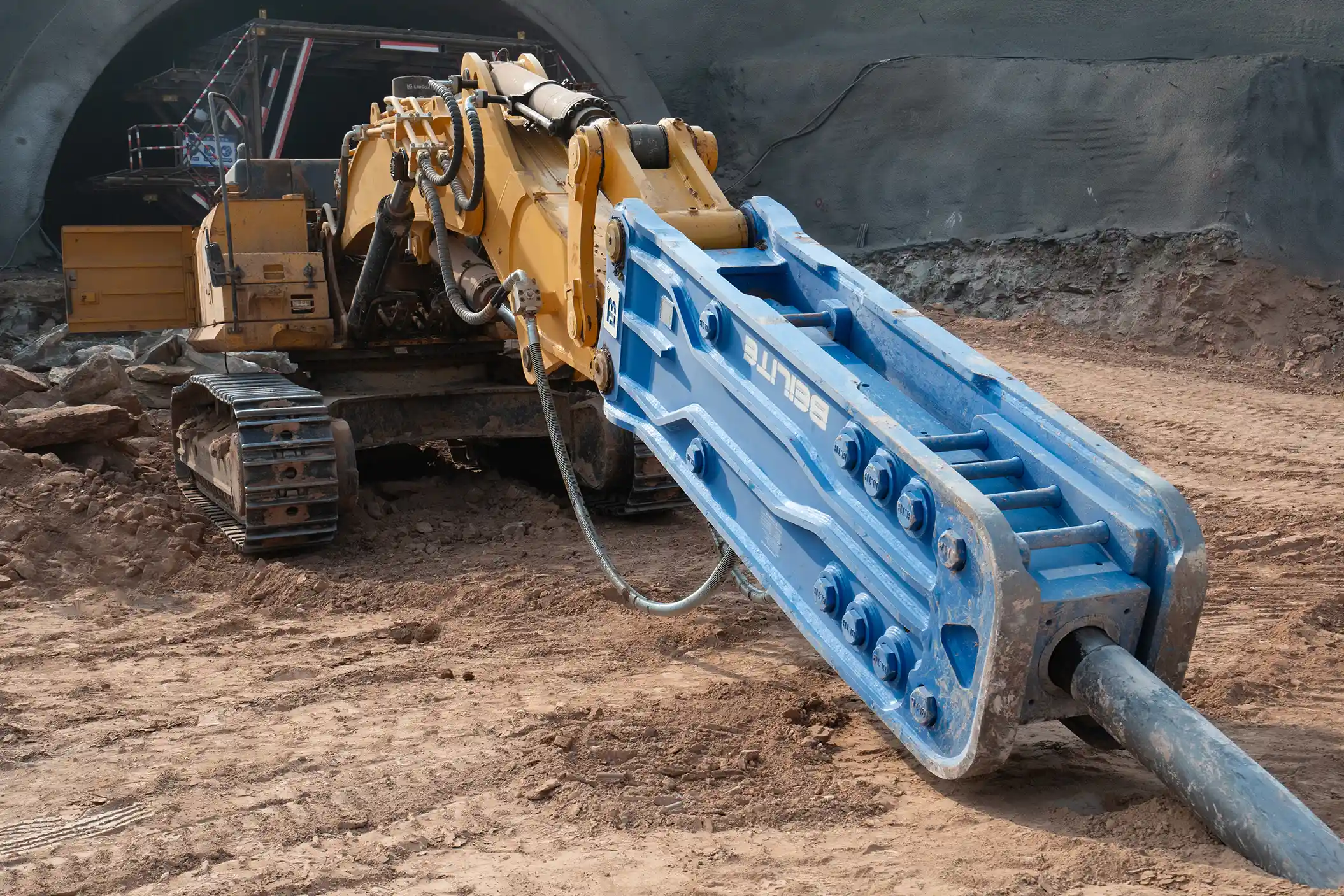
Quick-change systems let crews swap chisels in minutes instead of hours. Different tip geometries suit different materials—moil points for penetration, blunt tools for fracturing, flat chisels for scaling.
BEILITE’s participation in drafting China’s national standards for hydraulic breakers reflects the engineering depth behind these features. Hundreds of patents protect innovations that show up in real-world performance gains.
 ;
;
Là où les casseurs gagnent leur vie
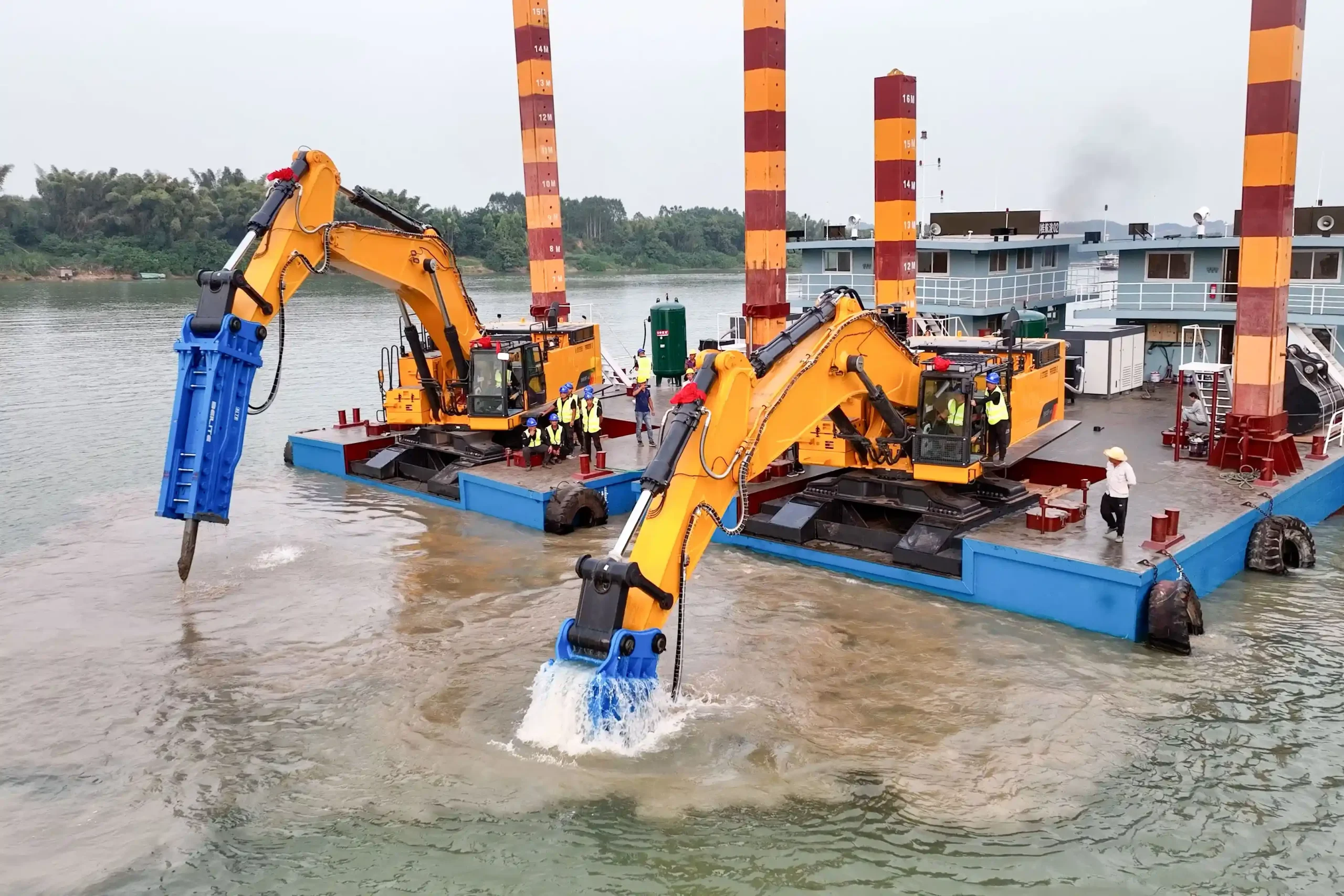
A hydraulic breaker for a 30-ton excavator handles work that would otherwise require blasting, manual labor, or specialized equipment. The versatility translates directly into project savings.
Demolition contractors use them to bring down concrete structures, break up foundations, and remove asphalt. The breaker replaces wrecking balls and reduces the need for cutting equipment.
Rock excavation for pipelines, utilities, and road beds relies on breakers where blasting permits are unavailable or the work area sits too close to existing structures. The controlled fracturing minimizes vibration damage to adjacent buildings.
Quarry operations use breakers to reduce oversized boulders that won’t fit through crushers. Secondary breaking at the face improves material flow and reduces loader cycle times.
Tunnel construction depends on breakers for scaling loose rock and breaking through mixed-face conditions where tunnel boring machines struggle.
 ;
;
The return on investment shows up in project timelines. A reliable breaker keeps the excavator productive instead of waiting for repairs. Faster material processing means earlier completion dates and lower labor costs. Equipment that holds its value through proper maintenance commands better resale prices when the time comes to upgrade.
Frequently Asked Questions About 30-Ton Excavator Hydraulic Breakers
What is the average lifespan of a hydraulic breaker for a 30-ton excavator?
Most hydraulic breakers for 30-ton excavators last between 5,000 and 10,000 operating hours. The range depends heavily on maintenance consistency, material hardness, and operator technique. Breakers used primarily on soft concrete with regular servicing reach the upper end. Units hammering hard granite with sporadic maintenance fall toward the lower end. Tracking operating hours and following service intervals gives the clearest picture of remaining life.
How do I determine the correct breaker size for my excavator?
Match three specifications: operating weight, oil flow requirement, and operating pressure. The breaker’s weight should fall within the excavator manufacturer’s recommended attachment range—typically 8–12% of the carrier’s operating weight. Oil flow and pressure must align with what the excavator’s auxiliary hydraulics can deliver. Exceeding these limits causes instability, hydraulic overheating, or insufficient power. Spec sheets from both the excavator and breaker manufacturers provide the numbers you need.
What are the common signs of a failing hydraulic breaker?
Reduced impact force is usually the first sign—the breaker takes longer to fracture material it previously handled easily. Excessive heat at the housing indicates internal friction from worn seals or low nitrogen charge. Oil leaks around the cylinder or hose connections point to seal failure. Unusual noise patterns, especially metallic clanking, suggest loose internal components. Frequent chisel breakage often means the tool retention system has worn beyond tolerance.
Can a hydraulic breaker for a 30-ton excavator be used on smaller or larger machines?
Running a breaker outside its rated carrier range creates problems in both directions. On a smaller excavator, the breaker’s weight destabilizes the machine and its hydraulic demand exceeds supply. On a larger excavator, the breaker becomes underpowered relative to the carrier’s capability, and the mismatch stresses mounting hardware. Manufacturers specify compatible weight ranges for good reason—staying within them protects both machines.
What safety precautions should be taken when operating a hydraulic breaker?
Clear the work area of personnel before starting. Inspect hydraulic hoses and connections for leaks or damage. Maintain proper tool angle to prevent the chisel from kicking sideways. Never operate the breaker without material contact—blank firing damages internal components and can throw debris. Keep the cab windows closed and wear hearing protection even inside the cab. Operators should complete formal training before running a breaker on any job site.
Partenaire de BEILITE pour des solutions de brise-roche hydrauliques de qualité supérieure
BEILITE Machinery Co., Ltd. has manufactured hydraulic breakers since 2002, earning recognition as a national high-tech enterprise in China. The BLT and BLTB product lines serve customers in over 100 countries, backed by hundreds of patents and compliance with national standards BEILITE helped draft. Whether you need a hydraulic breaker for a 30-ton excavator or equipment for a different carrier class, the engineering team can match specifications to your application. Reach out at [email protected] or call 40008-40008 to discuss your requirements.