 Anglais
 Français
20 Ton Excavator Hydraulic Breaker: Maximizing Site Efficiency
Getting the right hydraulic breaker matched to a 20-ton excavator makes a measurable difference in how a job runs. I’ve seen crews lose hours troubleshooting flow rate mismatches that could have been avoided with better upfront selection. The stakes are real—wrong sizing strains the carrier, burns through seals faster, and leaves money on the table in cycle time alone. This piece walks through the selection logic, the specs that actually matter, and what separates a breaker that performs from one that just looks good on paper.
How to Match Breaker Specs to Your Excavator’s Hydraulic System
Choosing the right hydraulic breaker for a 20-ton excavator comes down to methodical parameter matching. Skip this step, and you’re looking at premature wear, underperformance, or worse—damage to the carrier itself. The excavator’s hydraulic output, the application type, and the material hardness all feed into the decision. A proper breaker sizing guide accounts for each variable, and excavator compatibility isn’t something you eyeball.
Getting the Hydraulic Numbers Right
The breaker lives or dies by how well it integrates with the excavator’s hydraulic circuit. Operating pressure and flow rate are the two numbers that matter most. Push a breaker beyond its rated pressure range, and internal components take the hit. Starve it of flow, and you lose breaker power—impact frequency drops, and the tool bogs down. Overfeed it, and you’re generating heat that accelerates seal degradation.
Beilite Hydraulic Breaker Specifications for 20-Ton Excavators
| Modèle | Excavateur applicable | Poids en ordre de marche (kg) | Diamètre du ciseau (mm) | Pression de fonctionnement (bar) | Oil Flow (L/min) | Impact Energy (bpm) |
|---|---|---|---|---|---|---|
| BLT-135 | 18-22 t | 1736 | 135 | 160-180 | 100-150 | 350-500 |
| BLT-140 | 20–24 t | 1910 | 140 | 160-180 | 120-180 | 350-500 |
These hydraulic hammer specifications need to sit within the excavator hydraulic system’s output window. Check the carrier’s auxiliary circuit ratings before committing to a model.
Sizing the Breaker for a 20-Ton Class Machine
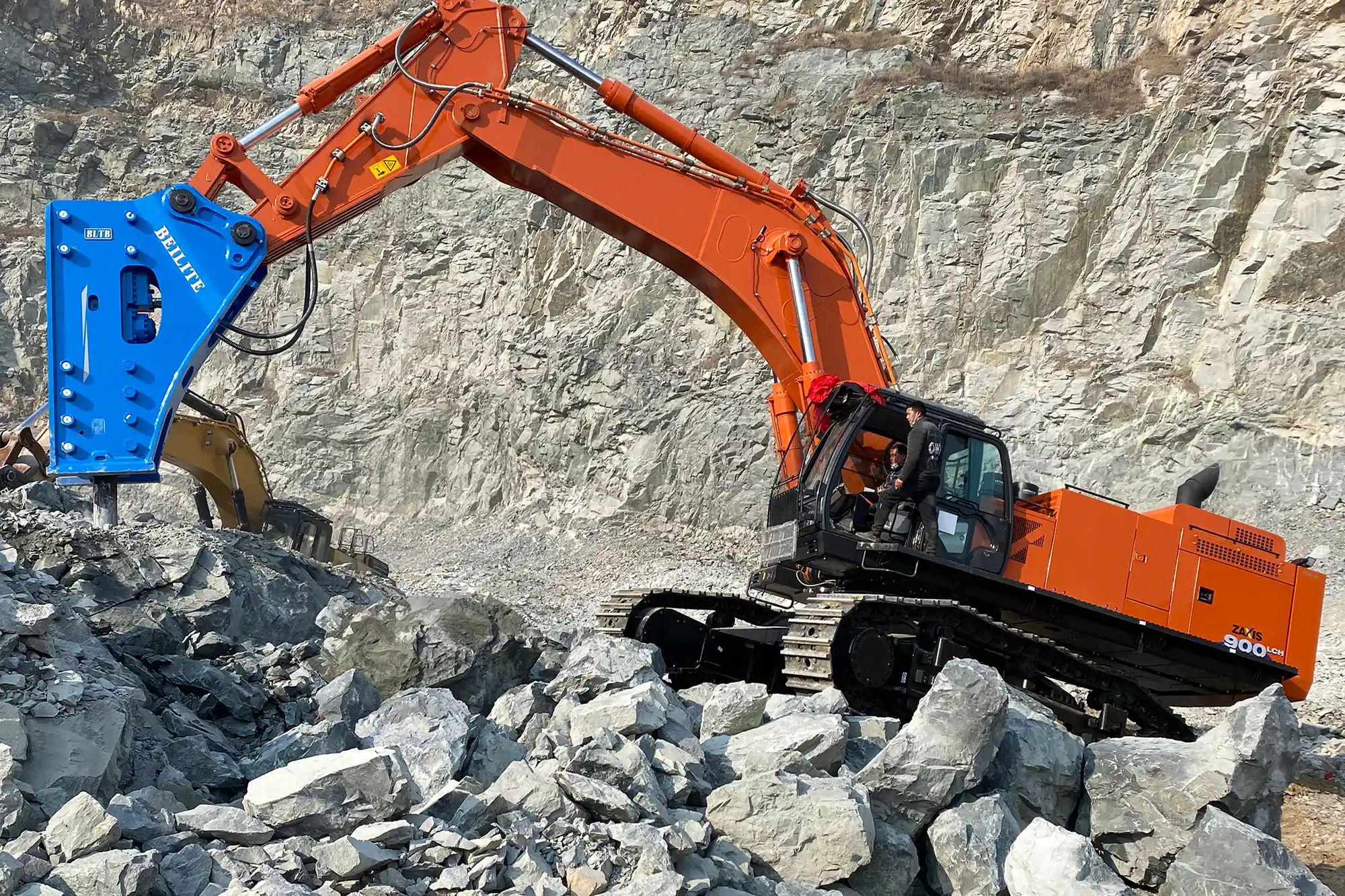
For this excavator class, the optimal breaker size lands in a fairly defined range. Engineering data and field performance both point to the same conclusion: a hydraulic breaker weighing between 1700 kg and 2000 kg, with a chisel diameter of 135mm to 140mm, handles the workload without overtaxing the carrier. The attachment weight needs to be heavy enough to transfer impact energy efficiently but not so heavy that it compromises boom stability or ground bearing capacity. This balance is what makes a demolition attachment effective rather than just powerful.
Technology That Translates to Faster Cycle Times
Maximizing site efficiency isn’t about working harder—it’s about the breaker doing more per blow. Design advances in piston geometry, nitrogen gas pressure management, and material metallurgy all contribute to breaker efficiency gains that show up in production numbers. The power-to-weight ratio tells you how much impact force you’re getting relative to the mass hanging off the boom.
Features That Actually Move the Needle
Modern hydraulic breakers pack in features that weren’t standard a decade ago. Automatic lubrication keeps grease on the tool bushing and thrust rings without operator intervention—miss a greasing cycle on an older unit, and you’re accelerating wear on parts that aren’t cheap to replace. Energy recovery system designs capture recoil energy and redirect it into the next blow, which means more impact force from the same hydraulic input and lower fuel burn at the carrier.
Anti-blank firing protection is another practical addition. When the chisel breaks through and loses contact with the material, the mechanism prevents the piston from slamming forward into empty space. That kind of unloaded impact is hard on internal components. Over thousands of cycles, it adds up. These aren’t marketing features—they’re engineering responses to real failure modes that field service teams see repeatedly.
Keeping the Breaker Running Long-Term
Operational longevity separates equipment that pays for itself from equipment that becomes a maintenance burden. The breaker lifespan depends heavily on how well the maintenance schedule is followed. Downtime prevention starts with daily checks—greasing, hose inspection, chisel condition. Skipping these creates compounding problems that surface later as bigger repairs.
Why Maintenance Schedules Exist
Regular maintenance isn’t bureaucratic overhead. It’s the difference between a breaker that runs reliably for years and one that’s constantly sidelined. Daily greasing prevents metal-on-metal contact in the tool bushing area. Hydraulic oil filter changes at proper service intervals keep contamination from circulating through the system and scoring valve surfaces. These aren’t optional steps.
Equipment reliability comes from consistency. Reduced operating costs follow from fewer unplanned repairs and parts replacements. The warranty and support programs that come with quality breakers assume you’re using genuine parts and following the maintenance protocol. Cut corners here, and you’re on your own when something fails.
Where 20-Ton Excavator Breakers Earn Their Keep
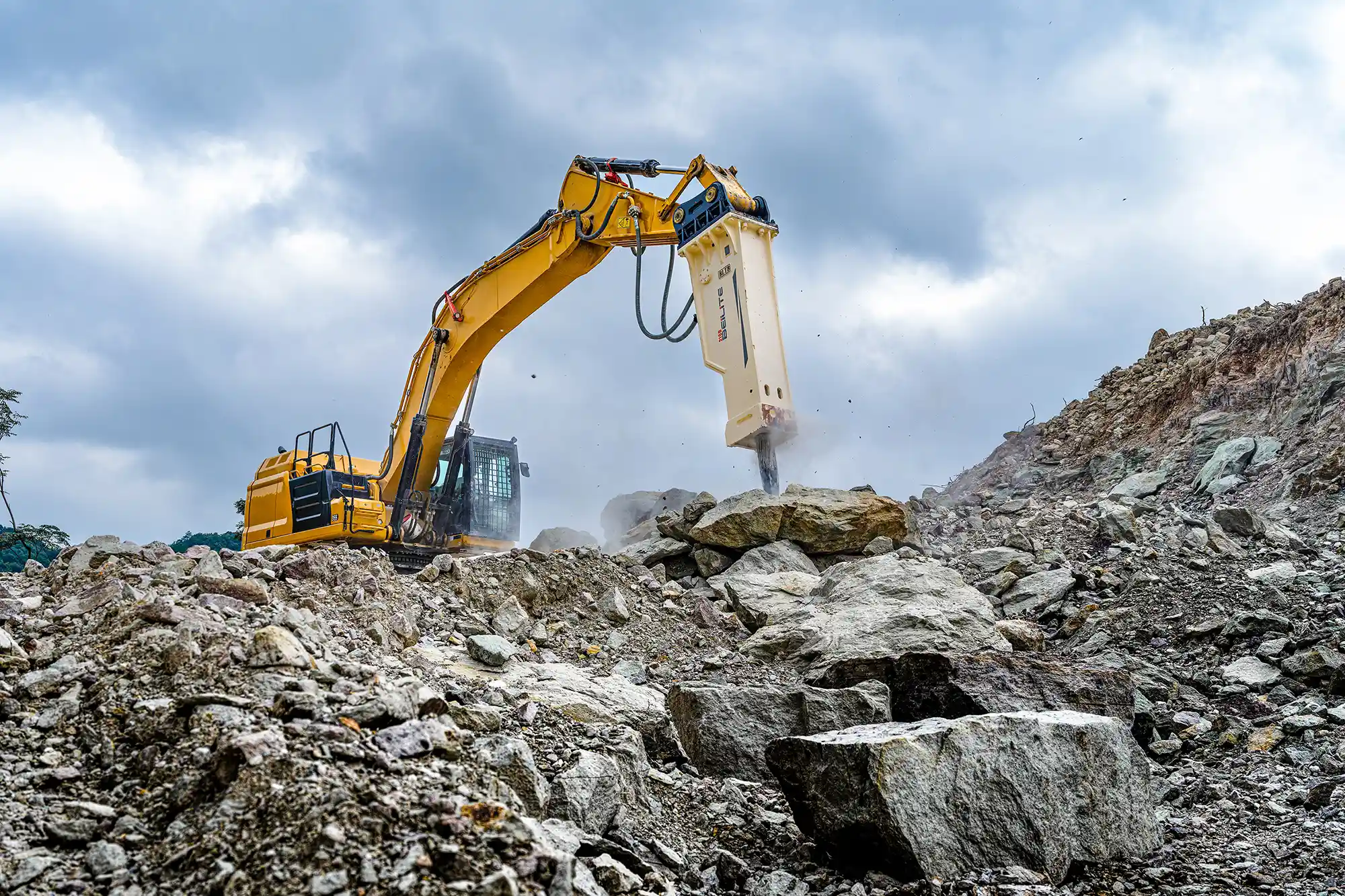
A hydraulic breaker Hammer sized for a 20-ton excavator handles a wide range of demanding applications. Construction demolition is the obvious one—breaking down reinforced concrete slabs, foundations, and structural elements. The same tool works in quarry operations for rock breaking, fracturing hard formations to feed crushers or clear overburden.
Trenching applications benefit from the breaker’s ability to cut through concrete breaking tasks quickly, whether it’s removing old pavement or opening up utility corridors. Urban demolition projects often require this excavator class because the machine is large enough to be productive but maneuverable enough to work in constrained spaces. Heavy-duty applications like bridge deck removal or industrial site preparation put these breakers through their paces.
Looking Beyond the Purchase Price
The cost of hydraulic breaker acquisition is only part of the financial picture. Total cost of ownership factors in durability, maintenance frequency, parts availability, and fuel efficiency at the carrier level. A breaker that runs efficiently puts less load on the excavator’s hydraulic pump, which translates to lower fuel consumption over the life of the attachment.
Operator comfort matters too—vibration damping and control responsiveness affect how long an operator can run the tool productively before fatigue sets in. Resale value holds better on equipment with a reputation for reliability and a documented maintenance history.
What the Price Range Looks Like
The breaker price range for 20-ton excavator attachments varies significantly. Entry-level units from lesser-known manufacturers might start in the lower tens of thousands. High-performance models from established brands like Beilite command higher investment cost because the engineering, materials, and quality control justify the premium. The difference shows up in operational expenses over time—fewer repairs, longer intervals between major service, and more consistent production output.
Beilite’s Engineering Background
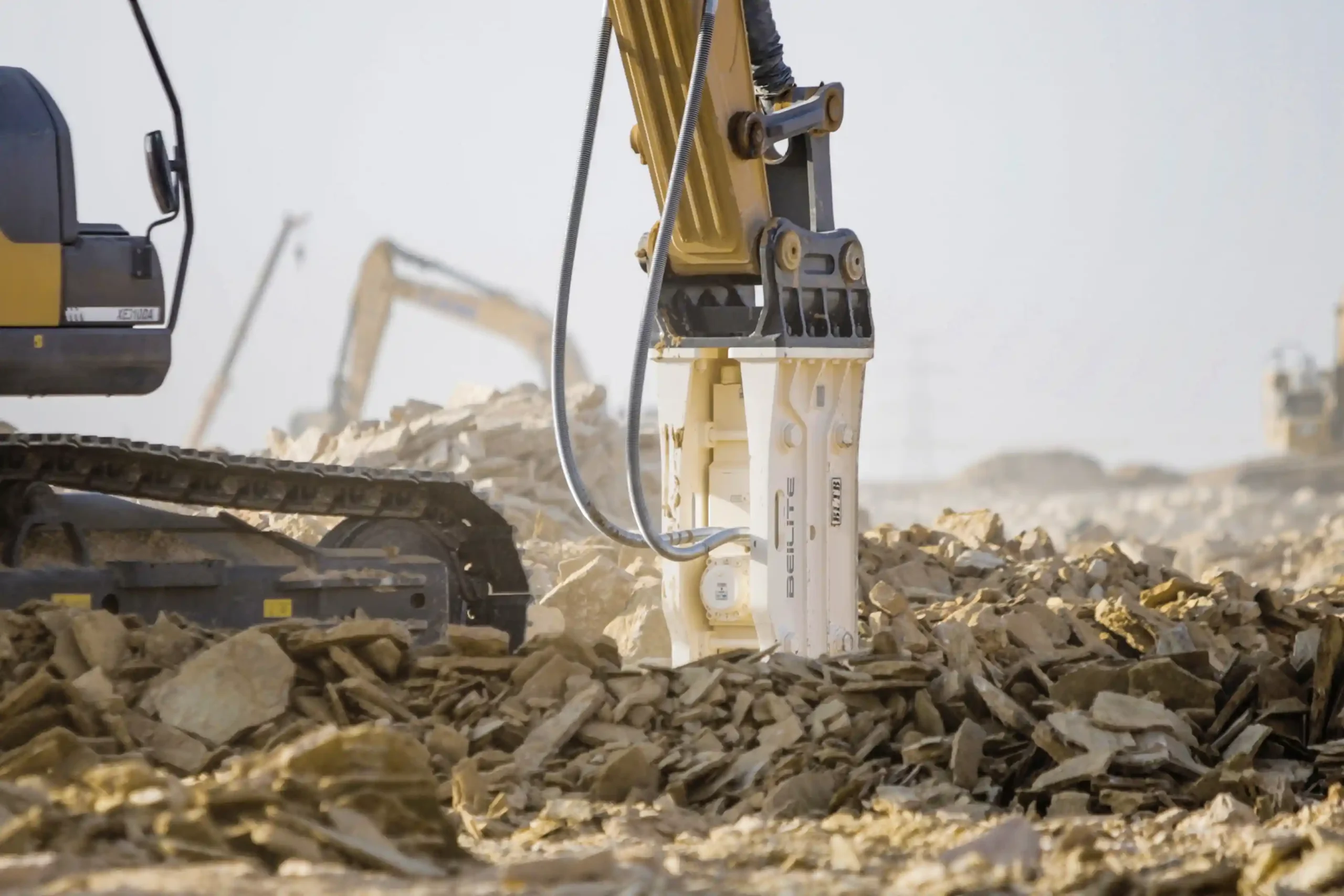
BEILITE Machinery Co., Ltd. has been building hydraulic breakers since 2002. The company holds national high-tech enterprise status in China and has accumulated hundreds of patents covering core breaker technologies. That R&D investment shows in the BLT and BLTB product lines, which are engineered for diverse working conditions and exported to over 100 countries.
Beilite participated in drafting China’s national standards for hydraulic breakers—a role that reflects technical credibility within the industry. The patented technology portfolio covers everything from piston design to gas charging systems. This isn’t a company assembling commodity components; it’s an organization that develops its own solutions and stands behind them.
Getting Started with Beilite
Beilite Machinery Co., LTD brings decades of focused development to the hydraulic breaker Hammer category. The BLT and BLTB series are purpose-built for excavators in the 20-ton range, with specifications validated across global markets. Reach out to the technical team at [email protected] or 40008-40008 for application-specific recommendations. The right breaker matched to your machine and your work conditions makes the difference between adequate performance and genuine productivity gains.
Questions fréquemment posées
What brands should I consider for a 20-ton excavator hydraulic breaker?
Several manufacturers compete in this segment, but Beilite Machinery Co., LTD has built a track record worth examining. The company’s national high-tech enterprise designation and extensive patent portfolio reflect serious engineering investment. The BLT and BLTB series have proven themselves across more than 100 countries in applications ranging from quarry work to urban demolition. That global deployment provides real-world validation that lab testing alone can’t replicate.
How do I verify that a hydraulic breaker will work with my specific excavator?
Start with the excavator’s auxiliary hydraulic circuit specifications—operating pressure range and flow rate capacity. Compare these against the breaker manufacturer’s requirements. For Beilite models, the published specs show the acceptable pressure and flow windows. If the excavator’s output falls within those ranges, the match should work. When in doubt, contact the manufacturer directly with your excavator model number. Getting this wrong creates problems that are expensive to fix after the fact.
What does a realistic maintenance routine look like?
Daily greasing is non-negotiable—the tool bushing and related wear surfaces need consistent lubrication. Hose connections should be checked for leaks or damage before each shift. Chisel inspection catches wear before it becomes a problem; running a worn chisel reduces breaking efficiency and can damage the tool retainer. Hydraulic oil filters need replacement at intervals specified by the manufacturer. Following Beilite’s maintenance guidelines protects the investment and keeps the breaker producing at its rated capacity.