 Anglais
 Français
Hydraulic Breaker Compatibility: Ensuring Perfect Fit and Function
Getting hydraulic breaker compatibility right determines whether your demolition or mining project runs smoothly or grinds to a halt with damaged equipment. I’ve seen operators lose weeks of productivity because someone assumed a breaker would “probably fit” without checking the specs. The technical details matter here—operating pressure, oil flow, pin dimensions, carrier weight limits—and getting any of them wrong creates problems that range from weak performance to genuine safety hazards. This covers what you actually need to verify before mounting a breaker, why certain mismatches cause specific failures, and how to avoid the compatibility mistakes that cost projects time and money.
Technical Specifications That Determine Whether a Breaker Works With Your Carrier
Selecting the correct hydraulic breaker means understanding how several specifications interact between the breaker and carrier machine. These parameters control whether the system operates efficiently or creates stress that leads to premature failure. Equipment managers need to review excavator specifications alongside breaker data before any purchase decision.
The breaker weight directly affects carrier stability and lifting capacity—mount something too heavy and you compromise the machine’s balance. Operating pressure and oil flow rate from the hydraulic system determine the breaker’s power output and cycle speed. Then there’s the mechanical interface: pin diameter, pin spacing, and mounting bracket configuration must align precisely.
Overlooking any single element creates problems. Mismatched hydraulic specs cause underperformance or component damage. Wrong pin dimensions mean the attachment either won’t mount or sits loose enough to create dangerous movement during operation.
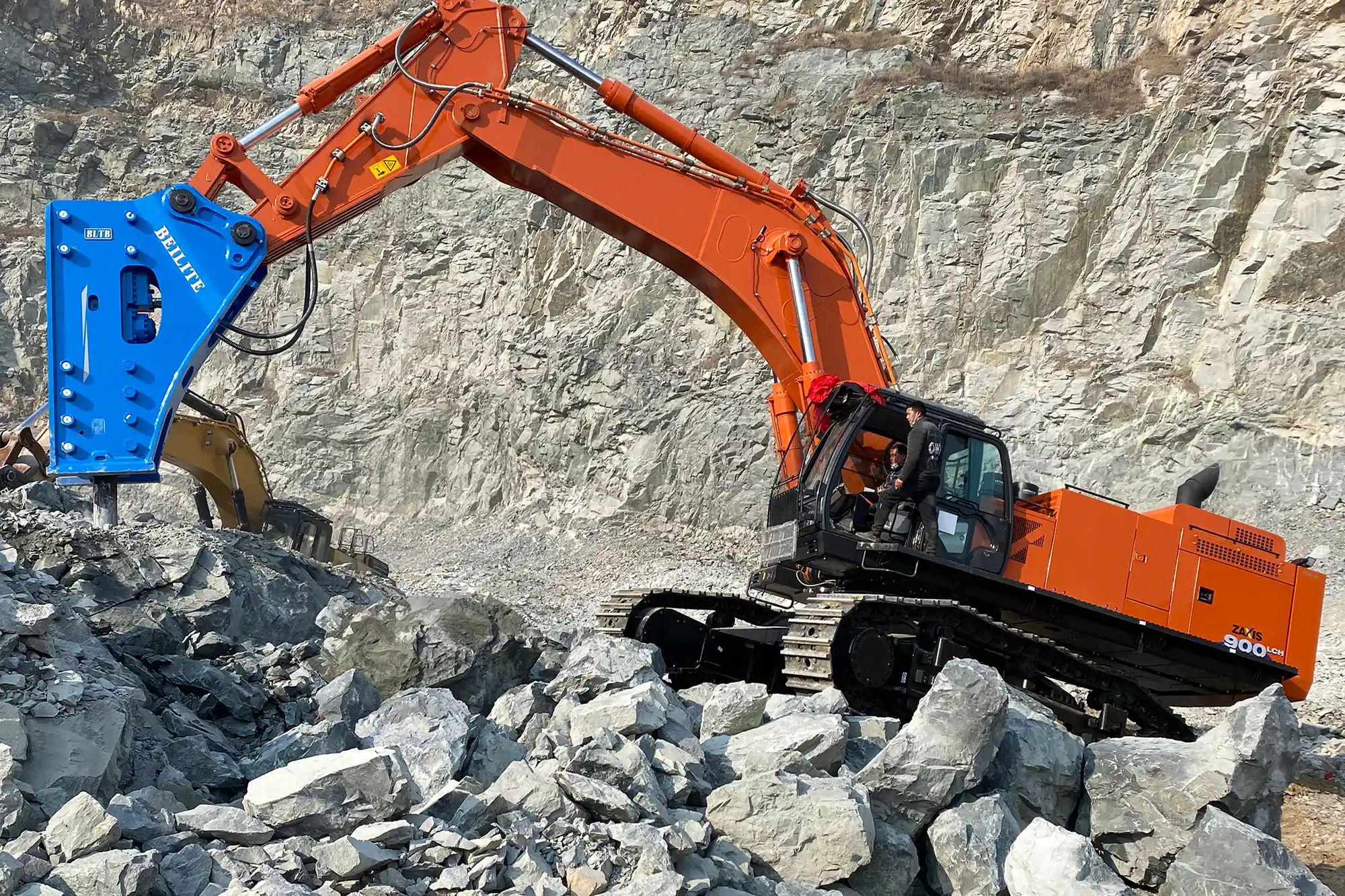
Table: Basic Hydraulic Breaker Compatibility Checklist
| Fonctionnalité | Excavator Specification | Breaker Requirement | Check Status |
|---|---|---|---|
| Operating Weight | 0.5-1.2 t | BLT-40 (86 kg) | Match |
| Hydraulic Flow | 15-30 L/min | BLT-40 (15-30 L/min) | Match |
| Pression de fonctionnement | 90-120 bar | BLT-40 (90-120 bar) | Match |
| Pin Diameter | Specific to model | Must align with carrier | Verify |
| Pin Spacing | Specific to model | Must align with carrier | Verify |
Parameters That Make or Break Hydraulic Breaker Performance
Effective hydraulic breaker operation depends on precise matching between the breaker and carrier machine capacity. This splits into hydraulic requirements and mechanical constraints.
The excavator’s hydraulic system must deliver adequate oil flow rate and operating pressure to power the breaker. Insufficient flow produces weak impacts that barely scratch the material you’re trying to break. Excessive pressure damages internal breaker components. Understanding auxiliary hydraulics becomes important here—components like the flow divider and pressure relief valve protect the system from overload conditions.
On the mechanical side, the service weight of the breaker must stay within the excavator’s safe operating limits. The tool diameter and chisel type should match your intended application and target material. Impact energy from the breaker also needs to align with what the carrier’s structure can handle without stress damage.
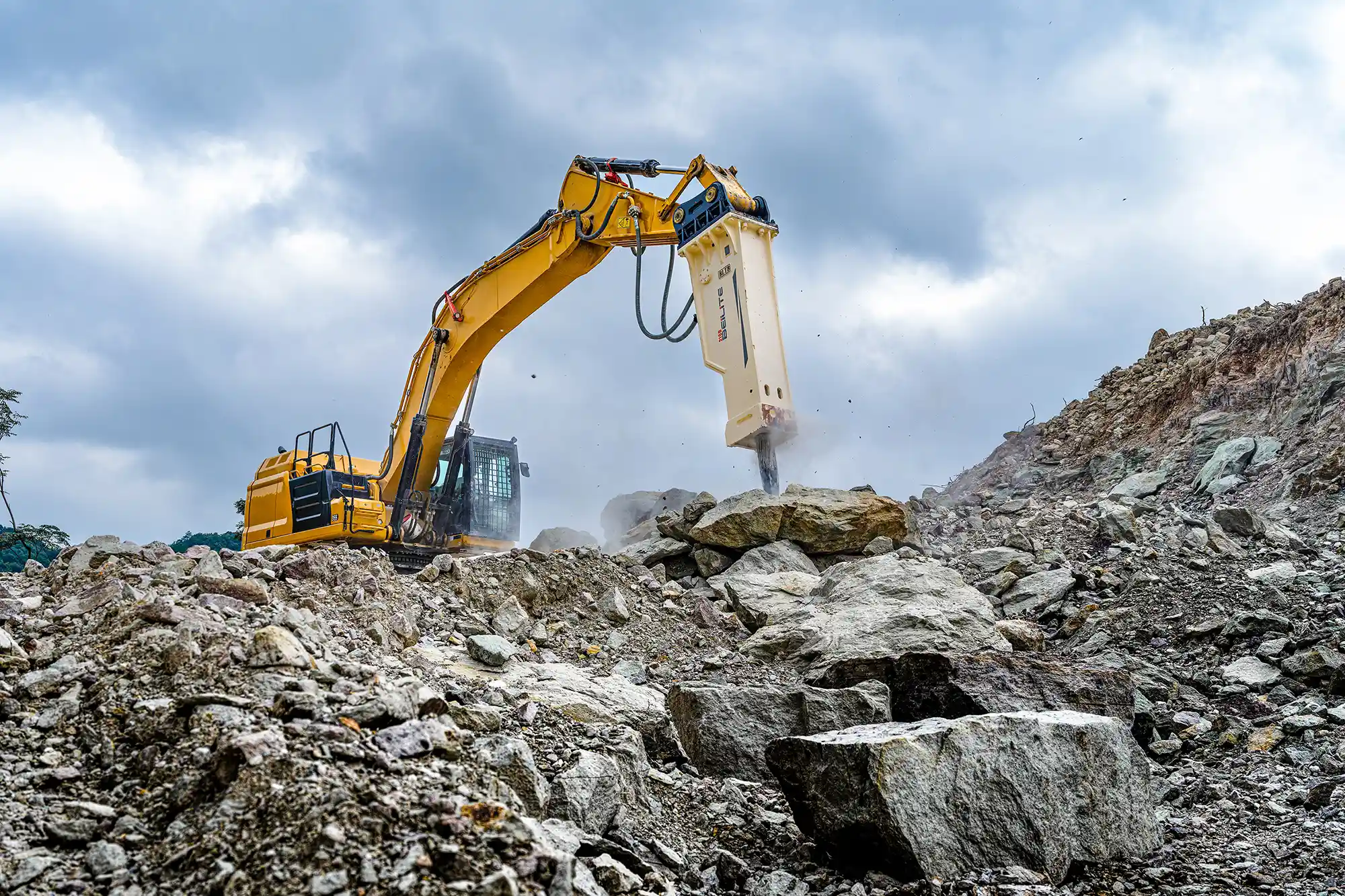
Getting Hydraulic Flow and Pressure Measurements Right
Accurately determining hydraulic flow and pressure forms the foundation for optimal breaker performance. Operators measure the excavator’s hydraulic output using a calibrated pressure gauge and flow meter connected to the auxiliary circuit.
The breaker’s specified operating pressure and oil flow rate must fall within the excavator’s delivery range. Mismatches create predictable problems: system overload, overheating, or significantly reduced breaker efficiency. A BLT-40 breaker, for example, requires 15-30 L/min flow and 90-120 bar pressure. Push beyond these limits and you risk damaging both the breaker and the excavator’s hydraulic components.
Regular monitoring of these settings catches drift before it causes failures. Hydraulic systems change over time as components wear, so what worked at installation may need adjustment after several hundred operating hours.
Pin Dimensions and Mounting Bracket Requirements
The physical connection between hydraulic breaker and carrier machine determines whether the attachment stays secure during operation. This involves verifying correct pin diameter and pin spacing for the pin-on attachment system.
Many excavators use quick coupler compatibility systems that require specific adapter plates. Some configurations need custom brackets to achieve a secure fit, particularly for specialized equipment or older machines. Proper attachment selection keeps the breaker firmly mounted, preventing dangerous detachment or excessive movement during breaking cycles.
Precise measurements eliminate play or stress concentration at mounting points. Even small dimensional mismatches create problems that compound over time—loose pins wear oval, brackets crack at stress points, and what started as minor slop becomes a safety hazard.
Weight Limits and Carrier Machine Capacity
Breaker weight stands as a primary constraint for carrier machine capacity. Each machine class has an operating weight range within which attachments can be safely operated.
Exceeding stability limits compromises the excavator’s balance. This creates tipping hazards on uneven ground and structural damage to the boom and frame over time. A BLT-155 breaker weighing 2610 kg is designed for excavators in the 27-33 t range. Mounting it on a smaller machine would be unsafe and could cause severe excavator damage—the machine simply isn’t built to handle those forces.
Manufacturer guidelines for both breaker and carrier machine establish the safe weight match. These aren’t conservative suggestions; they reflect actual engineering limits.
How Carrier Machine Type Shapes Breaker Selection
The carrier machine type significantly influences which hydraulic breaker makes sense for your application. Different machines handle different tasks and possess distinct hydraulic and structural capabilities.
A mini excavator in the 0.5-1.2 t class, compatible with the BLT-40 breaker, needs a lighter unit for precision work in confined spaces. The hydraulic output matches the scale of work these machines typically perform. Heavy-duty applications in mining or large-scale demolition demand powerful breakers mounted on larger excavators with proportionally robust hydraulic systems.
Backhoe loaders and skid steers have different mounting interfaces and hydraulic outputs compared to standard excavators. These differences require application-specific breakers designed for their particular characteristics. Understanding the inherent limitations and strengths of each machine class prevents both underperformance and equipment strain.
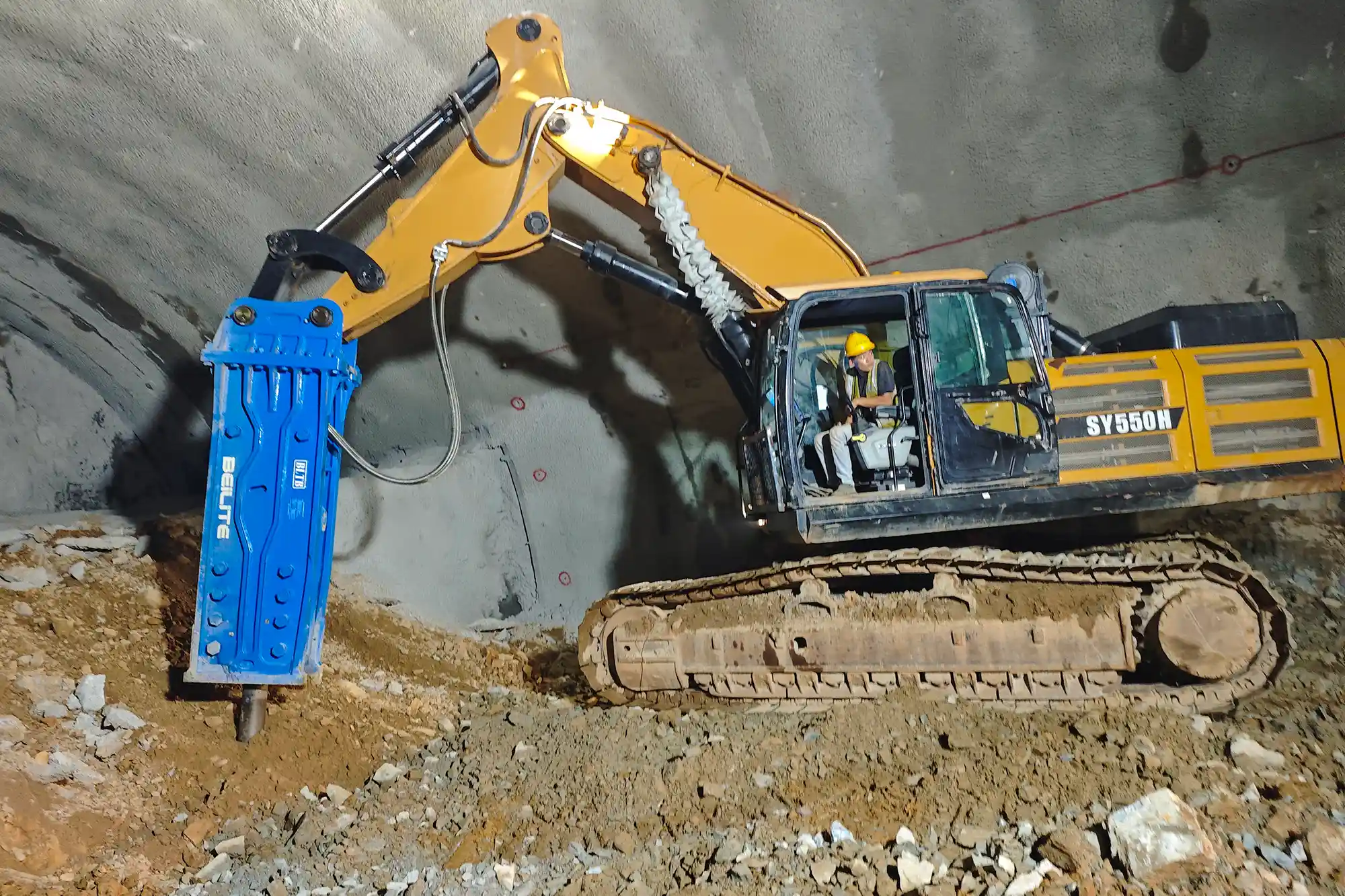
Comparison Chart: Beilite Breaker Series by Machine Type
| Beilite Model | Poids du disjoncteur (kg) | Excavateur applicable (t) | Débit d'huile de travail (L/min) | Applications primaires |
|---|---|---|---|---|
| BLT-40 | 86 | 0.5 - 1.2 | 15 - 30 | Mini Excavators, Light Demolition |
| BLT-75 | 466 | 6 - 8.5 | 50 – 90 | General Construction, Municipal Engineering |
| BLT-155 | 2610 | 27 – 33 | 180 – 240 | Heavy Demolition, Mining, Quarrying |
Installation Quality Determines Equipment Lifespan and Safety
Proper installation goes beyond following a checklist—it directly affects breaker longevity and operational safety. A perfectly compatible hydraulic breaker can still fail prematurely or create hazards if incorrectly installed.
A comprehensive installation guide must be followed completely, covering everything from hose connections to initial parameter settings. Correct setup minimizes stress on both breaker and carrier, reducing vibration transmission and noise levels. Following a strict maintenance schedule and understanding troubleshooting procedures maximizes operational lifespan.
Incorrect installation often voids warranties and leads to repairs that cost more than doing it right the first time. Project timelines and budgets take direct hits when equipment fails due to preventable installation errors.
Hydraulic Connections and Parameter Verification
After physically attaching the breaker, verifying all hydraulic hose routing and connections becomes critical. Hoses need correct routing, freedom from kinks, and secure fastening to prevent leaks or damage during operation.
Pressure settings and flow adjustments on the excavator must match the breaker’s specifications. Using a flow meter and pressure gauge confirms accurate settings rather than relying on gauge readings that may have drifted. Any leak detection should prompt immediate attention—hydraulic fluid under pressure creates both safety hazards and environmental concerns.
Proper hydraulic setup ensures the breaker receives correct power levels. This prevents both underperformance from insufficient flow and system overload from excessive pressure.
Break-In Procedures and Operating Techniques
The breaker break-in period matters for new or recently serviced units. Operating at reduced power for the first few hours allows components to seat properly and surfaces to mate without excessive wear.
Operator training guidelines establish optimal usage patterns. Avoiding prolonged blank firing prevents damage to the breaker’s internal components. Excessive prying stresses the tool and mounting system in ways they weren’t designed to handle.
Regular checks for loose bolts, leaks, and unusual noises form the core of preventative maintenance. Proper techniques—applying steady pressure, avoiding over-extension, maintaining appropriate chisel angles—extend breaker life and maintain consistent performance throughout the equipment’s service period.
Compatibility Problems and Their Consequences
Ignoring compatibility requirements creates predictable problems that affect both performance and safety. The most immediate consequence is reduced impact energy, making the breaker ineffective for its intended task. This typically stems from mismatched hydraulic flow or pressure.
Premature failure of seals, hoses, or internal components follows from excessive strain or overheating. Structural damage to the excavator’s boom or dipper occurs when an improperly weighted breaker or incorrect mounting creates stress concentrations.
Using an incompatible attachment can also void the manufacturer’s warranty, leaving you without support when problems develop. Diligent compatibility checks remain the most effective equipment damage prevention strategy available.
Fine-Tuning Breaker Performance Beyond Basic Compatibility
Beyond basic compatibility, several considerations can further optimize hydraulic breaker performance and extend service life. Quick coupler integration significantly enhances versatility, allowing rapid attachment changes for different tasks. This convenience introduces another layer of compatibility verification for hydraulic lines and mechanical fit.
A flow divider or pressure relief valve can fine-tune hydraulic output from the carrier. These components ensure the breaker operates within ideal parameters even when the excavator’s auxiliary circuit slightly exceeds specifications. This becomes particularly useful when one carrier serves multiple attachment types with different hydraulic requirements.
Consultation with manufacturers addresses complex compatibility challenges and provides solutions tailored to specific equipment combinations. Understanding these technical nuances contributes to optimized performance and robust equipment protection. Warranty terms should be verified when integrating new accessories or making modifications to ensure coverage remains intact.
Common Questions About Hydraulic Breaker Compatibility
What happens when you use an incompatible hydraulic breaker?
Using an incompatible hydraulic breaker creates several interconnected problems. Reduced efficiency and impact energy make tasks take longer while consuming more fuel. Increased wear affects both the breaker and carrier machine, leading to frequent breakdowns and expensive repairs. Structural damage to the excavator’s boom or frame develops over time from repeated stress cycles the machine wasn’t designed to handle. Safety hazards increase due to potential instability or attachment failure during operation. Manufacturers typically void warranties when damage results from incompatible use, eliminating support options when you need them most.
How frequently should compatibility settings be verified?
Initial compatibility checks before first use are essential. Beyond that, periodic reviews make sense after major maintenance, when changing carrier machines, or when performance issues appear. Regularly checking hydraulic flow and pressure settings confirms they remain within the breaker’s specified range—hydraulic systems drift over time as components wear. This proactive approach identifies minor discrepancies before they become significant problems, maintaining breaker efficiency and preventing unexpected downtime that disrupts project schedules.
Can one hydraulic breaker work with multiple excavator models?
A single hydraulic breaker can sometimes work across different excavator models, particularly with adapters or quick coupler systems. Each machine still requires thorough compatibility verification. Breaker weight, hydraulic system requirements for flow and pressure, and pin dimensions must be confirmed for every new carrier. Quick couplers offer convenience but don’t eliminate fundamental compatibility assessments. The hydraulic specs of different excavators vary enough that what works perfectly on one machine may underperform or cause damage on another.
What does a quick coupler add to the compatibility equation?
A quick coupler enhances hydraulic breaker versatility by enabling rapid attachment and detachment from various excavators. It also adds another compatibility layer to verify. The quick coupler itself must match both the excavator’s mounting system and the breaker’s pin dimensions. Hydraulic connections on the quick coupler must align with the breaker’s hoses and flow requirements. While convenient for operations that switch attachments frequently, quick coupler compatibility requires the same careful consideration as direct mounting to maintain system integrity and optimal hydraulic breaker performance.
Partner with BEILITE for Unmatched Hydraulic Breaker Solutions
For expert guidance on selecting the perfect hydraulic breaker for your specific machinery and application, or to explore BEILITE’s range of high-performance, nationally standardized BLT and BLTB breakers, contact our specialists today. Leverage our two decades of R&D and patented technology for unparalleled reliability and efficiency. Visit [email protected] or call 40008-40008.