 Anglais
 Français
Hydraulic Breaker Automation: Optimizing Performance and Safety
The first time I watched a hydraulic breaker operate itself—adjusting its strike pattern mid-cycle without any operator input—I realized we had crossed into genuinely different territory. This wasn’t incremental improvement. Hydraulic breaker automation represents a fundamental shift in how demolition and construction equipment thinks, responds, and protects the people around it. The technology integrates sensors, machine learning, and remote control systems to deliver consistent breaking performance while keeping operators away from the most dangerous zones on any job site.
What Makes Automated Hydraulic Breakers Work
Automated hydraulic breakers rely on several interconnected technologies that communicate constantly during operation. Advanced sensors measure impact force, material resistance, and breaker position in real time. This data feeds into control systems that adjust parameters on the fly—if the material suddenly gets harder, the system responds before an operator would even notice the change.
IoT integration enables remote operation and monitoring from safe distances. Operators can control equipment without standing near falling debris or excessive vibration exposure. The connectivity also supports machine learning algorithms that analyze operational patterns over time. These algorithms predict when maintenance will be needed and refine striking strategies based on accumulated data.
Digital twins—virtual replicas of physical equipment—allow teams to simulate operations before committing to specific approaches. This proves particularly valuable on complex demolition projects where mistakes carry serious consequences. Telematics systems transmit operational data continuously, giving fleet managers visibility into equipment performance across multiple sites. The integrated approach maximizes both productivity and equipment longevity.
Why Automated Breakers Deliver Better Results
The productivity gains from hydraulic breaker automation show up in measurable ways. Consistent, optimized striking power reduces breaking time per cubic meter of material. This translates directly into lower fuel consumption and reduced labor requirements—fewer people need to be on site when machines handle more of the work autonomously.
Operator safety improves dramatically when personnel move away from hazardous working zones. Remote operation capabilities mean the person controlling the breaker doesn’t need to absorb the noise, vibration, and physical risk that traditional operation demands.
Predictive maintenance protocols minimize unexpected breakdowns. The systems monitor component wear and operational stress continuously, scheduling service before problems escalate. Environmental impact decreases through optimized energy efficiency—the breaker uses only the force necessary, reducing emissions from over-operation.
Precision demolition capabilities minimize collateral damage to surrounding structures. This matters enormously in urban environments where adjacent buildings must remain intact. The combination of efficiency, safety, and equipment longevity creates strong return on investment for organizations willing to adopt these technologies.
How Automation Extends Equipment Life and Simplifies Maintenance
Automated systems employ predictive maintenance strategies that fundamentally change how organizations approach equipment care. Real-time monitoring of critical parameters prevents premature wear and catches potential failures early. Integrated diagnostics identify developing issues before they become expensive repairs.
Maintenance scheduling becomes data-driven rather than calendar-based. Service intervals reflect actual usage patterns instead of arbitrary timelines. Component wear analysis guides timely replacements, avoiding the catastrophic failures that occur when parts run past their useful life.
The automated adjustments themselves reduce stress on mechanical components. When a breaker optimizes its operation automatically—backing off when resistance drops, increasing force only when needed—it experiences less cumulative wear than equipment operated manually at constant settings. This extends equipment longevity significantly.
Practical Challenges and How to Address Them
Implementing hydraulic breaker automation involves real obstacles that organizations must plan for. System integration with existing fleet management platforms requires careful coordination—different software systems don’t always communicate smoothly. Regulatory compliance and evolving safety standards demand ongoing attention from both manufacturers and operators.
The skilled labor shortage affects automation adoption in an unexpected way. While automated systems reduce the number of operators needed, they require technicians who understand both hydraulic systems and digital controls. Finding people with this combination of skills remains difficult.
Initial investment costs are substantial. Organizations need thorough financial analysis before committing. A phased adoption approach helps—gradually integrating new technologies minimizes disruption and allows teams to build expertise incrementally.
Comprehensive training programs prove essential for successful deployment. Operators need to understand not just how to use the systems, but why the automation makes certain decisions. Cybersecurity must be a priority when connecting heavy equipment to networks. Protecting operational data and preventing unauthorized access to equipment controls isn’t optional.
Understanding Investment Costs and Long-Term Returns
Initial costs for automated hydraulic breakers represent significant capital expenditure. The investment covers advanced hardware, specialized software, and integration services. Organizations should expect higher upfront spending compared to conventional equipment.
The long-term return on investment changes the calculation substantially. Operational costs decrease through reduced fuel consumption, optimized energy use, and lower maintenance frequency. Increased productivity and precision lead to faster project completion. Enhanced operator safety reduces liability exposure and insurance costs.
A comprehensive cost-benefit analysis typically reveals payback periods shorter than many organizations expect. Extended equipment life and optimized resource utilization generate savings that compound over time. For organizations with consistent heavy breaking requirements, automation becomes a financially sound decision within a few years of deployment.
Industries Seeing the Biggest Impact
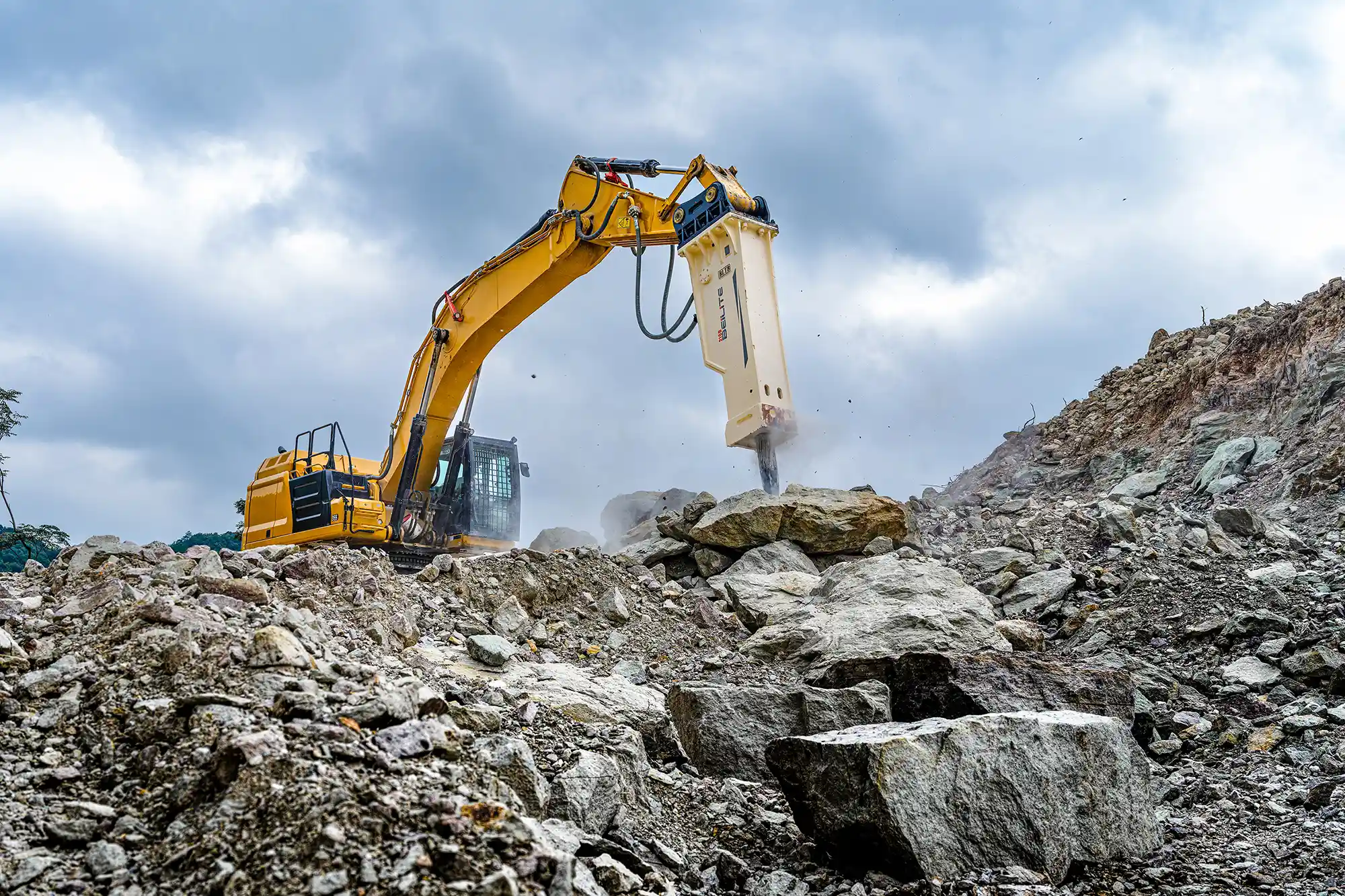
Smart breaker technology transforms operations across several heavy industries, though the specific benefits vary by application. In mining operations and quarrying, automated breakers enhance safety by enabling remote rock breaking. Personnel stay away from hazardous areas while equipment delivers consistent force in challenging environments. Extraction rates improve when breaking cycles optimize automatically.
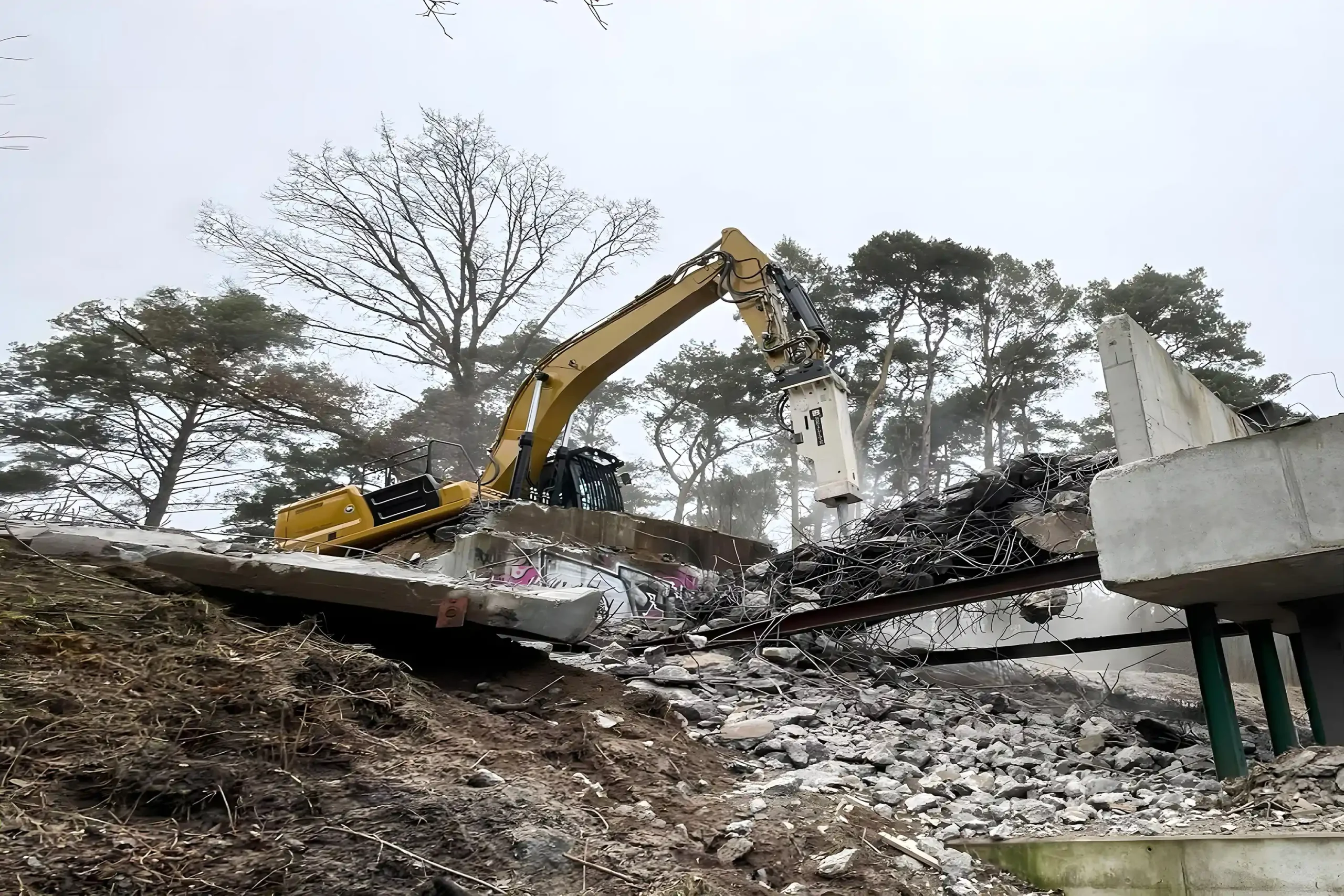
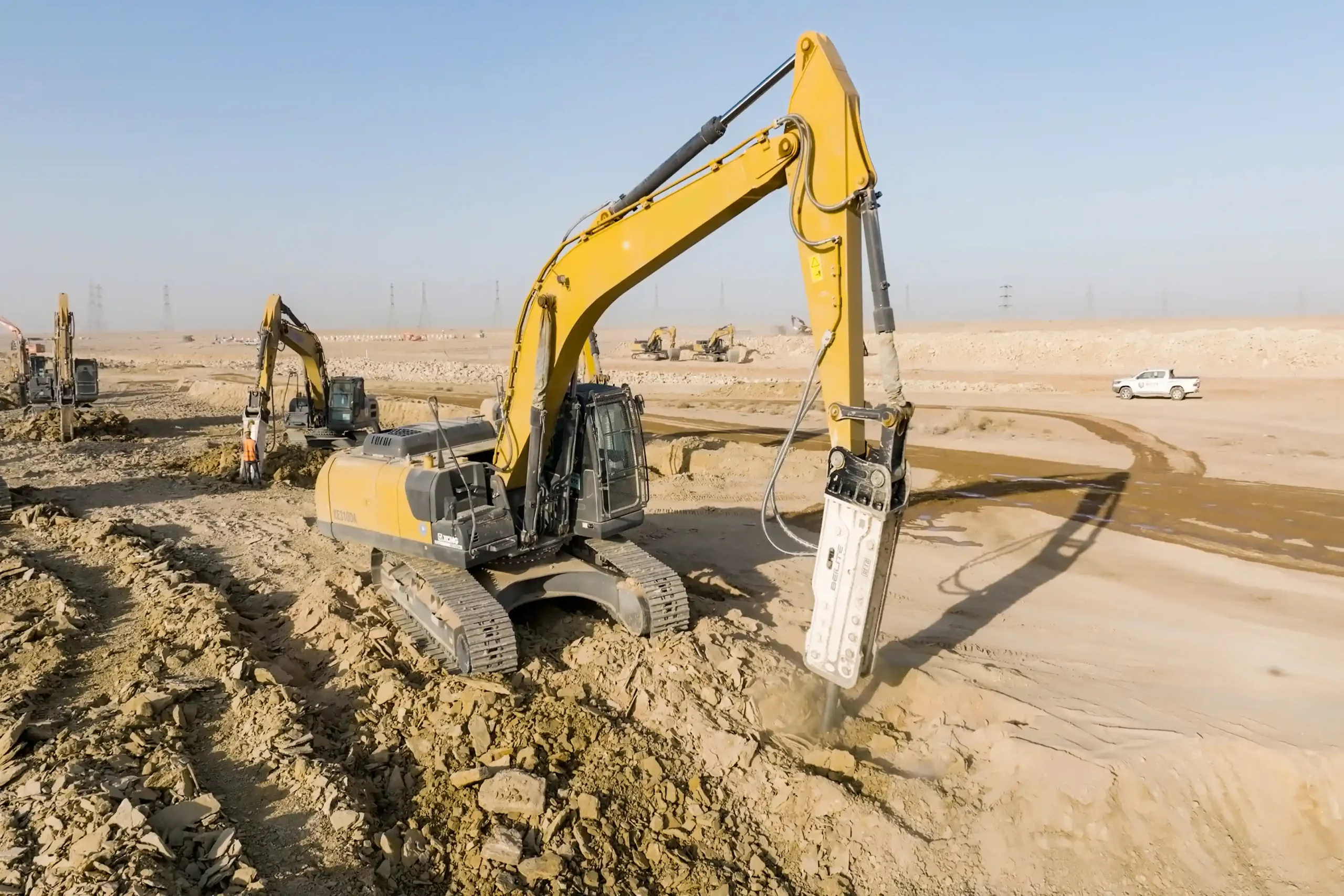
Infrastructure development benefits from precision demolition capabilities essential for urban renewal and road construction. Automated systems minimize disruption in confined or sensitive spaces where traditional methods would cause excessive collateral damage.
Specialized excavation tasks—tunneling, trenching, foundation preparation—achieve greater accuracy and speed with automated control. The demolition industry increasingly adopts automation for hazard reduction and controlled dismantling of structures.
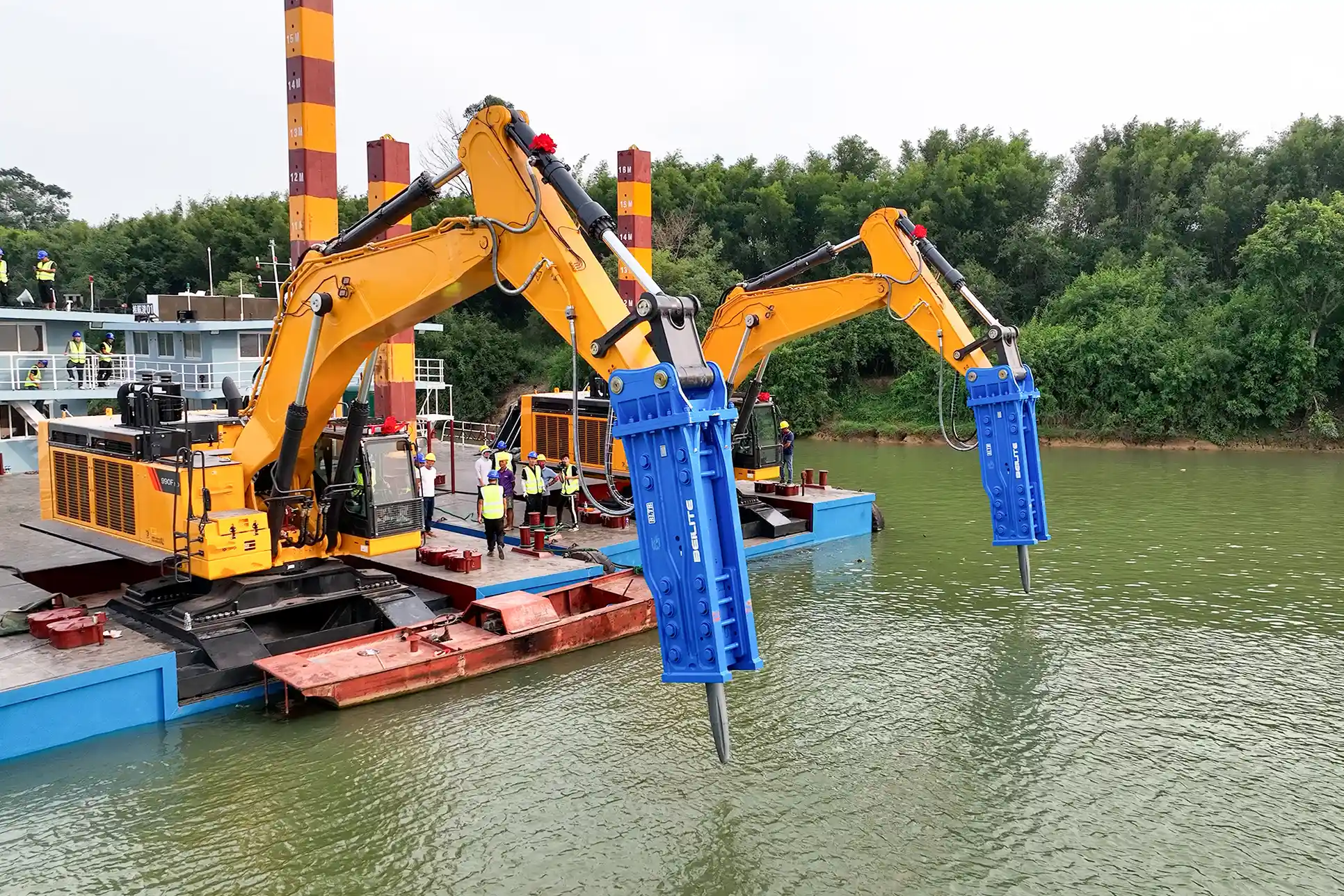
Applications extend beyond construction. Slag breaking in metallurgical plants benefits from consistent force and reduced human exposure to extreme heat. Underwater construction utilizes remote-controlled breakers for tasks too dangerous for divers to perform directly.
Which Sectors Gain the Most from Automation
Mining operations gain significantly, particularly in safety and operational consistency. Automated systems remove personnel from dangerous underground or open-pit areas where rock falls and equipment collisions pose constant risks.
Construction efficiency improves through precise material removal and site preparation. When breakers adjust their operation based on real-time conditions, projects move faster with less rework.
Demolition precision matters critically in urban environments. Minimizing structural damage to adjacent buildings and reducing environmental impact from dust and debris makes automation valuable for contractors working in populated areas.
Quarry productivity increases through continuous, optimized breaking cycles. Infrastructure projects leverage automation for speed and accuracy on road and bridge construction. Heavy industry applications in metallurgy benefit from consistent force delivery and reduced human exposure to hazardous conditions.
The Beilite Approach to Automated Breaking Technology
BEILITE Machinery Co., Ltd., established in 2002, operates as a national high-tech enterprise focused on R&D and manufacturing of high-end hydraulic breakers. The company has achieved breakthroughs in core technologies and participated in formulating national standards for hydraulic breakers in China. Hundreds of patents demonstrate ongoing leadership in the field.
BLT brand products and BLTB brand products cover a wide variety of working conditions. These high-end hydraulic breakers reach customers in over 100 countries and regions. BEILITE delivers quality and service that has earned trust from customers worldwide, pioneering the next generation of automated breaker solutions.
| Modèle | Applicabilité (tonnage de la pelle) | Poids du disjoncteur (kg) | Diamètre du ciseau (mm) | Pression de service (bar) | Fréquence du souffle (bpm) |
|---|---|---|---|---|---|
| BLT-40 | 0.5-1.2 t | 86 | 40 | 90-120 | 800-1400 |
| BLT-70 | 4.5-6 t | 362 | 70 | 110-140 | 500-900 |
| BLT-100 | 10-14 t | 986 | 100 | 150-170 | 350-700 |
| BLT-135 | 18-22 t | 1736 | 135 | 160-180 | 350-500 |
| BLT-165 | 33-38 t | 3149 | 165 | 210-230 | 150-300 |
Take the Next Step with Beilite Automation
Operational efficiency and safety improve measurably with hydraulic breaker automation. As a national high-tech enterprise and participant in national standards development, Beilite Machinery Co., LTD develops high-end, reliable solutions for demanding applications. Explore how BLT and BLTB brand products can support your projects. Contact us for expert consultation and to learn about our innovative range. Email: [email protected] | Phone: 40008-40008.
What Safety Benefits Do Automated Systems Provide
Automated hydraulic breaker systems enhance safety primarily by removing operators from hazardous environments. Exposure to noise, vibration, and falling debris decreases substantially when personnel control equipment from safe distances. Remote operation capabilities allow precise control without the physical risks that traditional operation demands.
Advanced sensor technology helps prevent operational errors and collisions. The systems detect obstacles and adjust operation accordingly, protecting both workers and equipment from potential damage. For organizations prioritizing worker safety, automation addresses the most significant hazards associated with breaking operations.
How Does Automation Reduce Costs and Improve Efficiency
Hydraulic breaker automation boosts efficiency through consistent, optimized performance. Cycle times decrease when systems adjust automatically to changing conditions. Overall productivity increases because the equipment maintains optimal operation without requiring constant operator attention.
Cost savings come from multiple sources. Fuel consumption drops due to optimized operation—the breaker uses only necessary force. Labor costs decrease when fewer personnel are required on site. Equipment lifespan extends through predictive maintenance and reduced wear from optimized operation. Precision minimizes rework and material waste, contributing to significant project savings over time.
Can Existing Equipment Be Upgraded with Automation Features
Upgrading existing hydraulic breakers with automation features depends on the specific model and its compatibility with modern control systems. Some systems offer retrofit options for telematics and basic remote control functionality. Full automation typically requires purpose-built equipment or significant modifications to existing machines.
Consulting with a specialized manufacturer provides the clearest path forward. Beilite Machinery Co., LTD can assess existing fleet capabilities and recommend the most practical approach—whether that involves retrofitting current equipment, phased replacement, or a combination of strategies based on operational requirements and budget constraints.