 English
 French
Break Rock Effectively: Hydraulic Breaker Strategies
Breaking rock well comes down to knowing what you’re hitting and how to hit it. I’ve watched crews burn through chisels in a single shift because nobody bothered to check the geology first, and I’ve seen the same equipment last years longer when operators actually understood what they were working with. The difference between efficient rock excavation and expensive frustration usually starts before the breaker ever touches stone.
Rock Properties Shape Every Decision You Make
Successful rock breaking begins with understanding what’s actually in the ground. Geological analysis determines which methods work and which waste time and money. The material properties you’re dealing with—hardness, abrasiveness, fracture patterns—dictate everything from tool selection to operating rhythm.
Rock hardness, measured through compressive strength tests or the Mohs scale, tells you how much impact energy you need and how often to deliver it. Granite and basalt, with their high compressive strength, require a completely different approach than softer sedimentary formations. Abrasiveness wears down tools at predictable rates, which means certain chisel materials become necessary rather than optional. Fracture patterns matter too. When you understand existing weaknesses in the geological formation, you can work with the rock instead of against it, improving fragmentation without burning extra fuel.
Skipping this analysis leads to inefficient operations, higher fuel consumption, and equipment that wears out faster than it should. Geological assessment isn’t just a preliminary step—it stays relevant throughout the entire project.
| Rock Hardness (Mohs Scale) | Recommended Breaking Method |
|---|---|
| 1-3 (Soft) | Small Breakers, Ripping |
| 4-6 (Medium) | Medium Hydraulic Breakers |
| 7-10 (Hard/Very Hard) | Heavy-Duty Hydraulic Breakers |
Technology That Actually Changes Performance
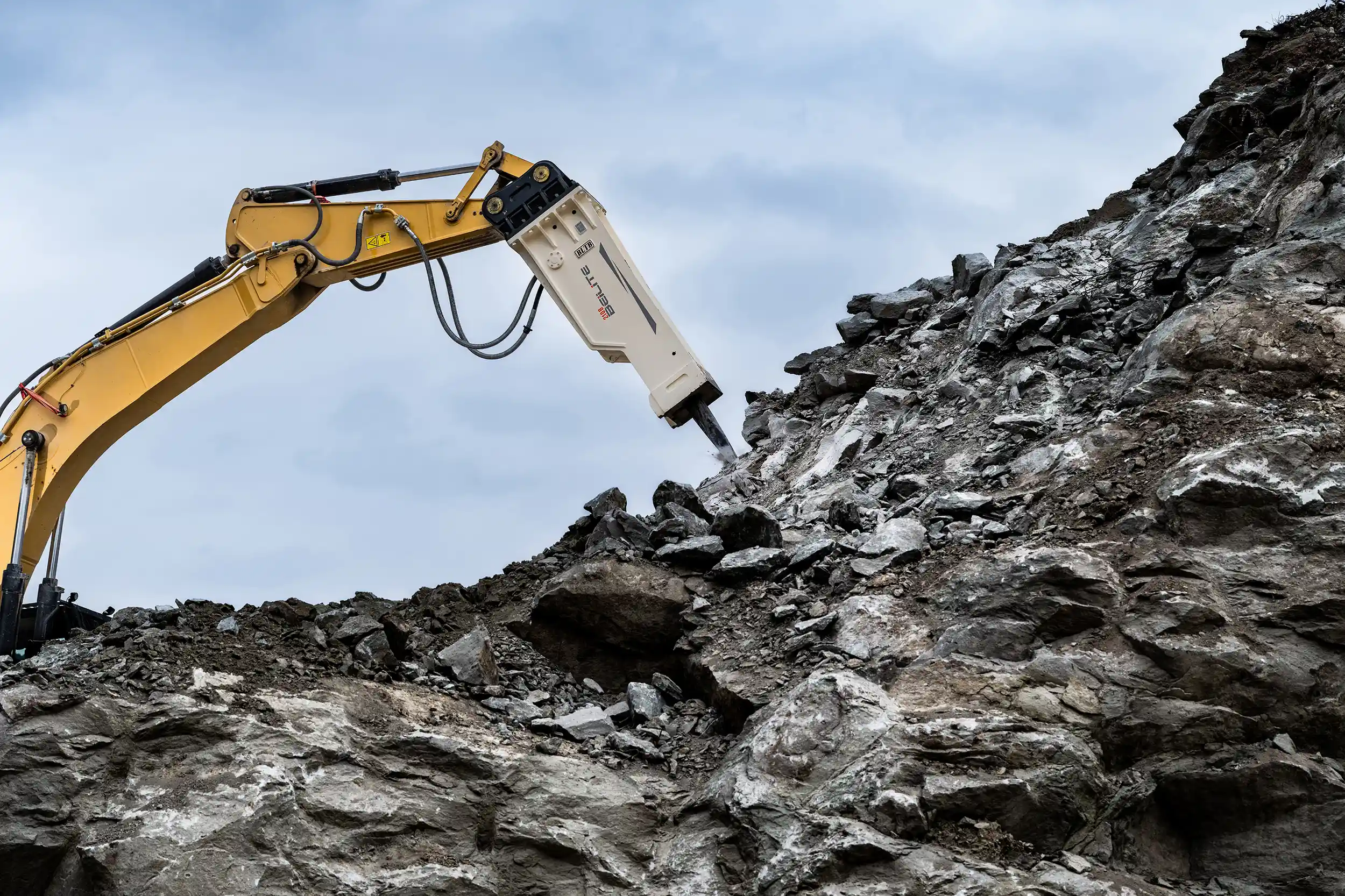
Modern hydraulic rock breakers have moved well beyond simple piston-and-chisel designs. The technologies built into current equipment make measurable differences in fuel consumption, operational efficiency, and how long the machine lasts.
Energy recovery systems capture recoil energy and redirect it into the next blow. This increases breaker impact energy without demanding more from the hydraulic system—you get harder hits from the same power input. Anti-blank firing systems solve a problem that used to shorten equipment life significantly: the breaker only activates when it contacts rock, protecting internal components from the damage that occurs when a hammer fires into empty air. These features reduce operational costs and minimize downtime in ways that show up clearly in project budgets.
BEILITE Machinery Co., Ltd., established in 2002 as a national high-tech enterprise, has developed hundreds of patents addressing these performance factors. The BLT and BLTB brand products reflect continuous refinement across mining, demolition, and quarrying applications. Our participation in national standards formulation keeps the hydraulic power units aligned with evolving industry requirements. We offer a range of hydraulic breaker Hammer models engineered for specific working conditions.
What is the most efficient method for breaking hard rock?
High-performance hydraulic breakers with optimized impact frequency and energy recovery systems deliver the best results on hard rock. The combination matters—impact energy alone isn’t enough without proper frequency matching to the material. The BLT-155 model, designed for 27–33 t excavators, applies these hard rock breaking techniques effectively. Maximum energy transfer and faster cycle times improve productivity measurably compared to older equipment designs.
Operating Practices That Separate Good Results From Wasted Effort
The equipment only performs as well as the person running it. Operator training, chisel selection, and impact angle all affect whether a hydraulic breaker works efficiently or struggles through every shift.
Chisel types for breakers exist because different rock demands different geometry. A blunt chisel handles hard, abrasive rock by spreading impact force across a wider contact area. A pointed chisel penetrates softer, layered rock more effectively. Using the wrong chisel accelerates wear and reduces rock fragmentation quality. Impact angle matters just as much—force applied perpendicular to the rock surface transfers energy most efficiently. Angled strikes waste power and stress components in ways they weren’t designed to handle.
Poor operation shortens equipment lifespan extension potential and increases stress on every part of the system. Training operators to understand these relationships pays back through longer service intervals and better daily output. Our guidance helps crews get optimal performance from their Hydraulic Breaker Hammer for Mining and Quarrying across varying site conditions.
How do hydraulic breakers improve rock excavation safety?
Hydraulic breakers reduce manual intervention in hazardous areas, which eliminates many traditional excavation risks. Anti-blank firing systems prevent accidental activation when the chisel isn’t in contact with rock, protecting operators and nearby workers. Controlled vibration control techniques and precise operation reduce uncontrolled rock falls and minimize structural damage to surrounding areas. These design choices align with excavation safety protocols that prioritize predictable, manageable operations over reactive responses to accidents.
Maintenance Determines Whether Equipment Pays Off
Proactive maintenance separates equipment that runs profitably for years from equipment that becomes a budget problem. Regular inspection and preventative scheduling minimize downtime and extend equipment lifespan in ways that compound over time.
Daily checks catch small issues before they become expensive failures. Hydraulic system diagnostics reveal pressure drops, contamination, or component wear that would otherwise go unnoticed until something breaks. Using genuine wear parts for rock breakers ensures compatibility and maintains the performance specifications the equipment was designed around. Aftermarket parts sometimes fit, but they rarely perform identically—and the difference shows up in reliability.
These practices build return on investment by maximizing operational uptime. Unexpected repairs cost more than scheduled maintenance, both in parts and in lost production time. Our service network supports this approach with accessible spare parts and technical guidance.
| Component | Maintenance Interval | Action |
|---|---|---|
| Chisel | Daily | Inspect for wear, sharpen/replace |
| Hydraulic Hoses | Weekly | Check for leaks, cracks, proper connection |
| Nitrogen Pressure | Monthly | Verify and adjust to specified levels |
| Grease Points | Every 8-10 hours | Lubricate as per manufacturer guidelines |
| Fasteners | Weekly | Check tightness, re-torque as needed |
Working With Beilite
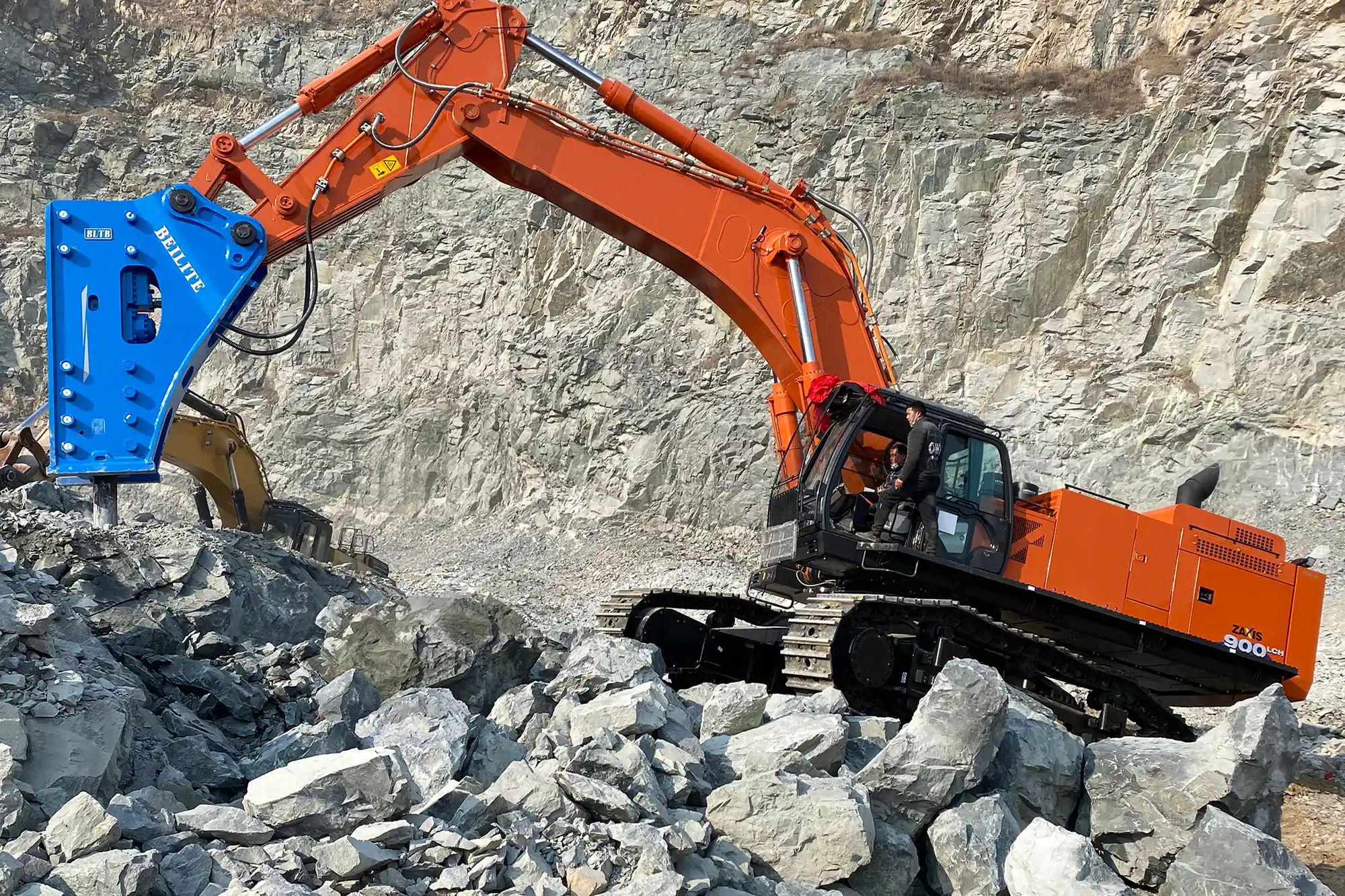
The right hydraulic breaker matched to the right strategy makes projects run the way they should. BEILITE Machinery Co., Ltd. builds high-end hydraulic breakers for diverse industry demands, backed by patented technologies and a global service network. Reliable, efficient, safe rock breaking solutions—that’s what we deliver.
For product details or project-specific discussions, reach out to our team.
Email: [email protected]
Phone: 40008-40008