 English
 French
Will a Hydraulic Breaker Break Rock? Expert Insights & Applications
Hydraulic Breakers for Rock Demolition
The first time you watch a hydraulic breaker tear through solid granite, you understand why these machines dominate heavy construction. That rhythmic pounding, the way fractured rock falls away in predictable chunks—it looks almost effortless. But the real story lies in matching the right breaker to the right rock, and getting that wrong costs time, money, and equipment life.
How Hydraulic Breakers Actually Work
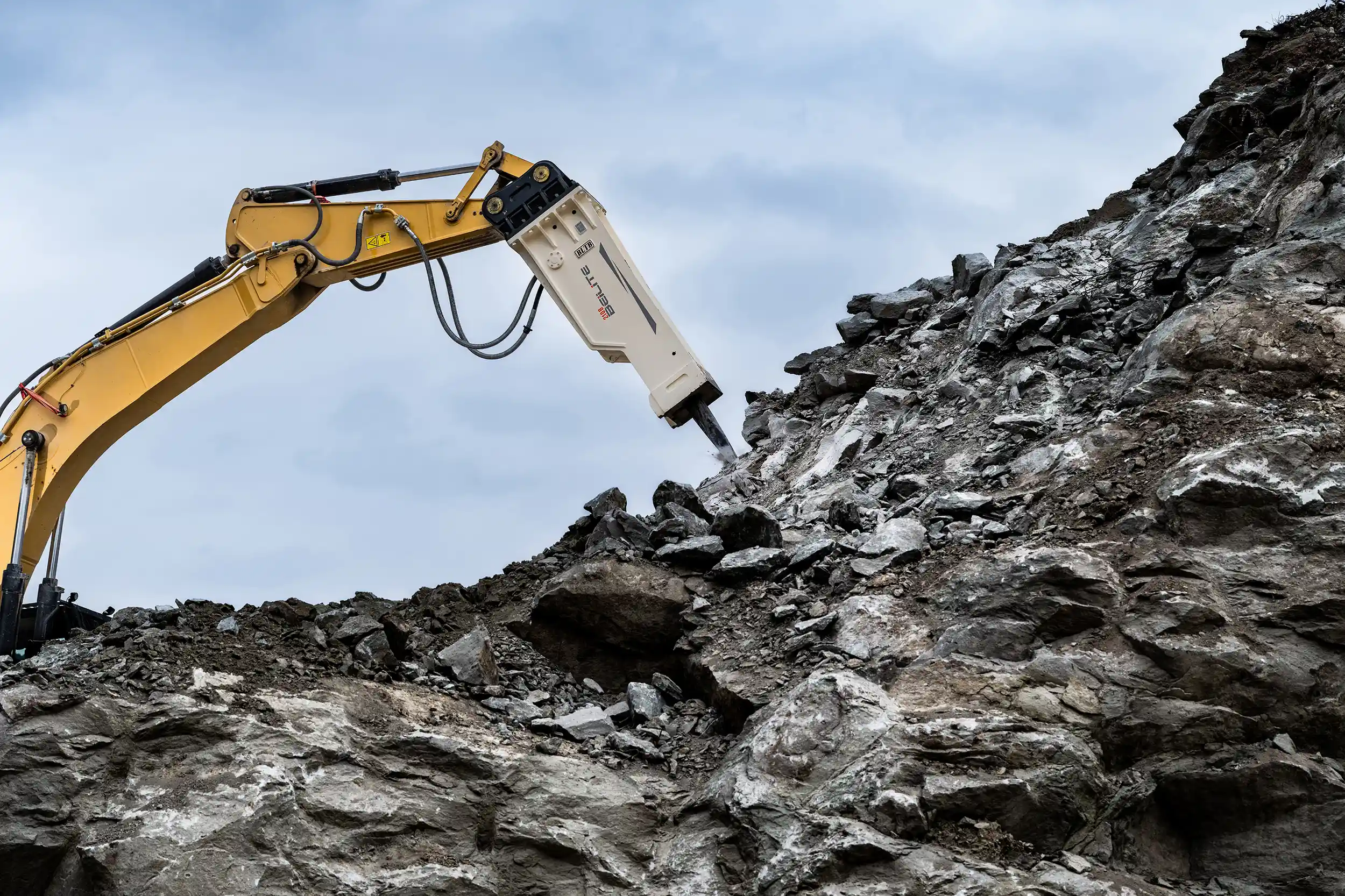
A hydraulic breaker converts pressurized oil from an excavator into repeated percussive strikes. The excavator’s hydraulic system feeds oil into the breaker, driving a piston that accelerates downward and slams into a chisel. That chisel transfers the impact into the rock surface, generating stress waves that propagate through the material until it fractures.
The main components work together in a tight sequence. Hydraulic pressure lifts the piston, then releases it to strike the chisel at high velocity. An accumulator stores energy between cycles, smoothing out pressure spikes and boosting impact force. The chisel itself comes in various geometries, each designed for specific rock conditions. BEILITE’s engineering focuses on robust construction and precise hydraulic integration, which translates to consistent striking power across thousands of operating hours.
Rock Properties That Determine Breaker Selection
Not all rock breaks the same way. Granite demands high impact energy and chisels built to withstand repeated contact with extremely hard surfaces. Sandstone with high quartz content wears chisels quickly because quartz is abrasive, so wear-resistant tool steel becomes essential. Even the internal structure of a rock mass matters—heavily jointed rock fractures more easily than massive, unfractured formations.
Compressive strength is the primary metric, but it doesn’t tell the whole story. A rock might test at moderate compressive strength yet prove difficult to break because its grain structure absorbs impact energy without fracturing. Breakers with adjustable impact energy and frequency can adapt to these variations. The BLT-150, for example, operates at 180–200 bar working pressure with a 150 mm chisel diameter, providing enough force for demanding applications while allowing operators to fine-tune performance.
What types of rock can a hydraulic breaker effectively break?
Hydraulic breakers handle sedimentary rocks like limestone and sandstone, igneous formations including granite and basalt, and most metamorphic rock types. The key is matching impact energy and chisel geometry to the rock’s compressive strength. Dense granite requires larger breakers with higher joule ratings compared to softer limestone, where excessive force wastes energy and accelerates wear.
Getting Maximum Performance from Your Breaker
Efficiency starts with proper matching between breaker and excavator. The breaker’s weight and hydraulic requirements must align with what the carrier machine can deliver. Running a breaker on insufficient hydraulic flow reduces impact energy. Running it on excessive flow generates heat and accelerates seal wear.
Chisel selection matters more than many operators realize. A moil point concentrates force for penetrating hard, massive rock. A blunt tool spreads impact over a wider area, better suited for fractured or layered formations. Regular maintenance—daily greasing, weekly inspections, scheduled servicing—prevents small problems from becoming expensive failures. Operator technique also plays a significant role. Holding the chisel perpendicular to the work surface, avoiding blank firing, and repositioning when the tool stops advancing all extend equipment life and improve productivity.
How does impact energy relate to rock-breaking capability?
Impact energy, measured in joules, directly determines how much force each strike delivers to the rock. Higher joule ratings fracture harder, denser formations more effectively. But impact frequency also matters. A balanced combination of energy per blow and blows per minute ensures efficient energy transfer. Too much frequency with too little energy just bounces off hard rock. Too much energy with too little frequency slows production on softer materials.
Where Hydraulic Breakers Get Used
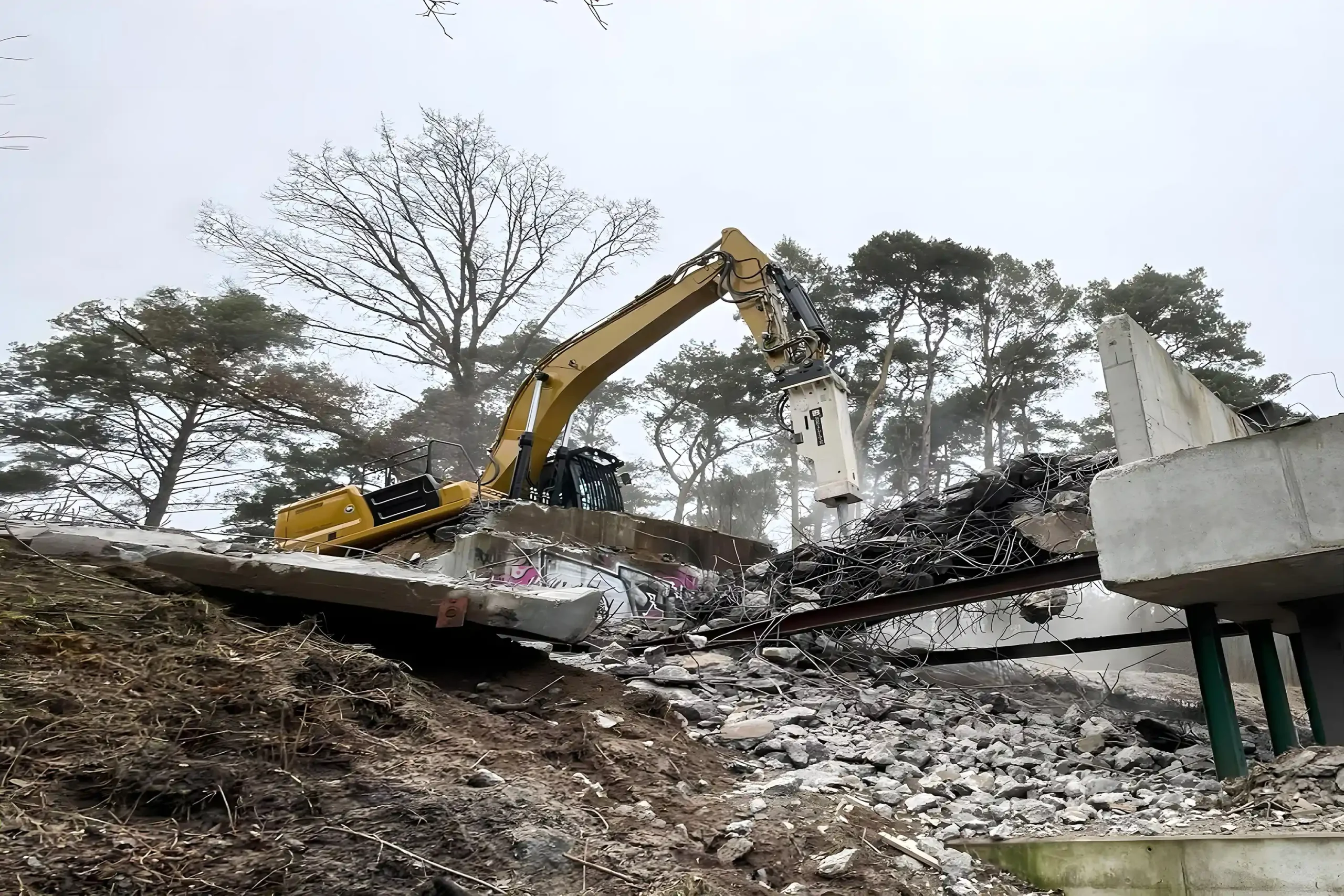
Quarrying operations rely on hydraulic breakers for both primary and secondary breaking. Large boulders extracted from the face get reduced to sizes that crushers can handle. Construction demolition uses breakers to remove concrete foundations, reinforced structures, and rocky subgrade. Mining operations depend on them for tunnel development, scaling loose rock from walls, and breaking oversize material underground.
Road construction frequently encounters rock that must be removed for trenching or site preparation. Recycling facilities use breakers for secondary processing of concrete and masonry. The versatility explains why BEILITE’s BLT and BLTB product lines serve customers in over 100 countries across these varied applications.
If you are interested in how hydraulic breakers are used in urban environments, consider reading 《Hydraulic Breaker for Municipal Engineering,Urban Road & Utility Works》.
Choosing the Right Breaker for Your Project
The selection process starts with your excavator’s specifications. A BLT-40 fits 0.5–1.2 ton machines. A BLT-165 requires a 33–38 ton carrier. Mismatching creates problems in both directions—an undersized breaker on a large excavator wastes the carrier’s capacity, while an oversized breaker on a small excavator risks damaging the carrier’s hydraulic system.
Rock type and project scale determine the required impact energy. Extensive hard rock excavation needs larger, more powerful units. Lighter demolition work on concrete or soft rock can use smaller, more maneuverable breakers. Budget considerations should include not just purchase price but operating costs, parts availability, and expected service life. A cheaper breaker that wears out quickly or lacks parts support costs more in the long run.
What factors matter most when choosing a hydraulic breaker?
Carrier machine weight and hydraulic flow capacity set the boundaries for compatible breaker size. Rock hardness and type determine required impact energy and chisel design. Project scope affects whether you need a breaker sized for occasional use or continuous heavy production. Parts availability and service support influence long-term operating costs and uptime.
| BEILITE Breaker Model | Applicable Excavator Weight | Chisel Diameter | Working Pressure | Impact Frequency |
|---|---|---|---|---|
| BLT-40 | 0.5–1.2 t | 40 mm | 90–120 bar | 800–1400 bpm |
| BLT-75 | 6–8.5 t | 75 mm | 120–150 bar | 400–800 bpm |
| BLT-125 | 14–18 t | 125 mm | 150–170 bar | 350–650 bpm |
| BLT-155 | 27–33 t | 155 mm | 200–220 bar | 200–300 bpm |
| BLT-165 | 33–38 t | 165 mm | 210–230 bar | 150–300 bpm |
Safety and Environmental Considerations
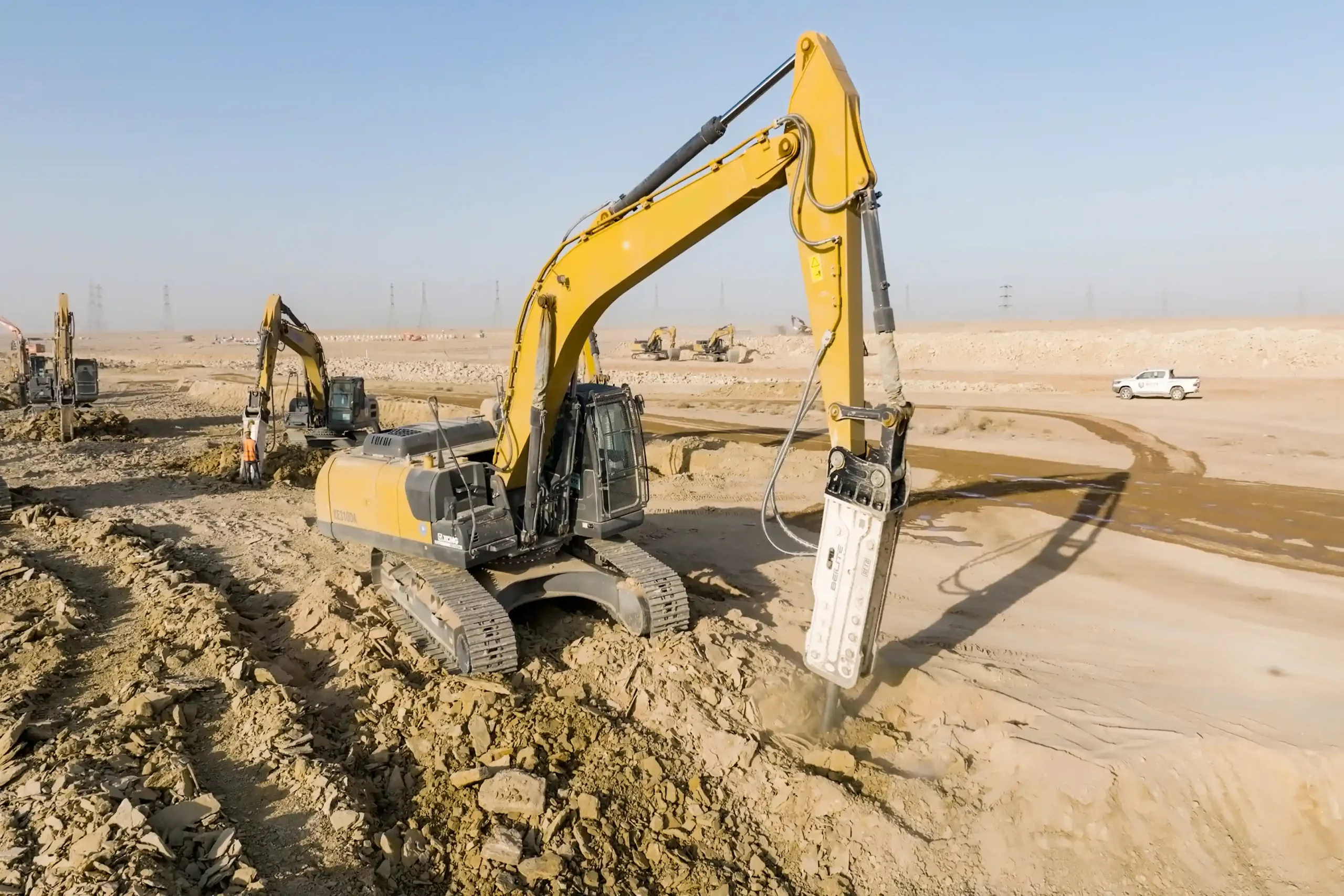
Hydraulic breaker operation carries real risks. Flying rock fragments, noise exposure, and vibration transmission all require active management. Operators need training that covers proper technique, hazard recognition, and emergency response. Site assessments before work begins identify potential problems—underground utilities, unstable slopes, proximity to occupied structures.
Noise and vibration affect both workers and surrounding communities. Silenced breaker housings reduce noise levels significantly. Vibration monitoring helps ensure compliance with regulations protecting nearby structures and residents. Dust suppression through water spraying improves visibility and air quality. These aren’t optional extras in most jurisdictions—they’re regulatory requirements that responsible contractors build into their operating procedures.
Working with BEILITE
BEILITE Machinery Co., LTD brings over twenty years of hydraulic breaker development to every product. Our BLT and BLTB lines incorporate hundreds of patents and meet national standards we helped develop. For projects requiring reliable rock-breaking performance, our technical team can help match equipment to your specific conditions. Reach us at [email protected] or call 40008-40008.
Frequently Asked Questions About Hydraulic Rock Breakers
Can a hydraulic breaker effectively break all types of rock formations?
Most rock formations respond well to hydraulic breaker Hammer treatment, but effectiveness varies with rock properties. Extremely hard formations like quartzite may require specialized high-energy configurations. Highly fractured rock sometimes breaks too easily, causing the chisel to drop into voids and potentially damaging the tool. Proper rock assessment before equipment selection prevents mismatches that waste time and accelerate wear.
What is the typical lifespan of a hydraulic rock breaker, and how can it be extended?
Lifespan depends heavily on operating conditions and maintenance practices. A well-maintained breaker working in moderate conditions can deliver years of reliable service. Harsh applications—continuous hard rock breaking, abrasive materials, dusty environments—shorten life expectancy. Daily greasing, correct chisel selection, operating within specified parameters, and prompt attention to wear indicators all extend service life significantly.
How do BEILITE hydraulic breakers compare to other rock-breaking methods in terms of cost and efficiency?
hydraulic breaker Hammer from BEILITE offer advantages over drilling and blasting in many situations, particularly where vibration limits, noise restrictions, or proximity to existing structures make explosives impractical. The controlled nature of hydraulic breaking allows precise material removal without the regulatory burden and safety overhead of blasting operations. Our equipment is engineered for high impact energy and long service life, which translates to faster project completion and lower per-ton breaking costs across the equipment’s operational lifespan.