 English
 French
The Enduring Legacy of Hydraulic Breaker Technology
The story of breaking rock and tearing down structures stretches back further than most people realize. What started with wedges and brute force eventually became something far more elegant—hydraulic systems that can deliver thousands of pounds of impact energy with surprising precision. Looking at how we got here reveals patterns that still drive equipment development today.
Early Percussive Tools and Mechanical Precursors
Breaking rock by hand was exactly as miserable as it sounds. Early quarry workers relied on wedges, heavy mauls, and whatever leverage they could create. The work was slow, exhausting, and severely limited what could actually be accomplished. Large-scale excavation remained a fantasy until someone figured out how to multiply human effort.
Mechanical hammers changed the equation. Water wheels and steam engines could drive striking mechanisms with force no human arm could match. The results were crude by modern standards, but the principle was sound. Pneumatic breakers followed in the late 19th and early 20th centuries, using compressed air to cycle a piston rapidly. Mining operations and road crews adopted them quickly. Tunneling projects that would have taken years suddenly became feasible in months.
Pneumatic tools had their problems though. They were loud enough to cause hearing damage, heavy enough to wear out operators, and hungry for compressed air. The energy transfer wasn’t particularly efficient either. Still, these machines established something fundamental about impact mechanisms that would carry forward into hydraulic designs.
The Dawn of Hydraulic Power in Demolition
The real breakthrough came mid-century when engineers started working seriously with hydraulic fluid as a power medium. Hydraulics offered something pneumatics couldn’t match—exceptional power density in a controllable package. The first functional hydraulic breakers appeared, and while they looked primitive compared to current equipment, they proved the concept worked.
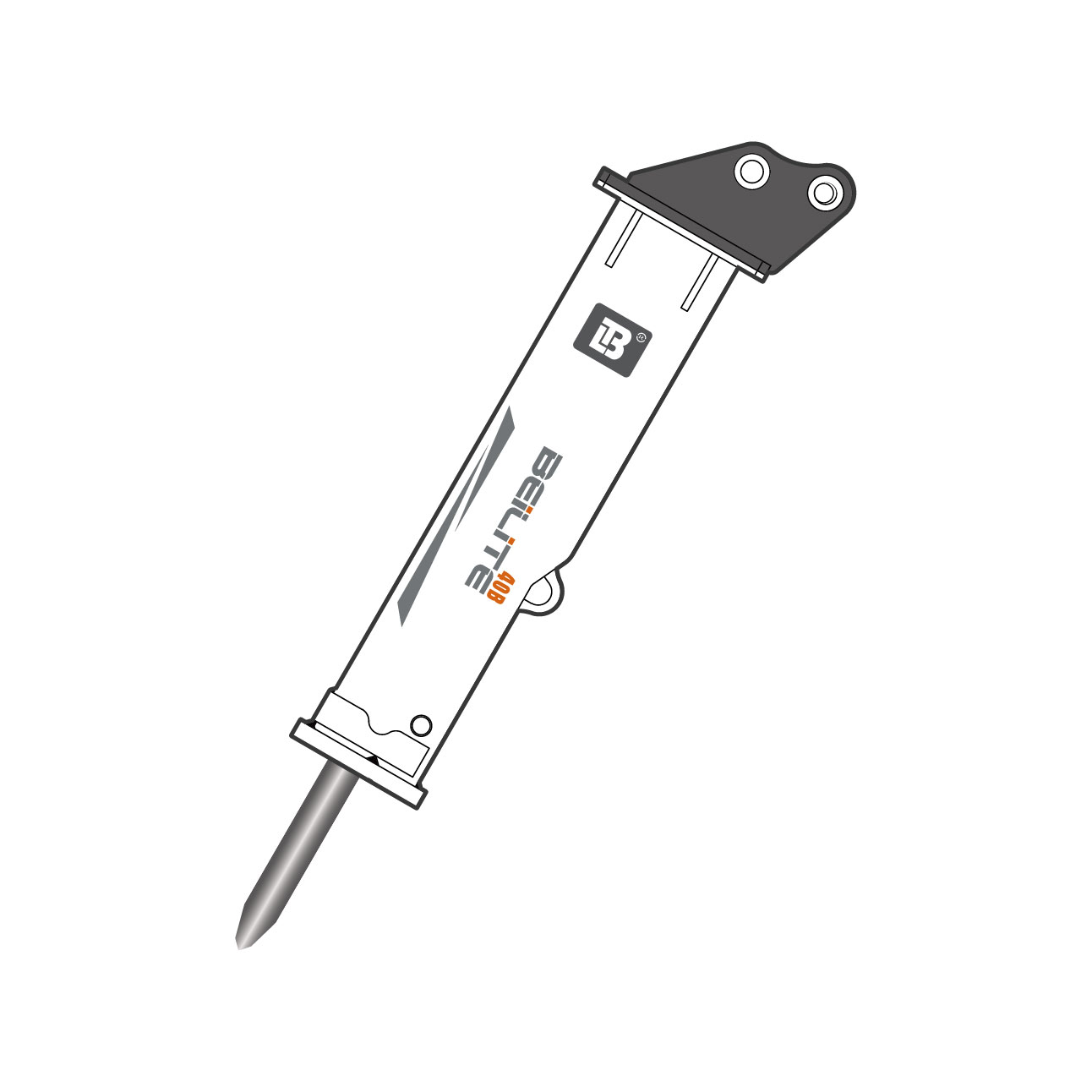
Mounting these breakers on excavators turned out to be the key innovation. Suddenly you had mobile demolition capability that could reposition quickly and work at various angles. Early designs prioritized durability above almost everything else because the forces involved would destroy anything less than robust. The ability to modulate impact energy and frequency gave operators control that pneumatic systems simply couldn’t provide.
Mid Century Advancements and Global Adoption
Through the middle decades of the 20th century, hydraulic breaker technology spread rapidly across construction and mining operations worldwide. Manufacturers refined their designs, pushing for more power and longer service life while trying to make the equipment less punishing for operators to use.
The market expanded as contractors recognized what these tools could accomplish. Concrete demolition, rock excavation, quarrying operations—hydraulic breakers handled all of it more efficiently than previous methods. Standardized mounting systems emerged, making it practical to move breakers between different excavator models. Materials science and hydraulic engineering continued advancing in parallel, each improvement feeding into the next generation of equipment.
What were the earliest forms of hydraulic breakers?
The first hydraulic breakers appeared in the 1960s, born from frustration with pneumatic limitations. These original designs used a hydraulic piston to generate percussive blows, converting fluid pressure into mechanical impact. The early units were bulky and rough around the edges, but they demonstrated superior energy transfer compared to air-driven tools. A straightforward piston-and-cylinder arrangement formed the core mechanism—the same fundamental approach that modern breakers still employ, refined through decades of iteration.
| Feature | 1960s Hydraulic Breakers | 1990s Hydraulic Breakers |
|---|---|---|
| Power Source | External hydraulic pump | Integrated hydraulic system |
| Impact Energy | Moderate | High |
| Noise Level | High | Reduced |
| Vibration | Significant | Dampened |
| Control | Basic On/Off | Variable frequency/energy |
| Weight | Heavy for output | Optimized weight-to-power |
Modern Hydraulic Breaker Engineering Milestones
Current hydraulic breaker technology reflects decades of accumulated engineering knowledge. The focus has shifted toward optimizing every aspect of performance while minimizing environmental impact. Energy recovery systems now capture recoil energy and redirect it into subsequent blows, squeezing more breaking power from the same hydraulic input.
Noise reduction and vibration damping have become standard features rather than optional upgrades. Urban construction projects demand equipment that won’t generate complaints from neighboring buildings. Smart control systems use sensors to read material hardness and adjust impact frequency automatically—the breaker essentially adapts to what it’s hitting. This kind of intelligent operation extends component life while maintaining productivity.
How has hydraulic breaker technology improved over time?
The progression from early hydraulic breakers to current models represents substantial engineering advancement. Where older units provided basic percussive force with minimal refinement, modern equipment incorporates automatic lubrication, anti-blank firing protection, and energy recovery systems. Breaking performance has become more consistent, component wear has decreased, and operational costs have dropped accordingly. The improvements reflect sustained effort toward higher productivity without sacrificing reliability.
The Future Trajectory of Demolition Technology
Electrification is coming to hydraulic breakers, driven by the same pressures reshaping the broader equipment industry. Lower emissions and reduced noise make electric-hydraulic systems attractive for urban work. Automated demolition using AI-guided systems will enable remote operation with precision that manual control can’t match. Self-diagnostic capabilities that predict maintenance needs before failures occur are already appearing in higher-end models.
Sustainable design principles are influencing material choices and energy consumption targets. Recyclable components and reduced power requirements will likely become competitive differentiators. The trajectory points toward equipment that delivers more breaking capability with less environmental cost.
What are the key innovations in modern hydraulic breakers?
Energy recovery systems stand out as a significant advancement, capturing recoil energy that older designs simply wasted. Noise and vibration reduction technologies have made these tools practical for sensitive environments. Integrated smart controls optimize performance automatically based on real-time conditions. Improved materials have extended service life considerably. Together, these innovations have pushed efficiency, safety, and durability well beyond what earlier generations of equipment could achieve.
Experience the Pinnacle of Hydraulic Breaker Innovation with BEILITE
For over two decades, BEILITE Machinery Co., LTD has been at the forefront of hydraulic breaker technology, driving advancements that shape the industry. As a national high-tech enterprise and a contributor to national standards, our BLT and BLTB brand products embody superior engineering, reliability, and performance. Discover how our commitment to continuous innovation and customer trust can elevate your operations. Explore our high-end hydraulic breaker Hammer for Demolition&Rock Breaking, trusted in over 100 countries, and partner with a leader dedicated to excellence. Contact us today to learn more about our solutions tailored for diverse working conditions. Email: [email protected] or call 40008-40008.
FAQ
What is the primary function of a hydraulic breaker?
A hydraulic breaker, often called a hydraulic hammer or rock breaker, is an excavator attachment used for demolishing concrete structures, breaking rock, and other heavy-duty demolition tasks. Its primary function is to deliver powerful percussive blows to break down hard materials efficiently. This makes it an indispensable tool for construction, quarrying, and Hydraulic Breaker for Municipal Engineering,Urban Road & Utility Works projects.
How do modern hydraulic breakers differ from older models?
Modern hydraulic breakers feature significant advancements over older models, including enhanced energy recovery systems for greater efficiency, reduced noise and vibration for improved operator comfort and environmental impact, and often incorporate smart technology for optimized performance and diagnostics. These innovations contribute to superior breaking power and durability, making modern units more productive and user-friendly.
Why is the history of hydraulic breaker technology important for equipment buyers?
Understanding the history of hydraulic breaker technology provides valuable insight into the evolution of design, the challenges overcome, and the continuous drive for innovation. For equipment buyers, this historical context helps appreciate the reliability, performance, and advanced features of current models, ensuring informed decisions when investing in high-end hydraulic breakers for demanding construction and demolition projects. It highlights the proven track record of continuous improvement.