 English
 French
Maximizing Hydraulic Breaker Efficiency for Optimal Performance
Selecting the Right Hydraulic Breaker for Maximum Efficiency
Getting the breaker selection wrong costs money in ways that show up slowly: wasted fuel, premature wear, jobs that drag on longer than they should. The right match between breaker and application changes everything. Material breaks down faster, the carrier runs smoother, and the equipment lasts longer. What follows covers the technical principles behind breaker efficiency and practical guidance for selection, maintenance, and getting the most out of your operations.
How Breaker Efficiency Actually Works
Hydraulic breaker efficiency comes down to three variables working together: hydraulic power, impact energy, and blow frequency. The carrier machine’s hydraulic output has to convert cleanly into percussive force at the chisel tip. Impact energy, measured in joules, determines how much force actually reaches the material. Blow frequency, counted in blows per minute, controls how rapidly those impacts land.
The numbers tell the story. A BLT-40 breaker runs at 800–1400 bpm, built for lighter work where speed matters more than raw power. A BLT-155 delivers 200–300 bpm with substantially higher impact energy, designed for heavy applications where each blow needs to count.
Material hardness dictates which combination works best. Softer materials respond well to high frequency with moderate impact energy. Pushing too hard just pulverizes the surface without productive fracturing. Hard materials like granite or reinforced concrete need the opposite approach: high impact energy at lower frequency to create clean fractures through the mass. Operators who understand this relationship get more done with less wear on the equipment.
Matching Breakers to Carriers and Applications
The connection between breaker class, carrier weight, and application type determines whether a setup performs well or struggles. Mismatches show up as reduced breaking power, higher fuel consumption, and components wearing out ahead of schedule.
Beilite’s range spans from the BLT-40 for 0.5–1.2 ton excavators up to the BLT-165 designed for 33–38 ton machines. Each model has specific hydraulic requirements that need to align with what the carrier can deliver. The BLT-45 works with 0.8–1.5 ton excavators like the Kubota U15 or CAT 301.5, requiring 20–40 L/min working oil flow. Larger projects calling for a BLT-125 need 14–18 ton excavators capable of supplying 90–120 L/min.
Beilite Breaker Specifications and Applications
| Model | Applicable Excavator (t) | Chisel Diameter (mm) | Working Oil Flow (L/min) | Impact Frequency (bpm) | Primary Application |
|---|---|---|---|---|---|
| BLT-40 | 0.5–1.2 | 40 | 15–30 | 800–1400 | Light Demolition, Small Projects |
| BLT-70 | 4.5–6 | 70 | 40–70 | 500–900 | Medium Demolition, Trenching |
| BLT-100 | 10–14 | 100 | 80–110 | 350–700 | General Construction, Rock Breaking |
| BLT-140 | 20–24 | 140 | 120–180 | 350–500 | Heavy Demolition, Quarrying |
| BLT-165 | 33–38 | 165 | 200–260 | 150–300 | Large Scale Mining, Primary Breaking |
What factors influence hydraulic breaker efficiency?
Chisel type needs to match the material being broken. Operating pressure and flow rate from the carrier set the ceiling on available power. Material properties including hardness and density determine the impact energy and frequency required for productive breaking. Temperature affects hydraulic fluid viscosity, which changes how the system performs across different conditions.
Maintenance Practices That Keep Breakers Running
Downtime costs more than parts. The maintenance routines that prevent failures matter as much as the initial equipment selection. Daily checks, consistent lubrication schedules, and using genuine replacement components add up to reliable performance over the equipment’s service life.
Lubrication reduces friction and heat buildup inside the breaker. Specified lubricants applied at recommended intervals protect internal components from accelerated wear. Genuine replacement parts maintain the dimensional tolerances and material properties the breaker was designed around. Aftermarket alternatives sometimes work, but they introduce variables that can affect performance and longevity.
Regular inspections catch developing problems before they become expensive repairs. A worn seal or a component showing unusual wear patterns signals something that needs attention. Addressing these issues early keeps the breaker available when work needs to happen.
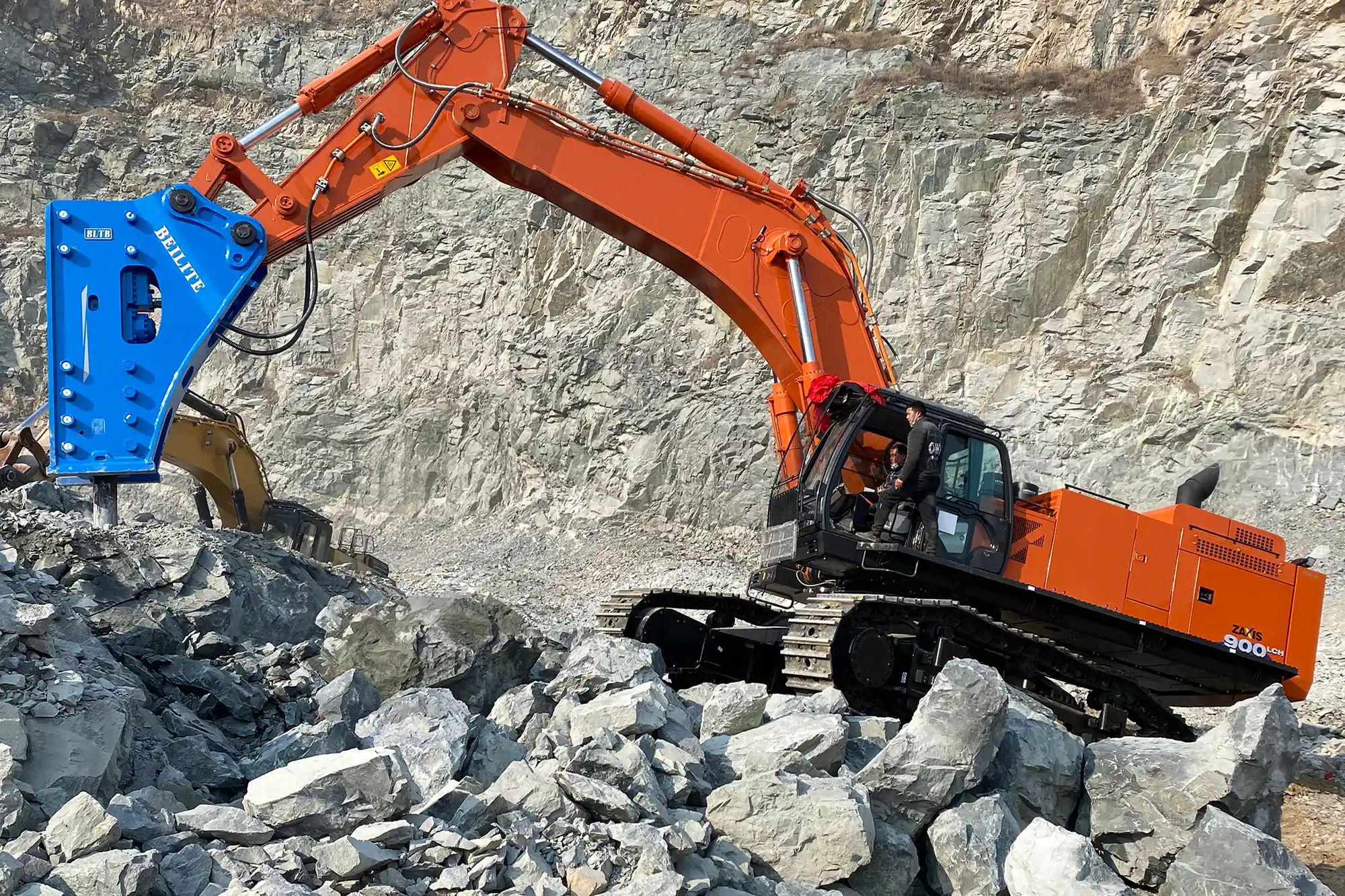
How can I reduce operational costs for hydraulic breakers?
Fuel consumption drops with optimized operating techniques and regular engine maintenance on the carrier. Chisel life extends when operators select the right tool for the material, maintain correct operating angles, and keep up with lubrication. Preventive maintenance including daily checks and scheduled servicing prevents the expensive emergency repairs and lost production time that come with unexpected failures.
Technology Improvements in Modern Breakers
Engineering advances have changed what breakers can deliver. Beilite’s patented technologies target better power-to-weight ratios, reduced noise levels, and vibration dampening that protects both operators and equipment.
Advanced piston designs optimize how energy transfers from hydraulic pressure to impact force. The result is more breaking power from the same hydraulic input, which translates to fuel savings over the equipment’s working life.
Energy recovery systems in some models capture recoil energy that would otherwise dissipate as heat and vibration. That recovered energy feeds back into the next impact cycle, boosting efficiency without additional hydraulic demand.
Smart monitoring systems track performance data in real time. Operators and maintenance teams can see how the breaker is performing and spot trends that indicate developing problems. This enables maintenance scheduling based on actual equipment condition rather than arbitrary time intervals.
Beilite Technology Advantages
| Feature | Benefit | Impact on Efficiency |
|---|---|---|
| Advanced Piston Design | Optimized energy transfer | Increased breaking power, reduced fuel consumption |
| Energy Recovery System | Recaptures recoil energy | Enhanced power, lower operational costs |
| Vibration Dampening | Reduces operator fatigue | Improved safety, extended work periods |
| Noise Reduction | Quieter operation | Enhanced site conditions, regulatory compliance |
| Smart Monitoring | Real-time performance data | Predictive maintenance, minimized downtime |
What are the latest technologies for improving breaker performance?
Advanced piston designs deliver optimized energy transfer and increased impact force per blow. Energy recovery systems capture and reuse recoil energy that would otherwise be lost. Smart monitoring provides real-time diagnostics that enable maintenance scheduling based on actual equipment condition, reducing unexpected downtime and extending component life.
Getting More From Site Operations
Equipment capability only matters if operators know how to use it properly. Training on correct techniques prevents the common mistakes that damage breakers and slow down work. Blank firing, prolonged pressure without material contact, and poor chisel positioning all cause unnecessary wear.
Trained operators position the chisel effectively and apply consistent pressure that produces efficient fracturing. They recognize when material conditions change and adjust their approach accordingly.
Site management practices affect breaker productivity too. Material preparation and debris removal keep the work flowing. When operators spend less time repositioning or clearing broken material, more of their time goes into productive breaking. The combination of skilled operation and organized site management maximizes what the equipment can accomplish.
Discover Beilite’s Advanced Hydraulic Breakers
As a national high-tech enterprise with decades of innovation, Beilite Machinery Co., LTD. is dedicated to engineering hydraulic breakers that set industry benchmarks for efficiency and reliability. Our participation in national standard formulation and hundreds of patents underscore our commitment to advanced technology. Explore our BLT and BLTB product lines to discover how our patented technologies can transform your operational performance and deliver unparalleled value. Contact us today to optimize your fleet. Reach us via email at [email protected] or call us at 40008-40008.
FAQ
How does hydraulic breaker efficiency impact project timelines?
Efficient breakers break material faster and keep working consistently without the interruptions that come from equipment problems. Projects move forward on schedule when the equipment performs as expected. The time saved on material breakdown accumulates across a project, often making the difference between meeting deadlines and falling behind.
What role does Beilite’s R&D play in hydraulic breaker efficiency?
Beilite’s research and development work, including participation in national standard formulation and hundreds of patents, drives the efficiency improvements built into our breakers. The focus stays on optimizing power delivery, minimizing energy losses, and building durability that holds up under demanding conditions. This ongoing investment in engineering keeps our products performing at the level professional operations require.
Can proper breaker maintenance truly improve fuel consumption and operational costs?
It does. A well-maintained breaker operates at its designed efficiency, converting hydraulic power into impact energy without the losses that come from worn seals, inadequate lubrication, or components operating outside their tolerances. The fuel savings and extended component life add up over the equipment’s service life, and the avoided emergency repairs represent costs that never hit the budget.