 English
 French
Mastering Hydraulic Breaker Operation: Safety, Efficiency, and Longevity
The first time I watched a seasoned operator work a hydraulic breaker, what struck me wasn’t the power—it was the precision. Every strike landed with purpose, the machine moving through reinforced concrete like it had been doing this for decades. That kind of efficiency doesn’t happen by accident. It comes from understanding how these tools actually behave under load, knowing when to reposition, and recognizing the early signs of wear before they become expensive problems. Hydraulic breaker operation sits at the intersection of mechanical knowledge and field instinct, and getting it right affects everything from daily productivity to long-term equipment costs.
Pre-Operation Setup That Actually Prevents Problems
Before the breaker touches material, there’s groundwork that separates smooth operations from the kind of day where everything goes wrong. A proper pre-operation routine isn’t bureaucratic box-checking—it’s the difference between productive hours and downtime.
Safety Steps That Matter Before Starting
Personal protective equipment comes first, and there’s no negotiating on this. Hard hats, safety glasses, hearing protection, heavy-duty gloves, and steel-toed boots form the baseline. But PPE alone doesn’t create a safe operation.
Machine pre-start checks require actual attention. Verify hydraulic fluid levels sit within the proper range. Inspect hoses for bulging, cracking, or abrasion damage—these failures often announce themselves visually before they become catastrophic. Check attachment pins for wear and proper seating.
Environmental assessment deserves more thought than it typically gets. Ground stability determines whether the excavator maintains its footing under repeated impact loads. Overhead obstructions create swing hazards. Underground utilities can turn a routine breaking job into an emergency. Establish clear boundaries for personnel before the first strike.
Attachment and Detachment Done Right
Secure mounting prevents the kind of failures that damage equipment and injure operators. The sequence matters:
- Position the excavator on level ground with the boom lowered.
- Align the breaker’s mounting pins with the quick coupler or pin-on points.
- Insert pins completely and verify they’re locked—partial engagement fails under load.
- Connect hydraulic lines with attention to which port handles pressure and which handles return flow.
- Check every connection for leaks before applying power.
- Detachment reverses this process, but relieve hydraulic pressure before disconnecting any lines.
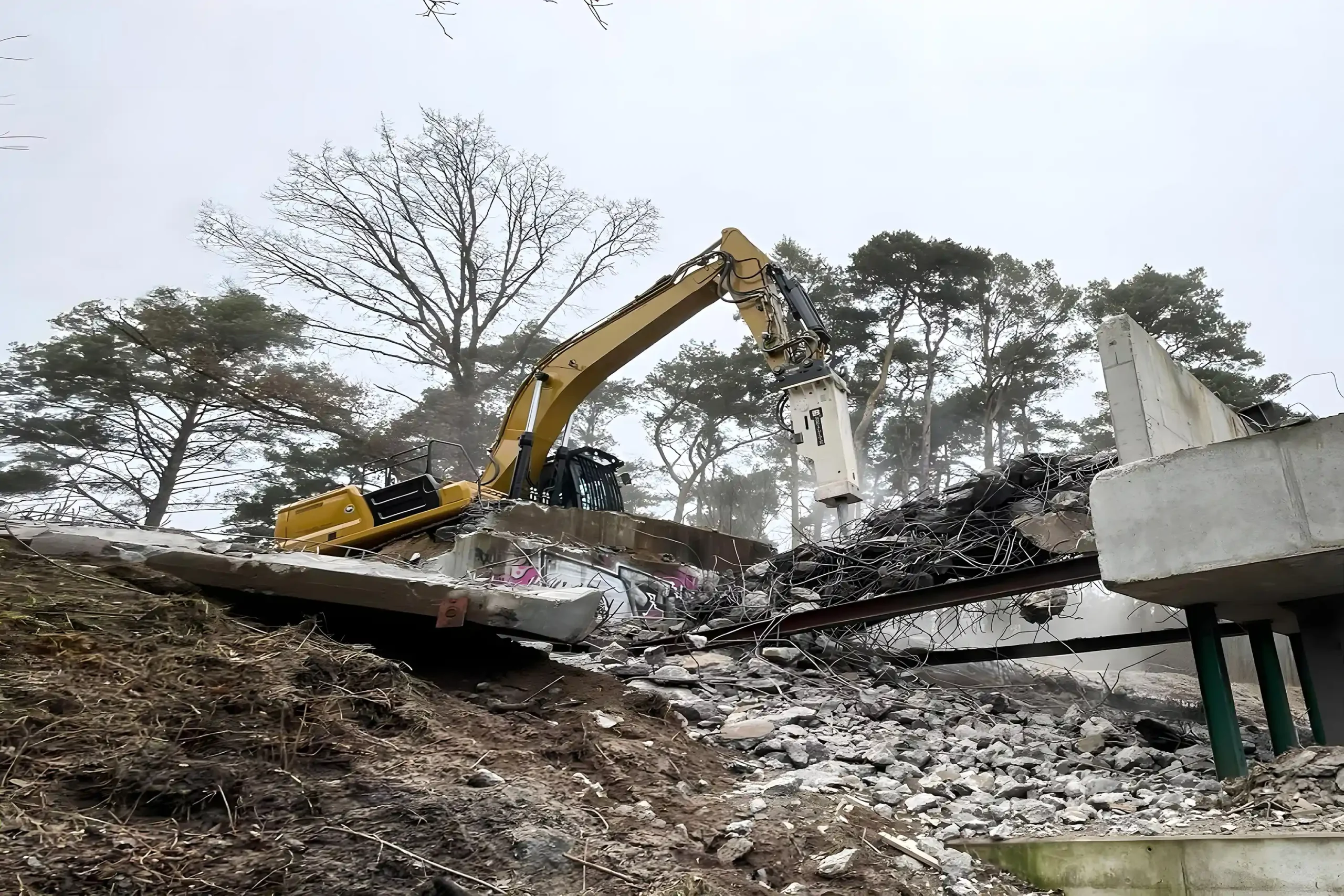
Operational Techniques That Reduce Wear and Increase Output
The gap between adequate hydraulic breaker operation and skilled operation shows up in maintenance costs and daily tonnage. Understanding how the tool interacts with different materials changes how you approach each job.
Hydraulic breaker operating pressure must stay within manufacturer specifications. Running too high accelerates internal wear without proportional productivity gains. Running too low means the tool lacks the energy to fracture material efficiently, leading to extended cycle times and heat buildup.
Apply steady downward pressure through the excavator arm rather than lifting the breaker between strikes. The tool needs consistent contact with the work surface to transfer energy effectively. Lifting and dropping wastes hydraulic cycles and increases stress on mounting hardware.
Striking frequency adjusts to match the material. Dense rock requires slower, more powerful impacts. Softer concrete breaks more efficiently with higher frequency. Flow rate controls this relationship—dial it in for the specific application rather than running at maximum output regardless of conditions.
Prolonged breaking in a single spot generates heat that damages tool bits and internal seals. If material isn’t fracturing after 15-20 seconds of continuous operation, reposition. Find a crack, an edge, or a weaker point in the structure. For rock breaking, starting at natural fracture lines or edges produces faster results than attacking the center of a solid mass. Concrete demolition follows similar logic—create initial fractures, then expand the break progressively.
If you’re working on specialized demolition projects, you might find valuable insights in 《Hydraulic Breaker Hammer for Demolition&Rock Breaking》.
Maintenance Practices That Extend Equipment Life
Hydraulic breakers take punishment that few other attachments experience. Consistent maintenance isn’t optional—it’s what separates equipment that lasts from equipment that fails at the worst possible moment.
Daily inspection should become automatic. Check for loose bolts, hydraulic leaks, and visible damage to the housing or tool. These checks take minutes but catch problems before they cascade.
Greasing the hydraulic breaker at specified intervals—typically every 2-4 operating hours—keeps the tool bit moving freely and prevents metal-to-metal contact that accelerates wear. Use the lubricant grade the manufacturer recommends; substitutions often cause problems.
Wear parts like tool bits and bushings have finite service lives. Replacing them before they fail completely prevents secondary damage to more expensive components. A worn bushing allows lateral movement that damages the housing bore. A cracked tool bit can fragment and damage internal components.
Nitrogen gas pressure in the accumulator and rear head requires periodic verification. Low pressure reduces impact energy and increases stress on hydraulic components. Recharging to specification restores proper operation.
Proper storage means cleaning the unit, lubricating exposed surfaces, and keeping it in a dry location. Moisture causes corrosion that compromises seals and internal surfaces. Seal kit replacement as part of scheduled maintenance prevents the gradual hydraulic fluid leaks that reduce efficiency and contaminate job sites.
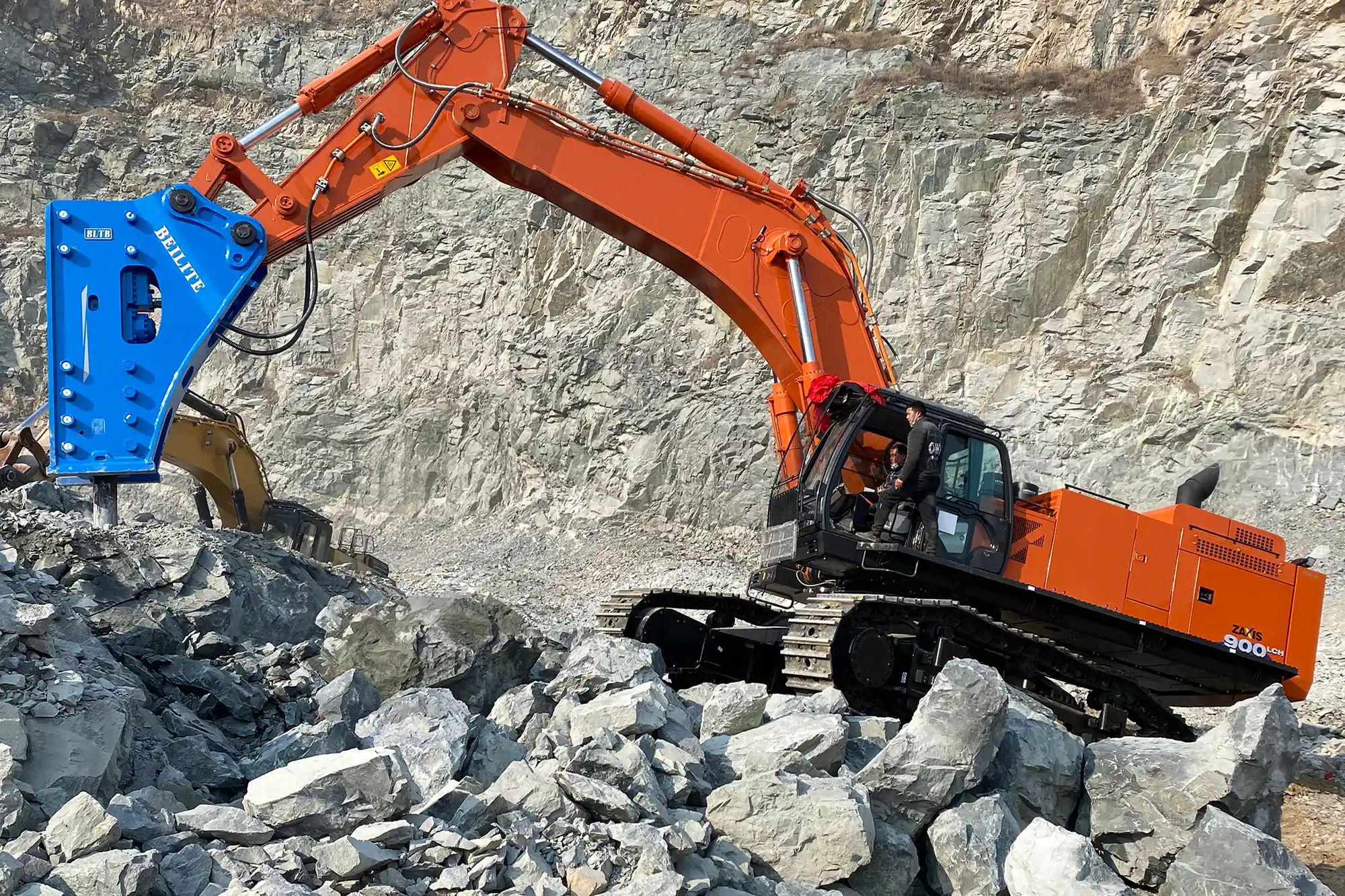
Troubleshooting and Avoiding Common Operational Errors
Even well-maintained equipment encounters problems. Recognizing symptoms early and understanding their causes prevents minor issues from becoming major repairs.
Mistakes That Cost Money and Time
Blank firing—activating the breaker without material contact—ranks among the most damaging operational errors. Without resistance, the piston travels beyond its normal stroke, creating impact forces the tool wasn’t designed to absorb. This accelerates wear on every internal component and can crack housings.
Incorrect pressure settings cause problems in both directions. Excessive pressure overworks seals and accelerates fatigue. Insufficient pressure means the tool struggles to fracture material, generating heat through extended cycle times rather than productive work.
Using the breaker as a lever to move material stresses the tool and mounting hardware in ways they weren’t engineered to handle. Bent tools and damaged housings result from this practice.
Tool bit selection matters more than many operators realize. A chisel point works differently than a blunt tip. Matching the tool to the material improves efficiency and reduces wear.
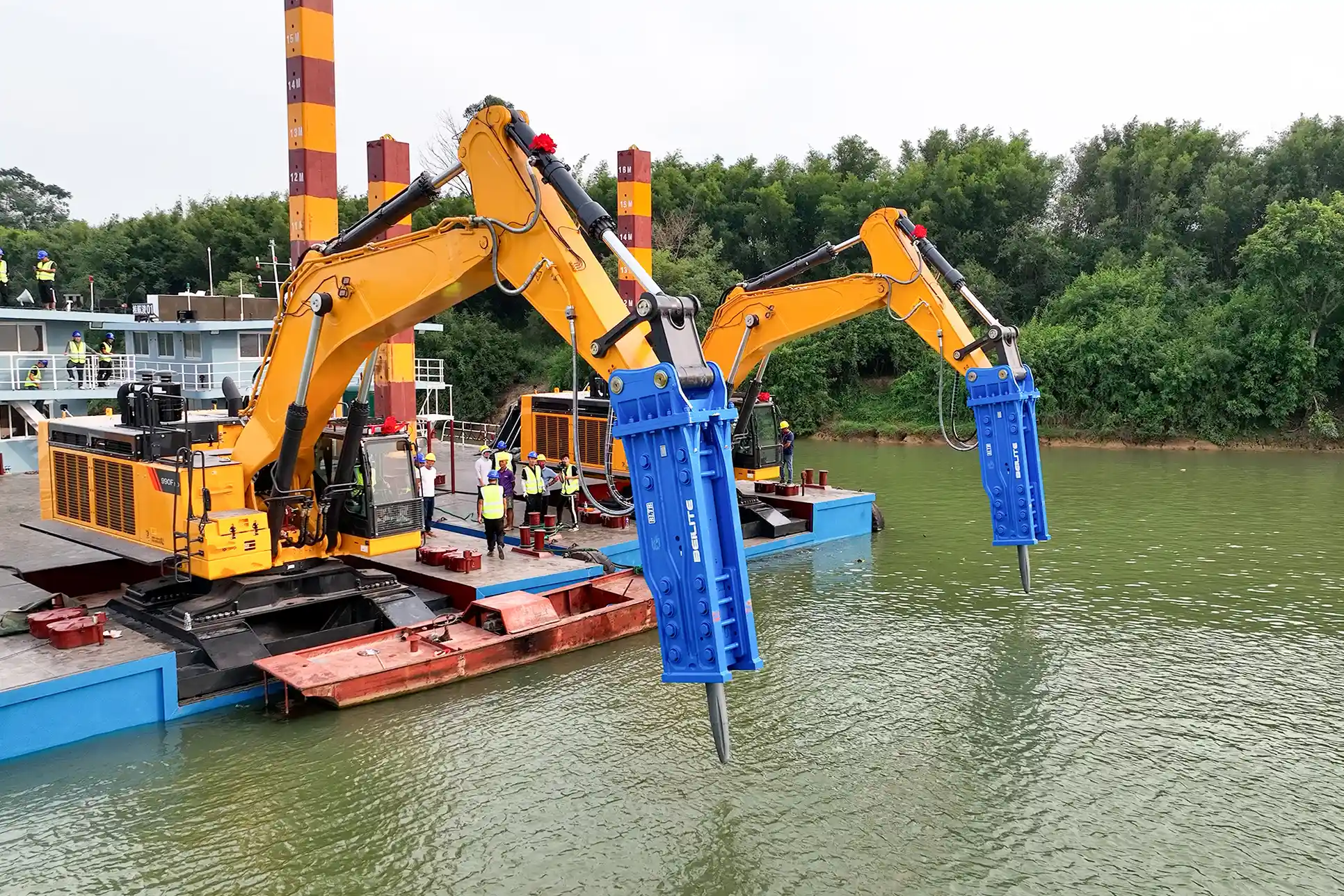
For those operating in extreme conditions, additional guidance can be found in 《Hydraulic Breaker Hammer for Underwater Construction》.
BEILITE’s Engineering Approach to Hydraulic Breaker Technology
BEILITE Machinery Co., LTD has focused on hydraulic breaker development since 2002. As a national high-tech enterprise, the company’s research and development work has produced breakthroughs across core technologies and contributed to national standards for hydraulic breakers in China. Hundreds of patents reflect this sustained engineering investment.
BLT and BLTB brand hydraulic breakers serve diverse working conditions across more than 100 countries. This global deployment provides continuous feedback that informs product refinement. BEILITE hydraulic breaker technology emphasizes the durability and efficiency that professional operators require.
| Model | Total Length (mm) | Total Weight (kg) | Chisel Diameter (mm) | Applicable Excavator (t) | Working Pressure (bar) |
|---|---|---|---|---|---|
| BLT-40 | 1115 | 86 | 40 | 0.5–1.2 | 90–120 |
| BLT-45 | 1330 | 137 | 45 | 0.8–1.5 | 90–120 |
| BLT-53 | 1446 | 180 | 53 | 1.5–3.5 | 90–120 |
| BLT-60 | 1478 | 263 | 60 | 3–5.5 | 100–130 |
| BLT-70 | 1659 | 362 | 70 | 4.5–6 | 110–140 |
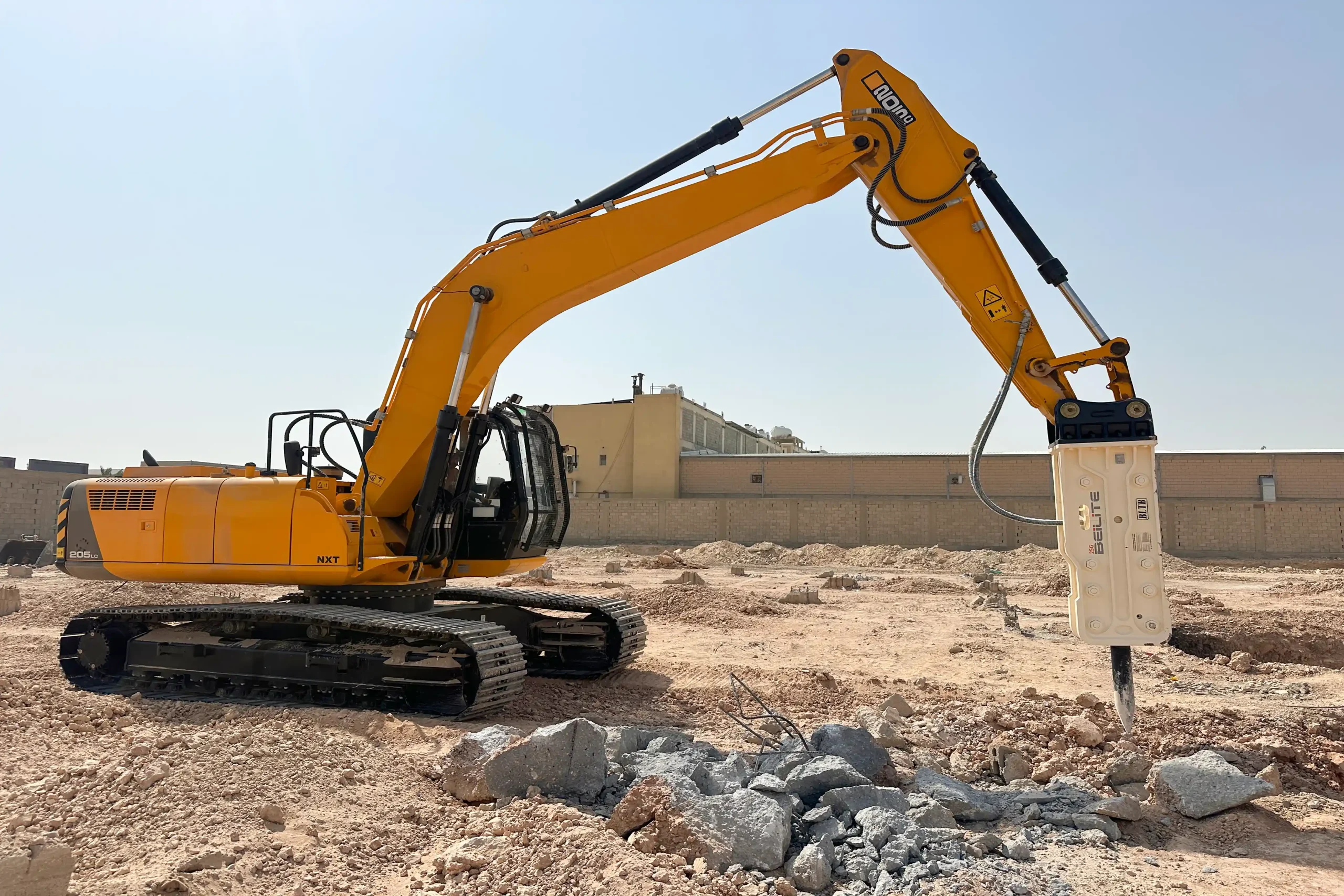
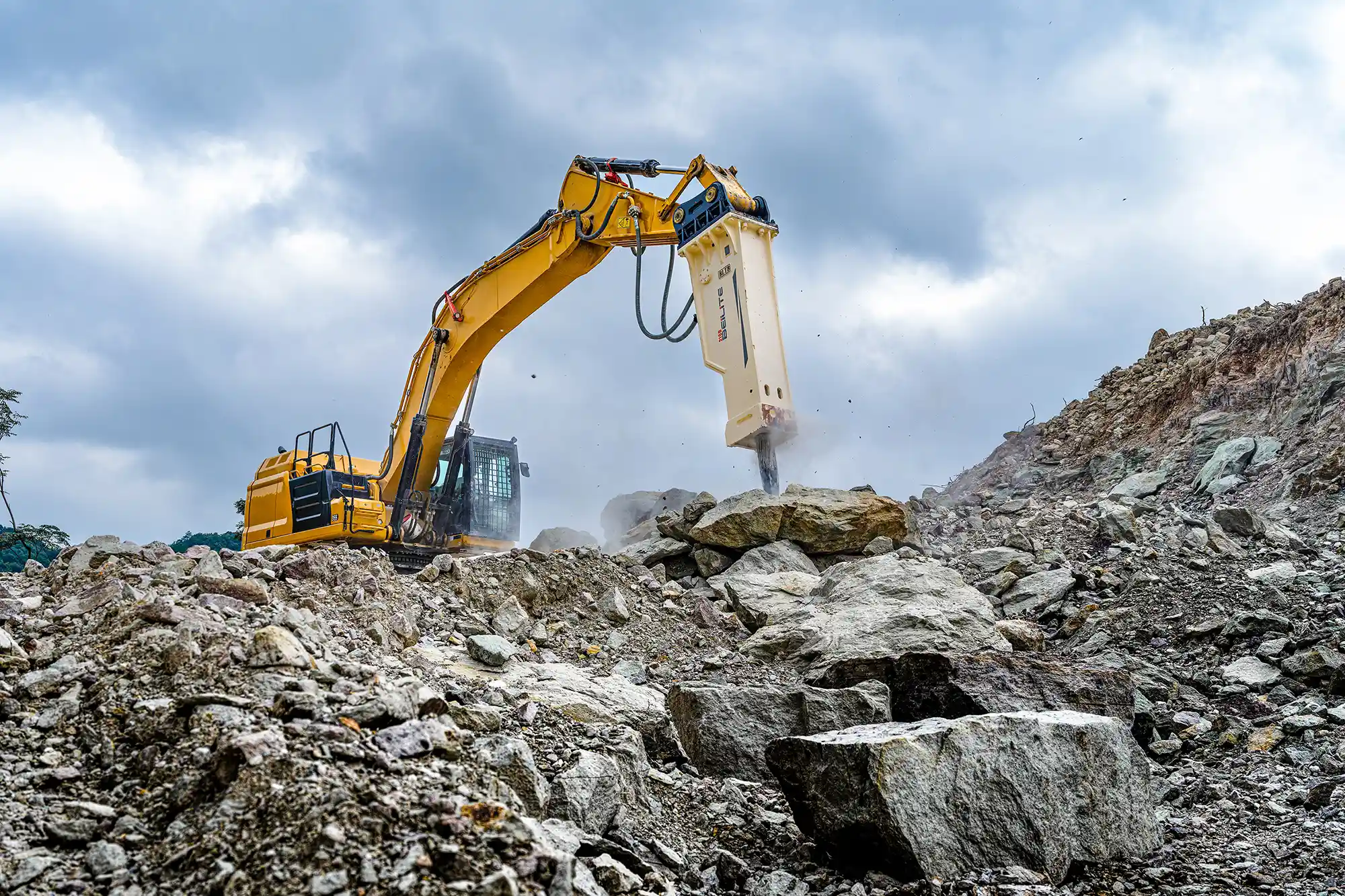
Partner with BEILITE for Superior Breaking Solutions
For over two decades, BEILITE Machinery Co., LTD has been at the forefront of hydraulic breaker innovation, setting national standards and earning global trust. Our commitment to excellence ensures that every BEILITE product delivers unparalleled performance, safety, and durability. Discover how our advanced hydraulic breakers can elevate your operational efficiency and project success. Contact us today at [email protected] or 40008-40008 for expert consultation and to explore our comprehensive range of high-end breaking solutions.
What daily checks actually prevent hydraulic breaker failures?
Start with the tool bit—look for visible cracks, chips, or excessive wear that changes the tip geometry. Inspect hydraulic hoses for bulging, surface cracking, or abrasion damage; these conditions precede failures. Verify mounting pins seat fully and show no signs of wear that would allow movement. Check lubrication points and confirm grease reaches the tool bit area. These checks take five minutes and catch the problems that cause unplanned downtime.
How does BEILITE’s engineering affect breaker longevity?
BEILITE’s hydraulic breaker technology focuses on optimizing how impact energy transfers from the piston to the tool bit while minimizing stress on internal components. This involves precise tolerances, material selection for high-fatigue applications, and accumulator designs that protect hydraulic systems from pressure spikes. The practical result is equipment that maintains performance characteristics over extended service intervals, reducing both maintenance costs and replacement frequency.
What factors determine the right hydraulic breaker for a specific application?
Excavator compatibility comes first—the breaker’s weight and hydraulic flow requirements must match what the carrier can supply. Undersized breakers struggle with productivity; oversized units stress the excavator and create safety concerns. Material hardness determines the impact energy needed; dense rock requires more powerful units than standard concrete. Finally, consider the work environment—confined spaces may require smaller equipment regardless of material characteristics.