 English
 French
Maintain Your Hydraulic Breaker: Expert Strategies for Peak Performance
A hydraulic breaker that runs smoothly one day and struggles the next usually comes down to something small that got overlooked. I’ve seen operators lose entire shifts to problems that started as minor leaks or slightly worn bushings. The frustrating part is that most of these failures announce themselves early if you know where to look. What follows covers the practical side of keeping a hydraulic breaker working the way it should, from the checks that matter most to the fixes that prevent expensive downtime.
What Daily Inspections Actually Catch Before They Become Problems
The difference between a hydraulic breaker that lasts and one that doesn’t often comes down to what happens in the first ten minutes of each shift. Skipping daily checks feels like saving time until something fails mid-job. These quick assessments catch the small stuff before it turns into the kind of problem that shuts down a site.
Chisel and Tool Bushing Wear Patterns
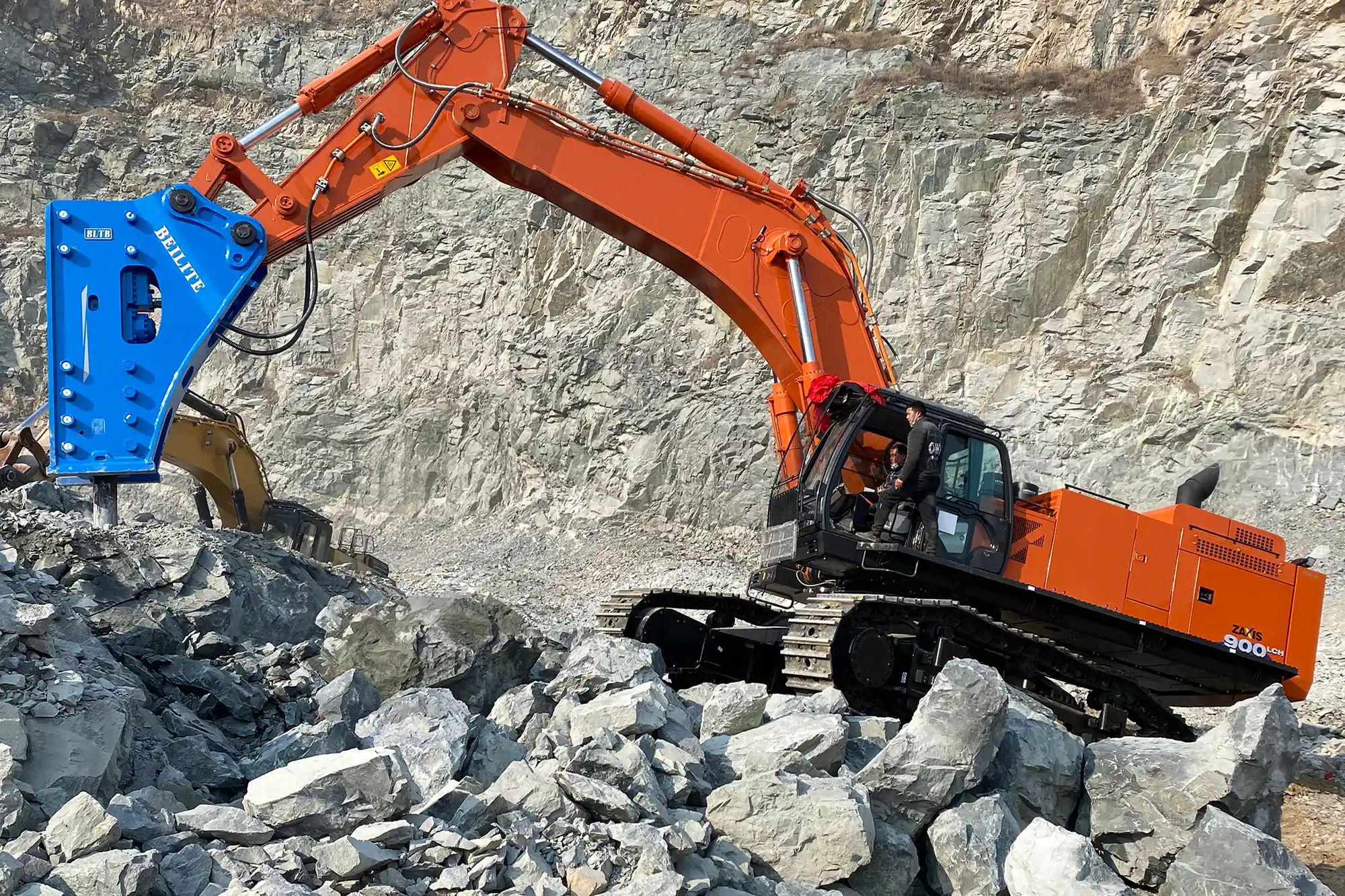
Chisel wear shows up as a reduction in diameter. Once that reduction hits around 10%, the tool starts losing impact efficiency and can damage the breaker itself. Tool bushings tell their own story through excessive play or visible scoring. When a chisel rattles noticeably in the housing, the bushings have already passed their useful life.
Hydraulic Hose and Connection Integrity
Hydraulic leaks create two problems at once. The obvious one is lost pressure and reduced performance. The less obvious one involves contamination entering the system and the fire risk that comes with pressurized oil spraying onto hot surfaces. Running a gloved hand along hoses catches small weeps that visual inspection misses. Connections loosen over time from vibration, so checking torque matters even when nothing looks wrong.
Daily Hydraulic Breaker Inspection Points
| Component | Inspection Point | Action if Issue Found |
|---|---|---|
| Chisel | Wear, cracks, bluntness | Replace or re-sharpen |
| Tool Bushings | Excessive play, visible wear | Replace |
| Hydraulic Hoses | Leaks, cracks, chafing | Repair or replace |
| Connections | Tightness, leaks | Tighten, repair |
| Fasteners | Loose or missing bolts | Tighten to specified torque |
| Housing | Cracks, damage | Repair or replace |
Getting Lubrication Right for Hydraulic Hammer Longevity
Lubrication seems straightforward until you realize how many breakers fail from doing it wrong. The chisel-to-bushing interface sees extreme pressure and heat with every blow. Standard grease breaks down under these conditions, which is why percussion-specific chisel paste exists. This formulation resists washout and maintains its protective film when temperatures spike.
Automatic greasing systems earn their cost in applications involving continuous operation. Manual greasing works fine for intermittent use, but the interval matters. Most hydraulic breaker applications need fresh grease every 2-4 hours of actual operation. Environmental conditions shift this window. Dusty sites or wet conditions push toward more frequent application.
For those working with smaller equipment, our coverage of Hydraulic Hammer Breaker For Mini Excavator,Factory Direct Price addresses the specific lubrication considerations for compact breakers.
Scheduled Maintenance That Prevents the Expensive Failures
The repairs that cost the most money almost always trace back to skipped maintenance intervals. A preventive schedule catches wear before it cascades into component damage. The time spent on regular service pays back in avoided downtime and parts that last their full expected life.
The Role of Nitrogen Pressure in Hydraulic Hammer Performance
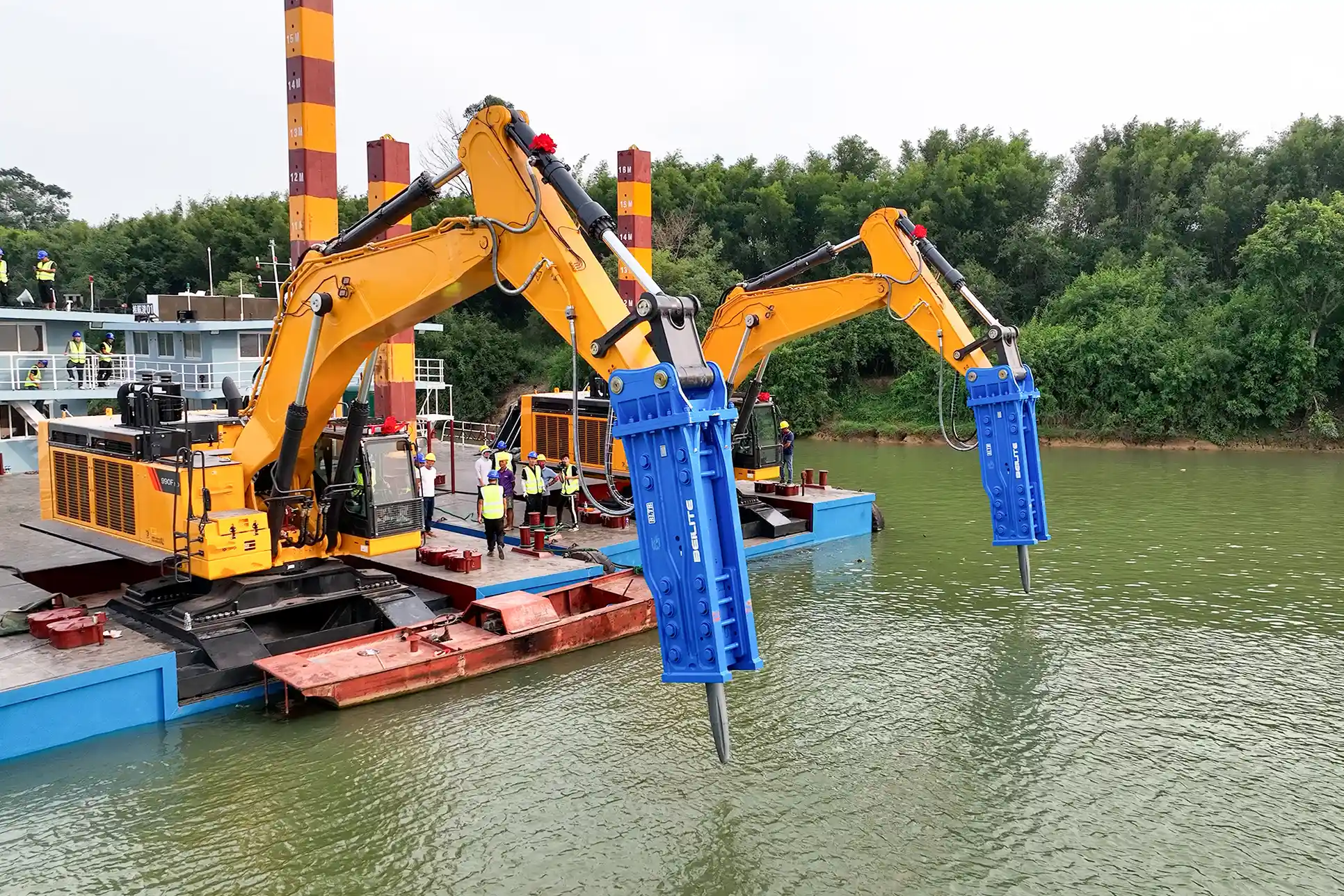
Nitrogen charging affects everything about how a hydraulic breaker hits. The gas accumulator stores energy between cycles and cushions the piston return stroke. When pressure drops below specification, impact energy falls off noticeably. Running too low also removes the protection that keeps hydraulic shock from traveling back into the excavator’s system.
Most BLT and BLTB models run optimally between 14-17 bar of nitrogen pressure. Checking this monthly catches slow leaks before they affect performance. The pressure gauge reading should happen with the breaker at operating temperature since cold readings run slightly lower.
When Seal Kits Need Replacement
Seal wear announces itself through oil appearing where it shouldn’t, reduced impact power, or sounds that weren’t there before. Internal seals fail gradually, so the symptoms build over time rather than appearing suddenly. Replacing seals before complete failure prevents the contamination that damages other components.
The cost of a quality seal kit represents a fraction of what worn seals can damage if ignored. Using parts matched to the specific breaker model matters here. Generic seals that almost fit create problems faster than worn original seals.
Hydraulic Breaker Service Schedule
| Service Interval | Key Checks and Tasks |
|---|---|
| Daily | Chisel wear, hydraulic leaks, fastener tightness |
| Weekly | General housing inspection, lubrication points refill |
| Monthly | Nitrogen pressure check, tool pin inspection |
| Quarterly | Hydraulic oil quality, filter replacement |
| Annually | Full seal kit replacement, accumulator service |
| As Needed | Chisel replacement, bushing replacement |
Diagnosing Problems When a Hydraulic Breaker Stops Working Properly
Troubleshooting a misbehaving hydraulic breaker follows a logical sequence. Starting with the most common causes saves time compared to random part swapping. Most issues fall into a handful of categories, and the symptoms point toward specific areas to check first.
A hydraulic breaker that won’t hit at all usually involves the hydraulic supply rather than the breaker itself. Checking pressure and flow at the excavator rules out the most common cause. Relief valve settings that don’t match the breaker specifications create the same symptom.
Impact energy that fades over time points toward nitrogen pressure or internal seals. These two causes account for most gradual performance loss. Checking nitrogen first takes less time and often solves the problem.
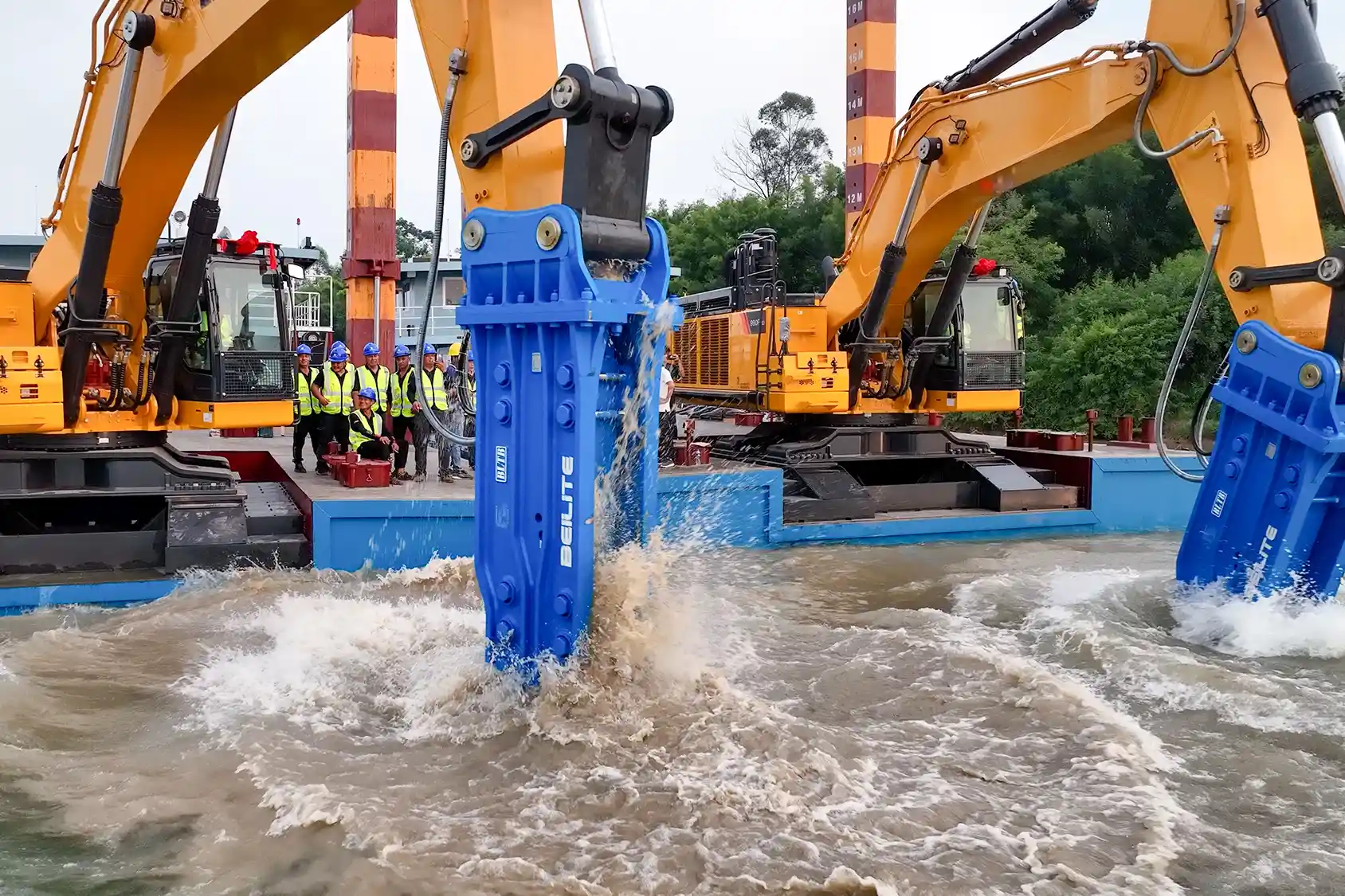
Overheating typically results from running too long without breaks, using the wrong hydraulic oil viscosity, or contamination in the system. The hydraulic fluid itself can only absorb so much heat before it starts degrading. Monitoring fluid temperature and changing oil on schedule prevents most thermal issues.
Troubleshooting Reference
| Symptom | Possible Causes | Solutions |
|---|---|---|
| Breaker Not Hitting | Insufficient hydraulic flow or pressure, clogged filter, incorrect relief valve setting | Verify excavator output, replace filter, adjust relief valve |
| Loss of Impact Energy | Low nitrogen pressure, worn seals, internal wear | Recharge nitrogen, replace seal kit, inspect internal components |
| Overheating Breaker | Incorrect oil, prolonged operation, contaminated oil | Use correct oil, allow cooling periods, change oil and filter |
| Excessive Noise or Vibration | Loose fasteners, worn bushings, damaged chisel | Tighten fasteners, replace bushings, inspect or replace chisel |
| Hydraulic Leaks | Damaged hoses, worn seals, loose connections | Replace hoses, replace seals, tighten connections |
Operating and Storing a Hydraulic Breaker Without Creating Future Problems
How a hydraulic breaker gets used day to day affects how long it lasts as much as any maintenance schedule. Operating techniques that seem minor add up over thousands of cycles. Storage practices matter too, especially for equipment that sits between projects.
Personal protective equipment protects operators from the obvious hazards. Hard hats, safety glasses, hearing protection, and steel-toed boots address the risks that come with percussive demolition work. Pre-operational checks confirm that nothing loosened overnight and all systems respond normally.
Operating angle affects wear patterns significantly. Working at extreme angles concentrates stress on components designed for more direct loading. Holding the chisel in one spot while firing repeatedly generates heat faster than the system can dissipate it. Moving the tool and allowing brief pauses extends component life.
Storage preparation starts with cleaning. Debris left on the breaker holds moisture against metal surfaces. Lubricating all moving parts before storage prevents corrosion from developing during idle periods. A dry location away from weather exposure keeps the hydraulic breaker ready for its next deployment.
For maintenance questions, parts needs, or information about BLT and BLTB hydraulic breakers, our technical team provides support at [email protected] or 40008-40008.
Frequently Asked Questions
How often should nitrogen pressure be checked in a hydraulic breaker?
Monthly checks catch most slow leaks before they affect performance. High-use applications or breakers showing any performance change warrant more frequent monitoring. Always check pressure with the breaker at operating temperature for accurate readings.
What causes a hydraulic breaker to overheat during operation?
Extended continuous operation generates more heat than the hydraulic system can dissipate. Using oil with the wrong viscosity reduces cooling efficiency. Contaminated fluid loses its heat transfer properties. Building in cooling breaks during intensive work prevents most overheating issues.
How can I tell when tool bushings need replacement?
Excessive play between the chisel and housing indicates worn bushings. Visible scoring or galling on bushing surfaces confirms the diagnosis. Unusual noise during operation sometimes accompanies bushing wear. Replacing bushings before they fail completely protects the chisel and housing from damage.
What type of grease works best for hydraulic breaker lubrication?
High-temperature chisel paste formulated specifically for percussion applications outperforms standard greases. This specialized lubricant resists washout from hydraulic fluid and maintains its protective properties under the extreme pressure and heat that occur at the chisel-to-bushing interface.
Why does my hydraulic breaker lose impact power gradually?
Gradual power loss typically traces to declining nitrogen pressure or deteriorating internal seals. The accumulator slowly loses charge over time even without obvious leaks. Seals wear incrementally, allowing internal bypass that reduces the energy reaching the chisel. Checking nitrogen pressure first identifies the more common cause.