 English
 French
Large Hydraulic Breaker: Ultimate Guide to Selection & Performance
Large hydraulic breakers show up wherever the work gets serious—quarries, demolition sites, tunneling projects, anywhere hard material needs to give way fast. After years of watching these machines perform across different conditions, what stands out is how much the right setup and handling affect outcomes. A well-matched breaker on a properly configured excavator can move through rock and concrete with surprising efficiency, while a mismatched combination burns fuel and wears components without much to show for it.
How Large Hydraulic Breakers Actually Work
Large hydraulic breakers function as percussion devices mounted to excavators or similar carrier machines. Hydraulic pressure drives a piston that strikes a tool bit, converting fluid energy into concentrated impact force. The internal mechanism relies on a nitrogen gas-charged accumulator that stores energy between strokes, amplifying each blow while smoothing out the hydraulic demand cycle.
The BLT and BLTB models use designs that prioritize power transfer efficiency and component durability under sustained operation. These excavator attachments handle the kind of repeated stress that would destroy lesser equipment—thousands of impacts per hour, often against unpredictable material densities.
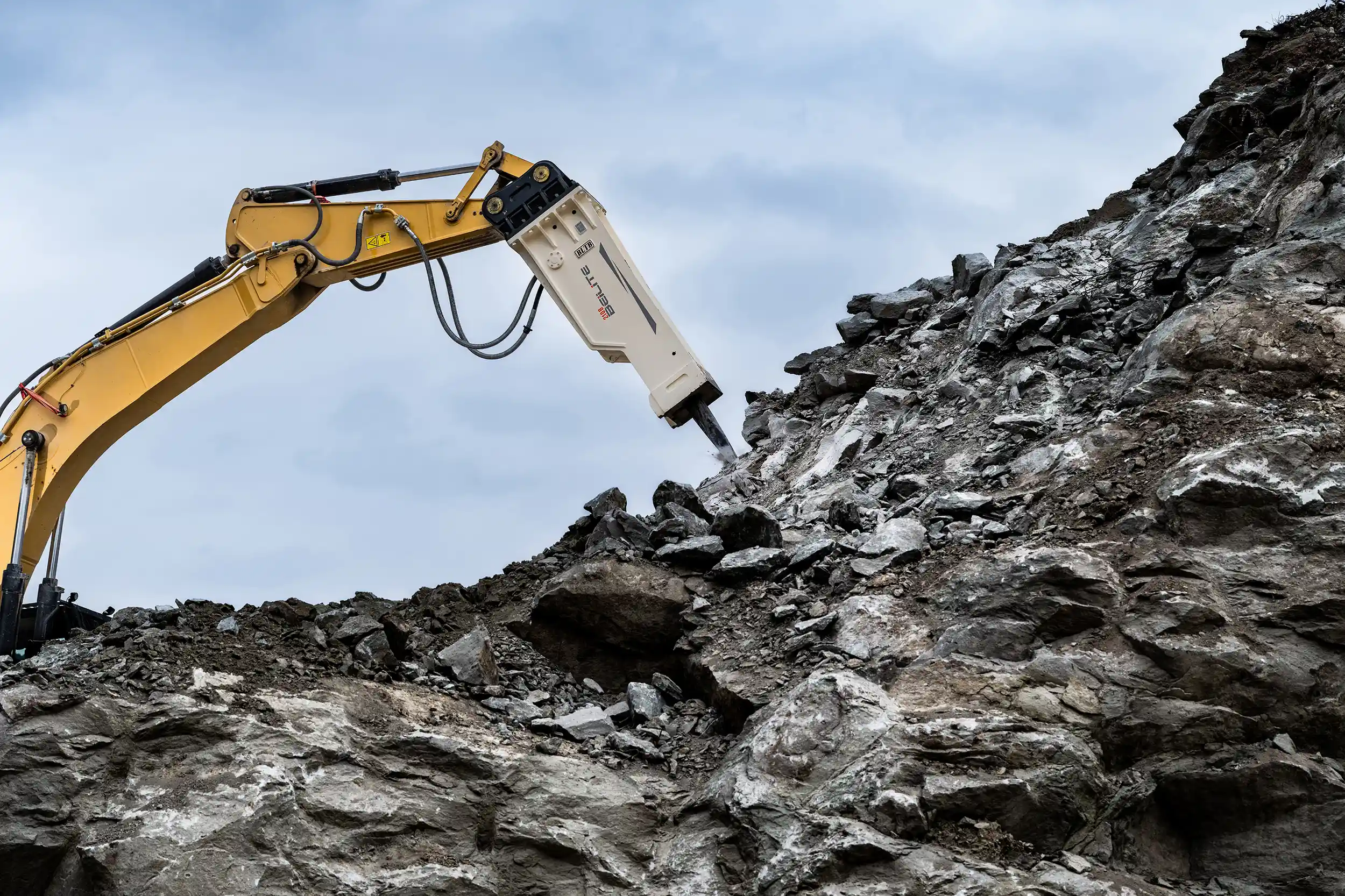
Applications spread across multiple industries. Quarry operations depend on hydraulic breakers to reduce oversized rocks before processing. Construction crews use them for foundation excavation, trenching, and breaking up existing structures. Road construction and tunneling projects rely on rock breaking equipment for rapid material removal when other methods prove too slow or impractical.
Common Applications by Breaker Size
| Breaker Model (Example) | Chisel Diameter (mm) | Applicable Excavator (t) | Primary Applications |
|---|---|---|---|
| BLT-75 | 75 | 6–8.5 | Medium demolition, rock excavation, trenching |
| BLT-100 | 100 | 10–14 | Quarrying, primary breaking, heavy construction |
| BLT-125 | 125 | 14–18 | Large-scale demolition, mining, tunneling |
| BLT-140 | 140 | 20–24 | Heavy rock breaking, large-scale infrastructure |
| BLT-155 | 155 | 27–33 | Extreme demolition, primary mining, specialized tasks |
Matching Breaker to Machine and Material
Getting the selection right matters more than most operators realize at first. The wrong large hydraulic breaker creates problems that compound over time—reduced productivity, accelerated wear, potential damage to the carrier machine itself.
Housing Designs and Their Practical Differences
Large hydraulic breakers come in several configurations, each suited to different working conditions. Top-type breakers sit higher on the boom, giving operators better sightlines to the work area. Side-type breakers position the mass lower, which improves stability on larger units working at awkward angles.
Box-type hydraulic hammers enclose the power cell in heavy steel casing. This design cuts noise substantially and contains vibration better than open configurations. Urban demolition projects often require these silenced breakers to meet noise ordinances and reduce complaints from neighboring properties. The BEILITE range includes specialized units for Hydraulic Breaker Hammer for Demolition&Rock Breaking and Hydraulic Breaker Hammer for Mining and Quarrying.
Size Selection Based on Excavator Specifications
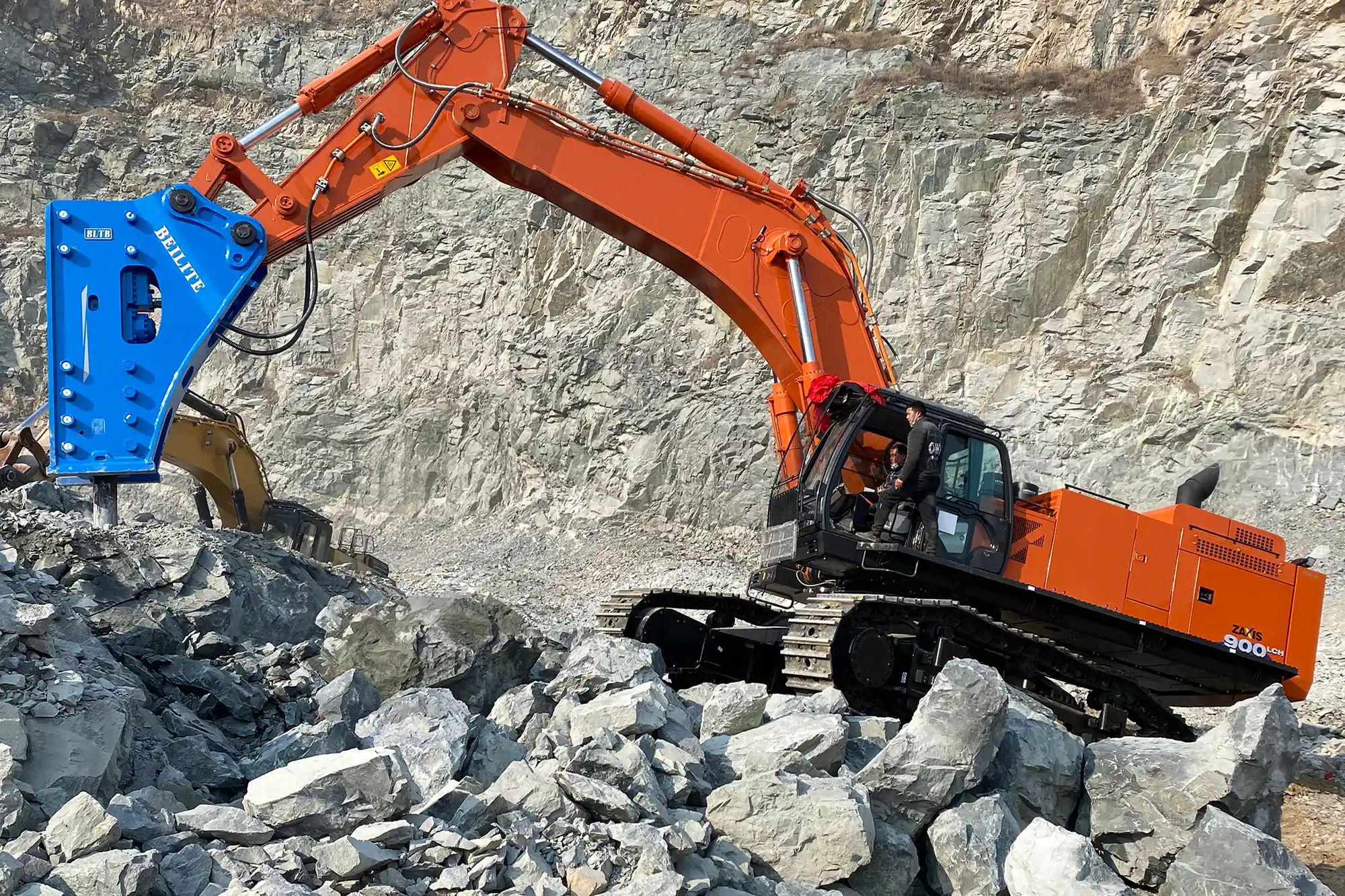
The relationship between excavator weight and breaker capacity determines whether the combination works efficiently or fights itself. An undersized hydraulic breaker hammer wastes the excavator’s potential. An oversized unit stresses the boom, hydraulic system, and mounting points beyond their design limits.
Hydraulic flow requirements and operating pressure must fall within the excavator’s output range. The attachment bracket needs to match both machines precisely—loose fits allow movement that damages components, while forced fits create stress concentrations. The BLT-45 works with 0.8–1.5 t excavators, while the BLT-165 handles machines in the 33–38 t range.
Excavator Weight vs. Recommended Breaker Size (BEILITE BLT Series)
| Excavator Operating Weight (t) | Recommended Breaker Model | Chisel Diameter (mm) | Working Oil Flow (L/min) |
|---|---|---|---|
| 0.5–1.2 | BLT-40 | 40 | 15–30 |
| 0.8–1.5 | BLT-45 | 45 | 20–40 |
| 1.5–3.5 | BLT-53 | 53 | 20–50 |
| 3–5.5 | BLT-60 | 60 | 30–60 |
| 4.5–6 | BLT-70 | 70 | 40–70 |
The product range extends to specialized applications including Hydraulic Breaker Hammer for Mini Compact Excavator and Hydraulic Hammer Breaker For Mini Excavator,Mini Excavator Breaker.
Operating Techniques That Actually Improve Results
Peak performance from large hydraulic breakers depends on operator skill as much as equipment quality. The difference between an experienced operator and a novice shows up in cycle times, fuel consumption, and maintenance intervals.
Proper technique means applying consistent downward pressure while letting the breaker do the work. Forcing the tool against material or allowing blank firing—striking without resistance—damages internal components and wastes energy. Starting at edges or existing cracks and working inward follows the natural fracture patterns of most materials.
Hydraulic flow and pressure monitoring keeps the breaker operating within designed parameters. The BLT series maximizes impact energy relative to fluid consumption, but only when the hydraulic system delivers the right flow rate. Noise reduction and vibration control features built into modern designs improve operator comfort during long shifts, which affects concentration and decision-making.
Site preparation makes a measurable difference. Clearing loose debris prevents chisel deflection. Pre-drilling pilot holes in extremely hard materials gives the breaker a starting point that reduces the energy needed for initial penetration.
Maintenance Practices That Prevent Expensive Failures
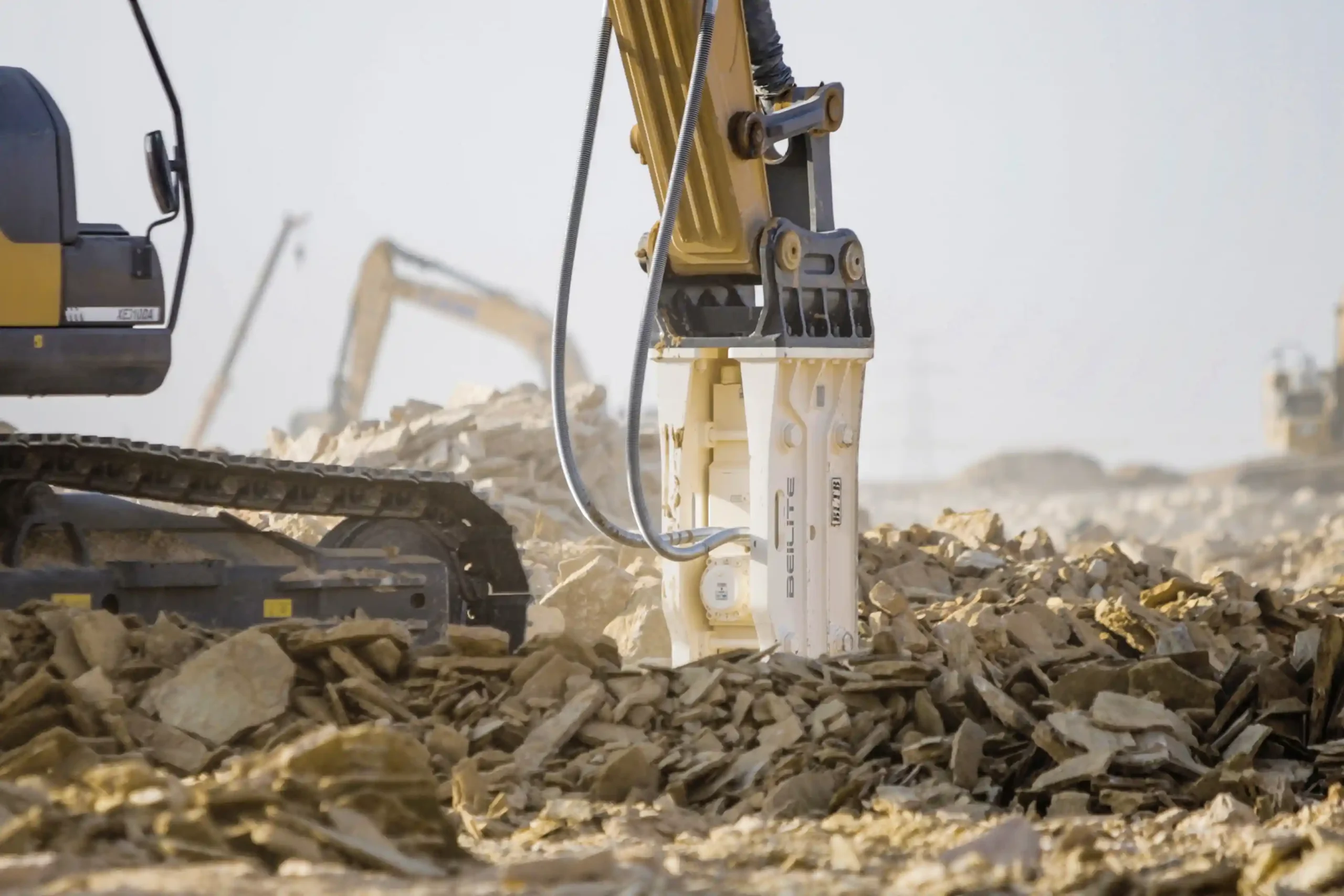
Large hydraulic breakers operate under conditions that accelerate wear on every component. Preventive maintenance catches problems before they cascade into major repairs or unexpected downtime.
Daily checks should cover obvious issues—visible damage, unusual sounds, fluid leaks. Periodic servicing follows manufacturer schedules based on operating hours. Wear parts like chisels and bushings need replacement before they fail completely, since running damaged components causes secondary damage to surrounding parts.
Hydraulic system health determines breaker performance. Oil levels, filter condition, and fluid cleanliness all affect how much energy reaches the tool bit. Greasing points require consistent attention because lubrication failures cause metal-to-metal contact that destroys precision surfaces.
Chisel inspection catches cracks, excessive wear, and blunting before these conditions reduce efficiency or create safety hazards. A worn chisel requires more energy to achieve the same penetration, which means higher fuel costs and faster accumulation of operating hours.
Diagnosing Common Problems Before They Escalate
Low impact power usually traces back to hydraulic pressure loss or insufficient nitrogen charge in the accumulator. The nitrogen acts as an energy storage medium, and when pressure drops below specification, each stroke delivers less force. Regular pressure checks and recharging maintain designed performance.
Oil leaks indicate worn seals. Hydraulic fluid contamination from external leaks introduces particles that damage pumps, valves, and cylinder surfaces throughout the system. Prompt seal replacement costs far less than the repairs needed after contaminated fluid circulates through the hydraulic circuit.
Excessive chisel wear results from several factors: wrong chisel type for the material, improper operating angle, or inadequate lubrication. Genuine spare parts ensure compatibility and material quality that aftermarket alternatives sometimes lack.
Where Large Hydraulic Breaker Technology Is Heading
Development in large hydraulic breaker technology responds to demands for efficiency, reduced environmental impact, and improved safety margins. Smart hydraulic breakers now incorporate sensors that monitor impact energy, operating temperature, and pressure in real time. This data supports predictive maintenance—identifying wear patterns before failures occur—and allows operators to adjust technique based on actual performance metrics.
Remote-controlled and semi-autonomous breakers address safety concerns in hazardous environments. Keeping operators at a distance from unstable structures, toxic materials, or extreme conditions reduces injury risk without sacrificing productivity.
Environmental pressures drive development of quieter operation, lower fuel consumption, and compatibility with biodegradable hydraulic fluids. These eco-friendly breakers meet increasingly strict regulations while reducing operating costs over equipment lifespans.
Advanced materials science contributes lighter, stronger components that improve power-to-weight ratios. A breaker that delivers the same impact energy at lower weight reduces stress on the carrier machine and improves fuel efficiency.
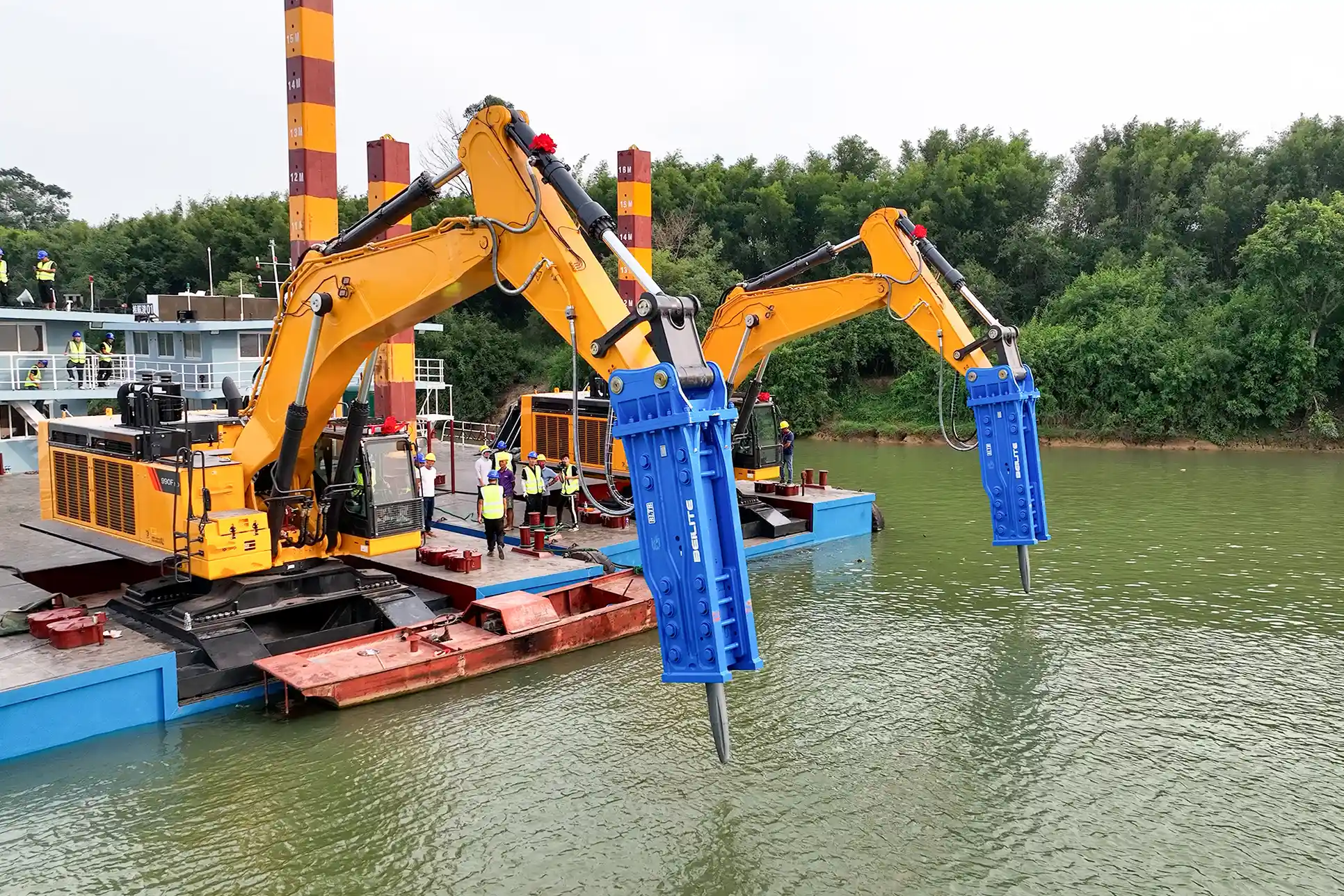
Specialized applications continue expanding. Solutions exist for Hydraulic Breaker Hammer for Underwater Construction and Hydraulic Breaker for Municipal Engineering,Urban Road & Utility Works, each addressing the specific challenges of their operating environments.
Working with BEILITE
BEILITE Machinery Co., LTD. has operated since 2002 as a national high-tech enterprise focused on hydraulic breaker development. The company holds hundreds of patents, and BLT and BLTB products work in over 100 countries. Contact [email protected] or call 40008-40008 for consultation on large hydraulic breakers matched to specific project requirements.
Frequently Asked Questions About Large Hydraulic Breakers
How do I ensure the longevity of my large hydraulic breaker?
Longevity comes from consistent maintenance rather than occasional overhauls. Lubricate all moving parts on schedule. Inspect chisels regularly for wear patterns that indicate problems. Maintain operating pressure and hydraulic flow within manufacturer specifications. Use genuine spare parts—the cost difference rarely justifies the risk of compatibility issues or premature failure.
What are the environmental considerations when operating a large hydraulic breaker?
Noise control matters most in populated areas, where silent breaker designs and vibration dampening reduce community impact. Dust suppression during demolition protects workers and neighbors from airite particulates. Carrier machine emissions fall under local regulations that vary by jurisdiction. Eco-friendly hydraulic fluids reduce contamination risk from leaks and spills, particularly important near waterways or sensitive ecosystems.
Can large hydraulic breakers be used for underwater demolition?
Specialized underwater hydraulic breakers handle marine construction and demolition work. These units feature enhanced seals that prevent water intrusion and corrosion-resistant materials that withstand saltwater exposure. Submersible attachments and modified operating procedures address the unique challenges of working beneath the surface, including reduced visibility and different material behavior under pressure.