 English
 French
Hydraulic Press Brake: Ultimate Guide to Precision Bending
Hydraulic Press Brakes in Metal Fabrication
Working with sheet metal long enough, you start to appreciate machines that just do what they’re supposed to do. Hydraulic press brakes fall into that category. They bend metal predictably, repeatedly, and with enough force to handle materials that would defeat lesser equipment. The hydraulic system delivers consistent pressure throughout the stroke, which matters more than most people realize until they’ve dealt with the alternative. This piece covers the technology behind these machines, the different configurations available, what features actually make a difference in production, and how to keep them running without incident.
How Hydraulic Press Brakes Actually Work
A hydraulic press brake bends sheet and plate material by clamping the workpiece between a punch and die. The underlying physics traces back to Pascal’s law. Hydraulic fluid transmits force through the system, and that transmission happens efficiently enough to give operators precise control over ram movement and applied tonnage. Getting accurate bends depends on this control.
The operational cycle follows a predictable sequence. The operator positions the workpiece against the backgauge system, which determines bend depth and angle. The hydraulic system then activates, extending cylinders to lower the ram. The punch descends into the die, forcing the material to conform. Once complete, hydraulic pressure releases and the ram retracts. This controlled approach minimizes material stress while maximizing accuracy.
Several components work together to make this happen. Hydraulic cylinders generate the bending force. A pump and valve system manages fluid flow and pressure, controlling ram speed and power. The ram and bed form upper and lower working surfaces where tooling mounts. The backgauge system positions workpieces accurately for consistent bend lines. Modern machines often feature multi-axis backgauges for complex geometries. Calculating required bending force matters because it depends on material type, thickness, and bend length. Over-tonnage damages both machine and workpiece. Insufficient tonnage leaves bends incomplete.
Choosing Between Different Hydraulic Press Brake Configurations
The right hydraulic press brake depends on what you’re actually making and how much of it. Conventional hydraulic press brakes offer straightforward, reliable performance for standard bending work. They typically feature manual or basic CNC controls for ram positioning and backgauge adjustments. Job shops with varying requirements often find these sufficient.
CNC hydraulic press brakes represent a different level of capability. Automated control over multiple axes improves precision, repeatability, and efficiency. High-volume production and intricate parts benefit most from this automation. Synchronous press brakes, a CNC subset, keep the ram parallel to the bed throughout bending. This guarantees consistent angles across the entire workpiece length through advanced hydraulic and electronic feedback systems.
Tandem press brakes link two or more machines together for exceptionally long workpieces that single machines cannot handle. Industries requiring large structural components use this configuration regularly. Electric hydraulic press brakes combine servo motors with hydraulic systems. They deliver better energy efficiency, reduced noise, and enhanced precision compared to purely hydraulic systems. Up-stroking press brakes move the ram upward from the bottom, while down-stroking models (more common) have the ram descending from above. Each configuration suits specific tooling and application needs.
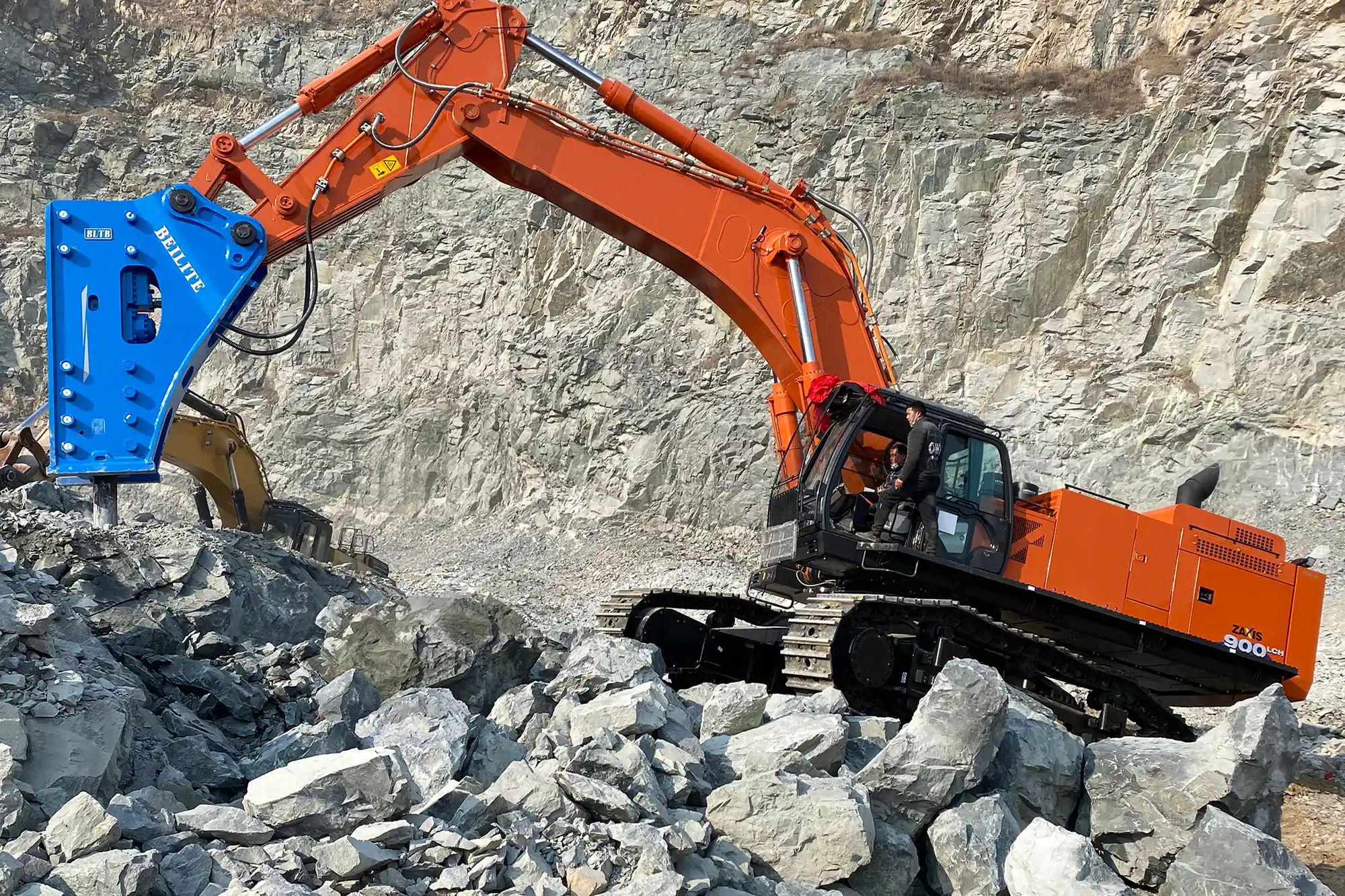
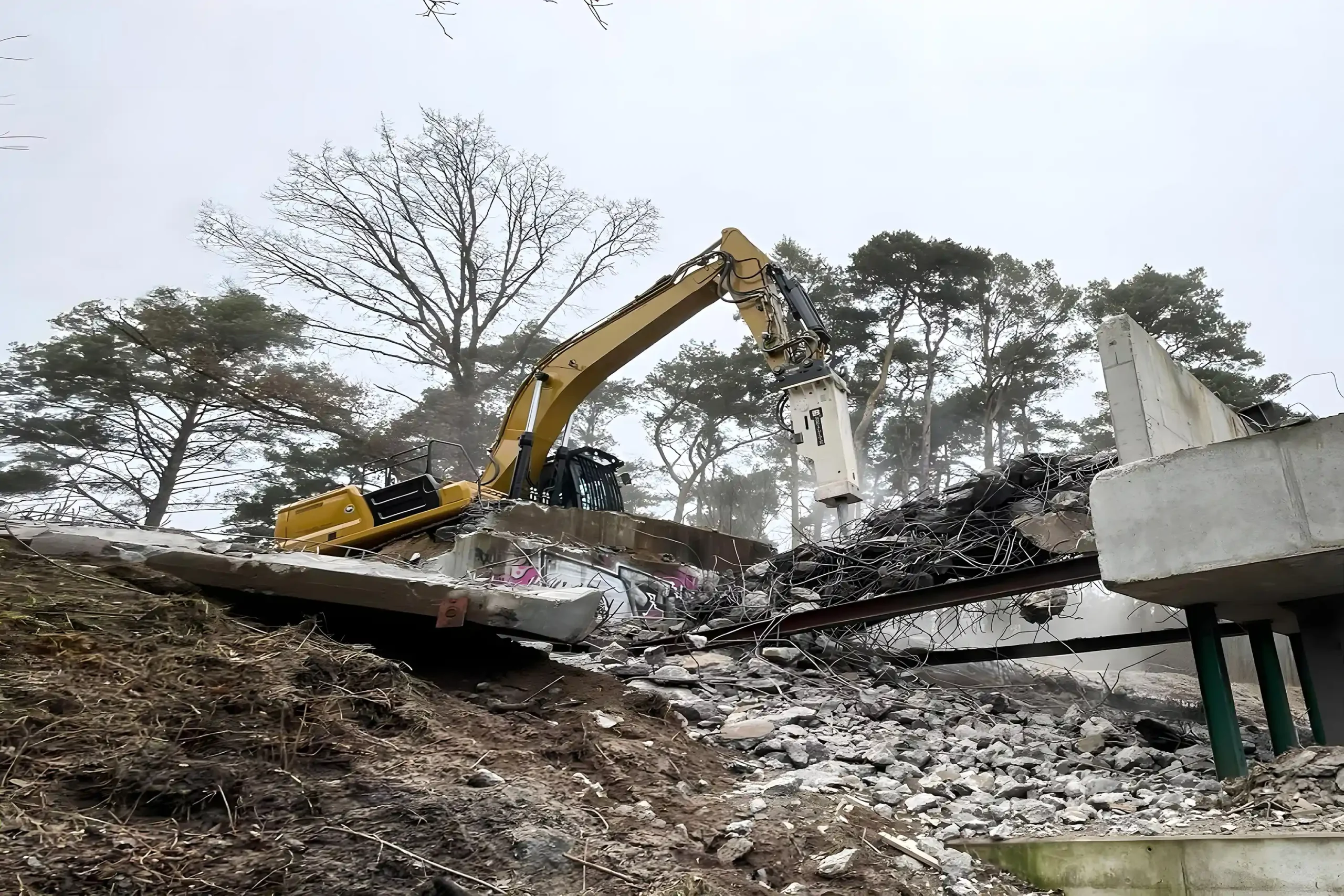
For robust demolition and rock-breaking work, specialized hydraulic attachments can significantly enhance operational efficiency. Check 《Hydraulic Breaker Hammer for Demolition&Rock Breaking》 for more information.
Features That Actually Improve Bending Results
Modern hydraulic press brakes include features that address real production challenges. These innovations reduce setup times, minimize material waste, and solve complex bending problems that would otherwise require multiple attempts or manual intervention.
Automatic crowning systems compensate for deflection in the bed and ram during bending. Without this compensation, long parts develop inconsistent angles because the machine structure flexes under load. The crowning system adjusts in real time to maintain uniformity across the entire workpiece length.
Laser safety systems create protective light barriers around the point of operation. Breaching this barrier stops the machine immediately. Angle measurement systems provide real-time feedback on bend angles, allowing corrections during the process without manual measurement. Multi-axis backgauges support intricate part geometries by offering greater flexibility in workpiece positioning.
Quick-change tooling systems reduce setup times substantially. Operators swap punches and dies rapidly, which matters in environments with frequent job changes. Offline programming software lets engineers design and simulate bending operations remotely. They optimize sequences and check for collisions before sending programs to the machine. This approach streamlines workflow and reduces downtime. These features collectively enable tighter tolerances and higher throughput in sheet metal fabrication.
CNC Control and Production Efficiency
A CNC hydraulic press brake improves efficiency through automation of bending cycles. Manual intervention decreases, and human error becomes less of a factor. Setup times drop significantly while repeatability increases. Complex operations that would consume considerable time on conventional machines become manageable with programmable precision. Programming software optimizes bending sequences, reducing material waste and improving throughput.
Primary Components of the System
The main components include hydraulic cylinders for generating bending force. The pump and valve system controls fluid flow, determining ram speed and pressure. Ram and bed structures hold punches and dies at the bending interface. A robust frame supports these components, maintaining stability and rigidity during operation. The control panel serves as the operator interface for programming and monitoring. The backgauge system positions workpieces for precise bends.
Keeping Operators Safe and Machines Running
Press brake safety standards exist because these machines can cause serious injury. Light curtains detect intrusions into the bending zone and halt operation immediately. Emergency stop buttons, placed within easy reach, give operators instant control in critical situations.
Preventative maintenance keeps machines operating efficiently and extends their service life. Routine checks of hydraulic fluid levels and quality matter. Proper lubrication and inspection of hydraulic system components for leaks or wear prevent problems before they escalate. Tooling inspection catches worn or damaged punches and dies that could produce inaccurate bends or create hazards. Operators need adequate training on both machine operation and safety procedures. Comprehensive training covers proper loading and unloading techniques, emergency procedures, and daily safety checks.
Critical Safety Considerations
Compliance with OSHA press brake regulations ensures machines meet industry safety standards. Point of operation guarding through light curtains or physical barriers prevents access to hazardous areas during operation. Operators should wear appropriate personal protective equipment (PPE), including safety glasses and gloves. Regular risk assessment of bending tasks identifies and mitigates potential hazards.
BEILITE Hydraulic Press Brake Engineering
BEILITE Machinery Co., Ltd. operates as a national high-tech enterprise with decades of experience in hydraulic equipment. Hundreds of patents reflect ongoing commitment to advancing hydraulic press brake technology. The company participates in formulating national standards for hydraulic breakers in China, demonstrating established expertise in heavy machinery.
BLT and BLTB brand products perform across diverse working conditions, from intricate sheet metal bending to heavy-duty industrial applications. This versatility has earned customer trust in over 100 countries and regions. Quality manufacturing and service remain central to operations.
Common Questions About Hydraulic Press Brakes
What makes hydraulic press brakes preferable to mechanical alternatives?
Hydraulic press brake advantages center on superior process control. Unlike mechanical press brake comparison, hydraulic models offer adjustable stroke length and consistent tonnage throughout the bend. This provides flexibility and precision that mechanical systems cannot match. Inherent overload protection prevents damage to machine and tooling. Precise control over ram speed and position produces higher quality bends with less material waste.
How do I calculate the right tonnage and bending length?
Press brake tonnage calculation depends on material thickness, material type, and V-die opening. Thicker and stronger materials require more tonnage. The bending length formula incorporates these parameters to ensure the machine handles workpiece dimensions appropriately. Material charts and specialized software provide accurate estimations.
What maintenance schedule keeps a hydraulic press brake performing well?
Hydraulic press brake maintenance requires consistent attention. A preventive maintenance schedule includes regular hydraulic fluid level and quality checks, with periodic hydraulic oil replacement and filter changes. Tooling inspection for wear matters. Routine system calibration maintains bending accuracy. Checking electrical connections and mechanical components prevents unexpected breakdowns.
Can these machines integrate with automated production systems?
Press brake automation has become standard practice. Modern hydraulic press brakes integrate with robotic bending cells and material handling systems. This enables lights-out manufacturing, boosting productivity while reducing labor costs. Industry 4.0 integration allows real-time data monitoring and remote control, optimizing production flows.
What determines the right tooling selection?
Press brake tooling selection depends on material, thickness, and desired bend angle. V-die opening is critical. A common guideline uses a die opening eight times the material thickness. Material compatibility between tooling and workpiece prevents premature wear. Quality tooling materials and proper segmentation achieve precise bends and maximize tool life.
Work with BEILITE on Your Next Project
BEILITE Machinery Co., Ltd. brings decades of innovation and hundreds of patents to hydraulic press brake engineering. BLT and BLTB products serve customers in over 100 countries. Contact us at [email protected] or call 40008-40008 to discuss how our hydraulic press brake solutions fit your metal fabrication requirements.